Pothos, often called “Devil’s Ivy,” is the undisputed champion of the indoor plant world, but its potential in a backyard setting is frequently overlooked. This vigorous climber is remarkably adaptable, fast-growing, and capable of turning a drab exterior into a lush, emerald sanctuary. Whether you have a sprawling garden or a compact urban patio, a Pothos wall can provide privacy, cooling shade, and an undeniable aesthetic upgrade.
Because Pothos (Epipremnum aureum) is a natural climber that uses aerial roots to latch onto surfaces, it is the perfect candidate for vertical gardening. From structured geometric patterns to wild, cascading waterfalls of foliage, here are 13 stunning Pothos wall ideas to revolutionize your outdoor space.
1. Wooden Trellis
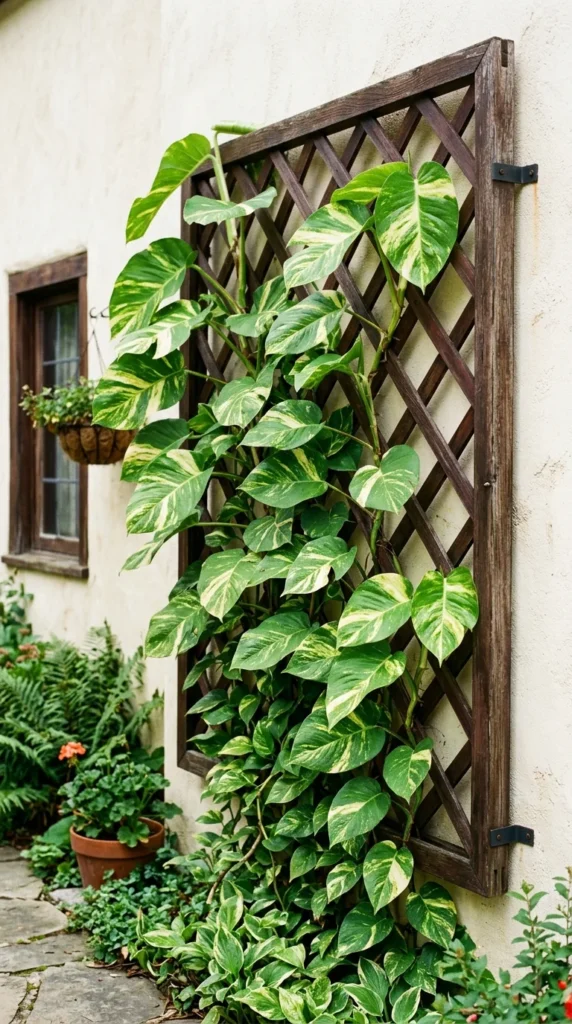
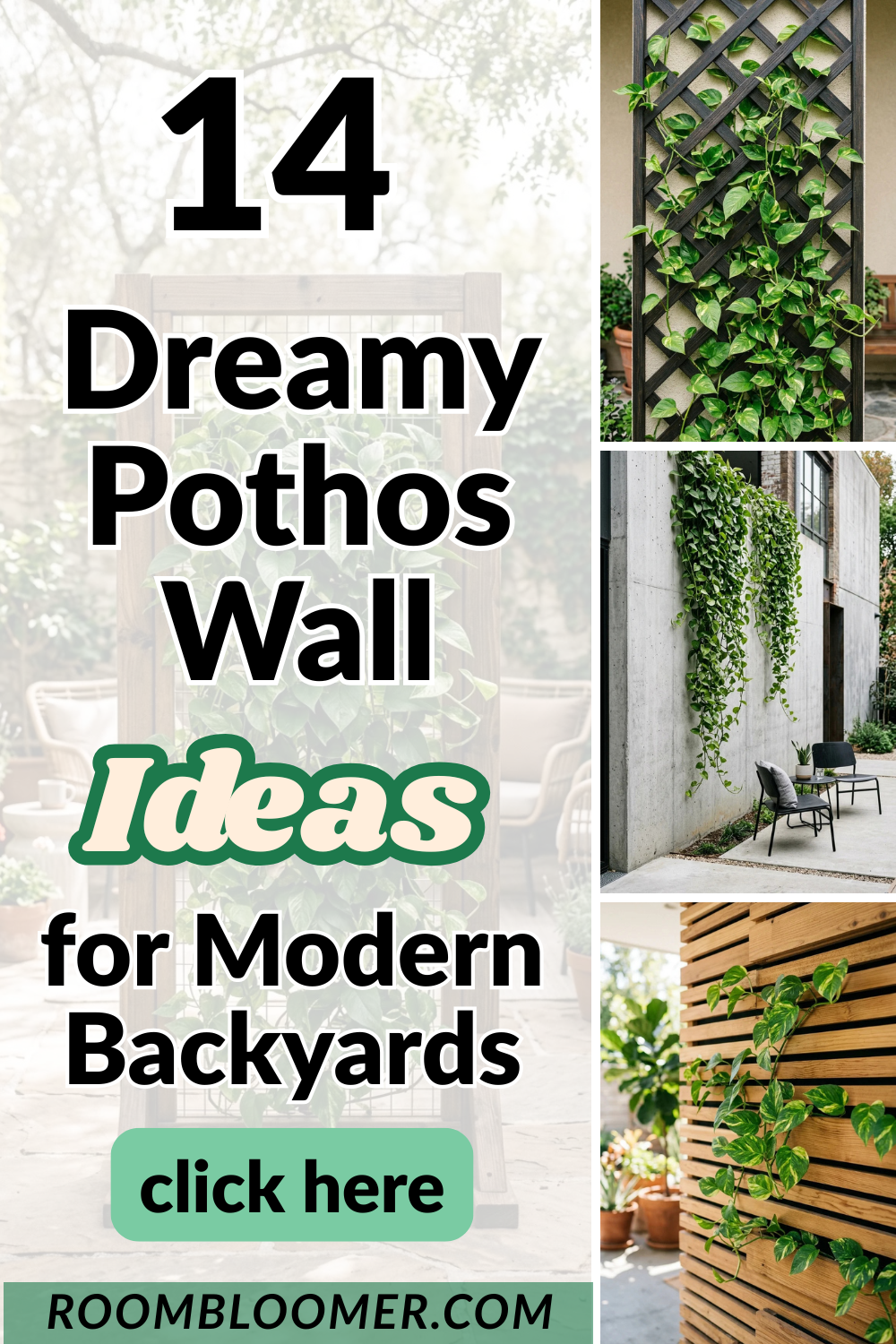
The wooden trellis is a timeless choice for a reason. It provides a sturdy, natural-looking structure for Pothos vines to grip. By installing a large-scale lattice against a fence or a bare house wall, you create a framework that the Pothos will eventually hide entirely. As the plant matures outdoors, the leaves often grow significantly larger than they do indoors, sometimes even developing natural splits similar to a Monstera. For a modern look, choose a horizontal slat trellis; for a traditional feel, go with the classic diamond pattern.
2. Chain-Link Cover
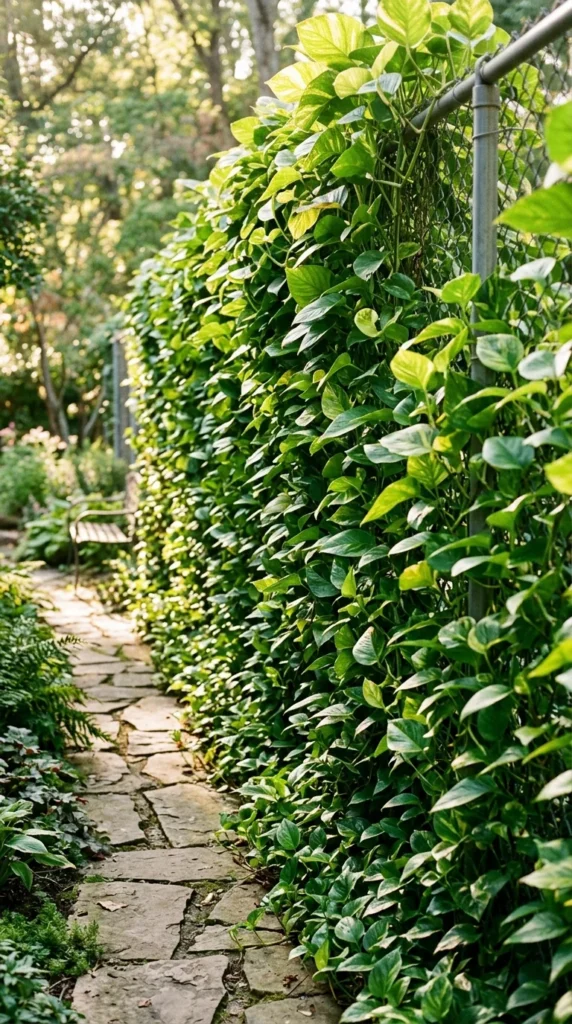
If you have an unsightly chain-link fence that feels more “industrial” than “oasis,” Pothos is your best friend. Because the wire mesh provides endless anchor points for the plant’s tendrils, the vines will quickly weave themselves through the links. Within a few growing seasons, the cold metal disappears behind a thick, living curtain of green. This is an excellent way to gain privacy from neighbors while softening the hard edges of your property line.
3. Living Tapestry
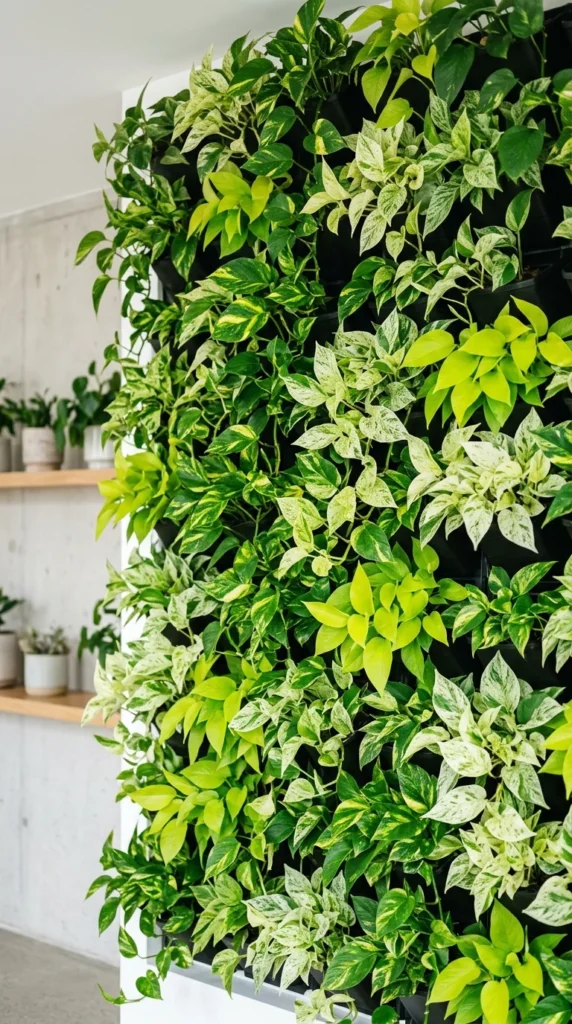
Why stick to one shade of green when you can have a spectrum? A “Living Tapestry” wall involves mixing different varieties of Pothos—such as the bright lime ‘Neon’, the white-splashed ‘Marble Queen’, and the classic ‘Golden Pothos’. By planting them in close proximity and training them to grow upward together, you create a textured, multi-tonal wall that looks like a piece of living art. The contrast in variegation patterns adds depth and visual interest that a single-species wall can’t match.
4. Cascading Pergola
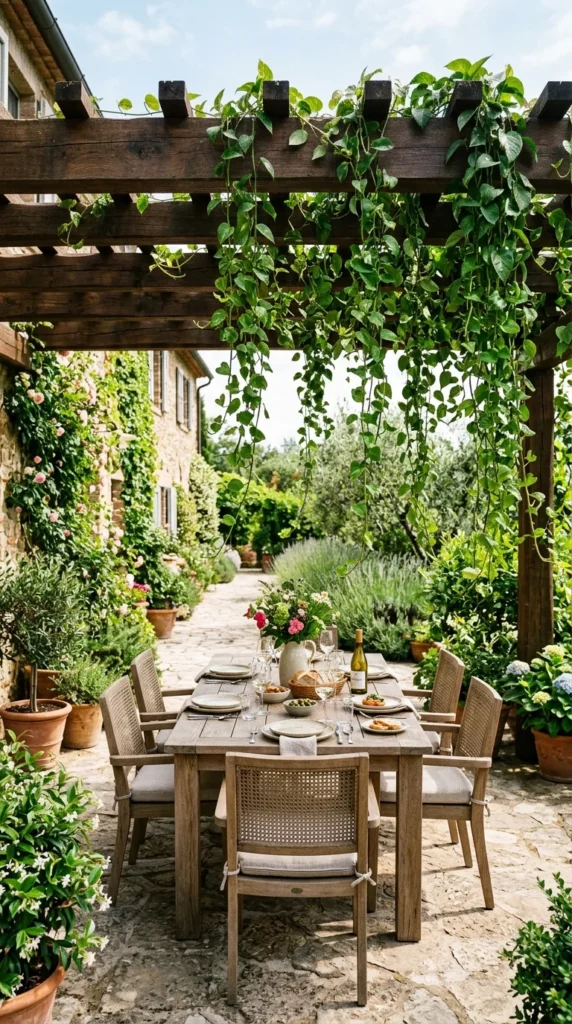
Instead of growing the Pothos from the ground up, why not let it fall from the sky? By placing long planters atop the beams of a pergola, you can encourage the Pothos to trail downward. This creates a “curtain” effect that provides dappled shade for your seating area. The sight of long, leafy vines swaying gently in the breeze adds a sense of movement and tranquility to the backyard, making it feel like a secluded tropical resort.
5. Privacy Screen
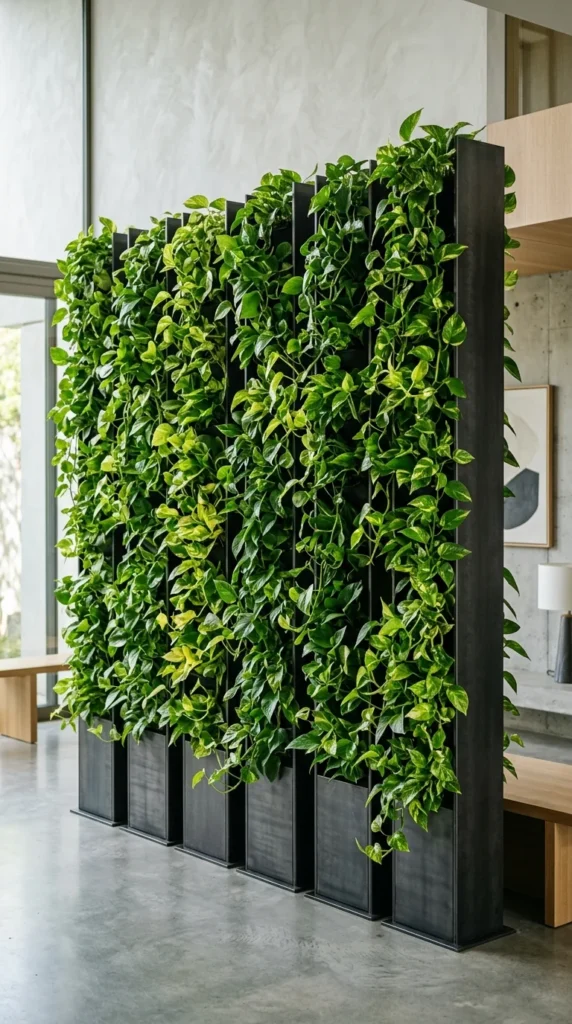
Sometimes you need a wall where there isn’t one. Using tall, vertical modular planters, you can create a free-standing Pothos wall that acts as a room divider for your patio. This is particularly useful for separating a dining area from a play area or shielding a hot tub from view. Because Pothos is so dense, it works as an effective sound buffer and visual screen, allowing you to enjoy your outdoor space in total seclusion.
6. Geometric Wire
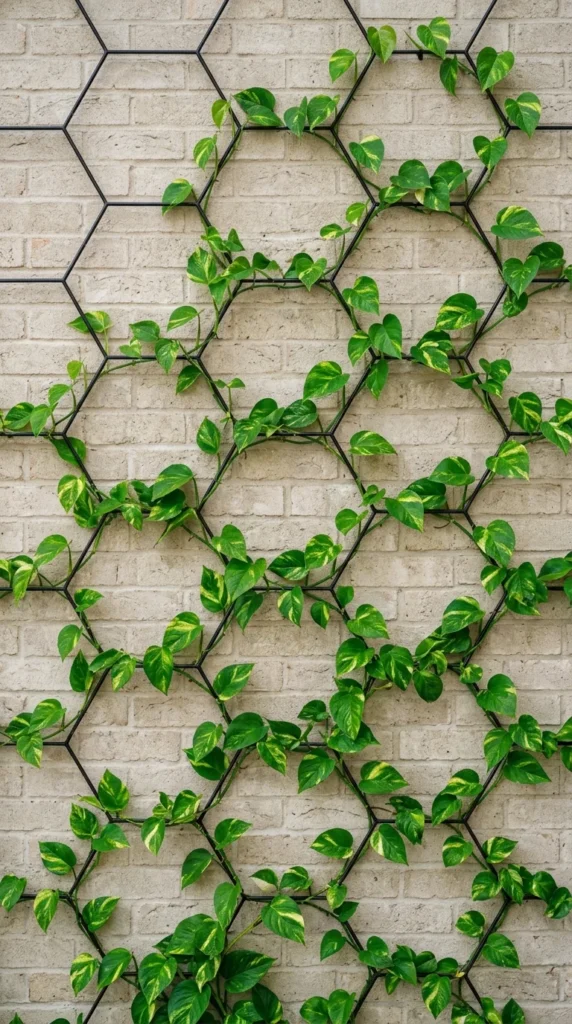
For those who prefer a modern, architectural look, a geometric wire system is the way to go. Using “invisible” steel cables or thin black wires, you can map out a specific pattern on your wall—diamonds, chevrons, or even abstract shapes. As the Pothos grows, you can clip the vines to the wires, guiding them to fill the pattern. This results in a clean, organized green wall that looks sophisticated and intentional, rather than wild and overgrown.
7. Hanging Pockets
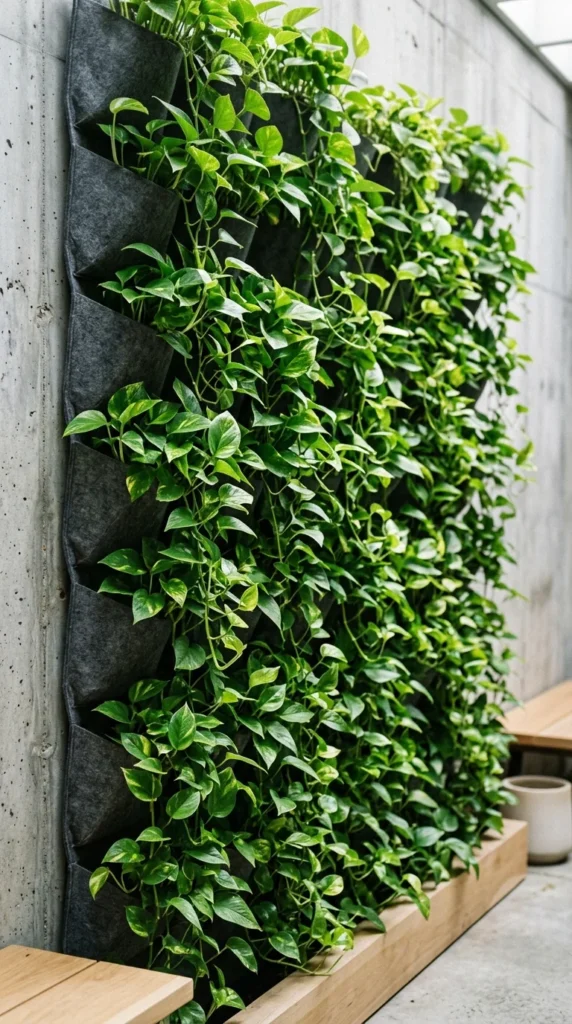
Felt wall pockets are a game-changer for backyard Pothos walls. These breathable containers allow you to plant Pothos at various heights simultaneously, rather than waiting for vines from the ground to reach the top. This results in an “instant” wall of green. Because the felt allows for excellent drainage and aeration, the Pothos roots stay healthy and vibrant. This method is perfect for smaller patios or balcony walls where ground space for large pots is limited.
8. Bamboo Frame
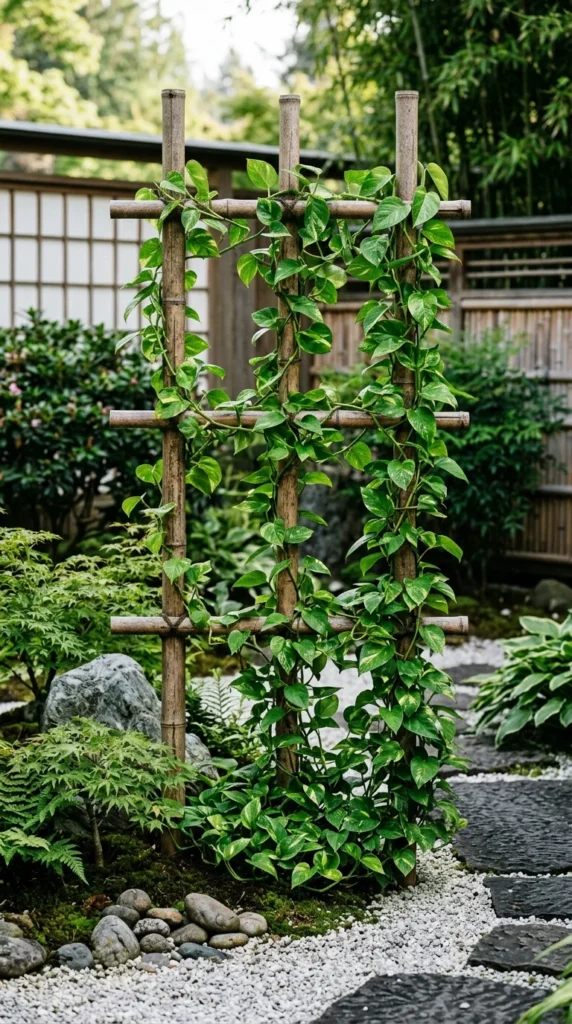
Bring a touch of the Zen garden to your backyard by using bamboo as your support structure. Bamboo is naturally rot-resistant and provides a beautiful, organic texture that complements the waxy leaves of the Pothos. You can build a simple “ladder” or a complex grid of bamboo poles. The tan color of the wood pops against the deep green of the leaves, creating a tropical, breezy aesthetic that pairs perfectly with water features or Buddha statues.
9. Stone Accent
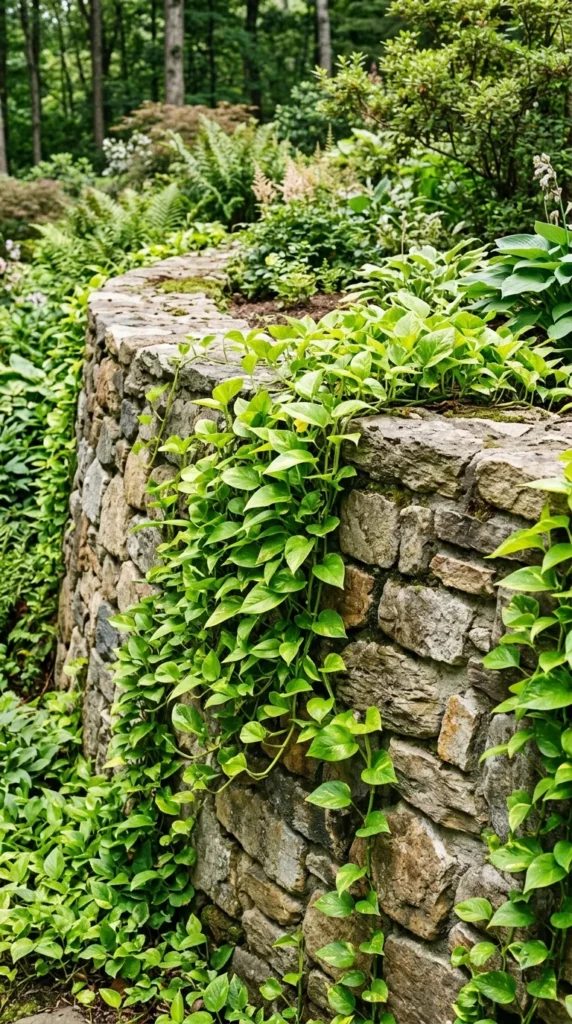
Pothos loves the cool, damp surface of stone. If you have a stone retaining wall or a brick exterior, you can encourage Pothos to crawl directly across the surface. While some homeowners worry about root damage, Pothos aerial roots are generally less destructive than English Ivy. The contrast between the hard, rugged texture of the stone and the soft, flowing leaves of the Pothos creates a beautiful “English cottage meets tropical jungle” vibe.
10. Staircase Runner
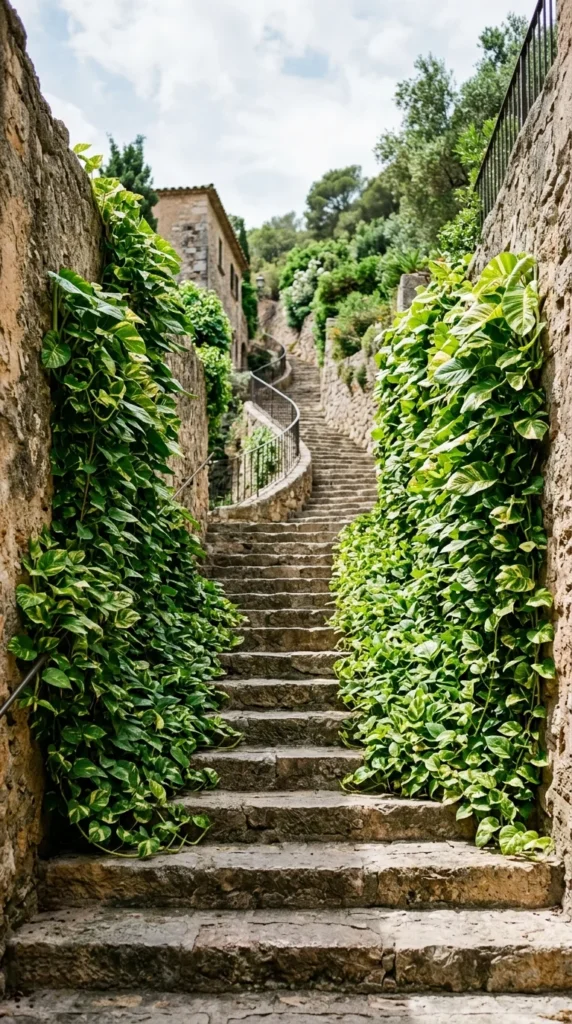
Transform a functional outdoor staircase into a grand garden feature by lining the sidewalls with Pothos. As the vines grow, they will drape over the edges of the steps, creating a soft, green border. This not only hides the structural elements of the stairs but also makes the transition between different levels of your garden feel more fluid and natural. It’s a fantastic way to lead guests through your landscape with a trail of greenery.
11. Gazebo Drape
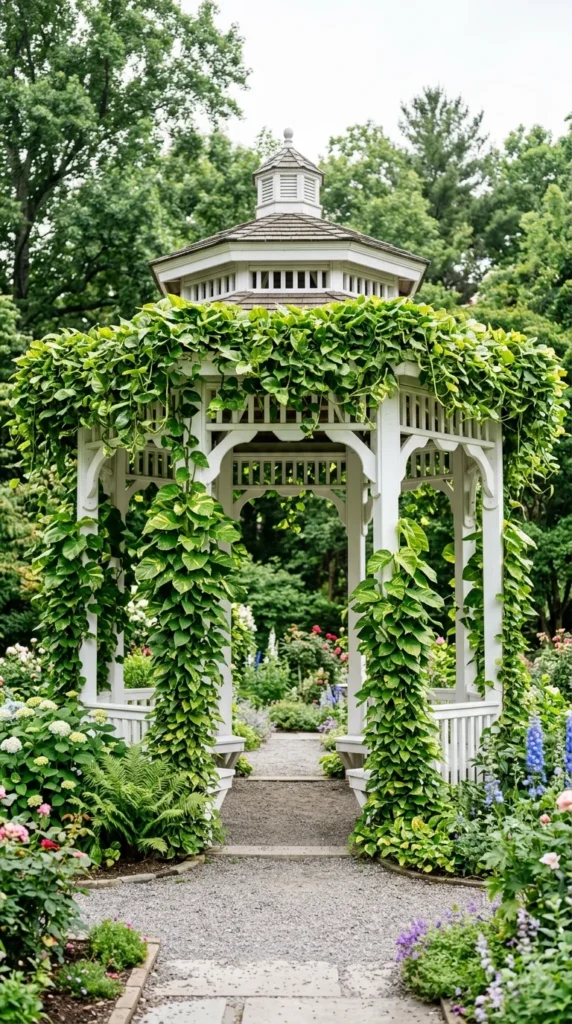
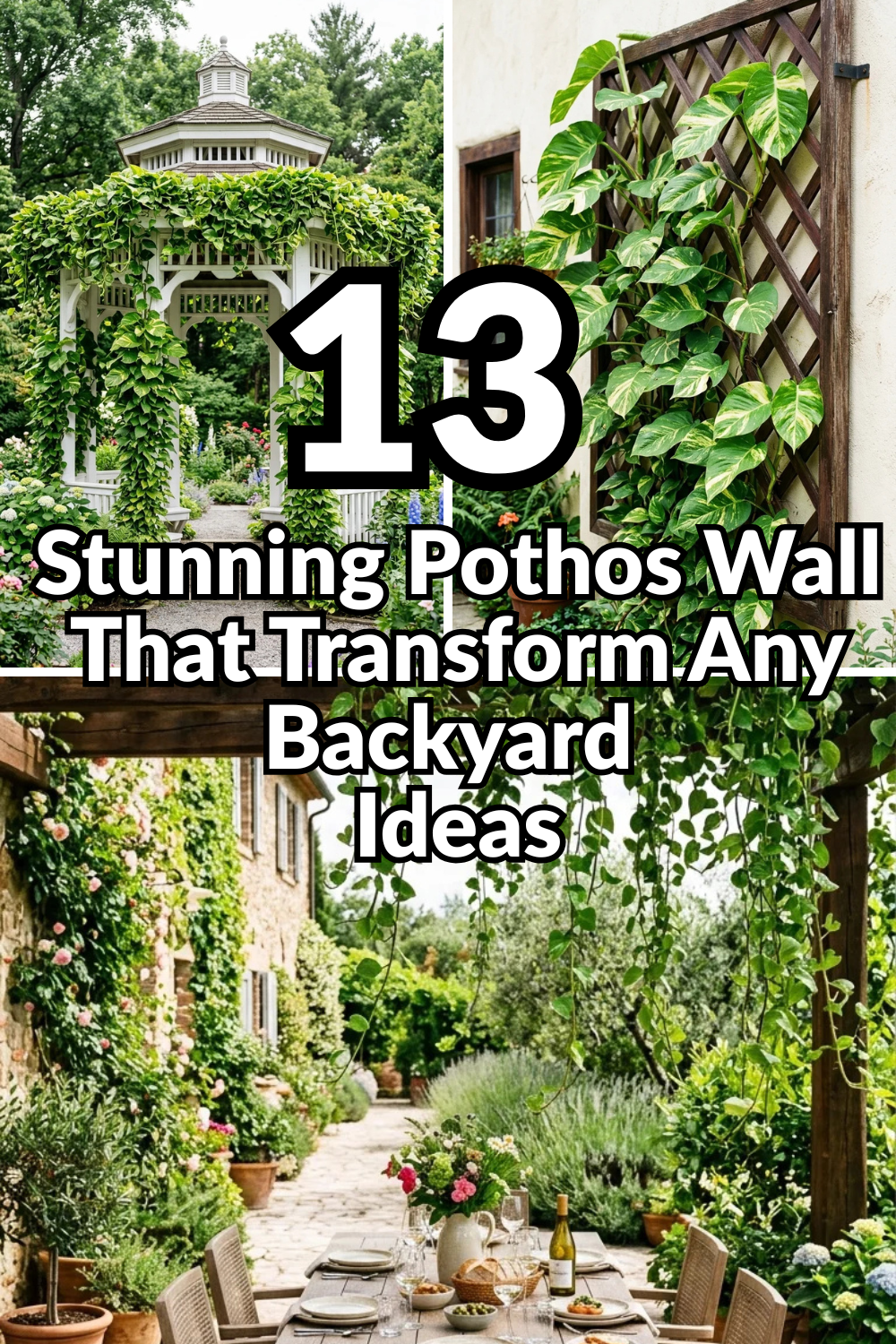
A gazebo is a beautiful focal point, but it can sometimes look a bit bare. By planting Pothos at the base of the support pillars, you can turn the structure into a living building. The vines will climb the posts and eventually wrap around the roofline, creating a lush, shaded interior. This turns the gazebo into a cool sanctuary even on the hottest summer days, as the transpiration from the leaves naturally lowers the surrounding temperature.
12. Arched Entryway
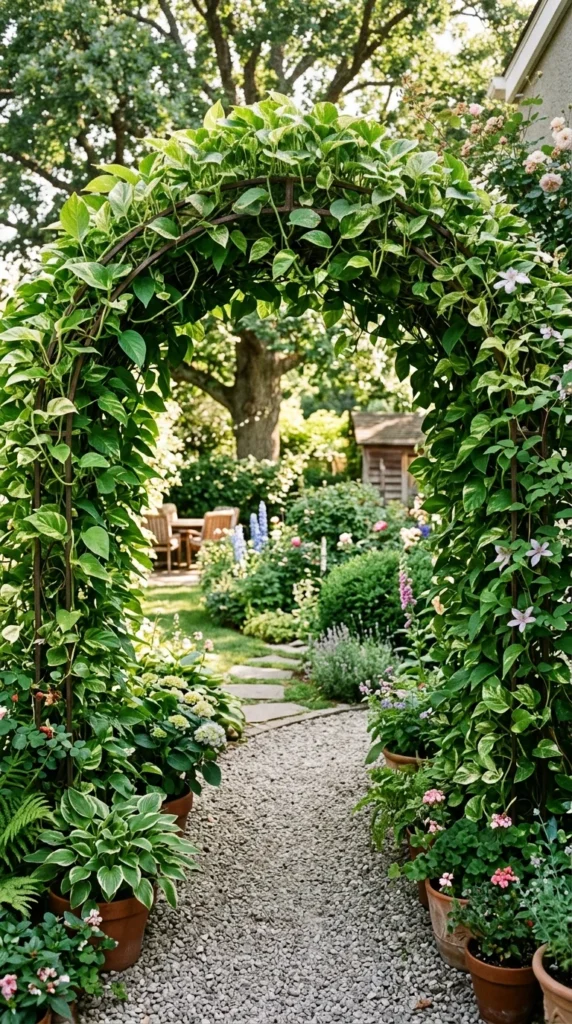
Create a sense of mystery and transition by using a Pothos-covered archway at the entrance to your backyard. Walking through a tunnel of cool, green leaves sets the tone for the rest of the garden. Because Pothos is so flexible, it is easy to wrap the long vines around the curves of the arch. This is a low-maintenance alternative to climbing roses or wisteria, providing year-round greenery without the mess of falling petals.
13. Modern Grids
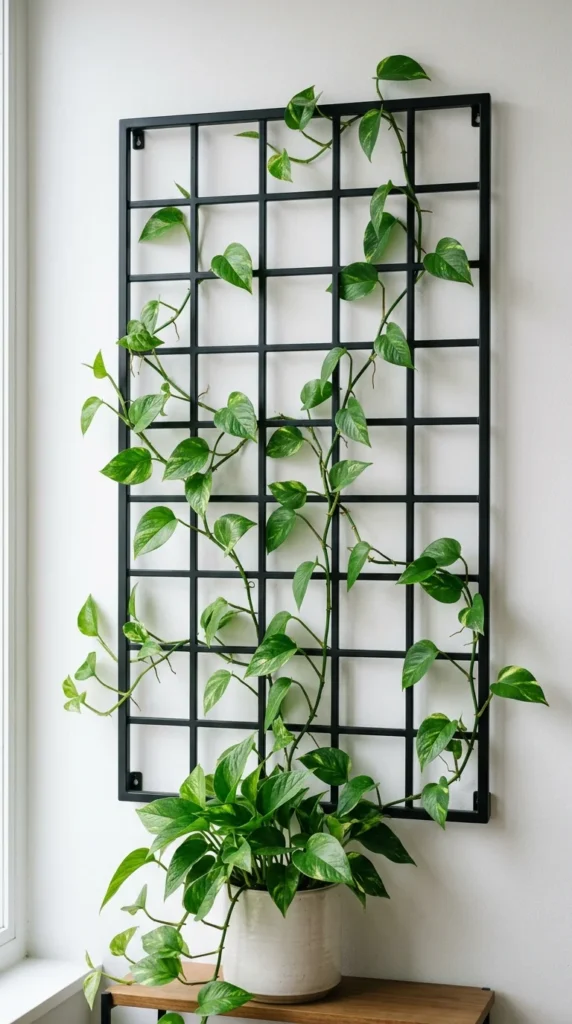
For a high-end, contemporary look, use a heavy-duty metal grid. Unlike thin wire, a thick metal grid acts as a piece of sculpture in itself. By allowing the Pothos to partially cover the grid, you maintain a balance between the industrial material and the natural plant life. This look is particularly effective in minimalist backyards with clean lines, concrete flooring, and monochromatic color schemes.
Tips for a Healthy Backyard Pothos Wall
To ensure your Pothos wall remains a stunning feature rather than a maintenance nightmare, keep these expert tips in mind:
- Light Requirements: While Pothos is famous for surviving in low light indoors, it prefers bright, filtered shade outdoors. Avoid placing your Pothos wall in direct, harsh afternoon sun, which can scorch the leaves and turn them yellow.
- Watering Routine: Backyard Pothos walls dry out faster than indoor plants due to wind and heat. Ensure your vertical system has adequate drainage, and water deeply when the top inch of soil feels dry.
- Fertilization: To achieve that “wall” effect quickly, use a balanced liquid fertilizer once a month during the growing season. This encourages the large leaf growth and vigorous vining necessary to cover large areas.
- Pruning and Training: Pothos doesn’t have “tendrils” that wrap around things; it has “sticky” aerial roots. You may need to help it along initially by using garden ties or clips to secure the vines to your chosen structure. Regular pruning will also encourage the plant to branch out and become bushier.
- Climate Considerations: Pothos is a tropical plant. If you live in a region with frost, you will need to treat your Pothos wall as an annual, or grow it in a way that the main containers can be moved to a sheltered area during the winter. In hardiness zones 10-11, it will thrive outdoors year-round.