Pothos (Epipremnum aureum), often called “Devil’s Ivy,” is celebrated globally as the ultimate indoor plant. However, when brought into the backyard or garden, this vigorous climber transforms into a powerhouse of vertical architecture. Its heart-shaped leaves and relentless growth patterns make it the perfect candidate for creating “living walls” that provide privacy, cooling, and a touch of tropical paradise.
Whether you are looking to mask an unsightly fence or create a lush backdrop for your outdoor seating area, Pothos is your best friend. Here are 14 creative ways to utilize Pothos to build stunning green walls in your outdoor spaces.
1. Wooden Trellis
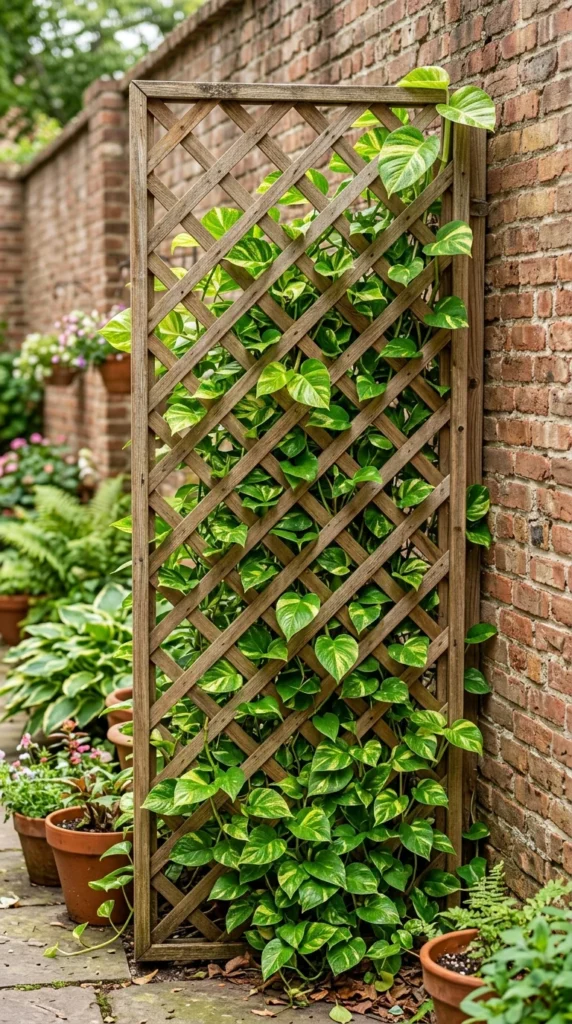
The wooden trellis is a classic garden staple that provides the perfect structural support for Pothos. Because Pothos uses aerial roots to cling to surfaces, the rough texture of natural wood like cedar or redwood is ideal. By installing a large trellis against a bare exterior wall, you provide a ladder for the vines to climb. Over a single growing season, the Pothos will fill the gaps, turning a functional wooden structure into a solid wall of greenery that feels both organized and wild.
2. Privacy Screen
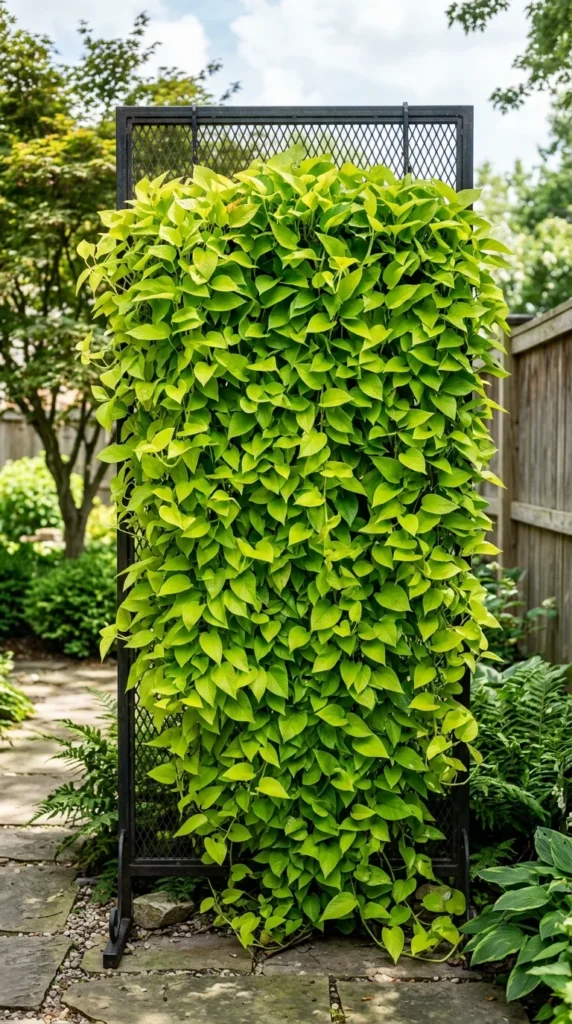
If your backyard feels a little too exposed to the neighbors, a Pothos privacy screen is a beautiful, biological solution. Use a free-standing frame with heavy-duty plastic or metal mesh. Plant your Pothos in long rectangular planters at the base. As the vines grow upward, weave them through the mesh. The result is a thick, sound-dampening barrier that breathes and moves with the wind, offering far more charm than a standard plastic or wooden fence.
3. Hanging Baskets
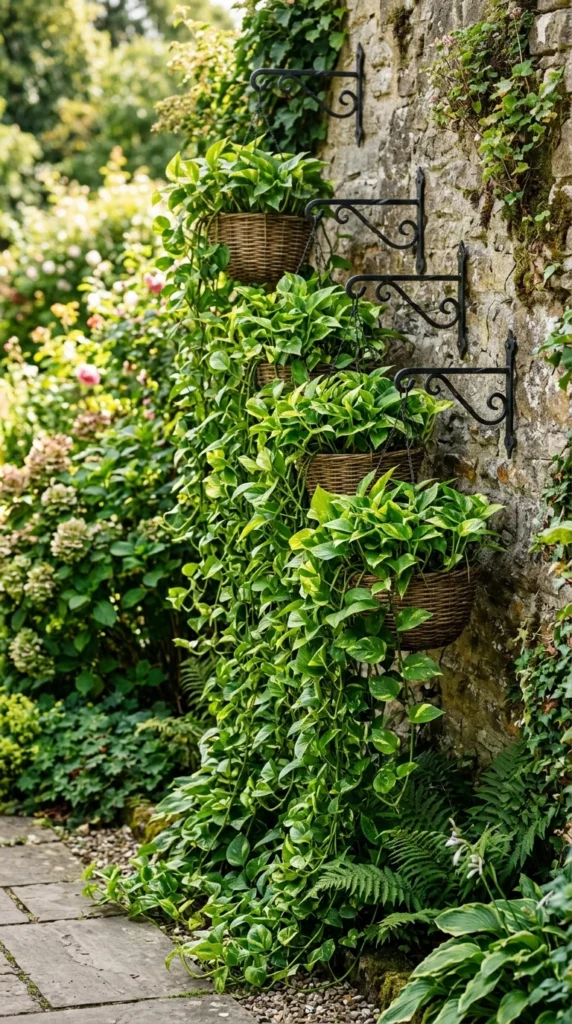
Creating a “wall” doesn’t always mean starting from the ground up. By lining a high wall or the edge of a porch with a series of hanging baskets, you create a “curtain wall” effect. As the Pothos grows, the vines will trail downward, creating long, vertical lines of foliage. If you space the baskets closely together, the trailing vines will eventually touch, forming a continuous sheet of green that looks like a waterfall of leaves.
4. Gutter Planters
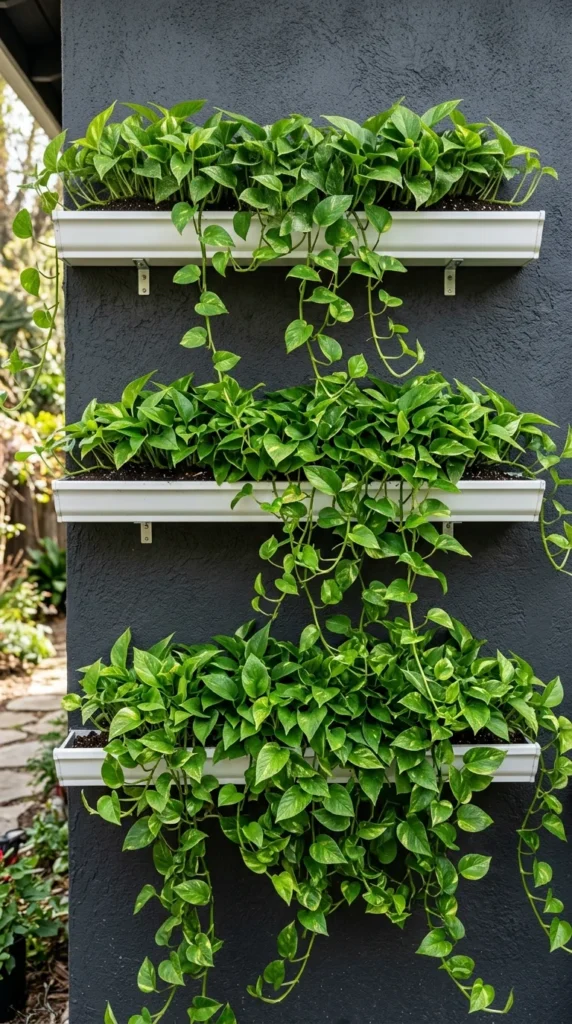
Repurposing rain gutters is a brilliant DIY way to create a tiered Pothos wall. Mount the gutters horizontally in rows, one above the other, with about 12 to 18 inches of space between them. When you plant Pothos in these narrow channels, the leaves spill over the front edge. Eventually, the growth from the top gutter will reach the gutter below it, creating a seamless, layered effect that covers the entire wall surface with minimal soil footprint.
5. Living Pockets
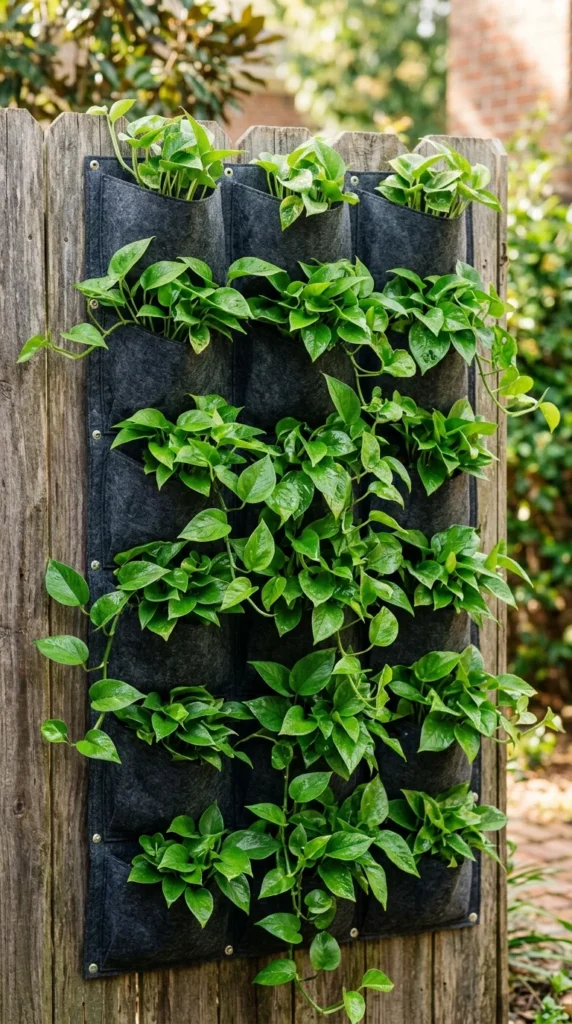
Modular pocket systems, often made from recycled felt or breathable plastic, are specifically designed for vertical gardening. These pockets allow you to plant individual Pothos starts across a wide surface area instantly. Because each plant has its own root space, you can mix different varieties—such as ‘Marble Queen’, ‘Jade’, and ‘Neon’ Pothos—to create a textured, multi-tonal green tapestry that looks like a piece of living art.
6. Arched Entryway
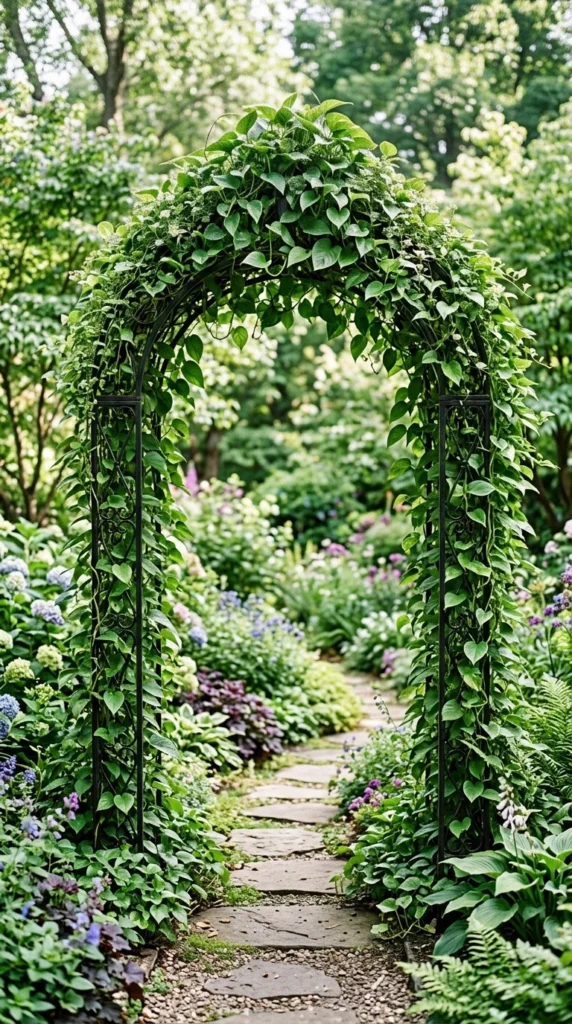
Transform the entrance to your garden into a secret portal by training Pothos over a metal or wooden arch. While Pothos isn’t a traditional “arbor” plant like roses, its fast growth rate makes it an excellent choice for shadier garden entrances. Secure the main runners to the arch with soft plant ties. Within a year, you’ll have a lush, shaded tunnel that transitions visitors from the open yard into a more intimate garden space.
7. Tree Trunk Wrap
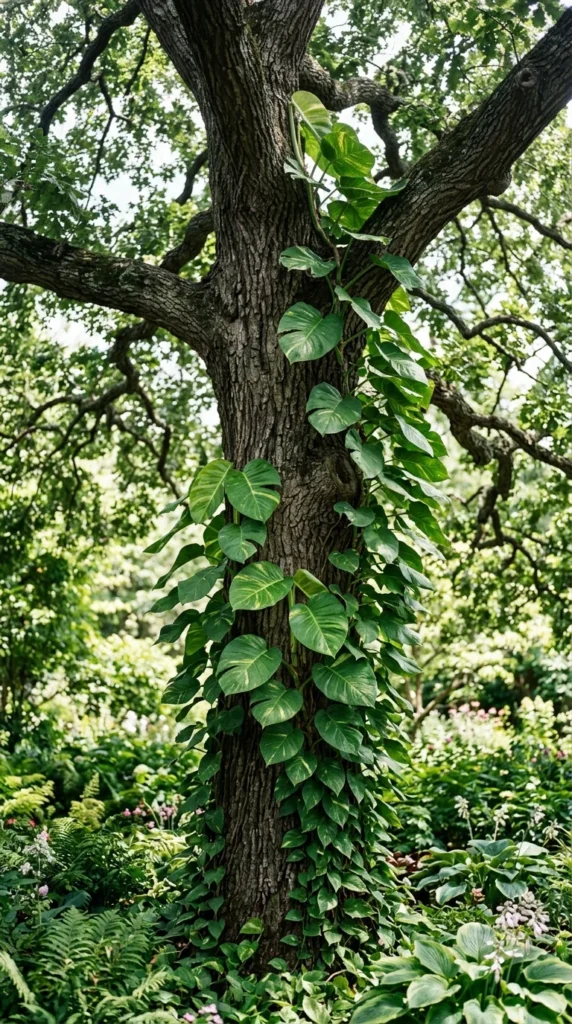
In their natural habitat, Pothos are epiphytic climbers that scale giant rainforest trees. You can recreate this look by planting Pothos at the base of a large, established tree in your backyard. Use a piece of coconut coir or a burlap wrap around the base to give the roots something to grip initially. As the Pothos climbs, the leaves will actually grow larger—sometimes reaching over a foot wide—as the plant senses it is climbing toward more light.
8. Fence Overhang
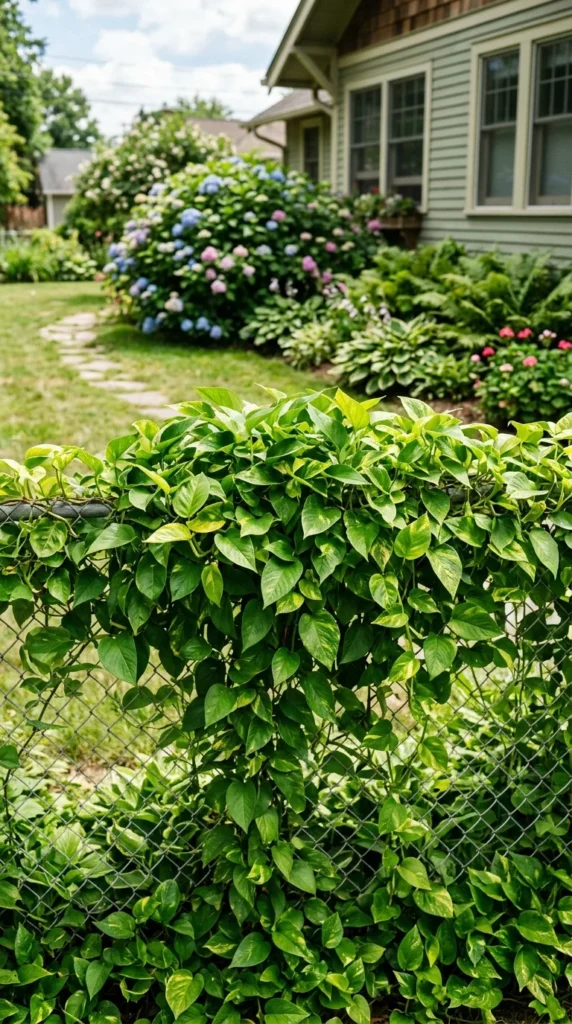
If you have a chain-link or wire fence that looks a bit too “industrial,” Pothos is the perfect camouflage. Instead of letting it grow vertically, train the vines horizontally along the top rail and weave them through the links. This creates a soft, blurred boundary for your property. It’s an excellent way to define different zones in your garden without the harshness of a solid wall.
9. Pallet Planter
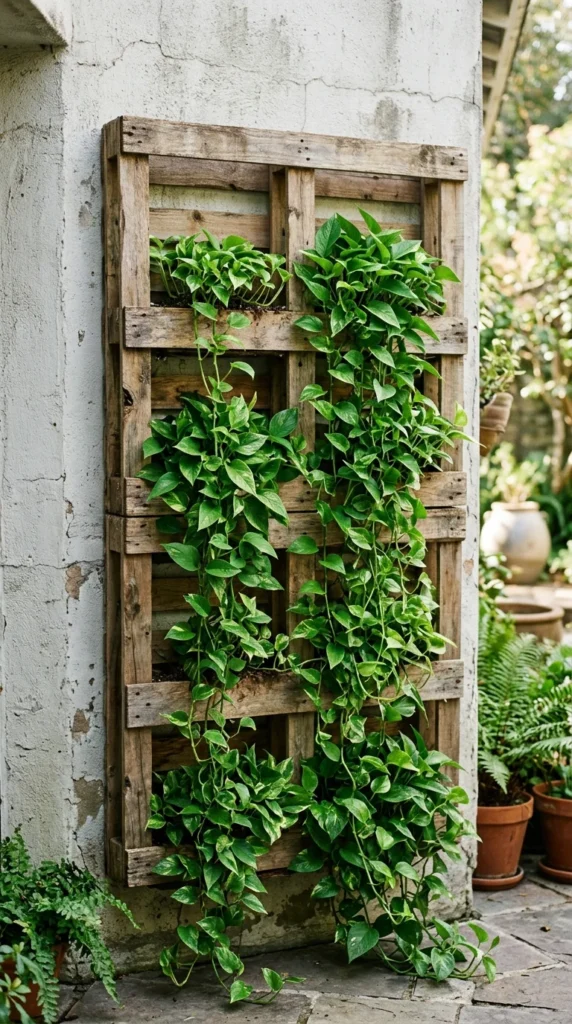
The rustic charm of a shipping pallet works perfectly with the wild, trailing nature of Pothos. By sealing the bottom and back of the pallet slats with landscaping fabric, you create built-in planter boxes. Lean the pallet against a wall or bolt it directly to a fence. The Pothos will grow out of the “shelves,” quickly obscuring the wood and creating a vertical garden that is both eco-friendly and stylish.
10. Pergola Drapes
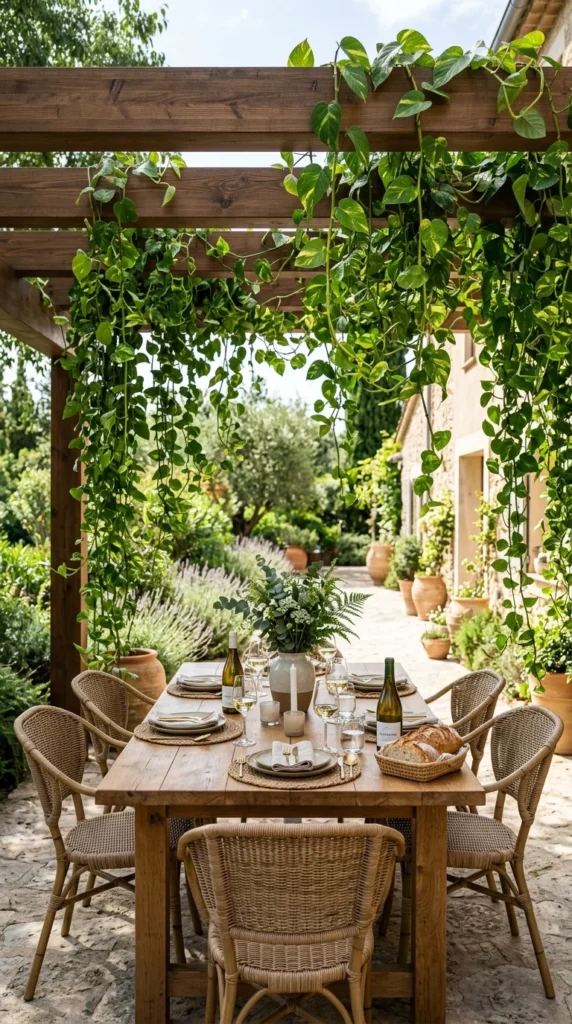
A pergola provides the perfect skeleton for a “ceiling” of Pothos. By placing large pots at the base of the pergola posts, you can train the vines to grow up the columns and across the overhead rafters. Once the vines reach the top, allow them to hang freely between the beams. This creates a natural, living chandelier effect that provides extra shade and a sense of enclosure for your outdoor dining or lounging area.
11. Wire Grid
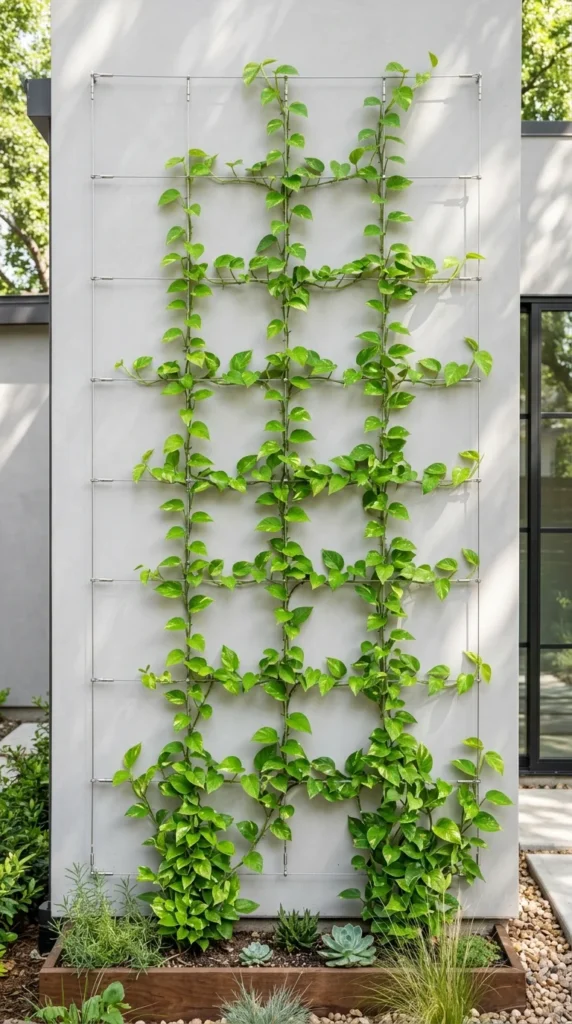
For a more modern or architectural look, install a stainless steel wire grid system on a flat exterior wall. Unlike a bulky trellis, a wire grid is nearly invisible, making the Pothos appear as if it is floating or growing directly on the wall in a specific pattern. You can create diamonds, squares, or even chevron patterns with the vines, leading to a sophisticated and manicured garden aesthetic.
12. Staircase Border
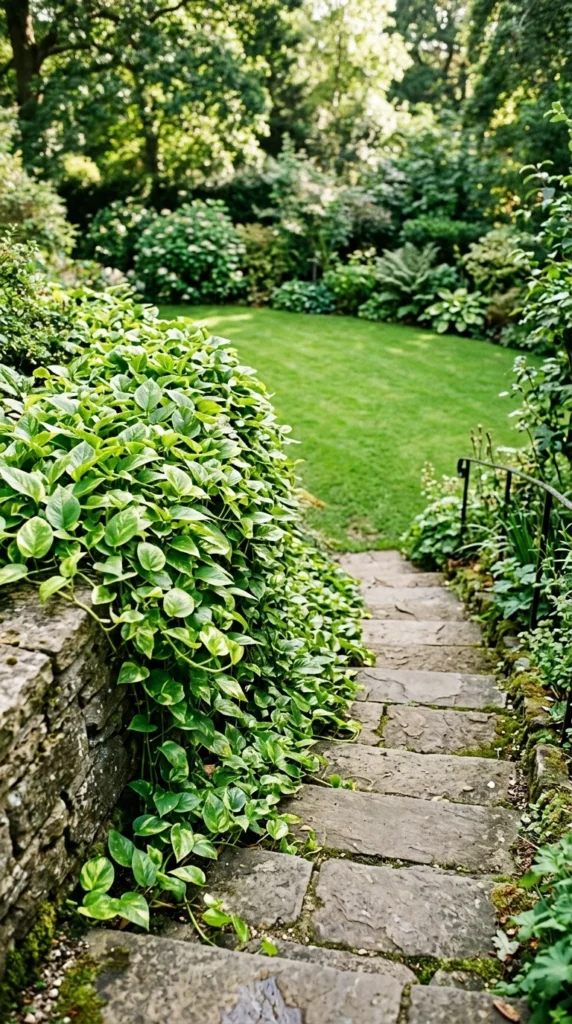
If your garden has multiple levels or a set of stairs, use Pothos to soften the hard edges of the stone or concrete. Planting Pothos along the border of a staircase allows the vines to spill over the sides, creating a lush “green banister.” This looks particularly stunning in sunken gardens or when transitioning from a patio to a lower lawn area, as it connects the different elevations with a continuous flow of foliage.
13. Stone Wall Crevice
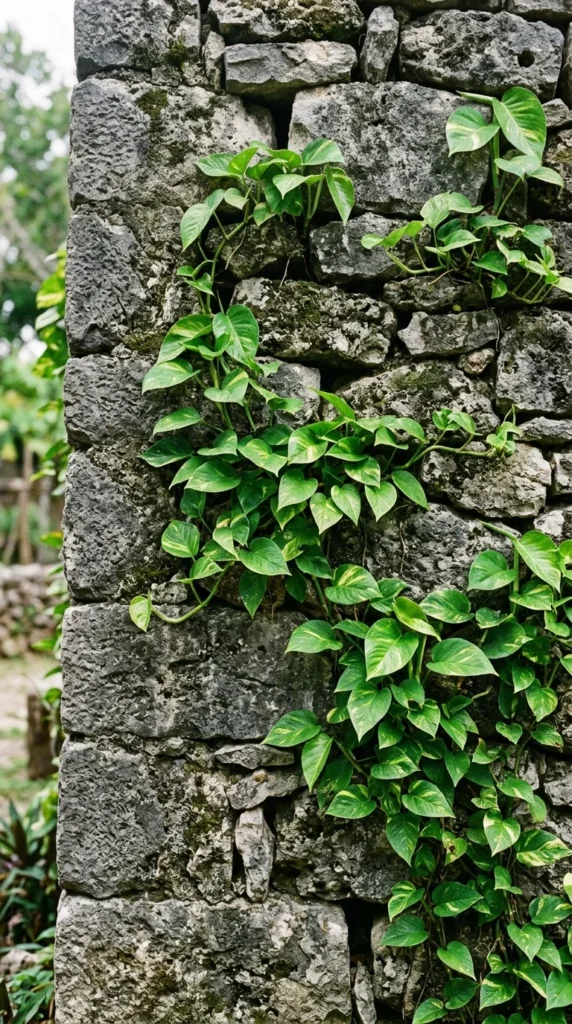
Pothos is remarkably hardy and can survive in the small amounts of soil found in the crevices of a dry-stack stone wall. By tucking small Pothos starts into these gaps, you create a naturalistic, “ruins” aesthetic. The contrast between the cold, hard texture of the stone and the soft, waxy green leaves of the Pothos adds immediate character and age to a new garden.
14. Macramé Wall
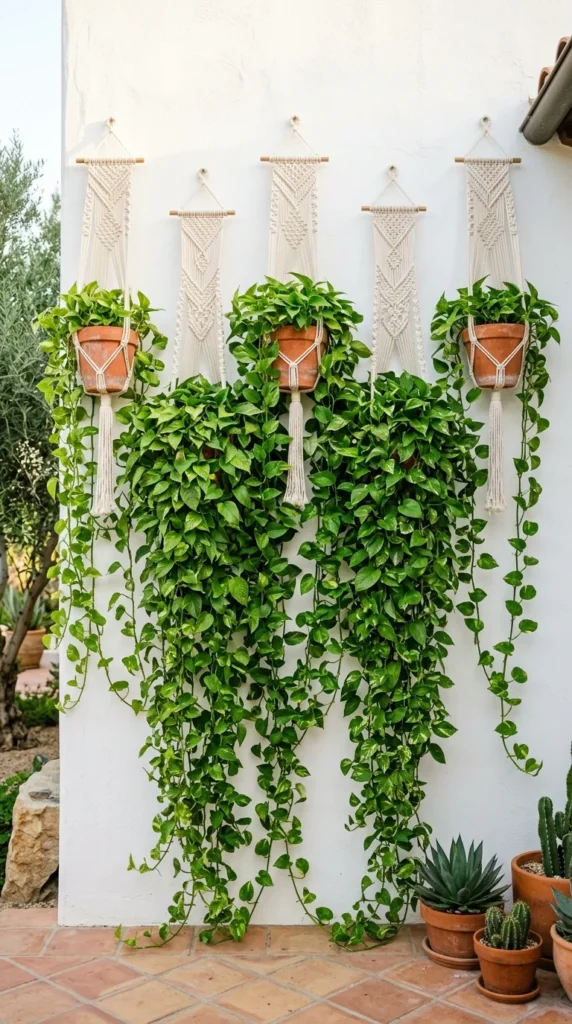
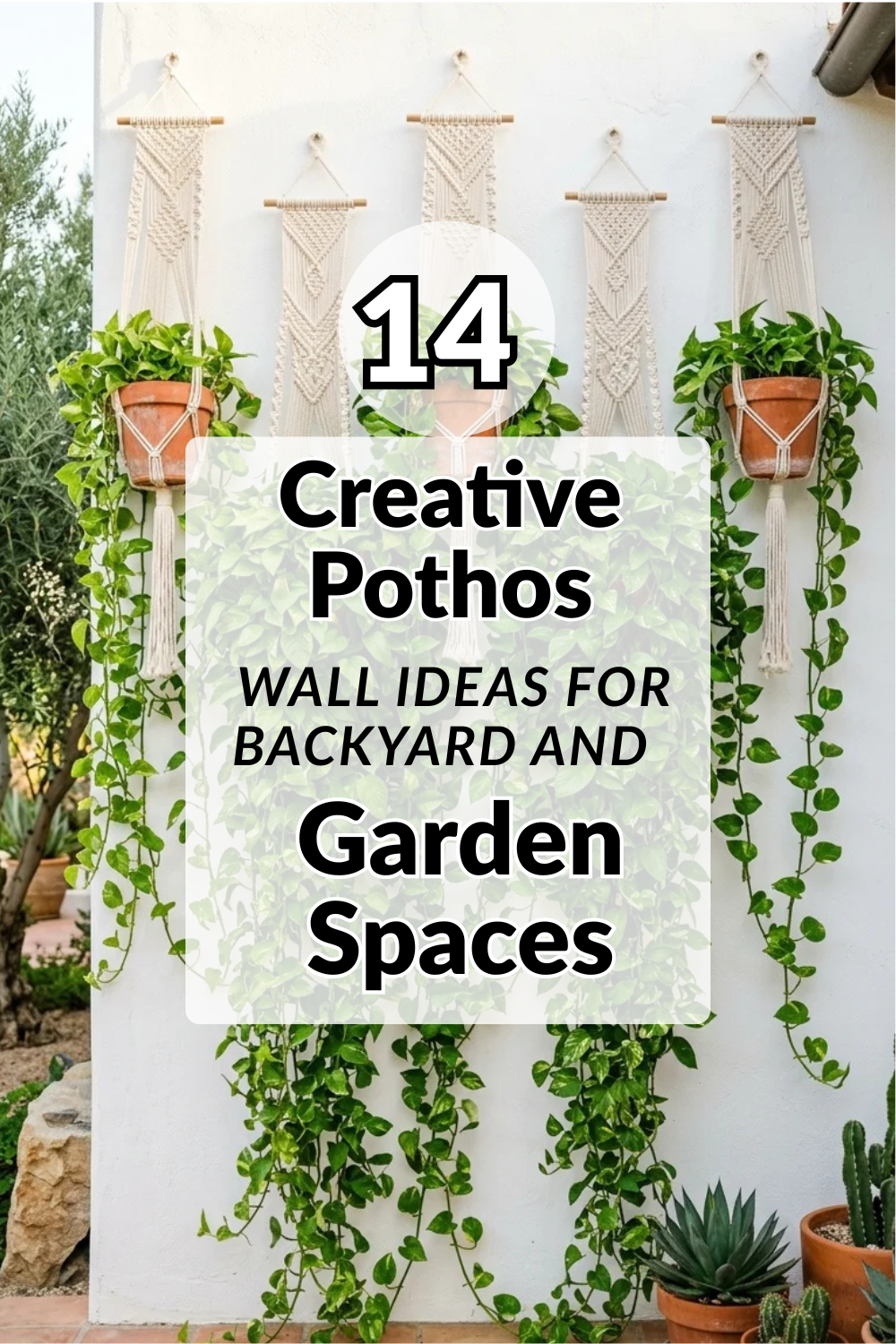
For those who love a Bohemian or “Jungalow” style, a macramé wall is the ultimate outdoor statement. Install a heavy-duty decorative branch or a copper pipe horizontally along a wall and hang multiple macramé plant holders from it at varying heights. Place a Pothos in each one. This creates a textured, layered wall of fiber and foliage that feels cozy and artistic, perfect for a meditation corner or a poolside lounge.
Tips for Maintaining an Outdoor Pothos Wall
To keep your Pothos wall looking vibrant and healthy, keep these essential maintenance tips in mind:
- Light Requirements: While Pothos loves bright, indirect light, harsh afternoon sun can scorch the leaves, especially in hotter climates. A north or east-facing wall is usually ideal.
- Watering: Outdoor plants dry out faster than indoor ones. Check the soil frequently, especially during the summer. Pothos likes to dry out slightly between waterings but shouldn’t be left bone-dry for long.
- Pruning: To encourage a “bushier” wall rather than a “leggy” one, prune the ends of the vines regularly. This forces the plant to branch out from the base and middle, filling in any thin spots on your wall.
- Climate Concerns: Pothos is a tropical plant. If you live in a region that experiences frost or freezing temperatures, you will need to treat your Pothos wall as an annual or bring the plants indoors for the winter. In USDA zones 10-12, they can remain outdoors year-round.
- Fertilizing: During the growing season (spring and summer), use a balanced liquid fertilizer once a month to support the rapid growth required to cover a large wall area.