Pothos (Epipremnum aureum) is often celebrated as the ultimate beginner-friendly indoor plant, but when taken outdoors, its potential for transformation is staggering. In the right climate—specifically warm, humid environments with indirect light—pothos can grow much larger and more vigorously than its indoor counterparts. Creating an outdoor pothos wall is one of the most effective ways to turn a bland patio, balcony, or garden fence into a lush, tropical sanctuary.
Whether you are looking to hide an unsightly brick wall or create a natural privacy screen, these eleven ideas will provide the inspiration you need to elevate your outdoor space.
1. Vertical Lattice
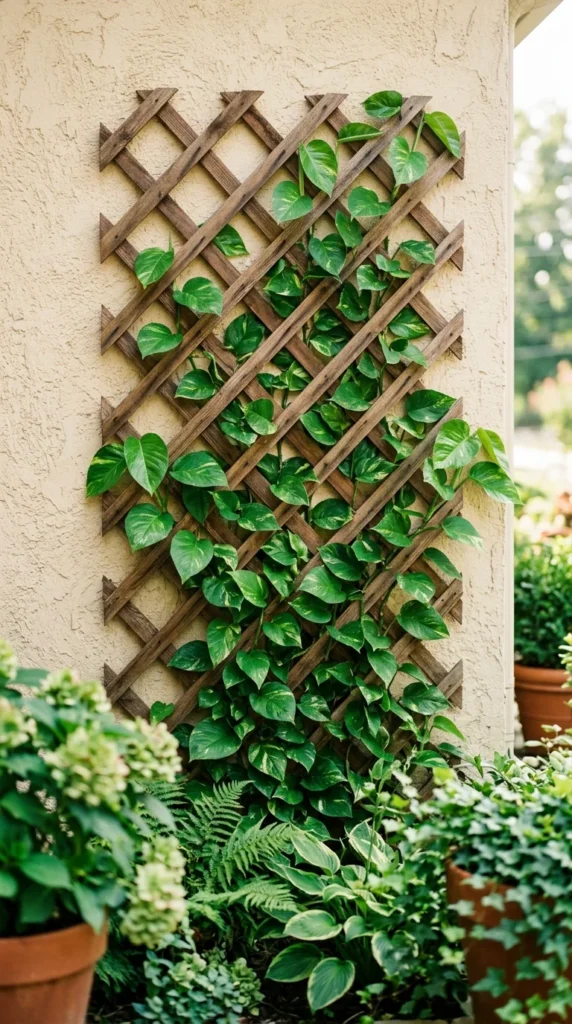
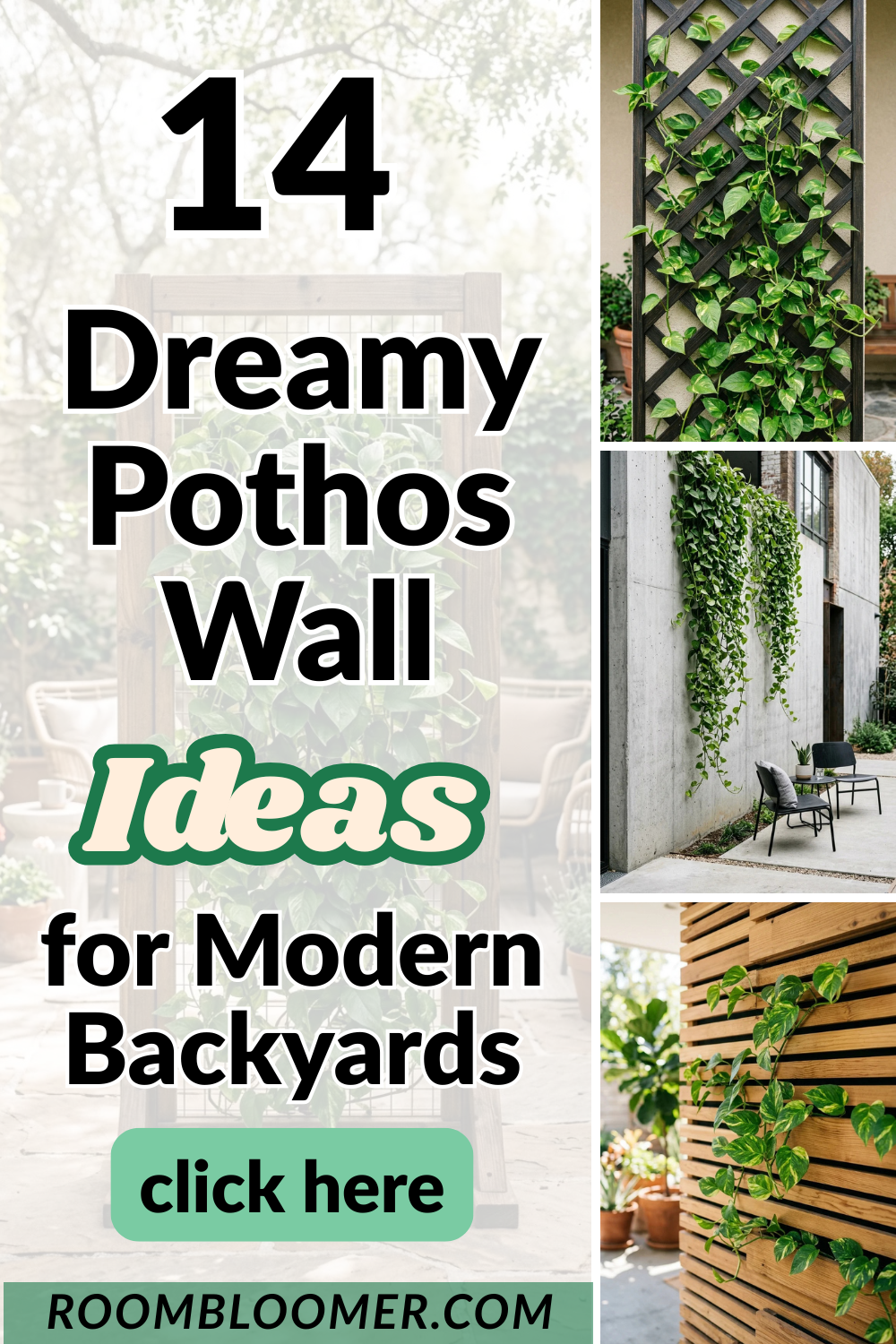
A vertical lattice is a timeless choice for any gardener. By mounting a wooden or vinyl lattice against an exterior wall, you provide the pothos with the structure it needs to climb. Unlike some climbing plants that require heavy pruning, pothos vines are flexible and easy to guide. As the aerial roots grip the wood, the leaves often grow larger, sometimes even developing the splits (fenestrations) usually seen in Monstera plants. For a modern look, paint the lattice a deep charcoal or black to make the vibrant green leaves pop.
2. Tiered Shelving
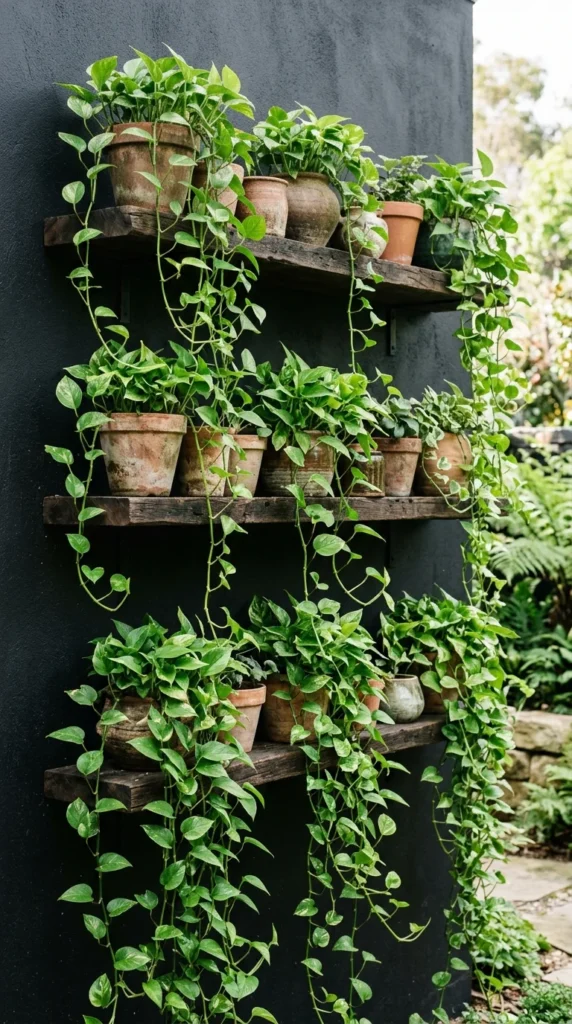
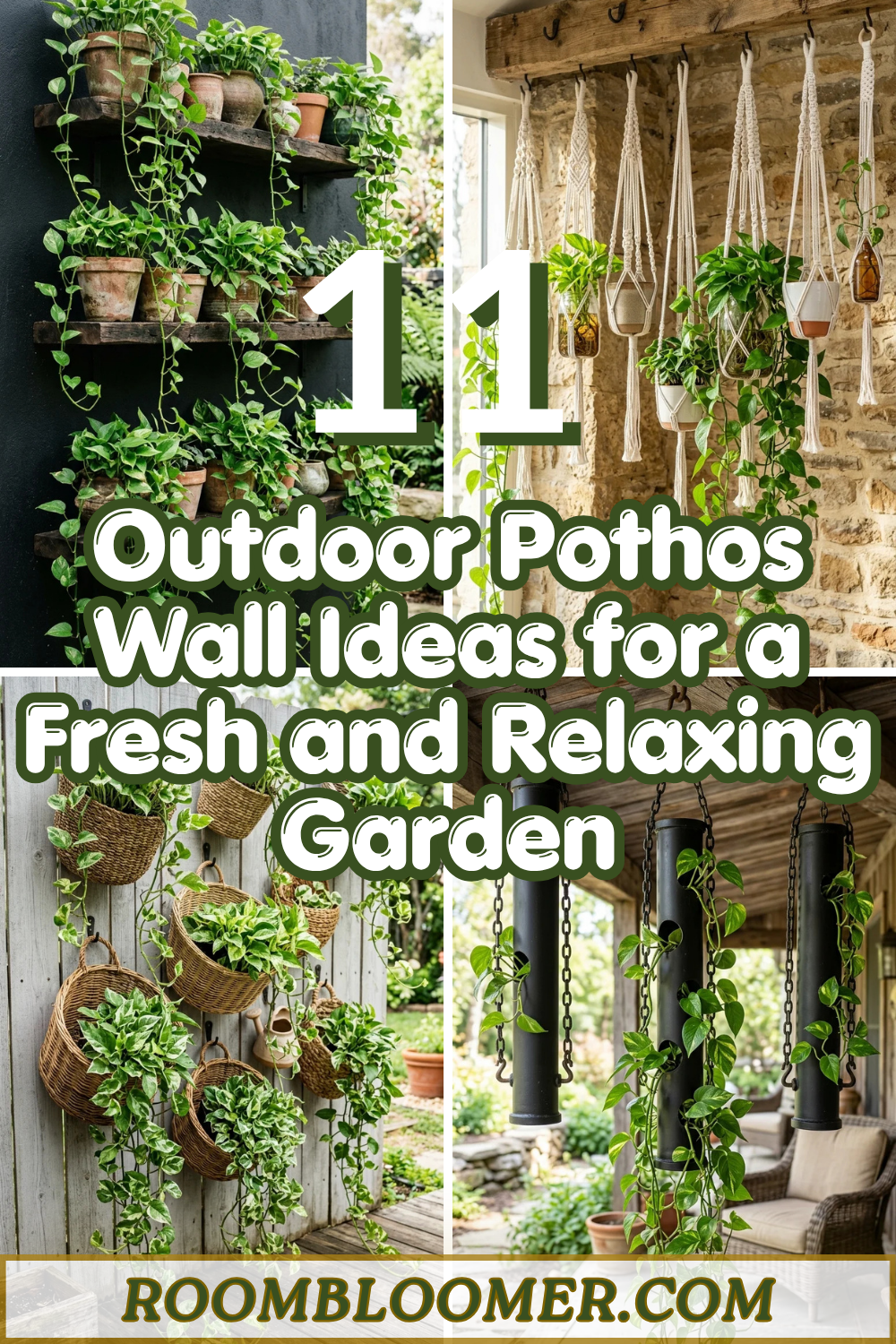
If you prefer a more organized, “potted” look, tiered shelving is the way to go. This method allows you to mix different varieties of pothos—such as ‘Marble Queen,’ ‘Neon,’ and ‘Jade’—in individual containers. By staggering the shelves, you create a “curtain” of foliage. As the vines grow, they will drape over the edges of the pots and hide the shelving units themselves, resulting in a wall that looks like a solid mass of tumbling greenery.
3. Macramé Hangers
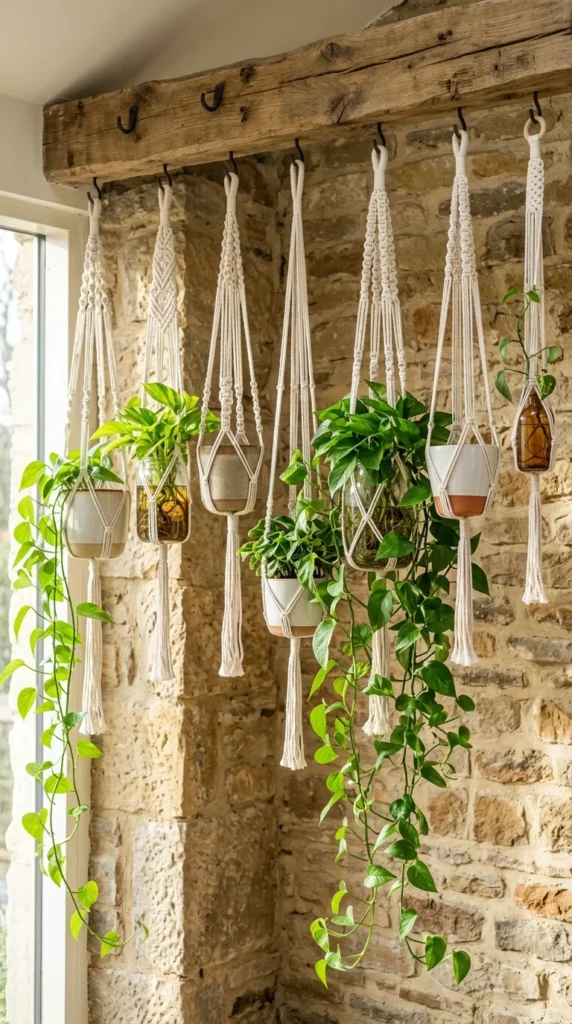
For those who love a bohemian or “jungalow” aesthetic, macramé hangers are an excellent outdoor wall solution. You can install a series of heavy-duty hooks or a long horizontal rod along your wall and hang pothos at varying heights. This creates a sense of depth and movement. Because pothos is lightweight compared to many other trailing plants, it is the perfect candidate for these decorative fiber holders.
4. Gutter Planters
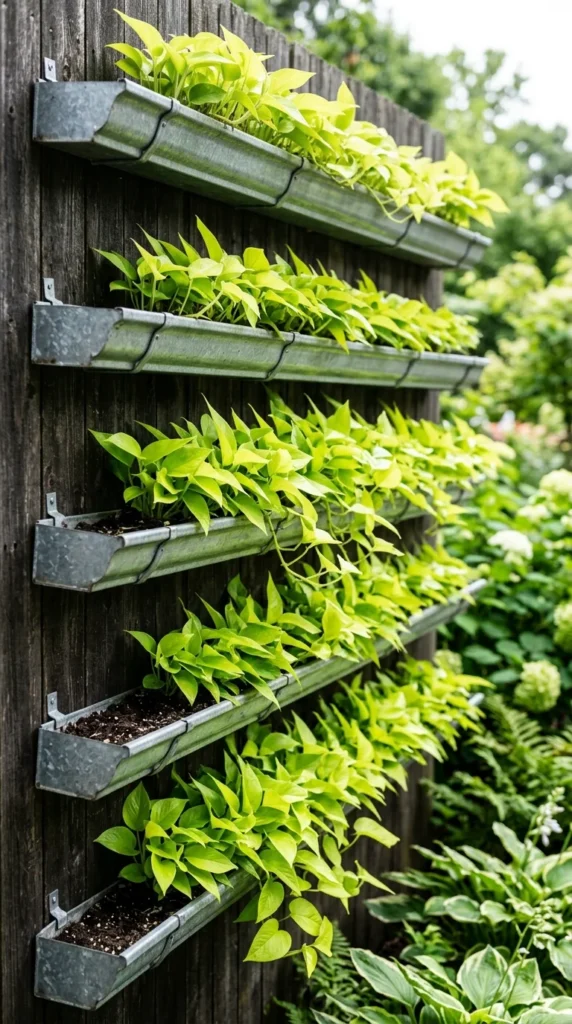
Gutter gardening is a brilliant upcycling project that works perfectly for a pothos wall. By mounting sections of rain gutters to a wall or fence, you create long, narrow planting troughs. When filled with pothos, these gutters disappear under a sea of leaves. This is an particularly effective strategy for covering long, horizontal stretches of a fence or for creating a “living border” along a balcony railing.
5. Privacy Screens
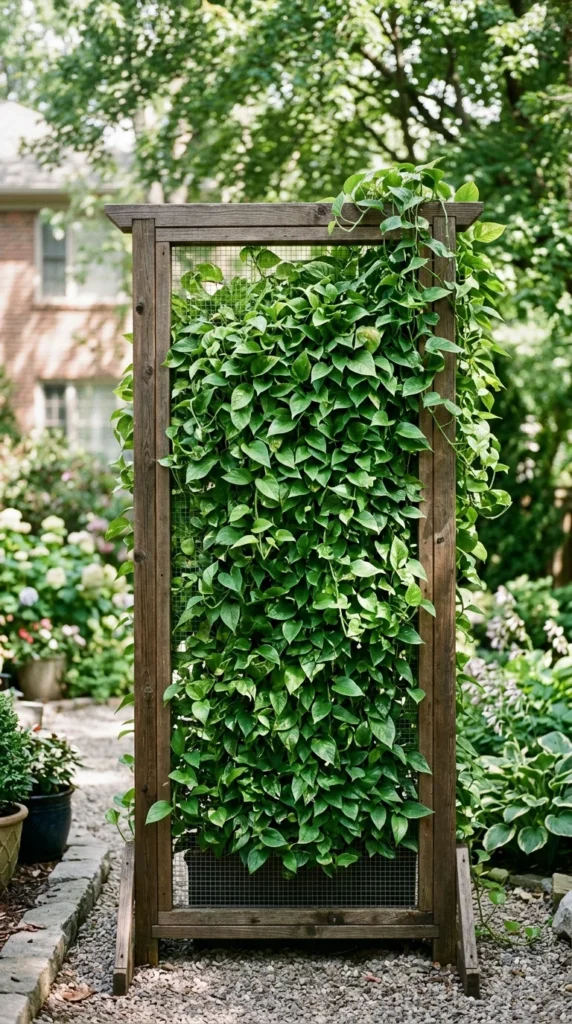
Pothos is an excellent candidate for a living privacy screen. By using a tall frame with wire mesh or chicken wire, you can train the pothos to grow upward and outward. Within a few seasons, the vines will become so dense that they block the line of sight from neighbors while still allowing a cool breeze to pass through. This is a much more relaxing and aesthetic alternative to a traditional plastic or wooden privacy fence.
6. Framed Living Art
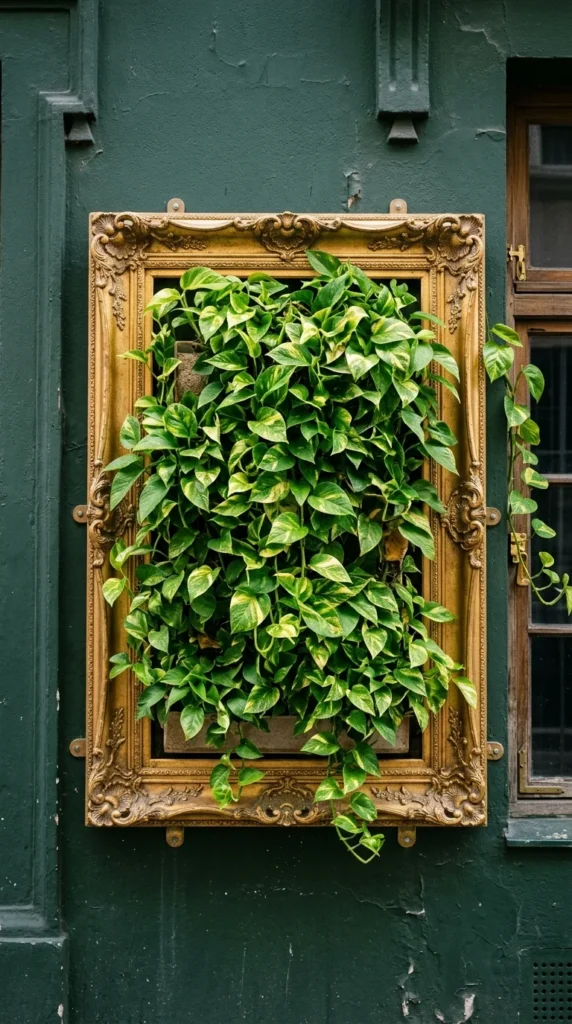
If you have a smaller outdoor area, consider “framing” your pothos. By building a shallow shadow box and securing a mesh screen over the front, you can plant pothos through the holes. When mounted on the wall, it looks like a piece of living art. The “Neon” variety of pothos is especially effective for this, as its bright color mimics a vibrant oil painting against a dark frame.
7. Woven Baskets
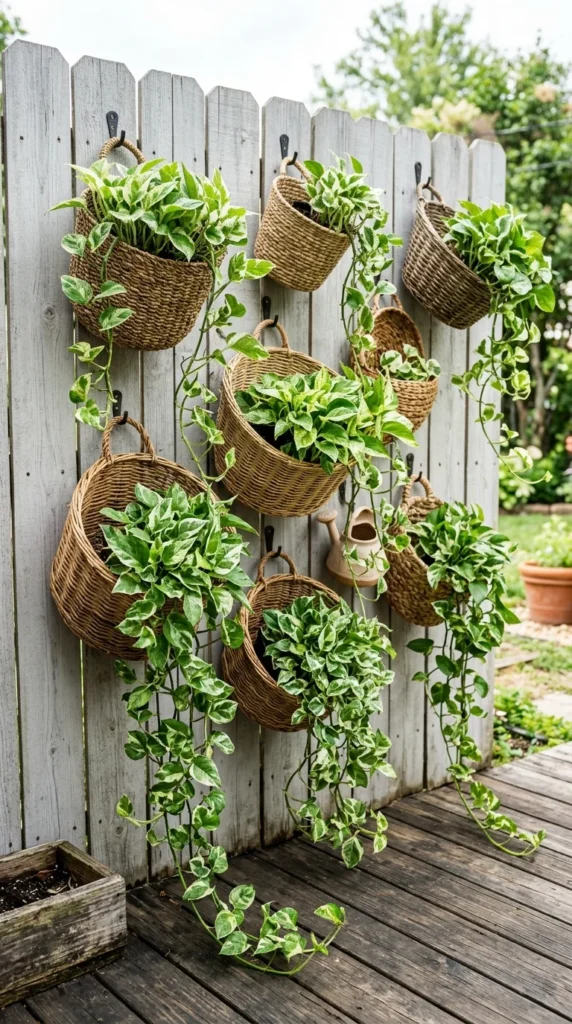
Using woven baskets as wall planters adds a warm, organic texture to your garden. You can line the baskets with plastic or coco coir to hold the soil and then mount them in a random, clustered pattern on your wall. The contrast between the tan fibers of the baskets and the waxy, variegated leaves of the pothos creates a sophisticated, coastal-inspired look that feels both relaxed and intentional.
8. Suspended Pipes
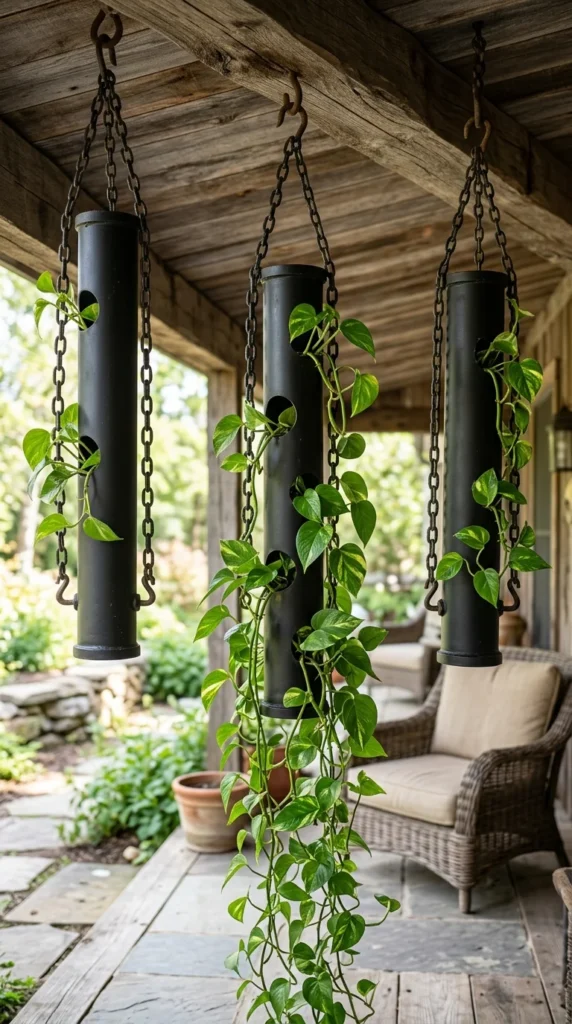
For an industrial or modern urban garden, consider using PVC or metal pipes as your planting vessels. By cutting holes into the top of a horizontal pipe and mounting it to the wall (or suspending it just in front of the wall), you create a sleek, minimalist home for your pothos. This method is highly space-efficient and works wonders on narrow balconies or side passages where floor space is limited.
9. Cinder Block Wall
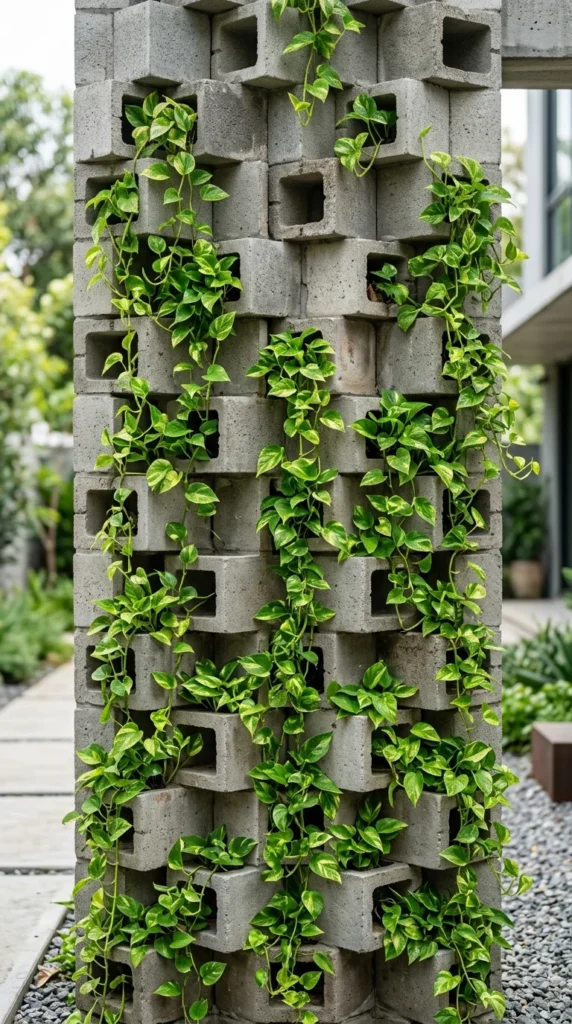
A cinder block wall doesn’t have to be boring. By stacking blocks in a way that creates “cubby holes,” you create built-in planters. Pothos is particularly well-suited for this because its roots don’t mind being slightly cramped, and its trailing habit softens the harsh edges of the concrete. This is a cost-effective and incredibly durable way to create a permanent outdoor green feature.
10. Iron Trellis
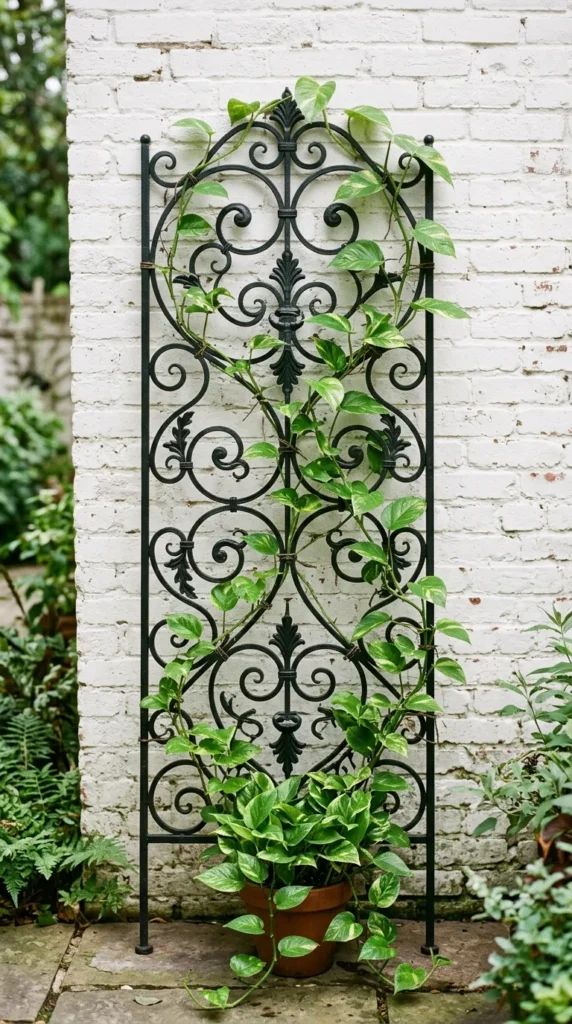
If you want a more formal or classical garden look, an iron trellis is the perfect partner for pothos. The dark metal provides a sophisticated backdrop for the heart-shaped leaves. Unlike wooden lattices which can eventually rot, a powder-coated iron trellis will last for decades. As the pothos climbs, you can prune it to follow the specific shapes of the ironwork, creating a “sculpted” green wall.
11. Pocket Planters
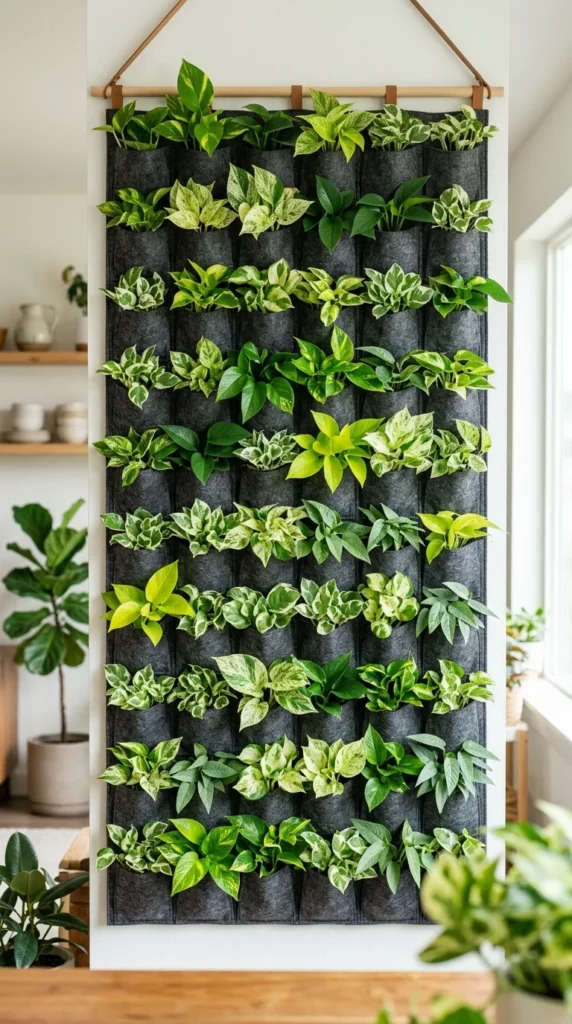
Fabric pocket planters are perhaps the easiest way to create a full green wall quickly. These “living wall” kits are made of breathable felt that allows the roots to air-prune, leading to a very healthy root system. Because pothos is so hardy, it thrives in these pockets. Within months, the plants will grow so large that the fabric pockets become completely invisible, leaving you with a solid, lush wall of tropical foliage.
Tips for a Healthy Outdoor Pothos Wall
- Light Requirements: While pothos can handle low light indoors, outdoors it prefers bright, indirect light. Avoid direct afternoon sun, which can scorch the leaves. A north-facing wall or a spot under a porch canopy is ideal.
- Watering: Outdoor plants dry out faster than indoor ones. Check the soil frequently, especially in summer. The “wall” format often means the top plants dry out faster than the bottom ones.
- Fertilizing: To maintain that lush, wall-covering growth, use a balanced liquid fertilizer once a month during the growing season.
- Temperature: Remember that pothos is a tropical plant. If temperatures drop below 50°F (10°C), you may need to bring the pots inside or provide protection, as they are not frost-hardy.