Pothos, or Epipremnum aureum, is the undisputed king of indoor vines. Known for its heart-shaped leaves and legendary resilience, it is the perfect candidate for creating “living walls” that do more than just look pretty. In an era where open-concept living can sometimes feel a bit too open, using plants to create natural partitions is a genius way to reclaim your space.
Whether you are trying to hide a home office, create a cozy reading nook, or simply add a layer of organic texture to your decor, a Pothos privacy wall is a low-maintenance, high-impact solution. Here are 12 stylish and functional ways to build your own green sanctuary.
1. Ceiling Trellis
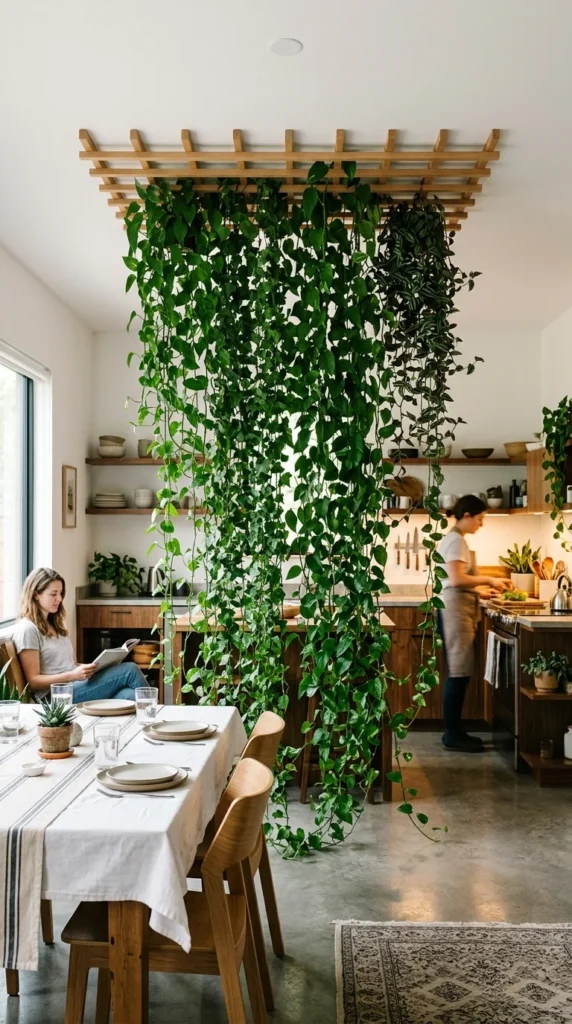
A ceiling-mounted trellis is one of the most dramatic ways to create a room divider without taking up a single inch of floor space. By installing a wooden or metal grid on the ceiling, you can train your Pothos to grow horizontally across the top and then allow the runners to dangle downward. Over time, these vines will create a thick, leafy fringe that acts as a visual barrier between two functional zones, such as a living room and a workspace.
- Why it works: It maintains an airy feel while providing clear spatial boundaries.
- Pro tip: Use “Golden Pothos” for a splash of yellow variegation that catches the light from above.
2. Macrame Curtain
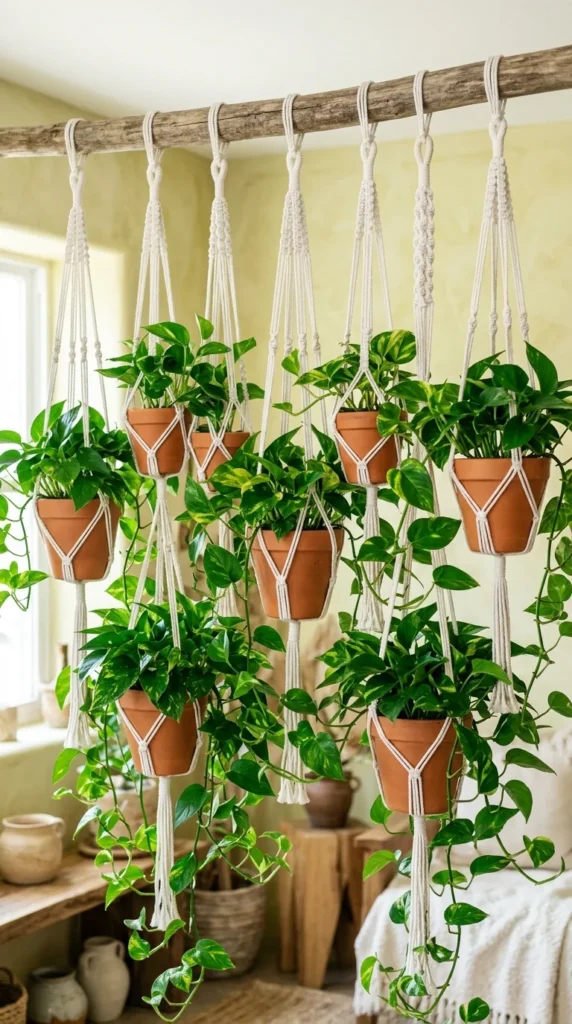
For those who love a bohemian or Scandi-inspired aesthetic, a macrame Pothos curtain is the ultimate DIY project. By hanging multiple macrame plant holders in a row—either from the ceiling or a sturdy curtain rod—you create a tiered wall of foliage. The intricate knots of the cotton rope paired with the wild, trailing nature of the Pothos create a soft, textured screen that offers significant privacy.
- Why it works: It adds a handcrafted, artisanal touch to the room.
- Maintenance: Ensure your rod is anchored securely into studs, as multiple wet pots can become quite heavy.
3. Floor Screen
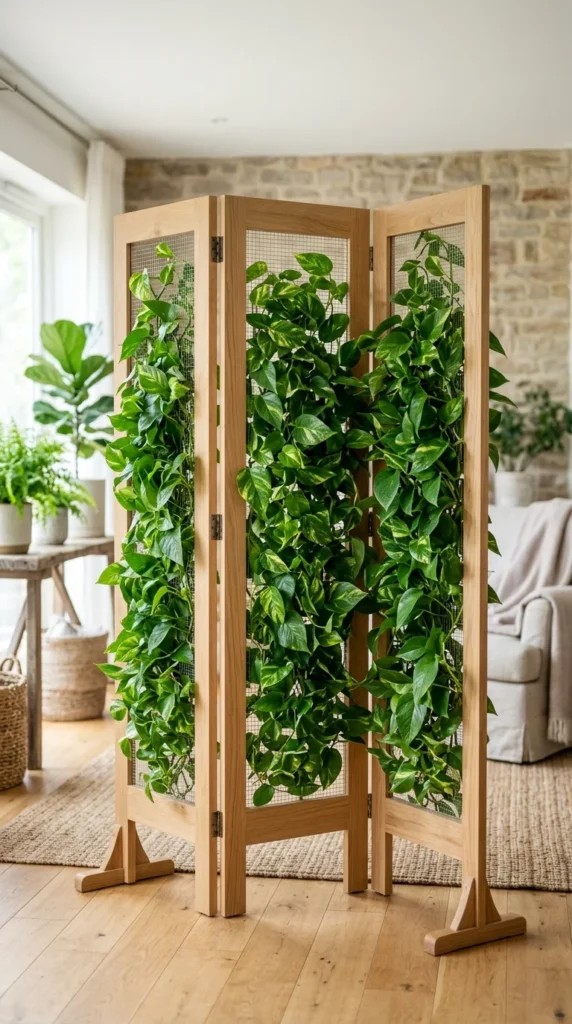
If you need a privacy solution that is portable, a modified floor screen is your best bet. You can take a standard folding room divider—preferably one with slats or wire mesh—and place long rectangular planters at the base. As the Pothos grows, you manually weave the vines upward through the screen. Within a few months, the hardware disappears entirely behind a wall of green.
- Why it works: It can be moved around to accommodate guests or changing layouts.
- Best variety: “Marble Queen” Pothos provides a dense, bushy growth habit perfect for filling gaps.
4. Floating Shelves
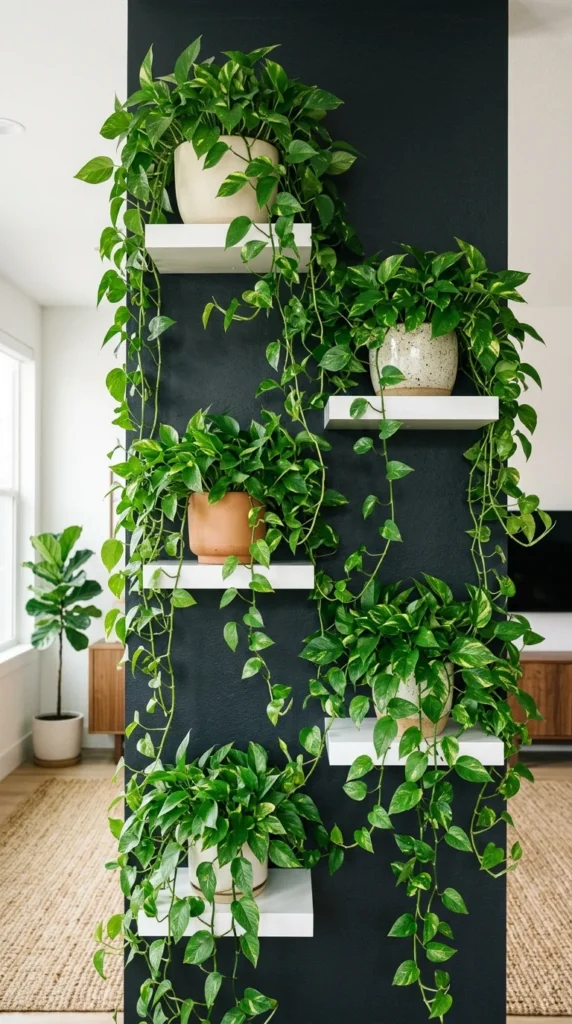
Floating shelves are a classic decor staple, but when stacked vertically and filled with Pothos, they become a functional privacy wall. By spacing the shelves about 12 to 18 inches apart, you allow the trailing vines from the top shelf to reach the middle shelf, and so on. This creates a “waterfall” effect of leaves that effectively blocks the line of sight through the room.
- Why it works: It provides extra storage for books or decor while serving as a greenery hub.
- Style tip: Mix and match different Pothos varieties, like “Neon” and “Jade,” for a multi-tonal green wall.
5. Tension Rods
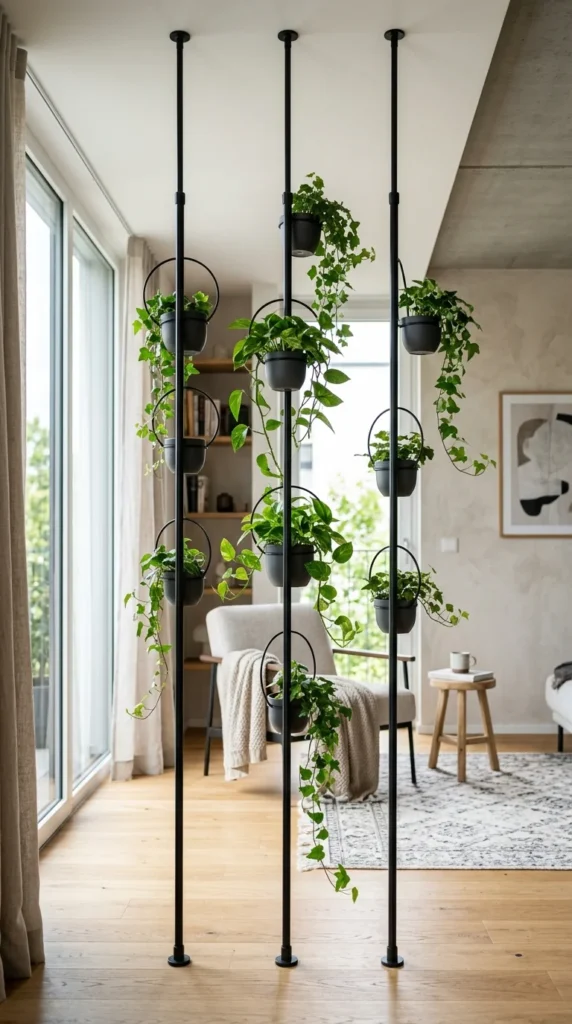
In rental properties where you can’t drill into the walls or ceiling, vertical tension rods are a lifesaver. You can install several rods in a line and attach plant clips or rings to them. By placing Pothos at different heights along the rods, you create a vertical garden that feels architectural and modern. The vines will naturally wrap around the rods, eventually forming thick columns of foliage.
- Why it works: No permanent damage to the home and a very small footprint.
- Function: Ideal for separating a bed from a living area in a studio apartment.
6. Geometric Wire
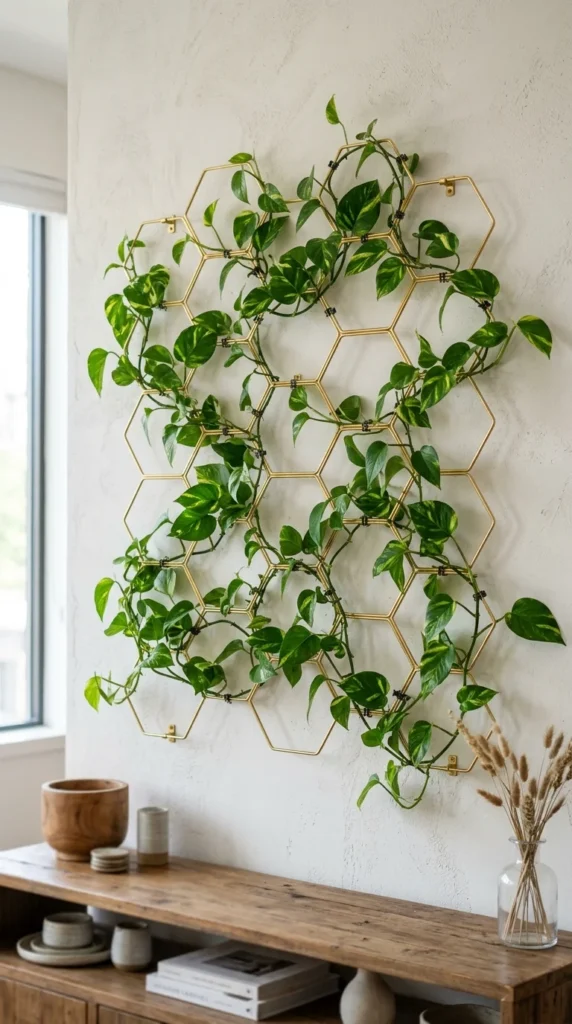
Transform a plain wall or a room opening into a piece of art using geometric wire grids. Whether you choose a honeycomb, diamond, or square pattern, the wire acts as a guide for the Pothos. Instead of letting the vines hang, you can pin them to follow the lines of the metal. This results in a structured, “tamed” look that fits perfectly in minimalist or industrial interiors.
- Why it works: It offers a clean, organized look compared to the “wild” appearance of hanging vines.
- Hardware: Use small, clear plant clips to secure the vines without distracting from the gold or black wire.
7. Bookshelf Divider
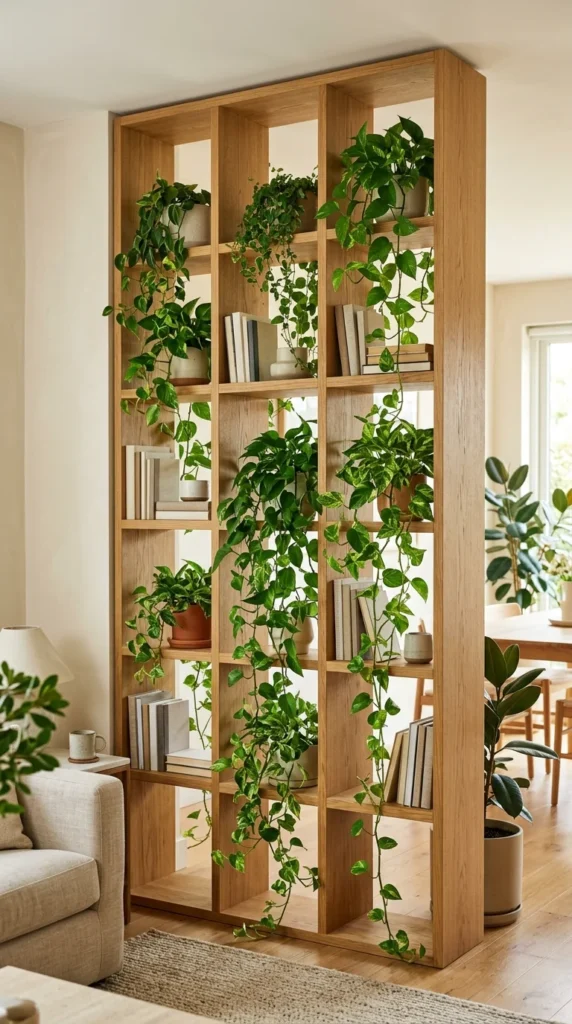
An open-backed bookshelf (like the famous IKEA Kallax or a custom wooden frame) is one of the easiest ways to create a functional room divider. By leaving some cubbies empty and filling others with Pothos, you create a peek-a-boo effect. The trailing vines will eventually fill the empty spaces, providing a lush screen that filters light while blocking a direct view.
- Why it works: It’s a dual-purpose piece of furniture that provides massive amounts of green surface area.
- Care tip: Use drip trays under every pot to prevent water damage to the shelving material.
8. Hanging Poles
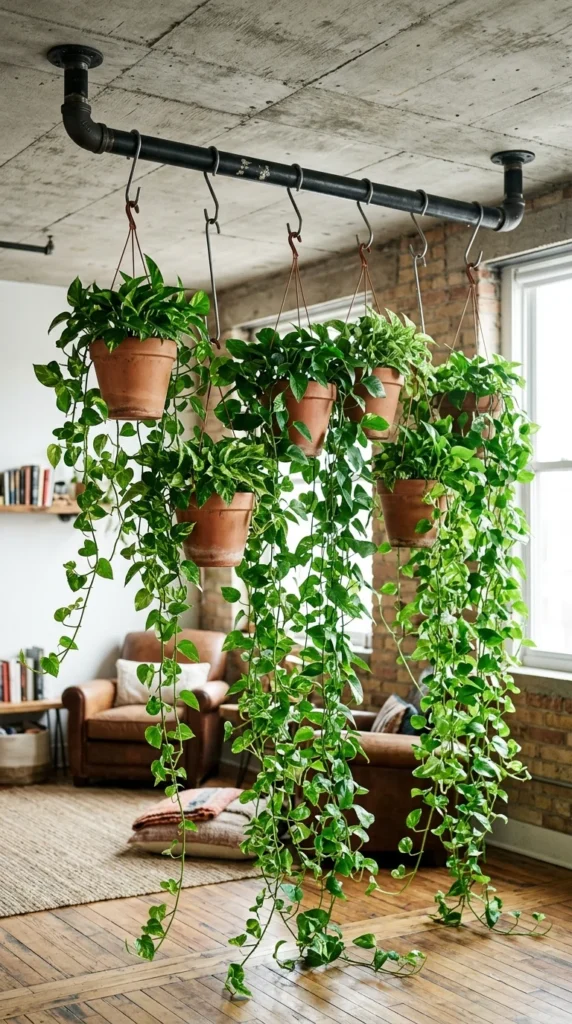
Borrowing from industrial design, a long hanging pole (like a heavy-duty curtain rod or a plumbing pipe) can support a massive amount of weight. By hanging a row of identical Pothos pots from the pole, you create a “living curtain.” This works exceptionally well in front of large windows or as a transition piece between an entryway and a living room.
- Why it works: It creates a very clean, linear look that feels intentional and high-end.
- Pro tip: Choose “N’Joy” Pothos for this setup; its smaller, variegated leaves look stunning when grouped together.
9. Wall Pockets
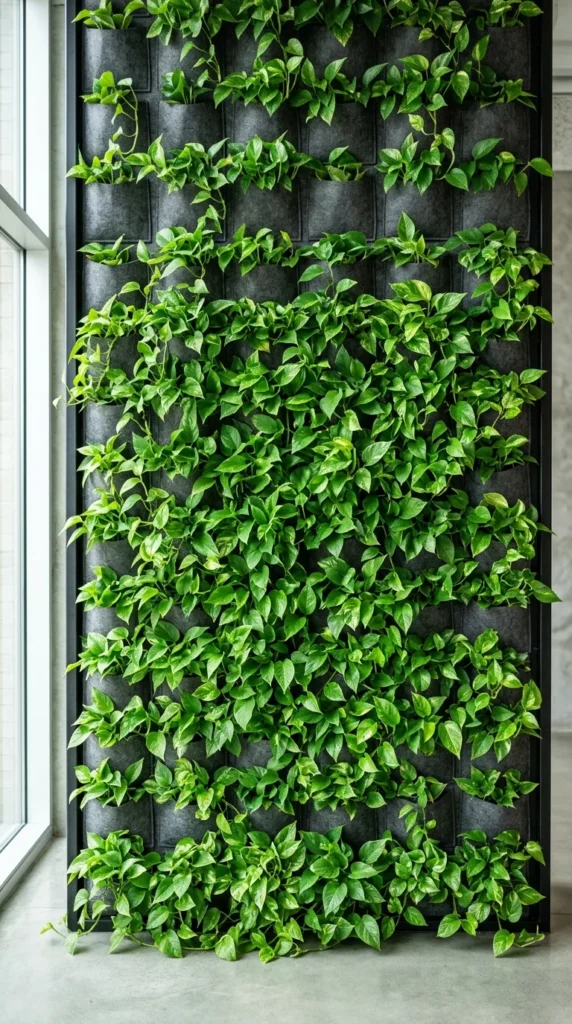
Vertical wall pockets are typically used for herbs, but they are fantastic for creating a solid Pothos privacy wall. When mounted to a plywood backing or directly onto a divider, these pockets allow you to plant Pothos very densely. Because the foliage grows outward and downward, the pockets themselves are quickly hidden, leaving you with a solid “hedge” of indoor greenery.
- Why it works: It creates the highest level of privacy as there are almost no gaps between the plants.
- Maintenance: Look for pockets with a built-in moisture barrier to protect your walls.
10. Staircase Railing
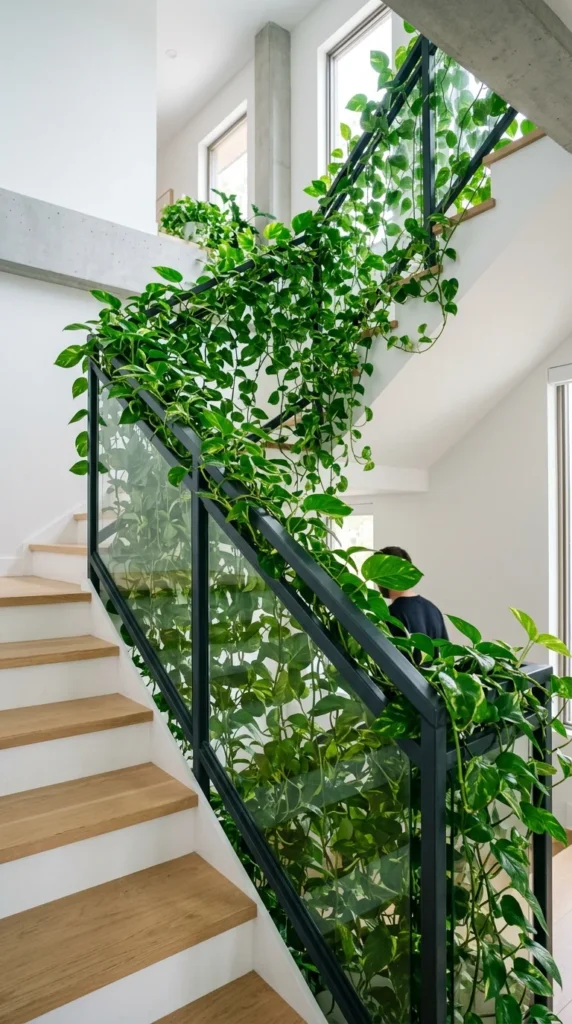
If your home has an open staircase that feels a bit too exposed, use Pothos to create a living banister. By placing pots at the base or on the steps (if space permits), you can train the vines to wrap around the spindles and railings. This not only adds safety by creating a visual “wall” but also turns a functional architectural element into a stunning focal point.
- Why it works: It softens the hard lines of a staircase and makes the transition between floors feel more organic.
- Best variety: The classic “Jade Pothos” is hardy enough to handle the occasional brush-by from people walking up and down.
11. Indoor Arbors
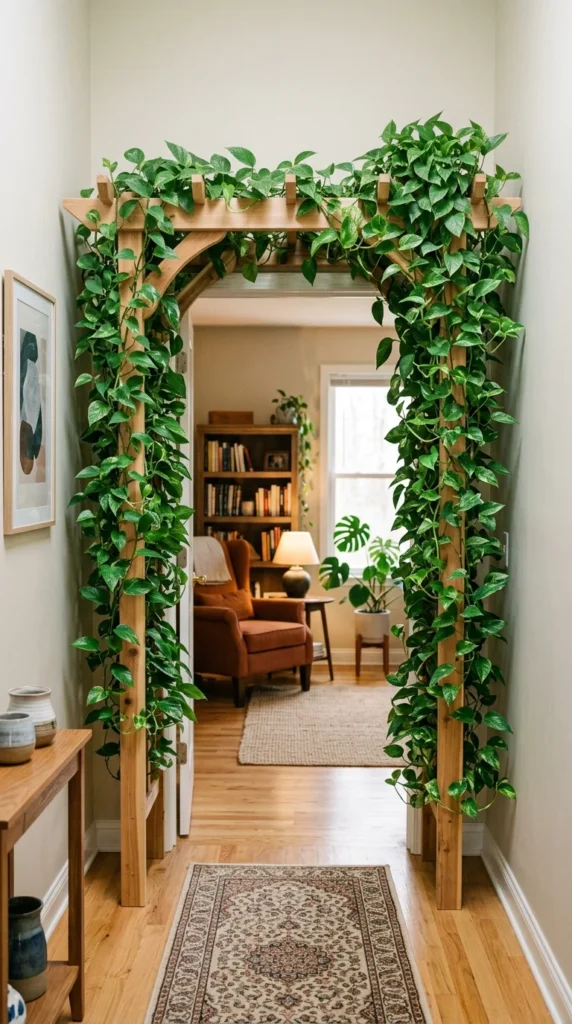
Who says arbors are only for the garden? Bringing a slim wooden or metal arbor indoors allows you to create a “doorway” of greenery. This is a brilliant way to define the entrance to a room without installing an actual door. The Pothos will climb up the sides and meet in the middle, creating a romantic, lush archway that provides a sense of enclosure and privacy.
- Why it works: It adds height and architectural interest to a room.
- Style tip: Wrap fairy lights through the Pothos vines for a magical, glowing effect at night.
12. Minimalist Hooks
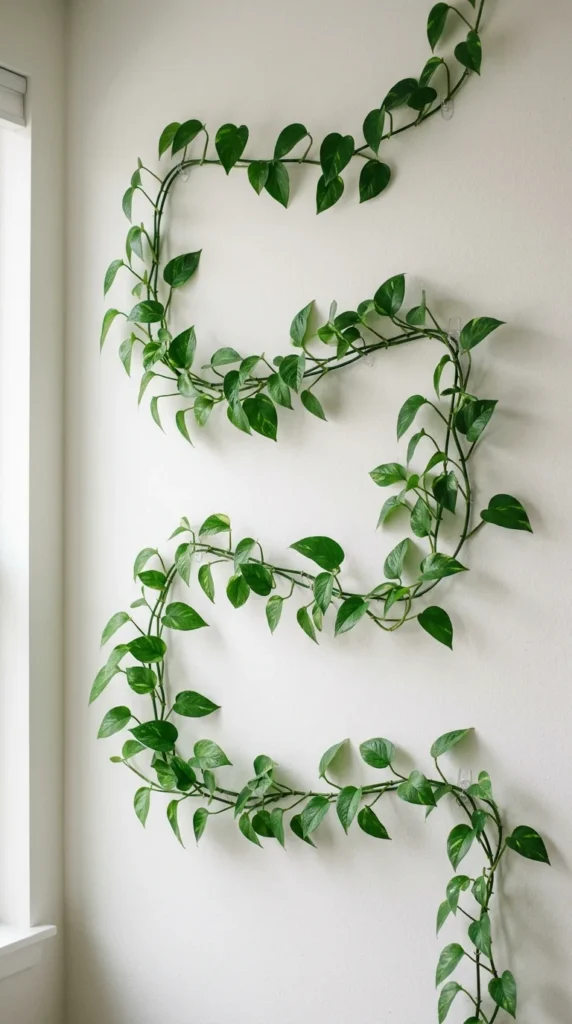
For the ultimate minimalist, you don’t need bulky furniture or trellises. A simple box of clear adhesive wall hooks can turn a single Pothos plant into a sprawling privacy screen. By placing the mother plant on a high shelf or pedestal, you can use the hooks to “map out” where you want the vines to go. You can create a crisscross pattern across a doorway or a solid block of vines across a window.
- Why it works: It is the most affordable and customizable option.
- Function: Great for highlighting specific areas of a room or creating “living wallpaper.”
Tips for a Healthy Pothos Privacy Wall
To ensure your living wall stays lush and doesn’t become a collection of bare stems, keep these maintenance tips in mind:
- Light Requirements: While Pothos can survive in low light, they need bright, indirect light to grow fast enough to form a privacy screen. If your wall is in a dark corner, consider adding a stylish LED grow light.
- Pruning for Density: To prevent “leggy” vines (long stems with few leaves), prune the ends of your Pothos regularly. This encourages the plant to branch out from the base, making your wall thicker.
- Watering Consistency: Plants in a wall setup can be tricky to water. Use a long-necked watering can or a portable pressure sprayer to reach higher pots without making a mess.
- Dusting: A privacy wall has a lot of surface area for dust to collect. Wipe the leaves down with a damp cloth once a month to keep the “pores” (stomata) clear so the plant can breathe and stay vibrant.