First impressions are everything, and when it comes to your home, the exterior speaks volumes before a guest even reaches the front door. Curb appeal is the secret sauce of real estate and homeowner pride alike. While a fresh coat of paint or a new mailbox can do wonders, nothing transforms a property quite like a masterfully designed flower bed. These “floral sanctuaries” act as the jewelry of your home, providing color, texture, and a sense of life that hardscaping alone simply cannot achieve.
Whether you are looking to sell your home or simply want to be the envy of the neighborhood, strategic planting is your best tool. From the romantic spills of a cottage garden to the clean, architectural lines of a modern minimalist display, the right arrangement can make your home feel welcoming and established. Here are 11 stunning flower bed styles that will instantly boost your curb appeal and turn your front yard into a masterpiece.
1. English Cottage
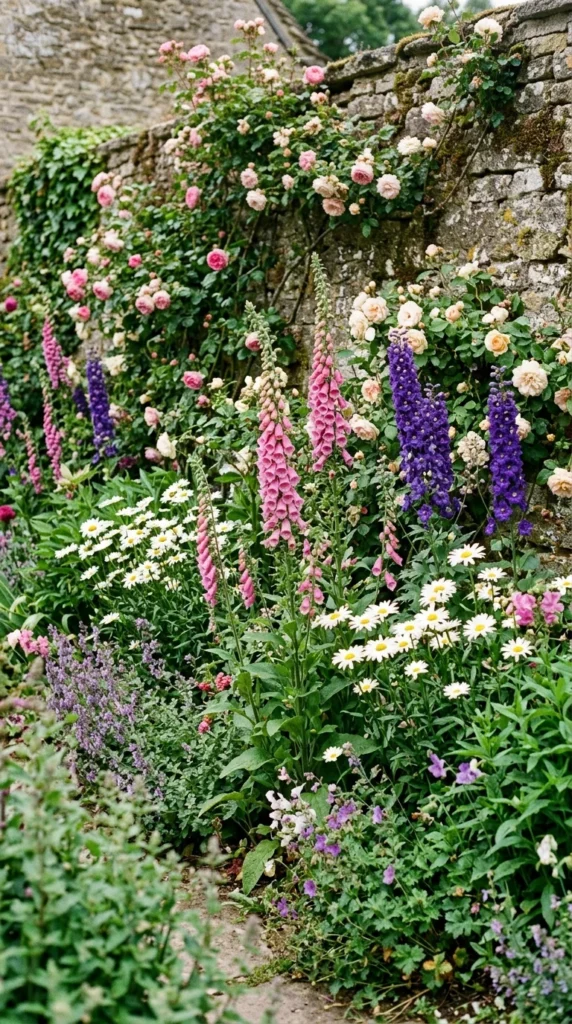
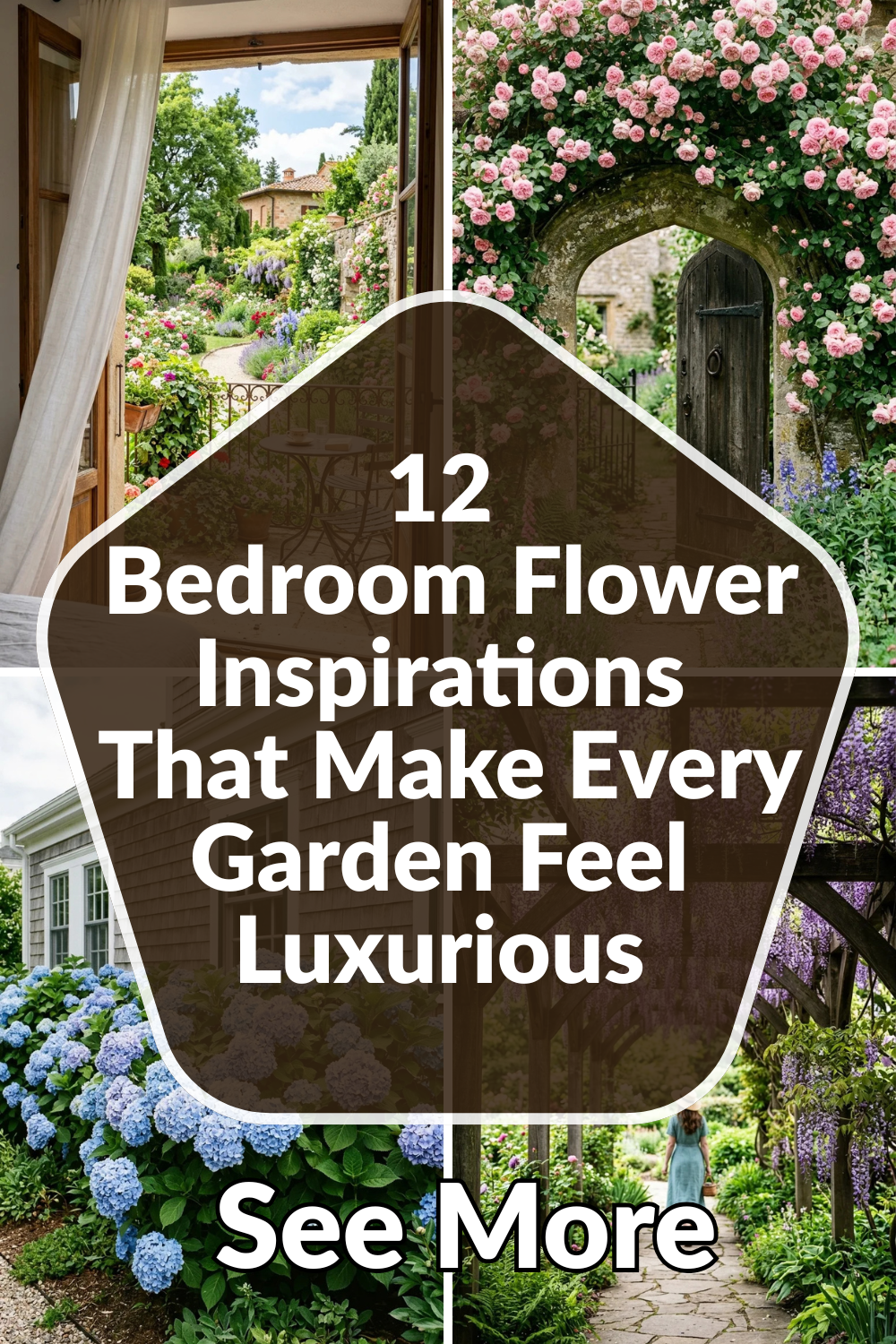
The English cottage garden is the epitome of charm and romance. This style is characterized by its “ordered chaos,” where plants are allowed to spill over edges and mingle freely. To achieve this look, focus on height and variety. Use tall perennials like hollyhocks and delphiniums in the back, while filling the front with shorter, fragrant blooms like lavender and pinks. The key to the cottage aesthetic is density—very little soil should be visible once the plants have matured. This creates a lush, abundant feel that makes any home look like it belongs in a storybook.
2. Lavender Borders
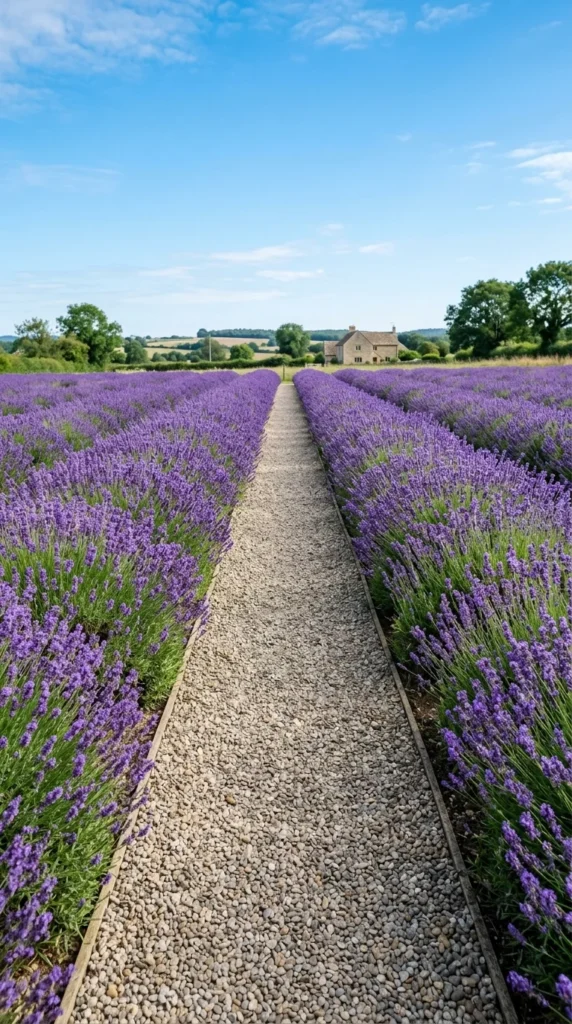
If you prefer a look that is both structured and sensory, a lavender border is an unbeatable choice. Lavender provides a consistent, silvery-green foliage year-round, topped with iconic purple spikes in the summer. Planting it along a walkway or a driveway creates a clean, sophisticated line that guides the eye toward the home. Beyond the visual appeal, the scent is legendary; as guests walk by, the slight brush against the plants releases a calming aroma that immediately sets a peaceful tone for their visit. Lavender is also remarkably drought-tolerant, making it a practical choice for sun-drenched yards.
3. Window Boxes
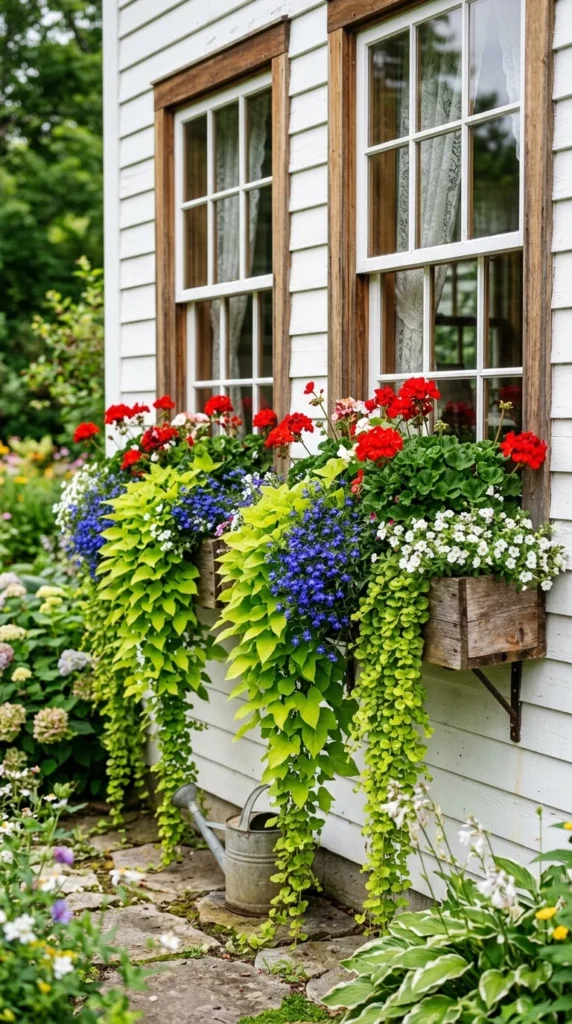
Curb appeal isn’t limited to the ground. Window boxes are essentially “miniature flower beds” that bring the garden up to eye level, breaking up the flat surface of your home’s siding. They offer a perfect opportunity to play with the “thriller, filler, spiller” design method. A central “thriller” (like a bright geranium), “fillers” to add bulk (like petunias), and “spillers” that trail down the side (like ivy or dichondra) create a professional, high-end look. Window boxes allow you to change your home’s color palette seasonally, from spring tulips to autumn chrysanthemums.
4. Layered Perennials
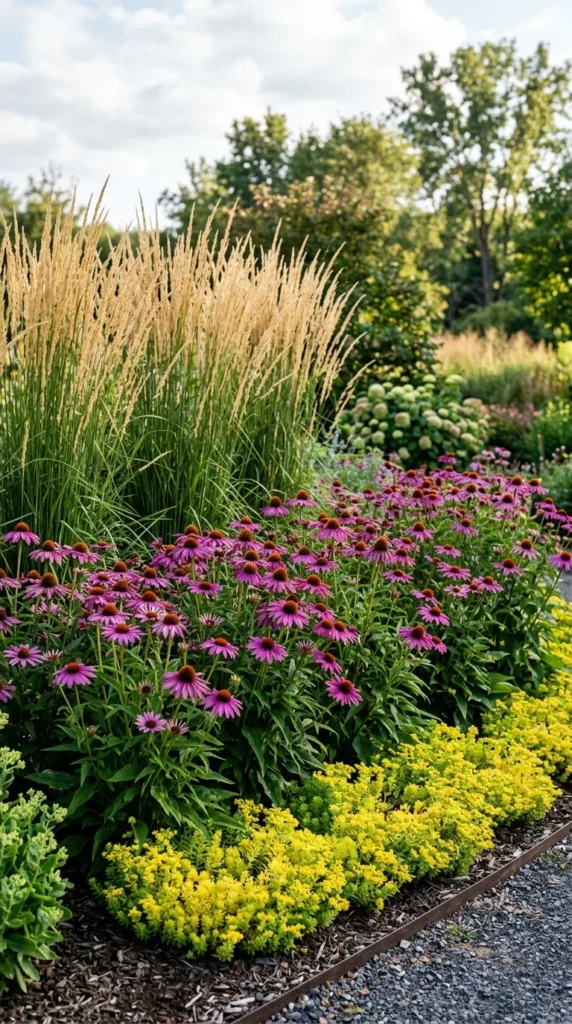
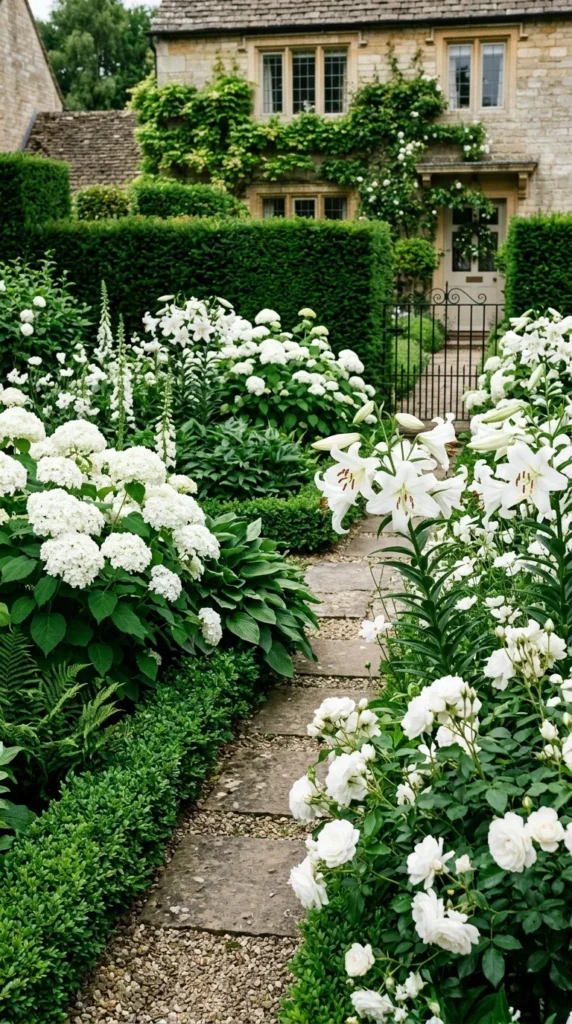
There is something profoundly elegant about a monochromatic white garden, often referred to as a “Moon Garden.” White flowers pop brilliantly against green foliage and look particularly stunning during the twilight hours, as they seem to glow in the fading light. This style conveys a sense of high-end sophistication and cleanliness. Using different textures—such as the massive, round heads of ‘Annabelle’ hydrangeas paired with the delicate, airy petals of white cosmos—keeps the single-color palette from feeling boring.
6. Tropical Paradise
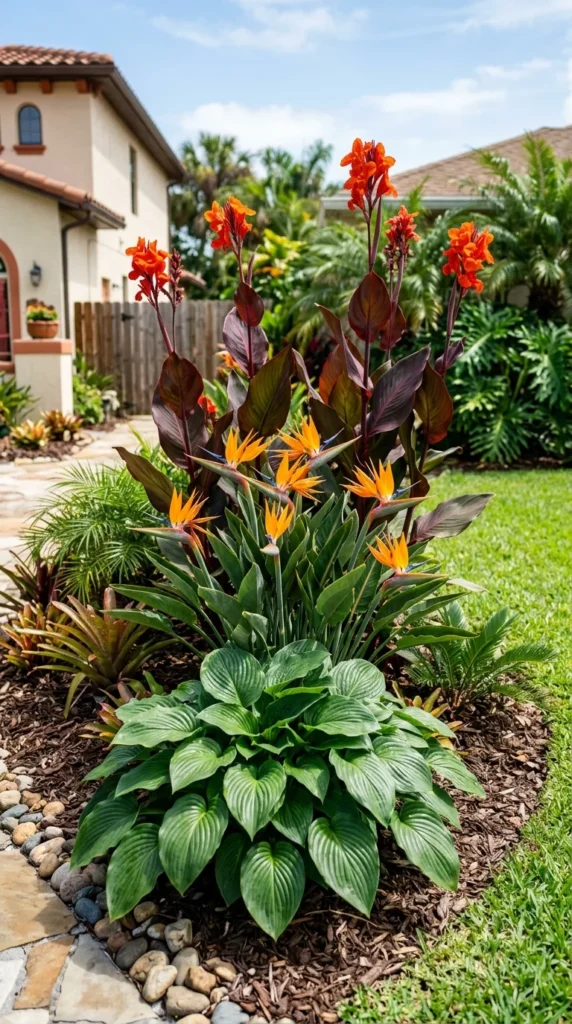
For homeowners in warmer climates, or those who want to feel like they are on vacation every time they pull into the driveway, a tropical-themed bed is the way to go. This style relies on bold colors and oversized foliage. Think “hot” colors like oranges, bright yellows, and deep reds. Plants like hibiscus, mandevilla, and bird of paradise provide architectural interest and a lushness that feels exotic. Even in cooler climates, you can achieve this look using hardy hibiscus and large-leafed hostas to mimic the jungle aesthetic.
7. Native Wildflowers
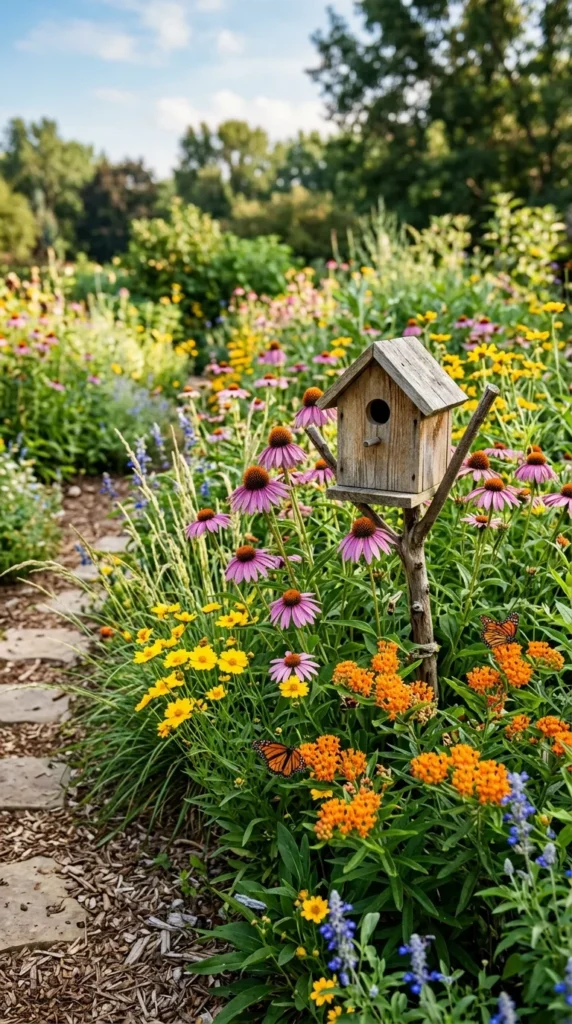
Sustainability is the new luxury in landscaping. A native wildflower bed not only looks beautiful with its vibrant, varied colors but also serves a vital ecological purpose. These plants are adapted to your local soil and climate, meaning they require less water, fertilizer, and maintenance than exotic species. A wildflower bed adds a sense of natural, rustic beauty to a home. It also attracts “living ornaments”—butterflies, bees, and birds—which add movement and life to your curb appeal.
8. Symmetrical Entryways
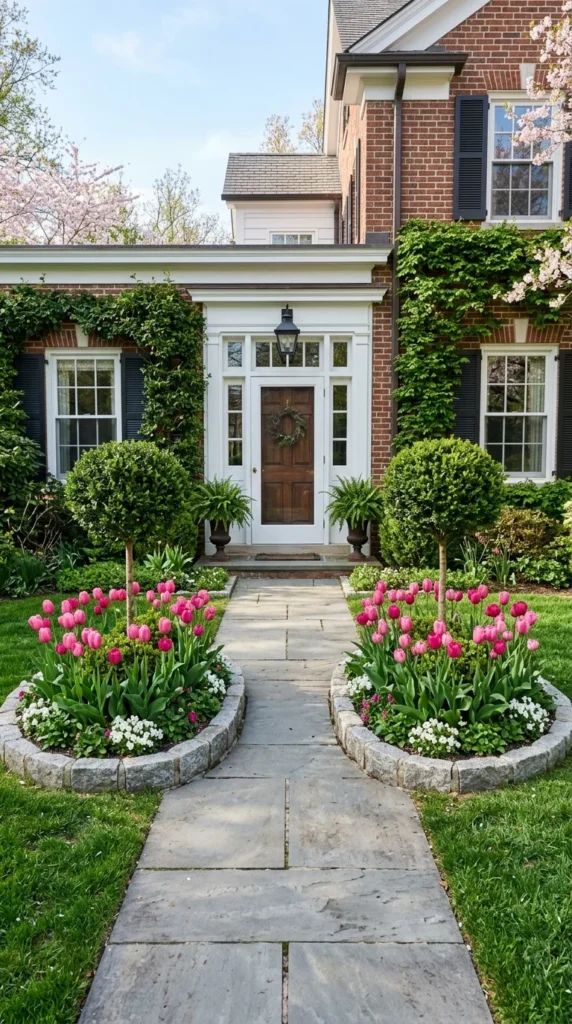
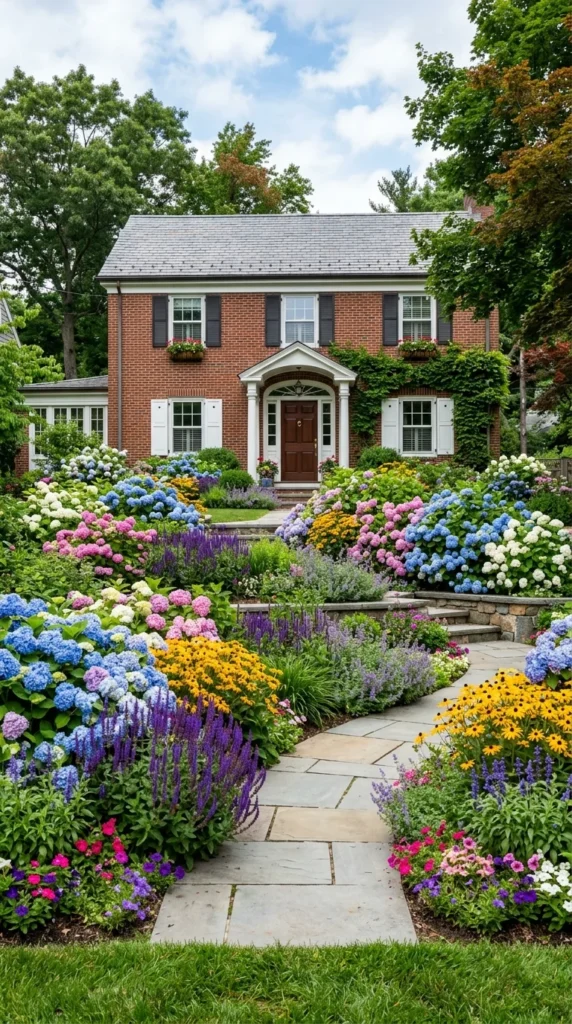
Symmetry is a classic design principle that signals order and prestige. By creating mirrored flower beds on either side of your front door or walkway, you create a formal, balanced look that is incredibly pleasing to the eye. This style works exceptionally well for traditional, colonial, or Georgian-style homes. Use a central focal point, like a boxwood topiary or a small ornamental tree, and surround it with concentric circles of seasonal flowers to keep the entrance looking sharp and intentional.
9. Rock Garden
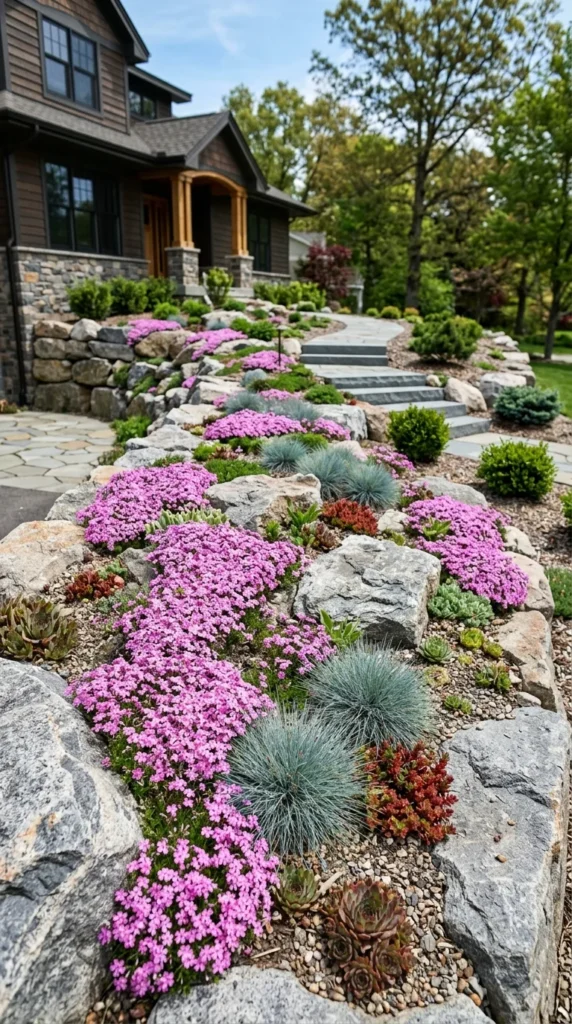
If your front yard has a slope or poor soil, a rock garden is a stunning solution that adds significant curb appeal. By incorporating natural stone and boulders, you create a rugged, permanent structure that looks beautiful even in the middle of winter. Intersperse the rocks with “alpine” style plants—low-growing, hardy species that tuck into crevices. Creeping phlox, sedums, and ornamental grasses provide pops of color and softness against the hard edges of the stone, creating a balanced, naturalistic look.
10. Rose Arbors
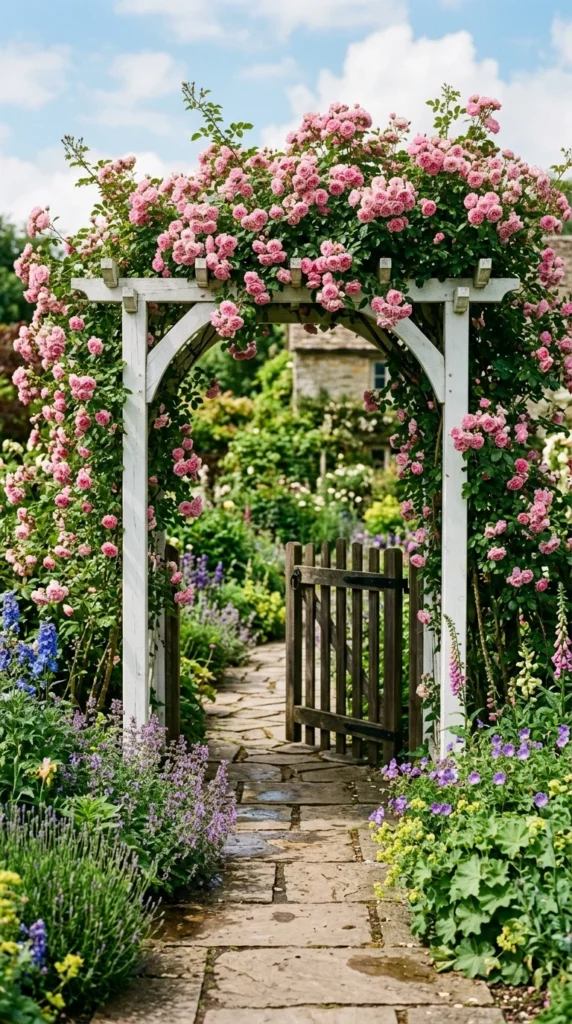
Nothing says “welcome home” quite like a rose arbor. This vertical flower bed element adds height and a sense of architectural grandeur to your exterior. A climbing rose, like the ‘Eden’ or ‘New Dawn’ variety, can transform a simple garden gate or walkway into a breathtaking focal point. The sight and smell of hundreds of roses hanging overhead create an unforgettable first impression. It’s a classic choice that adds a timeless, high-value feel to any property.
11. Modern Minimalist
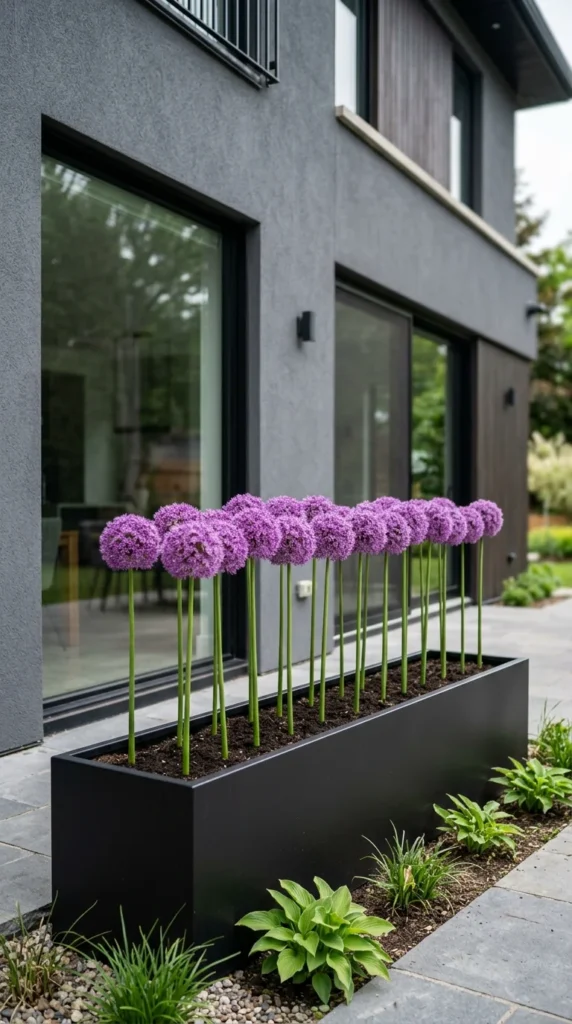
For homes with contemporary architecture, a traditional flower bed might feel out of place. A modern minimalist approach uses few species but chooses them for their striking shapes. Think of plants as living sculptures. Alliums with their perfect spheres, structural ornamental grasses, or the sharp lines of agave plants create a clean, sophisticated look. This style often uses mass planting—placing many of the same plant together—to create a high-impact, graphic effect that complements modern lines and materials like concrete, steel, and glass.