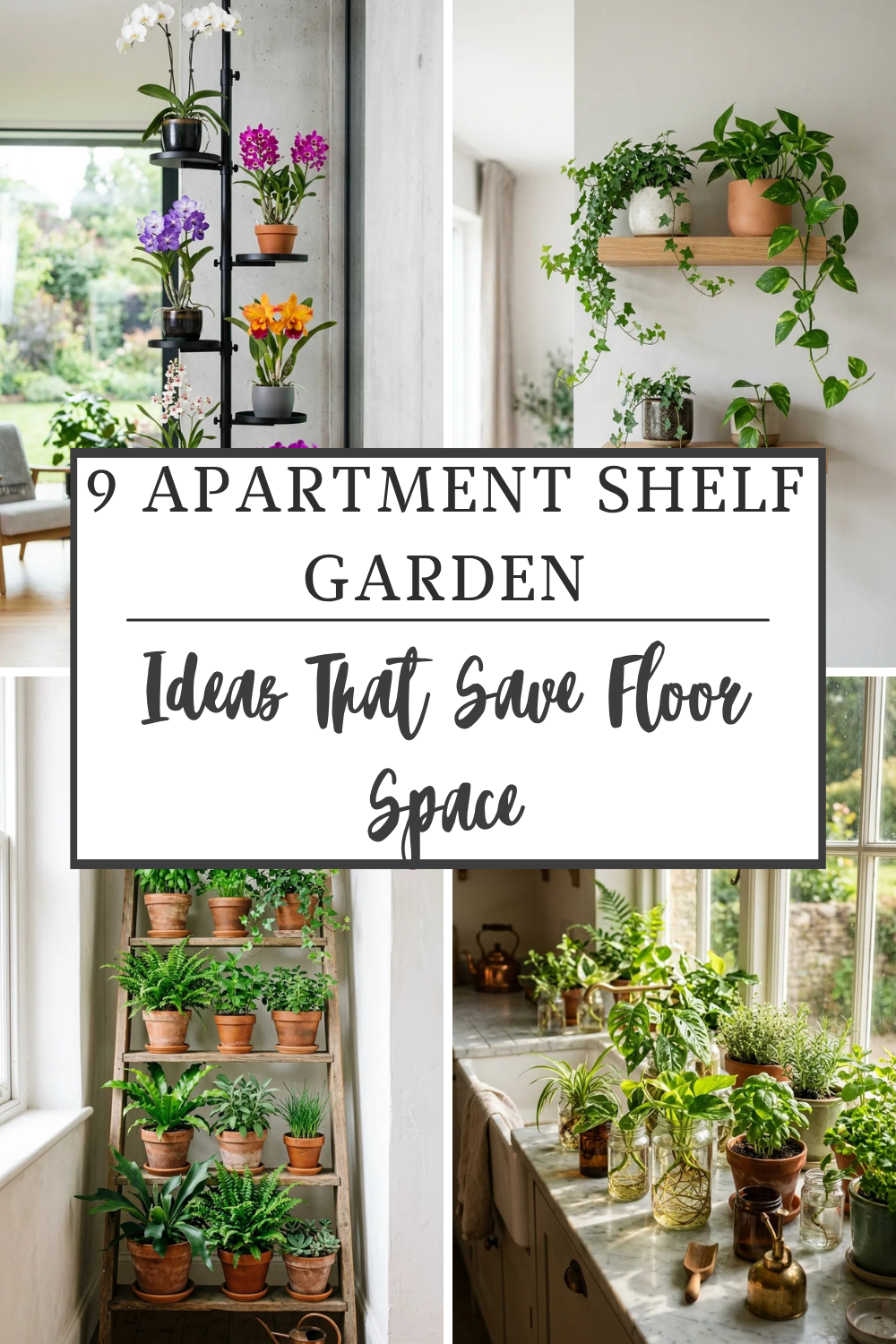
Living in an apartment often feels like a constant battle between your love for nature and the reality of limited square footage. When every inch of floor space is accounted for by furniture and foot traffic, the dream of a lush indoor jungle can seem out of reach. However, the secret to a thriving urban garden doesn’t lie on the floor—it lies on the walls and in the air.
By shifting your focus from horizontal to vertical, you can transform your living space into a green sanctuary without sacrificing a single square foot of walking room. Shelf gardens are the ultimate solution for the space-conscious plant lover. They allow you to curate beautiful displays, improve air quality, and bring a sense of serenity to your home. Here are 12 innovative apartment shelf garden ideas designed to maximize your space and elevate your interior design.
1. Floating Shelves
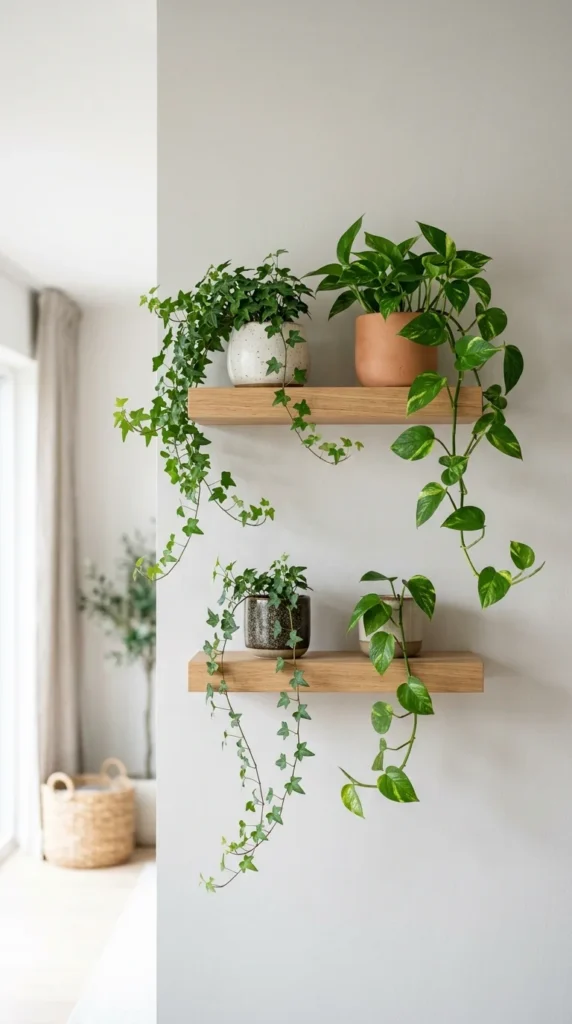
Floating shelves are the gold standard for minimalist apartment gardening. Because they lack visible brackets, they create a clean, streamlined look that doesn’t feel heavy or cluttered. This makes them ideal for small studio apartments where visual “noise” can make a room feel cramped.
To create an effective floating shelf garden, consider staggered heights. Instead of one long shelf, install three or four shorter shelves at different levels. This creates a “waterfall” effect if you use trailing plants like Heartleaf Philodendron or String of Hearts. Ensure the shelves are anchored properly to the wall, as damp soil can be surprisingly heavy.
2. Ladder Planters
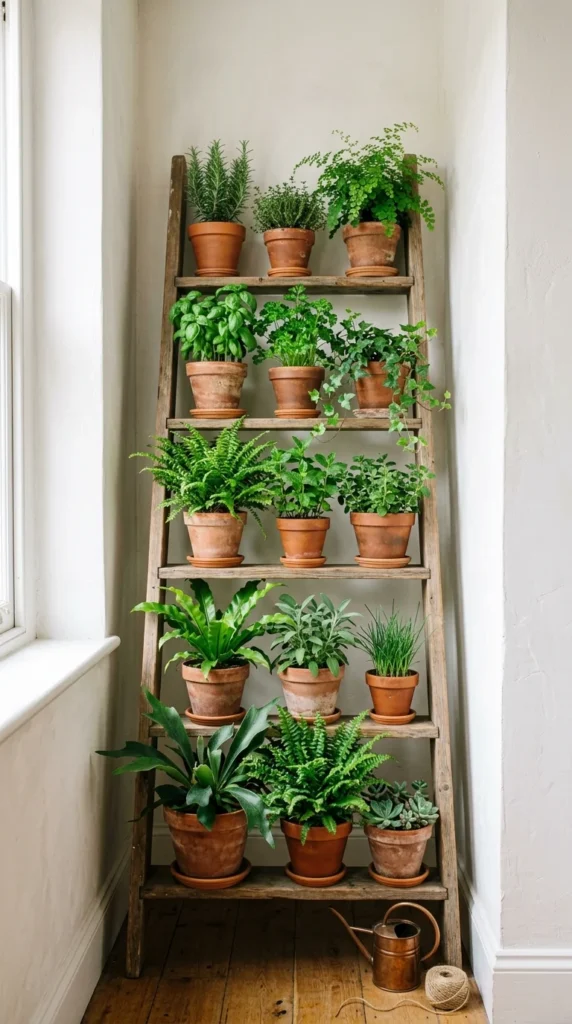
The ladder planter is a genius way to utilize vertical space with a very small footprint. These units lean against the wall, taking up only a few inches of floor depth while providing four to five tiers of growing space. They are particularly effective in “dead” corners that are too small for a traditional cabinet or chair.
The beauty of the ladder design is the graduated shelf depth. Usually, the bottom shelves are deeper, perfect for larger pots like Snake Plants or Peace Lilies, while the top shelves are narrower, ideal for small succulents or cacti. This natural progression ensures that plants on the lower levels aren’t completely shaded by those above them.
3. Window Sills
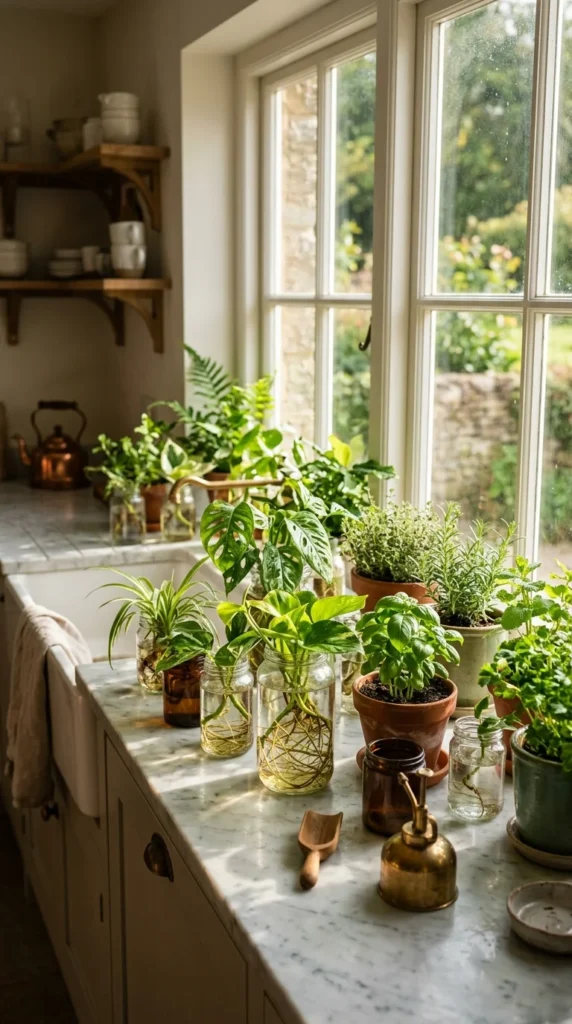
Your window sills are the most valuable real estate in your apartment for one simple reason: light. While many people leave them bare or use them for keys, they are essentially built-in shelves waiting to be gardened.
If your sills are too narrow, you can purchase “sill extenders”—small shelves that clamp onto the existing ledge to provide a wider platform. This is the perfect spot for a kitchen herb garden. Basil, cilantro, and mint thrive in the direct light of a window and are easily accessible for cooking. Using clear glass containers for propagation also looks stunning when the sun hits the water and roots.
4. Tension Poles
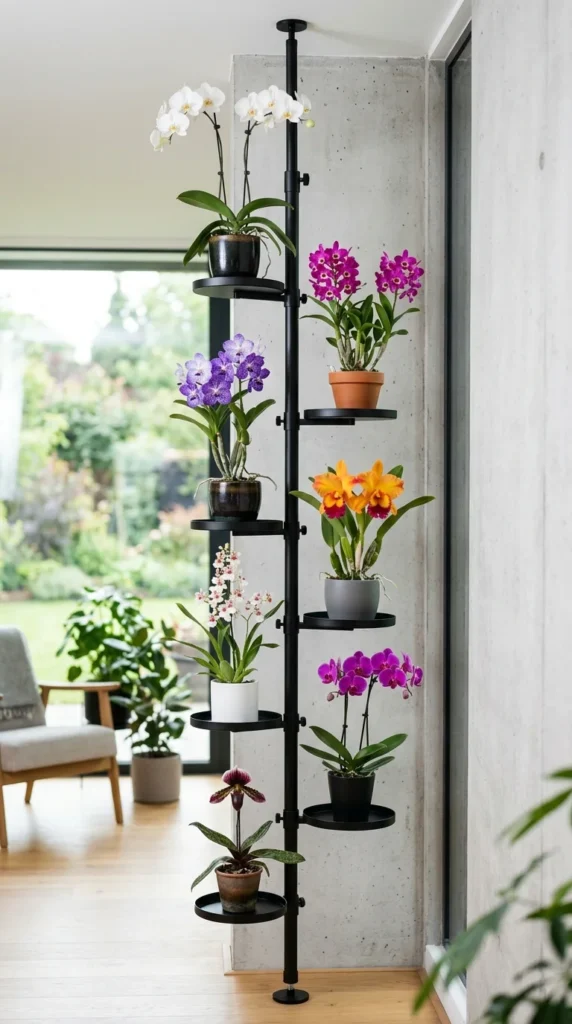
When you aren’t allowed to drill holes in your rental walls, tension pole gardens are a lifesaver. These poles use a spring-loaded mechanism to wedge securely between the floor and the ceiling. They come with adjustable arms or trays that can be rotated 360 degrees.
This setup is incredibly space-efficient because the pole itself takes up only a two-inch circle of floor space. You can height-adjust the trays to perfectly match the light requirements of each plant. For instance, sun-loving succulents can go near the top (closer to the top of the window), while shade-tolerant ferns can sit lower down.
5. Pegboards
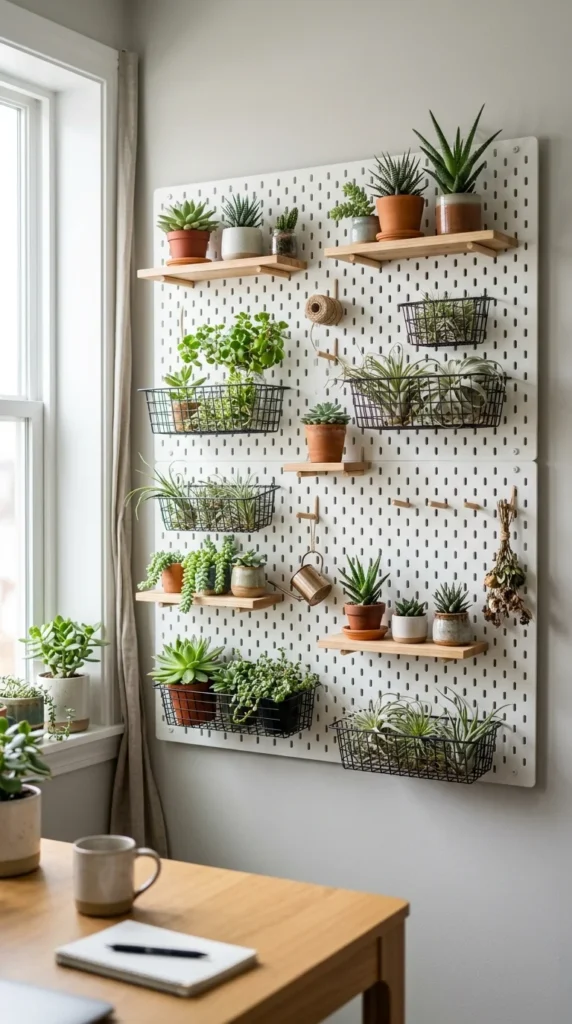
Originally designed for tool sheds and craft rooms, pegboards have made a massive comeback in interior design as modular garden walls. The beauty of a pegboard is its total customizability. You can move shelves, hooks, and baskets around as your plant collection grows or as the seasons change.
For a shelf garden, use small “clip-on” shelves specifically made for pegboards. These are usually just wide enough for a 4-inch nursery pot. You can mix and match plant life with gardening tools, such as a stylish brass mister or small pruning shears, creating a functional piece of living art.
6. Tiered Carts
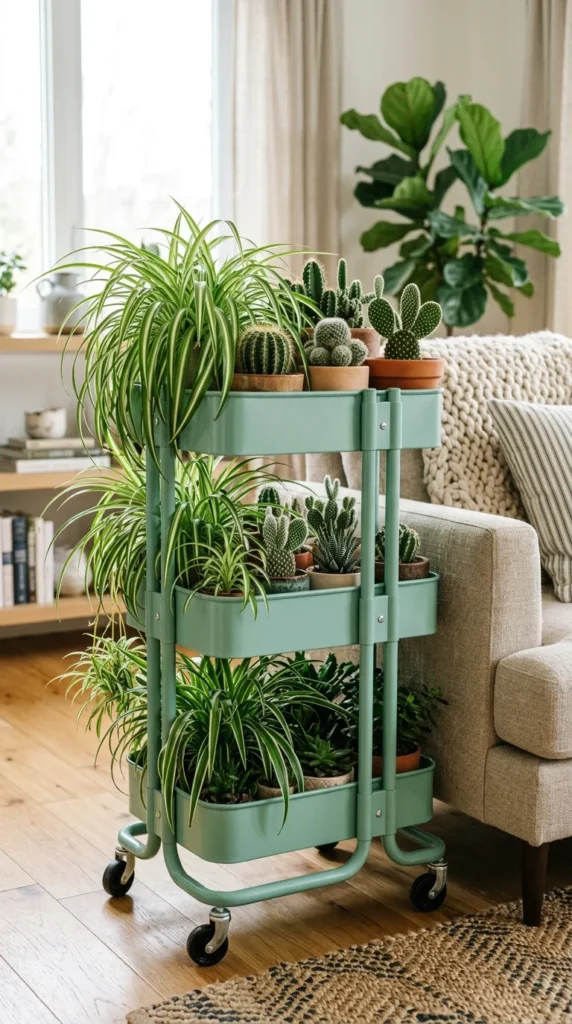
While a cart does technically touch the floor, its mobility makes it a floor-space saver. You can tuck it into a corner when you need the room, or wheel it directly in front of a sunny window during the day and move it back at night.
Tiered carts are excellent for organizing “families” of plants. You might use the top tier for “drama” plants like a bushy Boston Fern, the middle for colorful Calatheas, and the bottom for gardening supplies or heavy ceramic pots. The vertical stacking allows you to house 10–15 plants in the footprint of just two.
7. Hanging Racks
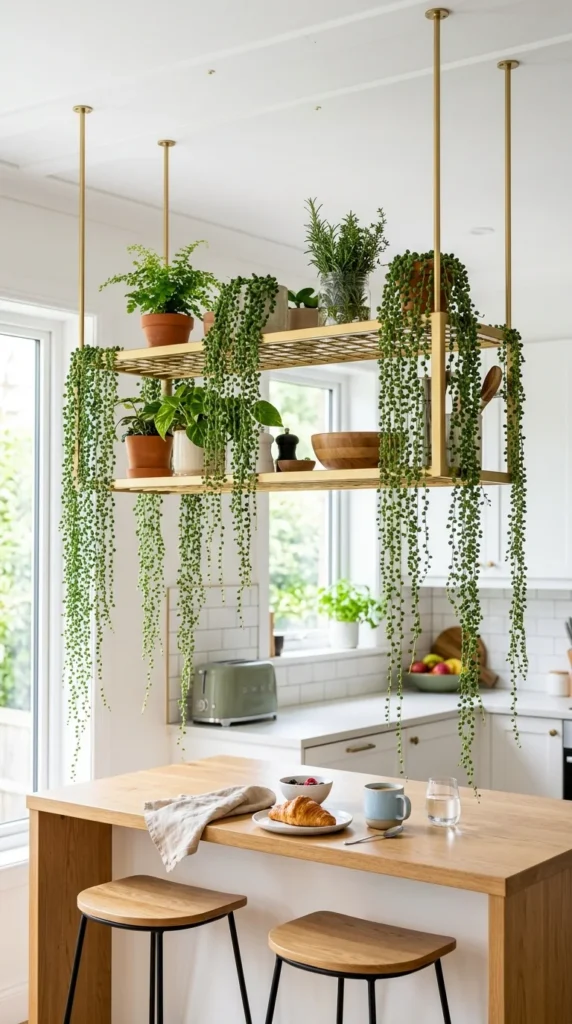
If your walls are full and your floor is packed, look up. Hanging racks—often used in kitchens for pots and pans—can be repurposed as overhead plant shelves. Suspending a rack from the ceiling allows you to create a “floating” canopy of greenery.
This is particularly effective over a kitchen island or a dining table. By using S-hooks, you can hang lightweight pots or even place flat wooden boards across the rack to create a traditional shelf surface. Trailing plants are the stars here; as they grow, they will create a living curtain that divides an open-concept apartment without the need for bulky room dividers.
8. Wall Cubes
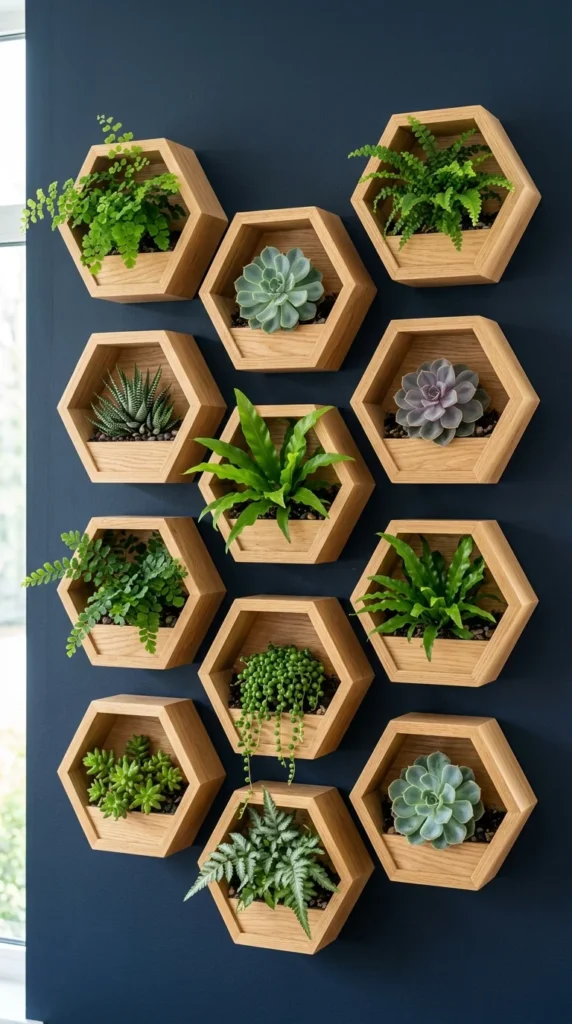
Wall cubes, or shadow boxes, provide a framed, curated look for your plants. Unlike a long shelf, a cube isolates a single plant, making it a focal point. This is a great way to showcase “collector” plants or particularly beautiful specimens like a variegated Monstera Adansonii.
Hexagonal cubes (often called “honeycomb shelves”) are popular because they can be clustered together to form a large, geometric installation. This turns your garden into a structural element of your home decor. Because the plant is enclosed on four sides, it also helps protect your walls from accidental water splashes during misting.
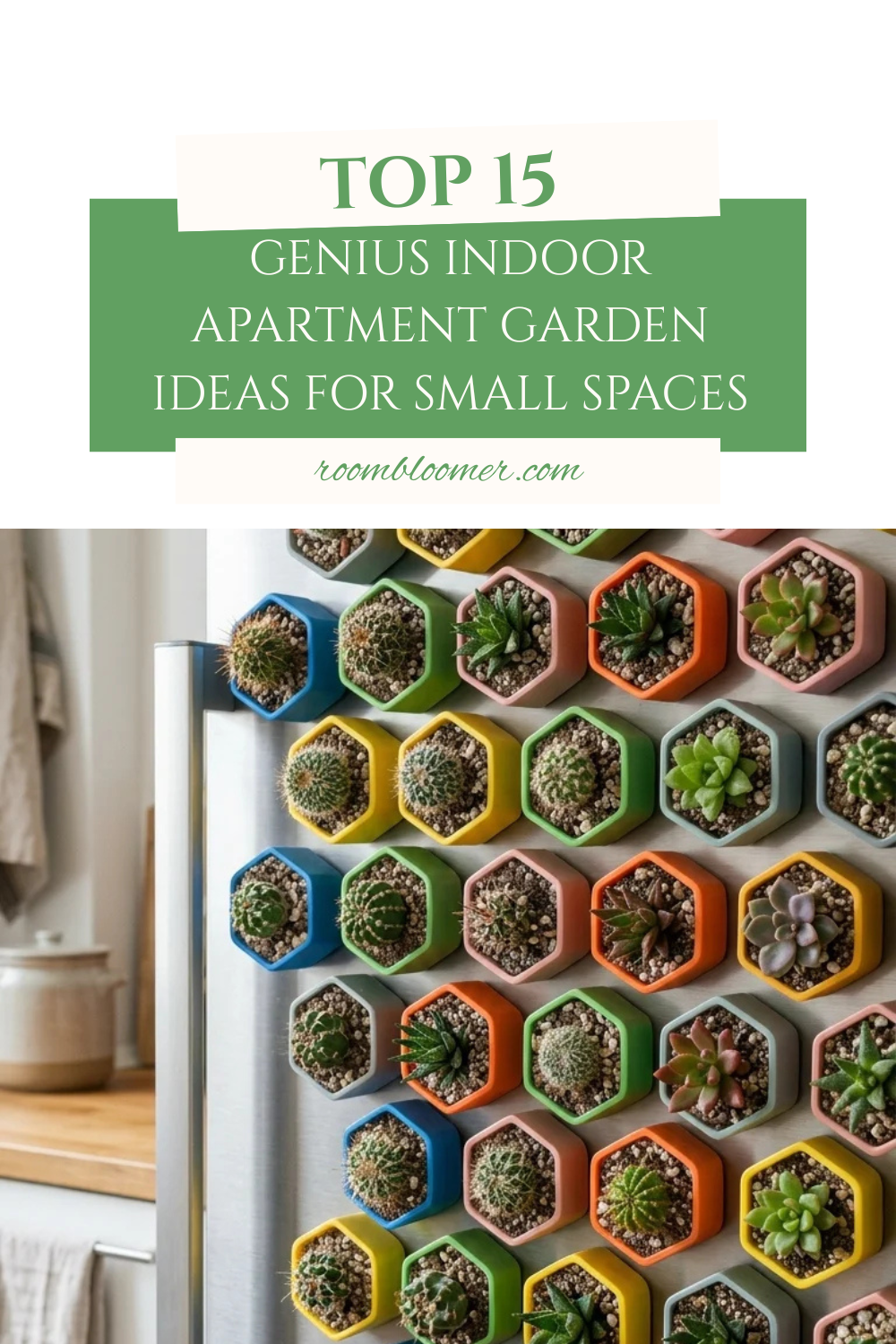
9. Magnetic Planters
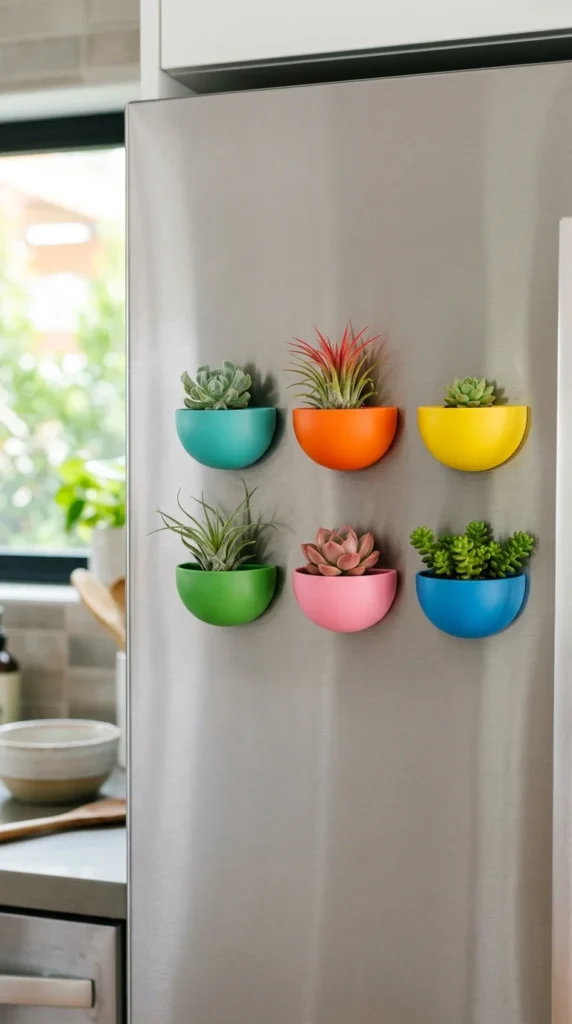
The ultimate floor-space saver is the magnetic shelf or planter. If you have a metal refrigerator or a metal shelving unit, you can attach small magnetic pods directly to the surface.
This is the perfect home for air plants (Tillandsia), which don’t require soil and are extremely lightweight. You can also find stronger magnetic shelves that can support small potted succulents. It turns a boring appliance into a vertical landscape and keeps your greenery at eye level while you’re busy in the kitchen.
Essential Tips for Success with Shelf Gardens
Transitioning to a shelf-based garden requires a slightly different approach than traditional floor gardening. To keep your elevated plants healthy and your apartment clean, keep these three factors in mind:
Light Rotation: Plants on shelves often receive light from only one side (the window). To prevent your plants from becoming “leggy” or leaning aggressively toward the light, give each pot a quarter-turn every time you water. This ensures even growth and a full, bushy appearance on all sides.
Weight Management: Always check the weight capacity of your shelves and wall anchors. A 6-inch ceramic pot filled with wet soil can weigh upwards of 5 to 7 pounds. Use lightweight plastic or resin pots hidden inside decorative “cachepots” to keep the load manageable.
Watering Logistics: Watering plants high on a shelf can be messy. To avoid water dripping down your walls or onto your furniture, choose pots with built-in reservoirs or use deep saucers. For very high shelves, a long-necked watering can is an essential tool to reach the soil without needing a ladder every time.