Living in an apartment shouldn’t mean sacrificing your dreams of a lush, green sanctuary. While urban dwellers often face challenges like limited floor space, fluctuating light levels, and dry air from climate control, the “urban jungle” aesthetic is more achievable than ever. Transforming a small studio or a high-rise flat into a botanical paradise requires a mix of creativity and clever science.
Whether you are struggling to keep a single succulent alive or you are already living in a forest of fiddle-leaf figs, these ten hacks will help you optimize your space, save money, and ensure your leafy companions thrive.
1. Vertical Growth
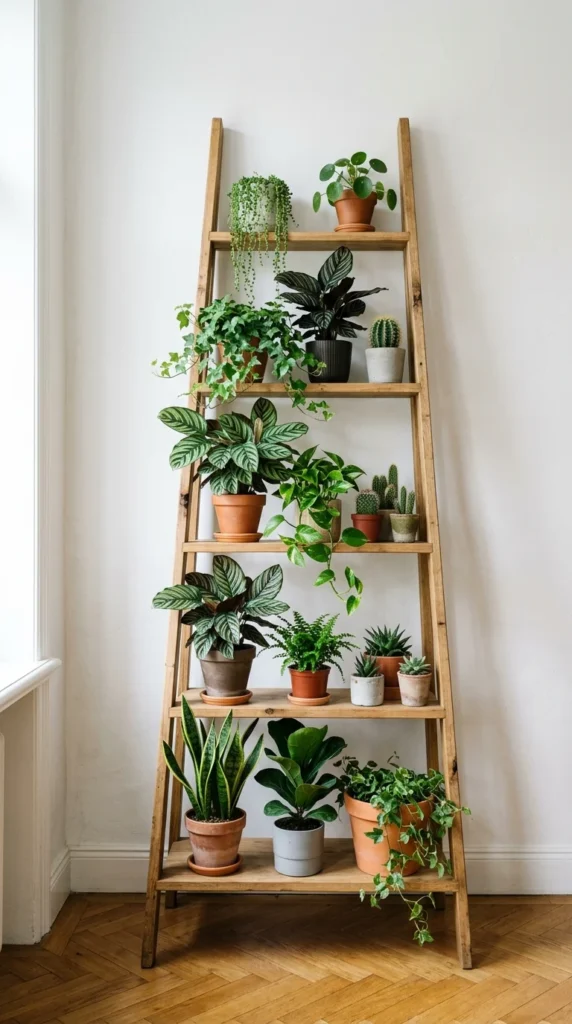
When floor space is at a premium, the only way to go is up. Vertical gardening is the ultimate hack for apartment dwellers. Instead of cluttering your walkways with pots, utilize your walls and ceilings. Wall-mounted planters, floating shelves, and macramé hangers can turn a blank wall into a living masterpiece.
By stacking your plants vertically, you also create different light zones. You can place sun-loving plants at the top of a shelf near a window and shade-tolerant species on the lower levels. Additionally, using “climbing” plants like Monsteras or Philodendrons with moss poles allows them to grow upward rather than outward, saving precious square footage.
2. Light Optimization
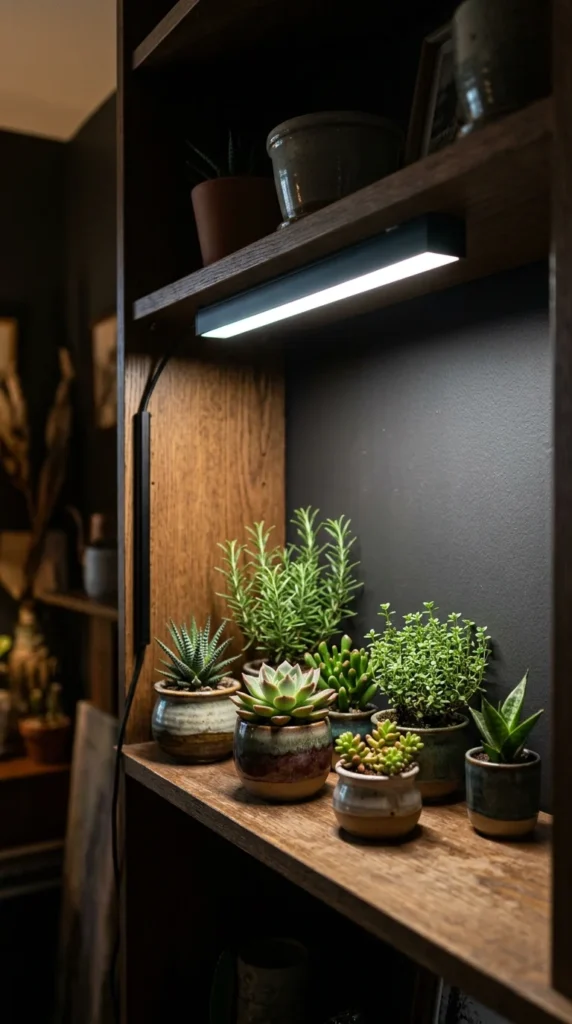
The most common struggle in apartments is a lack of natural light. Not every unit comes with massive south-facing windows. The hack here is two-fold: reflection and supplementation. Placing mirrors strategically opposite your windows can bounce natural light into the darker corners of your room, effectively doubling the “sunlight” your plants receive.
For those truly dark corners, modern LED grow lights are a game-changer. Forget the harsh purple lights of the past; today’s grow lights come in “warm white” tones that look like regular designer lamps. You can find clip-on versions or bulbs that fit into standard light fixtures, ensuring your plants get the full spectrum of light they need to photosynthesize, regardless of the weather outside.
3. Humidity Bubbles
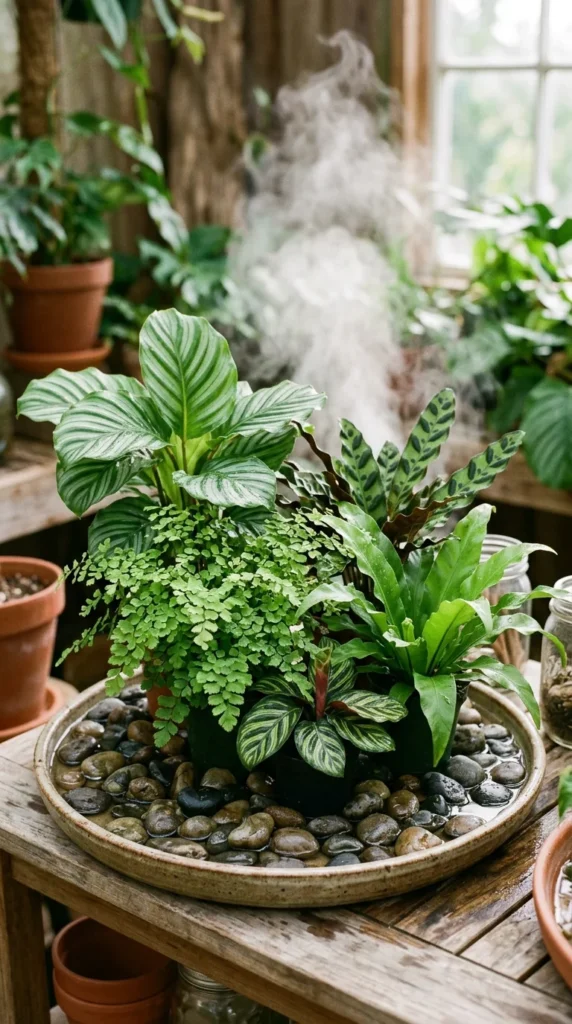
Apartments, especially during winter when the heater is running, tend to have very dry air. Tropical plants, which make up the bulk of popular indoor species, crave humidity. A simple hack is the “pebble tray.” Fill a shallow tray with decorative stones and add water until it’s just below the top of the pebbles. Place your pots on top. As the water evaporates, it creates a localized “microclimate” of humidity directly around the leaves.
Another humidity hack is grouping. Plants “breathe” through a process called transpiration, releasing moisture into the air. By huddling your plants together, they share this moisture, creating a collective humidity bubble that keeps their leaf tips from turning brown and crispy.
4. Self-Watering Wicks
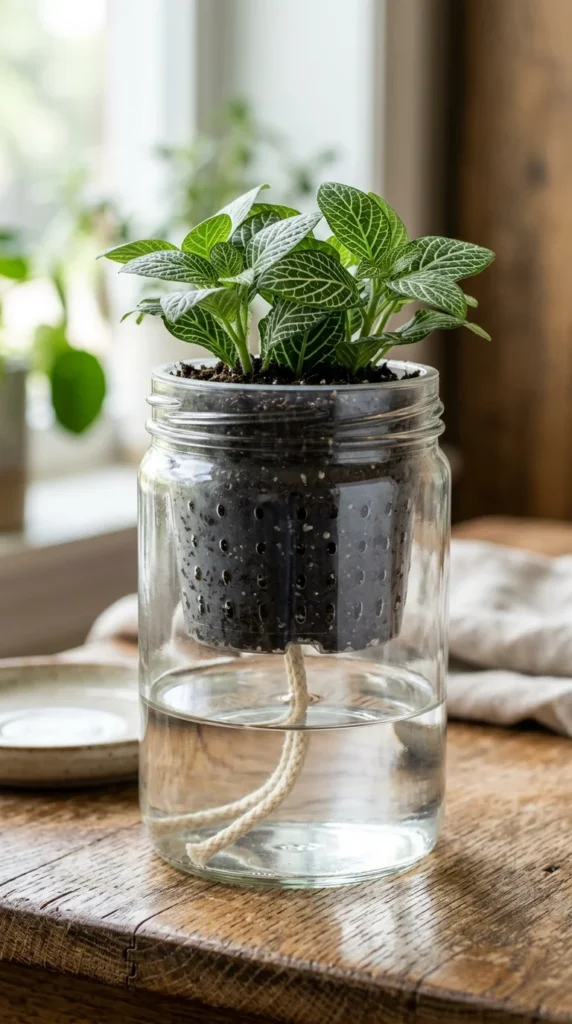
Consistency is the secret to plant health, but busy city lives can make regular watering difficult. The cotton wick hack is a lifesaver for those who travel or simply forget their watering schedule. Insert one end of a thick cotton or nylon string into the drainage hole of your plant’s pot (reaching into the soil) and place the other end in a reservoir of water nearby.
Through capillary action, the soil will draw up exactly as much water as it needs. This “bottom-watering” method prevents the soil surface from becoming a breeding ground for gnats and ensures that the roots—where the plant actually drinks—are always hydrated.
5. Kitchen Nutrients
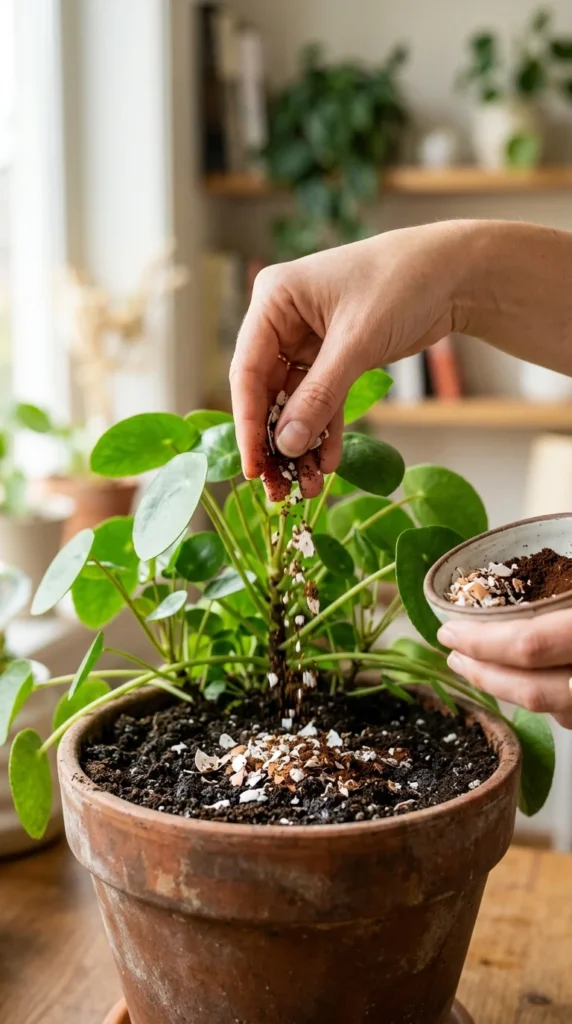
You don’t need expensive, chemical-heavy fertilizers to feed your indoor garden. Your kitchen is a goldmine of organic nutrients. Used coffee grounds, when dried and mixed sparingly into the soil, provide a slow-release nitrogen boost that acid-loving plants like ferns and African violets adore.
Crushed eggshells are another fantastic resource; they are packed with calcium, which strengthens plant cell walls. Even the water you use to boil pasta or vegetables (once cooled and unsalted) is a nutrient-rich “tea” that can give your plants a vibrant growth spurt. It’s the ultimate sustainable hack: reducing waste while nourishing your garden.
6. Community Grouping
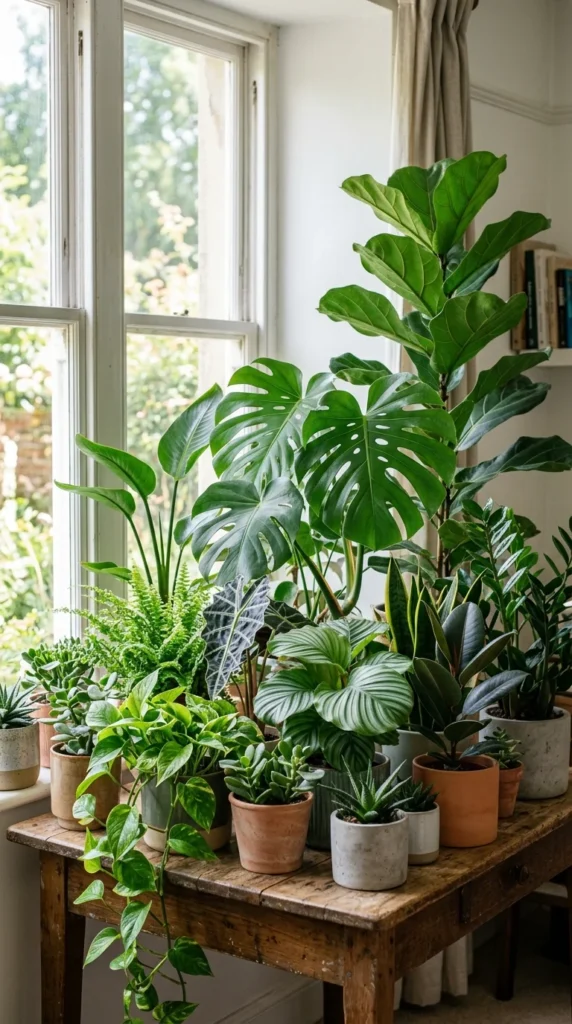
Plants are social creatures. Beyond the humidity benefits mentioned earlier, grouping plants together makes maintenance significantly easier. When all your “high-water” plants are in one corner and your “low-water” succulents are in another, you reduce the risk of overwatering or underwatering by mistake.
Visually, grouping creates a high-impact focal point. Instead of having single, lonely pots scattered around a room, a “plant gang” creates a lush, intentional look that hides unsightly cords or wall imperfections. It also makes it easier to inspect for pests, as you can check the entire “community” in one go.
7. Water Propagation
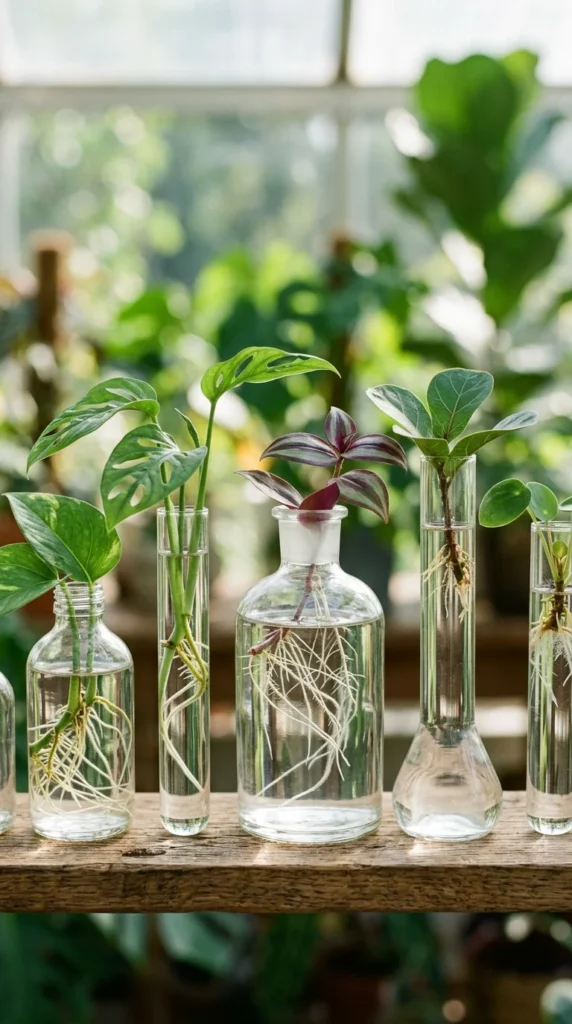
Want to expand your garden for free? Propagation is the ultimate plant lover’s hack. Many common apartment plants, such as Pothos, Tradescantia, and Spider Plants, can be grown from simple stem cuttings placed in water. This is not only a way to get “free” plants but also serves as beautiful decor.
Clear glass vessels filled with cuttings and growing roots add a scientific, elegant touch to windowsills and bookshelves. Once the roots are a few inches long, you can pot them in soil or keep them in water indefinitely (hydroponics), which is a great “no-mess” option for small apartments where bags of potting soil might be hard to store.
8. Root Aeration
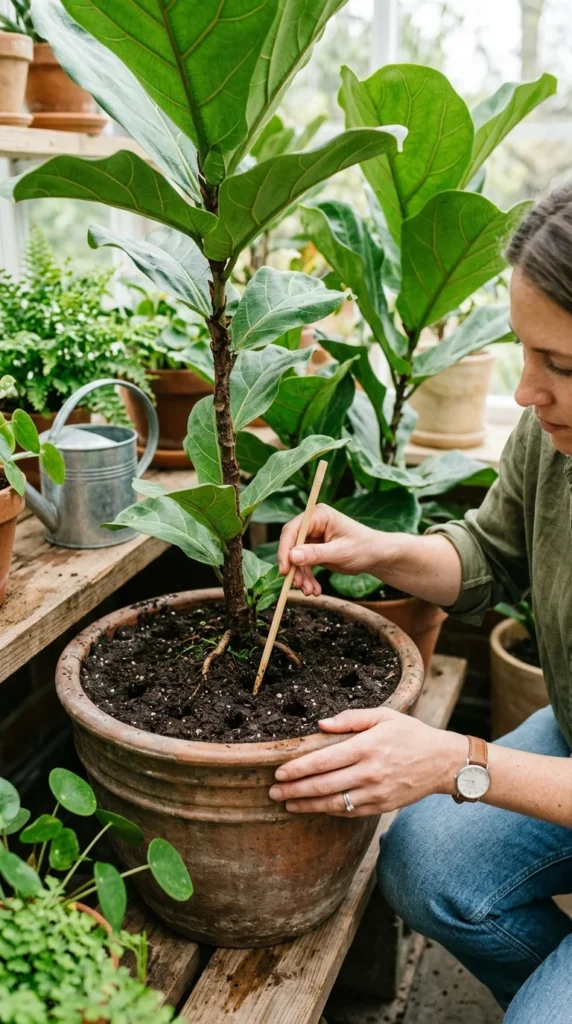
Over time, the soil in pots becomes compacted. When soil is too tight, oxygen can’t reach the roots, and water can’t drain properly, leading to the dreaded root rot. A simple, free hack to fix this is using a chopstick or a pencil.
Every few months, gently poke the chopstick deep into the soil in several places around the pot. This creates “air pockets” that allow the roots to breathe and ensures that when you water, the moisture reaches the center of the root ball rather than just running down the sides of the pot. It’s like a mini-spa treatment for your plant’s foundation.
9. Tiny Terrariums
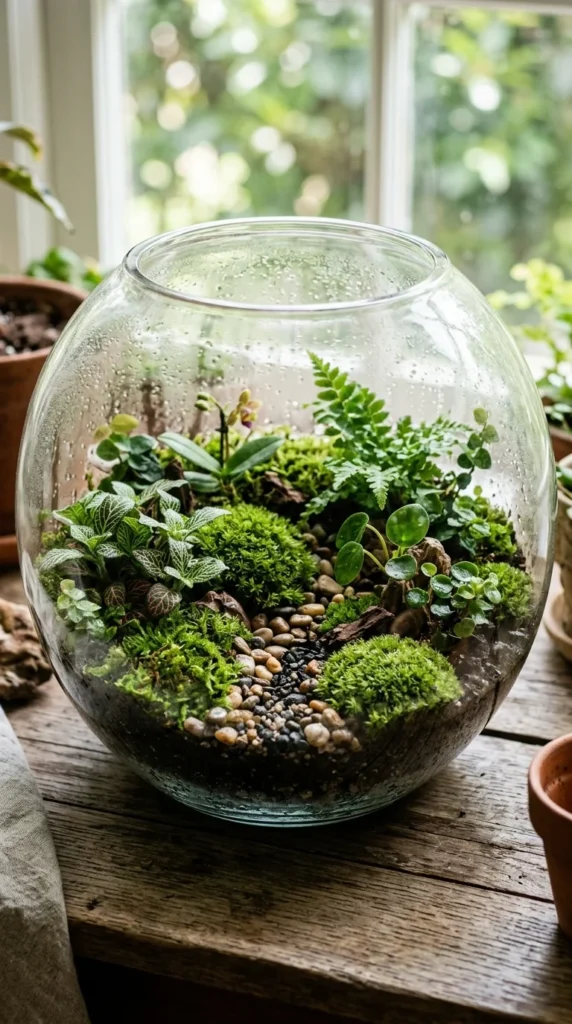
If you live in an apartment with particularly harsh air conditioning or if you love “fussy” plants like nerve plants or carnivorous species, a terrarium is your best friend. A glass enclosure—whether it’s a dedicated terrarium or an upcycled cookie jar—recycles moisture through condensation and evaporation.
This creates a self-sustaining ecosystem that requires very little maintenance. For the apartment gardener, this means you can have high-maintenance plants without the daily chore of misting or monitoring. Plus, they act as stunning, self-contained pieces of living art that take up very little space.
10. Natural Pesticides
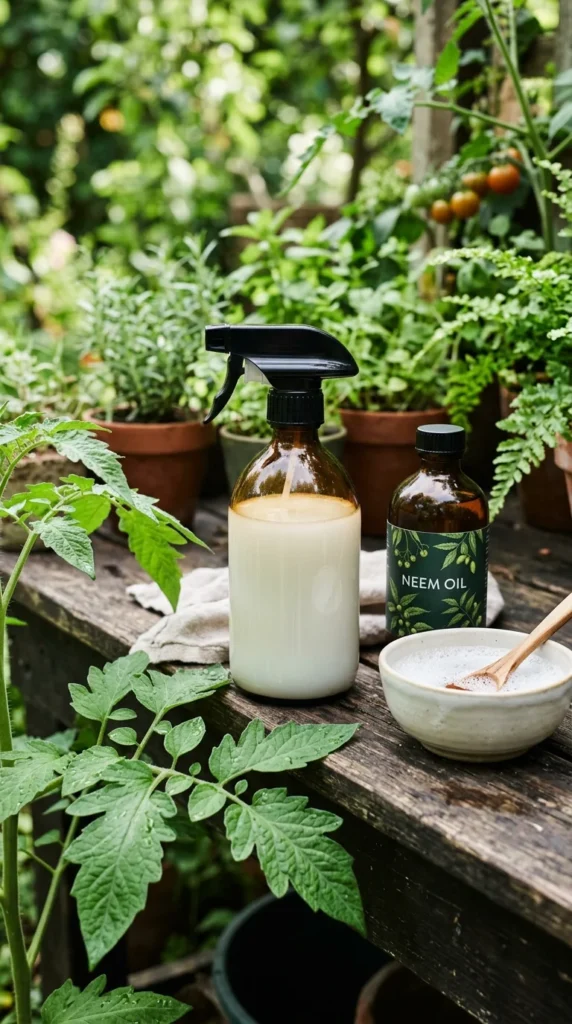
Pests like spider mites and fungus gnats can happen to the best of us, and in a small apartment, the last thing you want is to spray toxic chemicals. The hack for a pest-free home is a simple DIY Neem oil solution. Mix one teaspoon of organic Neem oil and a few drops of mild dish soap into a liter of warm water.
Spraying this on the leaves (and the top of the soil) once every two weeks acts as both a cure and a preventative measure. It disrupts the life cycle of common pests without harming your health or your pets. Keeping a bottle of this “green elixir” on hand ensures your indoor oasis remains a healthy, stress-free environment.