
The Pothos (Epipremnum aureum), often affectionately called “Devil’s Ivy,” is the undisputed champion of the indoor gardening world. Known for its incredible resilience, air-purifying qualities, and—most importantly—its rapid, trailing growth, the Pothos is the perfect candidate for creating a vertical masterpiece. If you have ever dreamt of living in an indoor jungle or simply want to breathe life into a drab corner of your home, a Pothos wall is the ultimate weekend project.
Transforming a blank wall into a cascading tapestry of green doesn’t require a professional landscaper or an expensive irrigation system. With a few simple tools, some creativity, and a bit of patience, you can train your Pothos to climb, drape, and frame your living space. Here are 11 DIY Pothos wall ideas that will turn your home into a botanical sanctuary.
1. Wall Clips
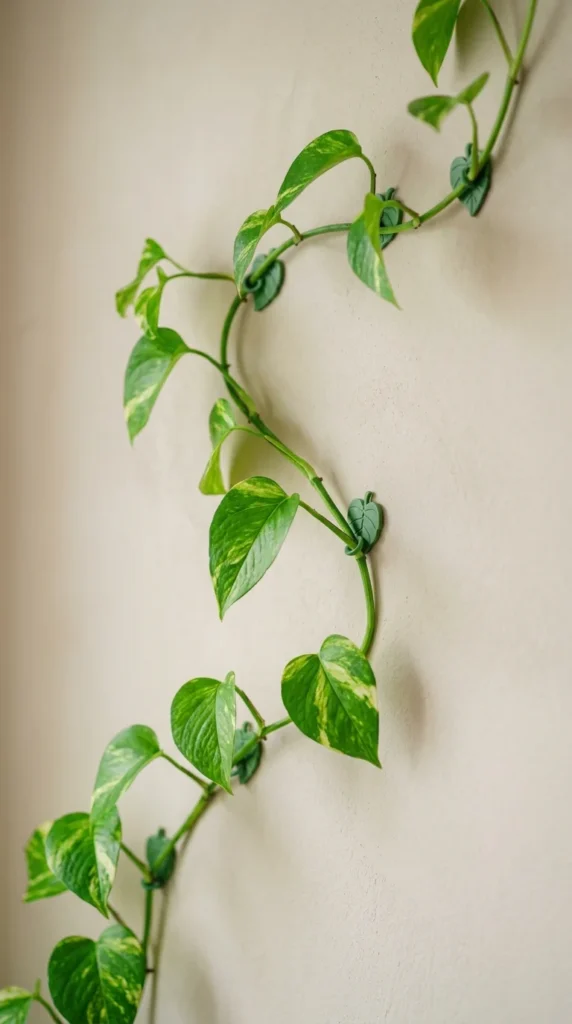
The simplest and most popular way to create a Pothos wall is by using specialized plant wall clips. These tiny, often leaf-shaped plastic holders have an adhesive backing that sticks to your drywall without causing damage.
Why it works: Wall clips allow you to “draw” with your plants. You can guide the vines in specific directions—around door frames, across the ceiling, or in a geometric pattern. Because the clips are discreet, the focus remains entirely on the lush foliage.
Pro Tip: Clean the wall surface with rubbing alcohol before sticking the clips to ensure maximum adhesion. As the Pothos grows, simply pop the new growth into a new clip to continue the design.
2. Wooden Lattice
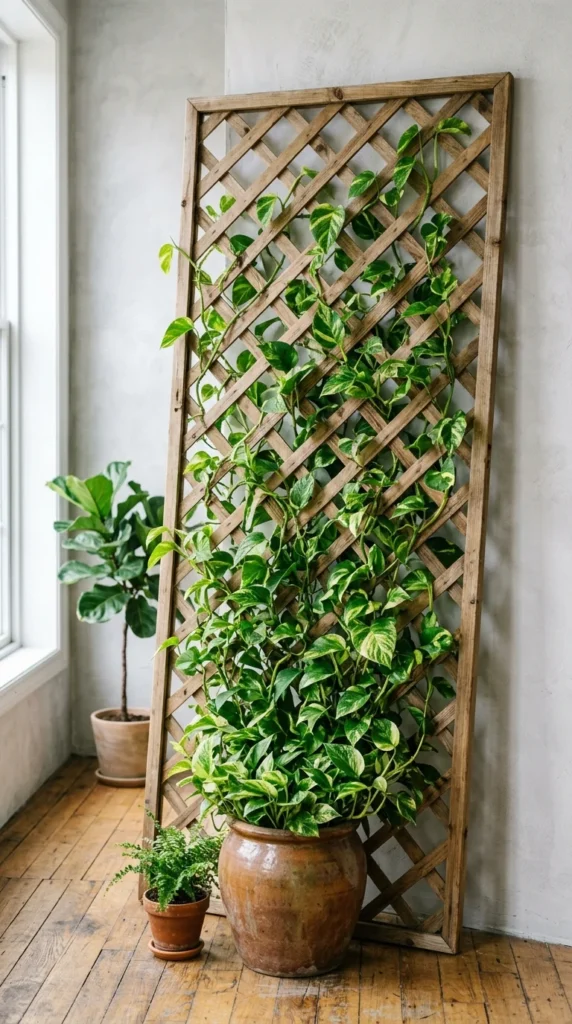
For a more structured and rustic look, a wooden lattice is an excellent choice. You can purchase pre-made lattice panels at any hardware store or build your own using thin strips of cedar or pine.
Why it works: The lattice provides a sturdy framework for the Pothos to climb. Unlike the clips, which hold the vine against the wall, a lattice creates a bit of depth and shadow, making the plant wall feel more substantial. It’s also a great way to hide wall imperfections or create a “living room divider.”
DIY Steps:
- Stain or paint the wood to match your decor.
- Mount the lattice slightly away from the wall (using spacers) to allow air circulation behind the leaves.
- Intertwine the vines through the gaps as they grow.
3. Macrame Netting

If your aesthetic leans toward Boho-chic, combining macrame with Pothos is a match made in heaven. Instead of a single plant hanger, create or buy a large-scale macrame wall “net.”
Why it works: The soft texture of the cotton rope contrasts beautifully with the waxy, vibrant leaves of the Pothos. The netting acts as a soft trellis, providing dozens of anchor points for the vines to rest on.
Maintenance Tip: Since macrame is porous, be careful when misting your plants. If you prefer a high-humidity environment for your Pothos, ensure the rope is made of synthetic material or treated to prevent mold.
4. Hexagon Shelves
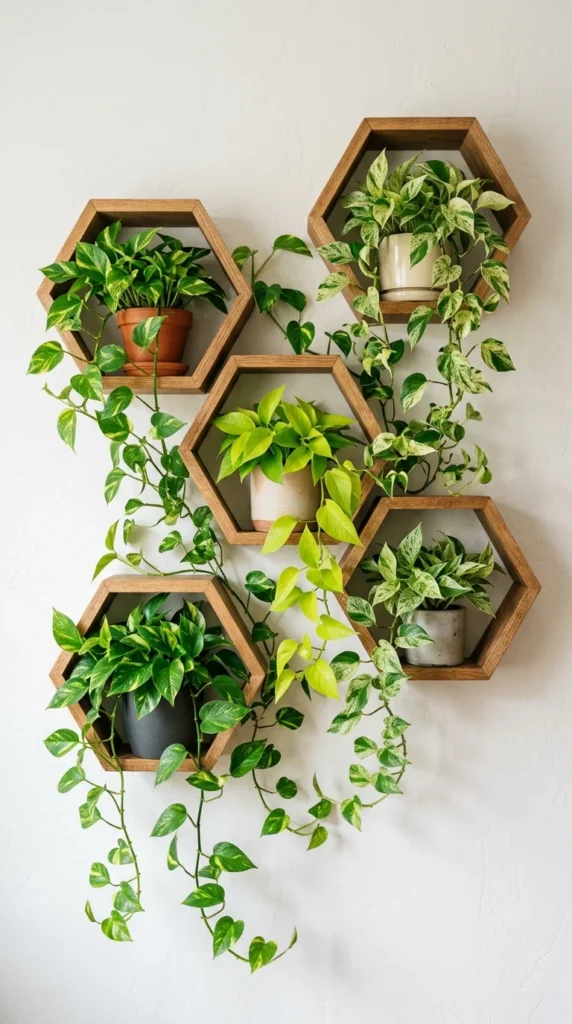
Modular hexagon shelves (also known as honeycomb shelves) offer a modern, architectural way to display your plant collection. By placing Pothos in several of these shelves, you can create a “living art” installation.
Why it works: Pothos vines naturally want to trail downward. By placing pots in shelves at varying heights, the vines from the top shelves will eventually reach the shelves below, creating a connected, cohesive wall of greenery.
Styling Idea: Mix and match different Pothos varieties. The bright chartreuse of a ‘Neon’ Pothos looks stunning when draped next to the deep green and white speckles of a ‘Marble Queen.’
5. Fishing Line
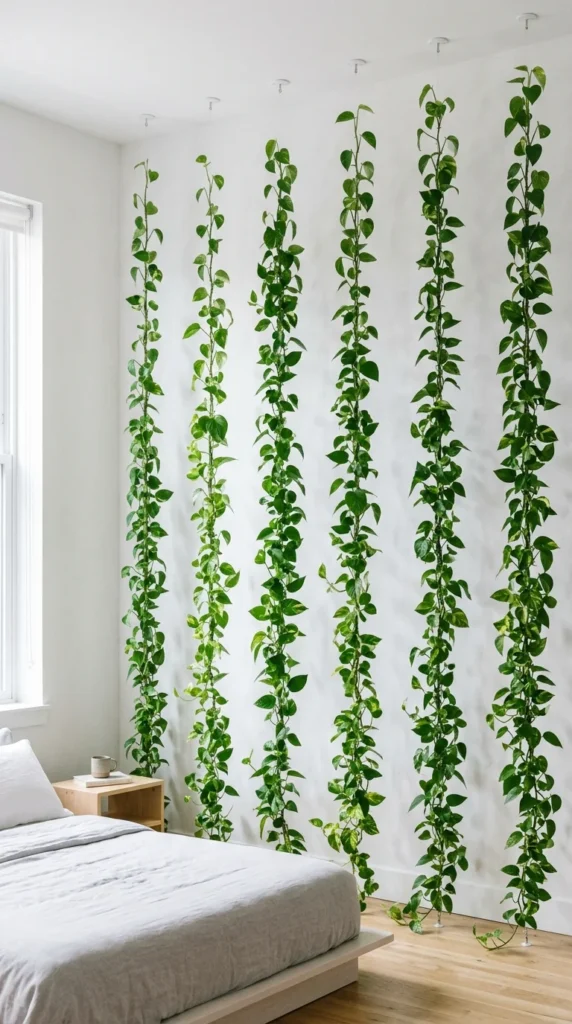
For those who love a clean, minimalist look, the “invisible trellis” method using clear fishing line is a game-changer.
Why it works: By tensioning fishing line between small eye-hooks at the ceiling and the baseboard, you create a path for the Pothos to climb. From a distance, the lines disappear, leaving only the “floating” vertical columns of leaves.
Growth Tip: Pothos vines don’t have tendrils like peas or grapes, so they won’t automatically wrap themselves around the line. You will need to manually wrap the vine around the string every few inches as it grows upward.
6. Picture Frame Trellis
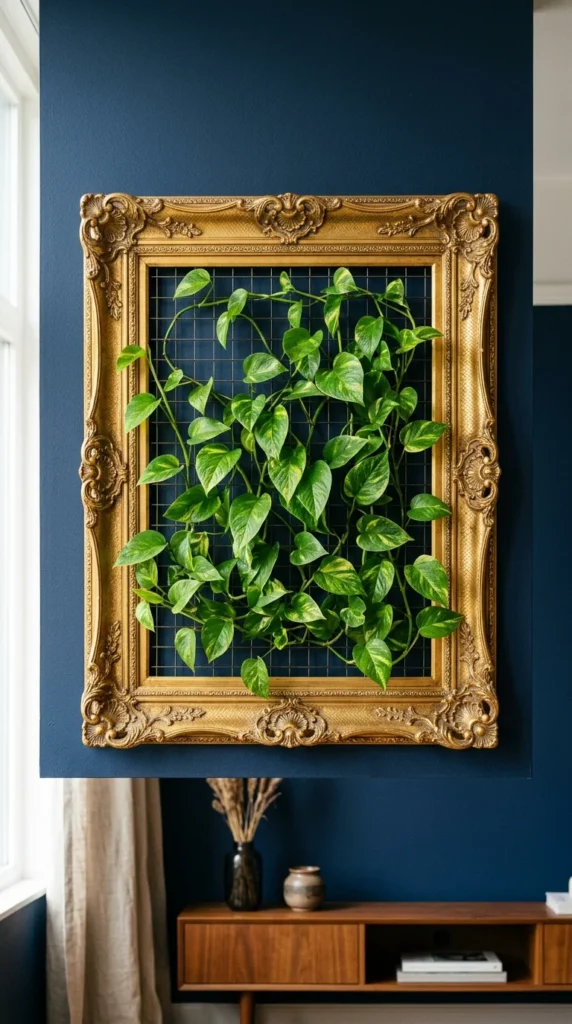
Who needs a painting when you have living art? Using an old picture frame as a border for your Pothos creates a focused, high-impact design element.
Why it works: It defines the space for the plant, preventing it from looking messy. It’s perfect for smaller rooms where a full-wall installation might feel overwhelming.
How to build it: Remove the glass and backing from a large frame. Staple chicken wire or a thin plastic mesh to the back of the frame. Mount it to the wall and place your Pothos pot on a small shelf directly underneath.
7. Moss Poles
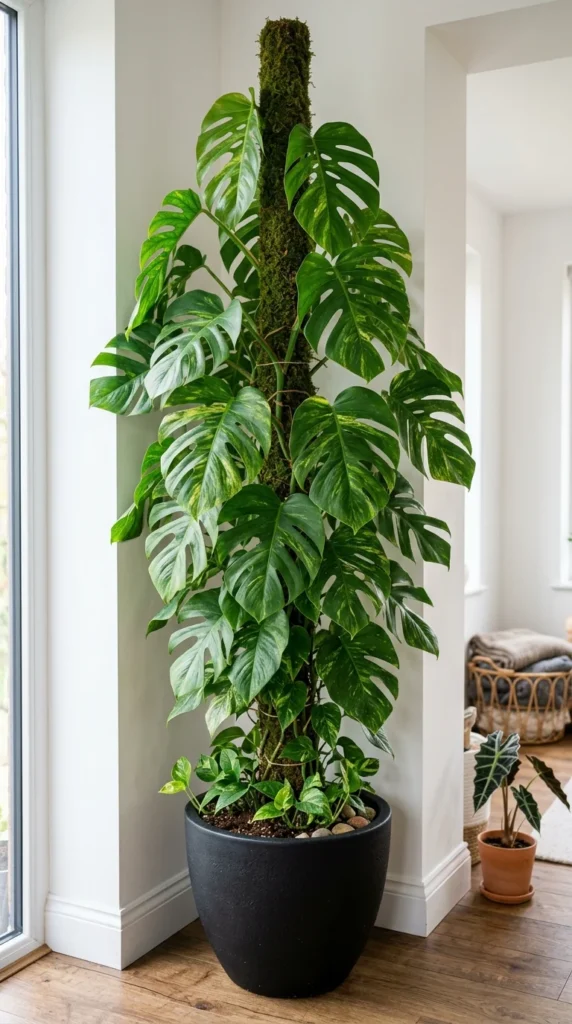
While often used for Monsteras, moss poles are incredible for Pothos. When a Pothos is allowed to climb a moist, organic surface, its leaves actually grow larger over time.
Why it works: The aerial roots of the Pothos will dig into the damp sphagnum moss, anchoring the plant and providing extra hydration. This mimics the plant’s natural environment where it climbs up tropical trees.
The “Wall” Aspect: Line up three or four tall moss poles against a single wall to create a “forest” effect. The verticality adds height to the room and makes the ceiling feel taller.
8. Cork Wall
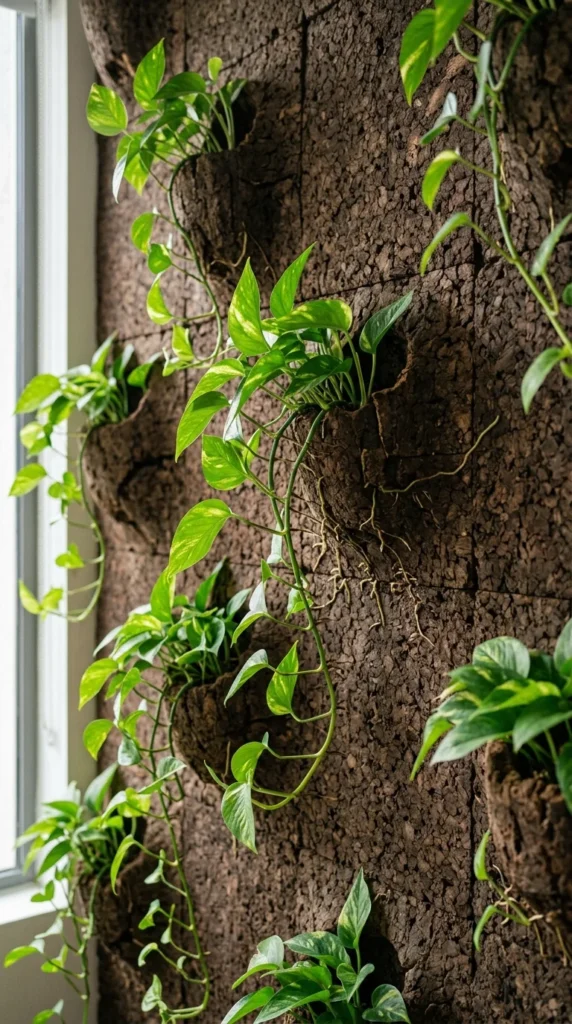
Cork is a sustainable, breathable material that provides an excellent backdrop for epiphytic plants like Pothos.
Why it works: Pothos aerial roots love texture. Over time, the Pothos will actually begin to “stick” to the cork on its own. The earthy tones of the cork also make the green of the leaves pop with vibrant intensity.
Installation: You can buy cork tiles and adhere them to a plywood backing before mounting the whole unit to the wall. This protects your actual wall from moisture while giving the plants a massive surface area to colonize.
9. Pegboard Garden
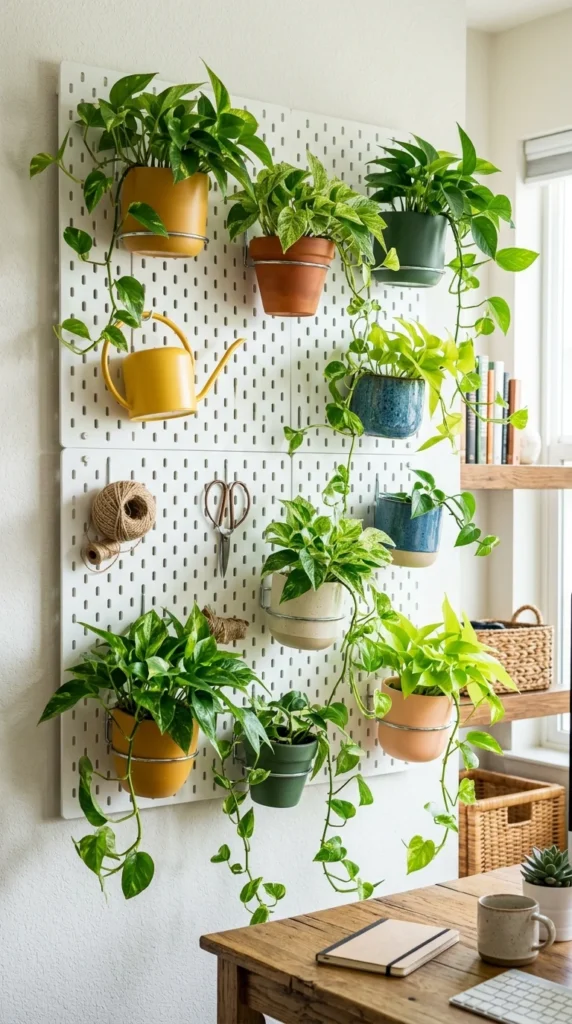
The pegboard is the ultimate tool for the organized plant parent. Usually reserved for workshops or kitchens, a pegboard makes for a highly customizable Pothos wall.
Why it works: You can move your plants around whenever you want. As one vine grows longer, you can move its pot higher or lower to adjust the “flow” of the wall. It also allows you to integrate your gardening tools into the display.
Customization: Paint the pegboard a bold color like terracotta or forest green to create a themed accent wall that serves as a functional vertical garden.
10. Copper Pipe Ladder
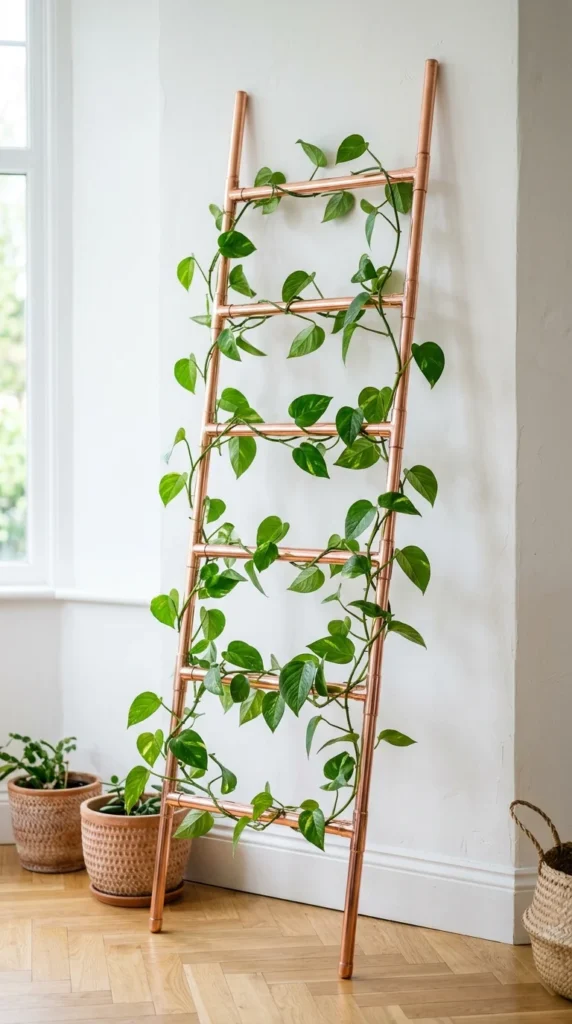
For an industrial or modern aesthetic, copper piping provides a stunning contrast to the organic shapes of Pothos leaves.
Why it works: The warmth of the copper and the coolness of the green leaves create a sophisticated palette. A copper ladder is slim and takes up very little floor space while providing plenty of “rungs” for the Pothos to drape over.
Maintenance: Copper is naturally antimicrobial, which is a small bonus for plant health. Ensure the pot at the bottom is heavy enough to anchor the ladder, or secure the top of the ladder to the wall for safety.
11. Command Hook Canopy

Why stop at the wall? A Pothos “canopy” uses the wall as a starting point to lead the vines across the ceiling, creating an immersive jungle experience.
Why it works: It utilizes the “dead space” of the ceiling and creates a sense of enclosure and coziness. It’s the ultimate way to show off the length of a long-established Pothos.
Ease of Use: Clear Command hooks are perfect for this because they are removable. You can create a “vine trail” that leads from one side of the room to the other, making your Pothos the true centerpiece of your home’s architecture.
Tips for a Healthy Pothos Wall
- Light Matters: While Pothos can survive in low light, they will grow much faster and produce larger leaves with bright, indirect sunlight. If your wall is in a dark corner, consider adding a stylish LED grow light.
- Watering Logistics: A wall of plants can be tricky to water. If your pots are high up, invest in a long-necked watering can or a step stool. Ensure your pots have drainage, but use saucer attachments or “cache pots” to prevent water from dripping down your walls.
- Dusting: Vertical leaves collect dust just like horizontal ones. Wipe your Pothos leaves down with a damp cloth every few weeks to keep the pores (stomata) clear so the plant can breathe and photosynthesize efficiently.
- Pruning: Don’t be afraid to trim! If a vine becomes “leggy” (lots of stem, few leaves), snip it back. This encourages the plant to branch out, resulting in a fuller, bushier wall.