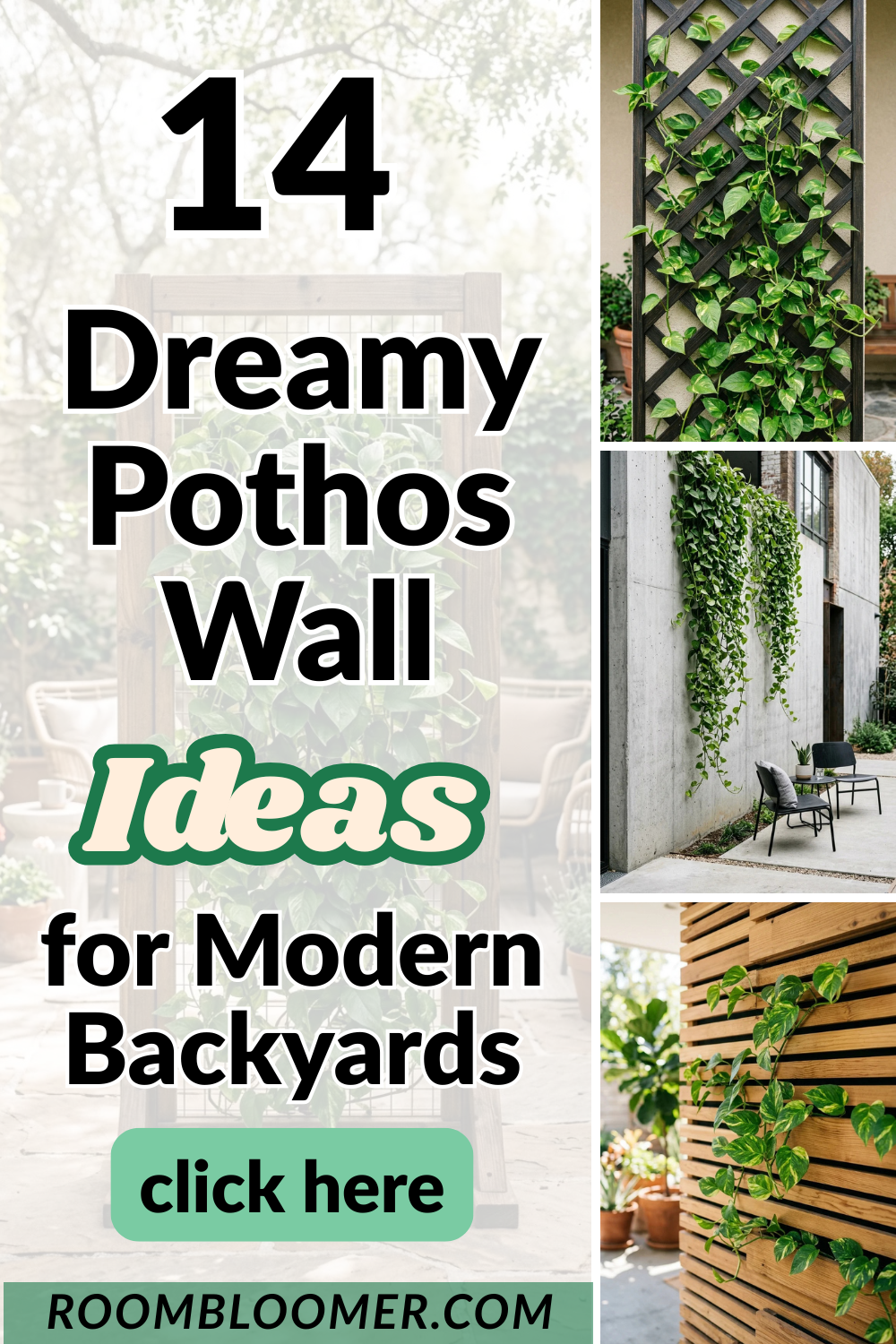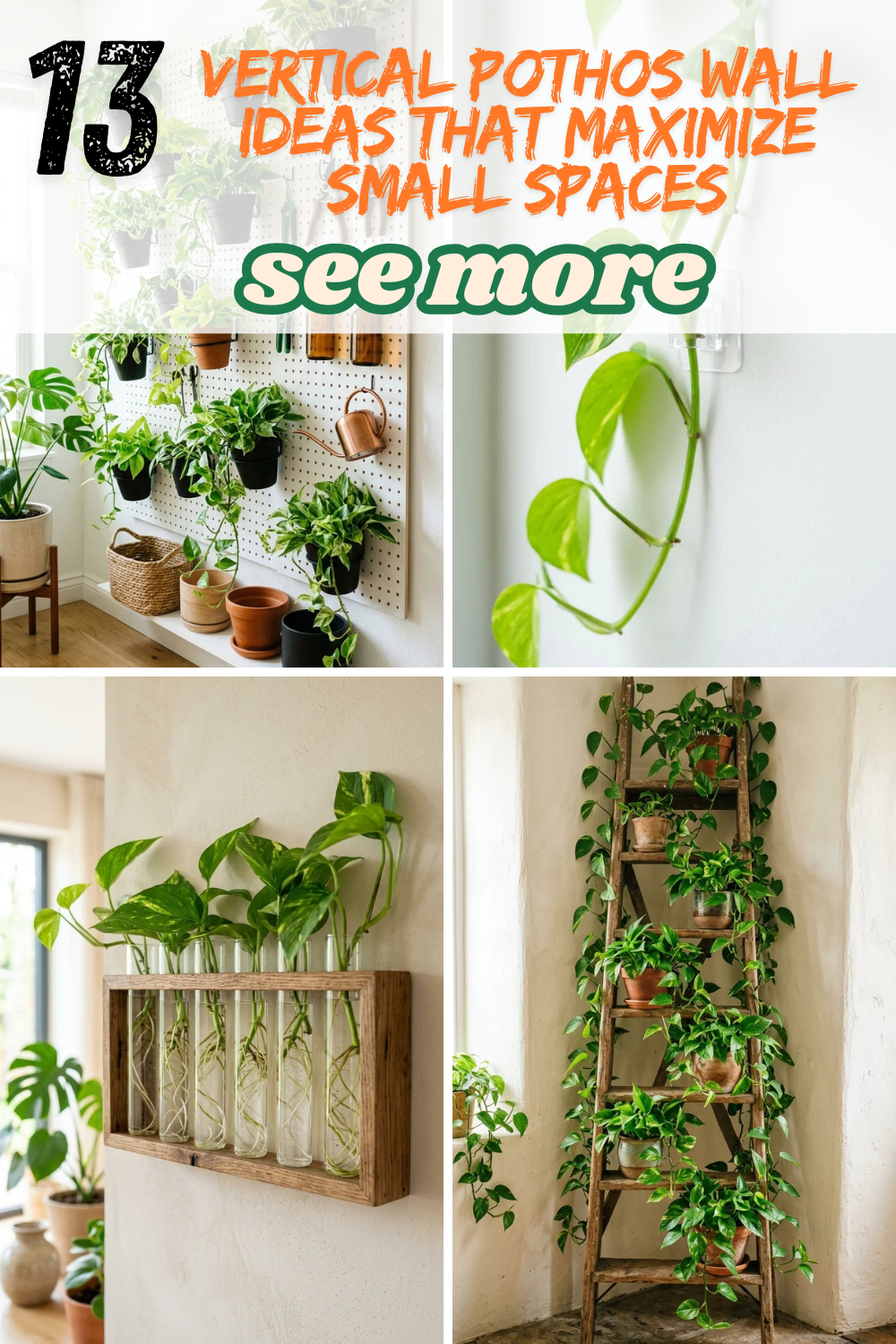
When you live in a small apartment or a compact home, floor space is the most valuable currency you have. But being short on square footage shouldn’t mean you have to sacrifice your dreams of an indoor jungle. Enter the Pothos (Epipremnum aureum). Known as the “gateway plant” for beginners, the Pothos is a vigorous climber and trailer that is practically begging to go vertical.
By taking your Pothos off the floor and onto the walls, you not only clear up walking space but also create a breathtaking “living wallpaper” effect. Here are 13 creative ways to utilize vertical space with the world’s most versatile houseplant.
1. Wire Trellis
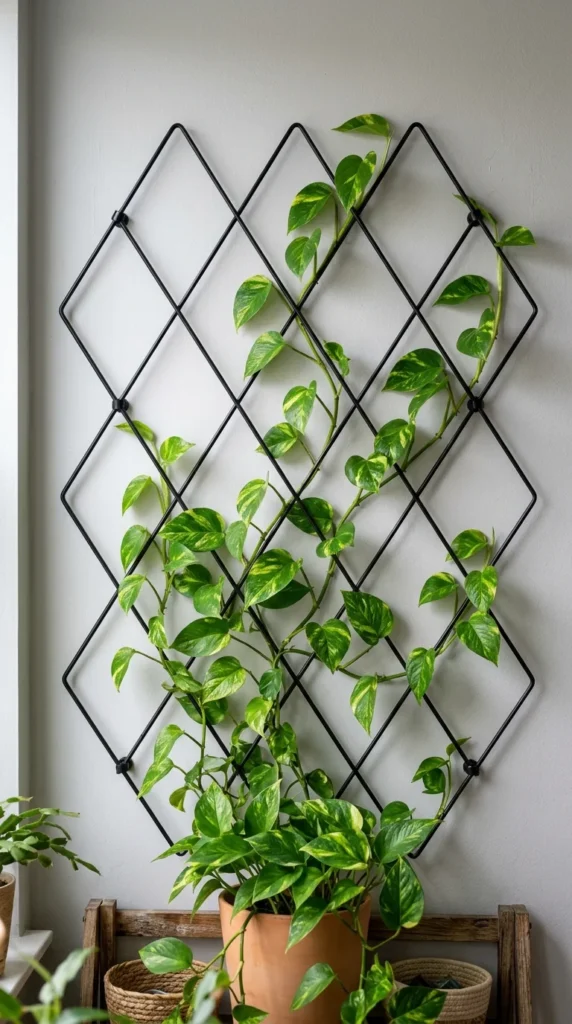
The wire trellis is the ultimate choice for those who love a clean, industrial-chic aesthetic. By mounting a thin metal grid—whether it’s a standard garden trellis or a repurposed wire cooling rack—directly onto your wall, you provide a sturdy skeleton for your Pothos to follow. As the vines grow, you can gently guide them through the openings. Over time, the foliage becomes so dense that the wire disappears entirely, leaving behind a geometric masterpiece of greenery. This method is particularly effective for filling large, blank wall spaces without the need for bulky furniture.
2. Macramé Slings
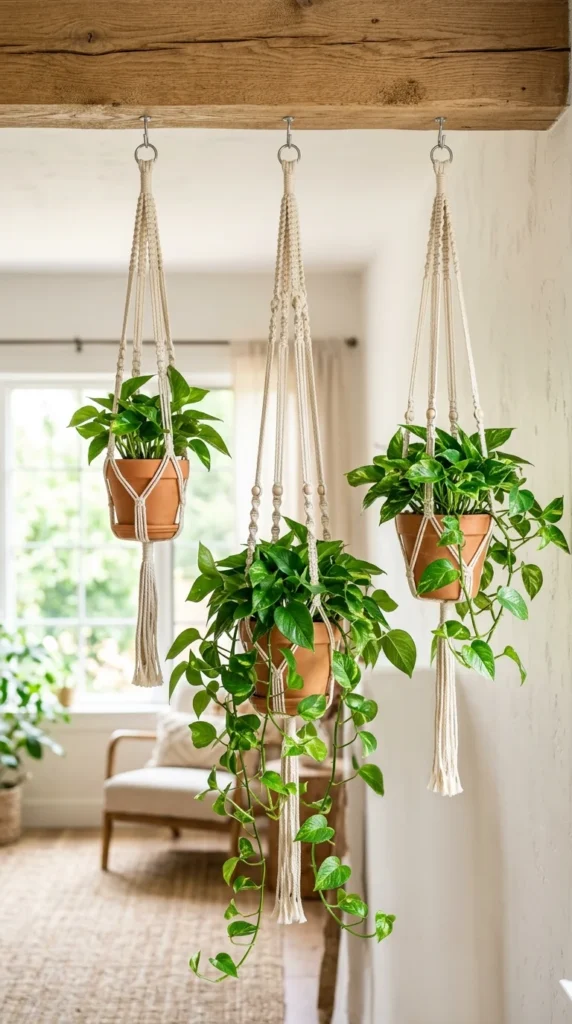
If your style leans more toward Bohemian or “Jungalow,” macramé slings are a timeless solution. These woven hangers allow you to suspend plants from the ceiling or high up on curtain rods, keeping your surfaces completely clear. The beauty of macramé is the layered look; by hanging multiple plants at different heights, you create a sense of depth and volume. For a small space, this draws the eye upward, making the ceilings feel higher than they actually are.
3. Moss Poles
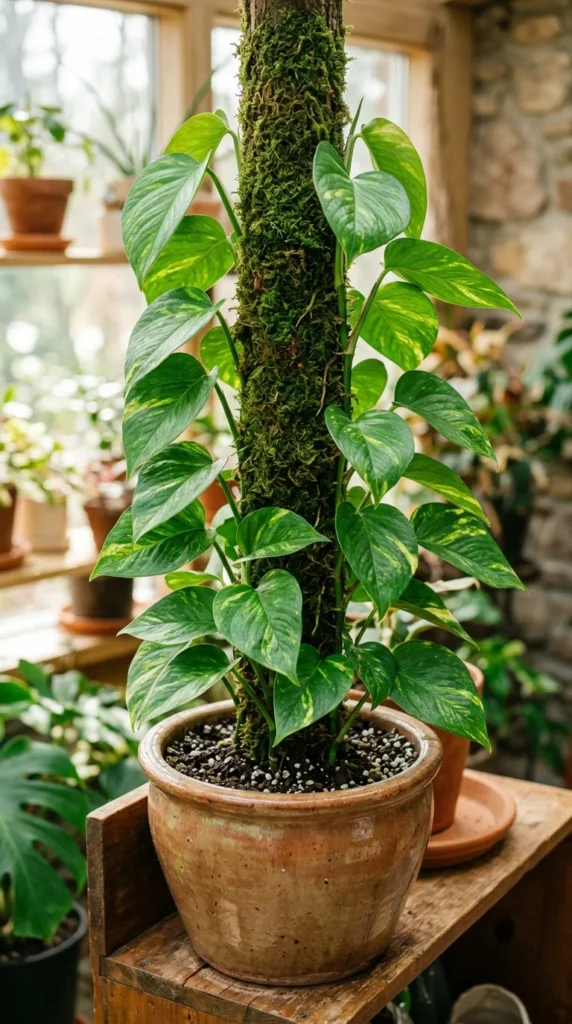
While many people think of Pothos as a trailing plant, it is naturally a climber. In the wild, they use aerial roots to scale trees. By providing a moss pole (a PVC or wood pipe wrapped in sphagnum moss), you mimic this natural environment. When a Pothos climbs upward, its leaves actually grow larger and more fenestrated over time. This vertical pillar of green takes up only a few inches of floor space while providing a massive visual impact.
4. Floating Shelves
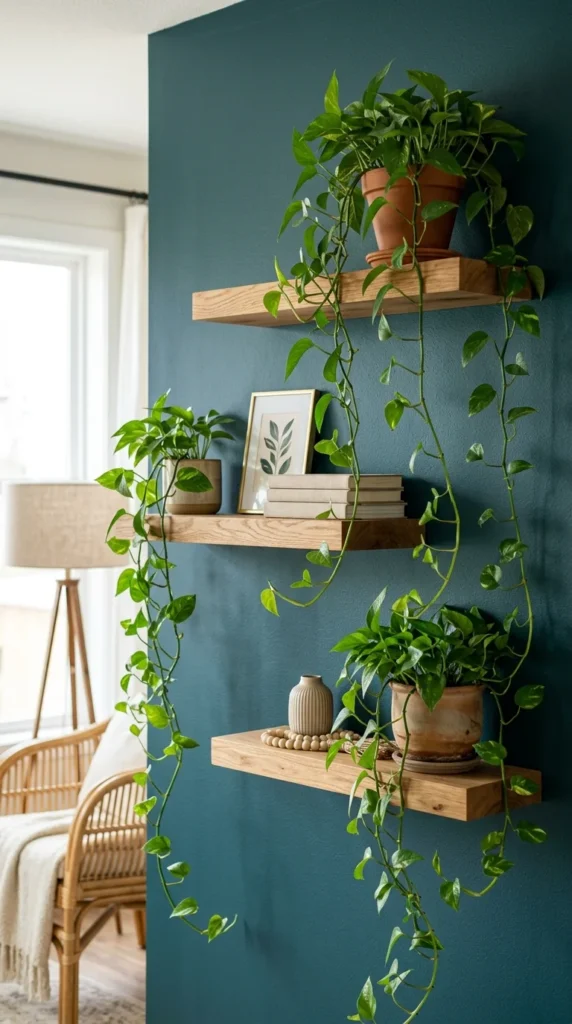
Floating shelves are a small-space dweller’s best friend. By installing a series of staggered shelves, you can create a “staircase” of greenery. Place your Pothos on the highest shelf and let the vines cascade down, brushing against the plants on the lower levels. This creates a waterfall effect that adds movement and life to a room. It’s also a highly functional way to use the space above a desk or a television.
5. Command Hooks
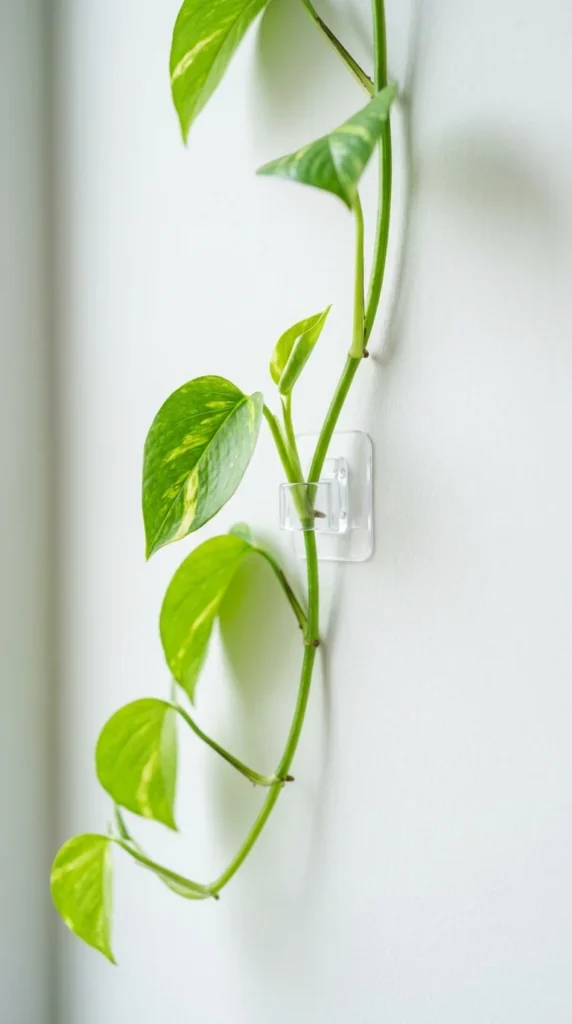
For renters who can’t drill holes into their walls, clear adhesive hooks (like Command hooks) are a game-changer. You can map out a specific path across your wall or even around your ceiling perimeter and use the hooks to “clip” the vines in place. This allows you to “paint” with your plants, creating organic patterns, framing doorways, or tracing the silhouette of a window. It’s lightweight, temporary, and creates a high-end look for just a few dollars.
6. Pegboard Gardens
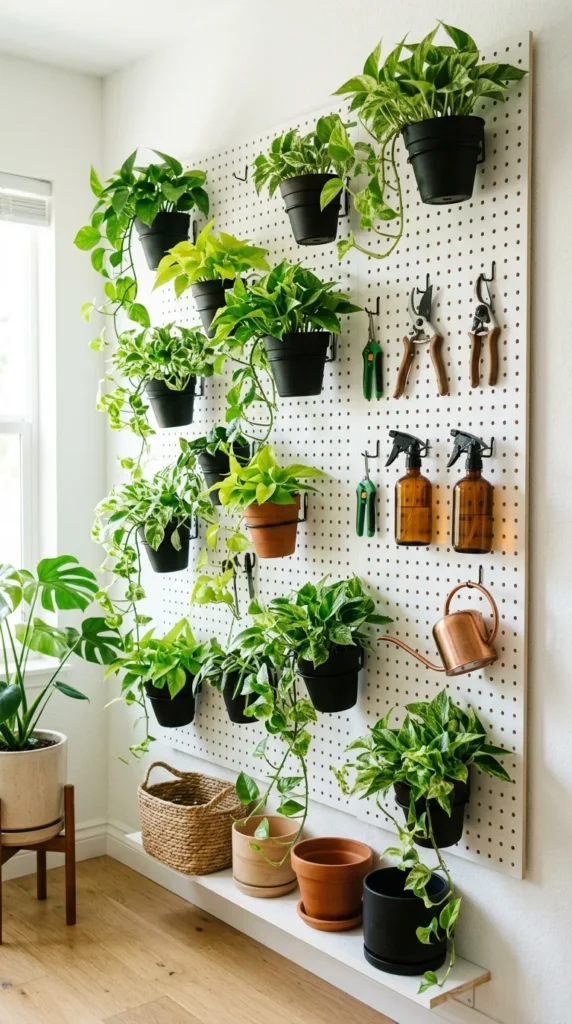
Pegboards aren’t just for garages and craft rooms anymore. A wall-mounted pegboard provides a modular system for your plants. You can move pots around as they grow, add hooks for trailing vines, and even store your watering can right on the wall. This is a brilliant solution for a home office, where you can surround your workspace with nature without cluttering your desk.
7. Geometric Pockets
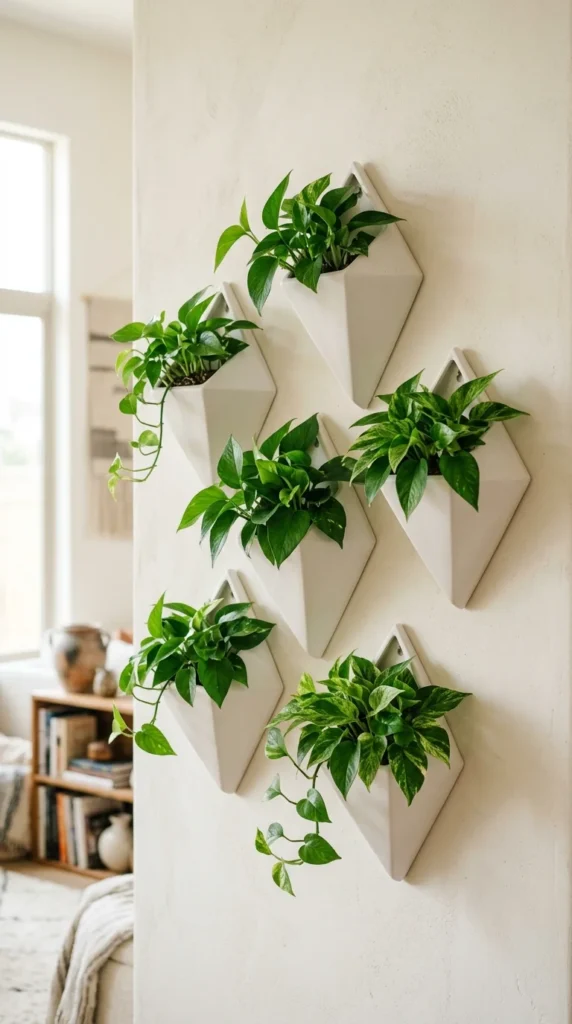
Geometric wall pockets act as living art. These small ceramic or plastic containers mount flush against the wall, making them ideal for narrow hallways or entryways where a traditional shelf might be too wide. When arranged in a cluster, they create a modern, sophisticated look. Because Pothos is so resilient, it can handle the slightly smaller root space of these pockets as long as you monitor the moisture levels.
8. Wooden Ladders
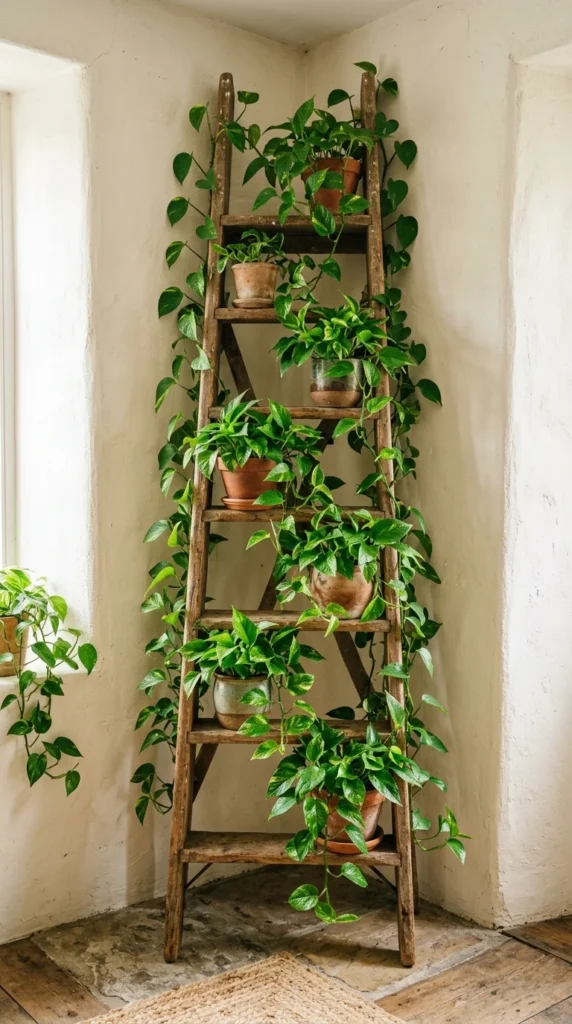
If you have an empty corner, a leaning ladder is a fantastic way to add vertical interest without any permanent installation. You can place pots on the rungs and train the vines to wrap around the sides of the ladder. This creates a dense “A-frame” of foliage. It’s an excellent choice for those who like to rearrange their furniture often, as the entire garden can be moved in one go.
9. Hanging Branches
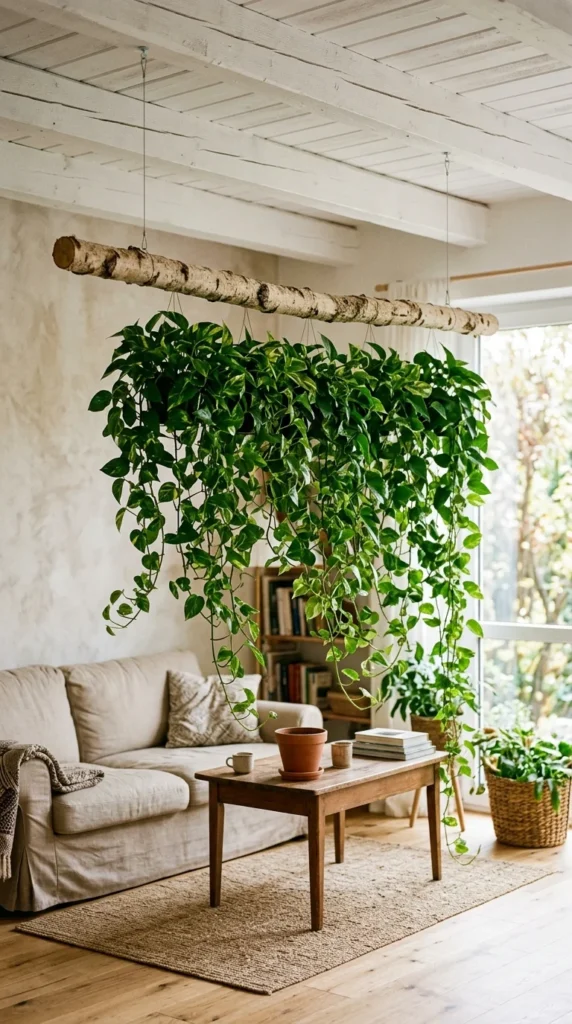
For a truly organic, forest-like feel, find a sturdy fallen branch (sanitize it first!) and suspend it from your ceiling using aircraft cable or heavy-duty twine. Drape your Pothos vines over the branch. This creates a “floating” curtain of greenery that can act as a room divider in a studio apartment, separating the sleeping area from the living area without blocking light or taking up floor space.
10. Felt Pockets
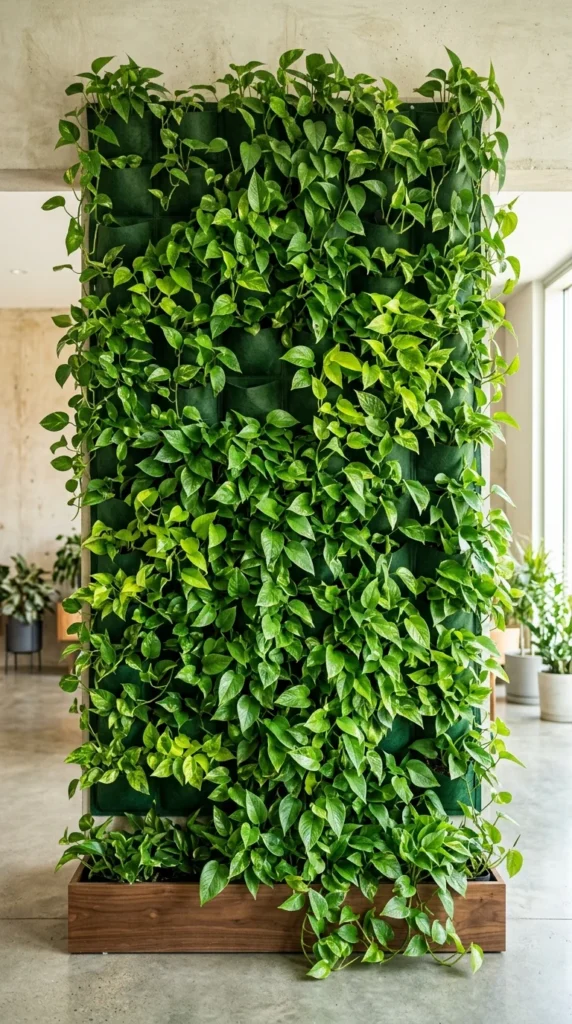
Felt pocket systems are designed for creating “living walls.” These breathable fabric pouches hold soil and plants and are usually mounted on a waterproof backing. Pothos is the perfect candidate for this because it grows quickly and fills in gaps effectively. Within a few months, the felt pockets will be completely hidden behind a solid wall of leaves, providing excellent sound insulation and air purification for your small space.
11. Lattice Screens
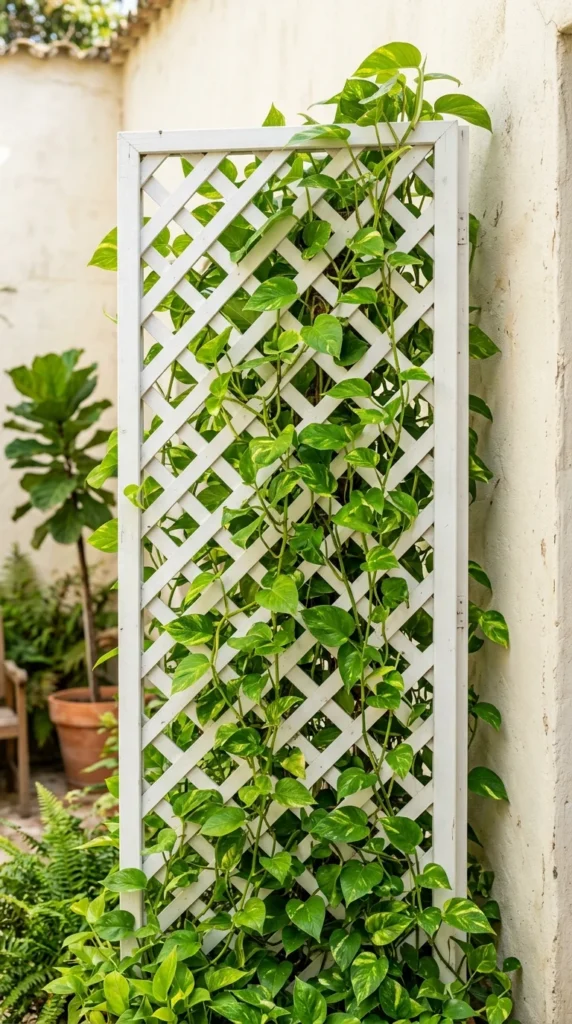
Lattice isn’t just for the garden. A small interior lattice panel can be mounted to a wall to create a structured climbing surface. This is particularly useful in “dead spaces,” like the narrow wall behind a door or the side of a wardrobe. The lattice gives the Pothos many points of contact, encouraging it to grow thick and full rather than just long and leggy.
12. Propagation Tubes
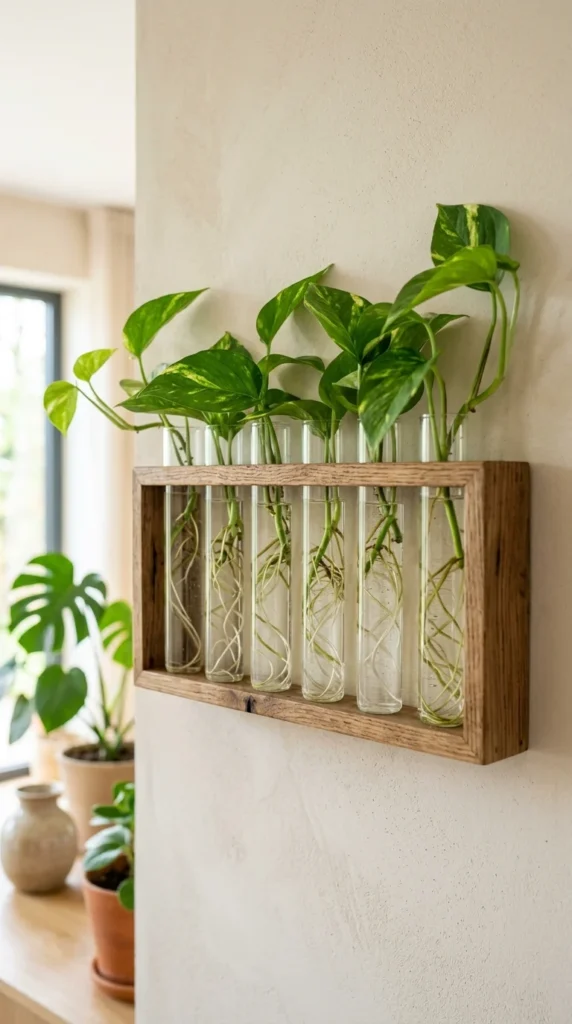
If you’re a fan of the “minimalist scientist” look, wall-mounted propagation stations are a beautiful way to display Pothos. Since Pothos roots so easily in water, you can keep cuttings in these tubes indefinitely. This creates a vertical display of both leaves and roots, adding a fascinating biological element to your wall decor. It’s also a great way to grow your collection for free!
13. Tension Rods
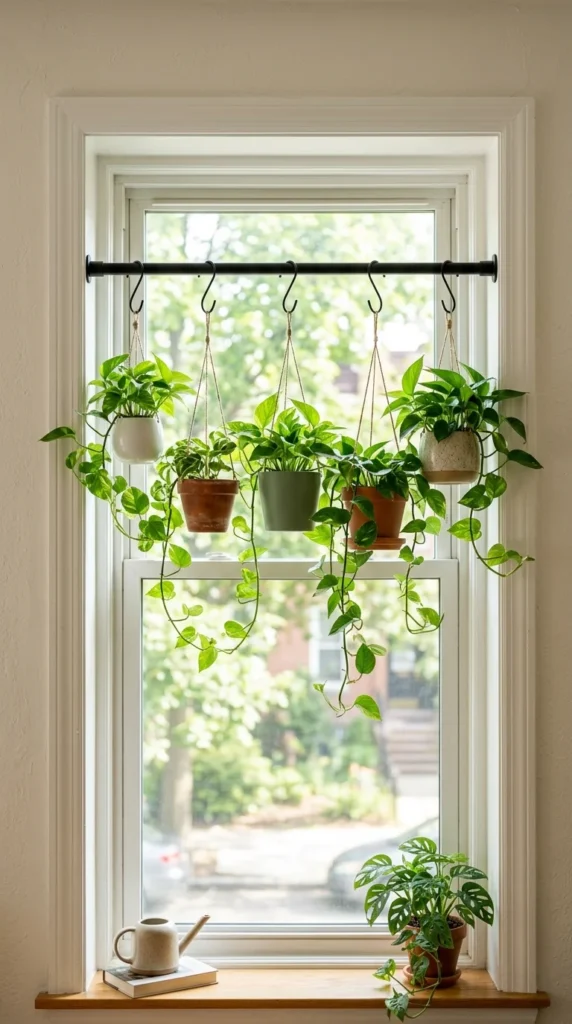
Don’t forget about your windows! In a small space, window sills are often crowded. By installing a heavy-duty tension rod across the window frame, you can hang a row of Pothos right in their favorite light source. Using “S” hooks, you can adjust the spacing and height of the plants easily. The trailing vines will eventually create a “living curtain,” providing privacy from neighbors while still letting filtered light into your home.
Pro-Tips for a Thriving Pothos Wall
- Light Matters: While Pothos can survive in low light, they will grow much faster and produce more “wall coverage” in bright, indirect light.
- Regular Pruning: To keep your wall looking full rather than “stringy,” prune the ends of the vines. This encourages the plant to branch out from the base, creating a bushier appearance.
- Dusting: Vertical walls can collect dust. Every few weeks, take a damp cloth and gently wipe the leaves. This not only keeps them looking shiny but also allows the plant to photosynthesize more efficiently.
- Watering Logic: Remember that heat rises. Plants near the ceiling will likely dry out faster than those lower down. Always check the soil of your highest plants first!