Transforming a standard apartment into a lush, designer-inspired sanctuary doesn’t require a degree in interior architecture—it requires a strategic eye for greenery. In urban living, where floor space is often a luxury, how you display your plants is just as important as the plants themselves. Professional interior designers use plants not just as “decor,” but as structural elements that add texture, color, and life to a room.
From creating vertical interest to utilizing negative space, these ten display ideas will help you elevate your botanical collection from a random assortment of pots to a curated gallery of nature.
1. Tiered Pedestals
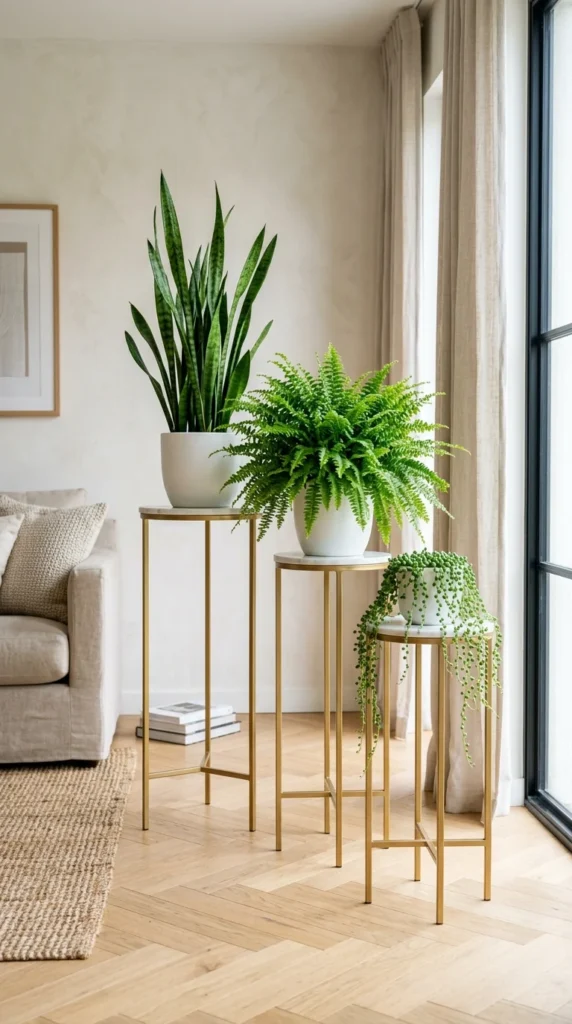
One of the most common mistakes in apartment decorating is placing all plants on the floor or the same tabletop. This creates a flat, uninteresting visual line. Designers use tiered pedestals to create a sense of rhythm and architectural height.
- Vary the Heights: Choose stands in sets of three with varying heights (small, medium, large). This “rule of three” is a staple in design that creates a more pleasing composition for the human eye.
- Mix Materials: Look for pedestals that complement your existing furniture. If you have a lot of wood, try matte black metal or stone stands to introduce a new texture.
- Create a Focal Point: Use a taller pedestal to showcase a “star” plant, like a variegated Monstera, making it the centerpiece of a corner that would otherwise go unnoticed.
2. Vertical Trellises
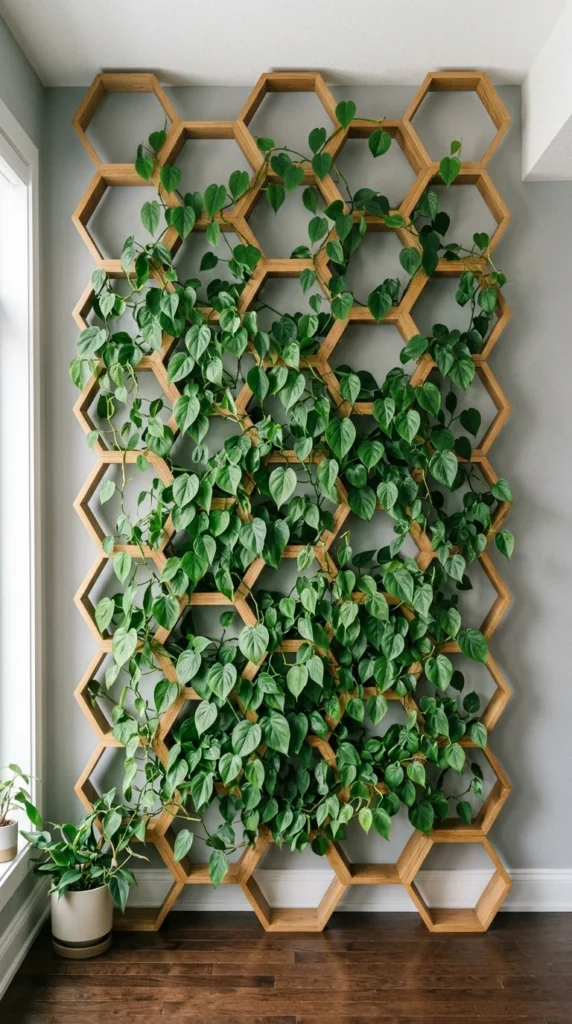
When you lack horizontal square footage, the only way to go is up. A vertical trellis turns your climbing plants into a living piece of wall art. Instead of letting vines hang haphazardly, training them onto a structure gives them a deliberate, “designed” appearance.
- Geometric Shapes: Move away from traditional garden lattices. Opt for modern shapes like honeycombs, circles, or minimalist wire grids that look like sculpture even before the plant covers them.
- Plant Choice: Fast-growing climbers like Pothos, Heartleaf Philodendron, or Hoya are perfect for this setup. As they grow, use small clear clips to guide the vines along the frame.
- The “Living Wall” Effect: By covering a significant portion of a wall with a trellis, you create a lush backdrop that softens the hard lines of apartment architecture.
3. Monochromatic Clusters
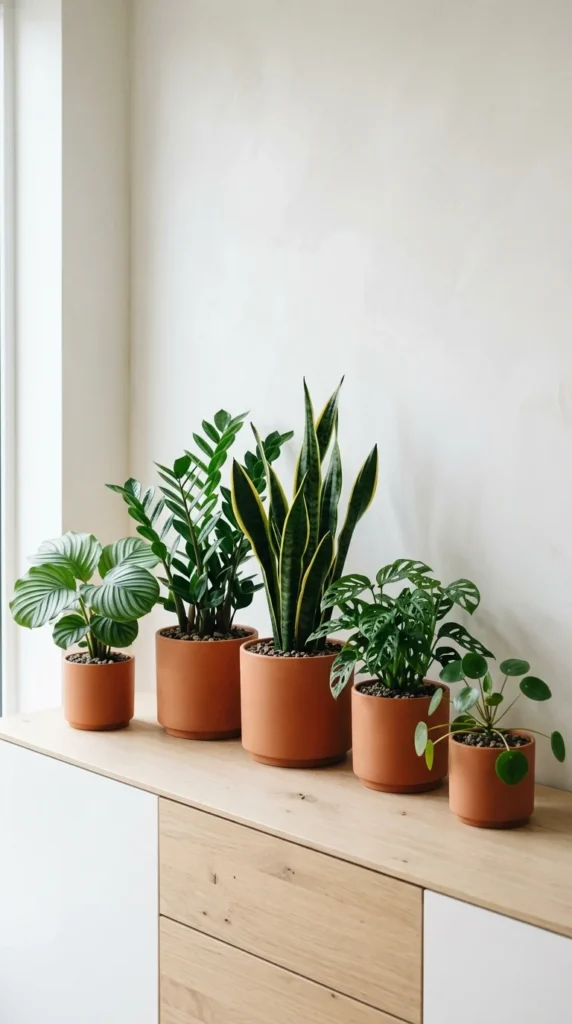
A hallmark of designer homes is a sense of cohesion. You can make a diverse group of plants look like a curated collection simply by unifying their “outfits.”
- Consistent Color Palette: Choose one color for all your pots—whether it’s crisp white, moody charcoal, or earthy terracotta. The variety comes from the different leaf shapes and textures, while the pots provide a calming visual consistency.
- Texture Over Color: If you want some variety, keep the color the same but vary the textures—one pot might be ribbed, another speckled, and another smooth.
- The Power of Repetition: Repeating the same pot style across a room ties the entire space together, making the greenery feel like an intentional part of the interior design rather than an afterthought.
4. Floating Ledges
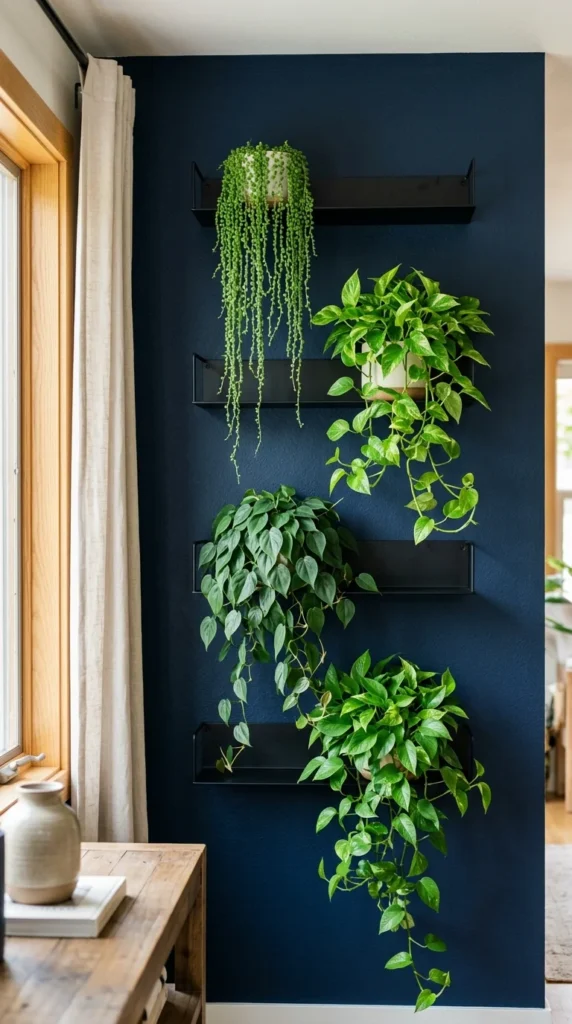
Floating shelves are a designer’s secret weapon for small apartments. They provide a platform for greenery without taking up an inch of floor space. When used for plants, they create “suspended jungles” that draw the eye upward and make ceilings feel higher.
- The Waterfall Effect: Place trailing plants like English Ivy or Creeping Fig on the highest shelves. As the vines grow downward, they create a soft, organic curtain that contrasts beautifully with the sharp lines of the shelves.
- Staggered Placement: Don’t align shelves perfectly. Staggering them creates a more dynamic, “organic” flow that mimics how plants grow in nature.
- Integrated Lighting: Consider adding a small LED puck light or a clip-on grow light to the underside of a shelf to highlight the plant below and ensure it gets enough light in darker corners.
5. Hanging Clusters
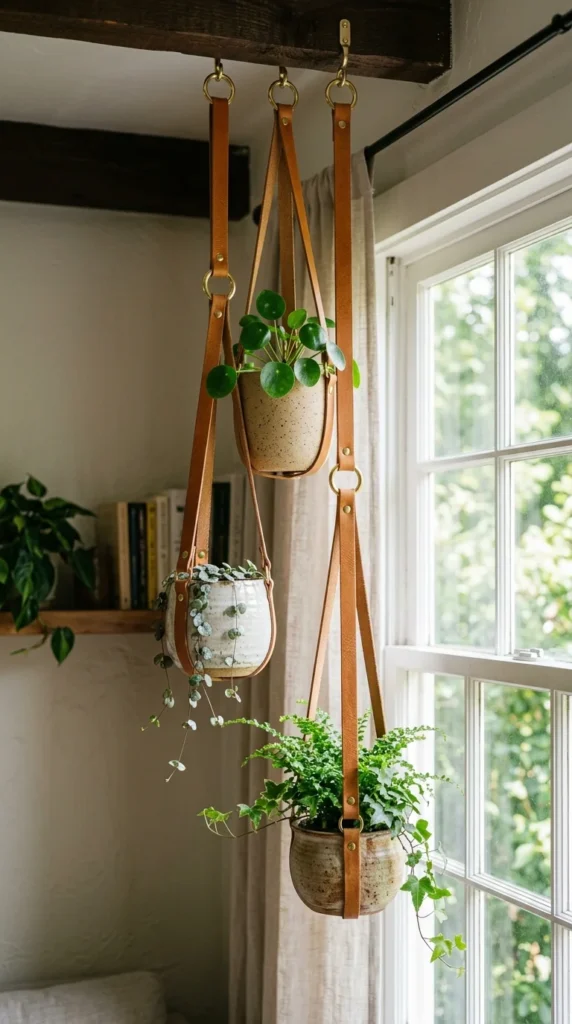
Hanging plants are classic, but the “designer” touch comes from grouping them together at different lengths. Instead of one lonely plant in a window, think of hanging plants as a botanical chandelier.
- Odd Numbers: Always hang plants in groups of three or five. This prevents the display from looking too symmetrical and stiff.
- Vary the Hangers: Mix macramé with leather straps or minimalist wire hangers. The contrast in materials adds a layer of sophisticated bohemian chic.
- Clear the Air: Using the ceiling for plants keeps your surfaces clear for books, lamps, and coffee mugs, which is essential for maintaining a clean, “staged” look in a small apartment.
6. Repurposed Bar Carts
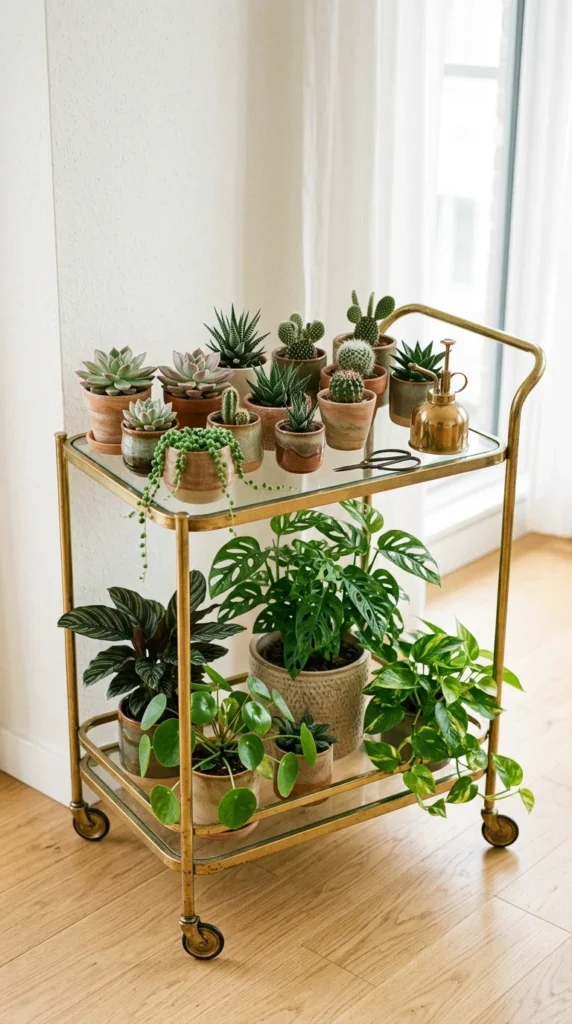
Bar carts are no longer just for spirits. A “plant cart” is a mobile, multi-level garden that can be moved to follow the sun or to clear space for entertaining. It’s an unexpected way to display greenery that feels high-end and quirky.
- Multi-Level Interest: Use the top shelf for smaller, “showy” plants like succulents or flowering African Violets. Use the bottom shelf for larger, bushier plants like a Bird of Paradise or a large Fern.
- The Styling: Treat the cart like a vignette. Add a few gardening books, a stylish brass watering can, and perhaps a small mister to complete the look.
- Mobility: The beauty of a cart on wheels is functionality. If you’re having a party, you can roll your “green wall” into the corner, or move it toward a window during the day for maximum light exposure.
7. Statement Specimen
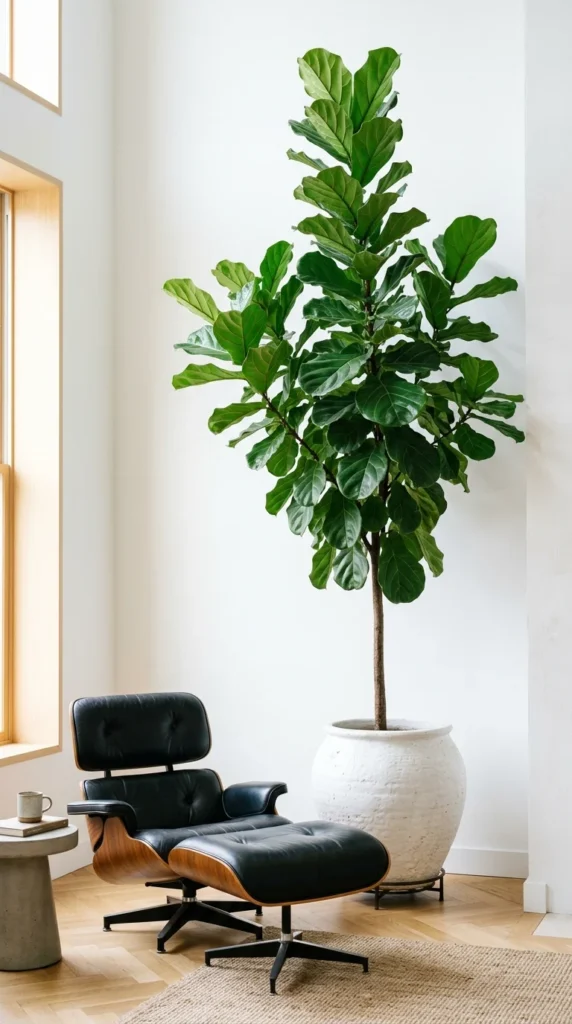
Sometimes, less is more. Designers often use one massive, high-quality plant to anchor a room. This “statement specimen” acts as a piece of living furniture and creates an instant “wow” factor.
- Size Matters: Look for a plant that is at least five to six feet tall. Popular choices include the Fiddle Leaf Fig, the Olive Tree, or the Rubber Tree.
- The Right Vessel: Because this plant is a focal point, the pot is crucial. Invest in a high-quality ceramic or stone planter that matches your room’s aesthetic. A cheap plastic nursery pot will ruin the “designer” illusion.
- Lighting as Drama: Use an uplight placed behind the pot to cast shadows of the leaves onto the wall and ceiling at night, creating a dramatic, architectural atmosphere.
8. Glass Terrariums
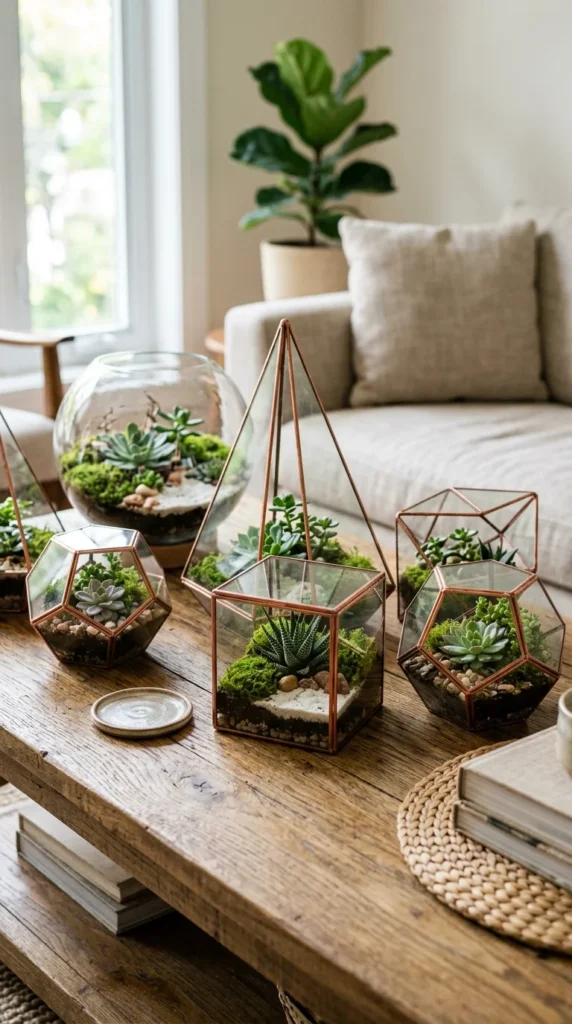
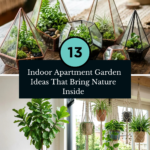
For those who love detail, terrariums offer a way to display plants as if they were precious museum artifacts. These miniature ecosystems are perfect for coffee tables, nightstands, or bookshelves where space is tight but style is a priority.
- Landscape Art: Don’t just stick a plant in dirt. Use layers of colored sand, charcoal, and decorative pebbles to create a miniature “landscape.”
- Geometric Shapes: Opt for glass vessels with metal frames (copper, gold, or black) to give the display a modern, jewelry-like quality.
- Low Maintenance: Closed terrariums create their own humidity, making them perfect for moisture-loving ferns and mosses, and they require very little watering—ideal for the busy apartment dweller.
9. Window Sill Jungles
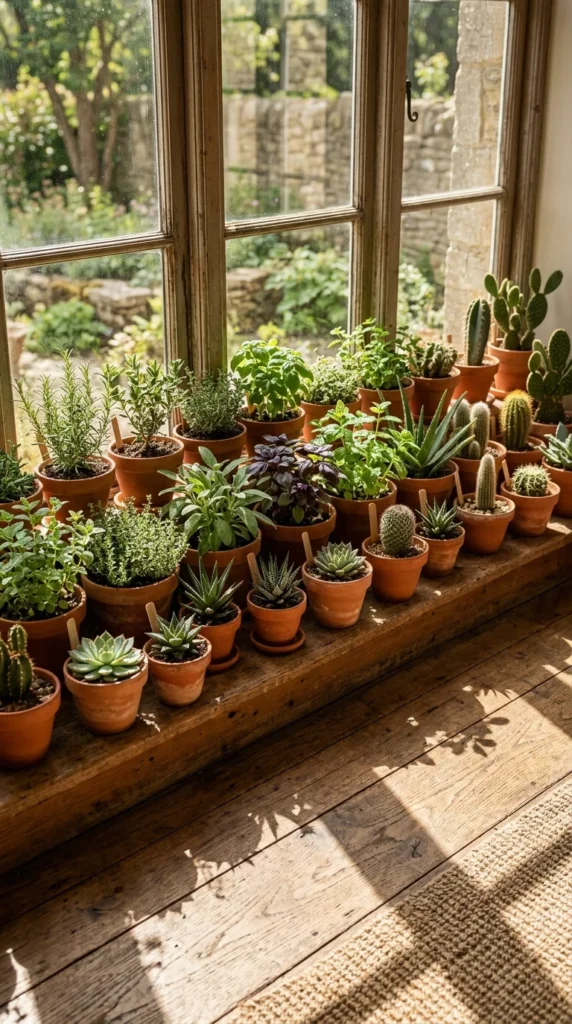
The window sill is the most valuable real estate for a plant lover. To make it look “designer-made” rather than cluttered, you need to think about density and layering.
- Wall-to-Wall Greenery: Instead of spacing plants out, pack them together. This creates a “curtain” of green that provides privacy from neighbors while still letting light filter through.
- Consistent Potting: Use identical pots for everything on the sill to keep the look clean. Simple terracotta or white ceramic works best against the bright light of a window.
- Height Variation: Use small wooden blocks or upside-down bowls to lift some plants higher than others, ensuring every leaf gets its moment in the sun.
10. Ladder Shelves
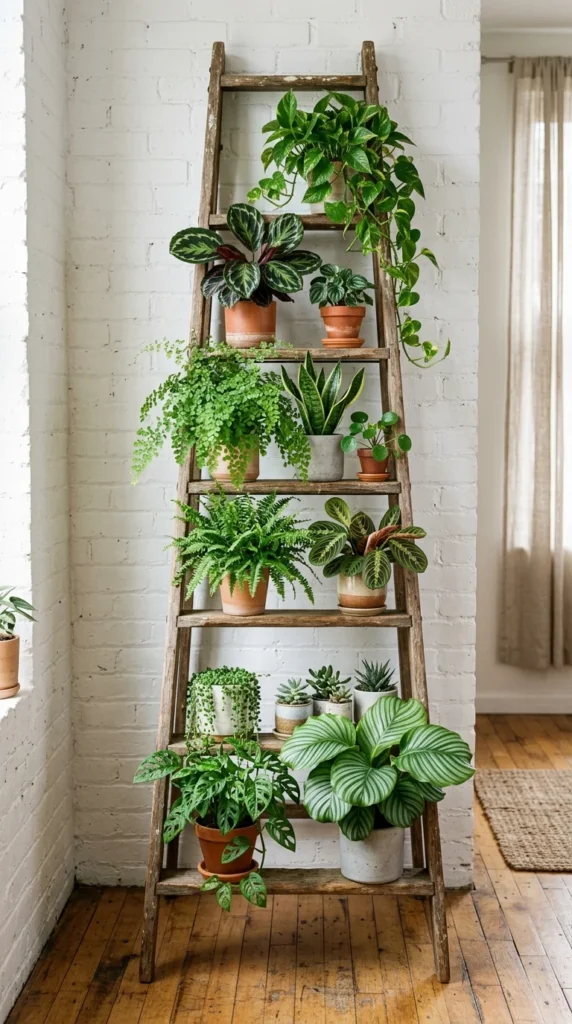
The leaning ladder shelf is a favorite in modern apartment design because it has a small footprint but offers massive vertical storage. It creates a “stairway” of greenery that feels effortless and chic.
- Natural Materials: Wood or bamboo ladders add warmth to a room. If your apartment is more industrial, a black metal ladder offers a sleek, edgy vibe.
- Visual Balance: Place the heaviest, largest plants on the bottom rungs to “ground” the display. As you move up the rungs, use progressively smaller pots and daintier plants.
- Incorporate Decor: Don’t fill every inch with plants. Leave a spot for a candle, a stack of books, or a small piece of sculpture to give the eye a place to rest and to make the display feel integrated into your home.