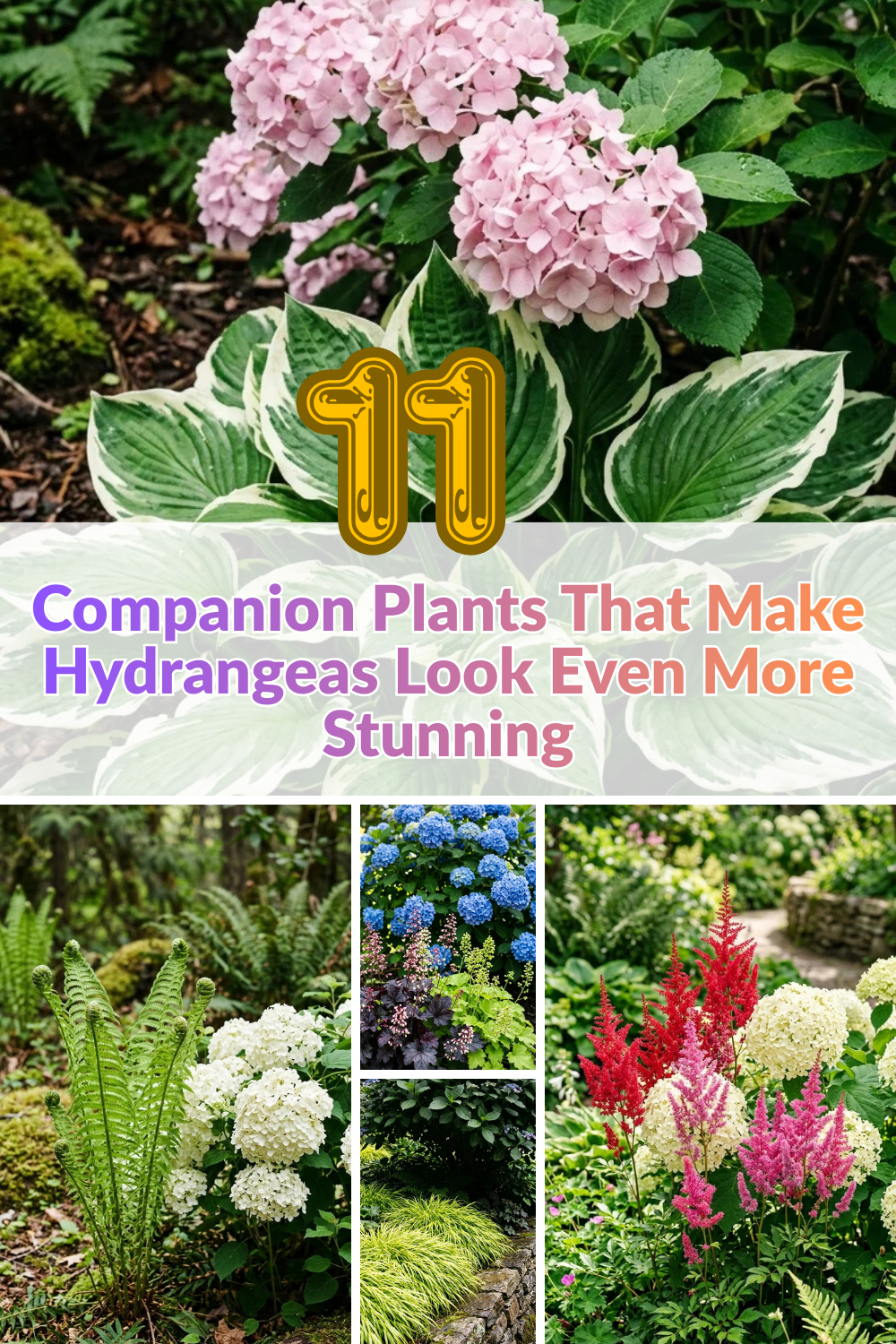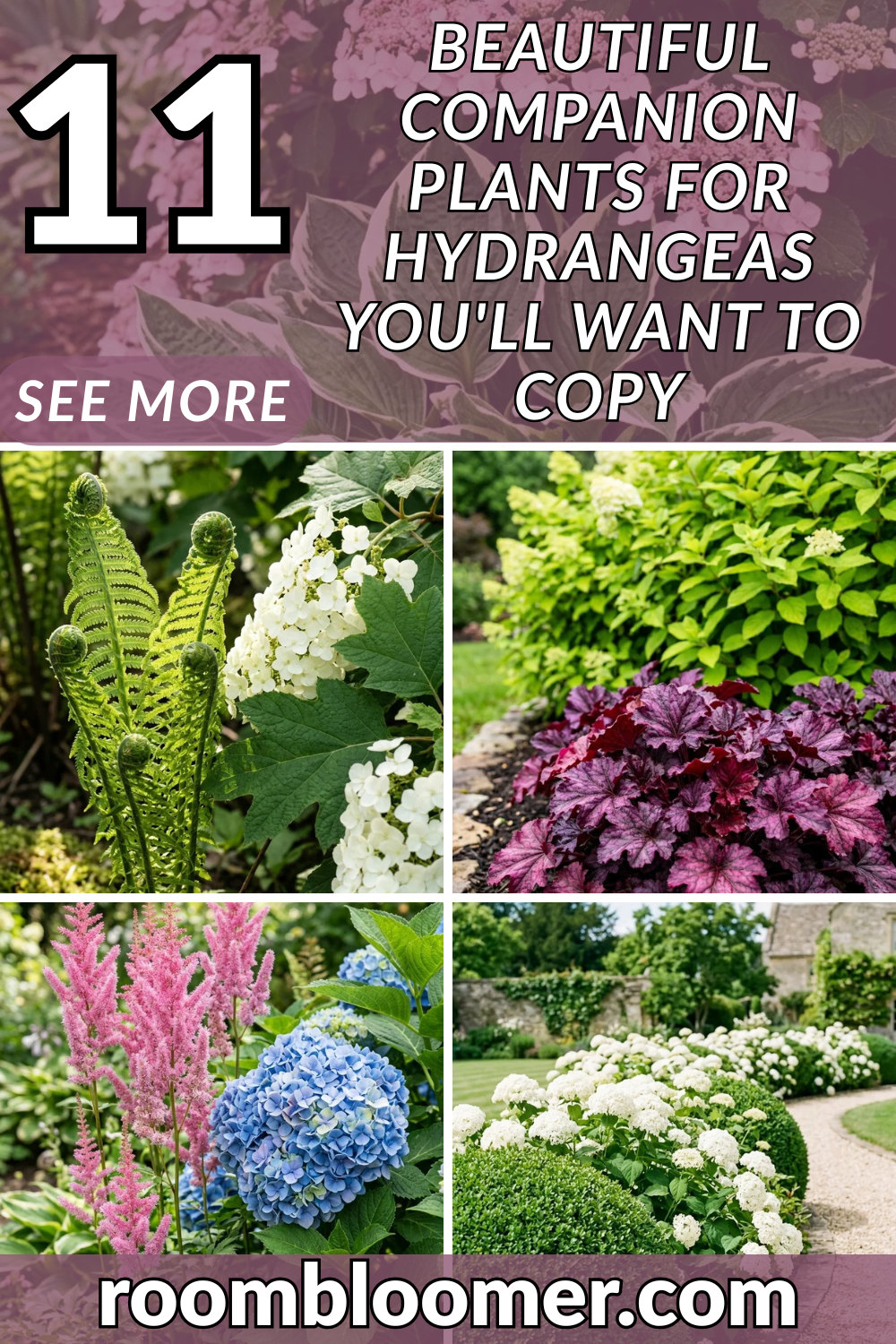
Hydrangeas are the undisputed royalty of the summer garden. With their massive, pillowy blooms and lush green foliage, they command attention from late spring through the first frost. However, even a queen needs a court. To truly make your hydrangeas pop and create a garden that looks professionally designed, you need the right companion plants.
Choosing the perfect partners for hydrangeas isn’t just about aesthetics; it’s about finding plants that thrive in the same conditions—typically moist, well-drained soil and a mix of sun and dappled shade. The right companions provide structural contrast, extend the blooming season, and fill in the “naked” stems often found at the base of older hydrangea shrubs.
Here are 11 stunning companion plants that will elevate your hydrangea garden to a work of art.
1. Hostas
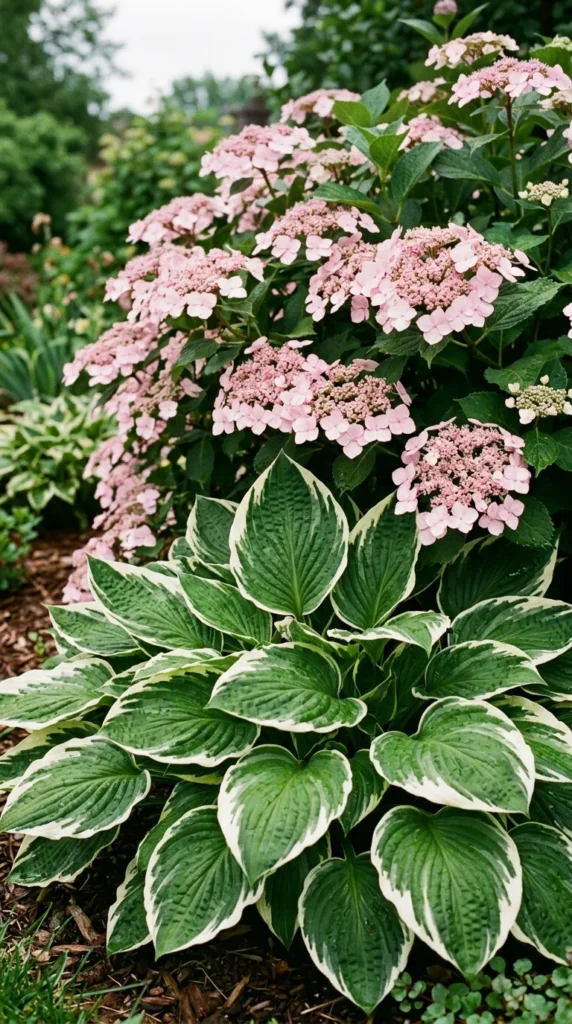
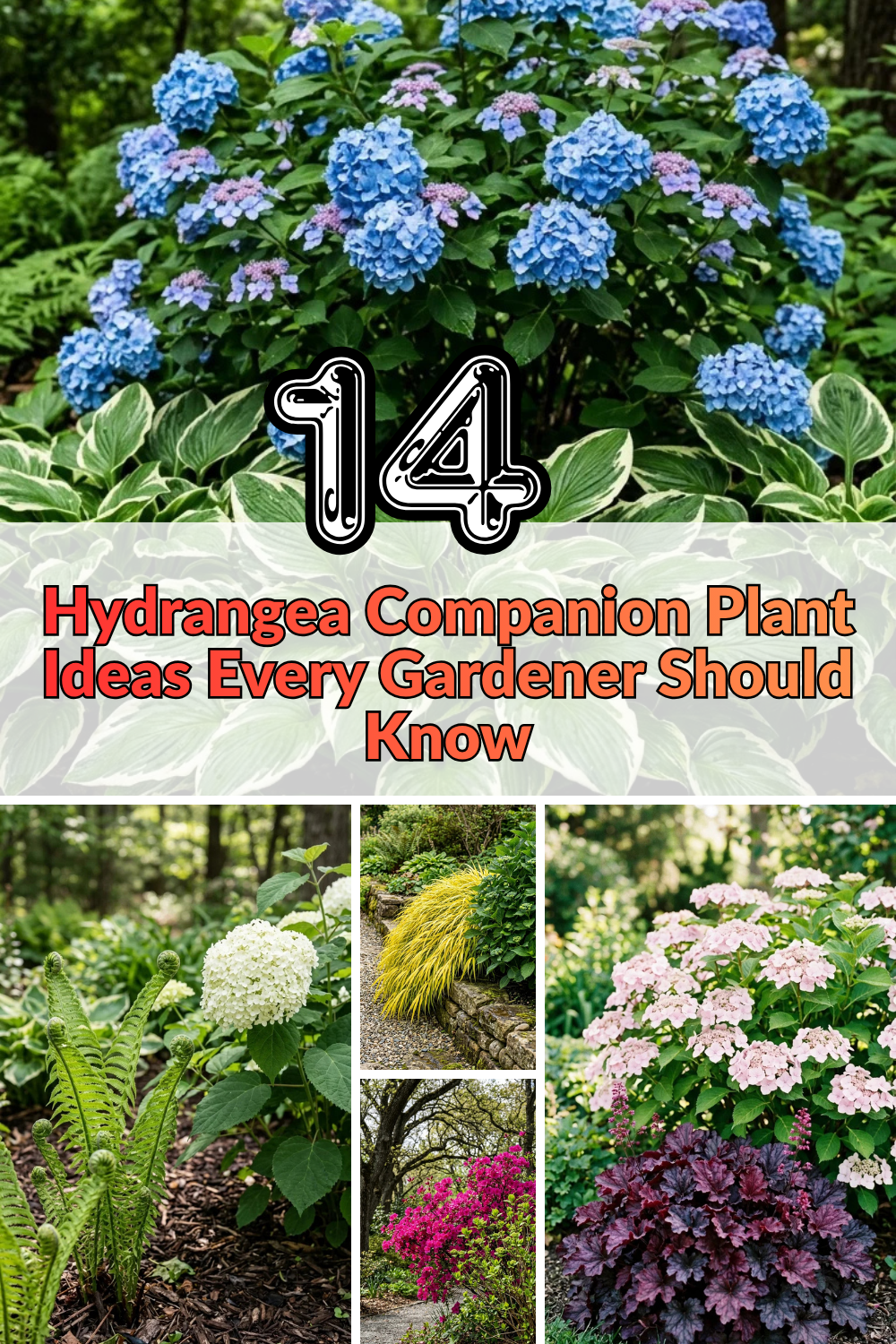
Hostas and hydrangeas are the ultimate power couple of the shade garden. Since both plants thrive in filtered light and appreciate consistent moisture, they are naturally compatible. The primary reason this pairing works so well is the dramatic contrast in foliage.
Hydrangeas have relatively medium-sized, serrated leaves. Hostas, on the other hand, come in a staggering variety of shapes, sizes, and colors—from the giant, blue-tinted ‘Empress Wu’ to the bright, chartreuse ‘Sum and Substance.’ Planting hostas around the base of your hydrangeas helps “ground” the shrubs and hides the woody lower stems. The broad, smooth leaves of the hosta act as a visual anchor for the airy, complex blossoms of the hydrangea.
2. Ferns
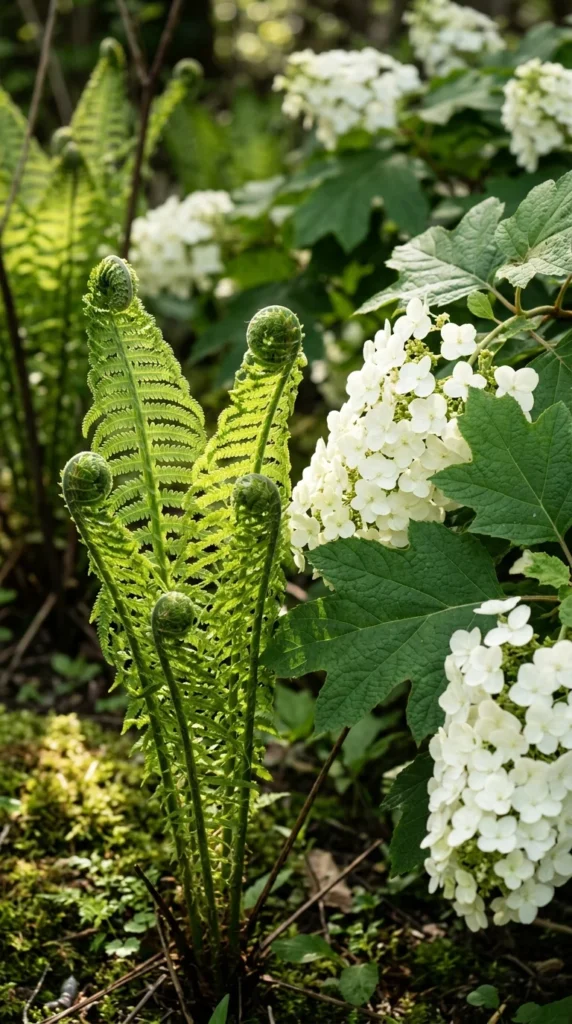
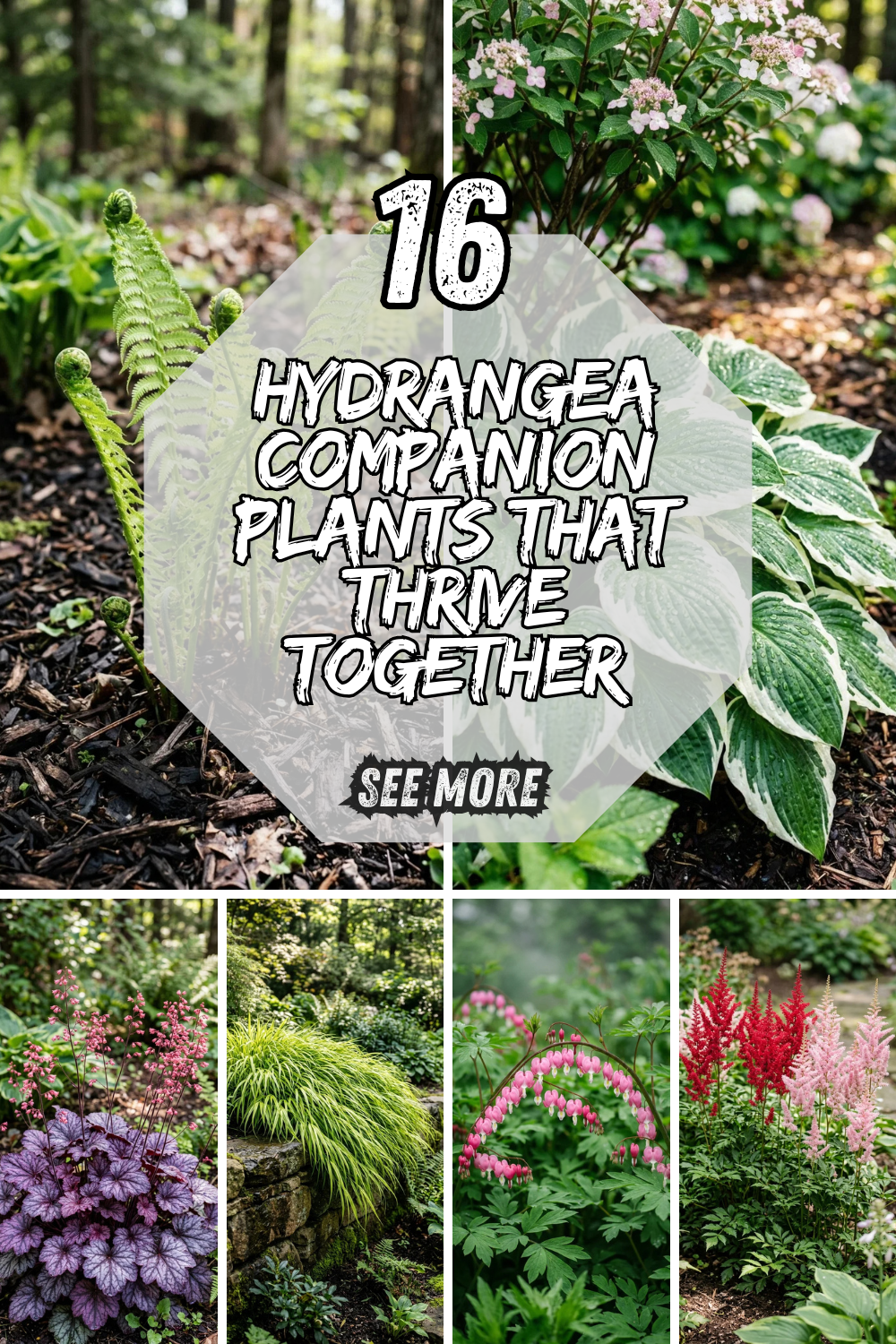
If you want to create a woodland retreat or a “secret garden” vibe, ferns are your best friend. While hydrangeas provide the “weight” in the garden, ferns provide the “air.” Their delicate, feathery fronds offer a soft textural contrast to the bold, heavy flower heads of mophead and lacecap hydrangeas.
Ostrich ferns or Cinnamon ferns are excellent choices for larger hydrangea varieties, as they can grow tall enough to stand their ground. For a touch of color, consider the Japanese Painted Fern, which features silvery-purple fronds that beautifully complement blue or purple hydrangea varieties. Ferns are also excellent at filling in those damp, shady corners where other plants might struggle.
3. Coral Bells
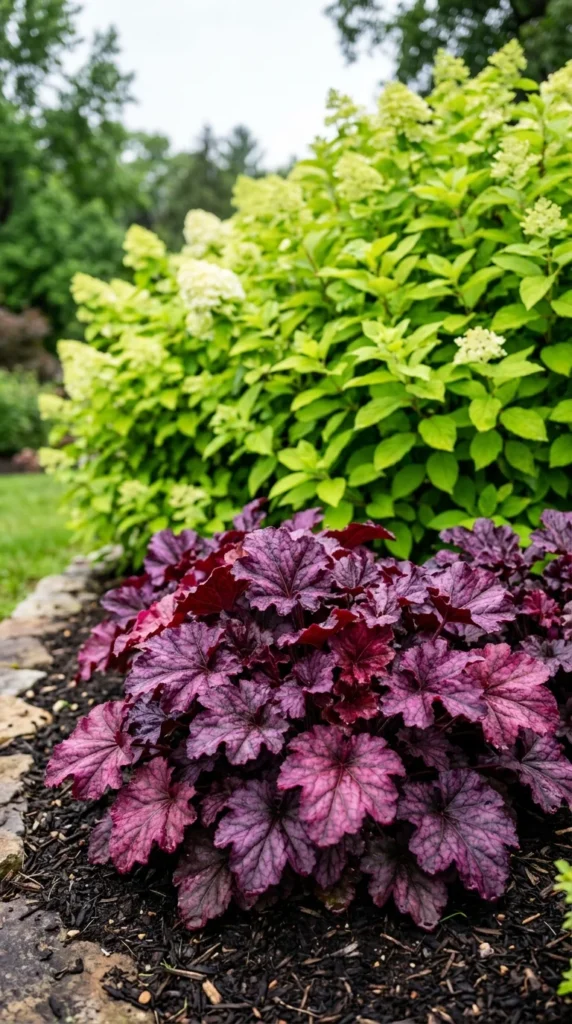
Coral Bells (Heuchera) are prized for their spectacular foliage, which remains vibrant long after the hydrangea blooms have faded. They come in a kaleidoscope of colors including deep burgundy, bright lime, burnt orange, and silver.
Because Coral Bells are low-growing and mounding, they make the perfect edging plant for a hydrangea bed. Try pairing a dark purple Heuchera like ‘Obsidian’ with a white or pale pink hydrangea for a high-contrast look that feels modern and sophisticated. They are also relatively drought-tolerant once established, making them a hardy neighbor for your shrubs.
4. Astilbe
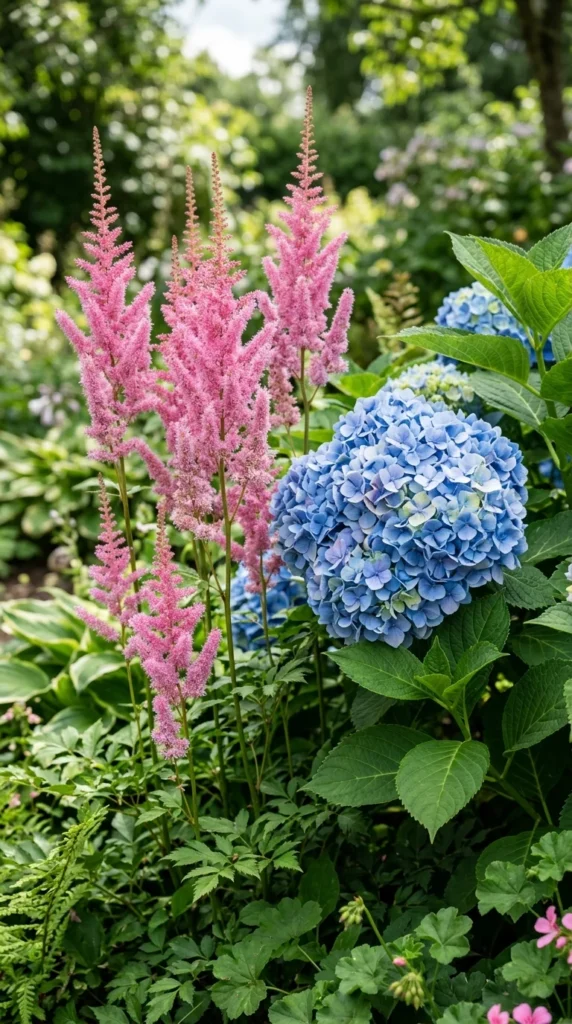
While many hydrangea companions focus on foliage, Astilbe brings flowers to the party. Astilbe is one of the few plants that can match the hydrangea’s love for moisture while offering a completely different floral shape. While hydrangeas are generally rounded or cone-shaped, Astilbe produces tall, feathery spikes that point toward the sky.
This verticality breaks up the horizontal “sea of roundness” often found in hydrangea-heavy gardens. Planting clusters of Astilbe in shades of white, pink, or red between your hydrangea bushes creates a layered, multi-dimensional look. They bloom around the same time, ensuring a massive explosion of color in mid-summer.
5. Boxwood
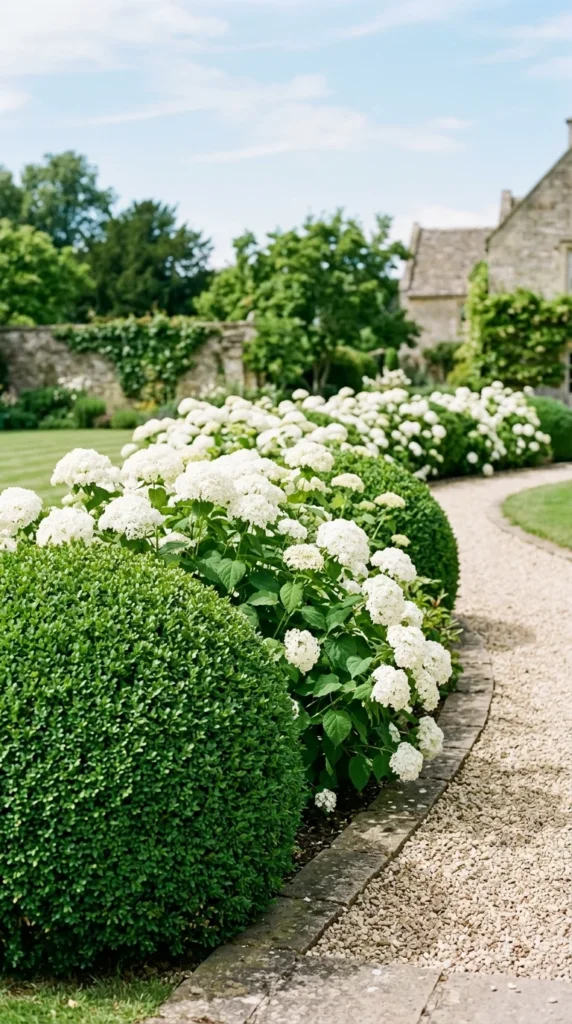
If your garden style leans more toward “English Manor” or “Formal Garden,” boxwoods are an essential companion. Hydrangeas can sometimes look a bit wild or floppy, especially after a heavy rain. Boxwoods provide the structural “bones” that keep the garden looking tidy and intentional year-round.
A low-clipped boxwood hedge in front of a row of hydrangeas creates a crisp, clean border. This is particularly effective with white hydrangeas, as the deep green of the boxwood makes the white petals look even cleaner and brighter. Even in winter, when hydrangeas are just bare stems, the evergreen boxwoods ensure your garden still has shape and life.
6. Bleeding Hearts
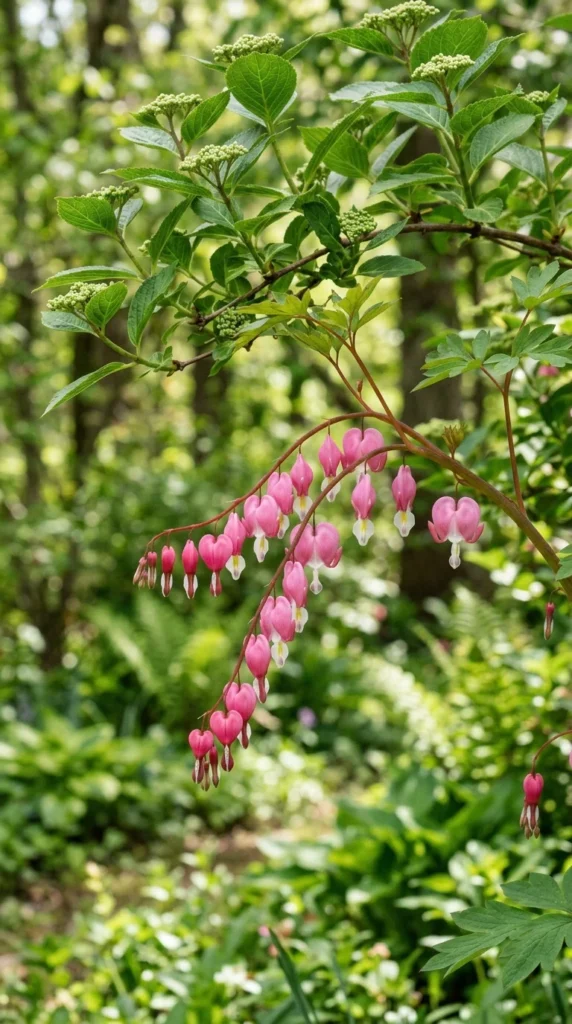
One of the few downsides of hydrangeas is that they can be “late to wake up” in the spring. Their stems often look like dead sticks well into May. This is where Bleeding Hearts (Lamprocapnos spectabilis) shine.
Bleeding Hearts are early spring bloomers that provide whimsical, heart-shaped flowers and fern-like foliage just as the hydrangeas are starting to leaf out. By the time the hydrangeas are ready to bloom in mid-summer, the Bleeding Hearts have often gone dormant and disappeared, “passing the torch” to the hydrangeas and leaving space for them to expand. It’s a perfect chronological partnership.
7. Japanese Forest Grass
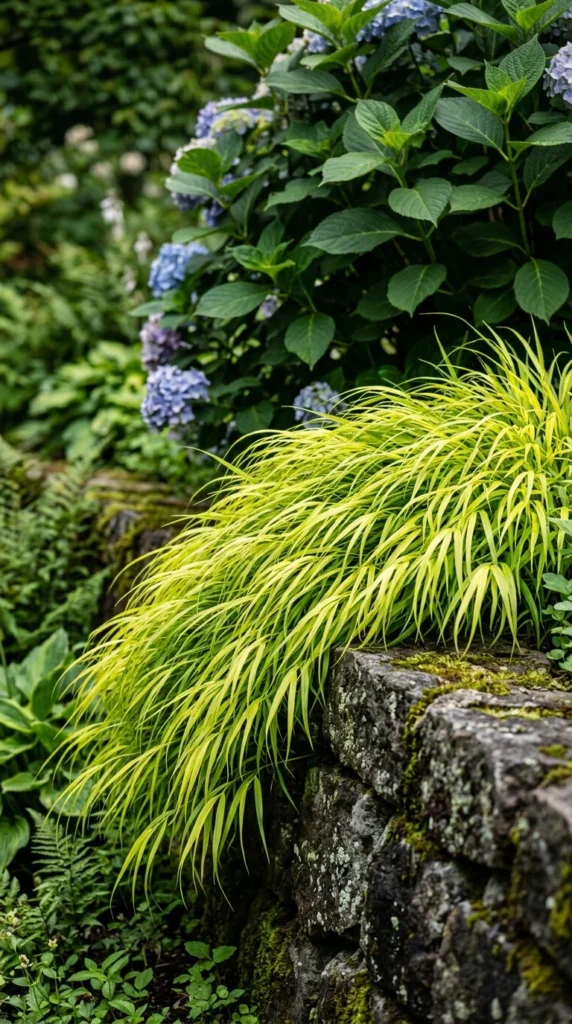
Japanese Forest Grass (Hakonechloa) is arguably the most elegant ornamental grass for shady spots. Its graceful, cascading habit looks like a waterfall of foliage, which provides a stunning textural counterpoint to the upright, sturdy stems of a hydrangea.
The ‘Aureola’ variety, with its bright yellow and green stripes, is particularly effective at lighting up dark corners under the hydrangea canopy. Because this grass moves beautifully in the breeze, it adds a sense of motion and life to the garden that static shrubs sometimes lack. It’s also excellent for softening the edges of paths or stone walls near your hydrangea beds.
8. Azaleas
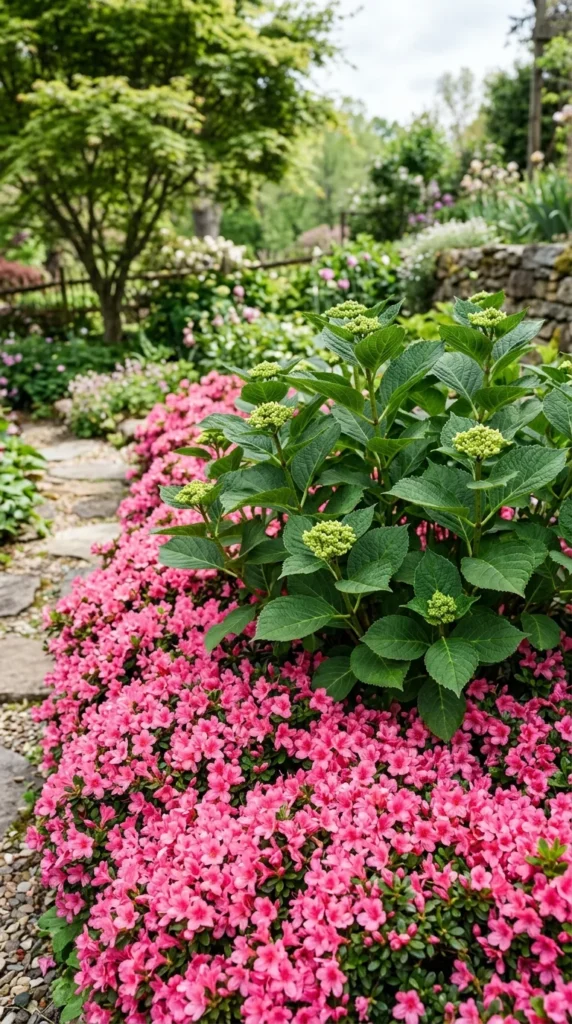
Azaleas and hydrangeas are a match made in acidic-soil heaven. Both plants thrive in the same pH levels, which is crucial if you are trying to maintain blue hydrangeas (which require acidic soil to stay blue).
Azaleas bloom in early to mid-spring, providing a riot of color while the hydrangeas are still developing their leaves. Their smaller, more numerous flowers provide a different scale of bloom that complements the massive hydrangea heads later in the season. Since many azaleas are evergreen or semi-evergreen, they also provide year-round structure and color to the garden bed.
9. Alliums
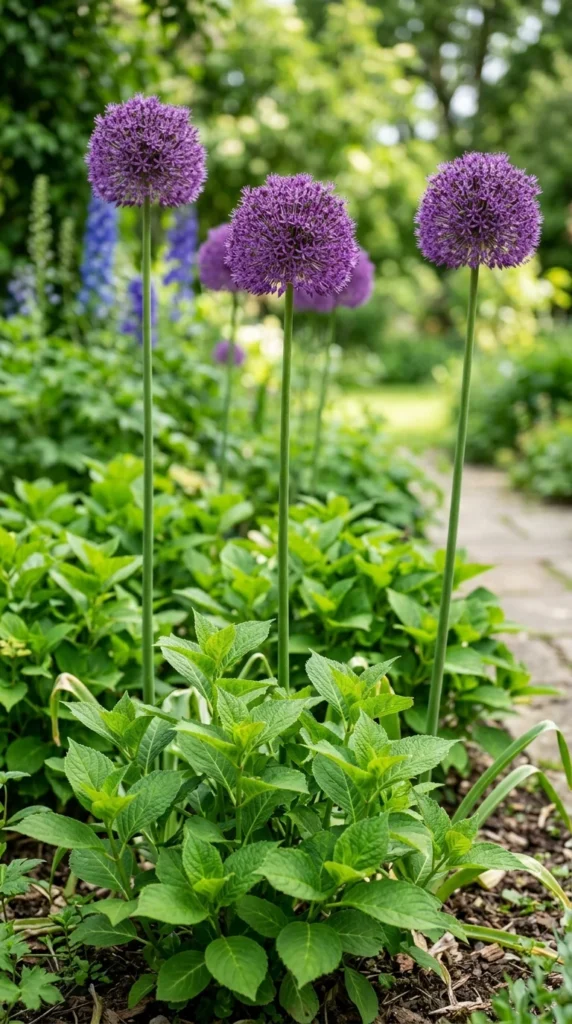
For those growing sun-loving hydrangeas like the Panicle variety (e.g., ‘Limelight’ or ‘Pee Gee’), Alliums are a fantastic, quirky companion. These “ornamental onions” send up tall, straight stalks topped with perfectly spherical purple flowers.
The geometric shape of the Alliums echoes the rounded shape of the hydrangea blooms that will follow later in the summer. Alliums typically bloom in late spring or early summer, filling the gap between the spring bulbs and the summer hydrangea peak. Plus, they are deer and rabbit resistant, which helps protect the overall integrity of your garden beds.
10. Japanese Maples
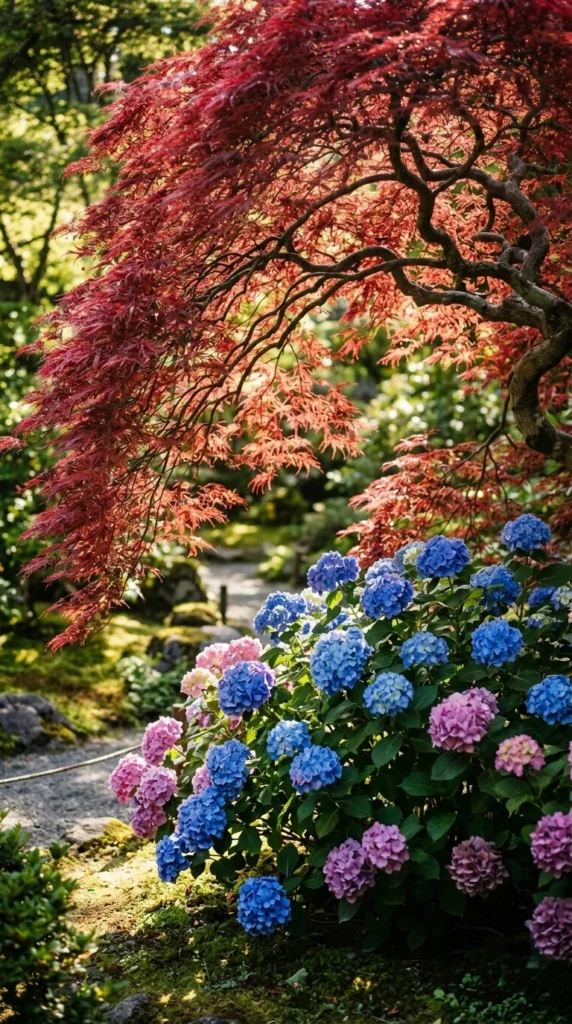
If you have the space, a Japanese Maple is the ultimate “overhead” companion for hydrangeas. These trees provide the perfect dappled shade that many hydrangea varieties crave, protecting their delicate leaves from the scorching afternoon sun.
The fine, lace-like foliage of a Japanese Maple—especially the red or burgundy varieties—creates a stunning color contrast against the green leaves and colorful blooms of the hydrangea. This pairing works on multiple levels, providing height, color, and a sense of “enclosure” that makes a garden feel like a sanctuary.
11. Clematis
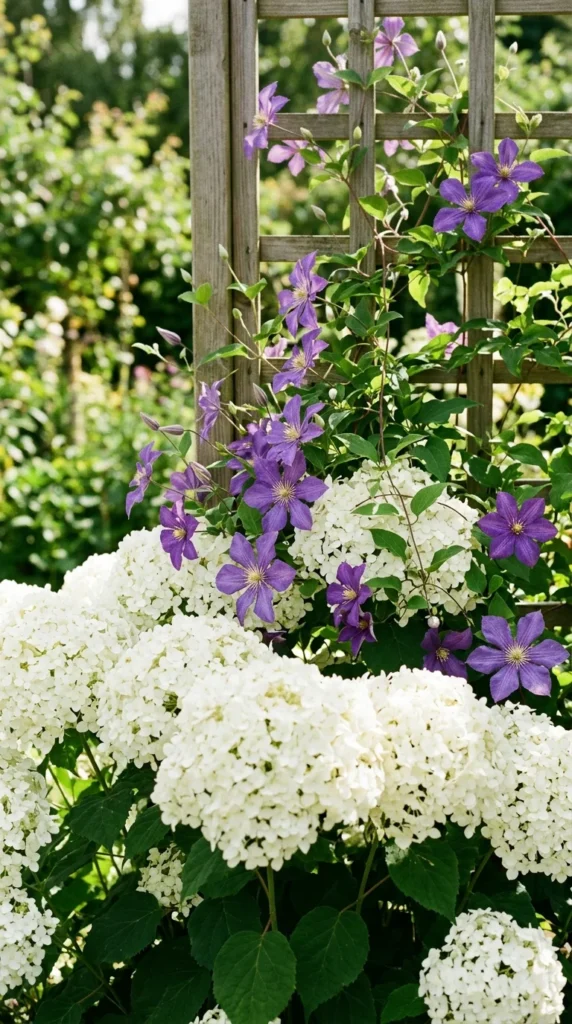
Who says companions have to stay on the ground? Clematis is a climbing vine that can share a trellis or fence with your hydrangeas, or even be allowed to scramble through the hydrangea branches themselves.
By choosing a Clematis variety that blooms at the same time as your hydrangeas, you can create a “bouquet” effect on a massive scale. A deep purple Clematis climbing behind a white ‘Annabelle’ hydrangea is a classic, breathtaking combination. Since Clematis likes its “feet in the shade and head in the sun,” the hydrangea’s dense foliage provides the perfect cooling cover for the Clematis roots.