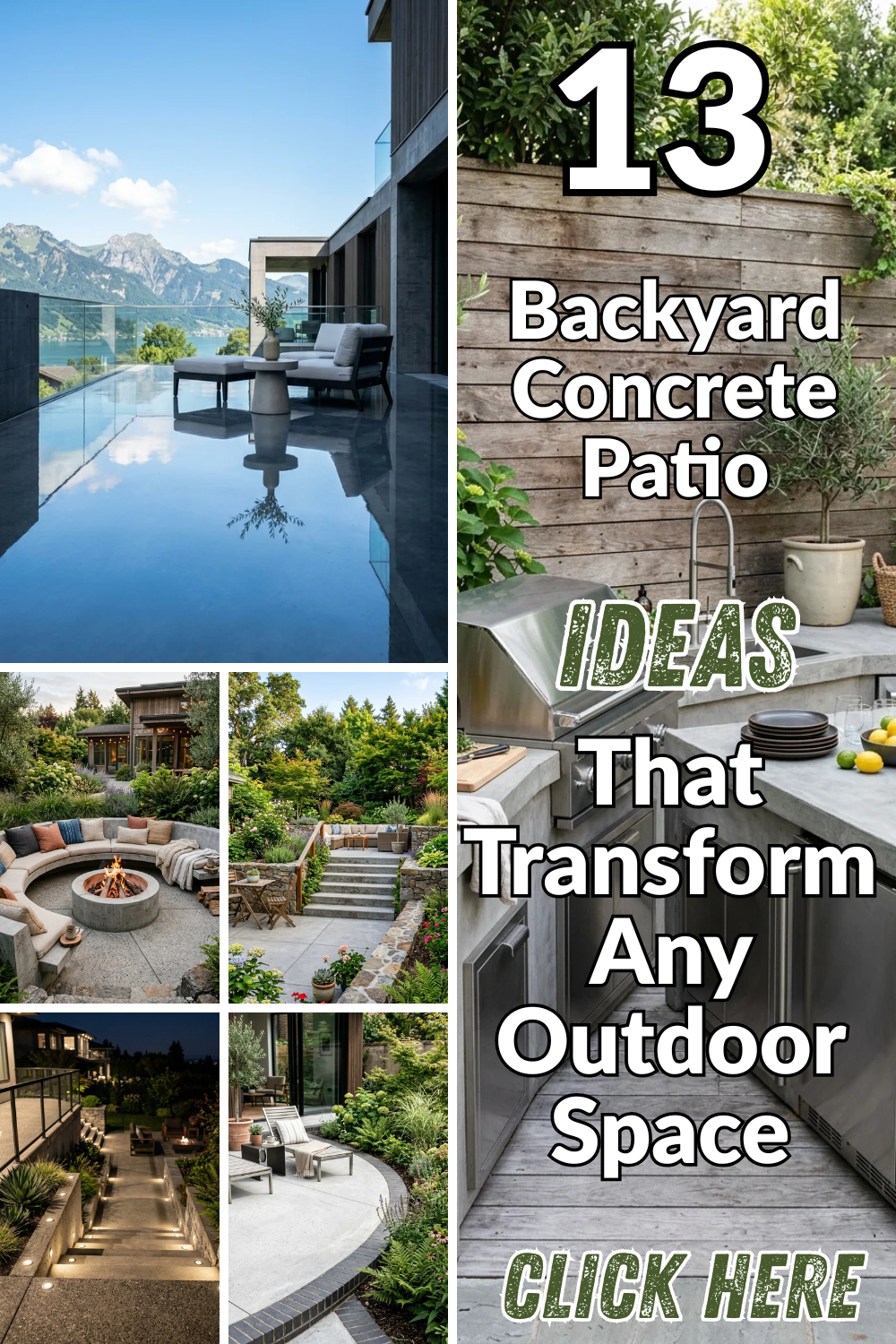
For a long time, concrete was seen as the “boring” choice for backyard landscaping—a utilitarian slab meant for driveways and basements. However, the modern design world has reclaimed this versatile material, turning it into a cornerstone of high-end outdoor living. Concrete is no longer just a grey rectangle; it is a canvas for texture, color, and architectural innovation.
The beauty of concrete lies in its durability and adaptability. Whether you are aiming for a sleek minimalist look, a rustic Mediterranean vibe, or a cozy traditional retreat, concrete can be molded, tinted, and finished to match your vision. It is low-maintenance, weather-resistant, and significantly more affordable than natural stone or hardwood decking.
If you are looking to upgrade your outdoor sanctuary, here are 13 transformative concrete patio ideas that blend functionality with breathtaking aesthetics.
1. Stamped Patterns
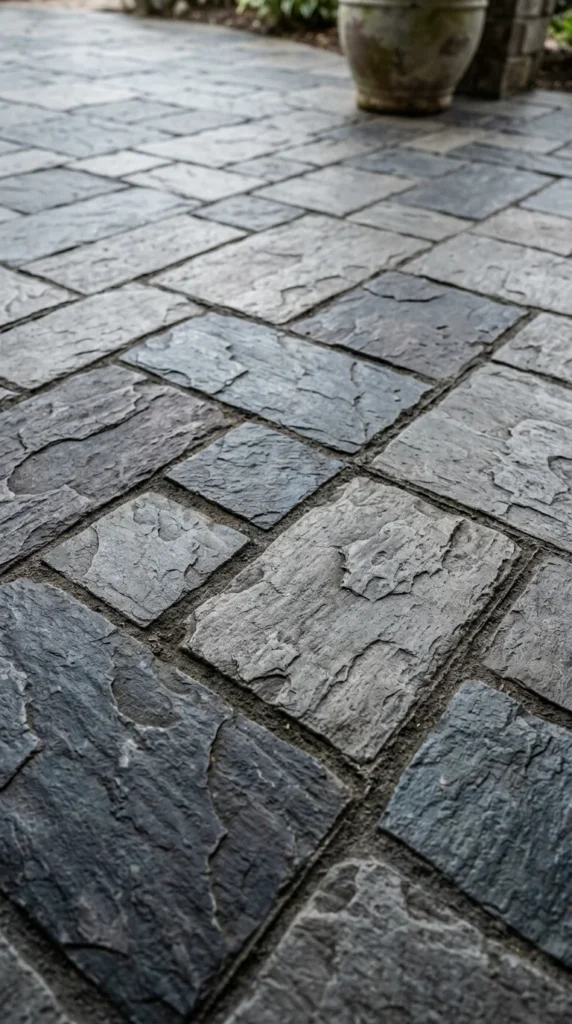
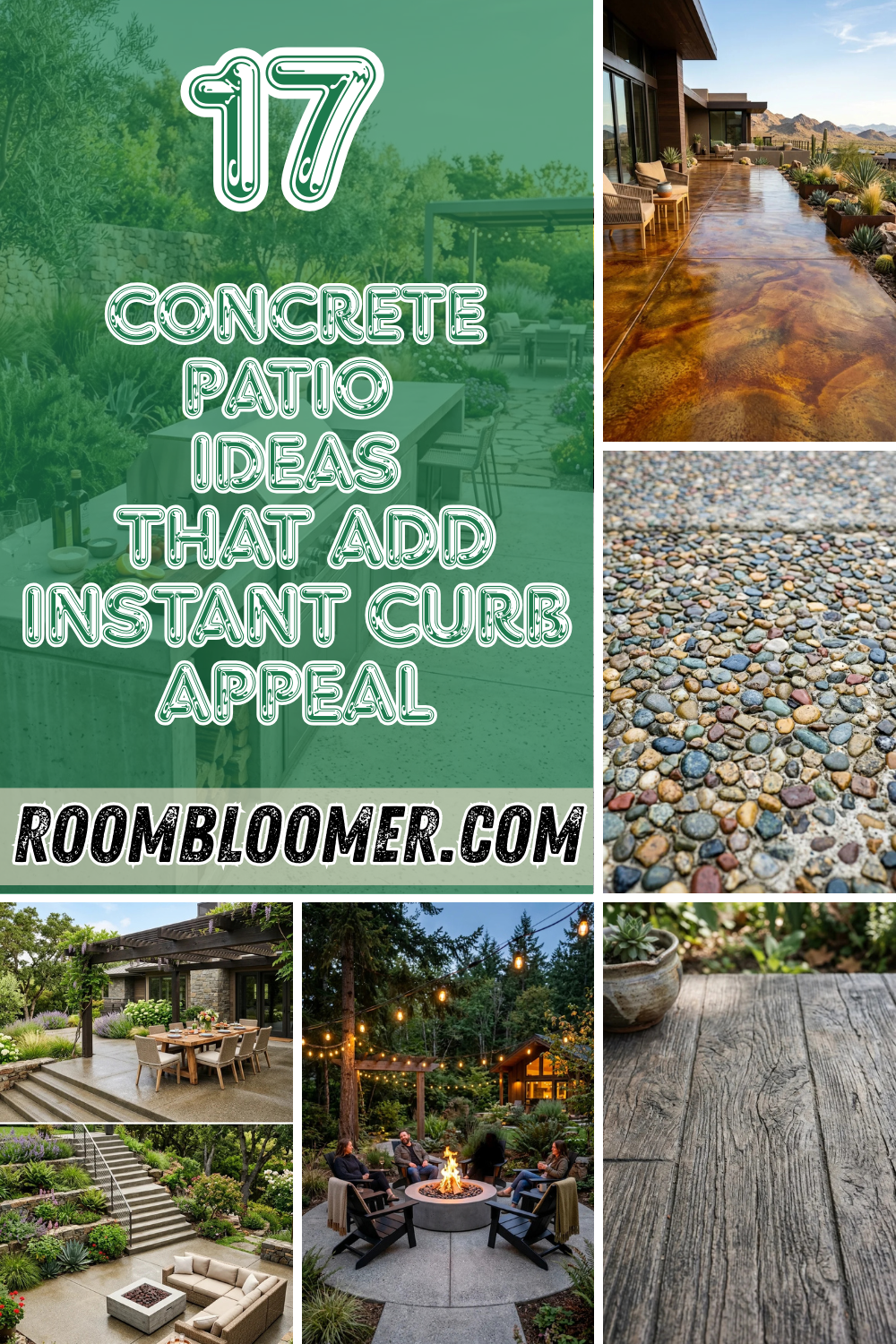
One of the most popular ways to elevate a concrete patio is through stamping. This process involves pressing large rubber molds into wet concrete to mimic the look of more expensive materials like slate, flagstone, brick, or even wood planks.
Stamped concrete provides the high-end look of natural stone without the high price tag or the risk of individual stones shifting over time. It creates a continuous, solid surface that is easy to sweep and maintain, while the deep textures provide excellent slip resistance for pool decks or dining areas.
2. Polished Finish
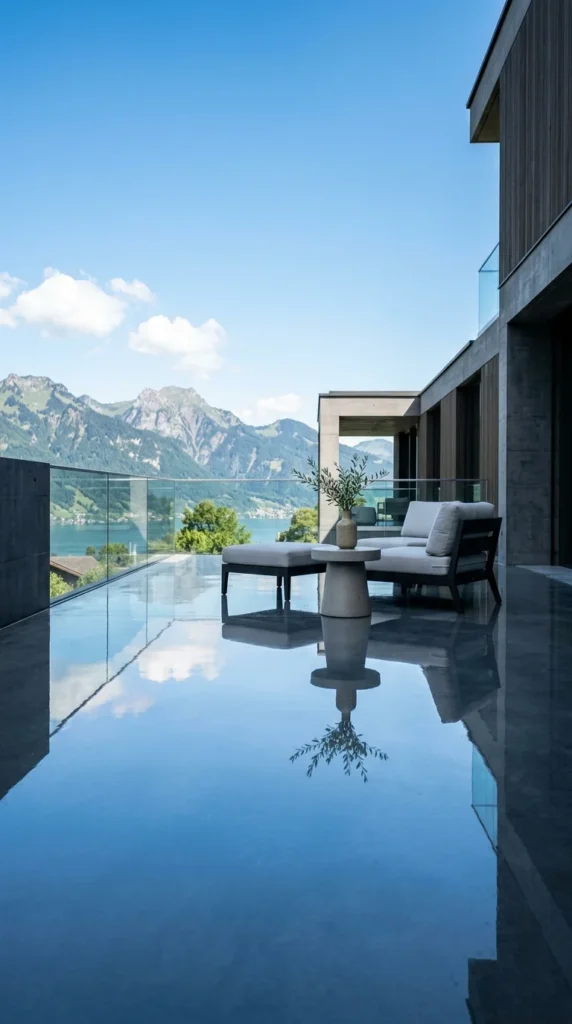
For homeowners who lean toward a contemporary or industrial aesthetic, polished concrete is the ultimate choice. This technique involves grinding the surface with diamond-tipped tools until it achieves a mirror-like sheen.
Polished concrete feels incredibly smooth underfoot and reflects light beautifully, making small backyards feel larger and brighter. It is a sophisticated option that bridges the gap between indoor and outdoor living, especially when paired with large sliding glass doors that create a seamless transition from the living room to the patio.
3. Stained Concrete
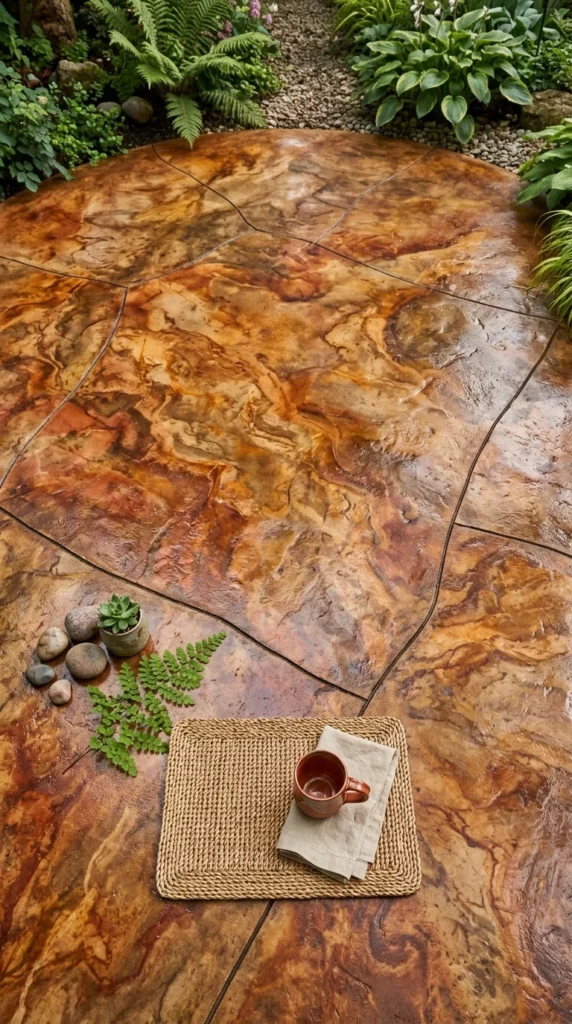
If you want to move away from the industrial grey, staining is the way to go. Unlike paint, which sits on top of the surface and can peel, concrete stains penetrate deep into the material to create a permanent, translucent color.
You can choose between acid-based stains, which create variegated, marble-like effects with earthy tones, or water-based stains, which offer a wider palette of vibrant colors. Staining adds depth and character to the concrete, giving it a custom, artisanal feel that looks more like a Mediterranean villa than a standard backyard.
4. Geometric Slabs
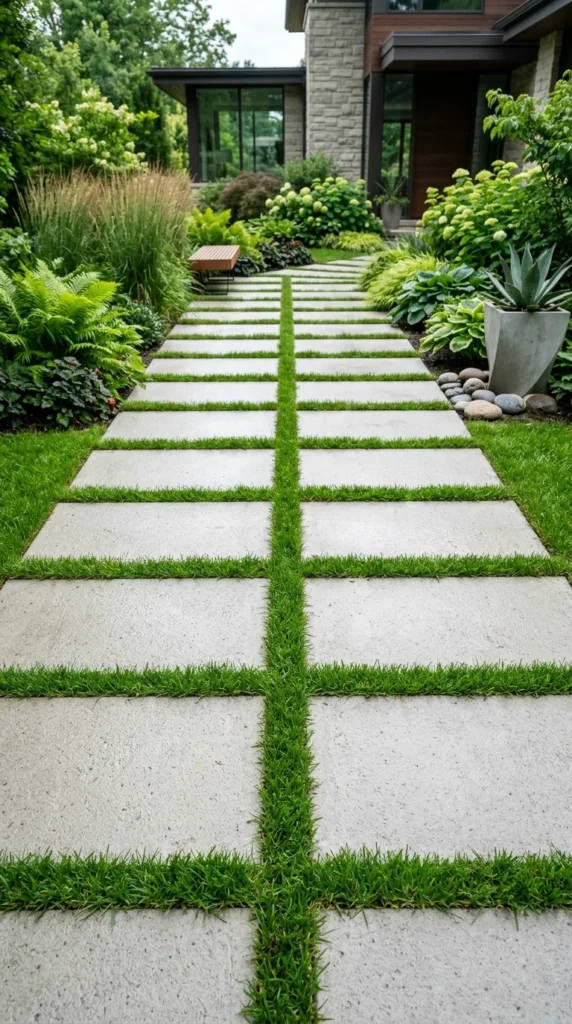
Geometric slabs are a hallmark of modern landscape design. Instead of pouring one continuous mass of concrete, this style involves creating large, individual pavers—often in squares or long rectangles—separated by narrow gaps.
Filling these gaps with artificial turf, moss, or decorative river stones creates a striking “checkerboard” or “linear” effect. This design not only helps with drainage by allowing rainwater to seep into the ground but also adds an architectural rhythm to the backyard that feels intentional and high-end.
5. Integrated Fire Pit
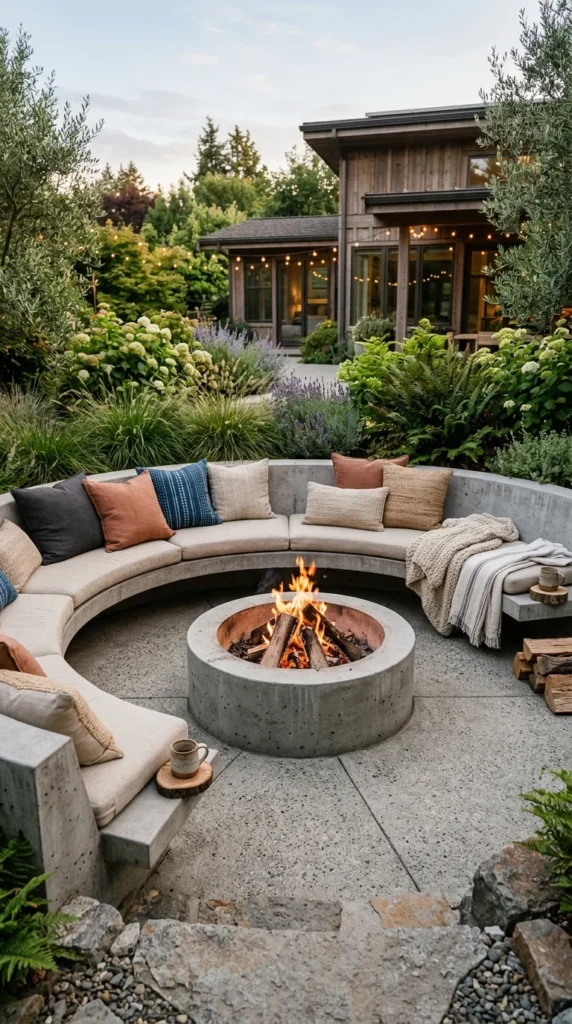
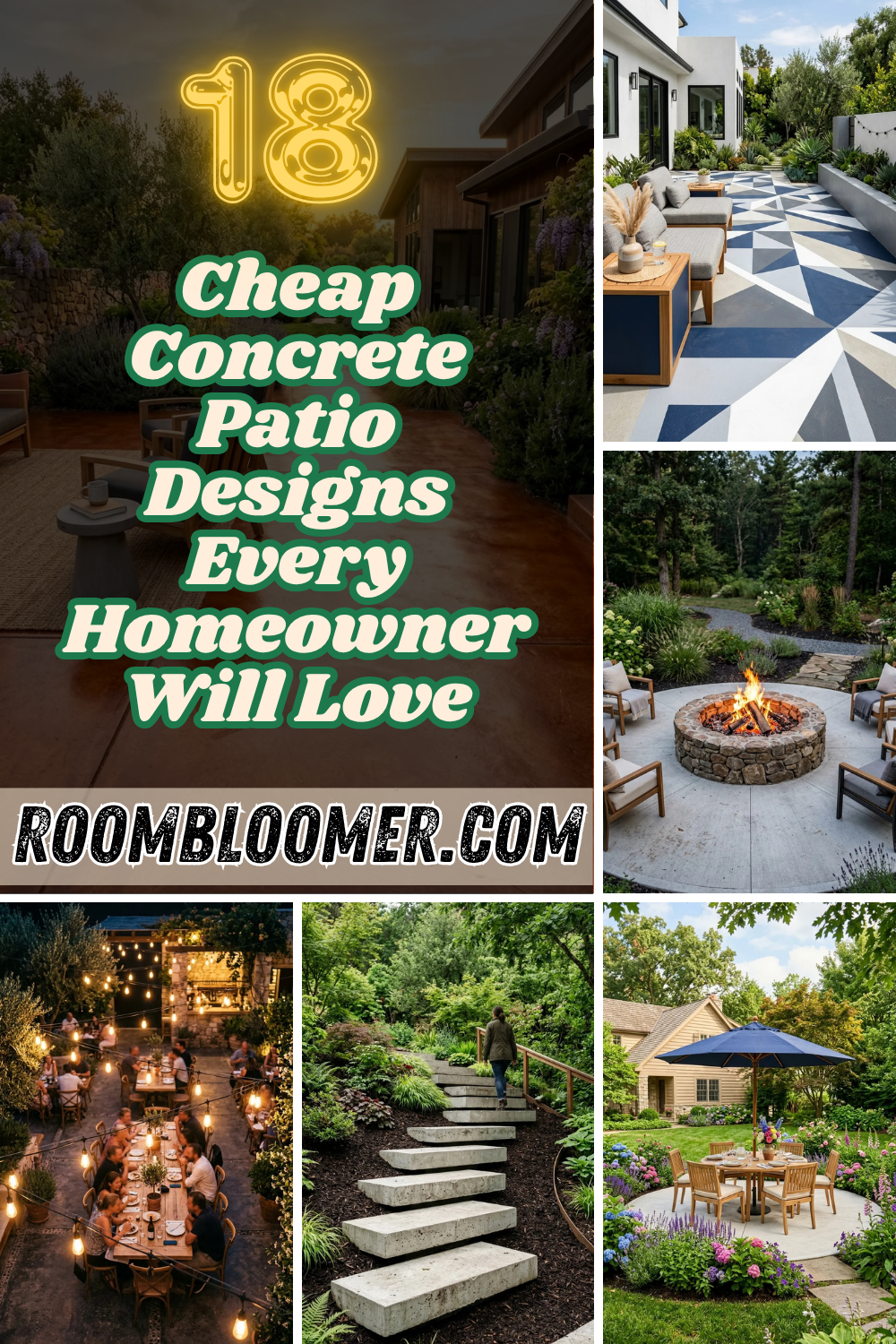
Concrete is naturally fire-resistant, making it the perfect material for an integrated fire feature. A built-in concrete fire pit becomes an instant focal point for social gatherings, providing warmth and ambiance during chilly evenings.
By using the same concrete for the patio and the fire pit, you create a cohesive, custom-built look. You can opt for a sleek, square modern pit or a traditional round one. To enhance the look, fill the pit with black lava rocks or colorful fire glass that sparkles against the flame.
6. Multi-Level Layouts
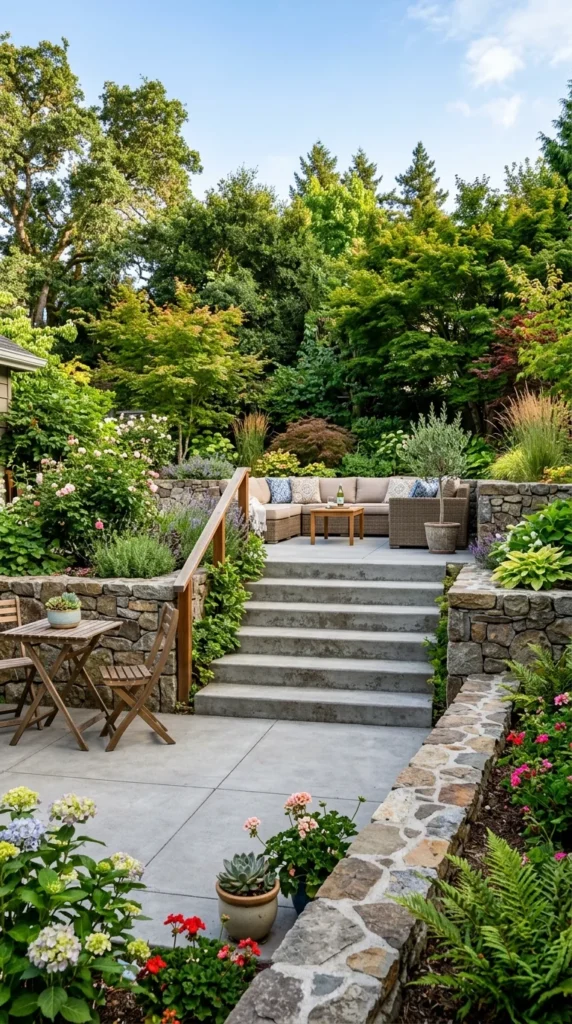
If your backyard has a slope, a multi-level concrete patio is a brilliant way to maximize space. By creating different “zones” on various elevations, you can separate the dining area from the lounging or sunbathing area.
Multi-level designs add visual interest and a sense of luxury. You can use different finishes for each level—such as a stamped texture for the dining area and a smooth finish for the lounge—to further define the spaces. This approach turns a difficult landscape into a functional, multi-functional masterpiece.
7. Exposed Aggregate
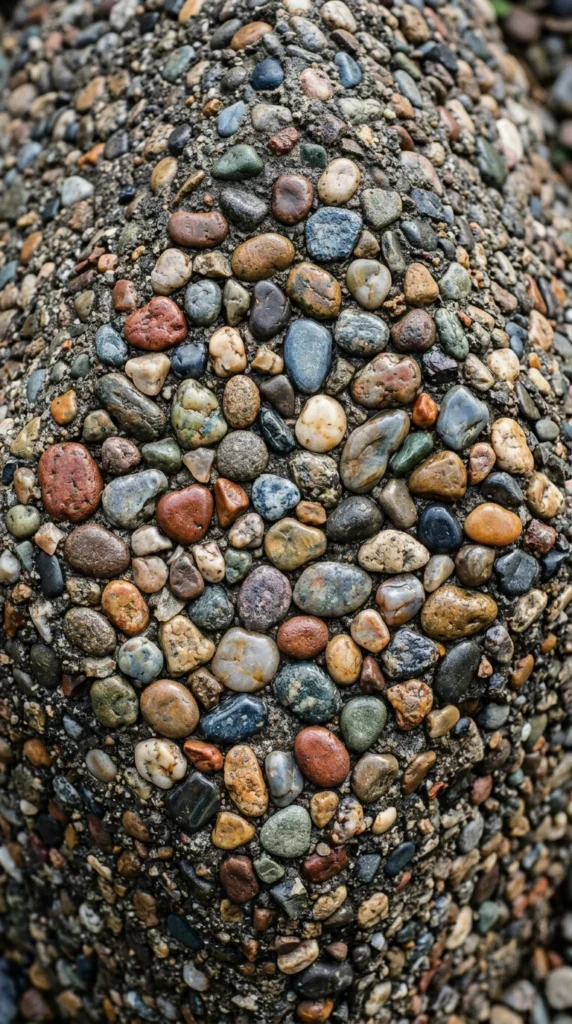
Exposed aggregate is achieved by stripping away the top layer of cement paste to reveal the decorative stones (aggregate) mixed into the concrete. The result is a rugged, gravel-like texture that is both beautiful and highly functional.
This finish is prized for its durability and its “non-skid” properties, making it an ideal choice for high-traffic areas or pool surrounds. The variety of colors available in the aggregate—from quartz and granite to limestone—allows you to customize the patio to match the natural colors of your home’s exterior.
8. Curved Edges
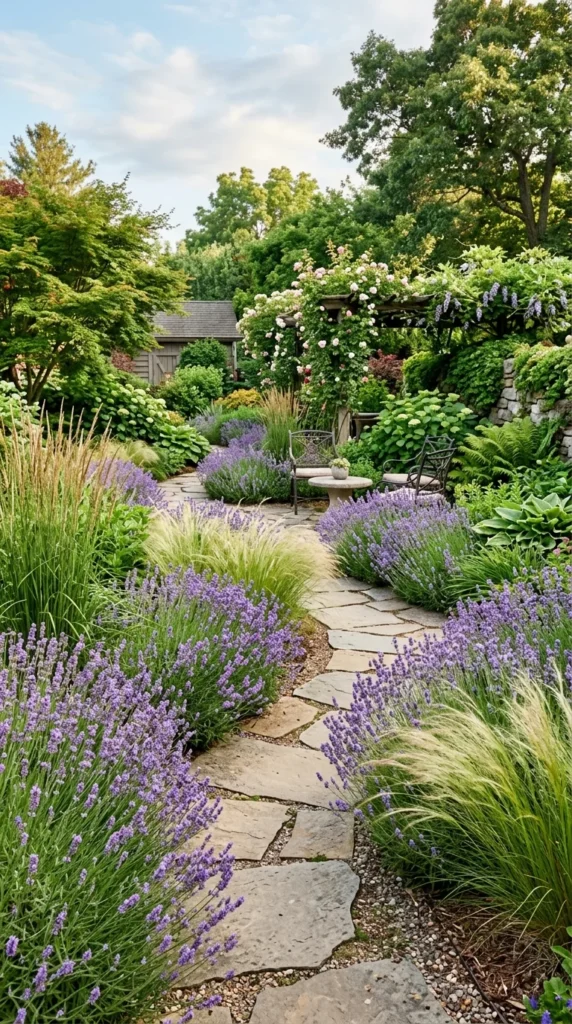
While many concrete patios are rectangular, there is no rule saying they have to be. Concrete is poured as a liquid, meaning it can take any shape you desire. Curved edges lend a softer, more organic feel to a backyard, mimicking the natural flow of a garden.
S-curves, circular pods, and winding paths help break up the harsh lines of a house and fence. This design style works particularly well in traditional or “English Garden” style landscapes where a rigid, boxy patio might feel out of place.
9. Inlaid Lighting
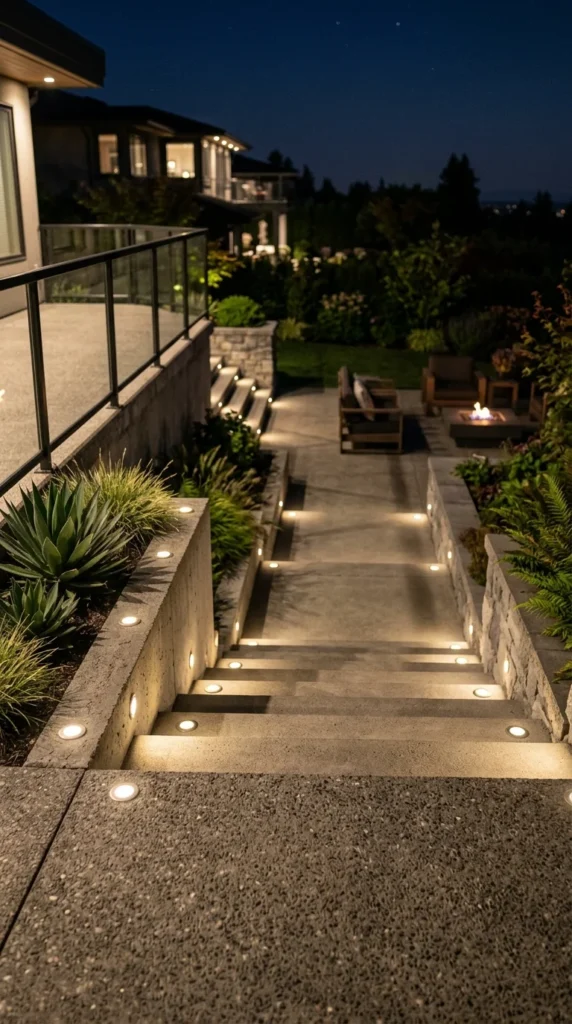
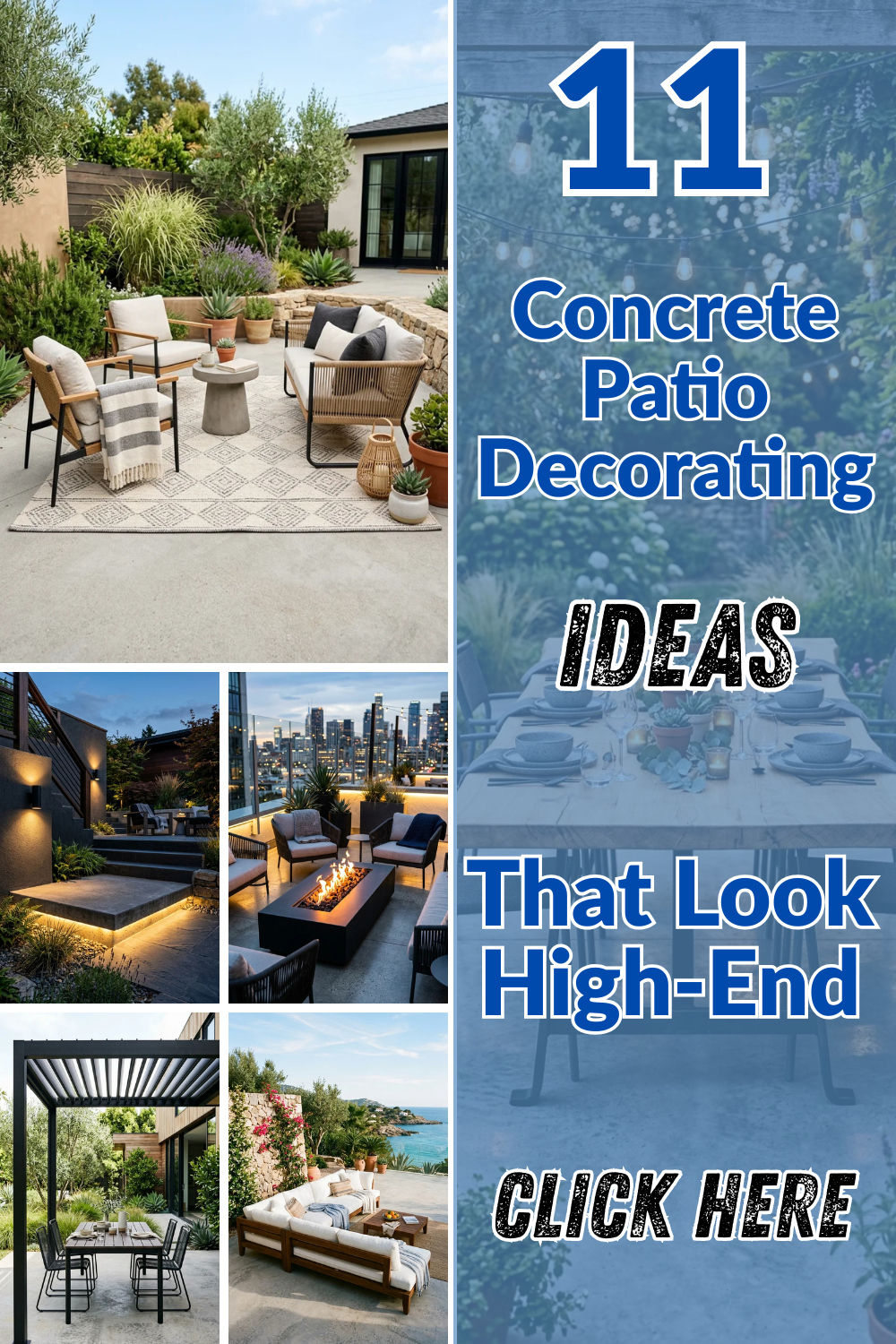
Lighting is the secret ingredient to a stunning backyard, and concrete allows for unique integrated solutions. You can install low-voltage LED “core lights” directly into the concrete during the pouring process.
Flush-mount lights along the perimeter of the patio or on the risers of concrete steps provide safety while creating a high-end, resort-like atmosphere. At night, the patio transforms into an illuminated stage, perfect for hosting dinner parties or enjoying a quiet night under the stars.
10. Borders & Accents
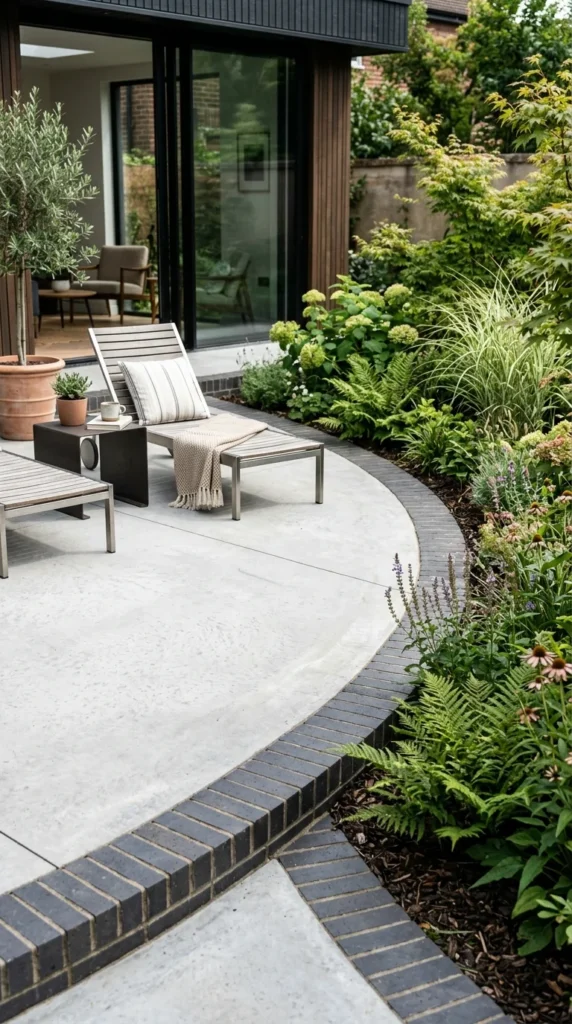
To prevent a large concrete patio from looking “washed out,” consider adding a decorative border. A contrasting border—made from brick, pavers, or a different color of concrete—frames the space and adds a professional, finished touch.
Using a darker stain or a different texture for the outer 12 inches of the patio can make a massive difference in its visual impact. This “picture frame” effect draws the eye and defines the transition between the hardscape and the surrounding lawn or garden beds.
11. Floating Steps
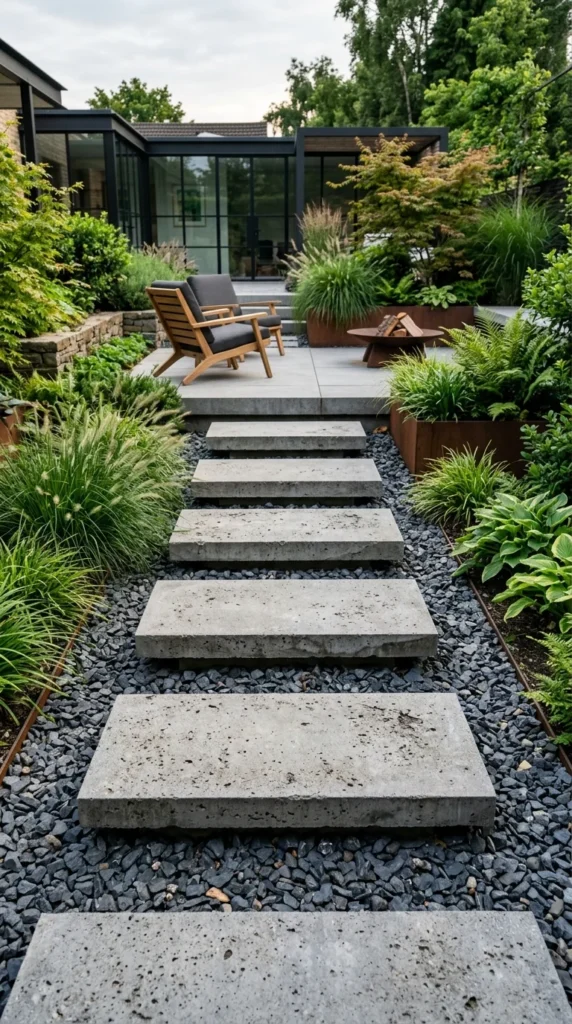
Floating steps are a favorite in minimalist and “Zen” garden designs. These are thick concrete slabs that are slightly cantilevered or set on hidden pedestals to give the illusion that they are hovering above the ground.
When placed over a bed of gravel or a shallow water feature, floating steps create a sense of lightness and modern sophistication. They serve as a sculptural element in the backyard, turning a simple functional necessity into a work of art.
12. Outdoor Kitchen
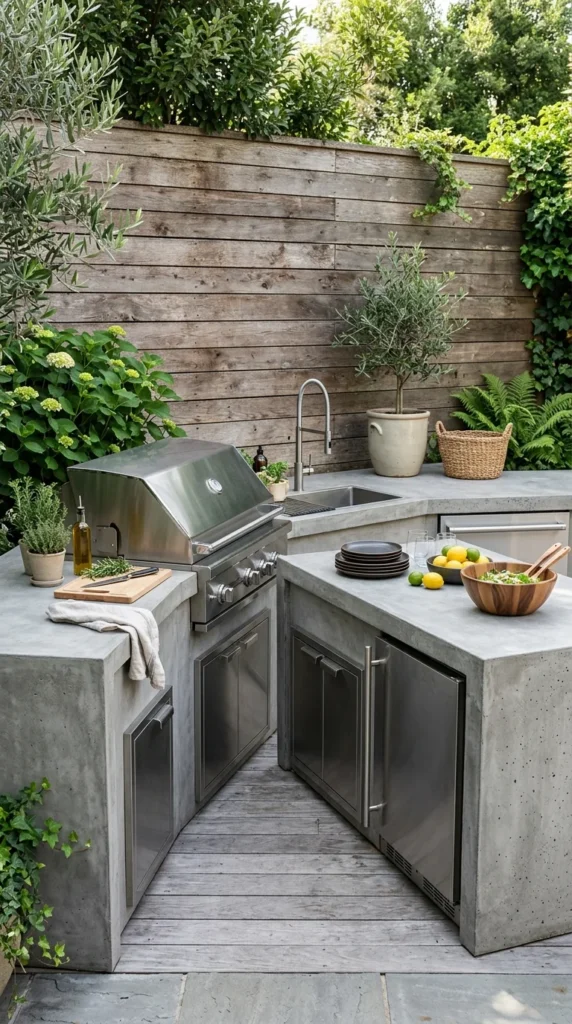
Concrete is one of the best materials for outdoor kitchens due to its heat resistance and durability. Instead of just a patio, you can extend the concrete upward to create built-in BBQ islands, pizza oven bases, and sleek countertops.
A cast-in-place concrete countertop provides a seamless, “waterfall” look that is incredibly popular in modern design. It is easy to clean and can be customized with built-in features like ice chests, herb planters, or even integrated drainage grooves for drying dishes.
13. Concrete Planters
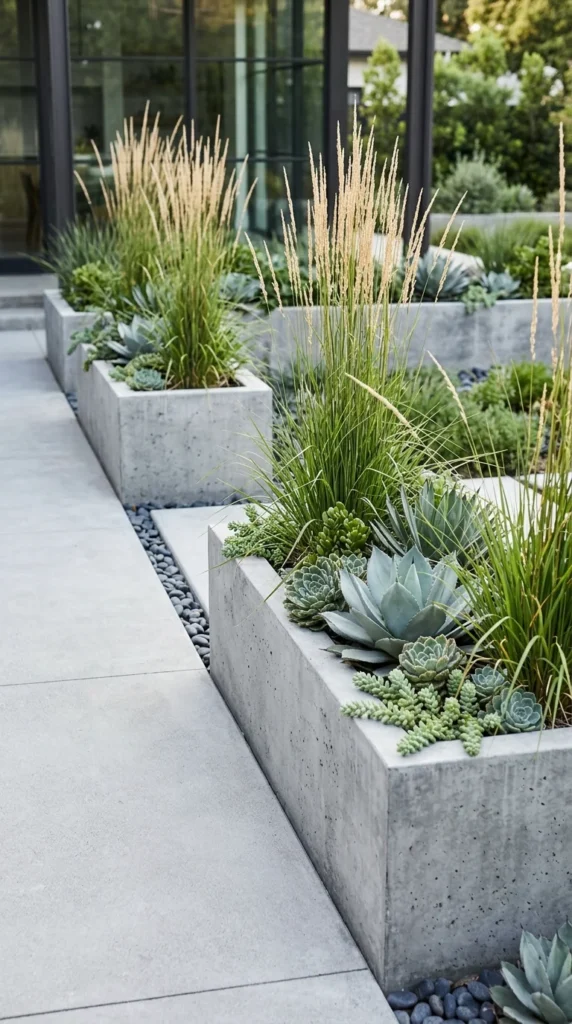
To truly “transform” a space, you need to blend the hardscape with the landscape. Integrated concrete planters allow you to build greenery directly into the structure of your patio.
By building raised concrete planter boxes along the edges of the patio, you create natural privacy screens and add a pop of organic color to the grey stone. These built-in containers can also double as extra seating walls, making them a space-saving solution for smaller backyards that need to maximize every square inch.
Conclusion
A backyard concrete patio is more than just a place to put a grill; it is an extension of your home and a reflection of your personal style. From the rustic charm of stamped stone to the futuristic appeal of polished slabs and floating steps, the possibilities are virtually endless. By choosing the right finish, shape, and integrated features, you can turn a simple slab of concrete into a breathtaking outdoor retreat that adds significant value to your home and your quality of life.