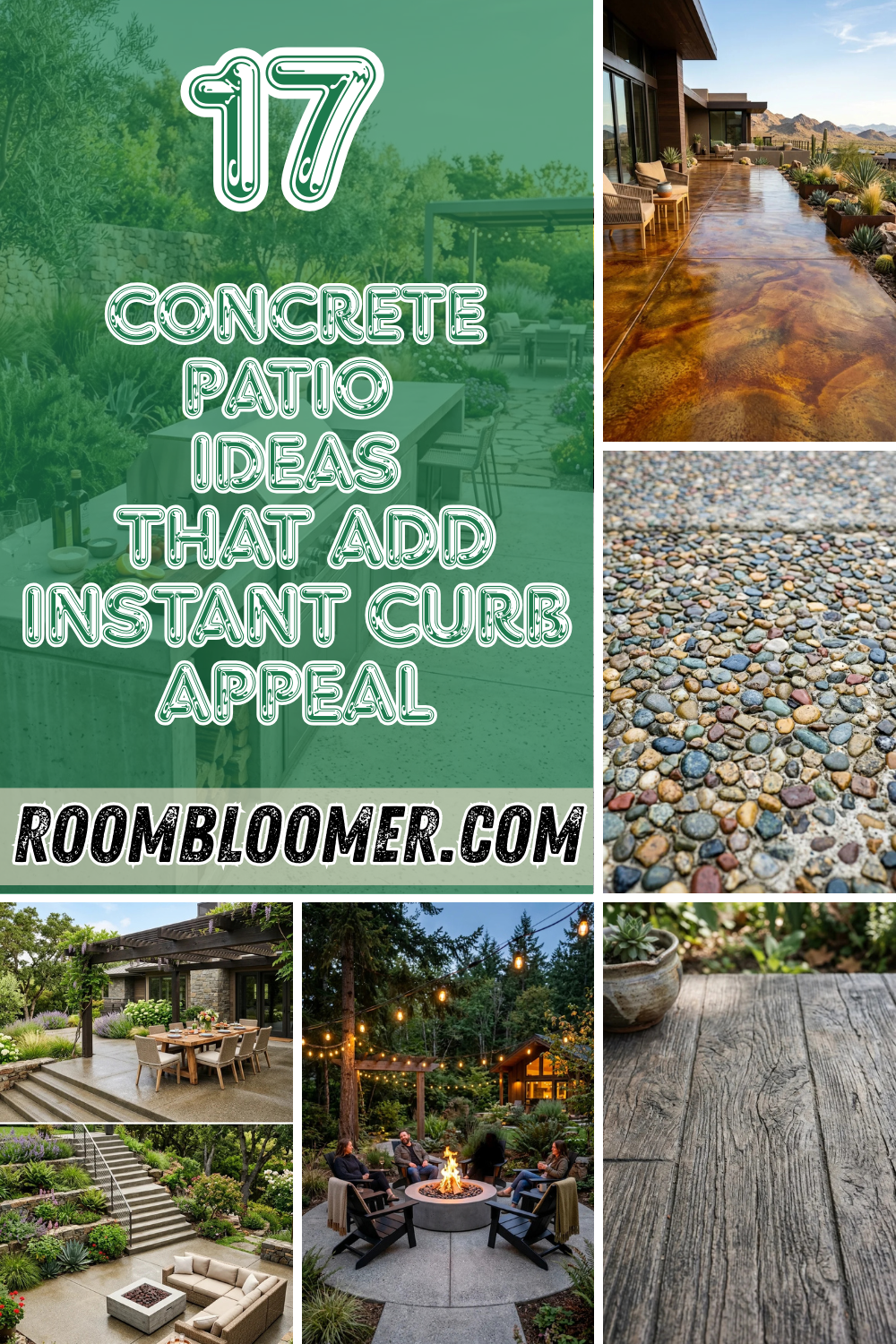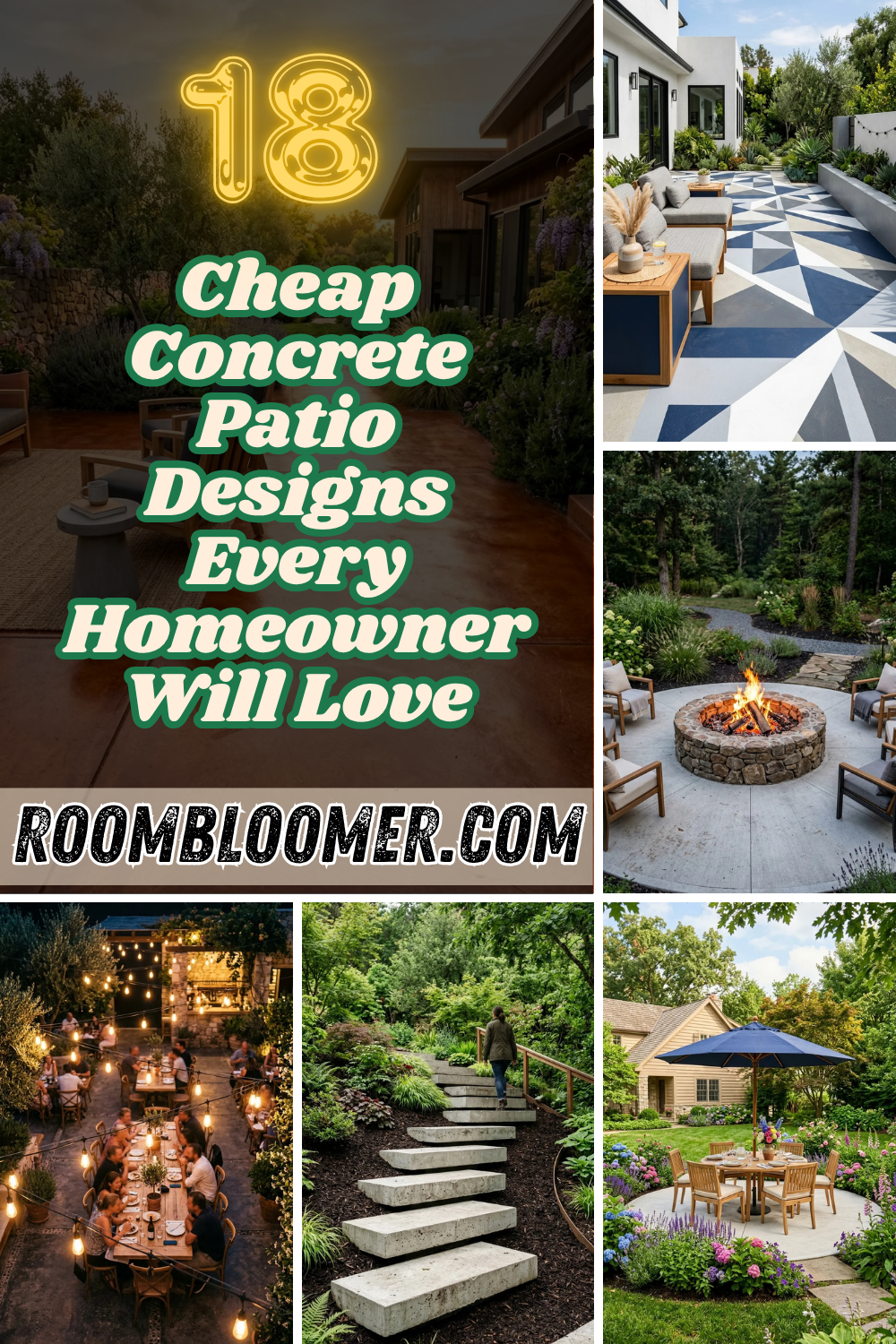
Concrete patios are often unfairly characterized as cold, industrial, or purely utilitarian. However, in the world of high-end landscape design, concrete is a coveted “blank canvas.” Its neutral tone and smooth texture provide the perfect foundation for a sophisticated outdoor retreat that rivals any five-star resort. The secret to elevating a concrete slab from basic to breathtaking lies in the art of layering, scaling, and material contrast.
If you are looking to transform your backyard into an elegant sanctuary, these eleven high-end decorating ideas will help you harness the minimalist beauty of concrete while infusing it with warmth, luxury, and style.
1. Layered Rugs
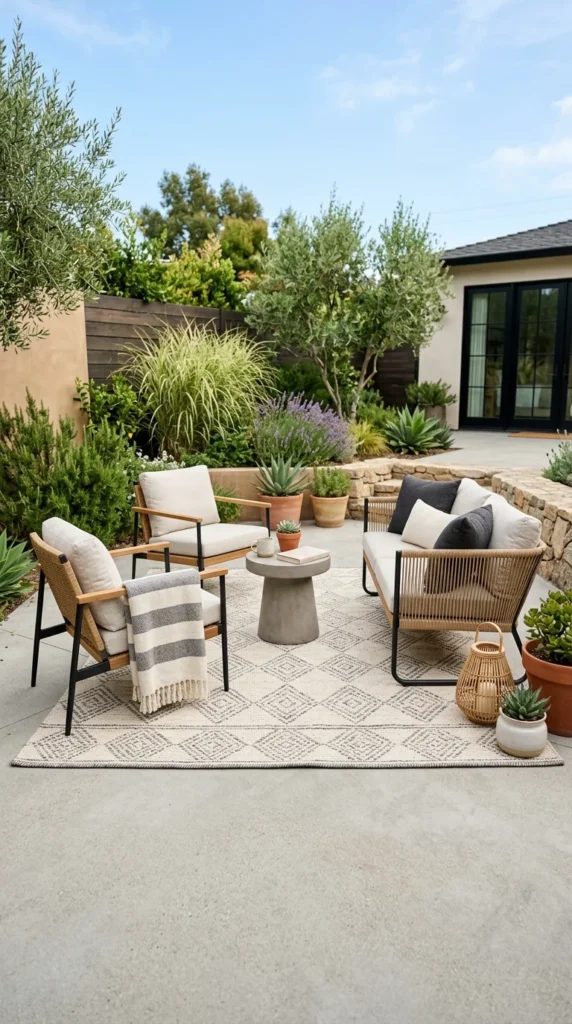
The most immediate way to soften the “hard” look of concrete is by introducing high-quality textiles. A high-end patio avoids the “postage stamp” rug look—where the rug is too small for the furniture. Instead, opt for an oversized outdoor rug that defines the seating area. For a truly designer feel, layer a smaller, textured rug (like a flat-weave Moroccan design) over a larger, natural-fiber sisal or jute-look rug. This creates depth and visual interest, making the concrete feel like an intentional interior floor rather than an outdoor sidewalk.
2. Fire Features
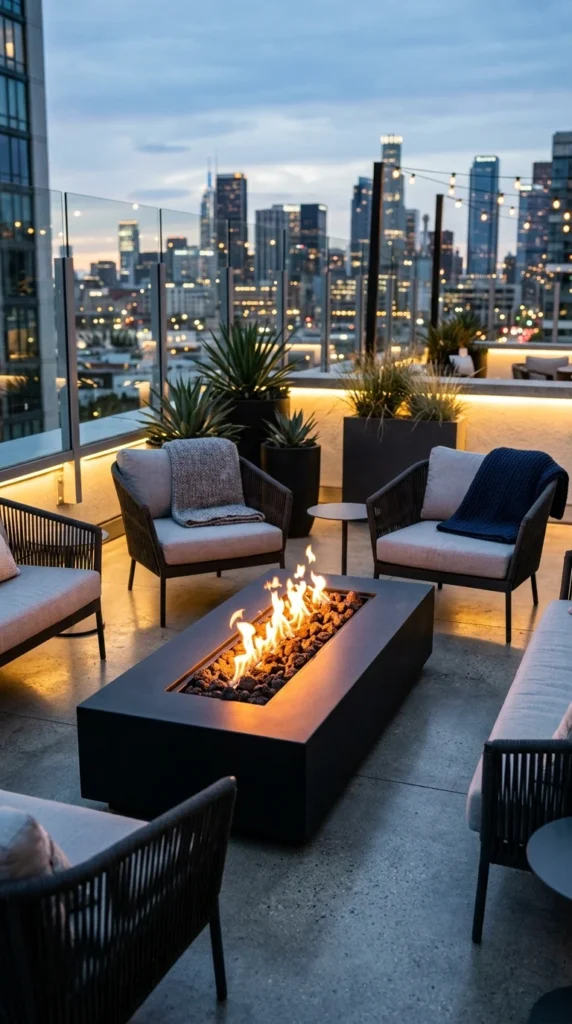
Nothing says “luxury” like the presence of fire. To keep the look high-end, move away from traditional portable metal fire pits and toward integrated or architectural fire features. A linear gas fire table made of GFRC (Glass Fiber Reinforced Concrete) or dark basalt provides a clean, minimalist focal point. The juxtaposition of flickering orange flames against the cool, gray backdrop of the patio creates a stunning visual tension that anchors the space for evening entertaining.
3. Oversized Planters
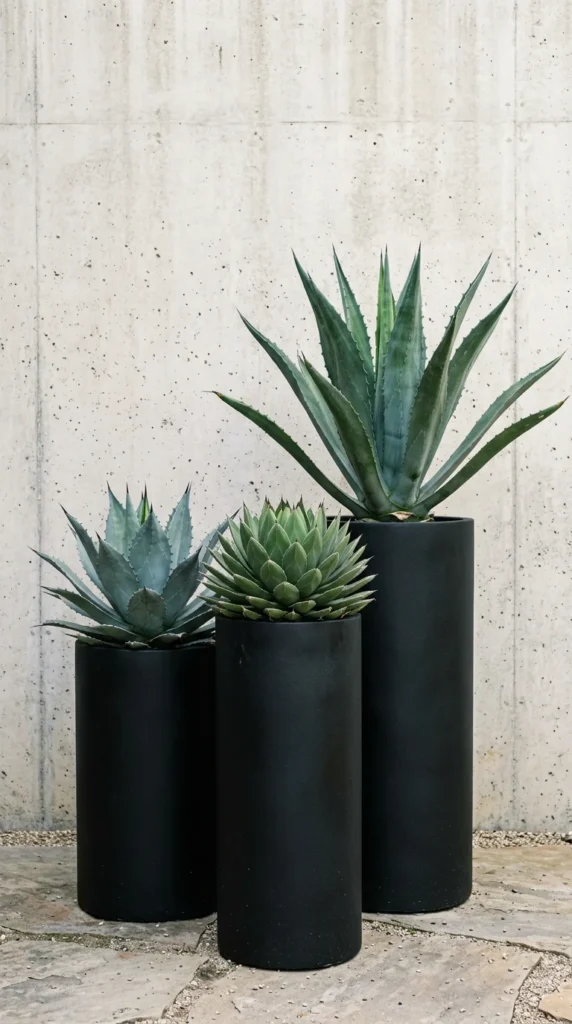
Scale is the ultimate differentiator between a DIY project and a professional design. Small pots can look cluttered; large-scale planters look like art. Choose planters that are at least 30 inches tall in a uniform color palette—such as matte black, slate gray, or crisp white. By grouping these in odd numbers (the rule of three) and filling them with structural plants like Horsetail Reed, Boxwood spheres, or Sansevieria, you create “living walls” that frame the patio and add essential organic movement.
4. Architectural Lighting
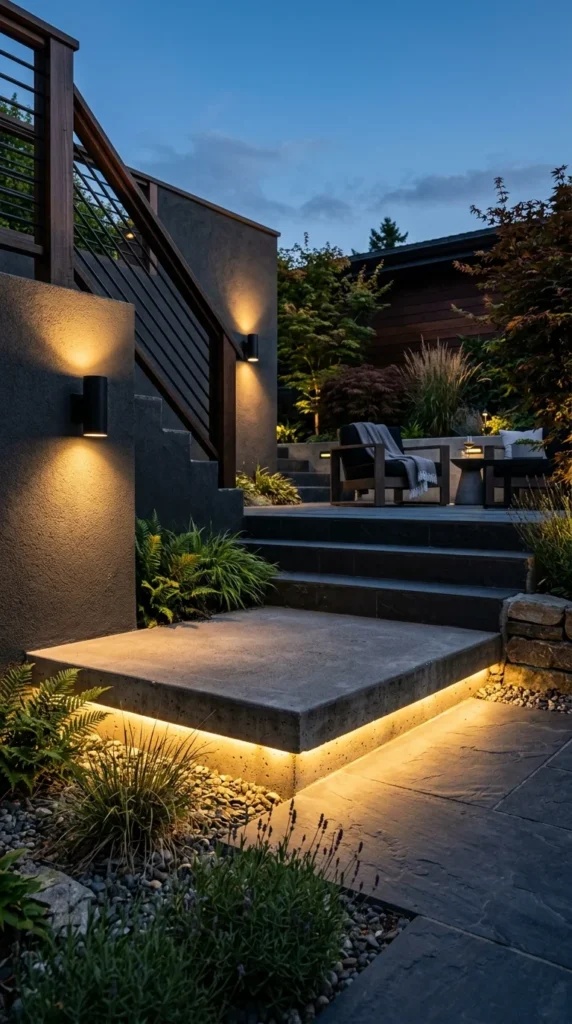
Lighting is the “jewelry” of the patio. To achieve a high-end look, avoid harsh floodlights. Instead, focus on layered, ambient lighting. Use LED strip lights tucked under the “nosing” of concrete steps or built-in benches to create a floating effect. Combine this with directional uplighting on specimen trees and a few high-quality, heavy-duty lanterns. This approach creates a “glow” rather than a “glare,” highlighting the texture of the concrete while masking any imperfections.
5. Modular Seating
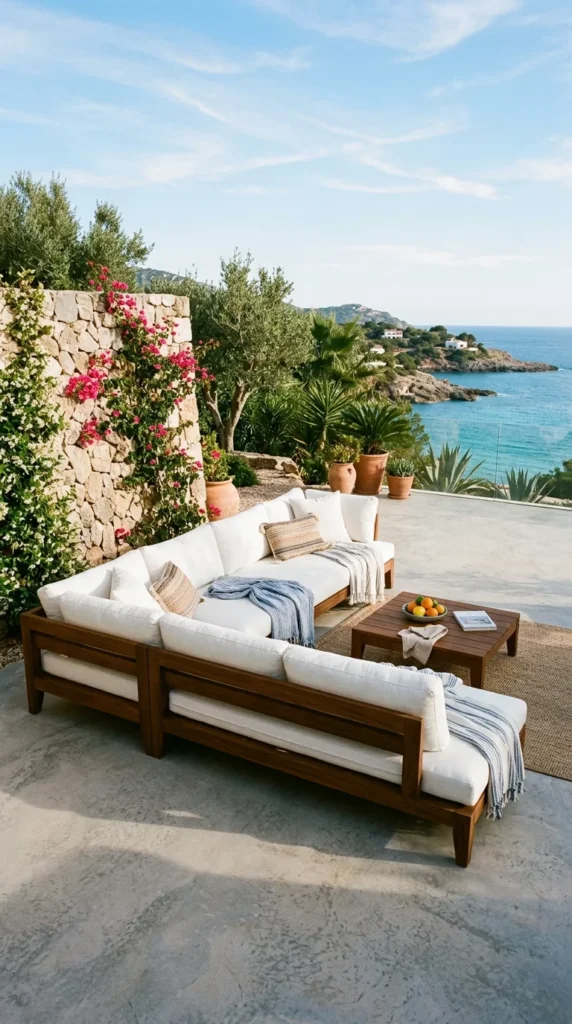
When selecting furniture for a concrete patio, the silhouette is everything. Low-profile, modular seating creates an unobstructed view of the horizon and mimics the aesthetic of modern luxury villas. Look for “deep-seated” pieces with performance fabrics like Sunbrella in neutral tones (oatmeal, dove gray, or crisp white). The weightiness of modular furniture complements the solid nature of concrete, making the entire setup feel permanent and expensive.
6. Vertical Screens
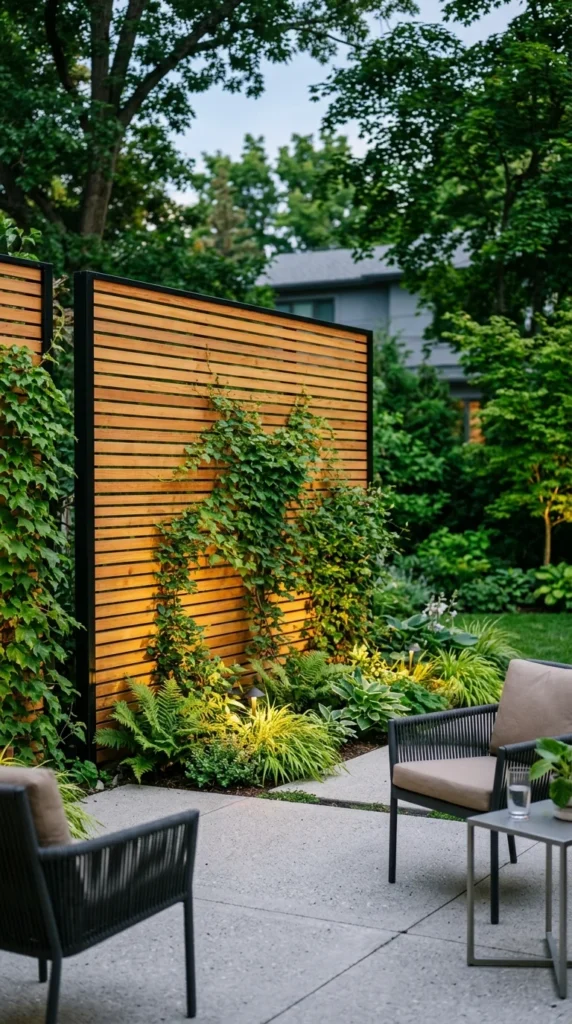
Because concrete patios are flat, they often need vertical elements to create a sense of enclosure. A high-end solution is the installation of architectural privacy screens. Horizontal wood slats (made from Ipe or Cedar) provide a warm, organic contrast to the cool concrete. These screens not only offer privacy but also act as a backdrop for furniture, effectively turning an open slab into an “outdoor room.”
7. Water Fountains
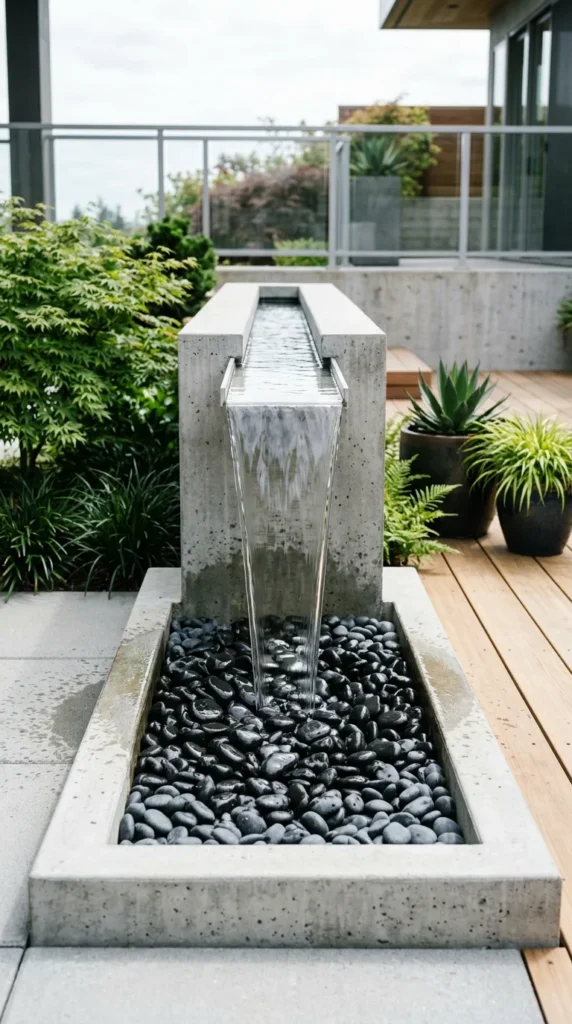
The sound of trickling water is a hallmark of luxury design. A minimalist water feature—such as a concrete weir or a simple bubbling basalt column—adds a sensory layer that masks neighborhood noise and creates a tranquil atmosphere. By using a fountain that shares the same material or color palette as the patio, the feature looks integrated rather than “tacked on,” which is key to a high-end aesthetic.
8. Mixed Materials
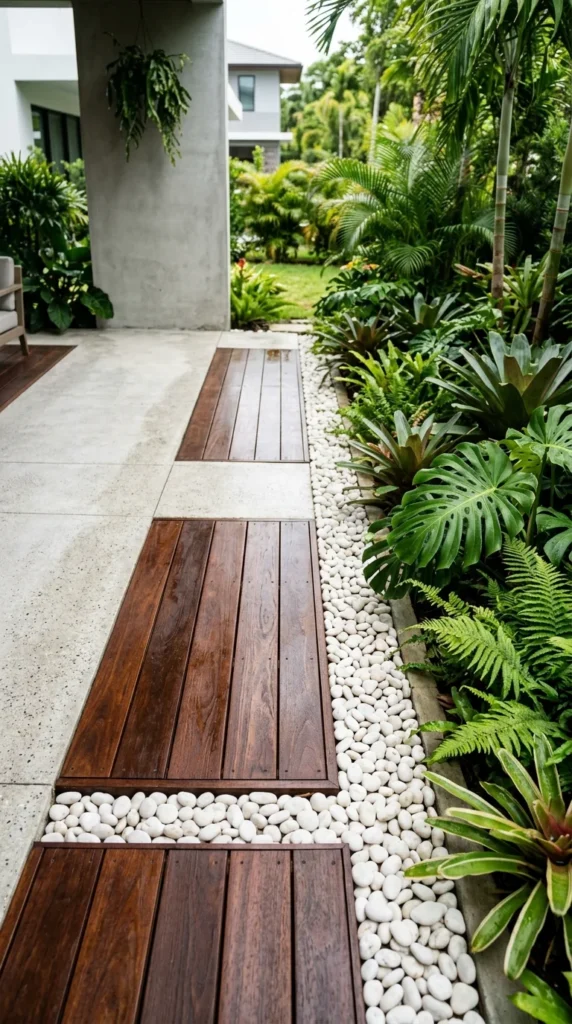
One of the most effective ways to make concrete look expensive is to break up the surface area with contrasting materials. You can achieve this by leaving “channels” between concrete slabs and filling them with black Mexican beach pebbles, white marble chips, or even artificial turf. Alternatively, insetting a section of wood decking directly into the concrete creates a sophisticated “mixed-media” floor that looks custom-designed by an architect.
9. Statement Pergolas
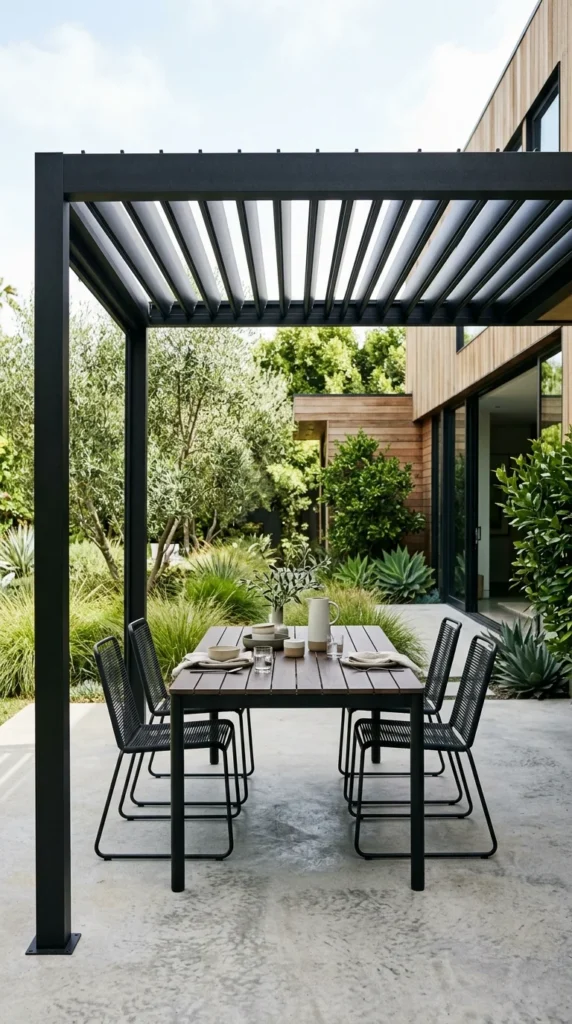
A pergola provides the “ceiling” for your outdoor room. For a high-end concrete patio, skip the traditional rustic wood styles and opt for a modern, clean-lined structure. A black aluminum pergola with a louvers system or a simple “cantilevered” roof provides architectural interest. This structure defines the dining or lounging zone and provides a place to hang high-end amenities like outdoor heaters or motorized shades.
10. Alfresco Dining
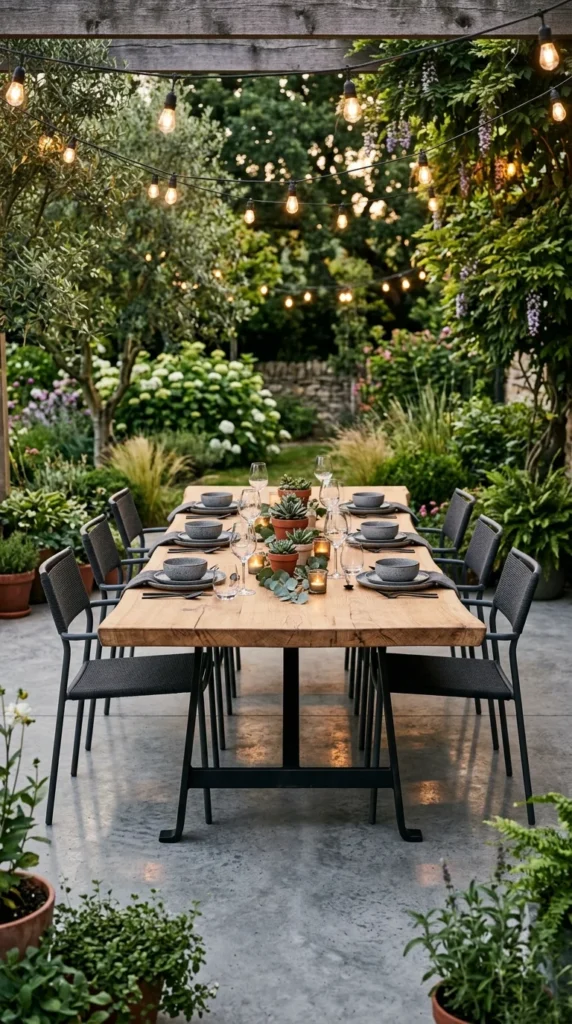
The dining area should be a celebration of textures. A heavy, live-edge wood table paired with sleek, black powder-coated metal chairs creates an “industrial-chic” look that feels incredibly curated. Ensure the table is large enough to feel substantial against the concrete; a spindly table will look lost. Set the scene with linen napkins, ceramic dinnerware, and a low-profile centerpiece to complete the high-end experience.
11. Outdoor Sculptures
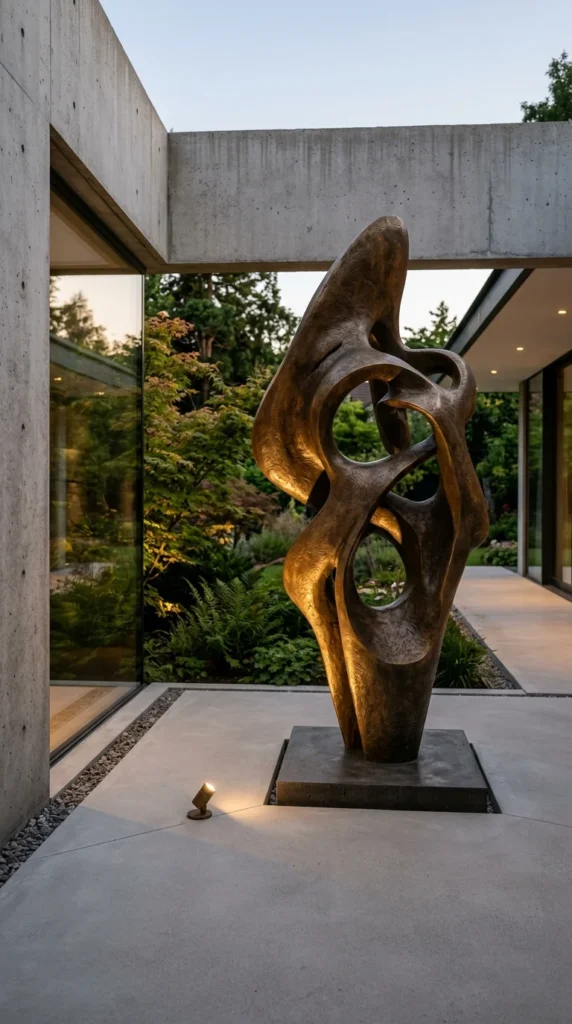
Treat your patio like an outdoor gallery. A single, well-placed piece of art can elevate the entire space. Whether it’s an abstract metal sculpture, a large-scale ceramic urn, or a series of geometric stone orbs, art provides a conversation piece and a clear focal point. When placed on a clean concrete surface, the art becomes the star of the show, proving that less is truly more when it comes to high-end design.