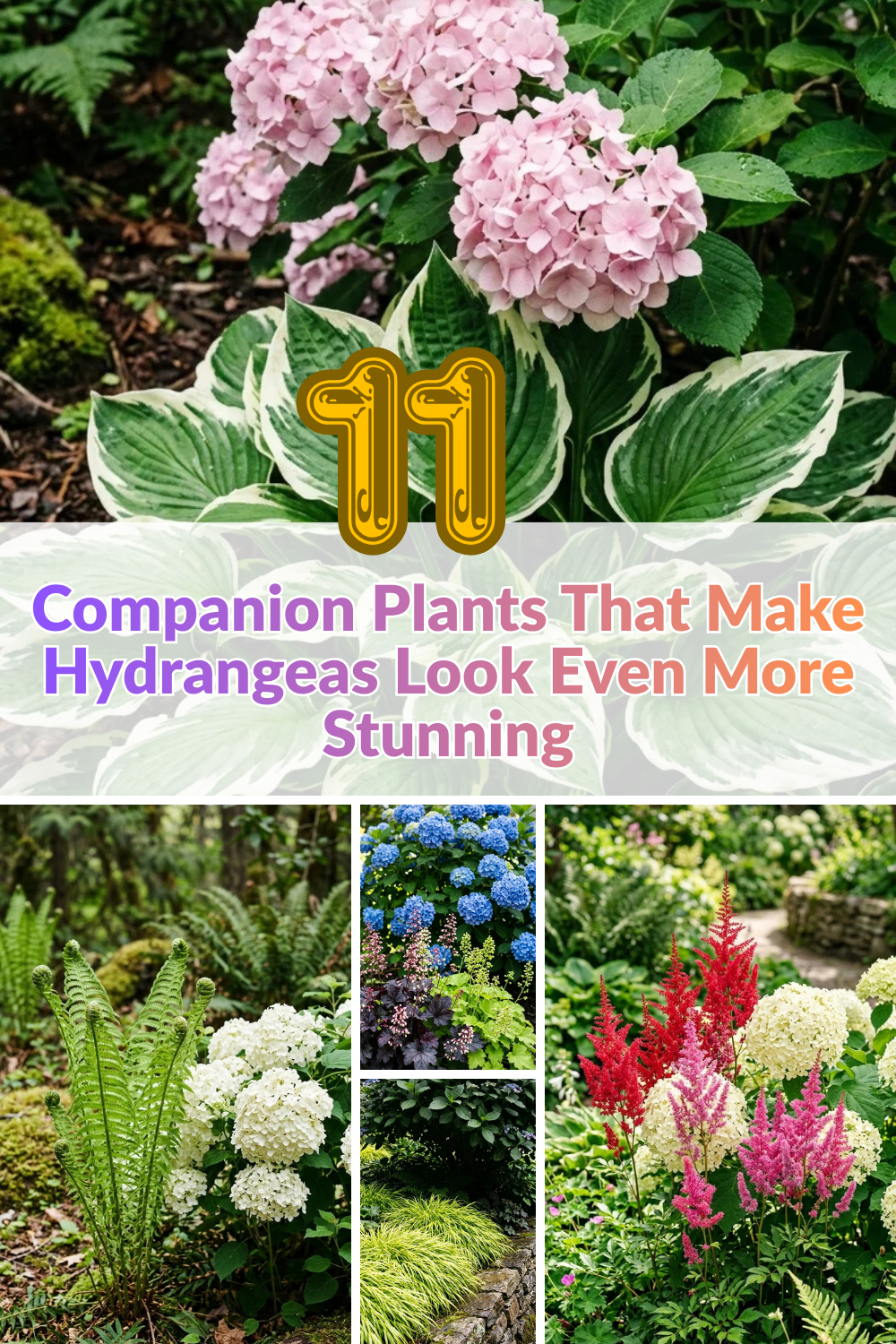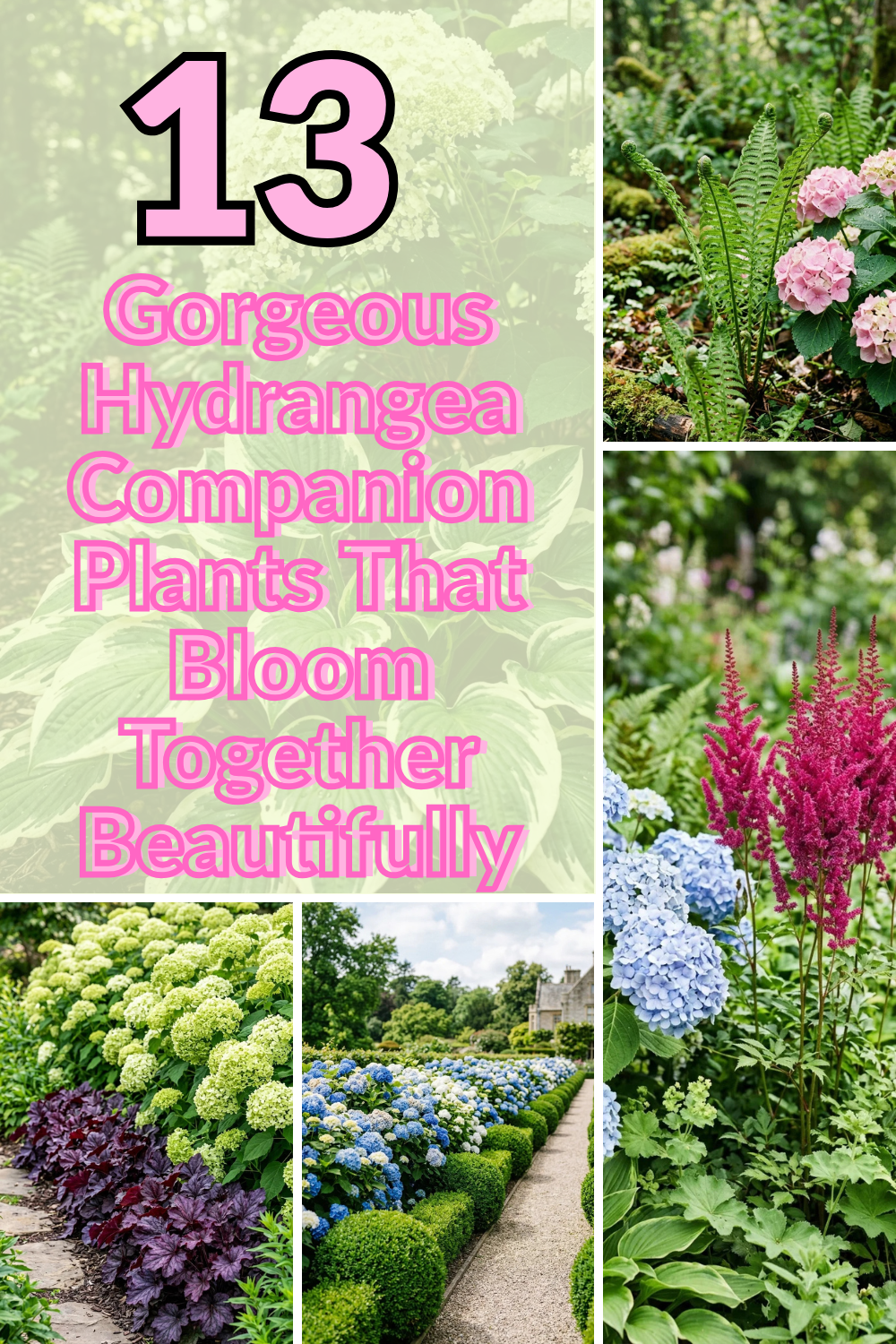
Hydrangeas are the undisputed royalty of the summer garden. With their massive, cloud-like blooms and lush green foliage, they command attention from late spring through autumn. However, even the most stunning hydrangea can benefit from a supporting cast. The right companion plants do more than just fill gaps; they highlight the hydrangea’s colors, provide textural contrast, and can even help maintain the soil moisture and shade that many hydrangea varieties crave.
Choosing the perfect partners for your hydrangeas requires a balance of aesthetics and cultural needs. Most hydrangeas thrive in dappled shade or morning sun with consistent moisture and acidic-to-neutral soil. By selecting plants that share these requirements, you create a harmonious ecosystem that looks professionally designed. From the delicate lace of ferns to the bold spires of foxgloves, here are 13 gorgeous companion plants that will take your hydrangea garden to the next level.
1. Hostas
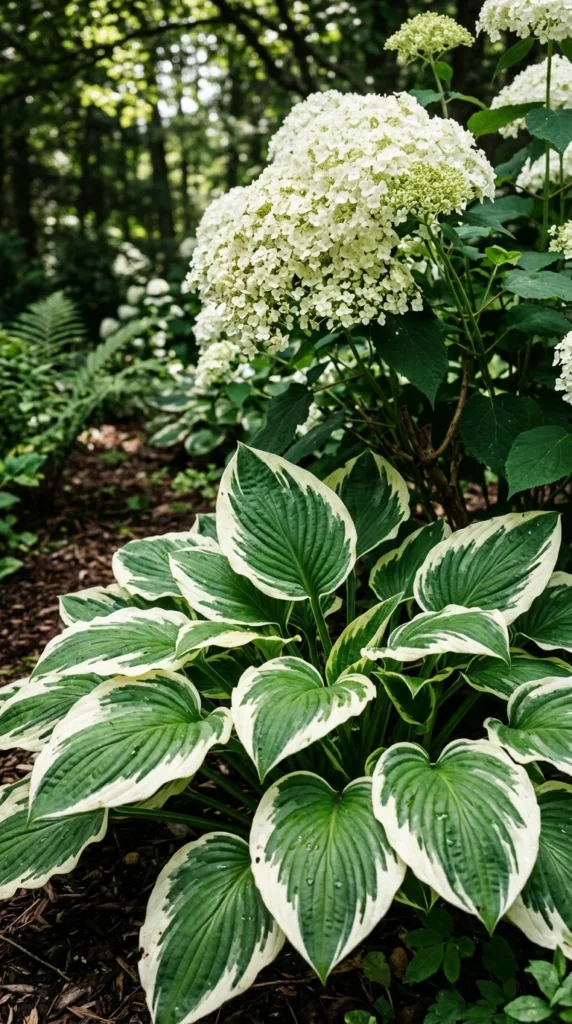
Hostas are perhaps the most iconic partner for hydrangeas. Because both plants thrive in part-shade to full-shade environments, they are naturally compatible. While hydrangeas provide the height and the “wow” factor with their blooms, hostas provide a thick, ground-level carpet of lush foliage that hides the woody “legs” of older hydrangea shrubs.
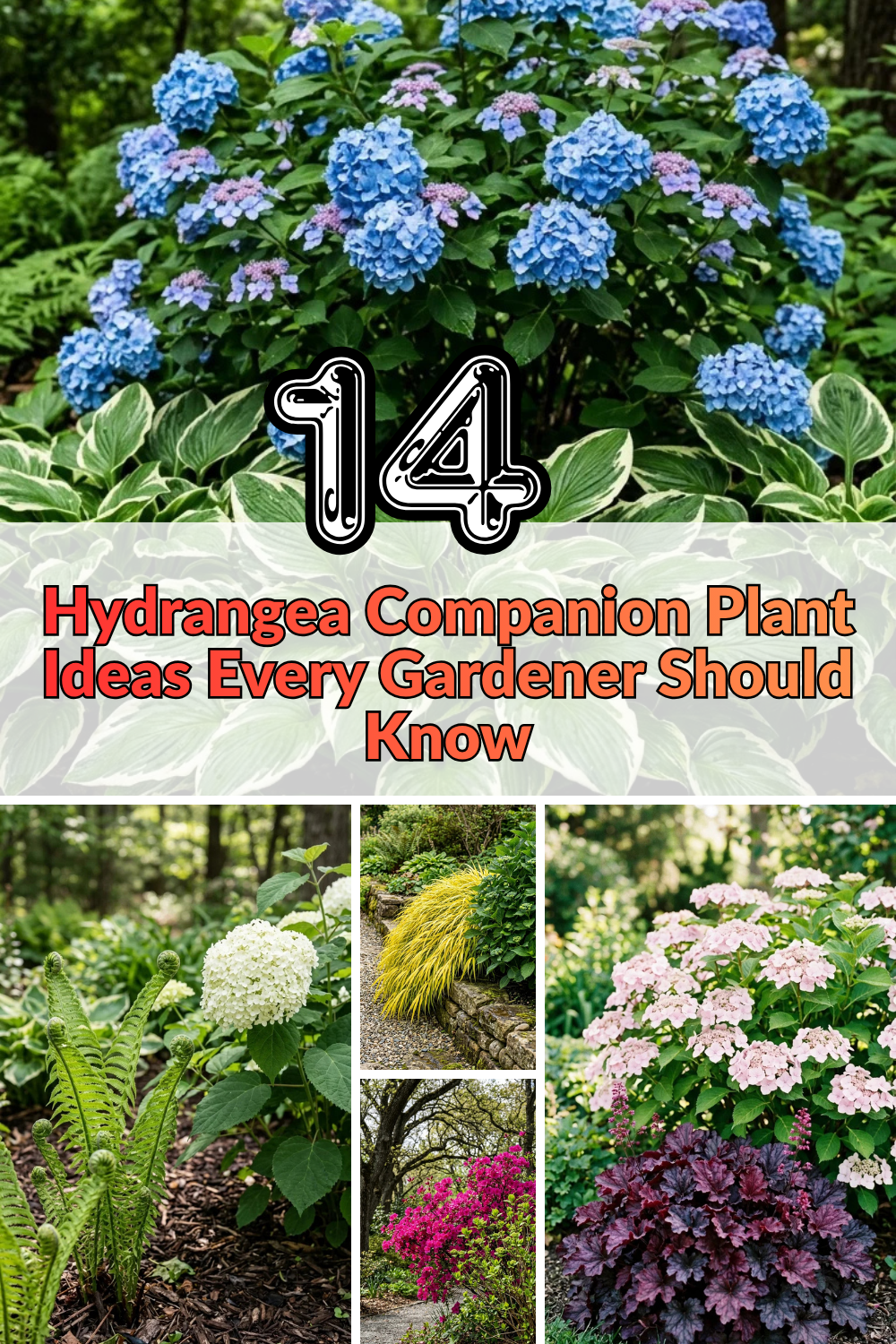
The variety of hostas available allows for endless design possibilities. You can pair a blue-toned hydrangea with a blue-leafed hosta like ‘Blue Angel’ for a monochromatic, cooling effect. Alternatively, variegated hostas with white or yellow edges can brighten up a dark corner and echo the white tones in ‘Annabelle’ or ‘Limelight’ hydrangeas.
2. Ferns
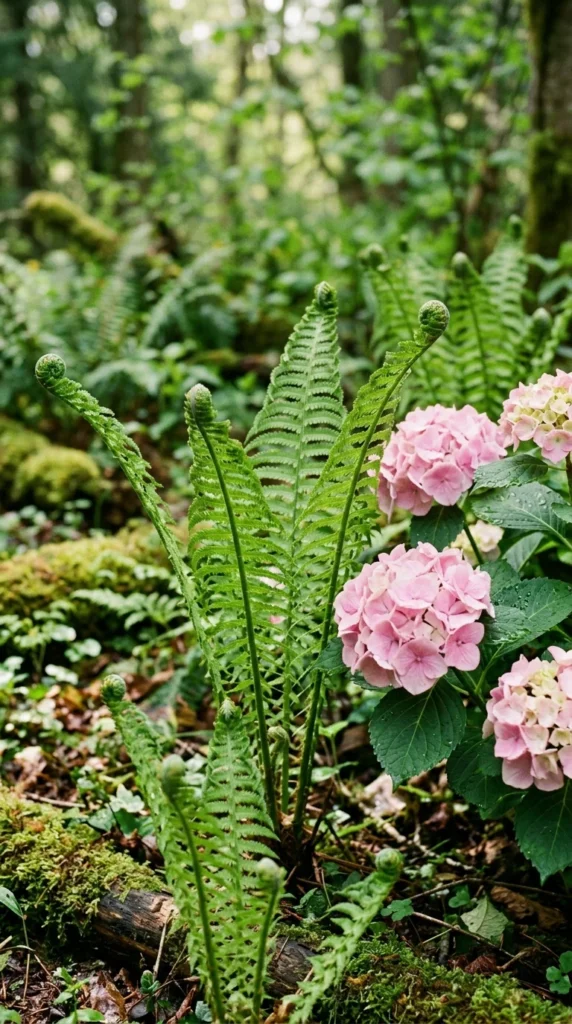
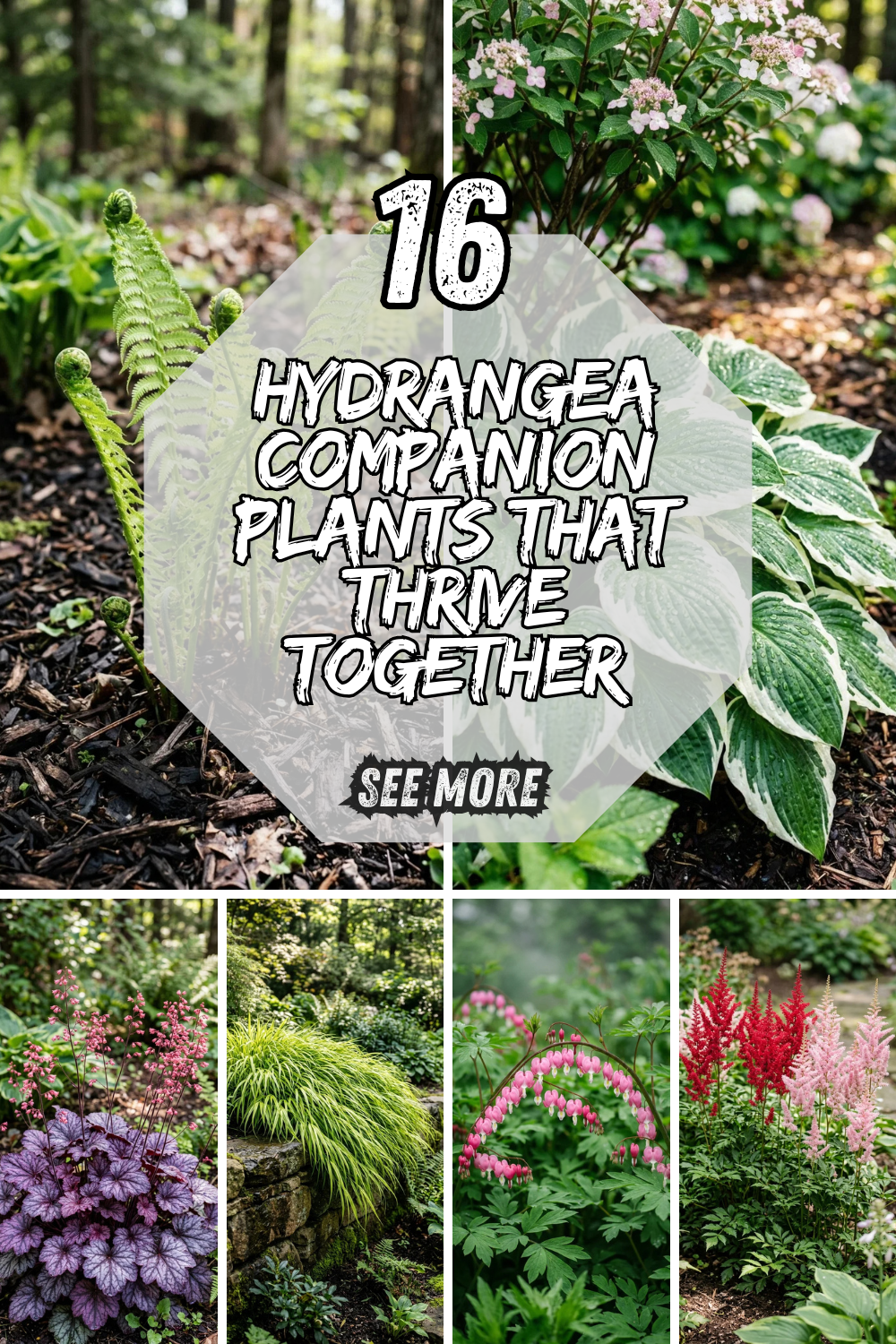
For a woodland or cottage garden feel, nothing beats the pairing of hydrangeas and ferns. Ferns offer a fine, feathery texture that contrasts beautifully with the large, broad leaves of most hydrangea species. They are particularly effective when planted beneath the canopy of larger shrubs like Hydrangea paniculata.
Ostrich ferns provide significant height and drama, while Japanese Painted Ferns offer unique silvery-purple hues that can pick up the lavender tones in mophead hydrangeas. Since both hydrangeas and ferns love moisture, they are easy to care for together, ensuring neither plant goes thirsty during the peak of summer.
3. Astilbes
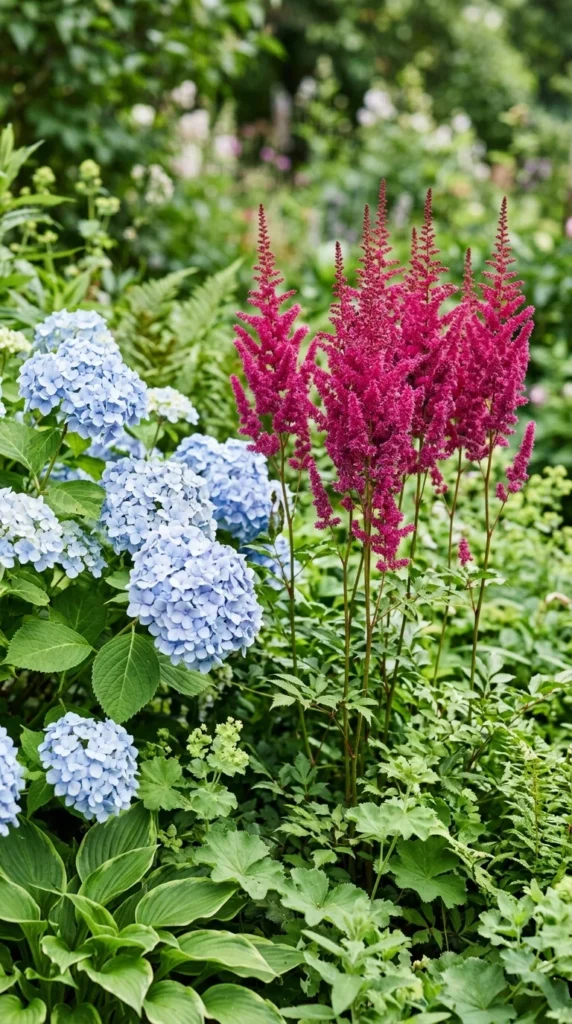
If you want to introduce a different flower shape to your hydrangea bed, astilbes are the perfect choice. While hydrangeas produce round or cone-shaped clusters, astilbes produce upright, airy plumes that add vertical interest and a sense of lightness to the garden.
Astilbes bloom at the same time as many hydrangea varieties, creating a spectacular mid-summer show. They come in shades of white, pink, red, and purple. Planting pink astilbes with pink lacecap hydrangeas creates a romantic, tiered look, while white astilbes can act as a neutral bridge between more vibrant hydrangea colors.
4. Heucheras
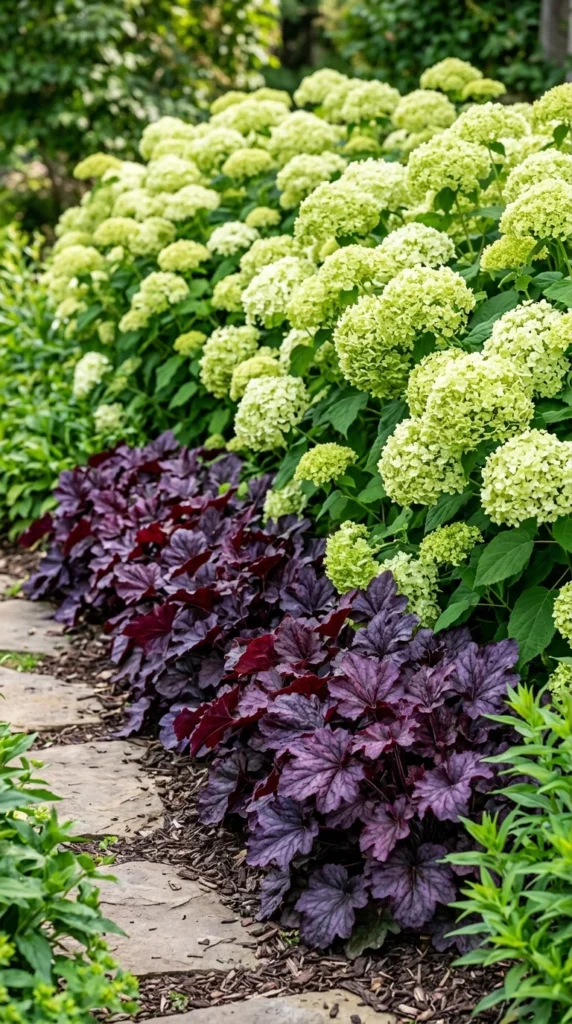
Commonly known as Coral Bells, Heucheras are prized for their spectacular foliage color rather than their tiny, bell-shaped flowers. They come in an incredible array of colors, including lime green, deep burgundy, burnt orange, and silver.
Because Heucheras remain relatively low to the ground, they make excellent edging plants for hydrangea borders. Using a dark purple Heuchera like ‘Obsidian’ beneath a ‘Limelight’ hydrangea creates a stunning high-contrast look. These plants are also remarkably hardy and can handle the same partial shade conditions that keep hydrangeas happy.
5. Boxwoods
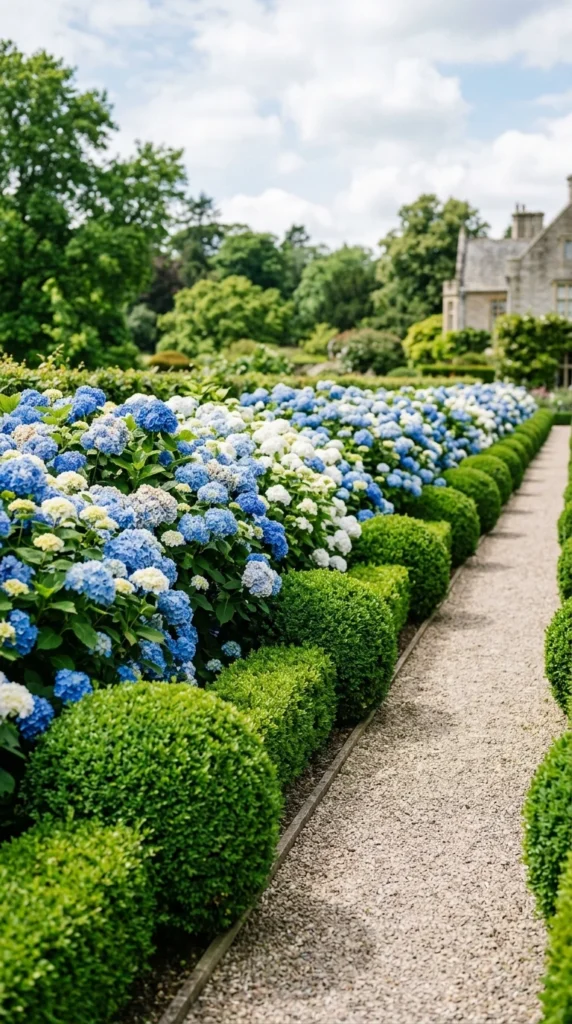
If your garden style leans more toward formal or traditional, boxwoods are an essential companion. While hydrangeas can sometimes look a bit wild or floppy, especially after a heavy rain, boxwoods provide a permanent, evergreen structure that keeps the garden looking tidy year-round.
Low boxwood hedges can be used to “fence in” a hydrangea bed, providing a clean green frame for the billowing summer blooms. Even in the winter, when hydrangeas are dormant and consist of mostly bare sticks, the boxwoods maintain the garden’s shape and visual interest.
6. Japanese Forest Grass
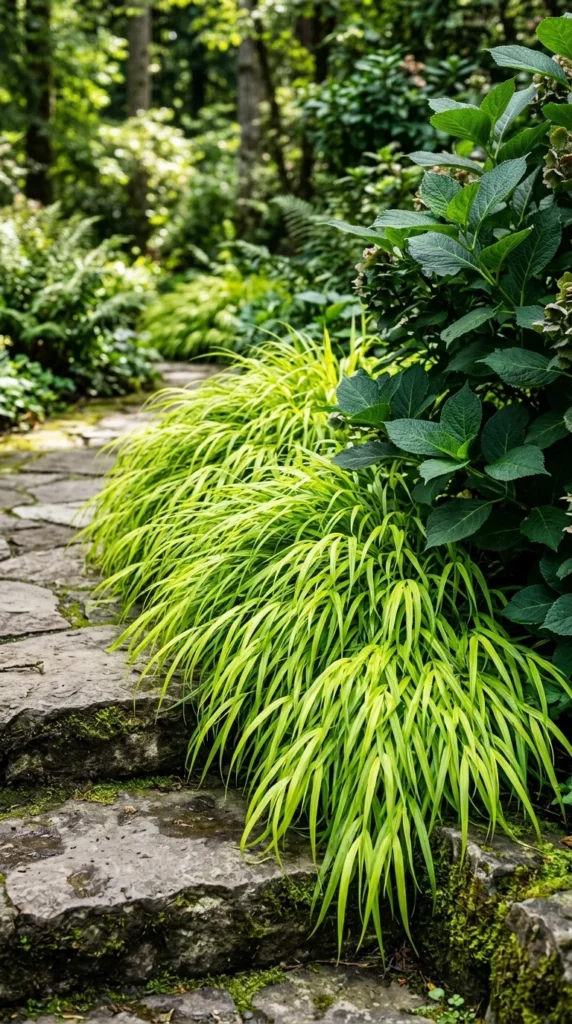
Japanese Forest Grass (Hakonechloa) is a shade-loving ornamental grass that brings movement and a soft texture to the garden. Its weeping habit looks like a golden waterfall, which provides a brilliant contrast to the sturdy, upright nature of hydrangea shrubs.
The “Aureola” variety, with its yellow and green stripes, is particularly effective at lighting up shady areas. Planting this grass along the front of a hydrangea border creates a soft, blurred edge that leads the eye naturally through the landscape. The way the grass sways in the breeze adds a sensory element of sound and motion that many other companions lack.
7. Bleeding Hearts
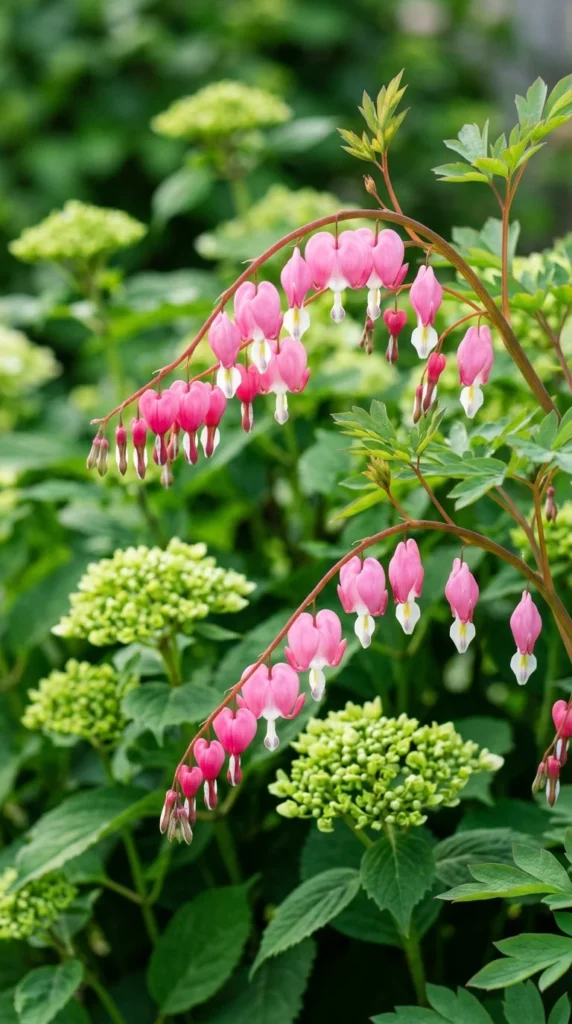
Bleeding Hearts (Lamprocapnos spectabilis) are classic spring perennials that bloom just as hydrangeas are beginning to leaf out. By planting them together, you ensure that your garden bed has visual interest from the very start of the growing season.
As the Bleeding Heart flowers fade and the plant enters summer dormancy, the hydrangeas will be reaching their full size, effectively covering the space left behind. This “succession planting” technique is a favorite among professional landscapers to maximize color in small spaces. The delicate, arching stems of the Bleeding Heart provide a whimsical, fairy-tale aesthetic that complements the romantic nature of hydrangeas.
8. Clematis
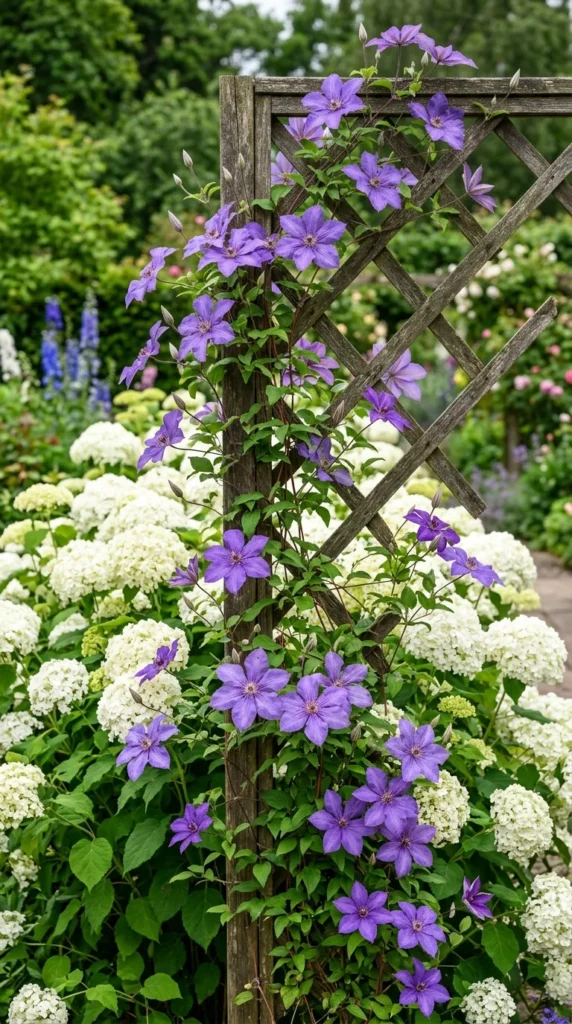
To add a vertical dimension to your hydrangea display, consider planting Clematis. This climbing vine can be trained up a trellis, fence, or even through the branches of larger hydrangea paniculata varieties.
The “cool feet, hot head” rule for Clematis—where the roots need shade but the vines need sun—makes them perfect for planting behind hydrangeas. The hydrangea’s thick foliage provides the necessary shade for the Clematis roots, while the vine climbs upward to catch the sunlight. Pairing a dark purple Clematis with a white ‘Annabelle’ hydrangea creates a sophisticated and timeless color palette.
9. Daylilies
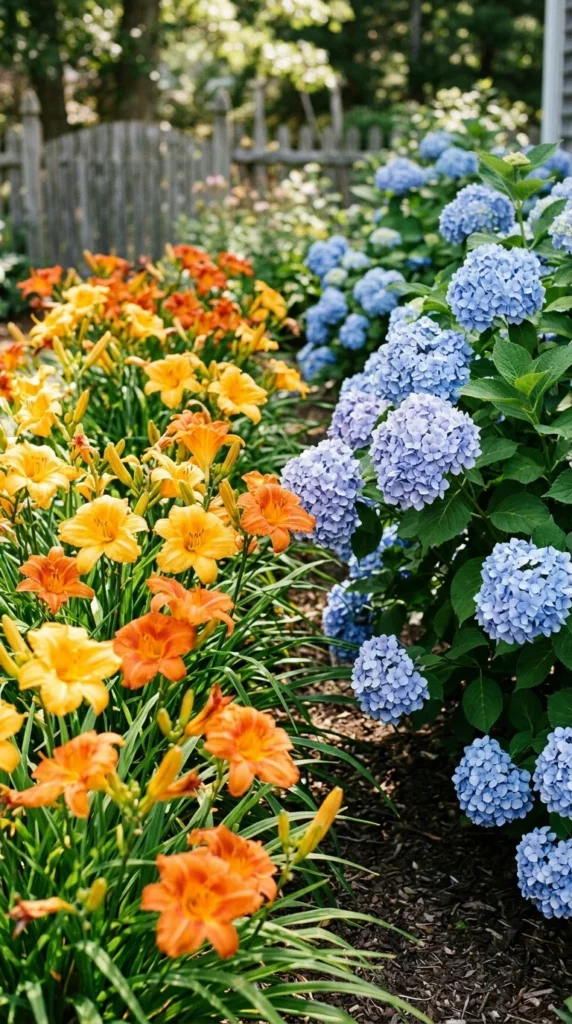
For hydrangeas that are planted in spots with a bit more sun, such as the Hydrangea paniculata or Hydrangea quercifolia (Oakleaf), Daylilies are a fantastic companion. Daylilies are incredibly tough, drought-tolerant, and offer a wide variety of colors.
Their strap-like leaves provide a different foliage texture than the broad hydrangea leaves, and their trumpet-shaped flowers offer a bold pop of color. Planting yellow daylilies next to blue mophead hydrangeas creates a vibrant, complementary color scheme that screams summer.
10. Foxgloves
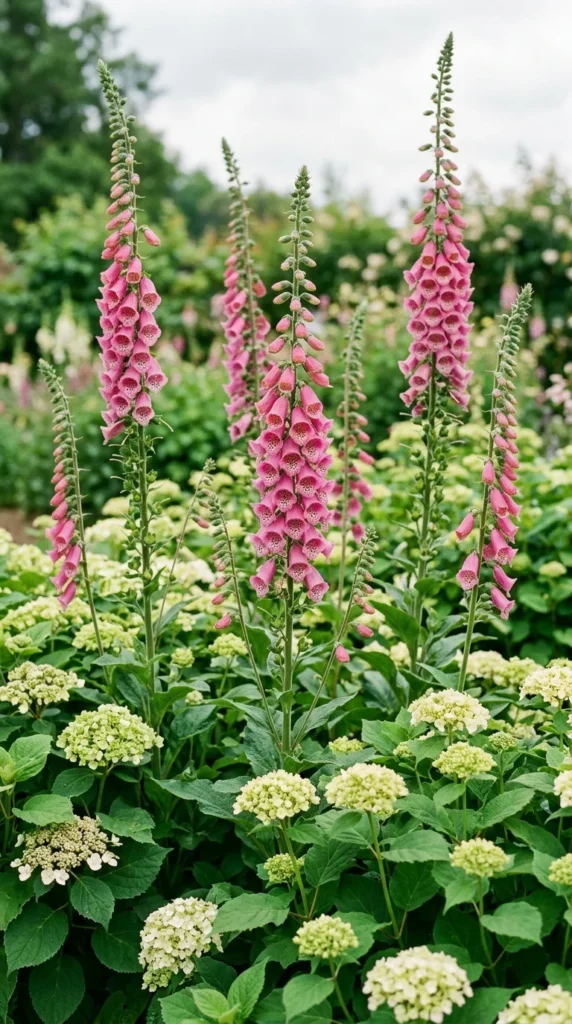
Foxgloves (Digitalis) bring a sense of height and “cottage core” charm to any hydrangea garden. These tall, stately biennials produce towers of bell-shaped flowers that can reach up to five feet in height.
Because foxgloves are tall and relatively narrow, they can be tucked into the gaps between hydrangea shrubs to provide a burst of vertical color. They bloom in early to mid-summer, overlapping perfectly with the start of the hydrangea season. The speckled throats of the foxglove flowers add a layer of intricate detail that rewards close-up viewing.
11. Alliums
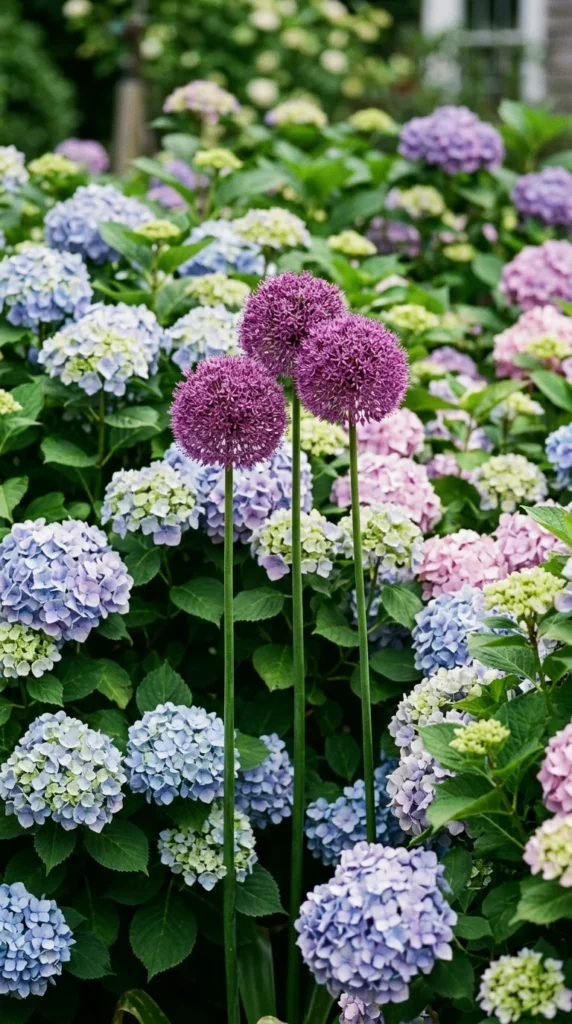
Alliums, also known as ornamental onions, offer a completely different geometry to the garden. Their perfectly spherical flower heads look like floating lollipops or fireworks.
When planted among hydrangeas, Alliums provide a playful contrast to the heavy, rounded hydrangea blooms. Many Allium varieties bloom in late spring and early summer, bridging the gap between spring bulbs and summer shrubs. Their tall, leafless stems mean they take up very little ground space, making them easy to tuck in around the base of established hydrangeas.
12. Ornamental Grasses
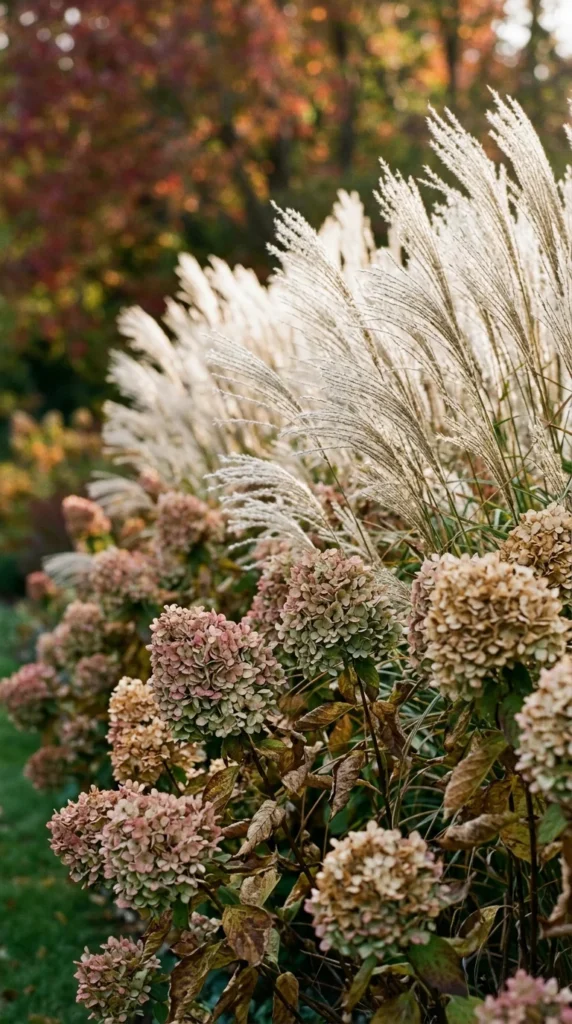
As summer turns to fall, many hydrangeas undergo a stunning color transformation, with blooms turning shades of antique pink, copper, or deep red. This is when ornamental grasses truly shine as companions.
Grasses like Miscanthus or Pennisetum develop feathery plumes in late summer that persist well into winter. The fine texture of the grass seed heads complements the drying hydrangea blooms, creating a stunning display of “winter interest.” This pairing is perfect for gardeners who want their landscape to look beautiful even during the colder months.
13. Japanese Maples
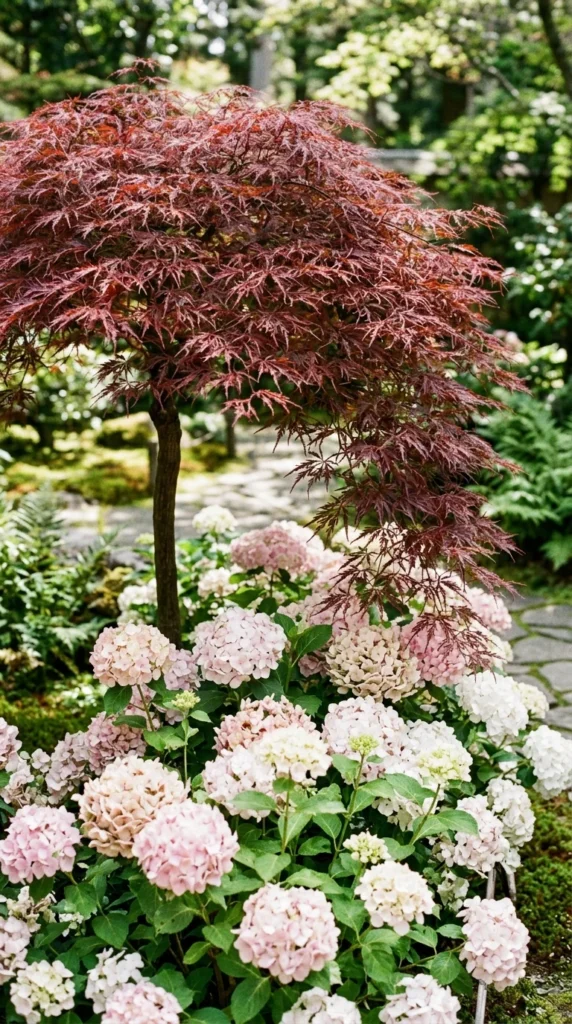
If you are looking for a structural companion that provides both shade and color, the Japanese Maple is unrivaled. These small, slow-growing trees provide the perfect dappled shade that many hydrangea varieties need to prevent their leaves from scorching in the afternoon sun.
A red-leafed Japanese Maple like ‘Bloodgood’ provides a stunning dark backdrop that makes the bright blooms of white or blue hydrangeas pop. In the fall, the maple’s leaves will turn brilliant shades of scarlet or orange, perfectly echoing the autumnal tones of Oakleaf hydrangeas. This combination creates a multi-layered, professional-looking garden design that feels like a private sanctuary.