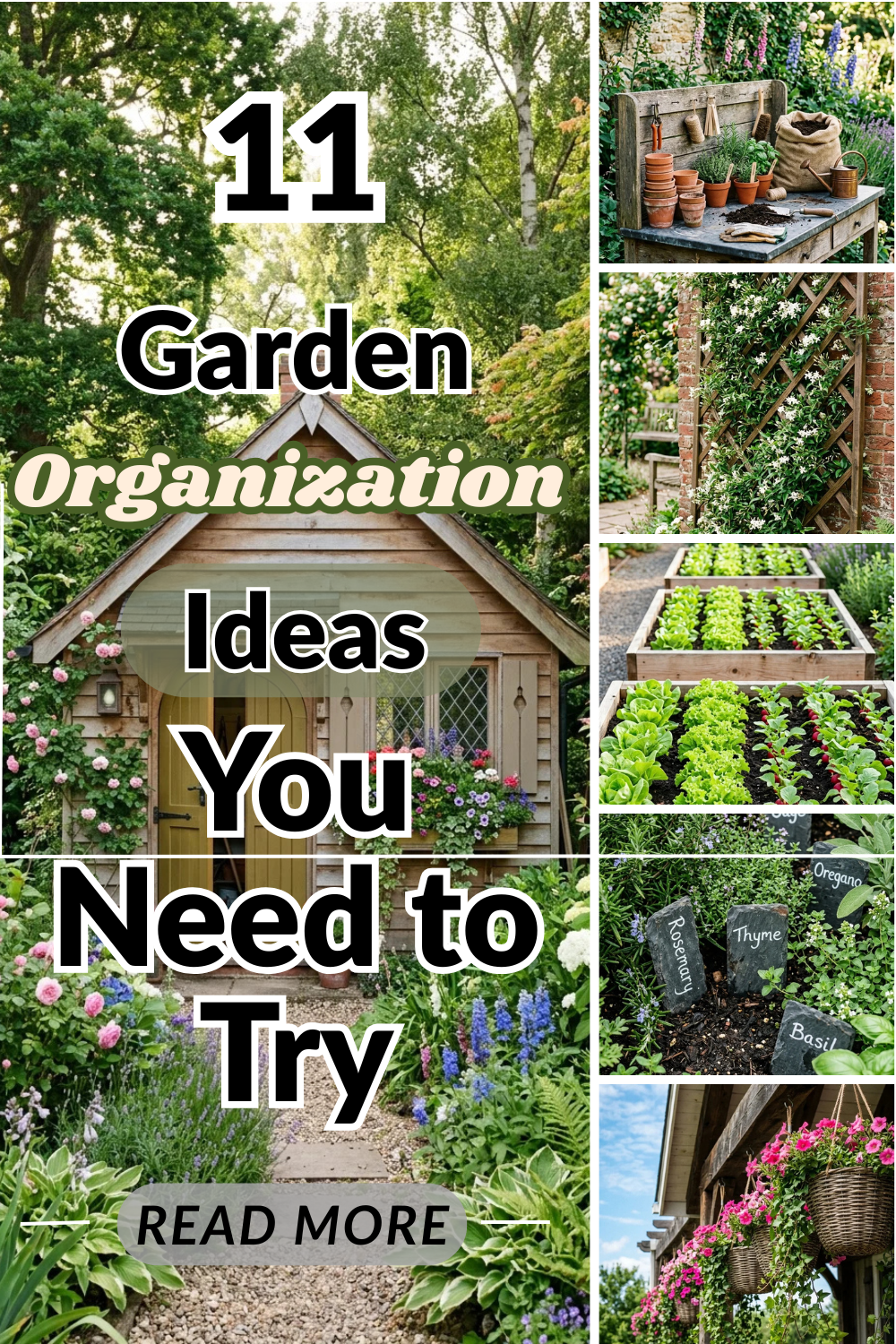
A garden is a sanctuary, a place of growth, and a labor of love. However, without a proper organizational system, it can quickly transform from a peaceful retreat into a cluttered mess of tangled hoses, misplaced trowels, and half-empty soil bags. Efficient garden organization doesn’t just make your outdoor space look aesthetically pleasing; it streamlines your workflow, protects your expensive tools from the elements, and ensures your plants get the attention they deserve. Whether you have a sprawling suburban lot or a tiny urban balcony, these eleven innovative organization ideas will help you reclaim your green space and garden like a pro.
1. Potting Bench
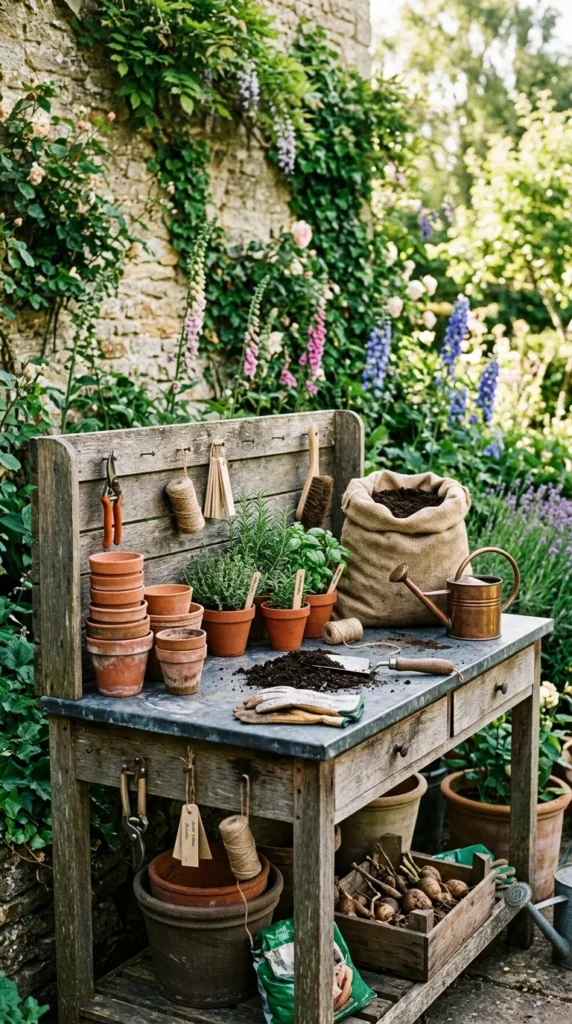
The potting bench is the nerve center of any organized garden. It serves as a dedicated workspace where you can transplant seedlings, mix soil, and prune your container plants without straining your back or making a mess on the lawn. When choosing or building a potting bench, look for models with built-in sinks or bins for loose soil.
To maximize the utility of your bench, utilize the space beneath it for storing heavy items like bags of mulch or large ceramic pots. Installing a pegboard above the bench allows you to hang small hand tools—like snips, twine, and dibbers—at eye level. This centralizes your activity, meaning you spend less time searching for your gear and more time actually gardening.
2. Vertical Trellis
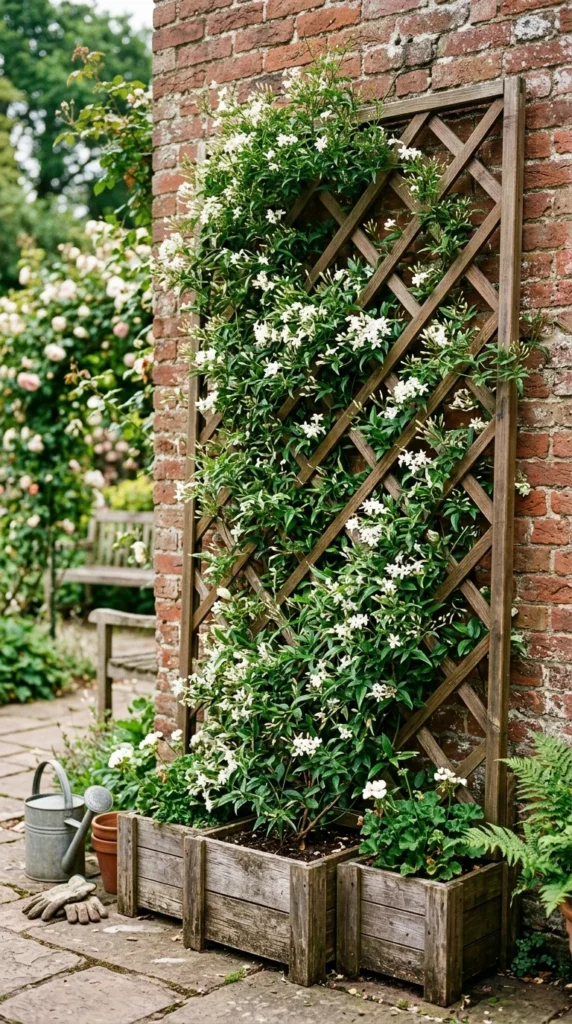
When ground space is at a premium, the only way to go is up. Vertical gardening is a game-changer for organization because it lifts sprawling plants off the path and gives them a dedicated structure to climb. Using trellises for climbing vegetables like cucumbers, peas, and pole beans prevents them from taking over your garden beds and makes harvesting significantly easier.
Beyond the practical benefits for the plants, trellises act as living walls that can define different “rooms” within your garden. You can use them to hide unsightly features like air conditioning units or trash bins. From simple bamboo teepees to ornate iron structures, vertical organization keeps your garden floor clear and your plants healthy by improving air circulation and sunlight exposure.
3. Tool Rack
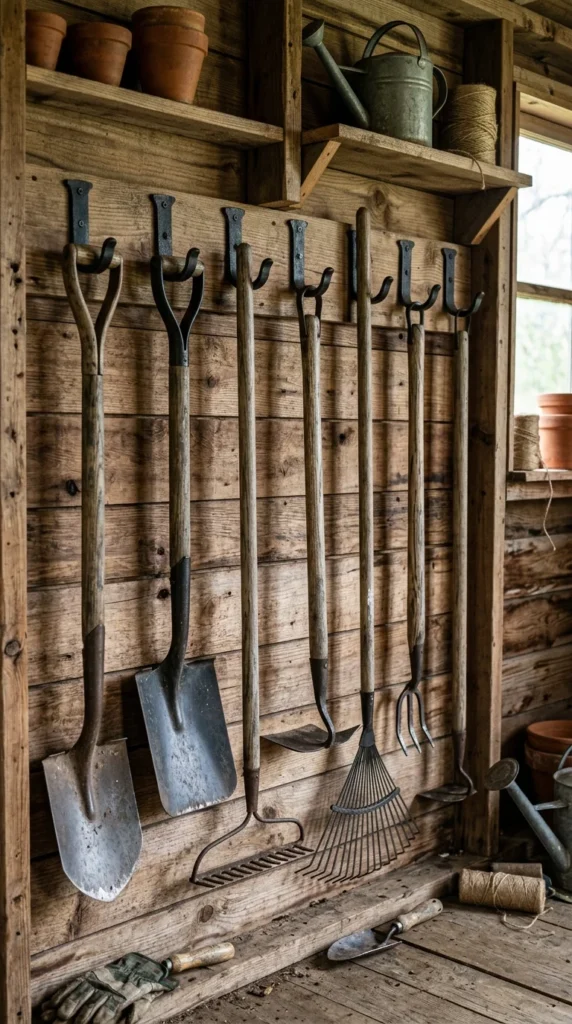
Nothing creates garden clutter faster than a pile of long-handled tools leaning precariously against a wall. A dedicated tool rack is the ultimate solution for safety and order. By mounting your shovels, rakes, hoes, and pitchforks on a wall-mounted rack, you clear up valuable floor space and prevent the “domino effect” that happens when one tool falls and knocks over the rest.
For a DIY approach, you can use PVC pipe sections mounted to a wooden frame to create individual slots for each tool handle. If you prefer a more polished look, heavy-duty magnetic strips or adjustable track systems work wonders. Keeping your tools off the ground also protects them from moisture, which prevents rust and extends the lifespan of your investment.
4. Hose Reel
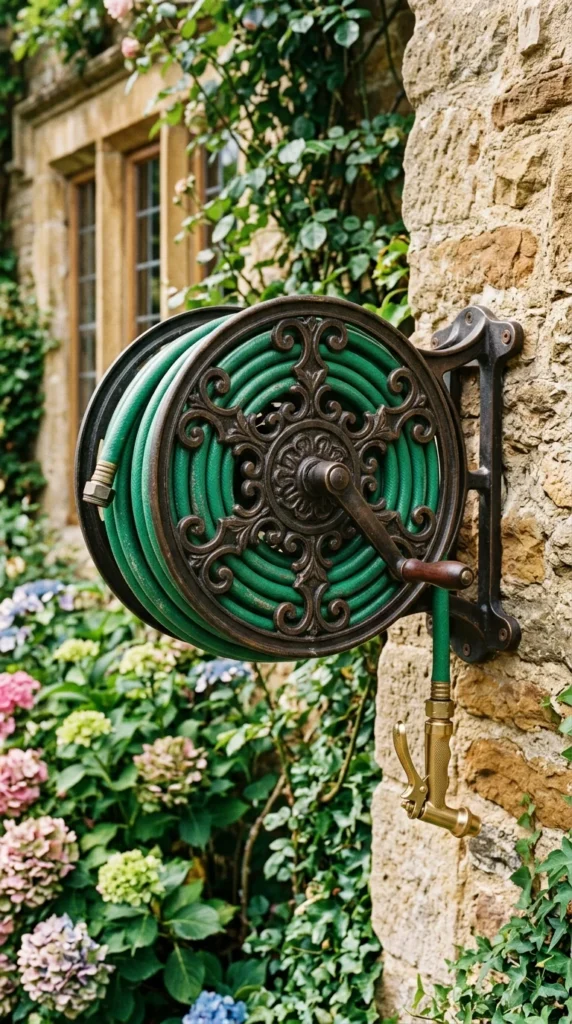
A tangled garden hose is a tripping hazard and an eyesore. It also wears out faster when left in a heap, as kinks can lead to cracks and leaks. Investing in a high-quality hose reel—whether it’s a wall-mounted manual crank, an automatic retractable box, or a freestanding decorative pot—is essential for a tidy yard.
Wall-mounted reels are excellent for keeping the hose completely off the ground and out of the way of the lawnmower. For larger properties, consider “hose guides”—small stakes placed at the corners of garden beds—to prevent the hose from crushing your delicate flowers as you pull it around the yard. A well-managed hose makes watering a breeze rather than a chore.
5. Seed Storage
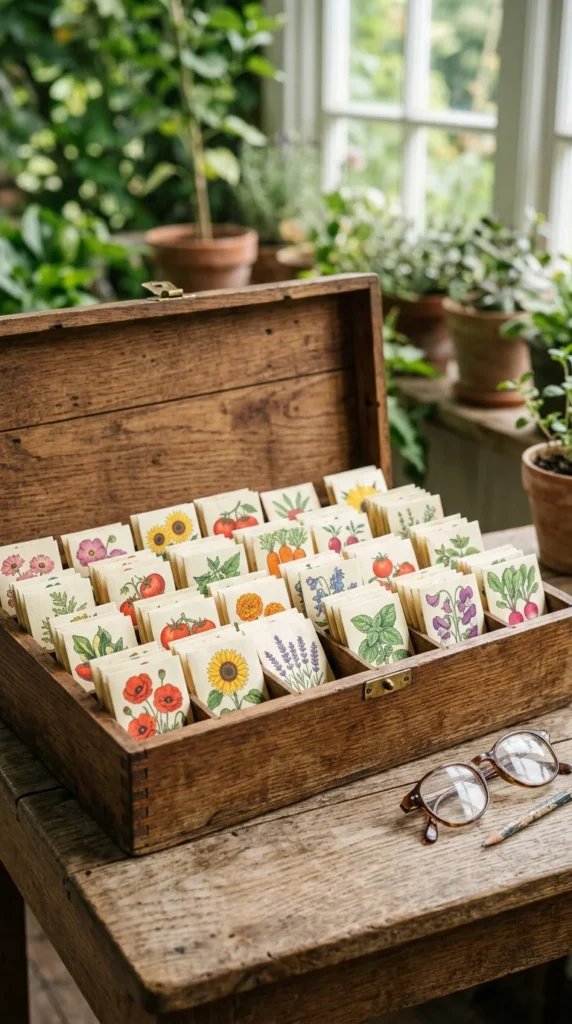
Gardeners are notorious for having “seed fever,” resulting in dozens of half-used packets scattered in drawers and pockets. A dedicated seed storage system is vital for keeping track of what you have and ensuring your seeds stay viable for the next season.
A photo album with plastic sleeves is a popular “hack” for storing seed packets, as it allows you to flip through your inventory easily. Alternatively, a moisture-proof metal tin or a dedicated wooden filing box with dividers sorted by “Sow Date” or “Plant Type” works beautifully. Store your seed container in a cool, dark, and dry place to maximize the germination rate of your future crops.
6. Raised Beds
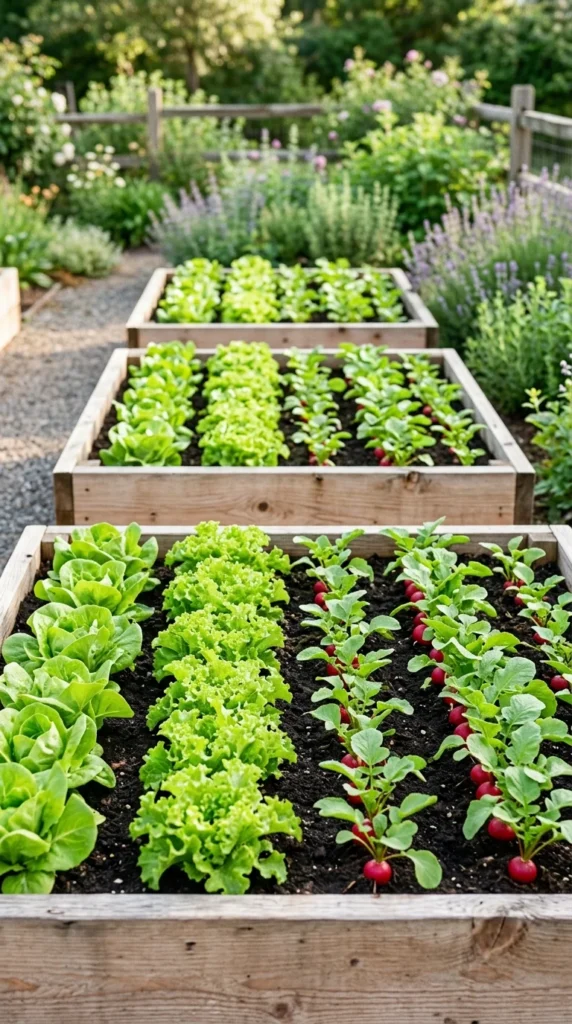
Raised beds are the gold standard for organized vegetable gardening. They provide clear boundaries between your growing area and your walking paths, preventing soil compaction and keeping weeds at bay. By containing your soil within a frame, you can tailor the nutrient mix specifically to what you are growing.
Organizationally, raised beds allow you to practice “square foot gardening,” a method where you divide the bed into a grid to maximize yield in a small space. This structured approach makes it easy to plan crop rotations and ensures that every inch of your garden is being used efficiently. Plus, they add a clean, architectural look to the landscape.
7. Labeling System
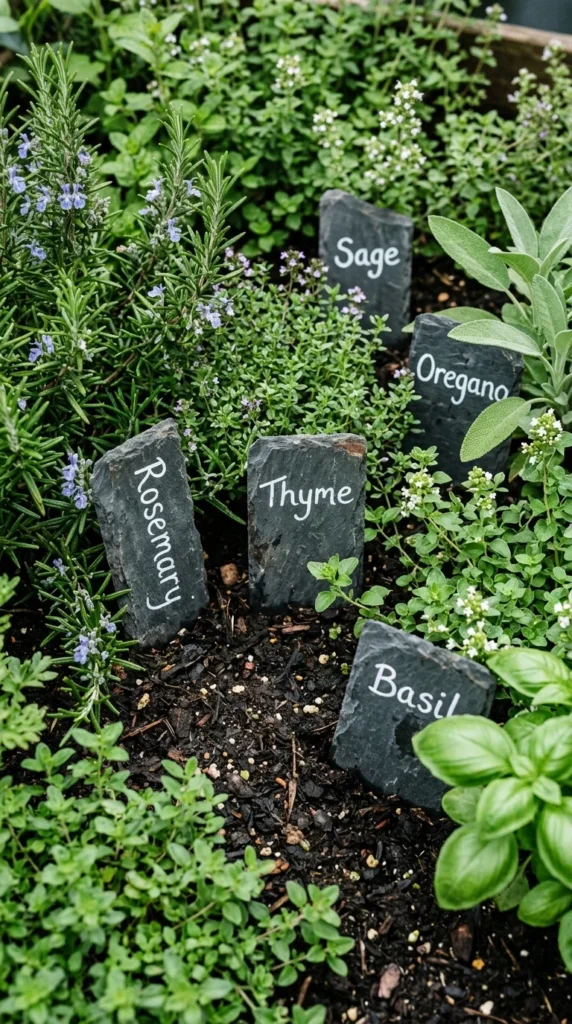
It’s easy to remember what you planted in April, but by July, a row of mystery greens can be a source of frustration. A consistent labeling system is key to keeping your garden organized and professional. Markers not only tell you what is growing where, but they can also include important info like the planting date or the specific variety name.
You can go rustic with smooth river stones and a permanent marker, or elegant with copper tags that develop a beautiful patina over time. For a budget-friendly option, wooden popsicle sticks or repurposed wine corks on skewers do the trick. A well-labeled garden ensures you don’t accidentally pull up a slow-germinating flower thinking it’s a weed.
8. Garden Shed
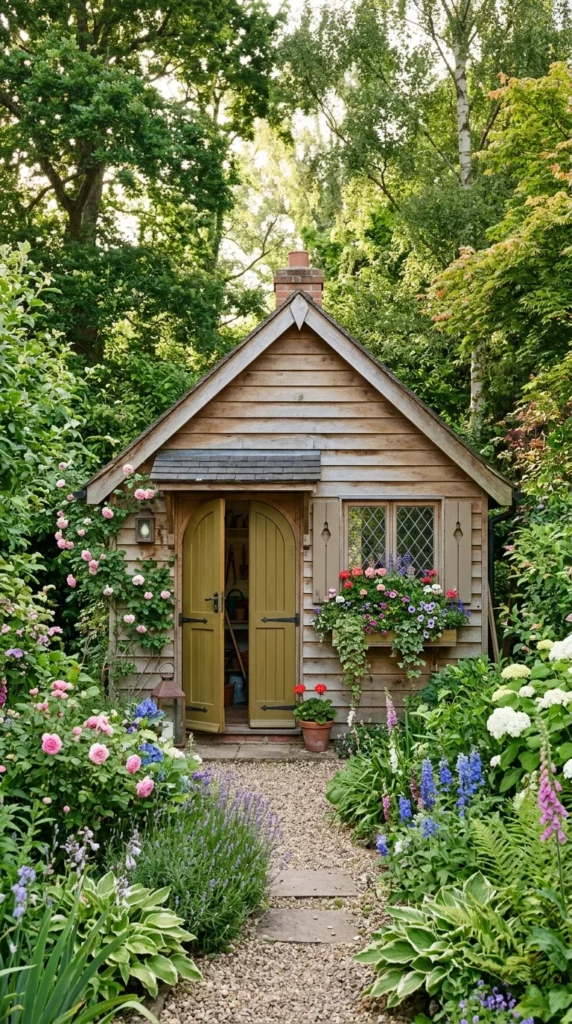
If you have the space, a garden shed is the ultimate organizational luxury. It acts as a “garage” for your outdoor life, housing everything from lawnmowers and leaf blowers to bags of fertilizer and birdseed. A shed allows you to keep all your gardening supplies in one weather-proof location, freeing up space in your actual garage or basement.
To make the most of a shed, think vertically. Install shelving units for bins of hardware, hooks for power tools, and even a small loft for seasonal items like holiday decorations or patio cushions. By keeping the interior organized with clear bins and labels, you’ll never find yourself buying a second bag of potting soil simply because you couldn’t find the first one.
9. Composting Bin
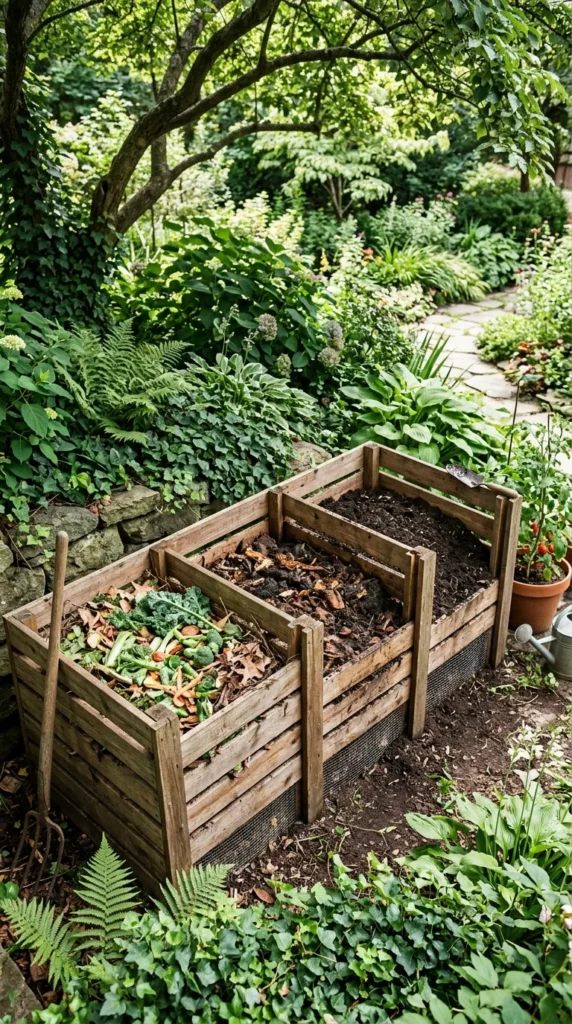
An organized garden should have a system for its waste. Instead of piling up grass clippings and kitchen scraps in a messy heap in the corner, a structured composting bin keeps your “black gold” contained and sightly. A multi-bin system is particularly effective for organization: one bin for fresh “active” waste, one for maturing compost, and one for finished compost ready to spread.
Enclosed bins or tumblers are great for smaller yards as they hide the decomposing material and keep pests away. Placing your compost station near your main garden beds reduces the effort required to transport materials back and forth, creating a closed-loop system that is both tidy and environmentally friendly.
10. Boot Station
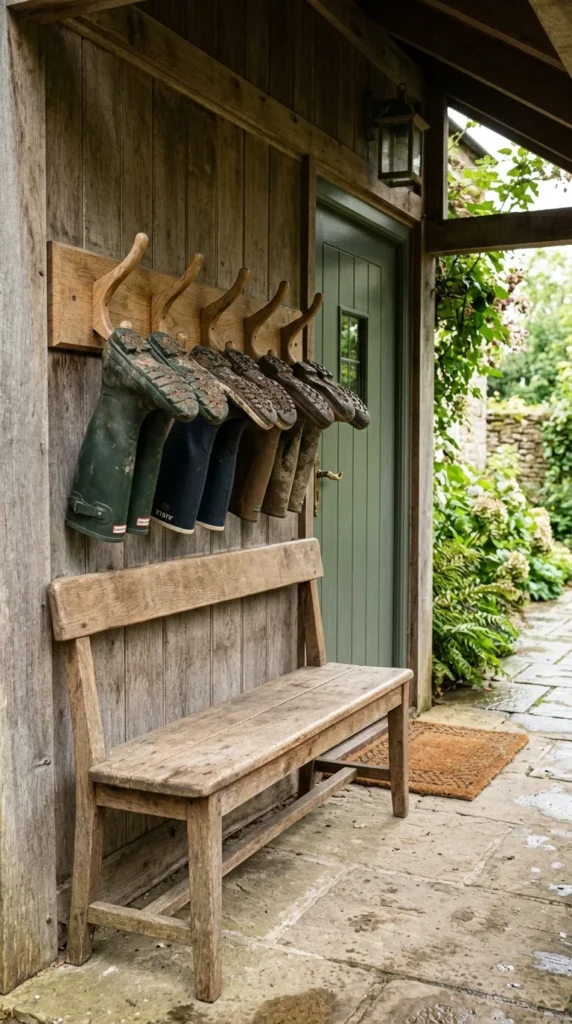
Gardening is a messy business, but that mess doesn’t have to follow you inside. A dedicated boot station at your garden entrance or in your mudroom is a vital part of keeping your entire home organized. By providing a specific spot to shed mud-caked boots and dirty gloves, you prevent the spread of dirt and debris across your floors.
A “boot jack” to help pull off tight wellies and a tray filled with pebbles to catch dripping water are excellent additions. If you have the space, a small bench provides a place to sit while you lace up your work shoes, and a few hooks nearby can hold your sun hat and gardening apron so you’re always ready to head out into the dirt.
11. Hanging Baskets
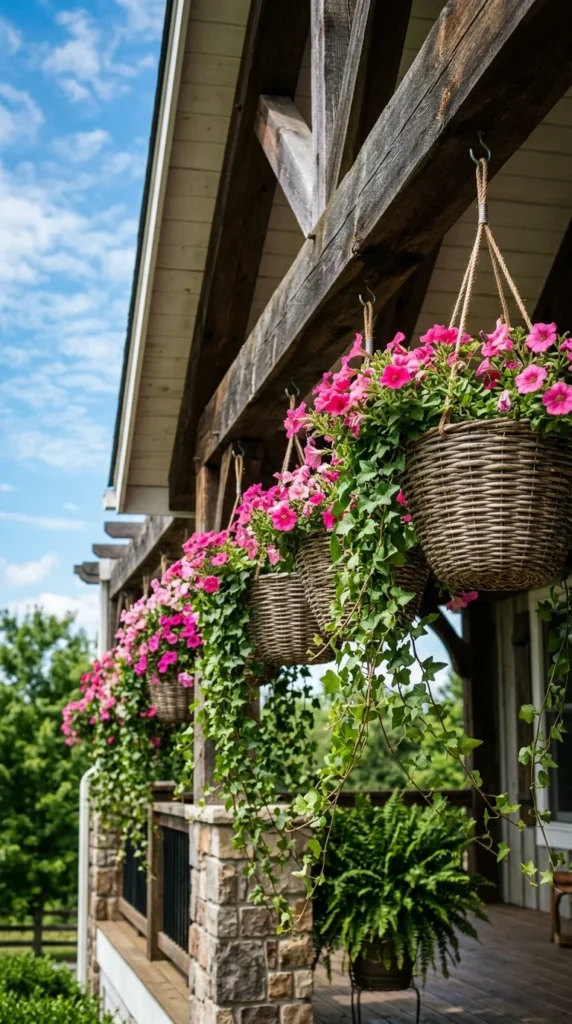
Hanging baskets are often seen as purely decorative, but they are secret weapons for garden organization. They allow you to utilize “dead space” under eaves, on porch railings, or from tree branches, keeping delicate or trailing plants away from ground-dwelling pests and curious pets.
In a culinary garden, hanging baskets can be used to grow “spilling” herbs like creeping thyme or strawberries, keeping the fruit clean and away from the soil. Organizationally, they add a layer of visual interest and free up shelf space on your potting bench or floor space in your greenhouse. By lifting your plants into the air, you create a multi-dimensional garden that feels lush and expertly curated.