Concrete is no longer just the dull, grey slab associated with basement floors and industrial sidewalks. In the world of modern landscaping, concrete has emerged as a high-end, versatile, and incredibly durable material that can transform the exterior of any home. Whether you are looking for a sleek, minimalist look or a rustic, textured finish, a concrete patio offers the perfect foundation for outdoor living. Beyond its functional benefits, a well-designed patio can significantly boost your home’s resale value and curb appeal.
If you are ready to upgrade your outdoor space, here are 17 concrete patio ideas that blend style, durability, and instant visual impact.
1. Stamped Patterns
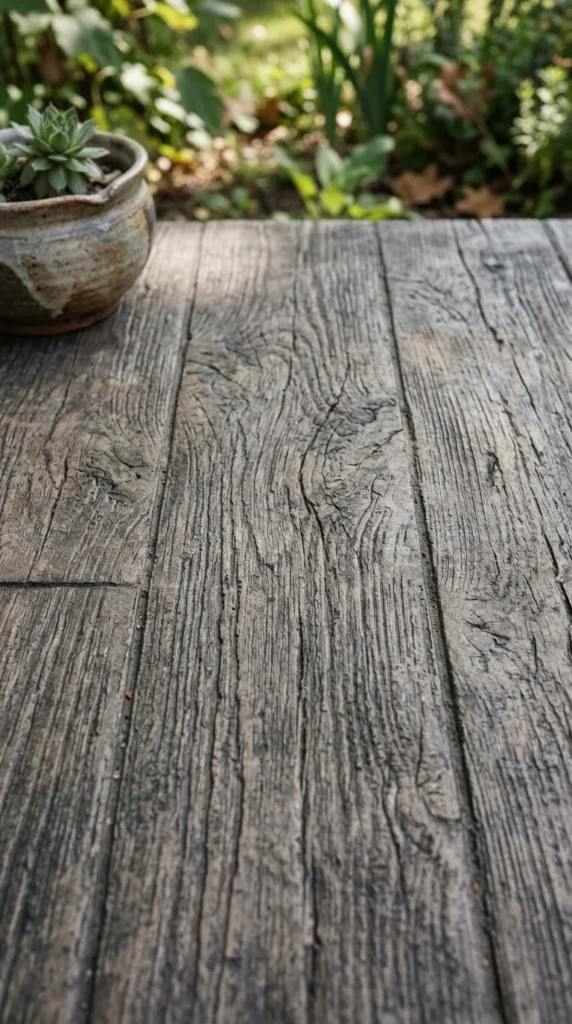
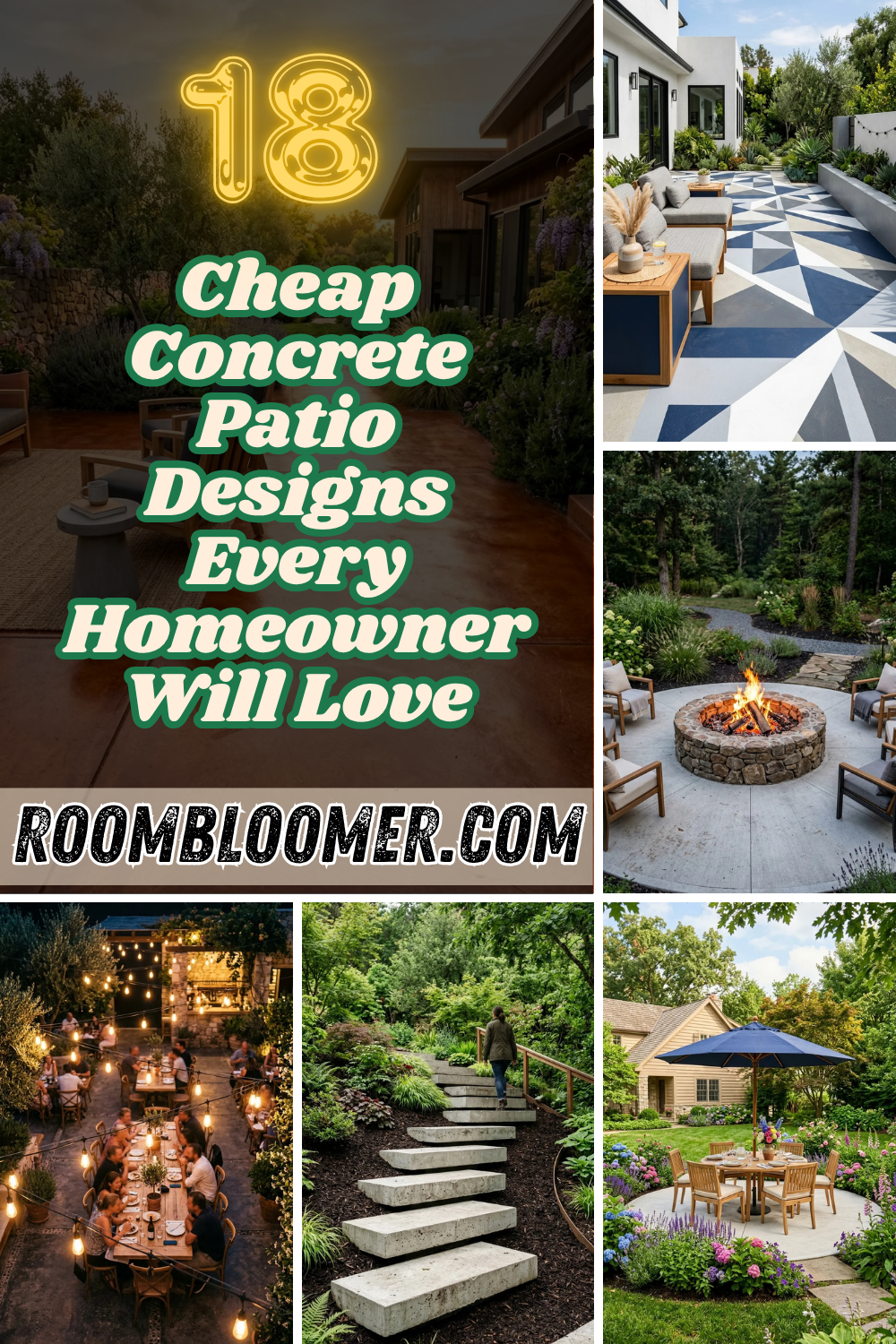
Stamped concrete is perhaps the most popular way to achieve a high-end look on a budget. By using large rubber molds, contractors can press patterns into wet concrete to mimic the appearance of brick, slate, flagstone, or even wood. This allows homeowners to enjoy the aesthetic of expensive natural materials with the longevity and low maintenance of a solid concrete pour. It’s an excellent way to add architectural interest to the front or back of a house.
2. Stained Finishes
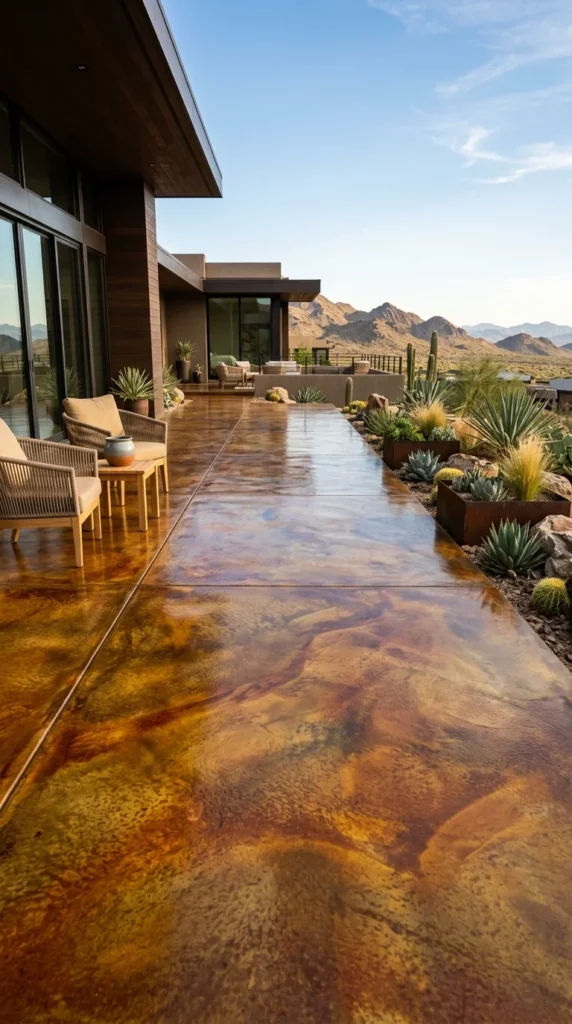
Unlike paint, which sits on the surface, concrete stains penetrate deep into the material to create permanent, fade-resistant color. You can opt for acid-based stains for a marbled, organic look that resembles natural stone, or water-based stains for a more uniform, vibrant color palette. Staining is an easy way to move away from “industrial grey” and toward a warm, inviting outdoor “room.”
3. Exposed Aggregate
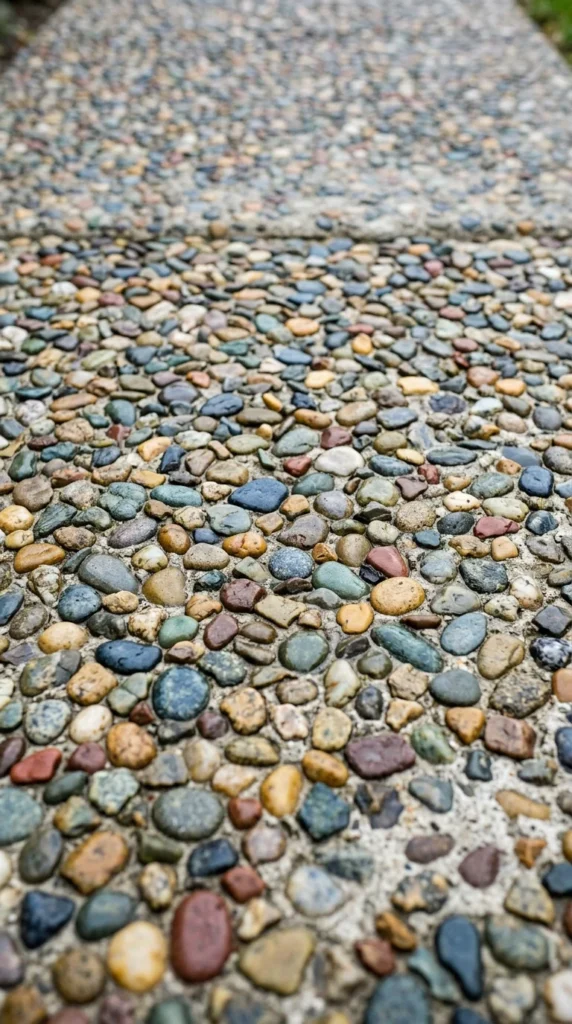
Exposed aggregate is a classic choice that provides incredible texture and slip resistance. By removing the top layer of cement to reveal the stones and sand beneath, you create a surface that looks like a natural pebble path. It is incredibly rugged and handles heavy foot traffic and harsh weather beautifully, making it ideal for high-use areas or pool surrounds.
4. Modern Geometric
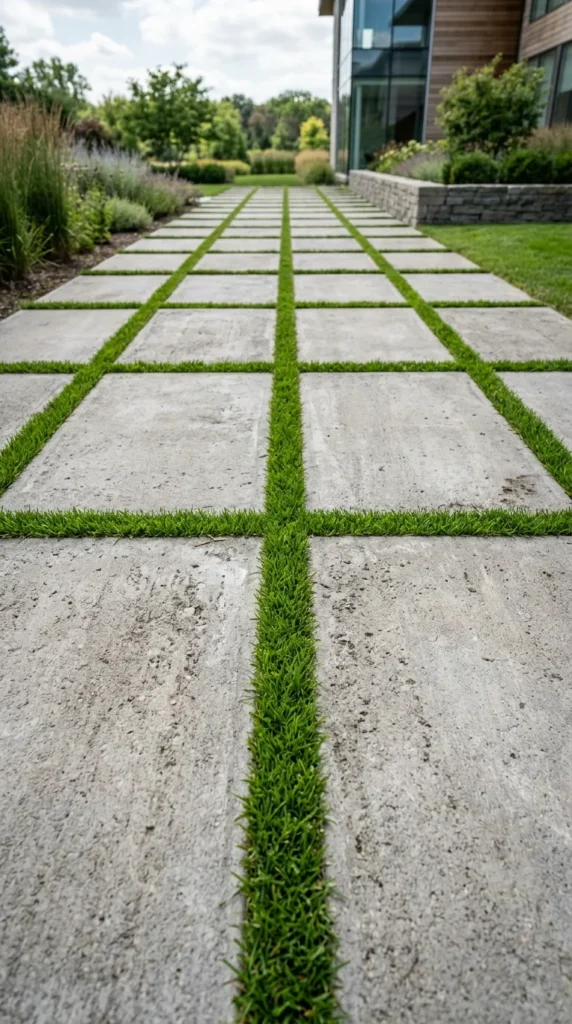
For a contemporary home, geometric layouts are a game-changer. Instead of one continuous slab, consider using oversized pavers or “steppers” with gaps in between. These gaps can be filled with moss, turf, or decorative river rocks. This design breaks up the visual weight of the concrete and adds a sophisticated, architectural feel to the landscape.
5. Fire Pit Focus
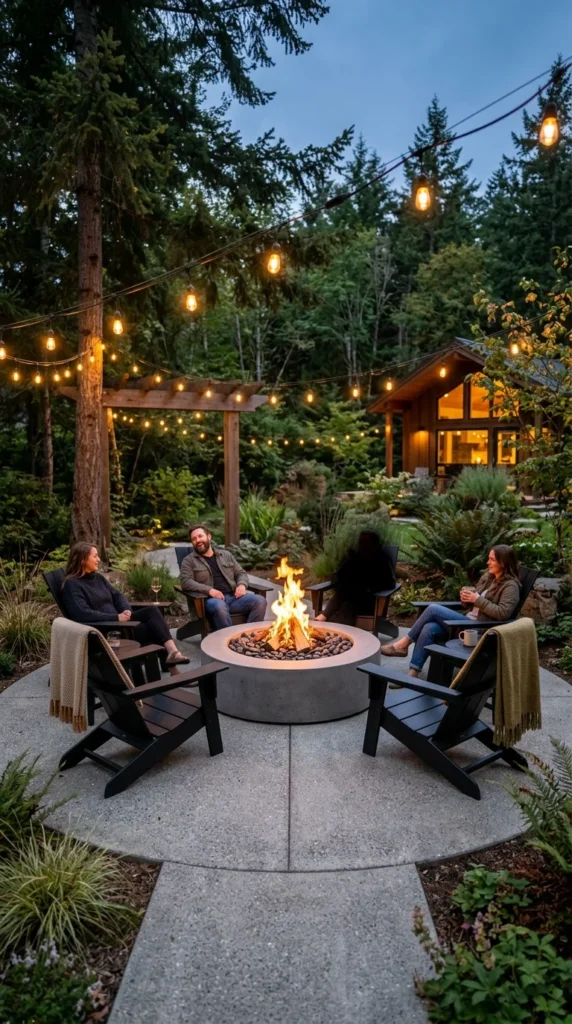
Creating a focal point is key to a functional patio. A built-in concrete fire pit not only provides a cozy gathering spot but also acts as a permanent design feature. Whether you choose a square, minimalist pit or a round, traditional one, integrating it directly into the patio design ensures a seamless, high-end look that invites guests to linger long after the sun goes down.
6. Borders and Inlays
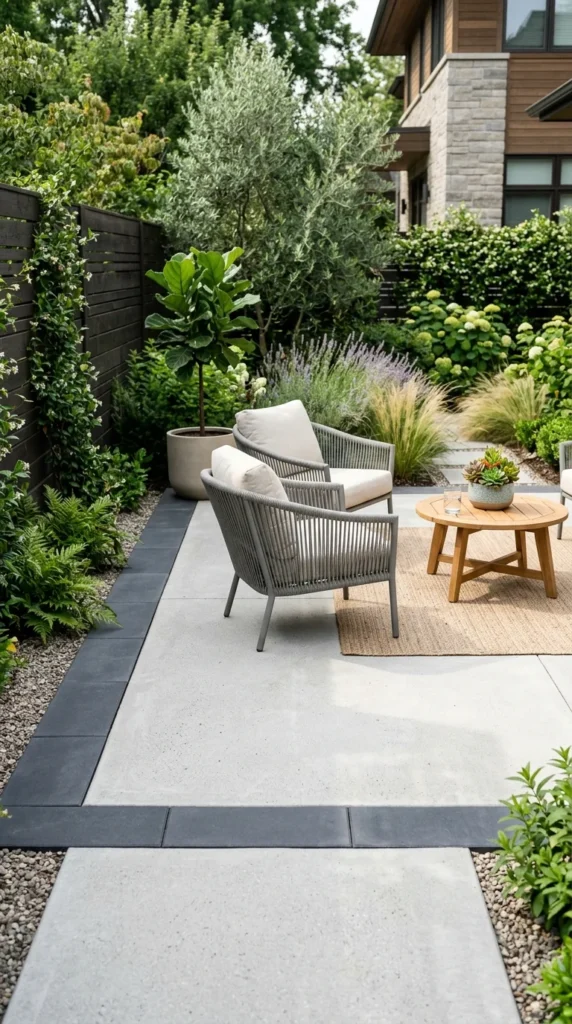
Sometimes, all a plain concrete patio needs is a “frame.” By adding a border of contrasting material—such as brick, cobblestone, or even a different colored concrete—you define the space and make it look custom-made. Inlays can also be used to create patterns in the center of the patio, similar to an outdoor rug, which adds a touch of elegance to the entrance of your home.
7. Polished Concrete
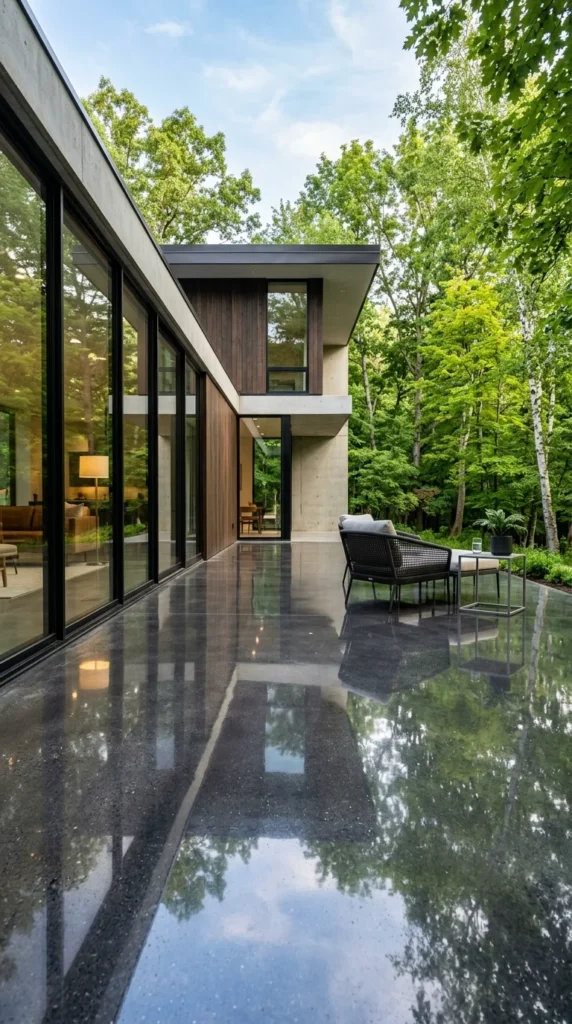
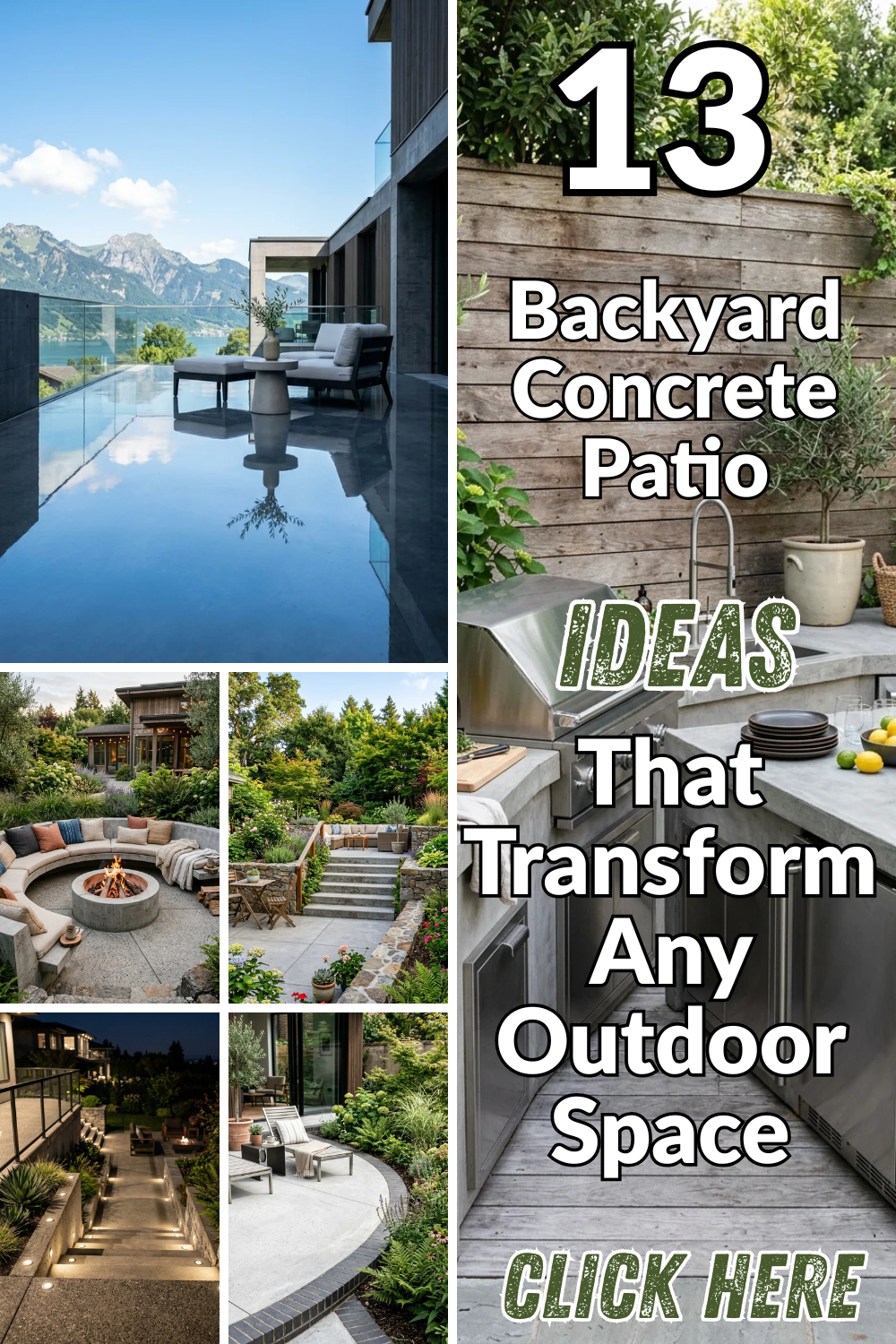
Polished concrete brings an ultra-modern, industrial-chic vibe to the outdoors. By grinding the surface with progressively finer diamond pads, the concrete achieves a mirror-like shine. This is a fantastic option for covered patios or “California rooms” where you want the transition between the interior and exterior to be as seamless as possible.
8. Multi-Level Design
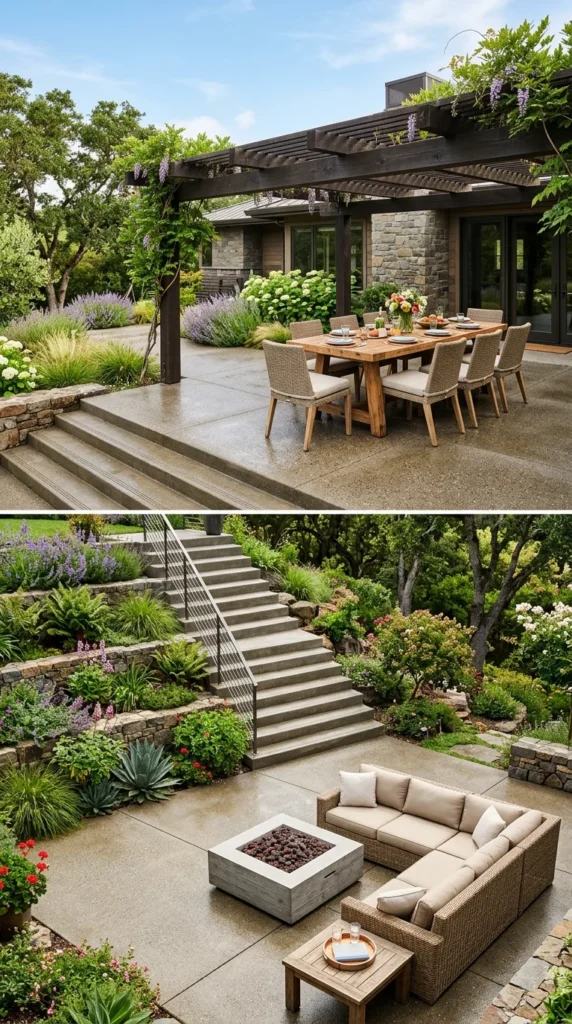
If your yard has a slope, don’t fight it—use it. Multi-level concrete patios create distinct “zones” for different activities, such as a raised area for dining and a lower area for lounging. This adds depth and dimension to your backyard, making it feel much larger and more organized than a single flat slab would.
9. Integrated Lighting
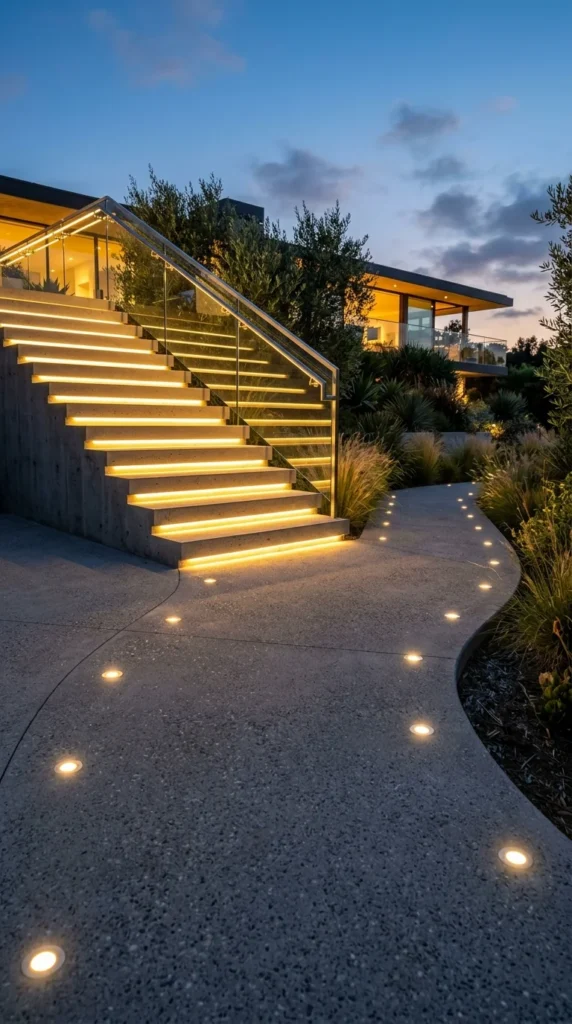
Safety meets style with integrated lighting. During the pouring process, sleeves can be placed to allow for low-voltage LED lights to be installed directly into the concrete. This illuminates walkways and edges, creating a dramatic, high-end look at night while ensuring that your patio is safe for evening entertainment.
10. Pergola Pairing
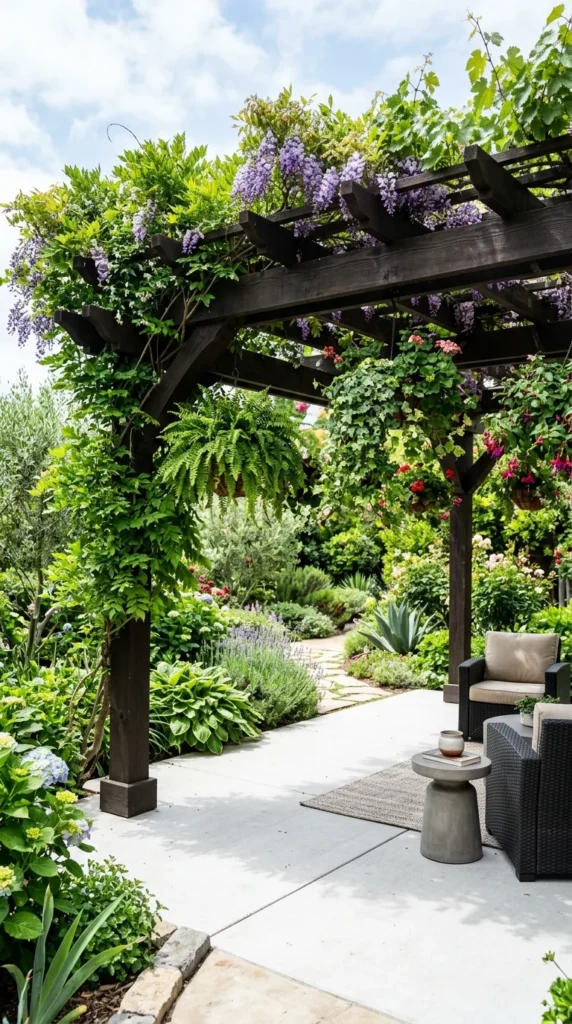
A concrete patio provides the perfect stable base for a heavy structure like a pergola or gazebo. Pairing the cool, solid feel of concrete with the warm, organic texture of wood creates a balanced aesthetic. This combination turns a simple slab into an outdoor “sanctuary,” providing shade and a sense of enclosure that boosts curb appeal.
11. Circular Designs
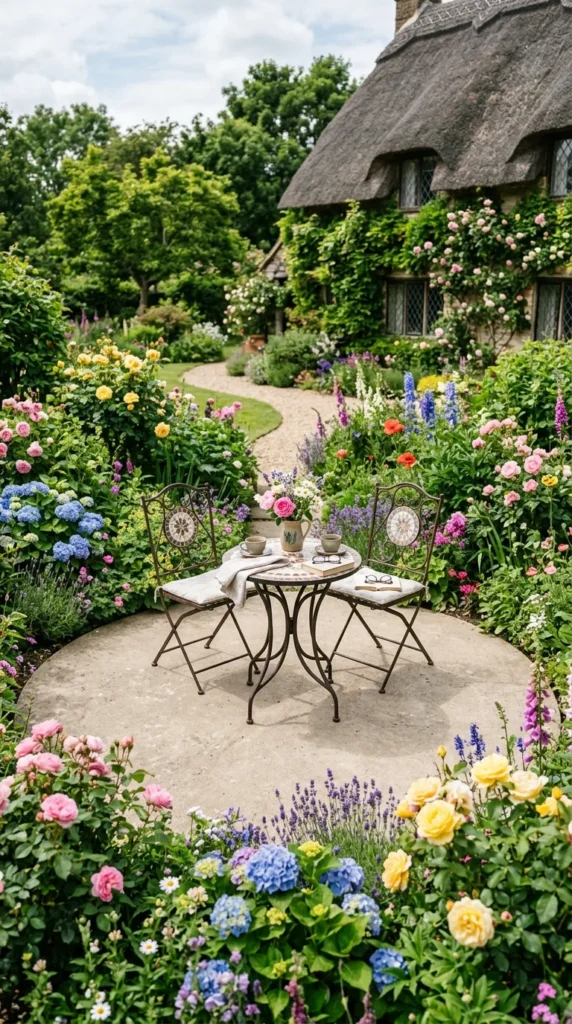
While most patios are rectangular, a circular concrete design can soften the hard lines of your home’s architecture. A round patio works beautifully as a satellite seating area or a garden escape. It draws the eye and creates a natural flow in the landscape, making the outdoor space feel more organic and inviting.
12. Walkway Integration
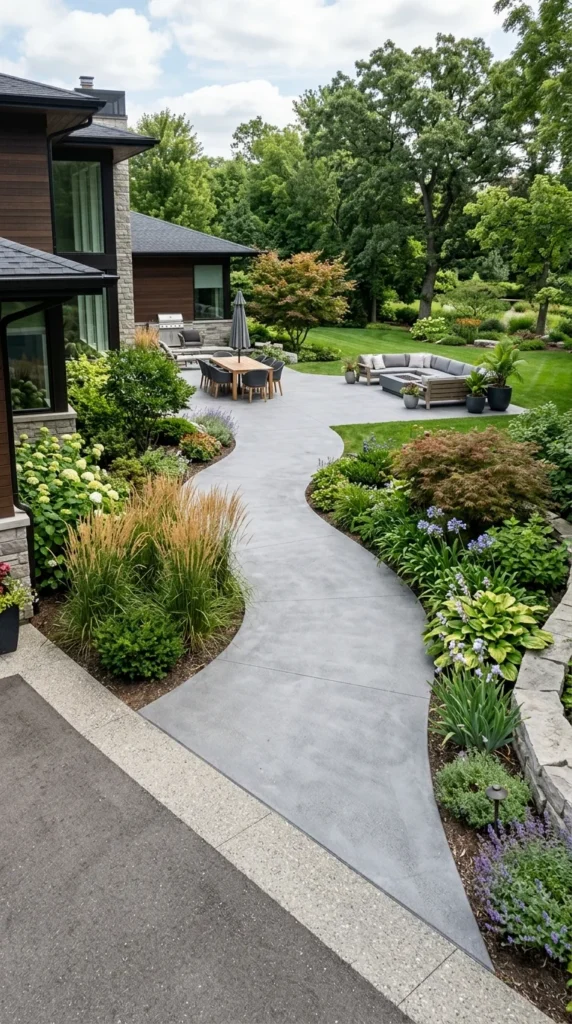
To maximize curb appeal, your patio should feel like a cohesive part of the entire property. Extending your patio material into a matching walkway that leads to the front of the house or the driveway creates a unified look. This consistency suggests a professional, well-thought-out landscape design that adds significant value.
13. Flagstone Look
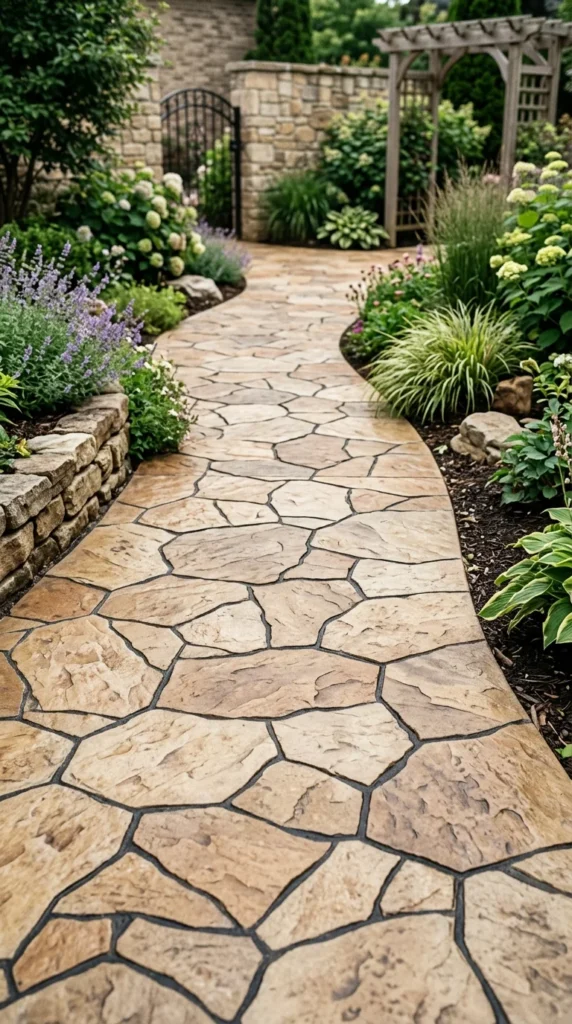
Natural flagstone is beautiful but can be uneven and difficult to maintain. Stamped concrete can replicate the irregular shapes and earthy colors of flagstone perfectly, providing a flat, stable surface that is easier to clean and walk on. This is a great way to add a rustic, “Old World” charm to a traditional or cottage-style home.
14. Bordering Greenery
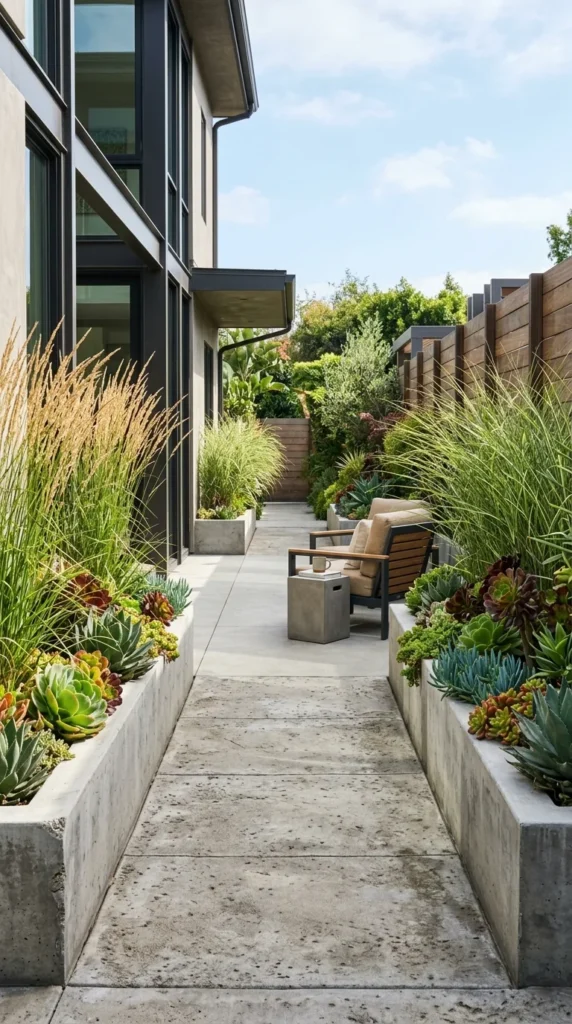
Softening the edges of concrete is essential for a balanced look. By designing built-in planters or leaving “pockets” for vegetation within the concrete layout, you bring life to the hardscape. The contrast between the solid, grey concrete and the soft, vibrant green of the plants creates a professional, landscaped appearance that pops from the street.
15. Outdoor Kitchens
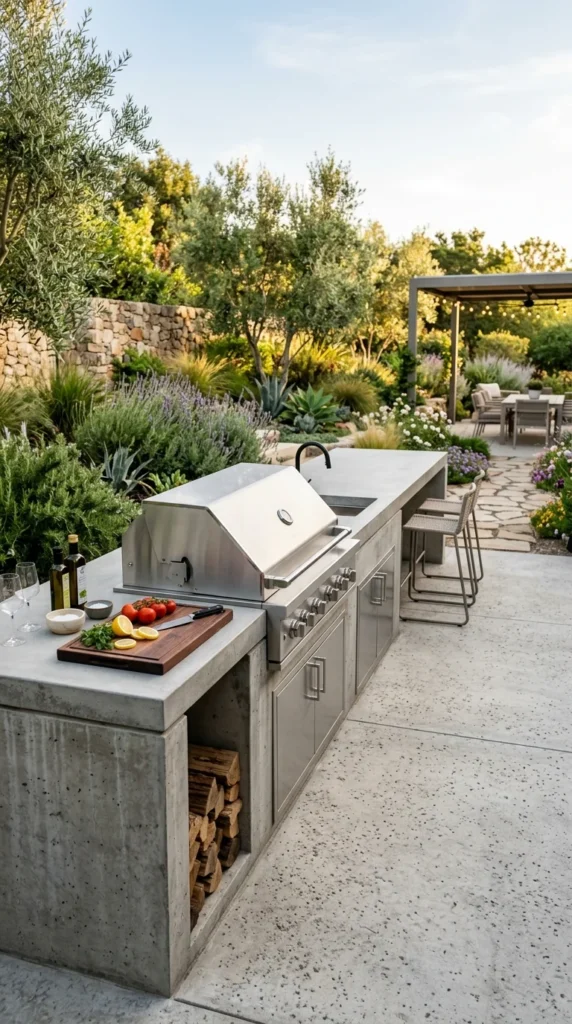
Concrete is an ideal material for outdoor kitchens because of its heat resistance and durability. Building a concrete kitchen island or countertop directly onto your patio creates a seamless, built-in look. It turns your patio into a functional extension of your home’s interior, perfect for summer barbecues and outdoor hosting.
16. Texture Contrast
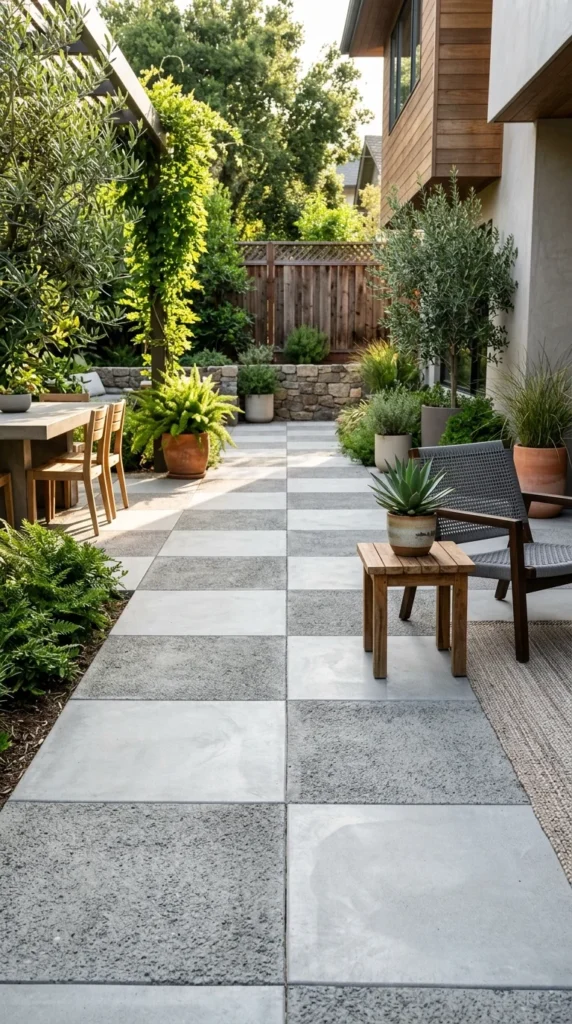
You don’t always need different materials to create interest; sometimes, different finishes of the same material do the trick. By alternating between a smooth finish and a rougher “broom finish,” you can create subtle patterns like stripes or checkers. This adds visual depth without the need for additional colors or expensive stamps.
17. Minimalist Grey
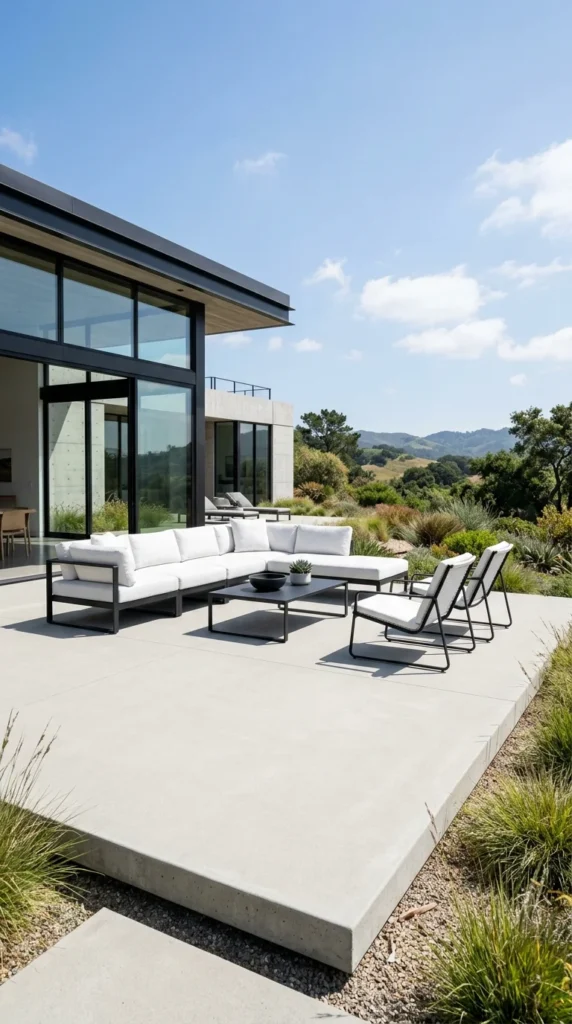
Sometimes, less is more. A clean, expertly poured slab of light grey concrete can look incredibly sophisticated in a minimalist or mid-century modern setting. The key to this look is precision—perfectly straight edges and a flawless surface. It provides a neutral backdrop that allows your furniture, landscaping, and the architecture of your home to take center stage.