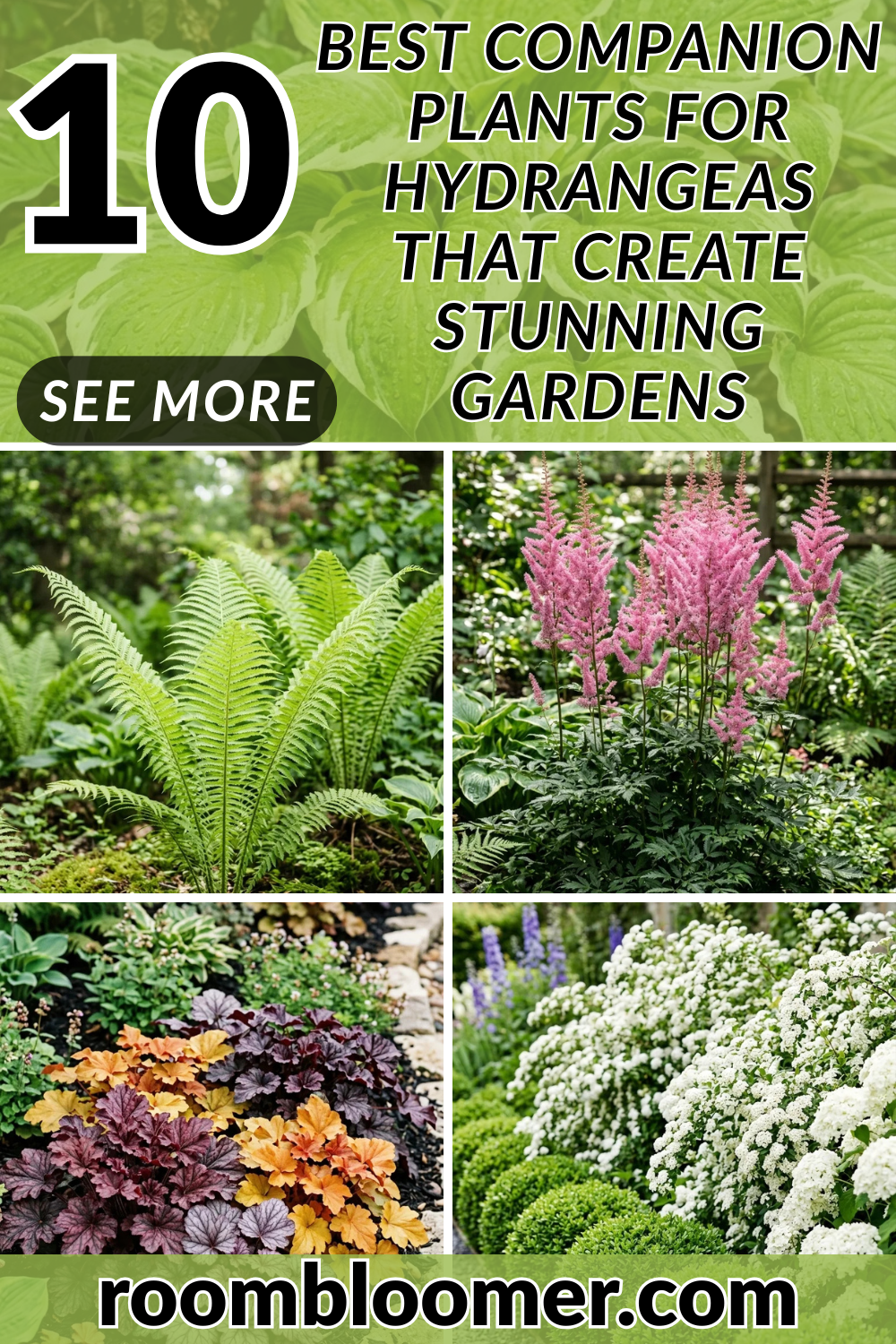
Hydrangeas are the undisputed royalty of the summer garden. With their massive, cloud-like blooms and lush green foliage, they command attention from late spring through autumn. However, even the most spectacular hydrangea can look a bit lonely or “leggy” without the right supporting cast. Companion planting is the secret to elevating a simple shrub into a professional-grade landscape.
The best companion plants for hydrangeas serve several purposes: they mask the woody stems at the base of the shrub, provide visual interest when the hydrangeas are dormant, and thrive in the same moist, well-drained soil and dappled light that hydrangeas love. By carefully selecting plants that contrast in texture, height, and color, you can create a multi-dimensional garden that looks curated and vibrant throughout the seasons.
1. Hostas
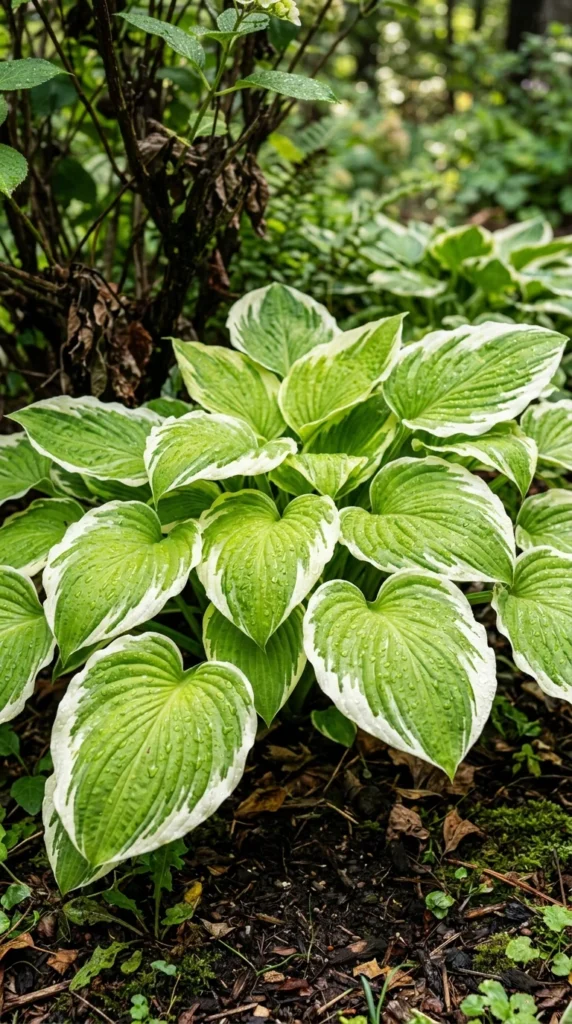
Hostas are the quintessential partners for hydrangeas, particularly for the shade-loving Hydrangea macrophylla (Bigleaf) and Hydrangea arborescens (Smooth) varieties. Because both plants thrive in part-shade and require consistent moisture, they are culturally perfect matches.
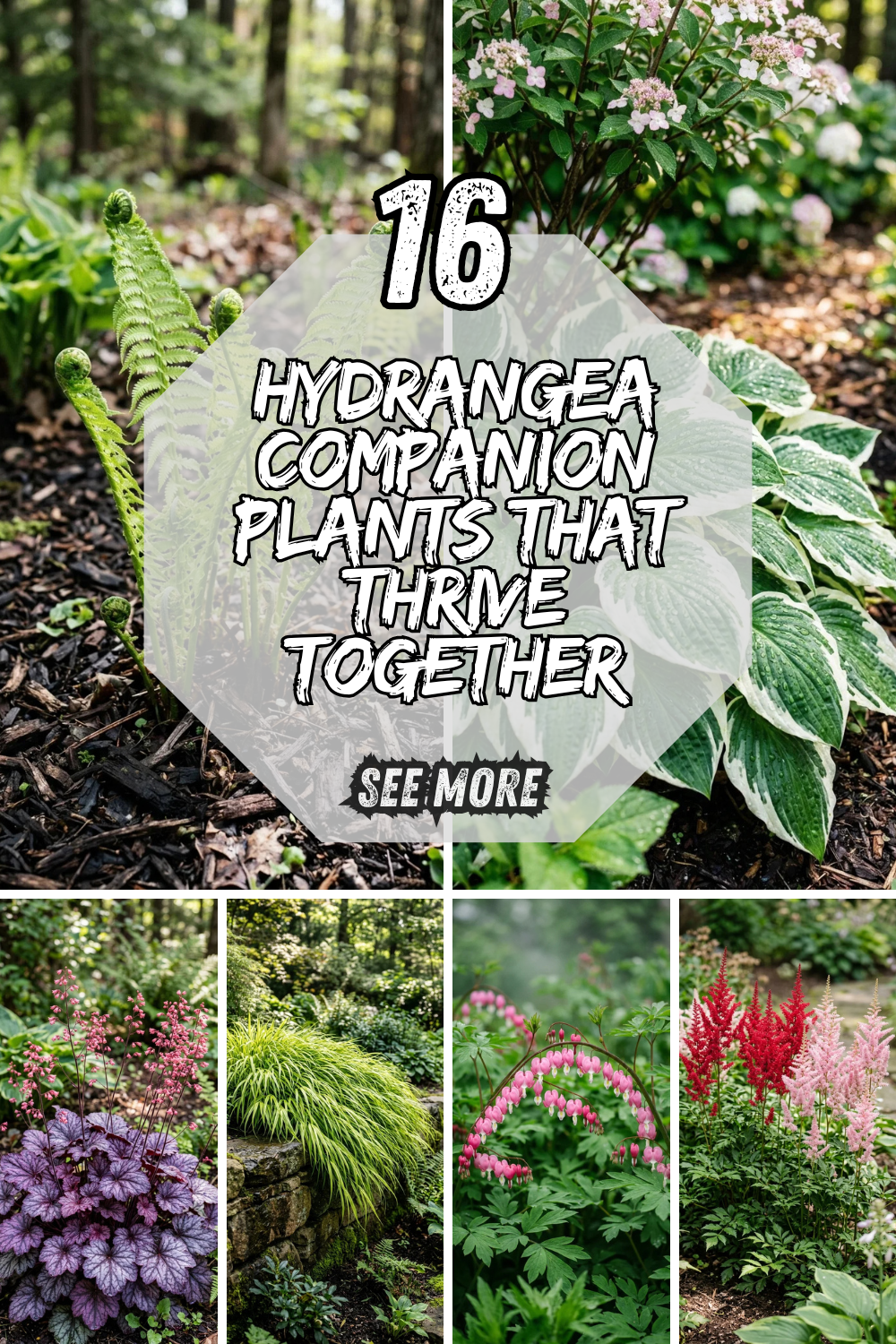
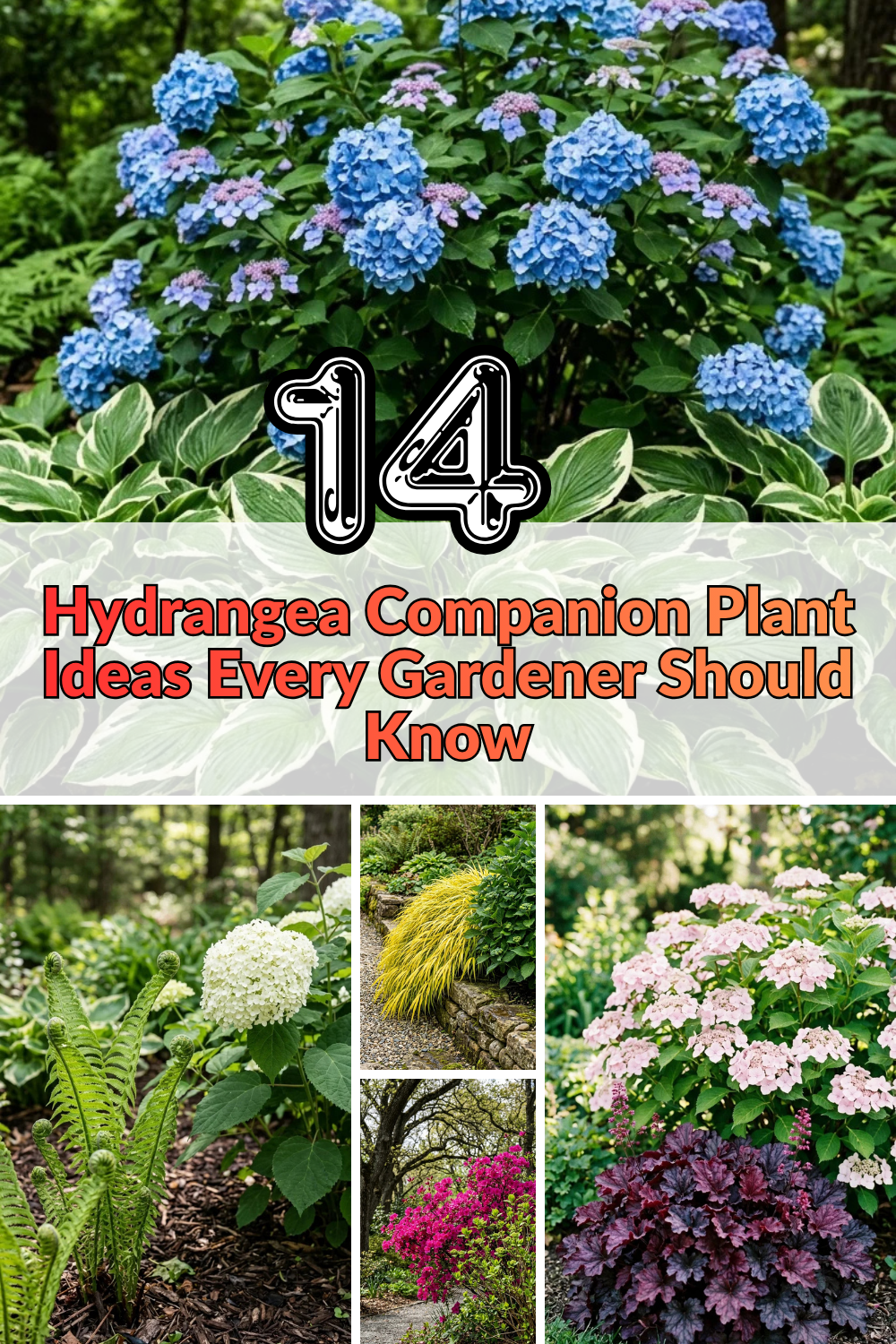
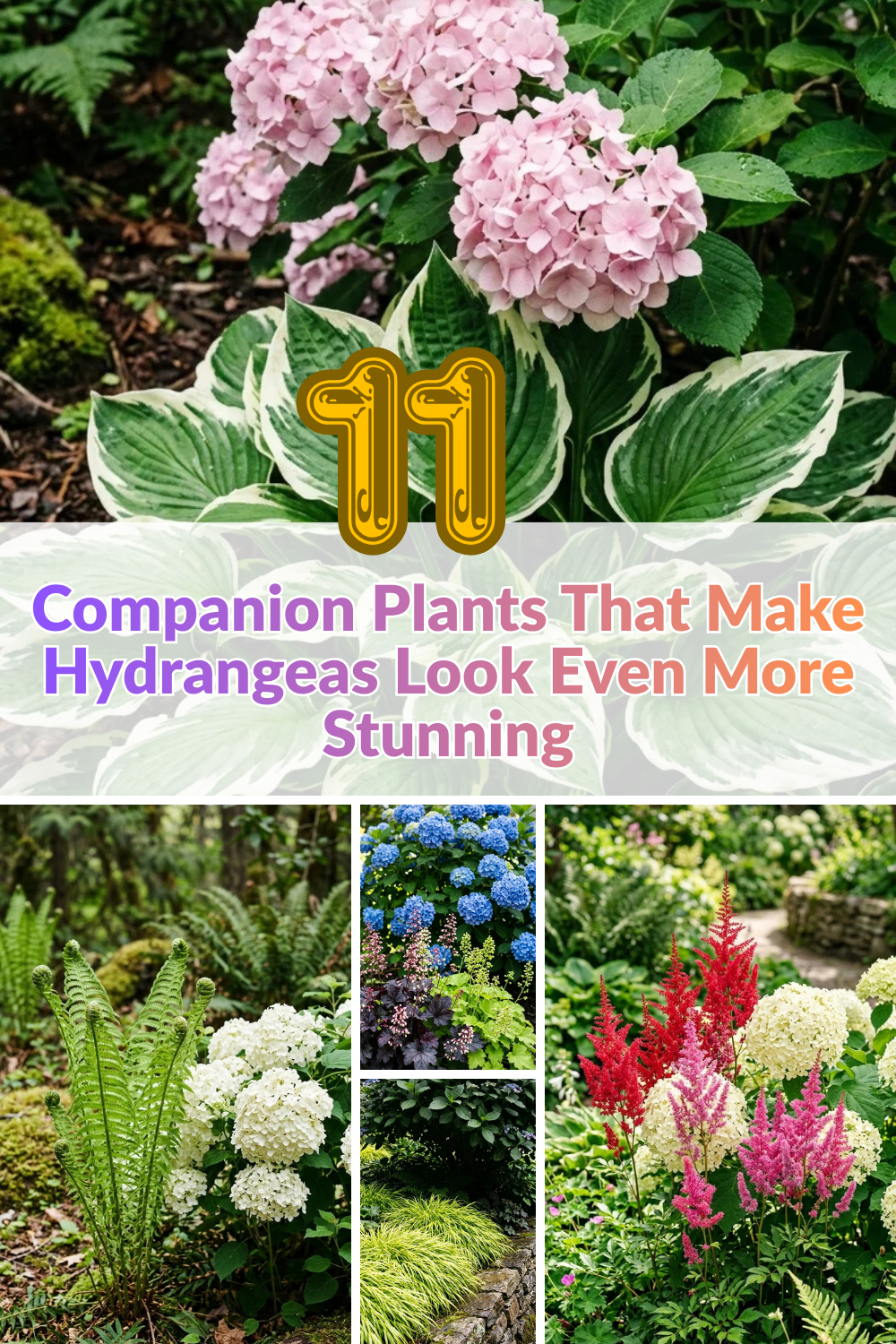
The primary appeal of this pairing is the contrast in foliage. While hydrangeas have somewhat matte, serrated leaves, hostas offer a massive range of textures—from the waxy, blue-toned leaves of ‘Halcyon’ to the bright, puckered yellow leaves of ‘Sum and Substance.’ Planting hostas at the “feet” of your hydrangeas hides the bare woody stems that often develop as the shrubs age, creating a seamless carpet of greenery that transitions beautifully into the blooming canopy above.
2. Ferns
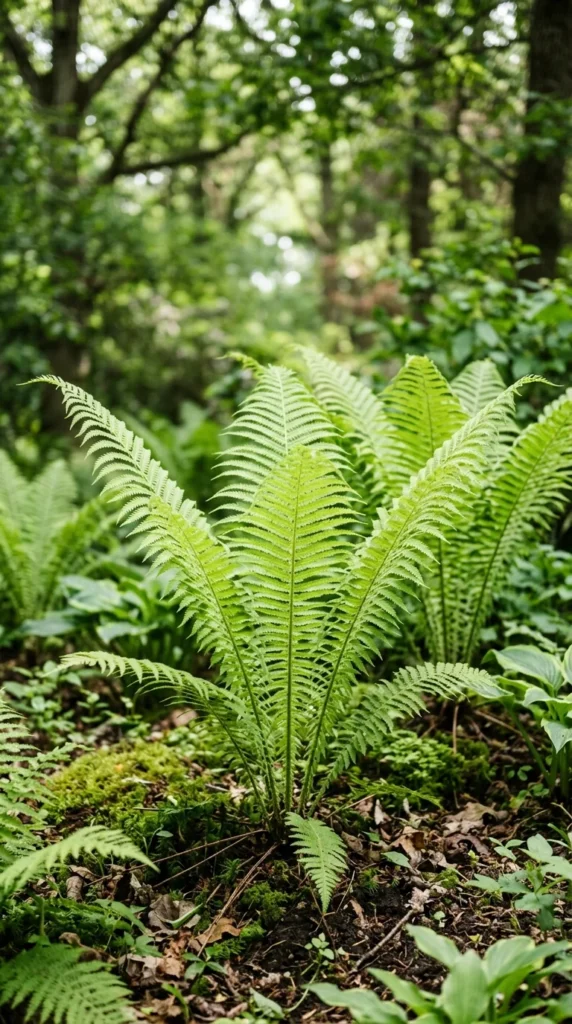
If you want to create a woodland oasis, ferns are an essential addition. Their delicate, lacy texture provides a stunning counterpoint to the heavy, bold flower heads of hydrangeas. This is a classic example of “texture play” in garden design.
Ferns like the Ostrich Fern or the Painted Fern thrive in the cool, moist environment found beneath the hydrangea’s outer branches. The Japanese Painted Fern, with its silvery-purple fronds, is especially effective when planted near purple or blue hydrangeas, as it echoes the cool tones of the blooms. Since ferns are relatively low-maintenance and don’t compete aggressively for nutrients, they coexist peacefully with the hydrangea’s root system.
3. Astilbe
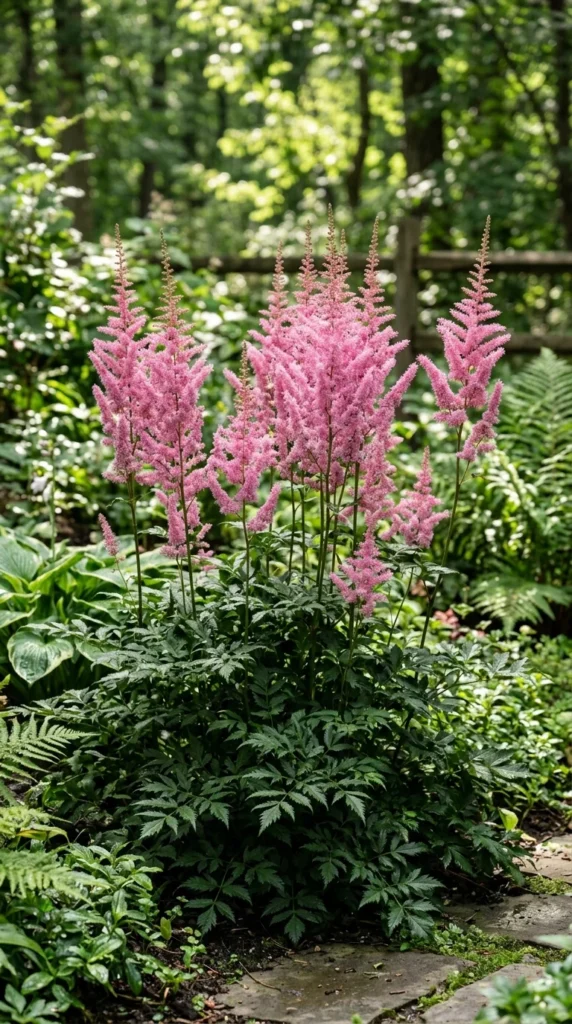
While many shade plants are grown primarily for their leaves, Astilbe brings vibrant color and unique architecture to the hydrangea garden. These perennials produce tall, plume-like spikes of flowers in shades of white, pink, red, and lavender.
The verticality of Astilbe is the perfect architectural foil to the rounded, globular shape of hydrangea mopheads. They typically bloom in early to mid-summer, overlapping perfectly with the hydrangea’s peak season. Furthermore, Astilbe loves the exact same “wet feet” conditions that hydrangeas do, making them a worry-free choice for damp spots in the yard where other plants might struggle with root rot.
4. Heuchera
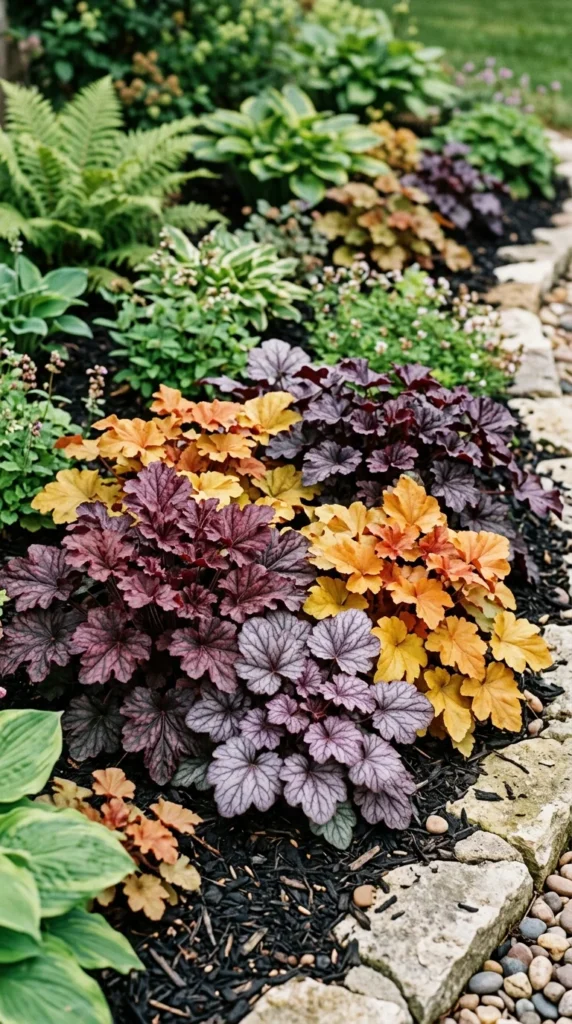
Commonly known as Coral Bells, Heuchera is the “color palette” plant of the shade garden. While hydrangeas provide the big floral show, Heuchera provides year-round foliage color that can range from lime green and peach to deep obsidian and rich burgundy.
Planting dark purple Heuchera (like ‘Obsidian’) underneath white ‘Annabelle’ hydrangeas creates a high-contrast, sophisticated look that pops even from a distance. Because Heuchera remains compact and mounded, it acts as a beautiful living mulch, keeping the soil cool and suppressing weeds without overtaking the hydrangea.
5. Boxwood
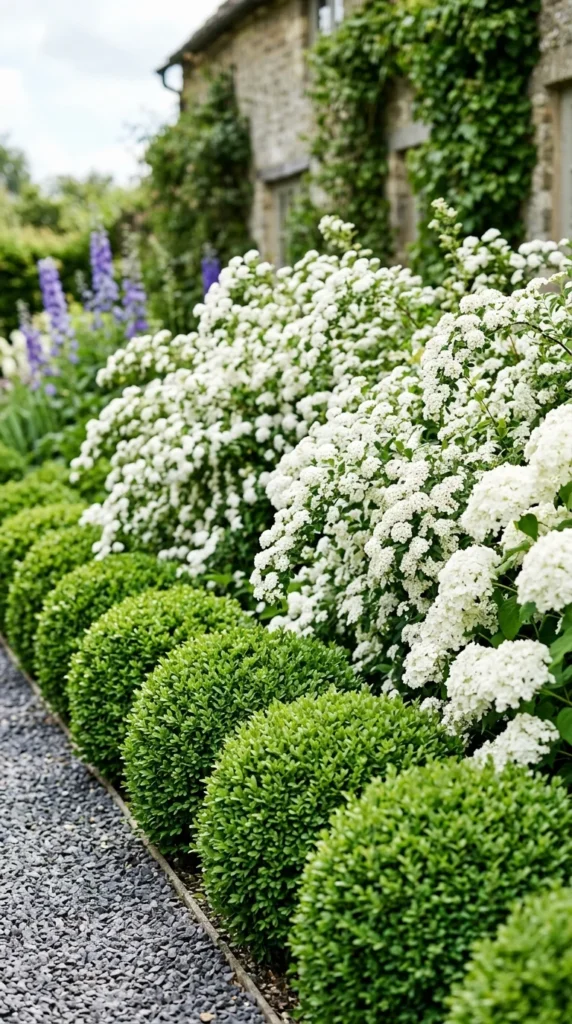
For gardeners who prefer a more formal or “Hamptons-style” aesthetic, Boxwood is the ultimate companion. Hydrangeas can sometimes look a bit messy or wild, especially after a heavy rain when the blooms weigh down the branches. Neatly trimmed Boxwood provides the necessary structure to “frame” the hydrangeas.
Evergreen Boxwoods also solve the biggest drawback of hydrangeas: the winter doldrums. When hydrangeas drop their leaves and stand as bare sticks in the winter, the evergreen Boxwood maintains the garden’s shape and bones, ensuring your landscape doesn’t look empty during the cold months.
6. Alliums
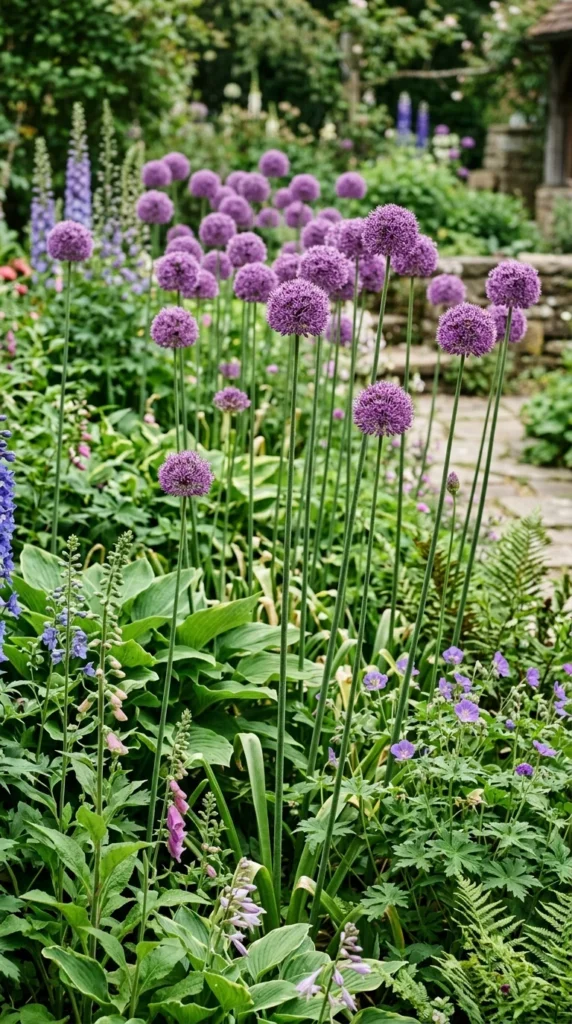
Alliums, often called “Ornamental Onions,” are a fantastic way to introduce a touch of whimsy and geometric interest. These bulbs send up tall, straight stalks topped with perfectly round globes of tiny florets.
The reason they work so well with hydrangeas is twofold. First, the bloom time for many Alliums (like ‘Purple Sensation’) occurs in late spring, just as the hydrangea foliage is filling out but before the flowers have opened. Second, Allium foliage tends to wither and look unattractive as the flower blooms; by planting them among hydrangeas, the large hydrangea leaves hide the dying Allium foliage while allowing the stunning purple globes to float above the shrub.
7. Japanese Forest Grass
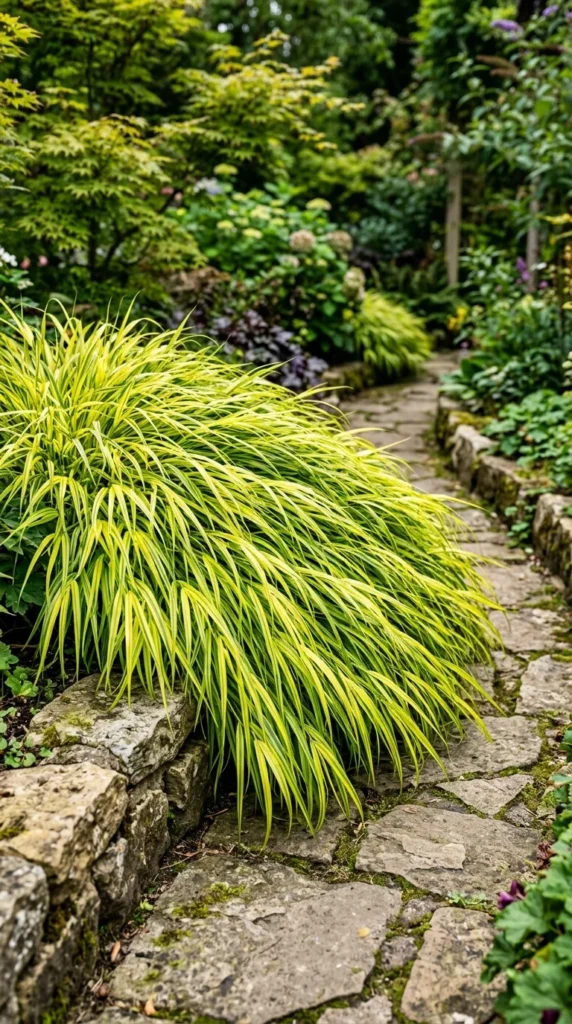
Hakonechloa macra, or Japanese Forest Grass, is one of the few ornamental grasses that thrives in the shade. It has a unique, cascading habit that looks like a waterfall of gold or lime-green blades.
This “softness” is vital for breaking up the heavy, woody appearance of larger hydrangea varieties like the Oakleaf or Panicle hydrangea. When the wind blows, the grass provides movement and sound, contrasting with the sturdy, stationary presence of the hydrangea. The bright chartreuse varieties are particularly effective at lighting up dark, shadowy corners under a dense hydrangea canopy.
8. Bleeding Heart
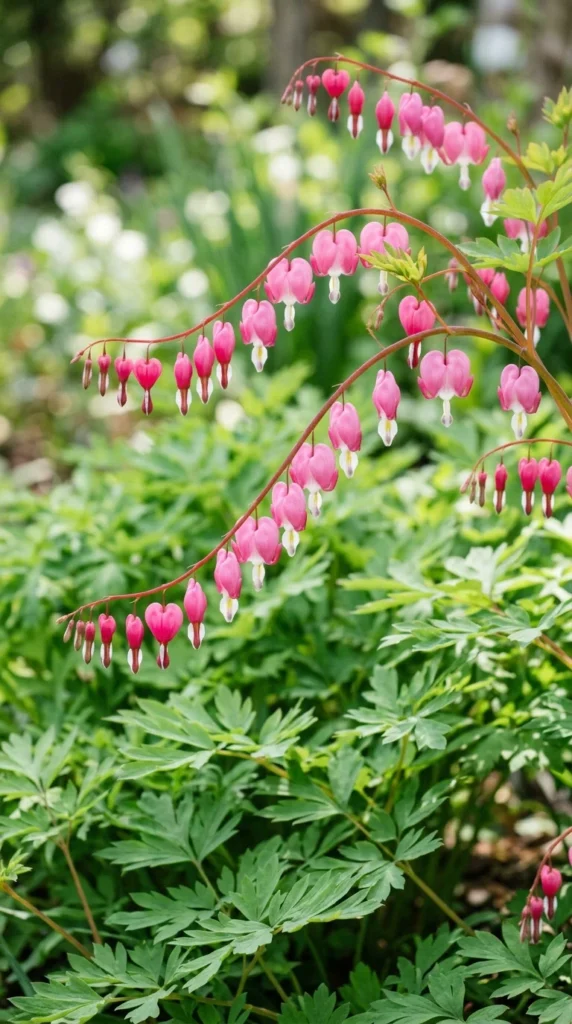
Bleeding Heart (Lamprocapnos spectabilis) is a nostalgic cottage garden favorite that fills a critical gap in the hydrangea garden: the early spring. While hydrangeas are often late to wake up and don’t bloom until summer, Bleeding Hearts burst into life in April and May.
As the Bleeding Heart finishes its show and enters summer dormancy (where it often disappears entirely), the hydrangeas are expanding to fill that vacant space. This natural “relay race” ensures that your garden bed is always occupied by something beautiful, maximizing the utility of your garden real estate.
9. Azaleas
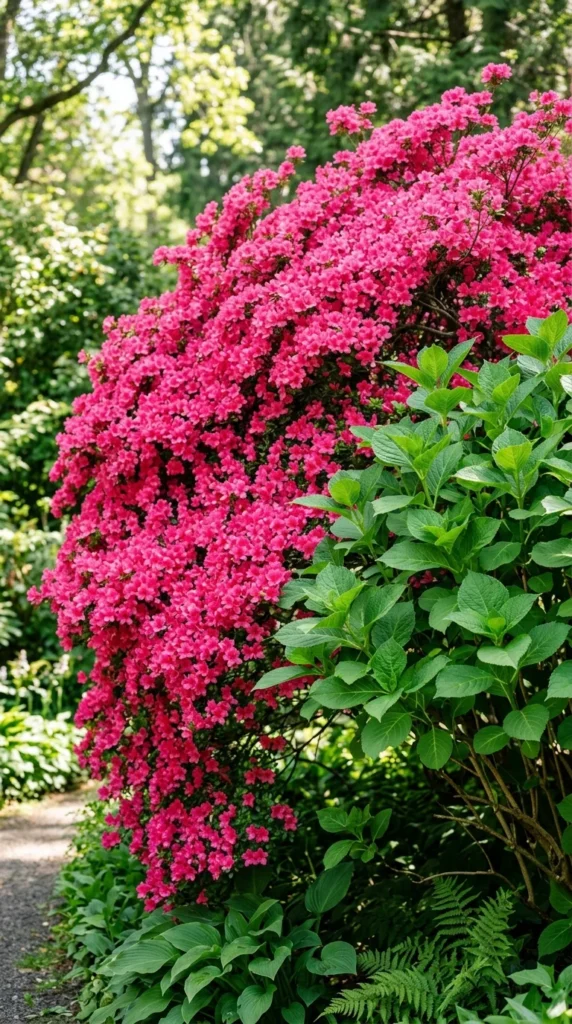
Azaleas and hydrangeas are like biological siblings. They both thrive in acidic soil (low pH), prefer filtered sunlight, and require regular watering. Because they share such specific soil requirements, they are incredibly easy to maintain together.
Azaleas provide a massive explosion of color in the spring, acting as the “opening act” for the hydrangeas. Once the azalea flowers fade, their small, dark green evergreen leaves provide a consistent, quiet backdrop for the large, showy hydrangea blooms that follow in the summer.
10. Clematis
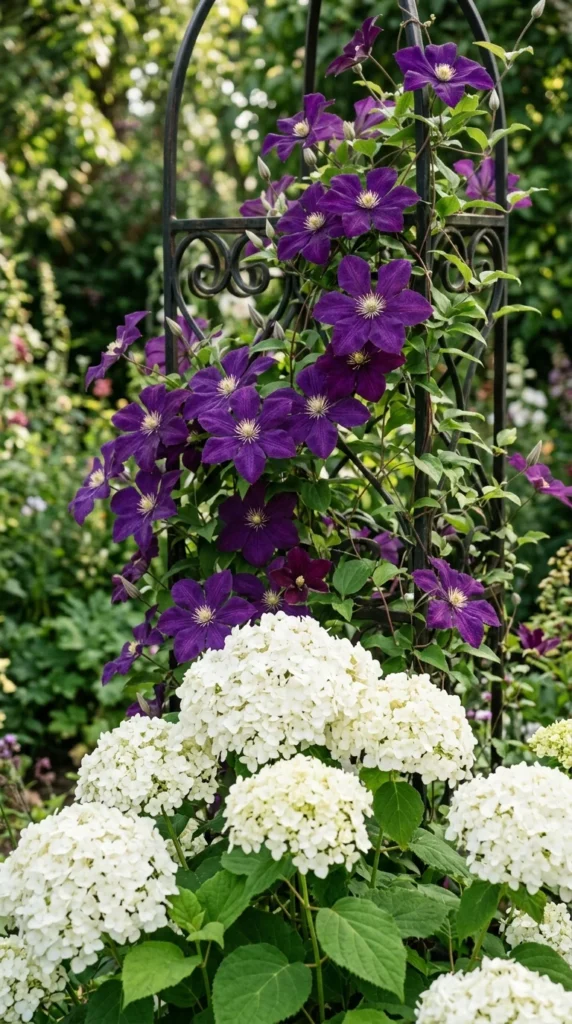
If you want to take your garden to the next level—literally—Clematis is the answer. While hydrangeas provide the horizontal bulk, Clematis provides vertical interest.
You can grow Clematis on a trellis behind your hydrangeas or, for a more natural look, let the vines scramble through the hydrangea branches themselves. This is particularly effective with white hydrangeas and dark purple Clematis (like ‘Jackmanii’). The Clematis flowers will appear to be blooming directly out of the hydrangea shrub, creating a stunning “two-in-one” floral display that will have your neighbors asking for your secret.
Pro-Tips for Success
To ensure your hydrangea companions thrive, keep these three expert tips in mind:
- Mind the Roots: Hydrangeas have relatively shallow, fibrous root systems that don’t like to be disturbed. When planting companions, try to plant them at the same time as the hydrangea, or place them just outside the “drip line” (the outermost circumference of the branches) to avoid damaging the hydrangea’s roots.
- Watering Consistency: Most of the plants on this list are moisture-lovers. To keep them all happy, consider installing a soaker hose or drip irrigation system hidden under a layer of organic mulch. This provides deep, consistent hydration without wetting the hydrangea leaves, which can lead to powdery mildew.
- Consider Soil pH: If you are growing blue hydrangeas, you are likely maintaining acidic soil (pH 5.2 to 5.5). Ensure your companion plants—like Azaleas, Ferns, and Heuchera—are also acid-loving. If you have alkaline soil for pink hydrangeas, plants like Boxwood and Clematis will be even more at home.