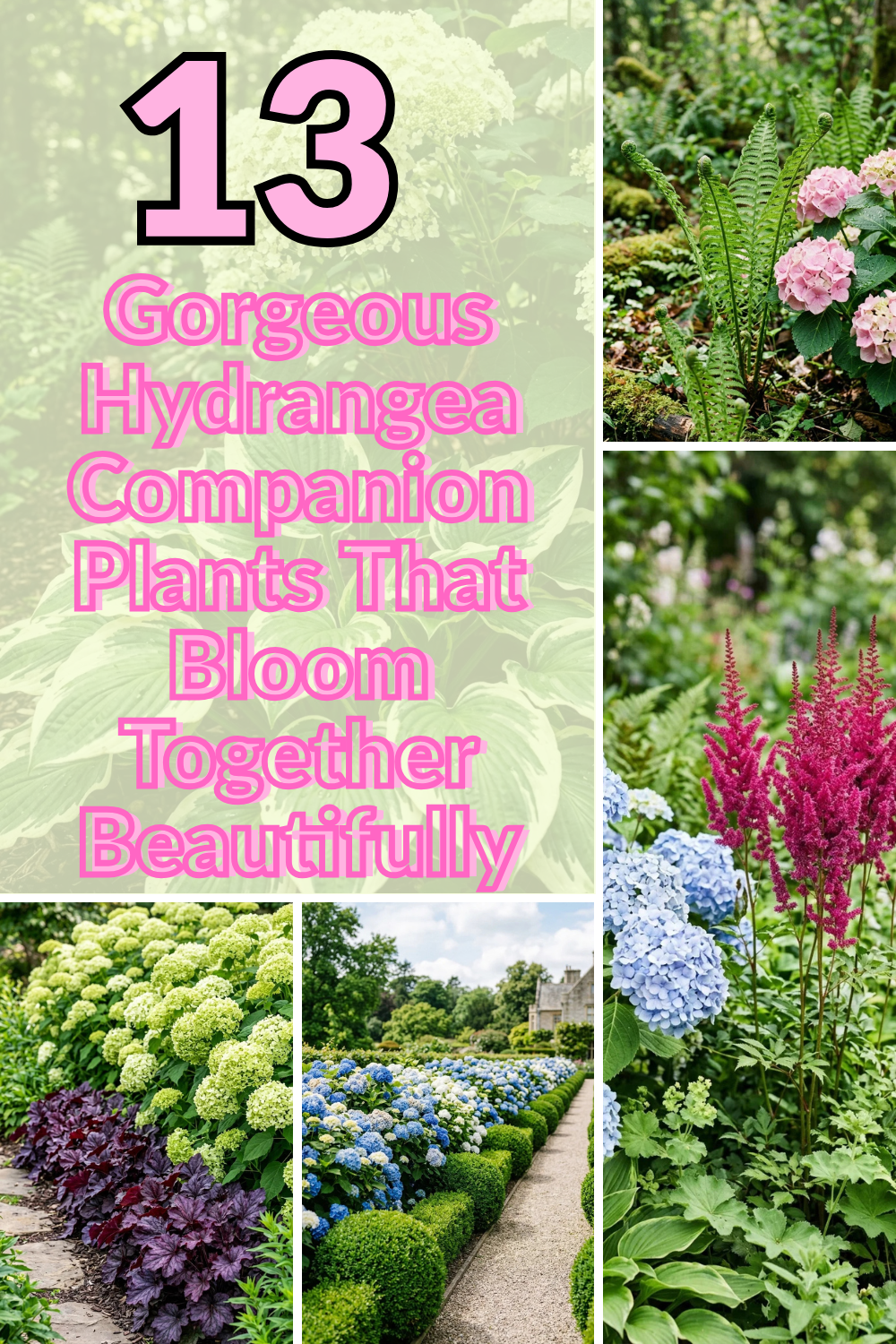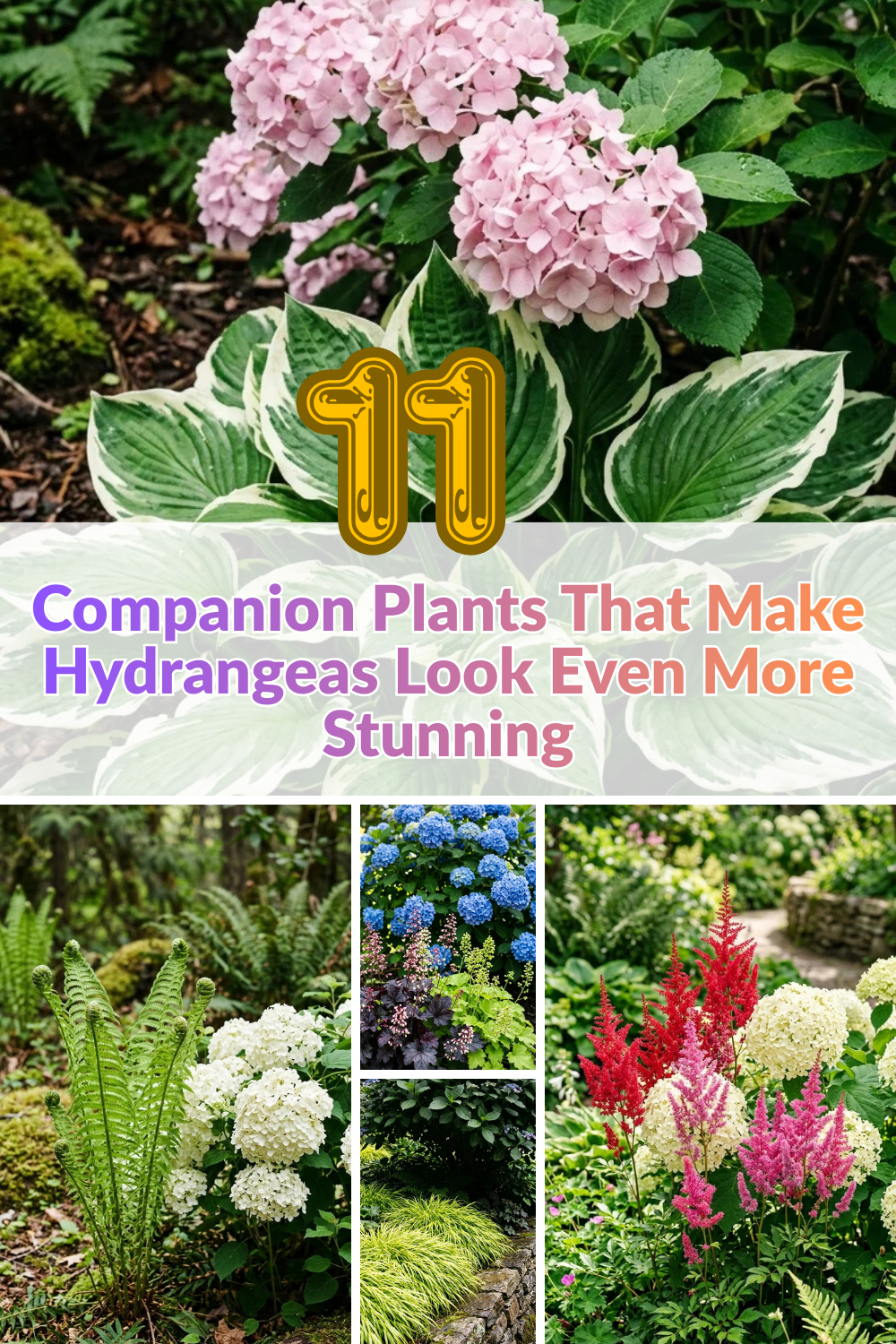
Hydrangeas are the undisputed royalty of the summer garden. With their massive, cloud-like blooms and lush green foliage, they command attention from late spring through autumn. However, even the most majestic hydrangea can benefit from a supporting cast. Companion planting isn’t just about aesthetics; it’s about creating a miniature ecosystem where plants support each other’s growth, manage soil moisture, and provide a continuous cycle of beauty.
When choosing companions for your hydrangeas, you must consider three critical factors: light requirements, soil pH, and moisture needs. Most hydrangeas thrive in moist, well-drained soil and prefer morning sun with afternoon shade. By pairing them with plants that share these preferences, you can transform a simple shrub into a breathtaking garden masterpiece. Here are 14 companion plants that will elevate your hydrangeas to new heights of beauty.
1. Hostas
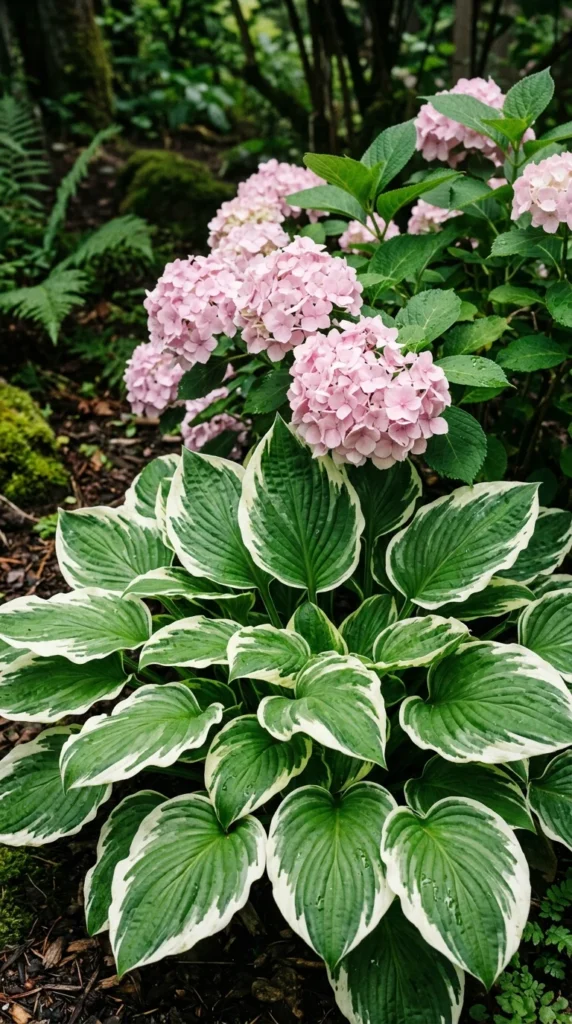
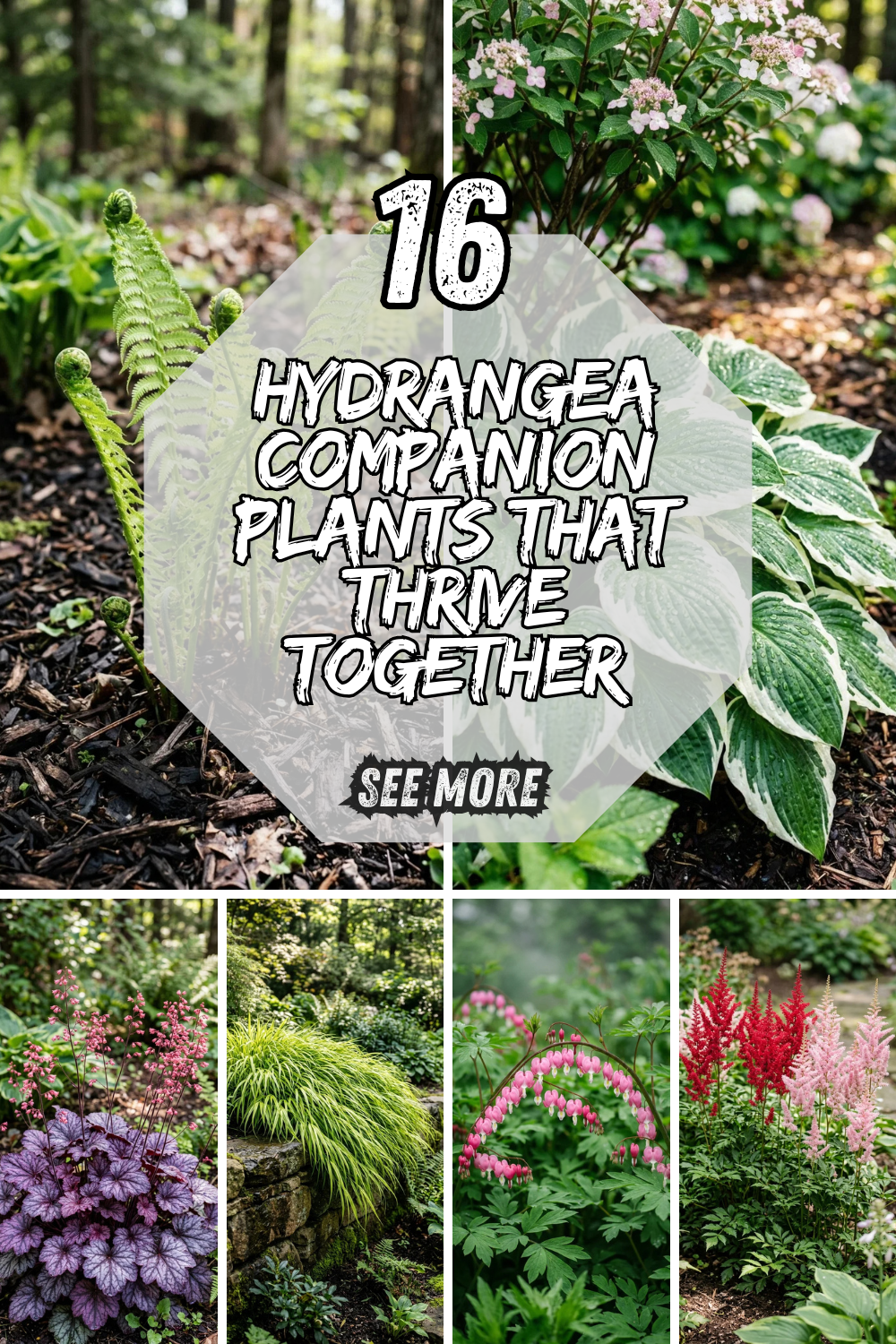
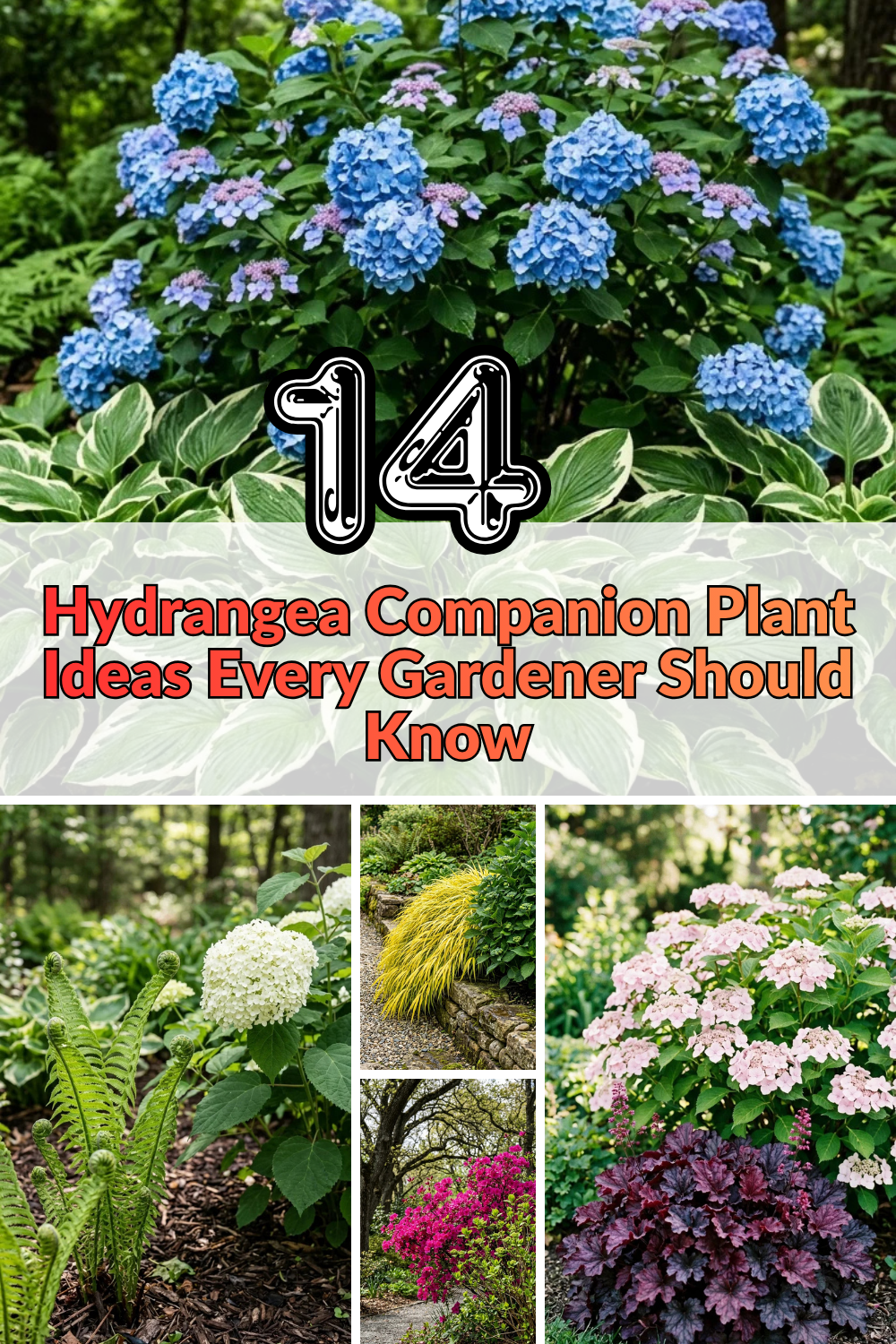
Hostas are the quintessential partner for hydrangeas. Because they both thrive in dappled shade and require consistent moisture, they are a match made in gardening heaven. The primary appeal of this pairing lies in the contrast of textures. While hydrangeas offer large, serrated leaves and heavy blooms, hostas provide a broad palette of foliage colors—from deep forest green and chartreuse to frosty blue and variegated white.
Using hostas as a ground-level “skirt” around the base of your hydrangeas helps to hide the woody stems that can sometimes look bare. For a modern look, pair blue-toned hostas with white “Annabelle” hydrangeas. For a classic cottage feel, use variegated hostas to brighten the shadows beneath pink or purple mopheads.
2. Ferns
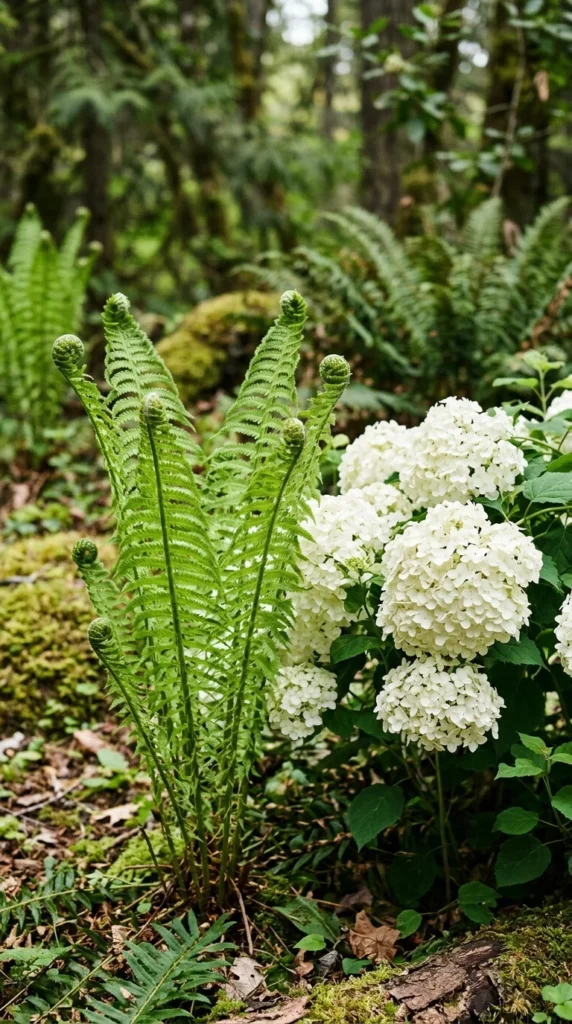
If you want to lean into the woodland aesthetic, ferns are an essential addition. The delicate, lacy texture of fern fronds provides a stunning structural contrast to the bold, heavy flower heads of the hydrangea. Ferns like the Ostrich Fern or the Japanese Painted Fern are particularly effective.
The Japanese Painted Fern, with its silvery-purple tints, looks extraordinary when planted beneath blue or purple hydrangea varieties. Ferns also serve a functional purpose: they love the humid, shaded environment created by the hydrangea’s canopy. They act as a living mulch, keeping the root zone cool and moist, which is exactly what hydrangeas need to prevent wilting during the heat of the day.
3. Astilbe
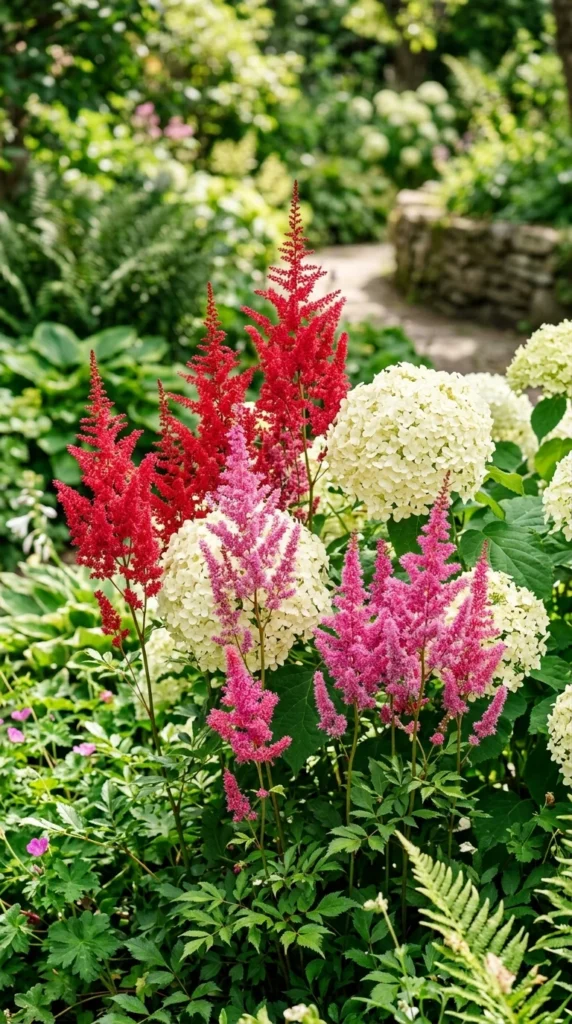
While hydrangeas provide massive horizontal interest, Astilbe adds much-needed verticality. These plants produce feathery, plume-like flowers that stand tall on stiff stems, shooting up like colorful fireworks from a base of fern-like foliage.
Astilbes bloom around the same time as many hydrangea varieties, allowing you to create a high-impact color explosion. If you have white hydrangeas, planting deep red or vibrant purple astilbe nearby creates a sophisticated, high-contrast look. Like hydrangeas, astilbes are thirsty plants; they will thrive in the same rich, damp soil that keeps your hydrangeas happy.
4. Heuchera
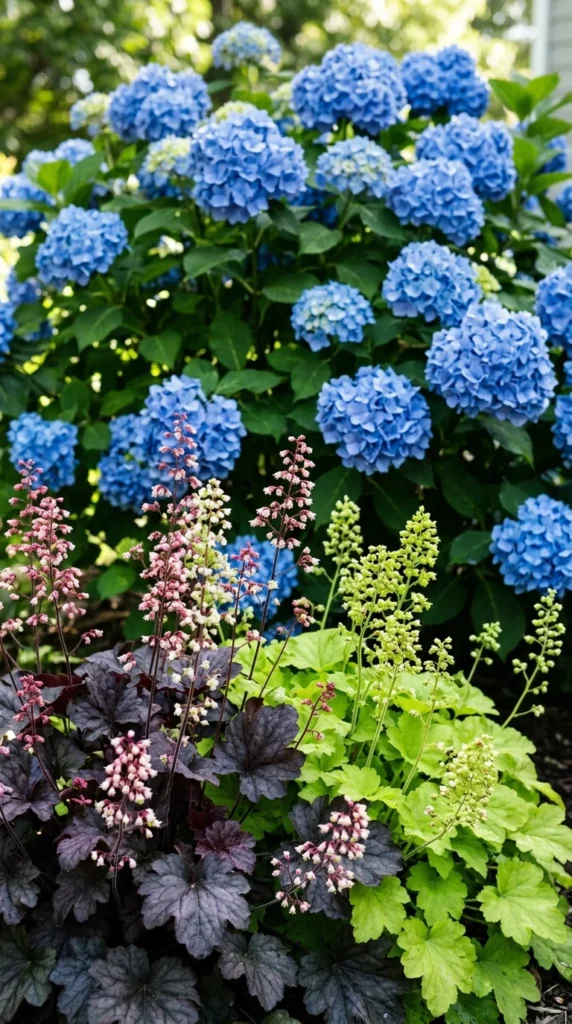
Commonly known as Coral Bells, Heuchera is prized for its incredible foliage. These plants come in almost every color imaginable: deep burgundy, burnt orange, lime green, silver, and even midnight black. Because hydrangeas are primarily green for much of the year, Heuchera provides a constant pop of color even when the shrubs aren’t in bloom.
Planting a ring of purple-leaved Heuchera around a lime-green “Limelight” hydrangea creates a stunning color-block effect. These low-growing perennials are excellent for edging walkways in front of hydrangea borders, providing a tidy transition from the path to the larger shrubs.
5. Boxwood
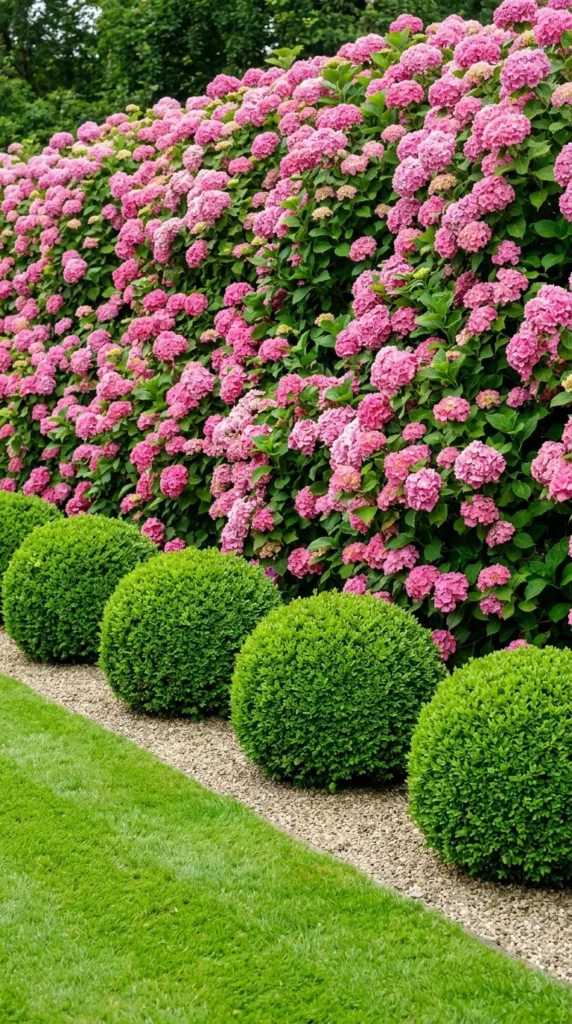
For those who prefer a more formal or structured garden, Boxwood is the perfect companion. Hydrangeas can sometimes look a bit wild or “floppy,” especially after a heavy rain. Incorporating evergreen boxwoods provides a sense of order and year-round structure.
A low, clipped boxwood hedge in front of a row of hydrangeas creates a classic “English Garden” look. In the winter, when the hydrangeas have dropped their leaves and are reduced to woody stems, the evergreen boxwoods keep the garden looking intentional and lush rather than empty.
6. Japanese Forest Grass
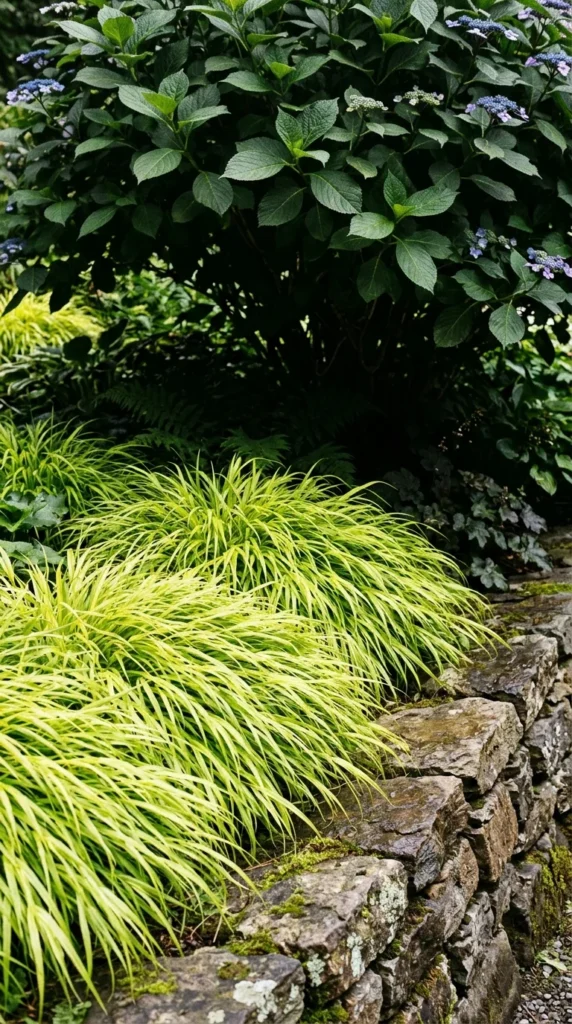
Japanese Forest Grass (Hakonechloa) is one of the few grasses that thrives in the shade, making it a unique companion for hydrangeas. Its soft, cascading habit mimics the look of a waterfall, providing a sense of movement that offsets the static, heavy nature of hydrangea shrubs.
The “Aureola” variety, with its bright yellow and green stripes, is particularly effective at lighting up dark corners. When planted at the feet of a hydrangea, it creates a luminous glow that makes the flower colors appear more saturated. The rustling sound of the grass in the breeze adds an extra sensory layer to your garden experience.
7. Bleeding Heart
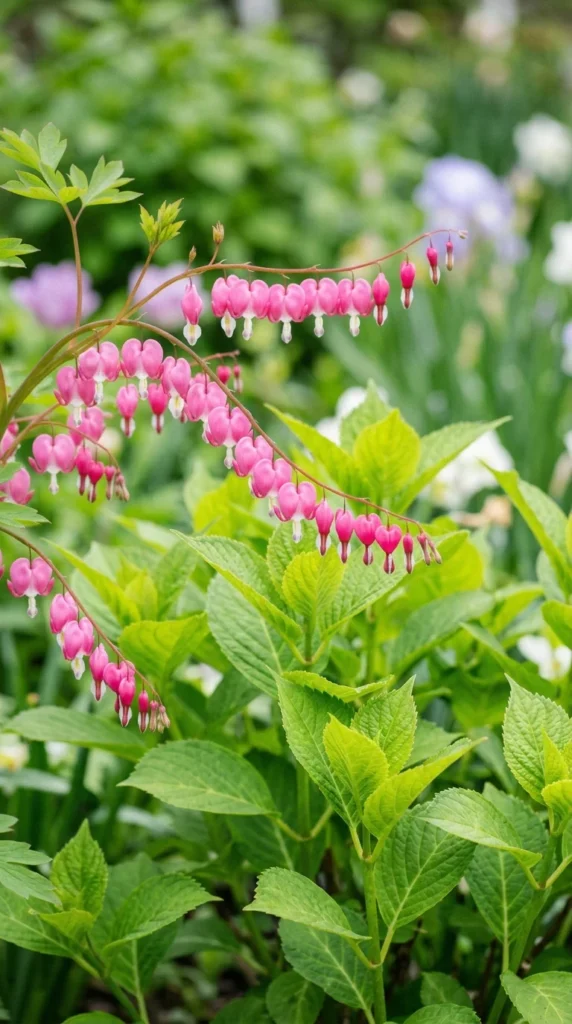
Bleeding Heart (Lamprocapnos spectabilis) is a spring-blooming favorite that fills the gap before hydrangeas take center stage. Their romantic, heart-shaped flowers hang from arching stems, creating a fairy-tale atmosphere.
Since Bleeding Hearts often go dormant and disappear in the heat of mid-summer, they are the perfect temporary residents. By the time the Bleeding Heart foliage begins to yellow and fade, the hydrangea is rapidly expanding and will grow over the empty space, hiding the dormant plant while it rests for the next year.
8. Daylilies
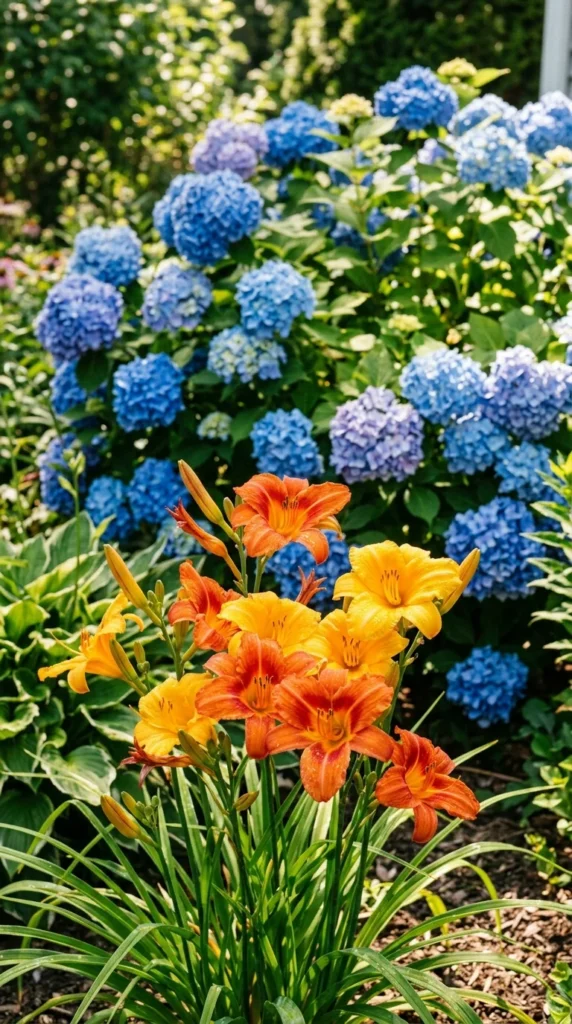
While many hydrangeas prefer shade, varieties like Hydrangea paniculata (like the famous ‘Limelight’) can handle significant sun. In these sunnier spots, Daylilies make exceptional companions. They are incredibly hardy, drought-tolerant once established, and offer a wide range of warm colors that contrast beautifully with the cool tones of most hydrangeas.
Daylilies have grass-like foliage that stays tidy throughout the season. Their repeat-blooming nature ensures that as the hydrangea flowers transition from bright white to dusty rose in late summer, there are still vibrant daylily blooms to keep the garden looking fresh.
9. Clematis
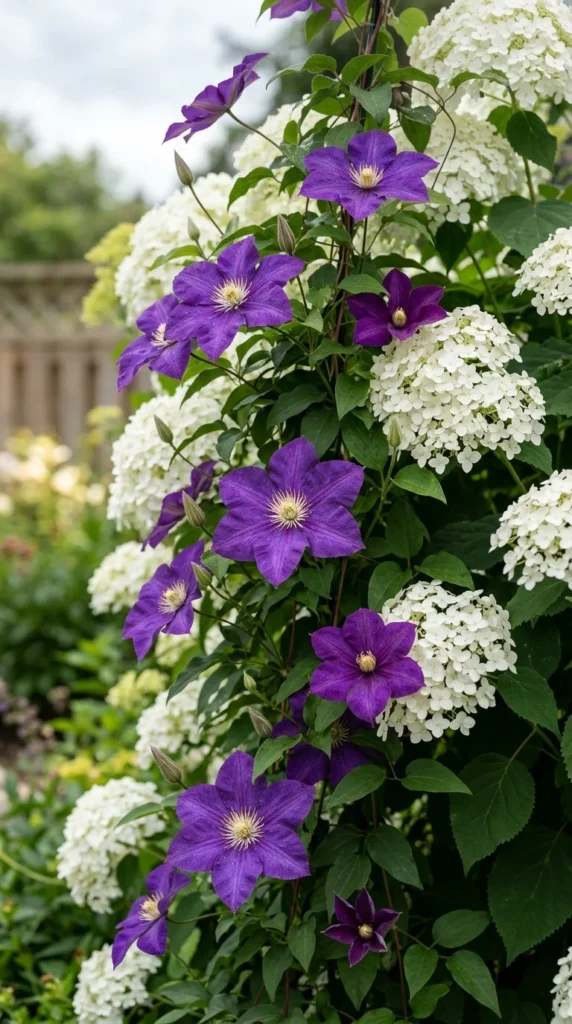
Why limit your garden to the ground? Clematis is a climbing vine that can be trained to grow up a trellis behind your hydrangeas or even allowed to weave through the hydrangea’s branches. This creates a “flower on flower” effect that is visually stunning.
Choose a Clematis variety that blooms at the same time as your hydrangea for a concentrated burst of color, or choose one that blooms earlier to extend the flowering season of that specific garden bed. A dark purple Clematis climbing through a white “Madame Emile Mouillere” hydrangea is a classic combination that never fails to impress.
10. Foxgloves
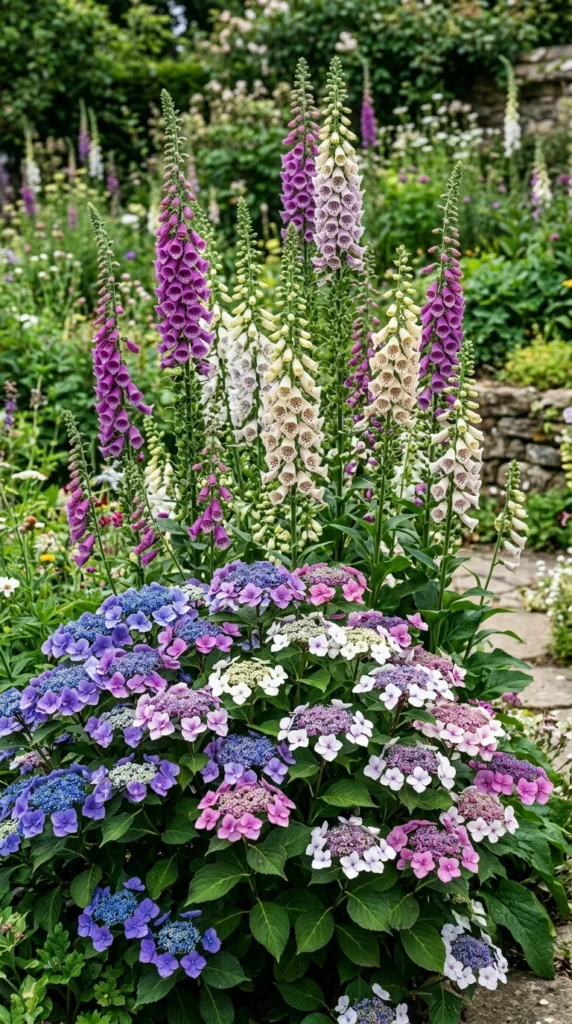
Foxgloves (Digitalis) offer a dramatic height contrast that few other plants can match. Their tall, stately spires covered in tubular bells provide a vertical accent that breaks up the rounded shapes of hydrangea shrubs.
They are particularly well-suited for cottage-style gardens. Because Foxgloves are biennials or short-lived perennials that readily self-seed, they give the garden a natural, evolved feel. Planting them in drifts behind your hydrangeas creates a sense of depth and mimics the way flowers grow in the wild.
11. Azaleas
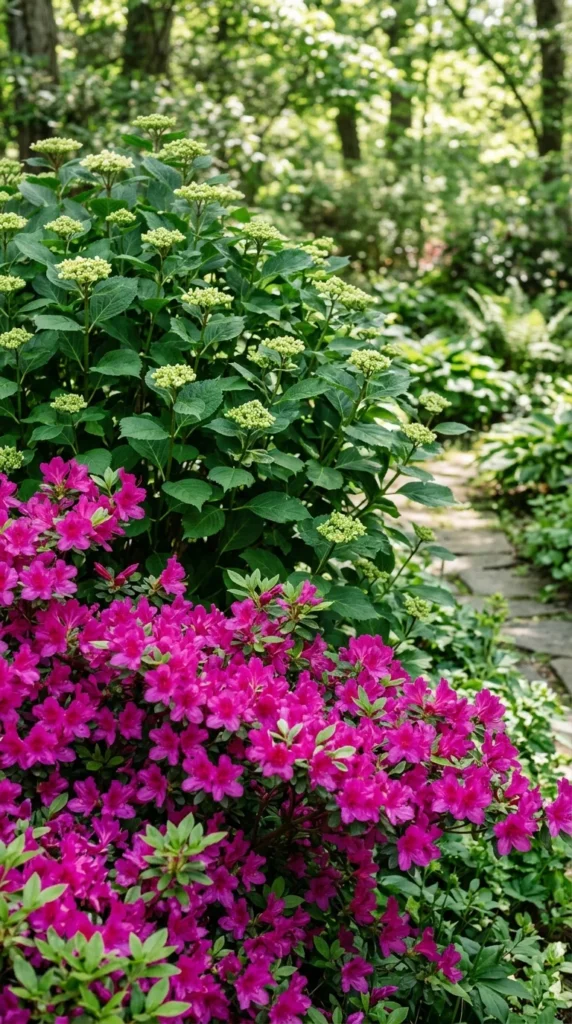
Azaleas and hydrangeas are the “dynamic duo” of the acidic soil world. Both plants thrive in the same soil conditions (pH between 5.0 and 6.0), making maintenance a breeze. Since Azaleas bloom in early spring and hydrangeas bloom in early-to-mid summer, planting them together ensures a continuous parade of flowers for months.
When the Azalea flowers fade, their small, dark green evergreen leaves provide a fine-textured backdrop for the massive hydrangea blooms that follow. This layering of bloom times is the secret to a professional-looking landscape.
Design Tips for a Stunning Hydrangea Garden
To make these companions work, keep these three design principles in mind:
- Layering: Always place your tallest plants (like Foxgloves or climbing Clematis) in the back, the medium shrubs (Hydrangeas and Azaleas) in the middle, and the low-growing spreaders (Hostas, Heuchera, or Japanese Forest Grass) in the front. This creates a “stadium seating” effect where every plant is visible.
- Color Harmony: Use a color wheel to plan your garden. For a calming effect, use analogous colors (blues, purples, and greens). For a high-energy look, use complementary colors (yellow Daylilies with purple Hydrangeas).
- Repetition: Don’t just plant one of each companion. Planting in groups of three or five creates a sense of rhythm and prevents the garden from looking cluttered or accidental.
By thoughtfully pairing your hydrangeas with these 14 stunning companions, you create more than just a flower bed—you create a living work of art that evolves with the seasons and brings joy from the first thaw of spring to the first frost of winter.