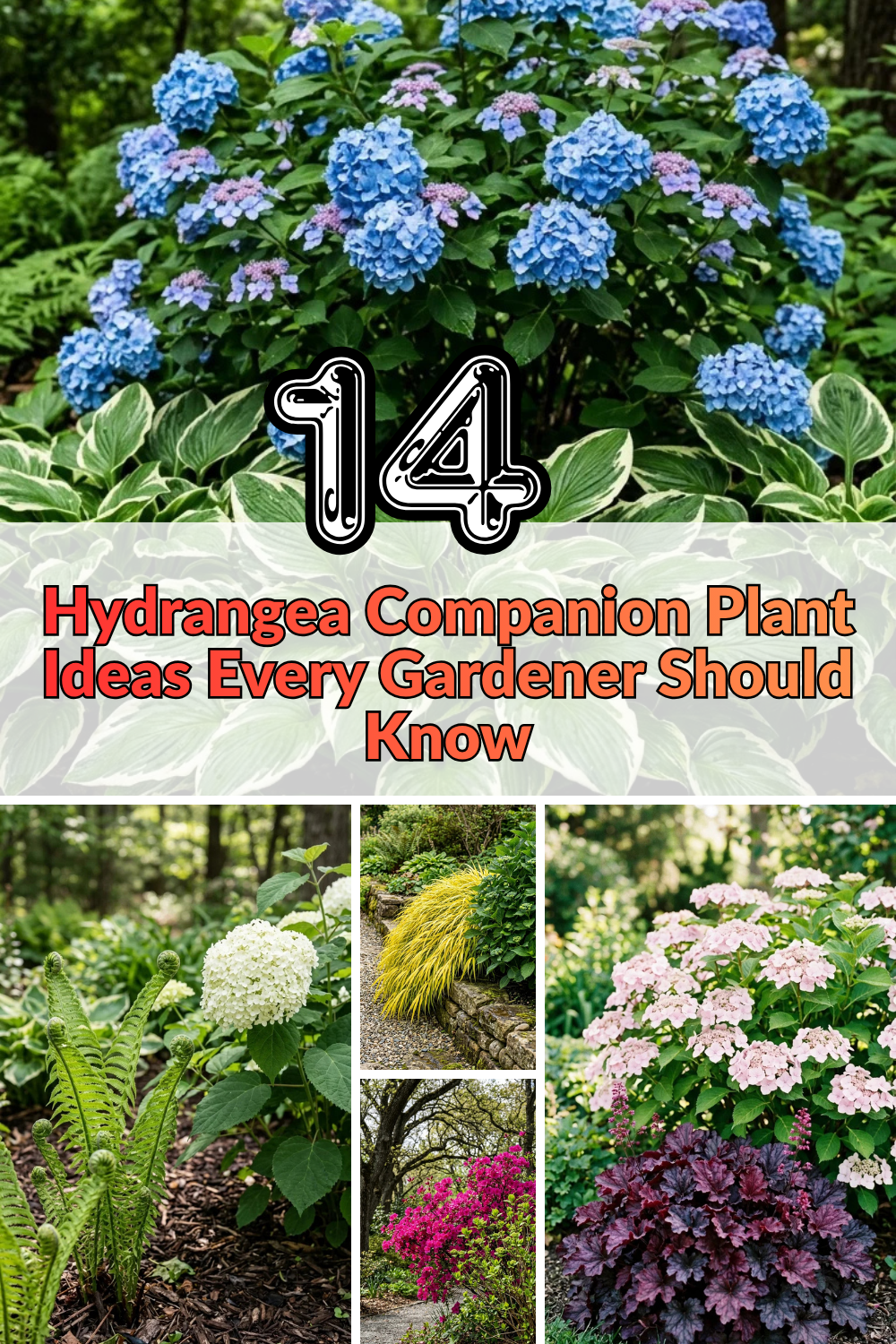
Hydrangeas are the undisputed royalty of the summer garden. With their massive blooms, rich foliage, and ability to change colors based on soil chemistry, they offer a dramatic focal point that few other shrubs can match. However, even a queen needs a supporting cast. Companion planting is the secret to elevating a hydrangea garden from “beautiful” to “breathtaking.”
The right companions do more than just look pretty; they serve functional purposes. They can provide ground cover to keep hydrangea roots cool, offer vertical interest to break up the roundness of the shrubs, or provide color in early spring and late fall when the hydrangeas are dormant. When selecting plants, it is crucial to match their light and water requirements. Most hydrangeas thrive in dappled shade with consistent moisture, making them perfect partners for a wide variety of perennials and shrubs.
Here are 15 hydrangea companion plant ideas that will transform your landscape into a multi-dimensional masterpiece.
1. Hostas
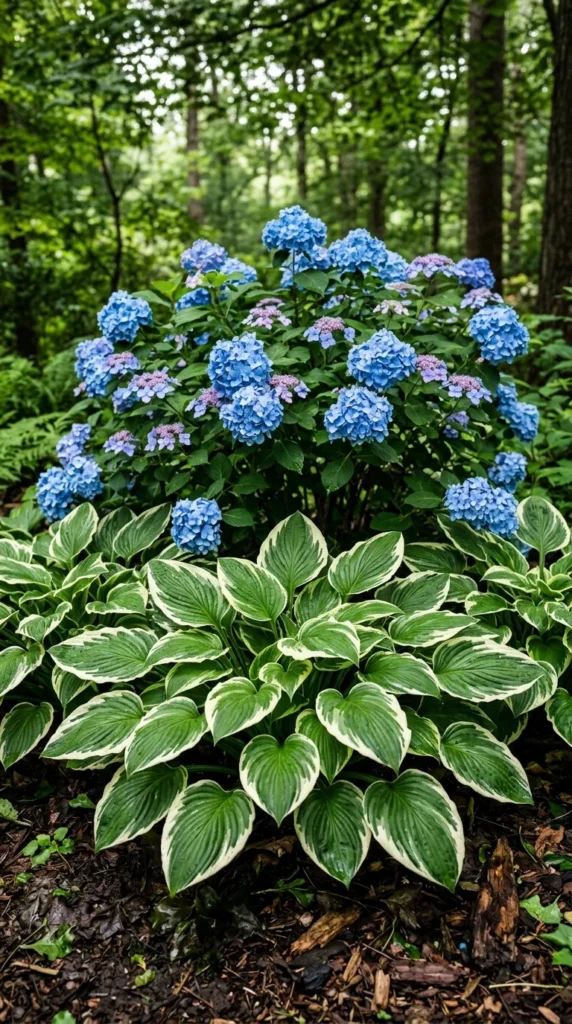
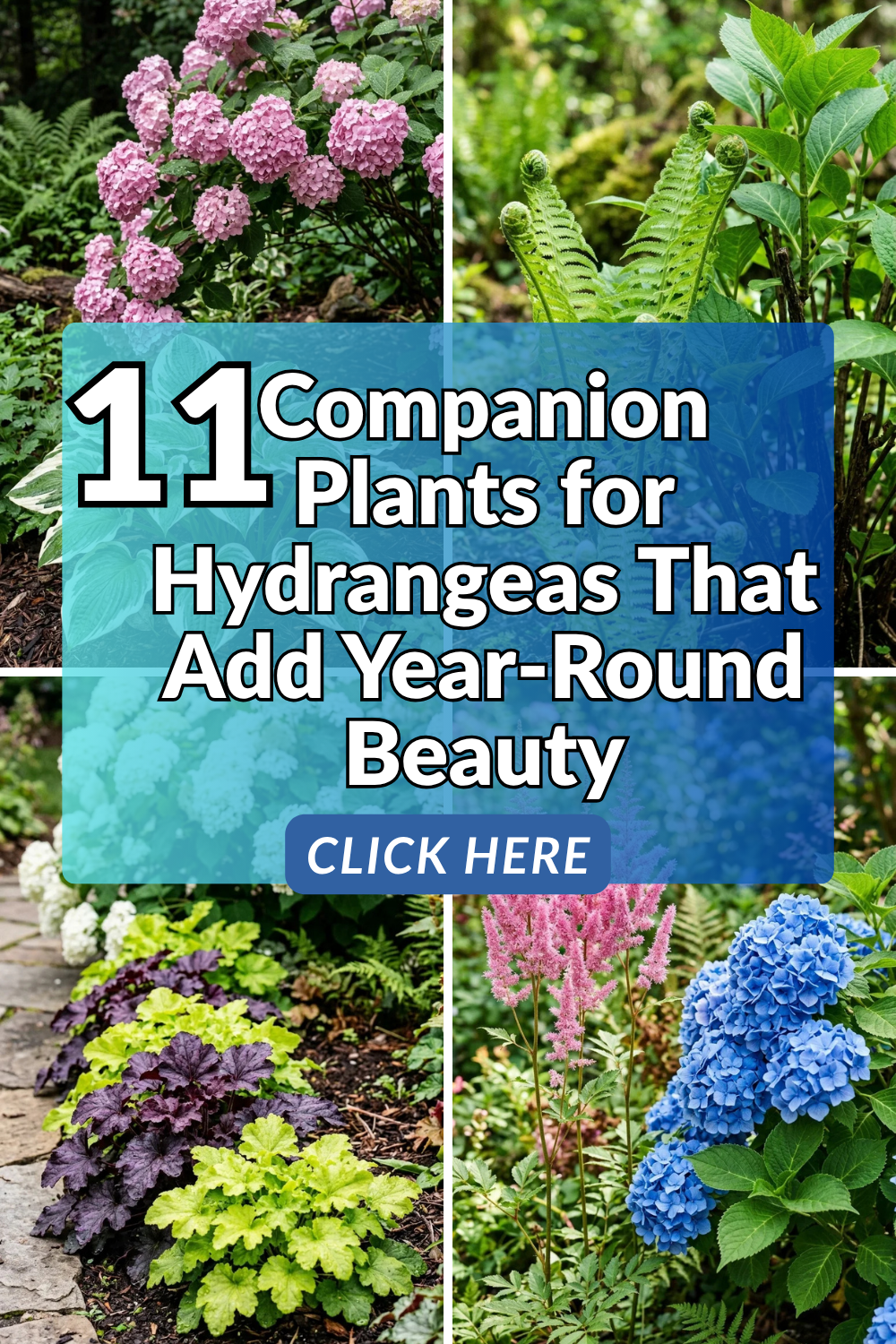
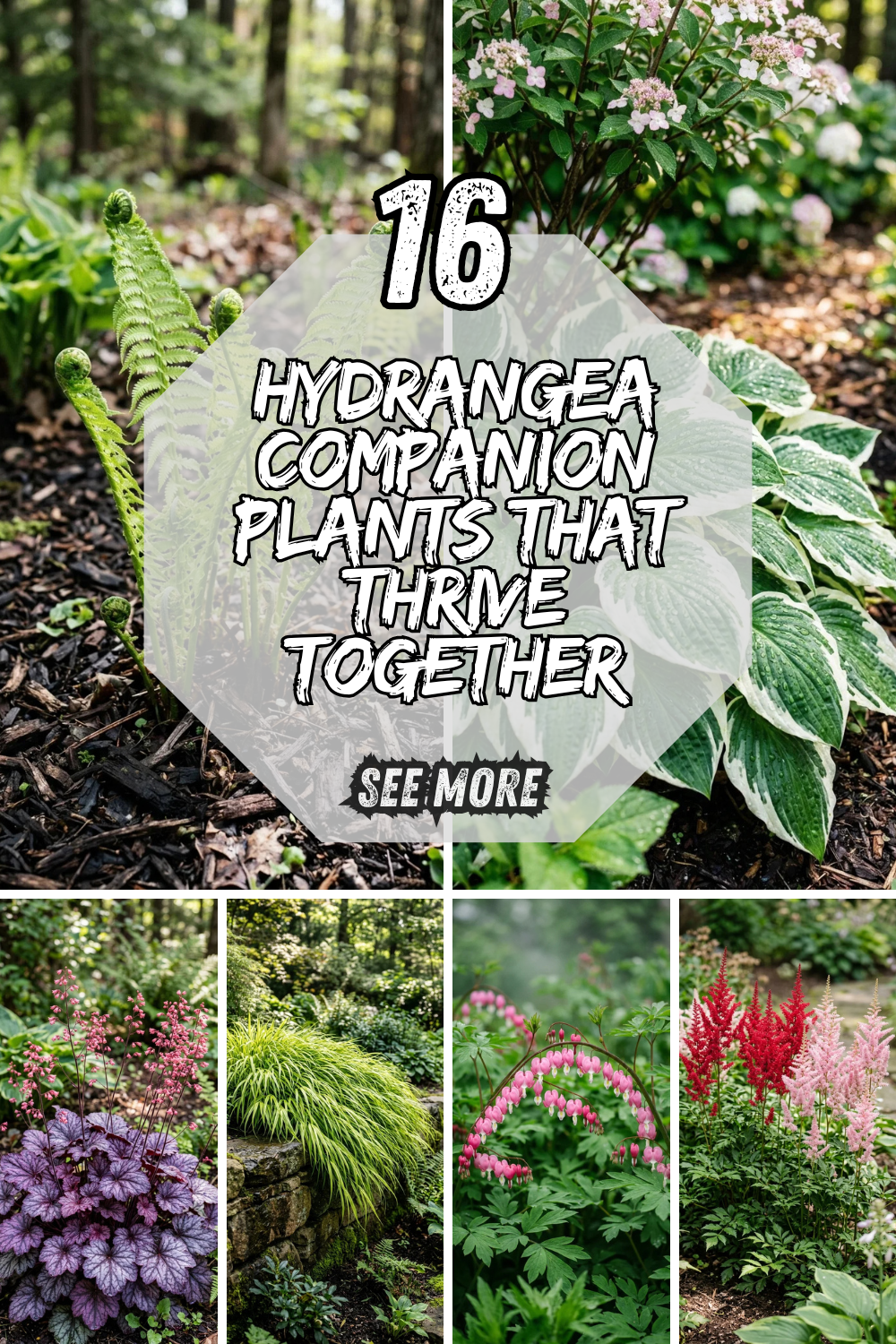
Hostas are perhaps the most classic companion for hydrangeas. Since both plants thrive in part-shade and love rich, moist soil, they are a match made in gardening heaven. Hostas offer a stunning textural contrast; while hydrangeas have serrated, somewhat coarse leaves, hostas provide broad, smooth, and often variegated foliage. Using hostas as a ground-level filler helps suppress weeds and retains soil moisture, which is vital for the water-hungry hydrangea.
2. Ferns
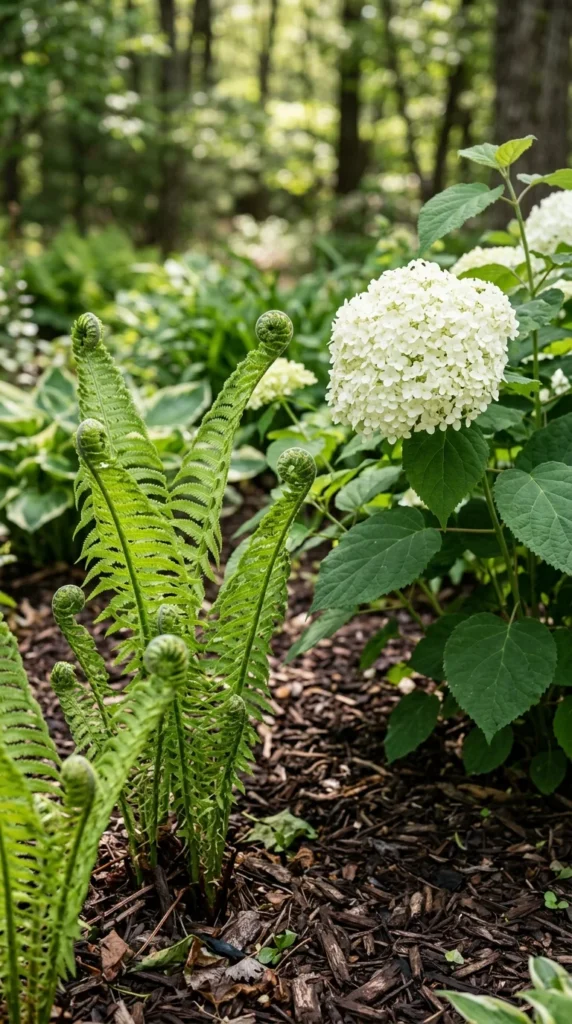
For a woodland or cottage garden aesthetic, ferns are an unbeatable choice. Their airy, delicate fronds provide a lightness that balances the heavy, dense flower heads of the hydrangea. Ostrich ferns or Japanese Painted Ferns work particularly well. The silver and burgundy tones of the Japanese Painted Fern, in particular, can pull out the subtle hues in pink or purple hydrangea varieties.
3. Heuchera
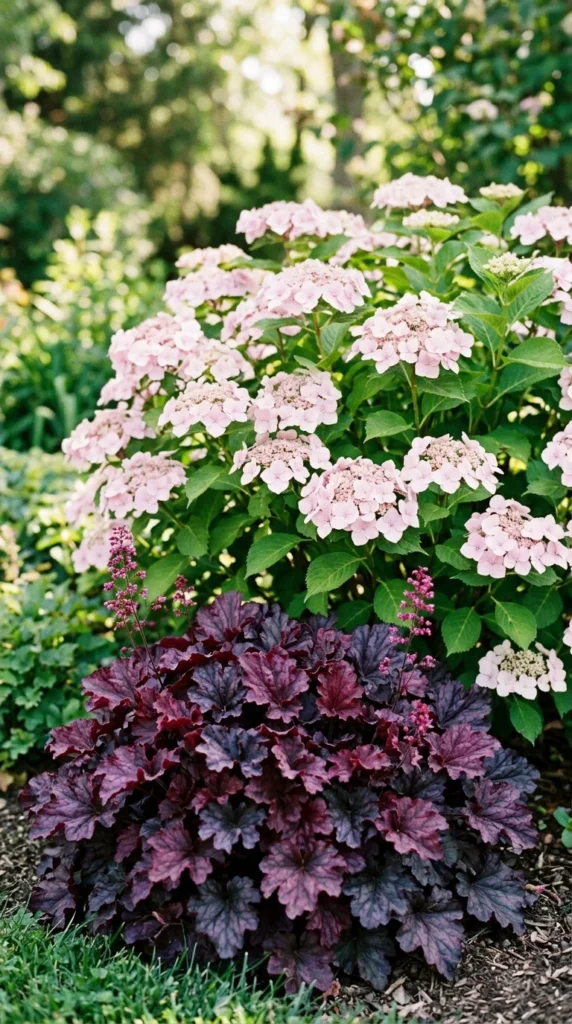
Commonly known as Coral Bells, Heuchera is prized for its spectacular foliage. Available in shades ranging from lime green and silver to deep chocolate and burnt orange, Heuchera allows gardeners to play with color theory. Planting dark purple Heuchera beneath white or light blue hydrangeas creates a high-contrast look that makes the blooms pop. They are low-growing, making them excellent “facers” to hide the “leggy” wooden stems of older hydrangea bushes.
4. Japanese Forest Grass
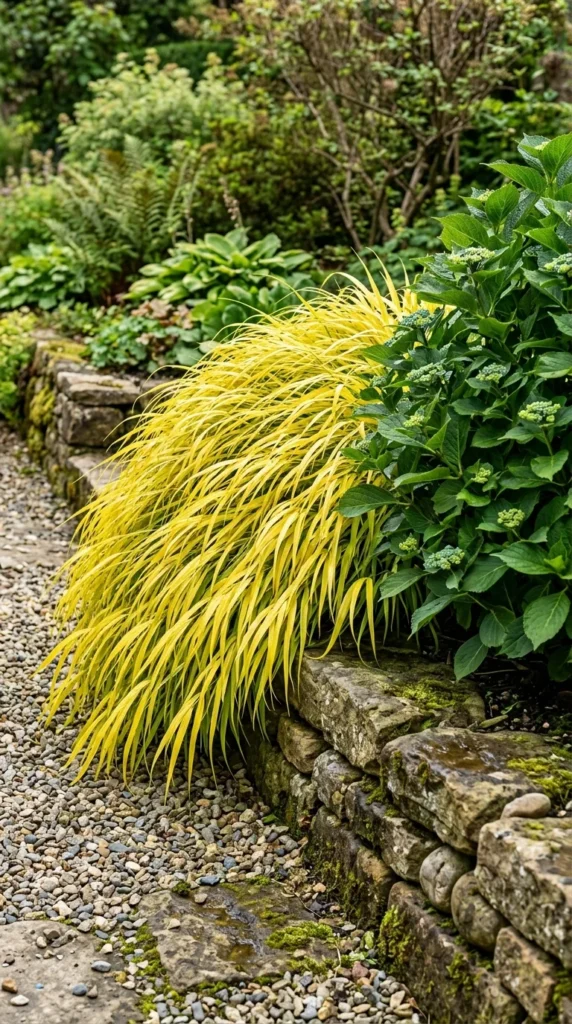
Hakonechloa, or Japanese Forest Grass, adds a sense of movement to the garden. Its slender, bamboo-like blades rustle in the breeze, providing a soft soundscape. The bright “Aureola” variety features lime and gold stripes that brighten up the shaded areas where hydrangeas typically live. The arching habit of the grass provides a beautiful structural transition from the hydrangea’s height down to the garden path.
5. Azaleas
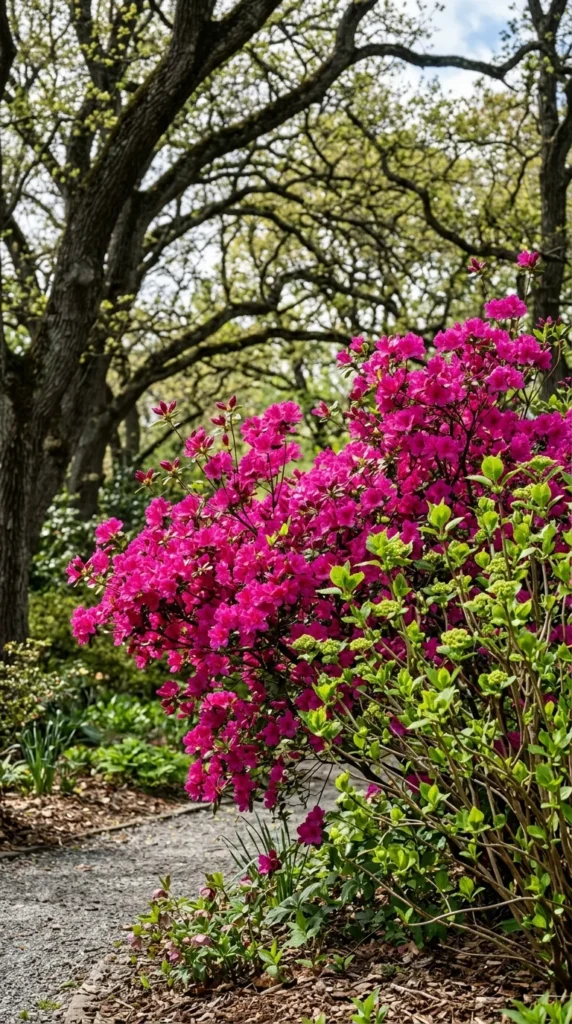
Azaleas and hydrangeas are natural partners because they share a love for acidic soil. In fact, the same soil acidity that turns your hydrangeas blue will keep your azaleas healthy and vibrant. Because azaleas bloom in early spring and hydrangeas bloom in mid-to-late summer, planting them together ensures a continuous cycle of color in your garden from April through August.
6. Boxwood
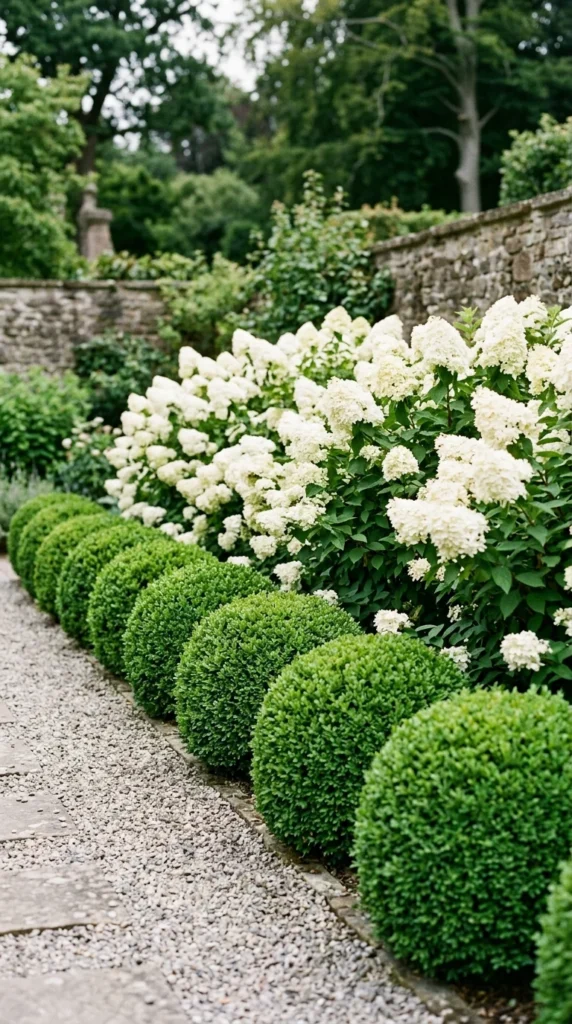
If you prefer a more formal or “Hamptons” style garden, boxwoods are the way to go. These evergreen shrubs provide the structural “bones” of the garden, ensuring it looks curated even in the winter when hydrangeas are just bare sticks. Using boxwood as a low hedge in front of a row of hydrangeas creates a clean, sophisticated look that defines the garden’s boundaries.
7. Clematis
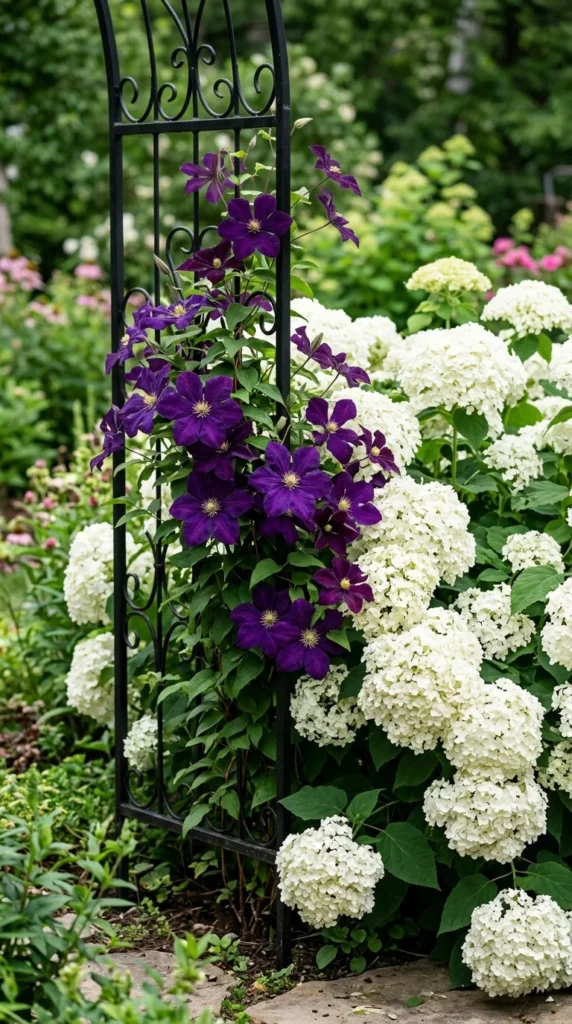
Hydrangeas provide the volume, but Clematis provides the height. By planting a Clematis vine to grow up a trellis or even through the branches of a sturdy hydrangea (like a Paniculata variety), you add a vertical dimension of color. This “stacking” of blooms creates a dense wall of flowers that is visually overwhelming in the best way possible.
8. Astilbe
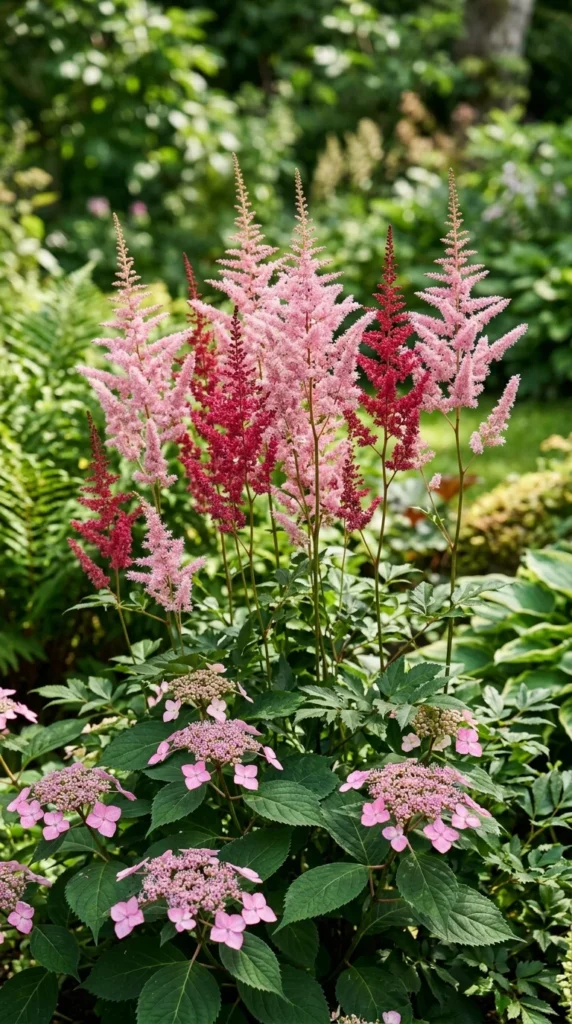
Astilbe thrives in the exact same conditions as hydrangeas: shade and moisture. Their flower form—tall, wispy spikes—is the perfect geometric foil to the rounded mopheads of the hydrangea. When the two bloom simultaneously, the contrast between the “spires” of the astilbe and the “globes” of the hydrangea creates a professional, layered look.
9. Brunnera
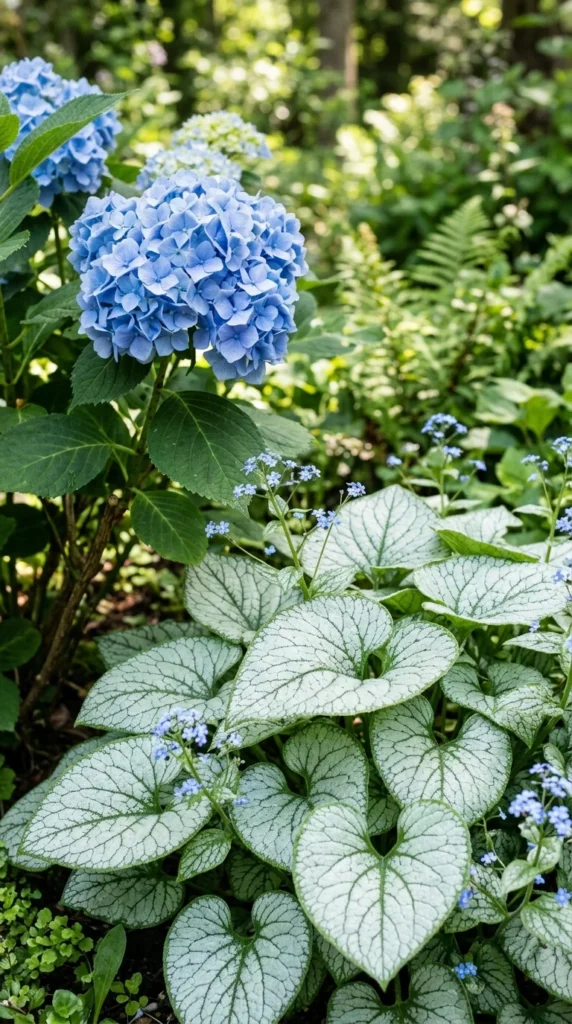
Brunnera, especially the ‘Jack Frost’ variety, acts like a living piece of silver jewelry for your garden. The shimmering, heart-shaped leaves reflect light in dark corners, helping to illuminate the space around your hydrangeas. In early spring, Brunnera produces tiny blue flowers that mimic Forget-Me-Nots, providing a lovely prelude to the hydrangea’s summer show.
10. Asters
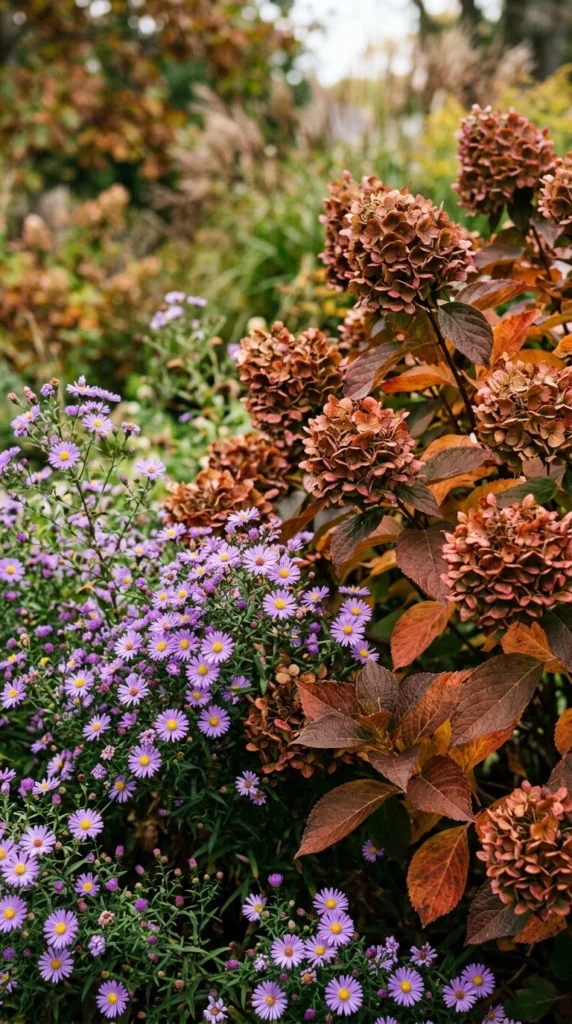
While most people focus on the hydrangea’s peak summer bloom, it’s important to think about the autumn transition. Asters are late-season stars that begin to shine just as hydrangeas start to fade. As hydrangea blooms take on their vintage, papery autumn hues, the vibrant purples and blues of the asters provide a fresh burst of energy to the garden.
11. Japanese Maples
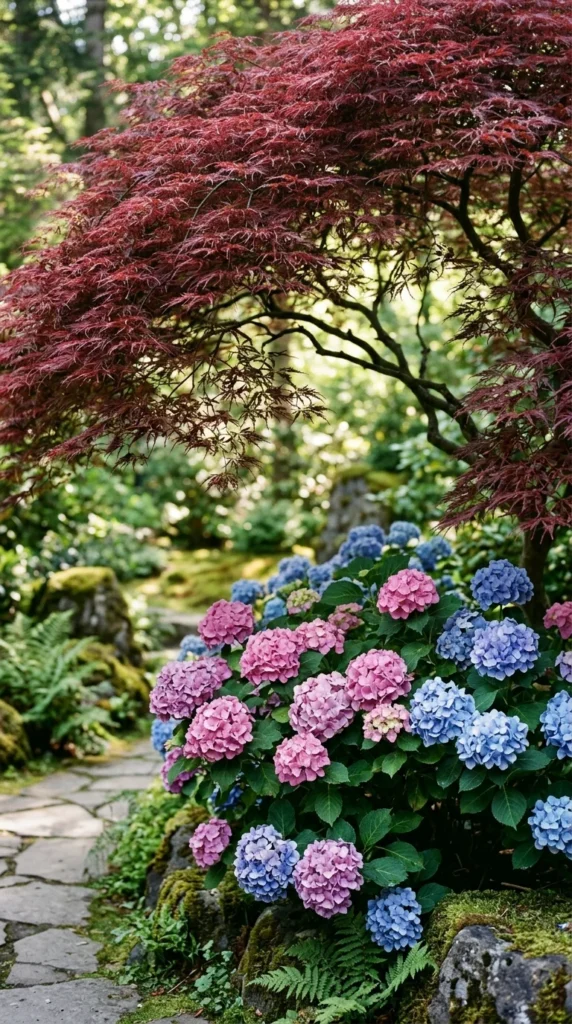
Japanese Maples provide the perfect “upper story” for a hydrangea garden. Their fine-textured, colorful foliage creates a stunning backdrop. Furthermore, a Japanese maple provides the high, filtered shade that prevent hydrangea leaves from scorching in the afternoon sun. The combination of the maple’s sculptural branches and the hydrangea’s lush flowers creates a classic East-Asian-inspired landscape.
12. Alliums
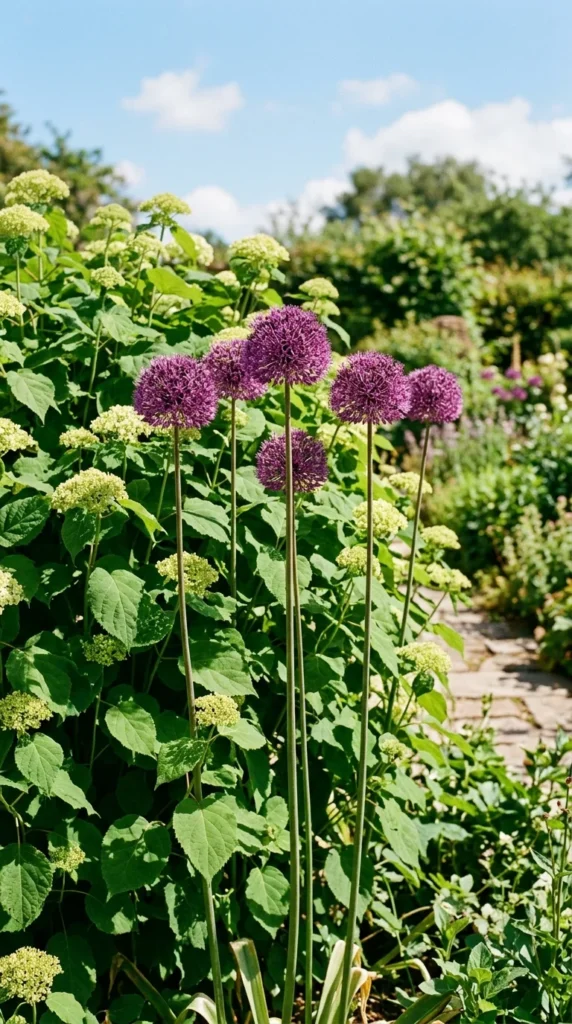
For those growing sun-tolerant hydrangeas like the ‘Limelight’ or other Paniculata varieties, Alliums are a fantastic choice. These “ornamental onions” provide a whimsical, Dr. Seuss-like appearance with their perfectly spherical heads. Because they grow on tall, naked stems, they can be planted right in the middle of a hydrangea bush, popping their heads up through the foliage for a surprising burst of geometry.
13. Geraniums (Perennial)
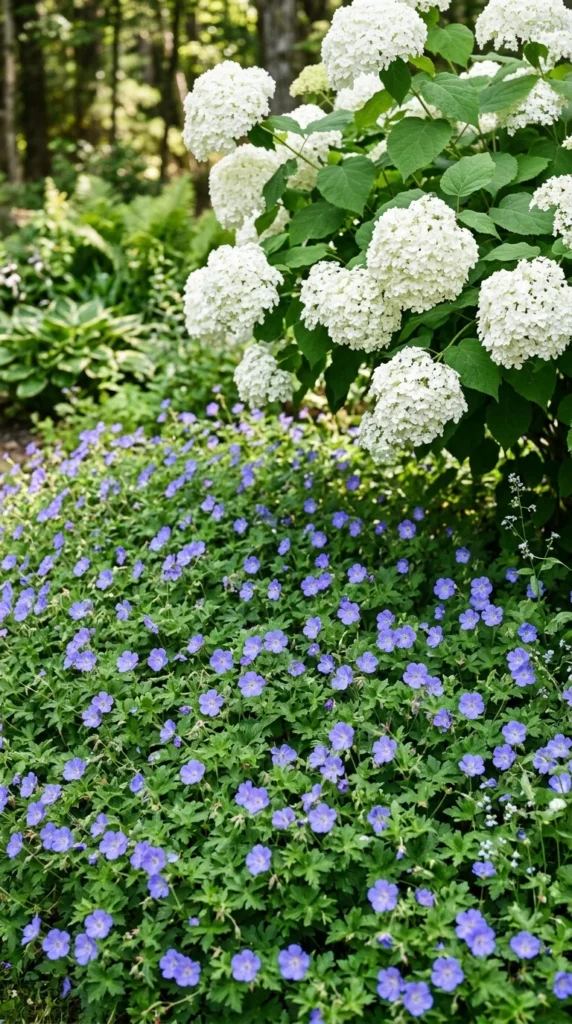
Hardy perennial geraniums (not to be confused with annual Pelargoniums) make excellent groundcovers. Varieties like ‘Rozanne’ bloom for a long period and have a scrambling habit. They will weave themselves around the base of your hydrangeas, filling in any “dead space” with soft foliage and delicate flowers. They are particularly good for suppressing weeds and keeping the soil cool.
14. Fothergilla
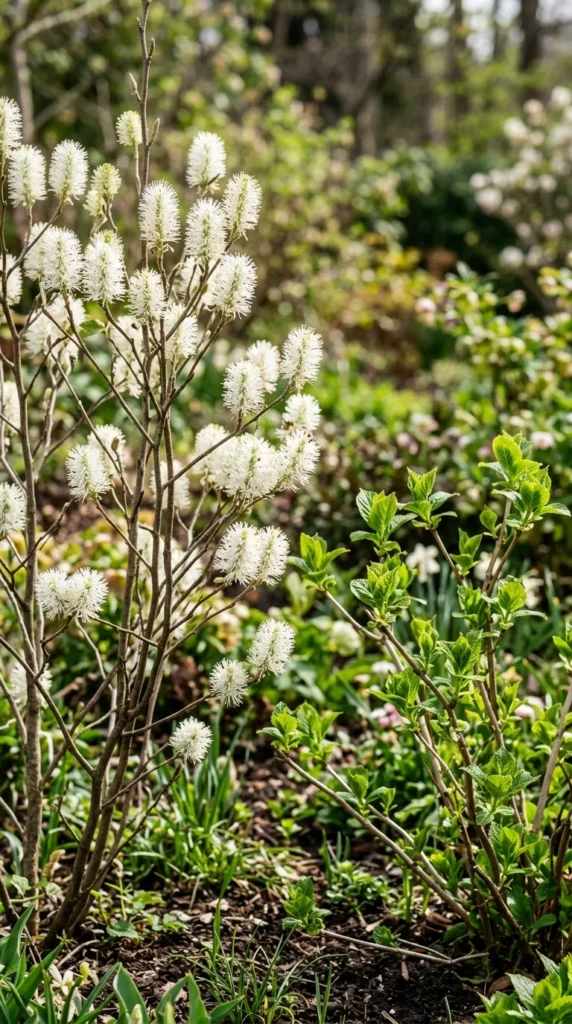
Fothergilla is a native shrub that often gets overlooked. It offers fragrant, honey-scented white flowers in the spring that look like little bottlebrushes. In the fall, its foliage turns brilliant shades of orange and red, providing a second season of interest that complements the drying flower heads of the hydrangea. It thrives in similar soil conditions and adds a rustic, naturalistic feel to the planting scheme.