Hydrangeas are the undisputed royalty of the summer garden. With their voluminous mopheads, delicate lacecaps, and cone-shaped panicles, they provide a sense of nostalgia and grandeur that few other shrubs can match. However, even the most beautiful queen needs a court. To truly elevate your garden from a seasonal showpiece to a year-round masterpiece, you need companion plants that fill the gaps, highlight the hydrangeas’ best features, and provide visual interest when the shrubs are dormant.
Choosing the right companions requires a balance of aesthetics and environmental needs. Since most hydrangeas thrive in dappled shade and moisture-rich, slightly acidic soil, their partners must share these preferences. From textural contrasts to vibrant pops of color, here are 11 companion plants that will make your hydrangeas shine throughout the seasons.
1. Hostas
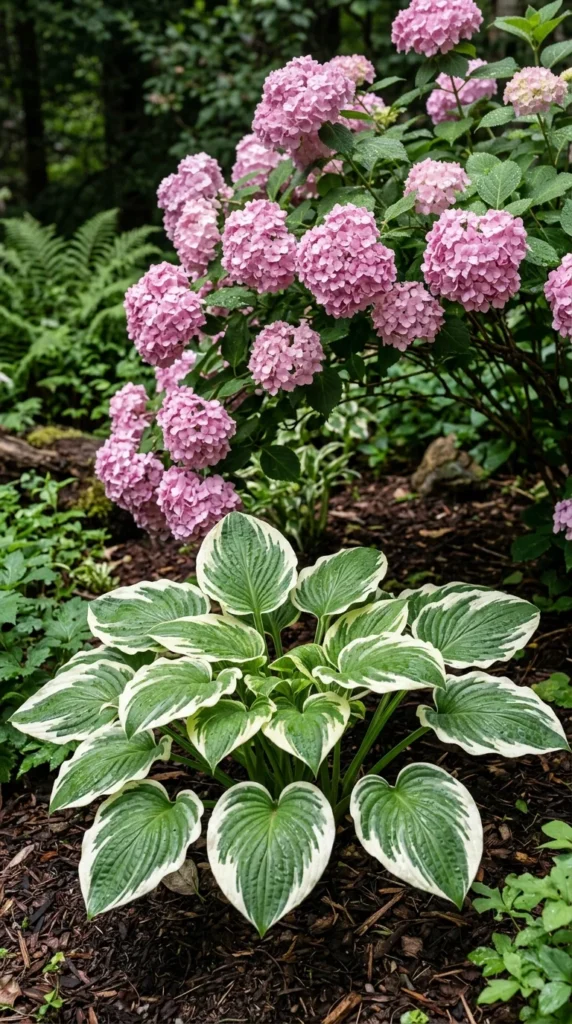
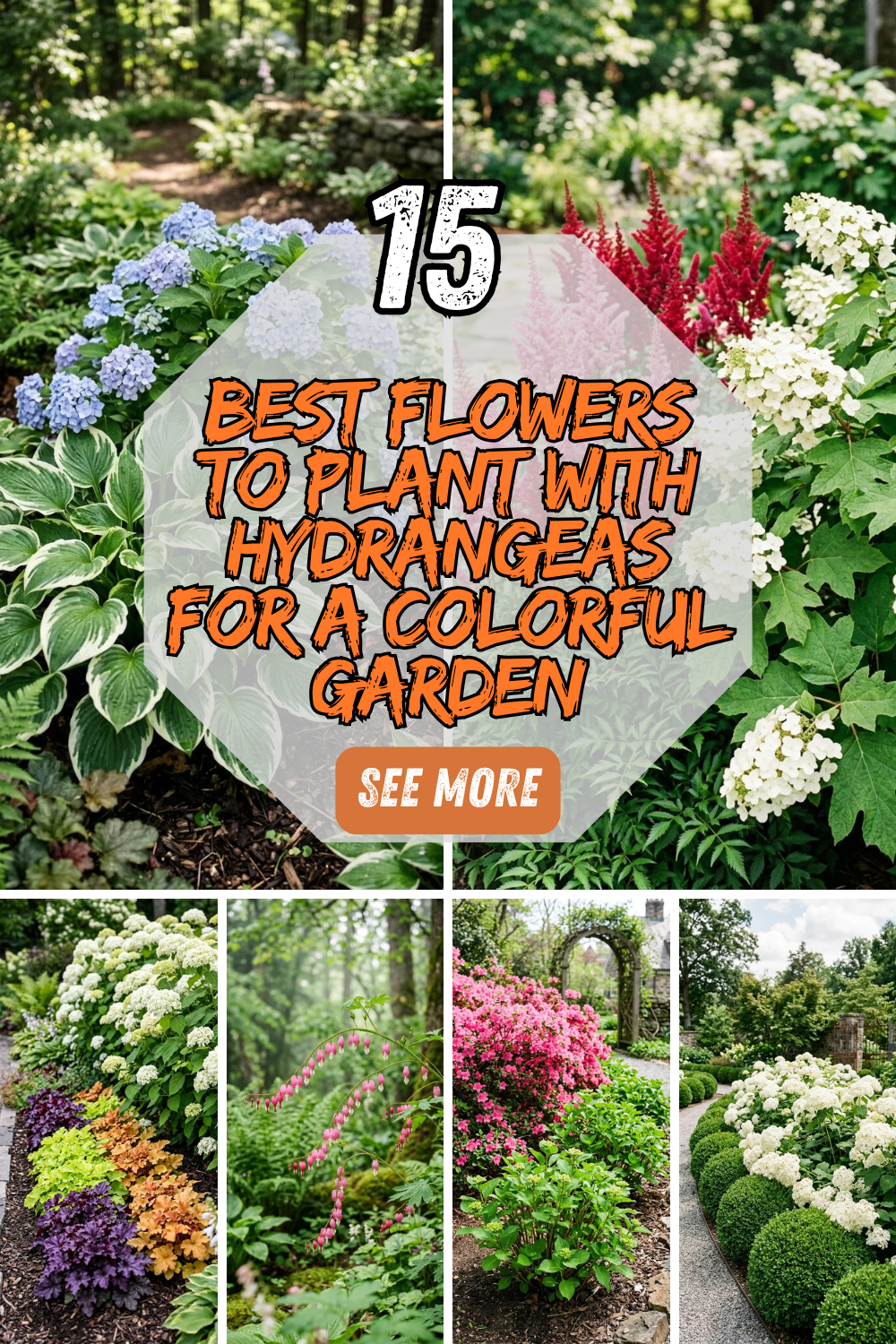
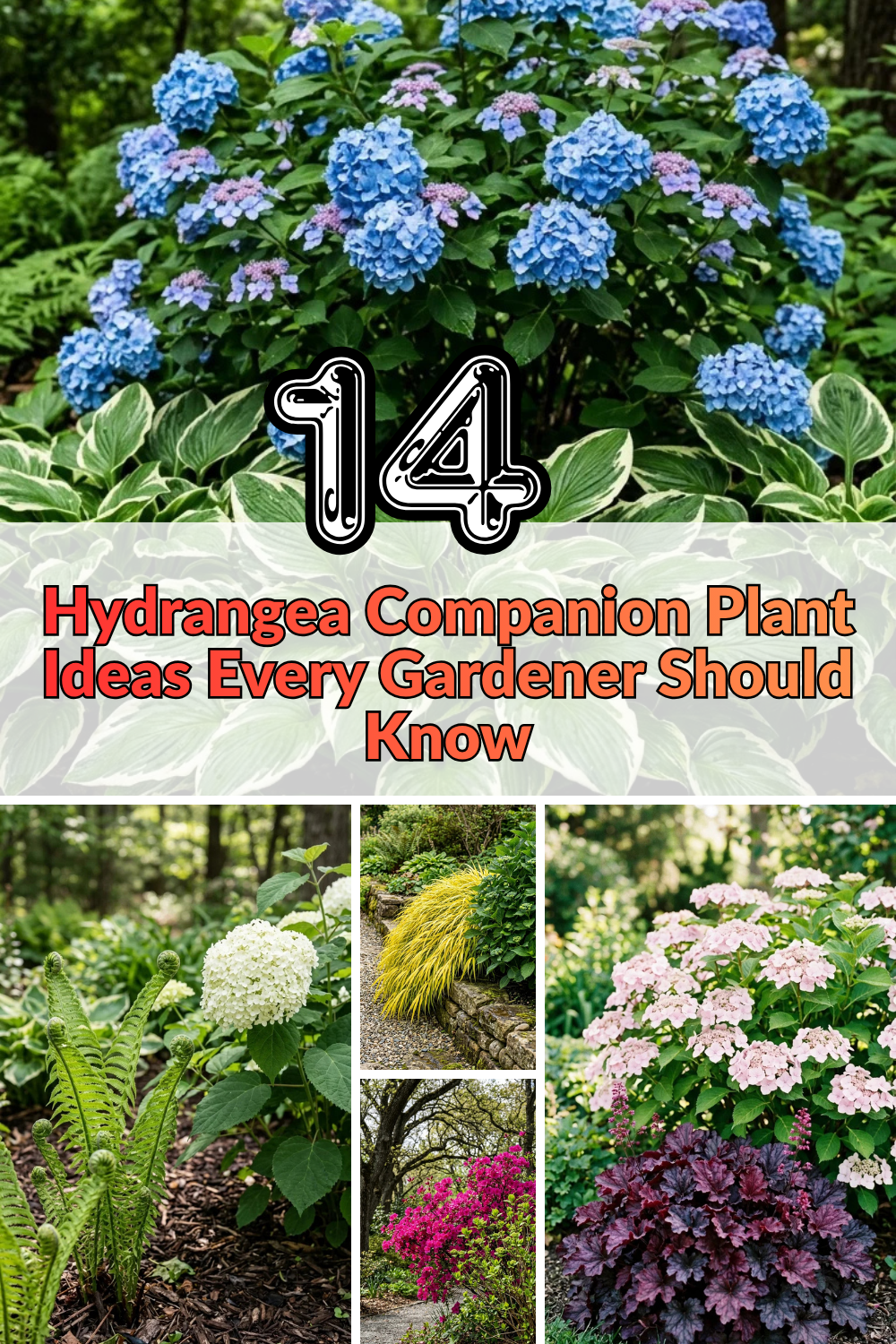
Hostas are perhaps the most classic companion for hydrangeas. Their primary appeal lies in their massive, sculptural leaves, which offer a stunning textural contrast to the serrated, smaller leaves of the hydrangea. While hydrangeas provide height and vertical color, hostas ground the look with their low-growing, mounded habit.
Because both plants thrive in part-shade to full-shade environments, they are naturally compatible. For a sophisticated look, choose variegated hostas with white or cream edges; these “glow” in the shadows and complement the white or pale blue tones of many hydrangea varieties. In the late summer, hostas produce spikes of lavender or white flowers that bridge the gap as early-blooming hydrangeas begin to fade into their autumn hues.
2. Ferns
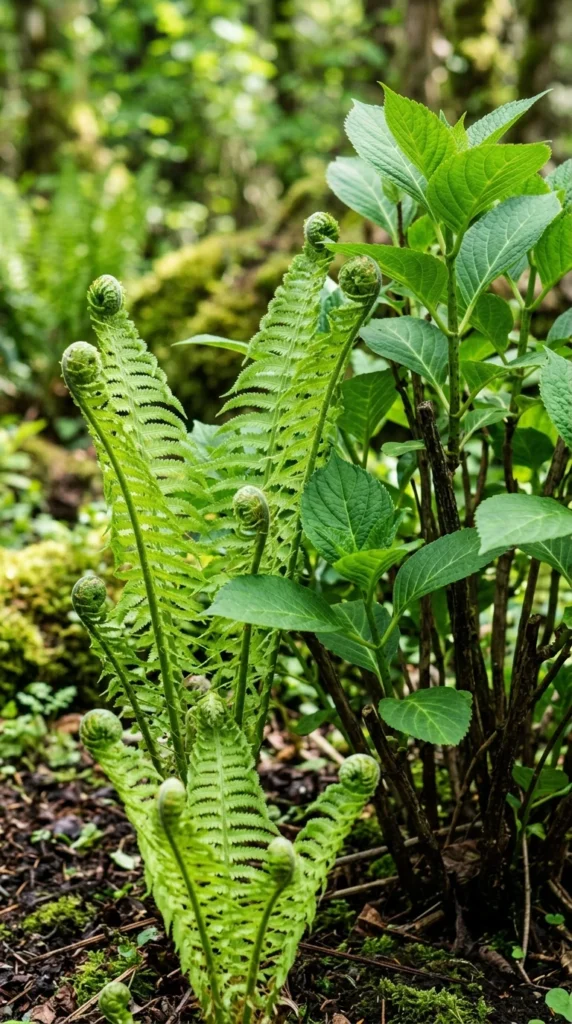
If hydrangeas represent the “bold” in a garden, ferns represent the “ethereal.” The fine, lacy texture of fern fronds—such as the Ostrich Fern, Japanese Painted Fern, or Autumn Fern—creates an airy backdrop that softens the heavy appearance of large hydrangea blooms.
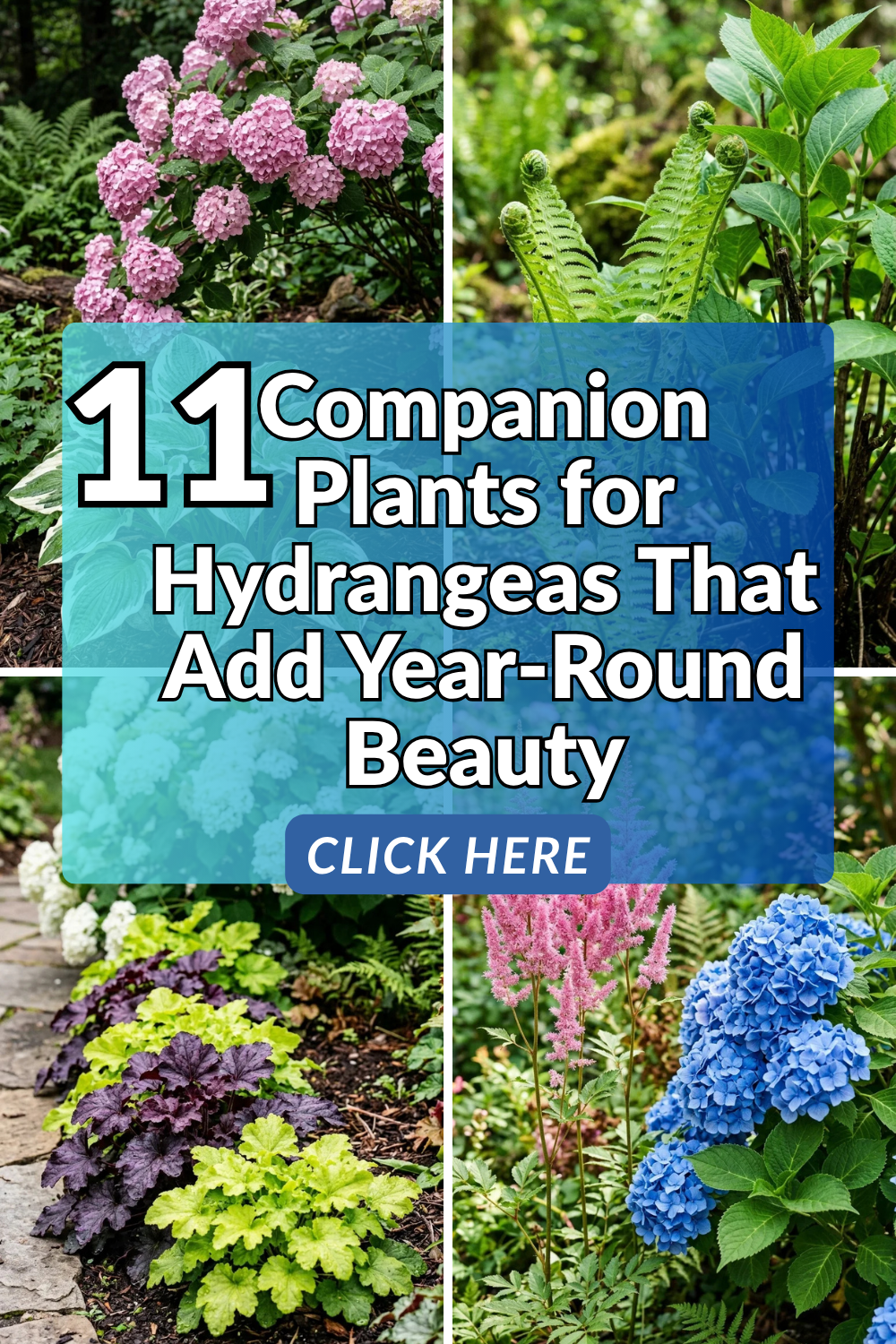
Ferns are particularly useful for filling the “knee-high” space around the base of leggy hydrangea varieties. The Japanese Painted Fern is a standout choice, offering silvery-purple fronds that echo the cool tones of blue and purple Endless Summer hydrangeas. Furthermore, ferns are incredibly low-maintenance and thrive in the same moist, organic-rich soil that hydrangeas crave.
3. Heuchera
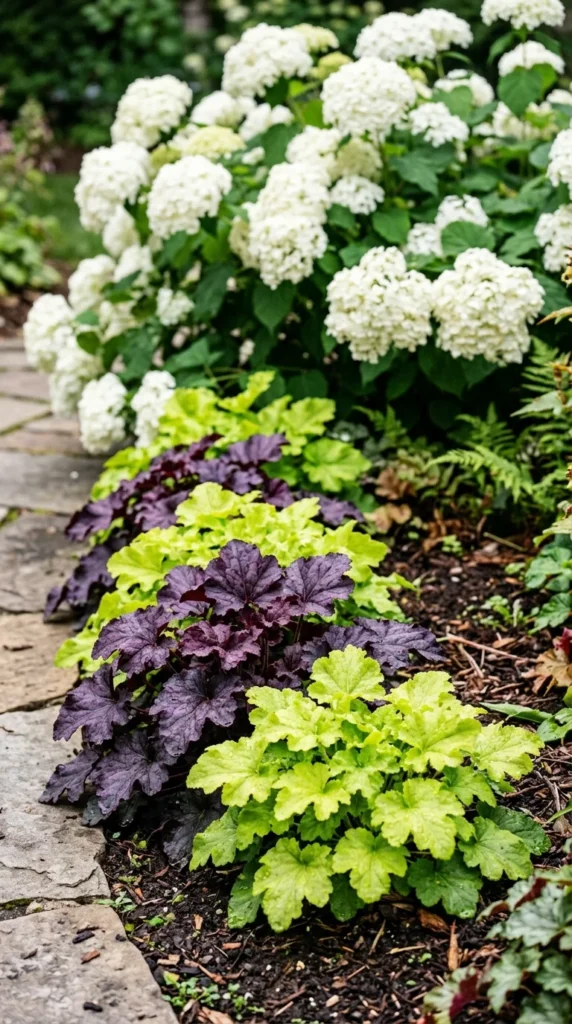
Commonly known as Coral Bells, Heuchera is the ultimate “color-filling” plant. While hydrangeas provide seasonal blooms, Heuchera provides vibrant foliage color from early spring through late fall—and in some climates, even through the winter.
Available in shades of deep burgundy, neon lime, burnt orange, and frosted silver, Heuchera allows you to create a specific color palette. For example, planting “Obsidian” (dark purple) Heuchera beneath white panicle hydrangeas creates a high-contrast, modern look. Their mounding habit makes them excellent for edging the front of a hydrangea border, hiding any bare stems at the bottom of the shrubs.
4. Astilbe
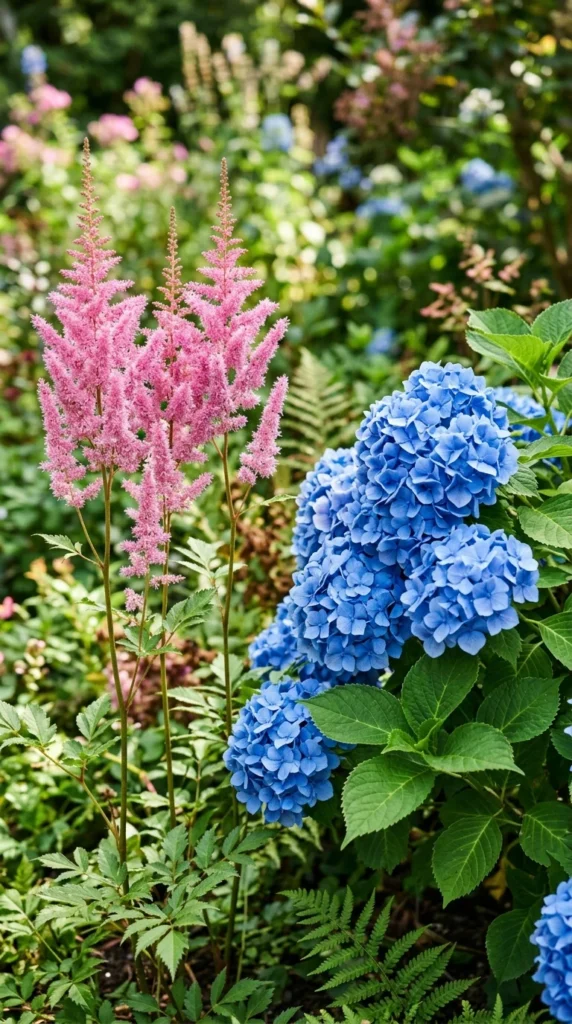
Astilbe offers a verticality that perfectly complements the rounded shape of hydrangea flower heads. Their feathery, fern-like foliage is attractive on its own, but their plumes of pink, red, or white flowers are the real showstoppers.
Astilbes bloom in late spring and early summer, often just as the hydrangeas are beginning their show. They love moisture and can handle the heavy shade that might stunt other flowering perennials. When planted in drifts among hydrangeas, they create a “meadow-like” feel that breaks up the woodiness of the shrubs.
5. Boxwood
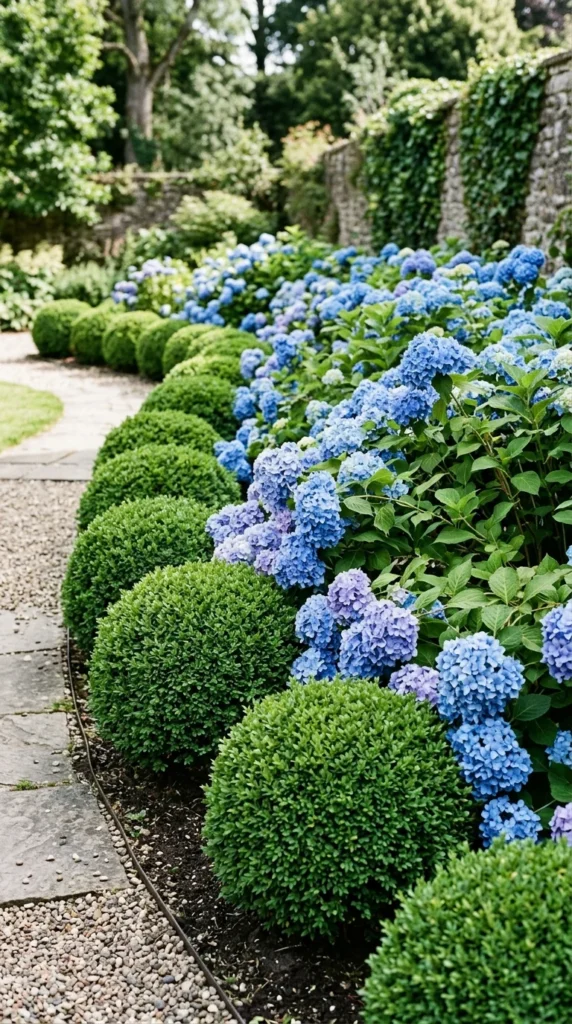
Structure is essential in any garden, especially in winter when hydrangeas drop their leaves and become a collection of brown sticks. Evergreen boxwoods provide the “bones” of the garden. By planting a low hedge of boxwood in front of your hydrangeas or tucking clipped spheres between them, you ensure the garden looks intentional and organized even during the dormant season.
The deep, glossy green of the boxwood foliage serves as a neutral stage that makes the bright hydrangea blooms pop. This combination is a staple of formal French and English cottage gardens, blending structured elegance with romantic, wild flowering.
6. Japanese Forest Grass
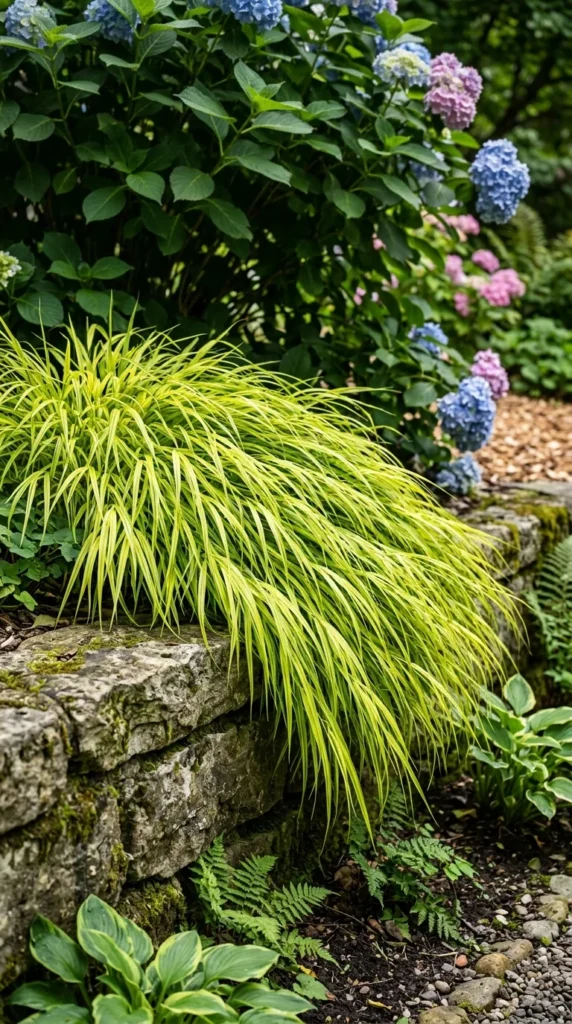
Also known as Hakonechloa, Japanese Forest Grass is one of the few ornamental grasses that loves the shade. Its cascading, bamboo-like blades create a sense of movement and “flow” in the garden, mimicking the look of a golden waterfall.
This grass is perfect for softening the edges of walkways or stone walls where hydrangeas are planted. The bright “Aureola” variety provides a stunning splash of gold that brightens up dark corners. In the fall, the grass often turns a warm tan or reddish-pink, coordinating beautifully with the drying flower heads of the hydrangea.
7. Azaleas
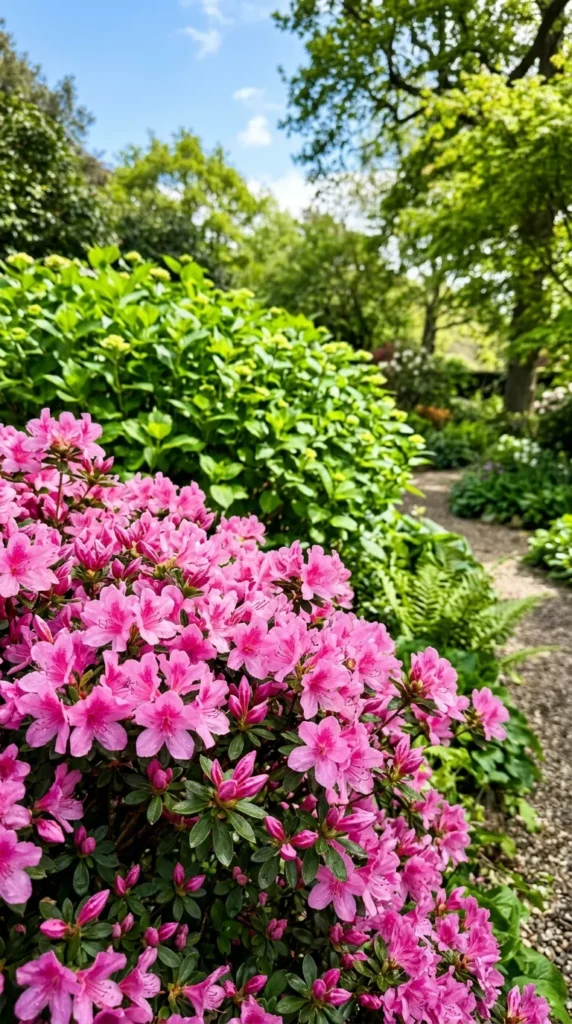
Azaleas and hydrangeas are the best of friends because they share an identical “shopping list” for soil: they both need acidic, well-draining, and humus-rich earth. While hydrangeas take over the mid-to-late summer, azaleas own the spring.
By planting azaleas alongside your hydrangeas, you extend the blooming season of your garden bed by several months. Once the azalea flowers fade, their small, dark green evergreen leaves provide a consistent backdrop for the emerging hydrangea buds. This “relay race” of blooming ensures there is never a dull moment in your landscape.
8. Bleeding Heart
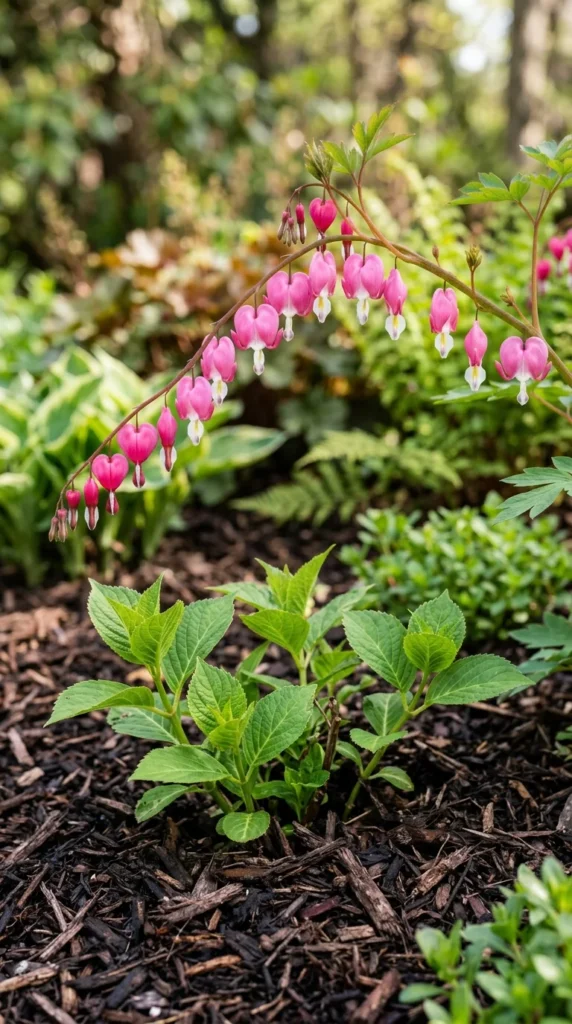
Bleeding Hearts (Dicentra) are the quintessential spring ephemeral. They produce charming, heart-shaped flowers that dangle from arching stems in the cool months of April and May.
As the heat of summer arrives, Bleeding Hearts typically go dormant and their foliage disappears. This makes them a perfect spatial companion for hydrangeas; as the Bleeding Heart fades away, the hydrangea is rapidly expanding to fill that same physical space. It is a clever way to maximize a small garden bed by “stacking” plants that peak at different times.
9. Dogwood Trees
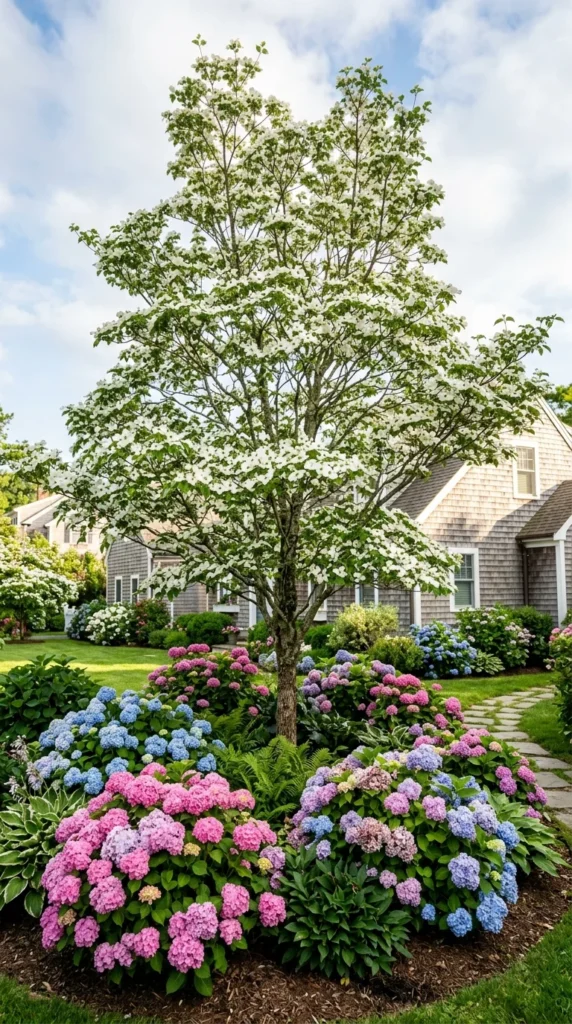
Every hydrangea bed benefits from a bit of overstory protection. Dogwood trees are excellent “canopy” companions. They provide the dappled shade that prevents hydrangea leaves from scorching in the afternoon sun, while their root systems are generally deep enough not to compete directly for surface moisture.
In the spring, the Dogwood provides a high-altitude floral display. In the fall, its leaves turn a brilliant purple-red, and in the winter, varieties like the Red Twig Dogwood (if grown as a shrub) provide bright red stems that stand out against the snow, offering interest when the hydrangeas are bare.
10. Hellebores
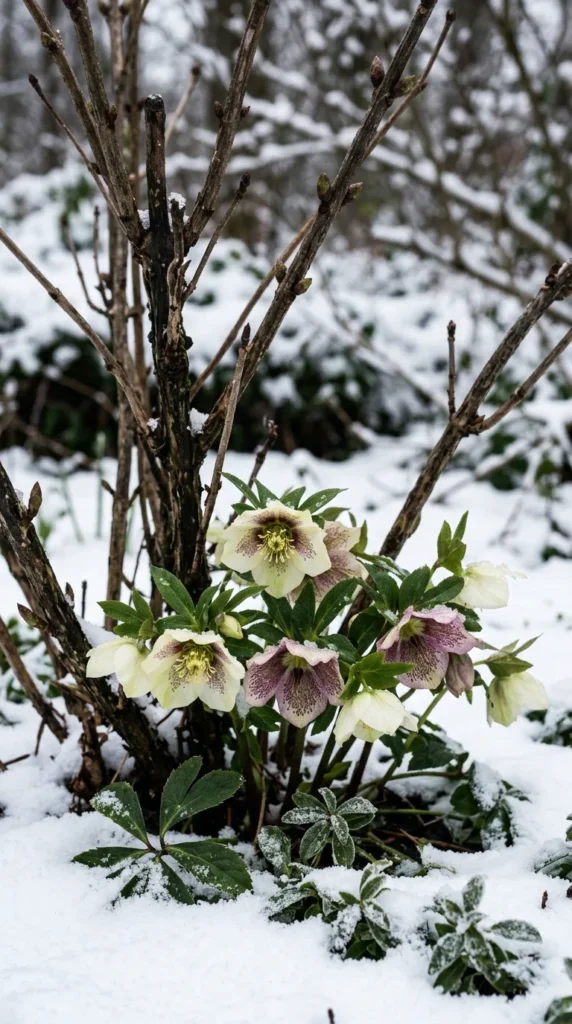
Often called “Lenten Roses,” Hellebores are the heroes of the late winter garden. They bloom when almost nothing else is awake, sometimes pushing their flowers through a layer of snow.
Hellebores feature thick, leathery, evergreen leaves that look great all year. By planting them at the base of your hydrangeas, you provide a ground-level interest point during the months of January through March. Once the hydrangeas leaf out in late spring, their large shadows provide the cool, shaded environment that Hellebores need to survive the summer heat.
11. Sweet Woodruff
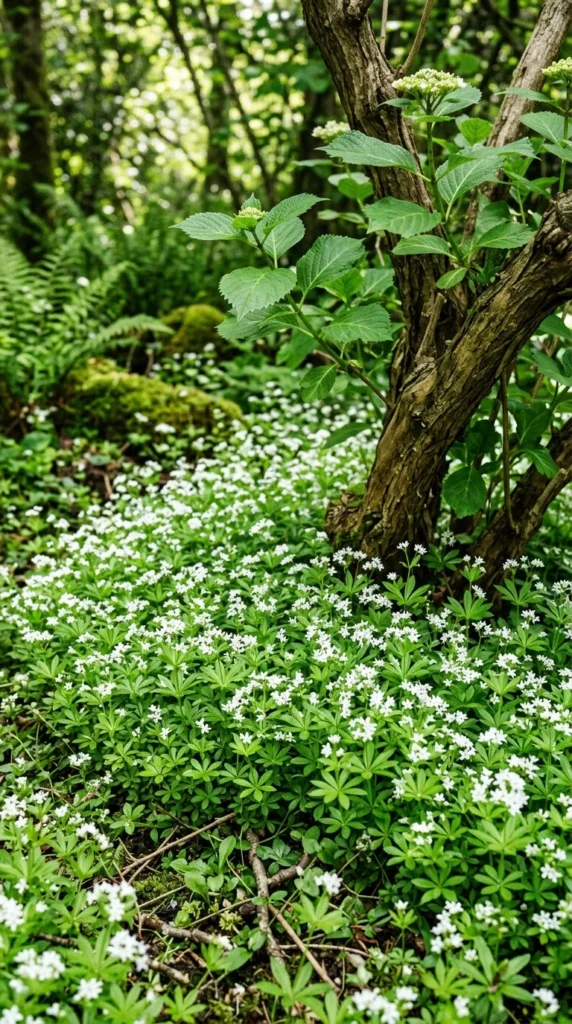
If you are looking for a living mulch to suppress weeds and keep the soil cool for your hydrangeas, Sweet Woodruff (Galium odoratum) is the answer. This low-growing groundcover spreads gently to create a lush, green carpet.
In late spring, it produces tiny, vanilla-scented white flowers that create a “cloud” effect at the feet of your shrubs. Sweet Woodruff is particularly effective because it doesn’t have an aggressive root system that would rob the hydrangeas of water, and its delicate texture offers a fine-grained contrast to the broad leaves of the hydrangea.