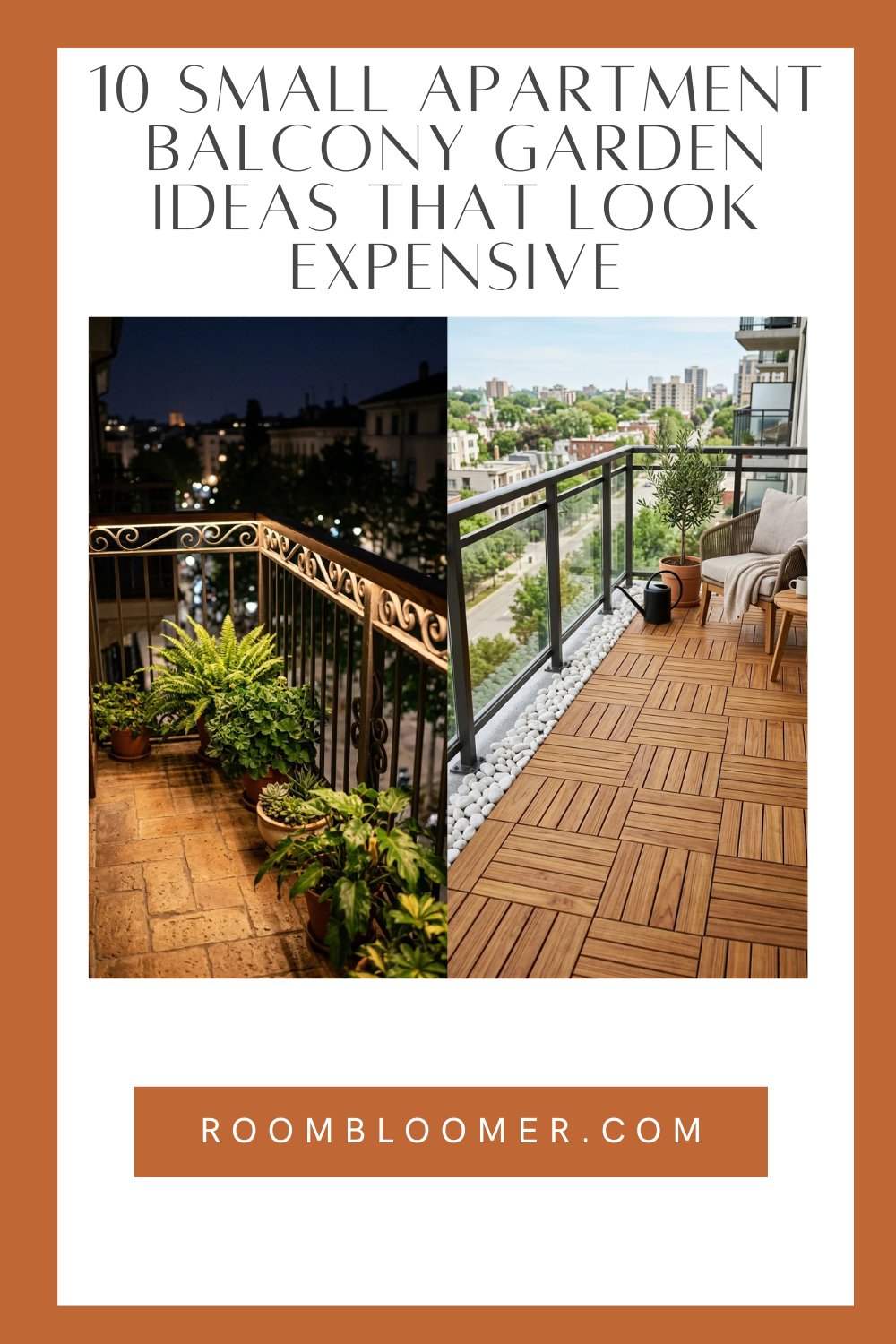
Turning a cramped concrete slab into a high-end outdoor sanctuary is less about the square footage and more about the strategy. You don’t need a sprawling estate to capture the essence of a luxury penthouse terrace. By focusing on texture, scale, and intentional design, even the smallest balcony can exude an air of sophisticated opulence. Here are ten ways to transform your small apartment balcony into a garden that looks and feels incredibly expensive.
1. Vertical Greenery
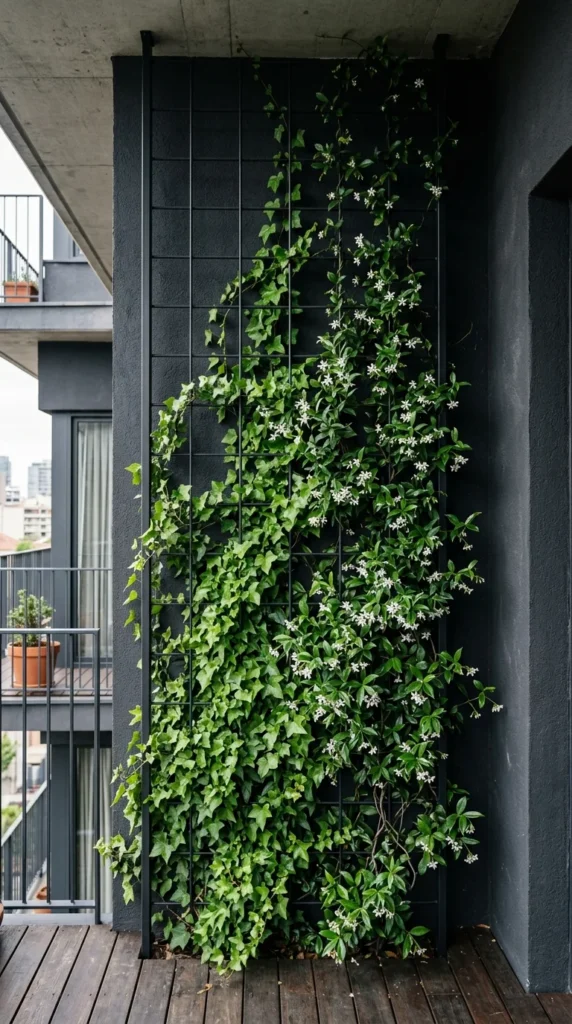
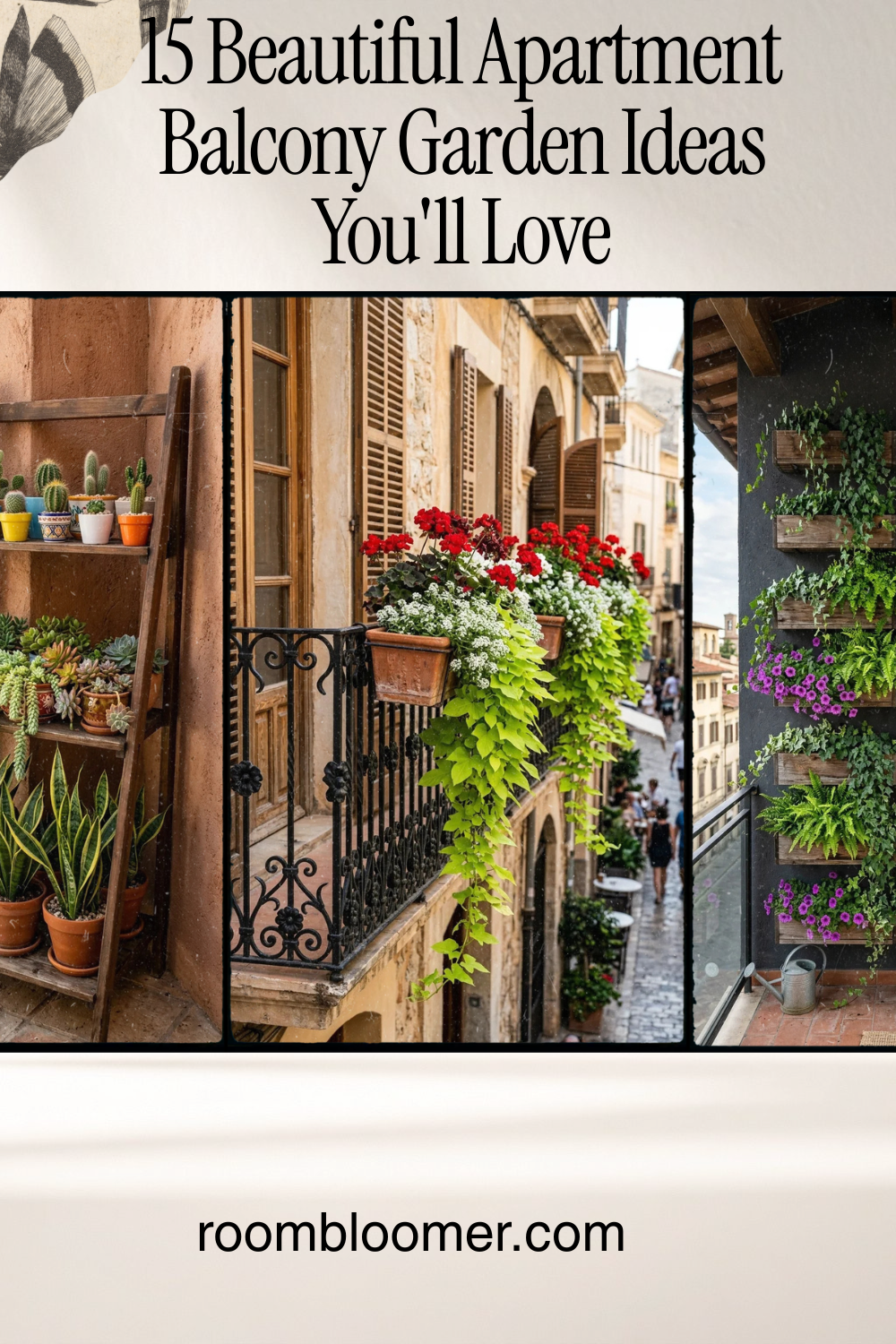
The most common mistake in small spaces is cluttering the floor. High-end gardens utilize vertical real estate to create a “living wall” effect. Instead of scattered pots, install a uniform trellis or a modular green wall system. When you cover a wall in lush foliage, it creates a sense of seclusion and luxury that mimics a private courtyard. Use fast-growing climbers like Star Jasmine or English Ivy to create a wall of scent and texture. The key to making this look “expensive” is to hide the mounting hardware and ensure the greenery is dense enough to look like a natural extension of the building.
2. Monochrome Pots
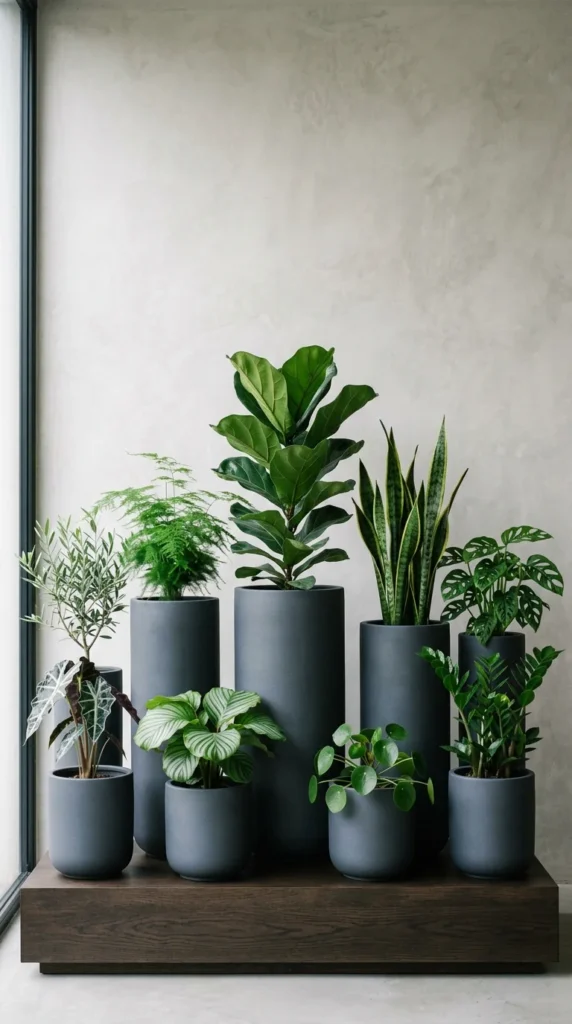
Visual clutter is the enemy of luxury. If you have a collection of mismatched plastic and terracotta pots, the space can quickly look chaotic. To elevate the aesthetic, switch to a monochromatic color palette for your containers. Whether you choose matte black, stone gray, or crisp white, keeping the color uniform allows the plants themselves to be the stars. Vary the heights and shapes of the pots to add architectural interest, but keep the material and finish consistent. This creates a curated, gallery-like feel that mimics professional landscaping.
3. Decking Tiles
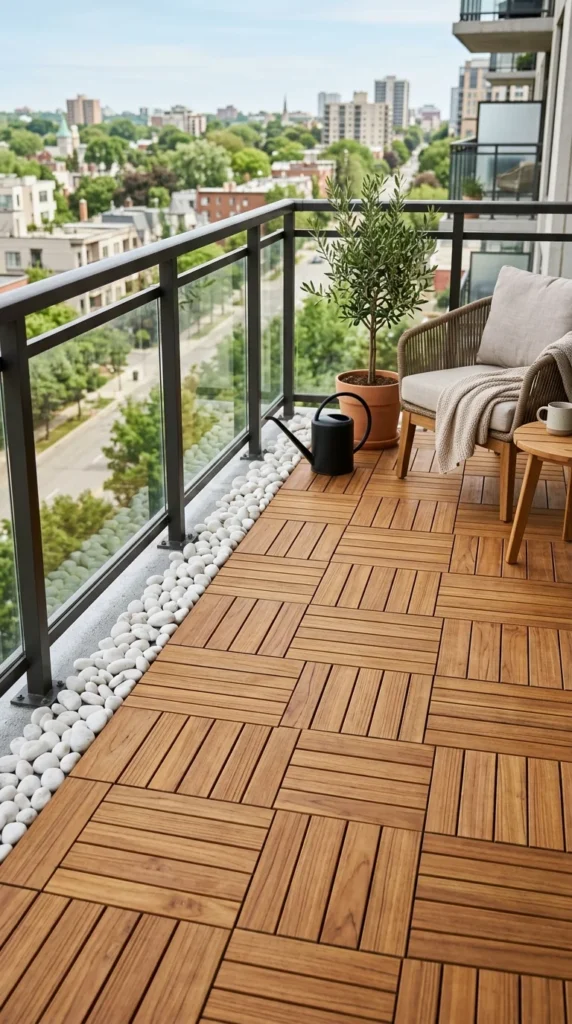
Nothing screams “basic apartment” like cold, gray concrete underfoot. One of the fastest ways to make a balcony look like a million dollars is to install interlocking wooden or composite decking tiles. They provide a warm, organic foundation that instantly softens the space. For a truly high-end finish, leave a two-inch gap between the edge of the tiles and the balcony railing, and fill that gap with smooth white river stones or black polished pebbles. This “framed” look is a hallmark of luxury minimalist design.
4. Statement Trees
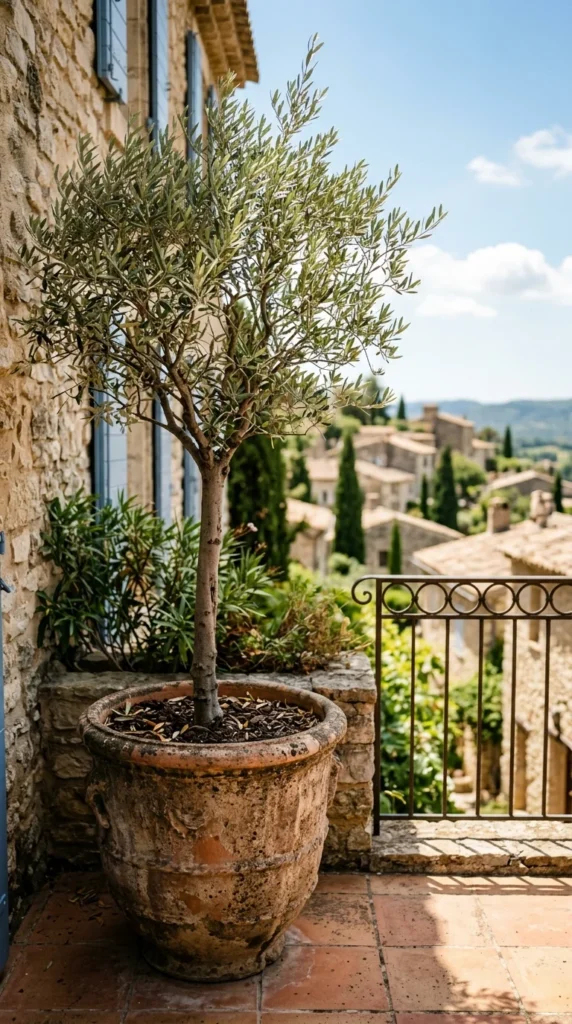
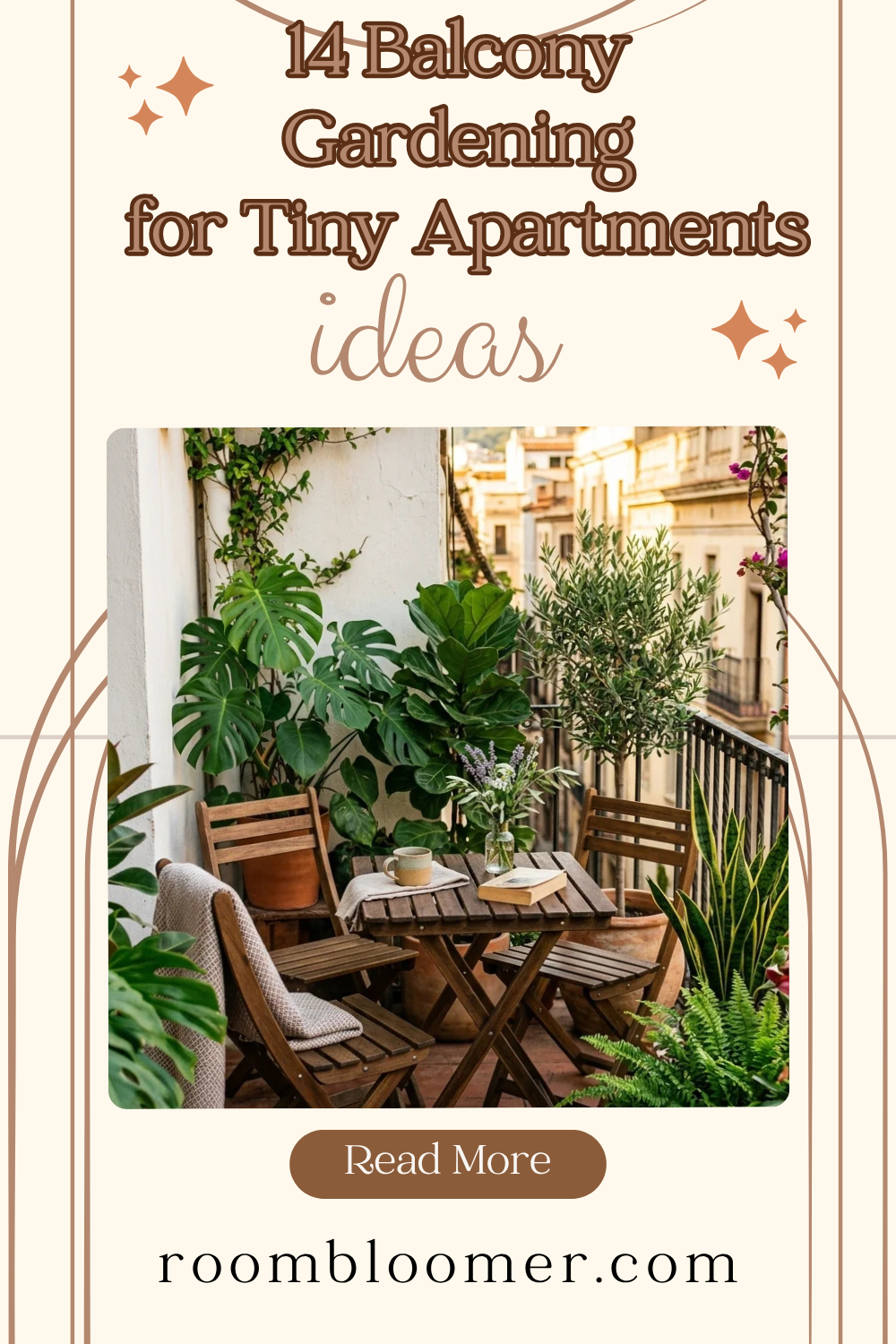
Instead of twenty small plants, opt for one or two “hero” plants. A single, well-placed Mediterranean Olive tree, a sculptural Fiddle Leaf Fig, or a Japanese Maple creates an instant focal point. Large-scale plants suggest a level of permanence and investment that smaller annuals simply can’t match. When you place a tall tree in a small space, it draws the eye upward, making the balcony feel larger and more like a curated garden room. Ensure the pot is oversized; a large plant in a small pot looks cramped, while a large plant in a massive, high-quality vessel looks intentional and expensive.
5. Integrated Lighting
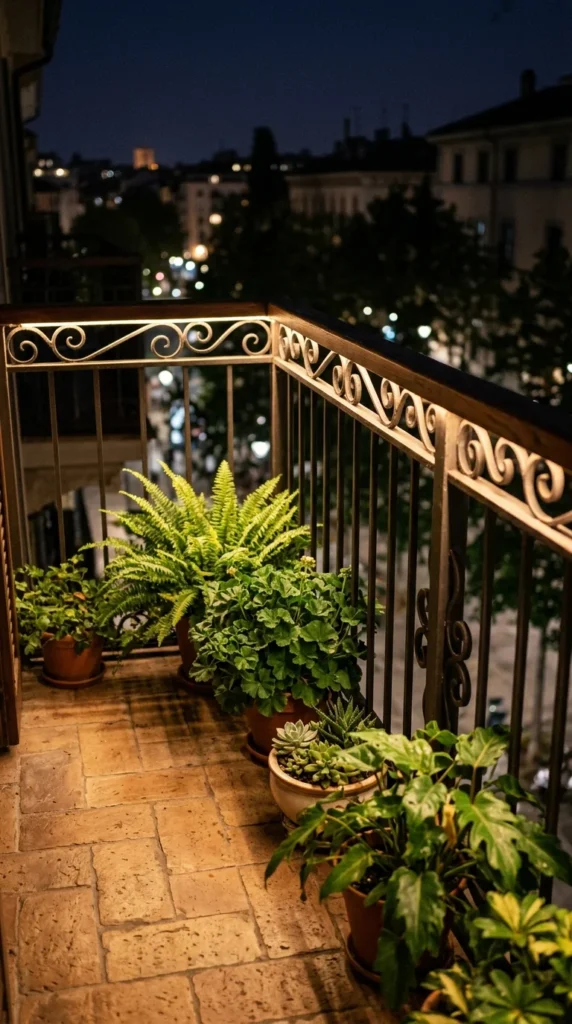
Luxury is often defined by ambiance, and nothing creates ambiance better than layered lighting. Move away from harsh overhead lights or cheap plastic solar stakes. Instead, use a mix of “up-lighting” (small spotlights aimed at the base of your plants to cast shadows on the walls) and “task lighting” (like a high-quality, rechargeable designer lantern). If you use string lights, opt for vintage-style Edison bulbs with warm amber tones, and ensure they are hung tautly or integrated into the architecture rather than draped haphazardly.
6. Symmetrical Layouts
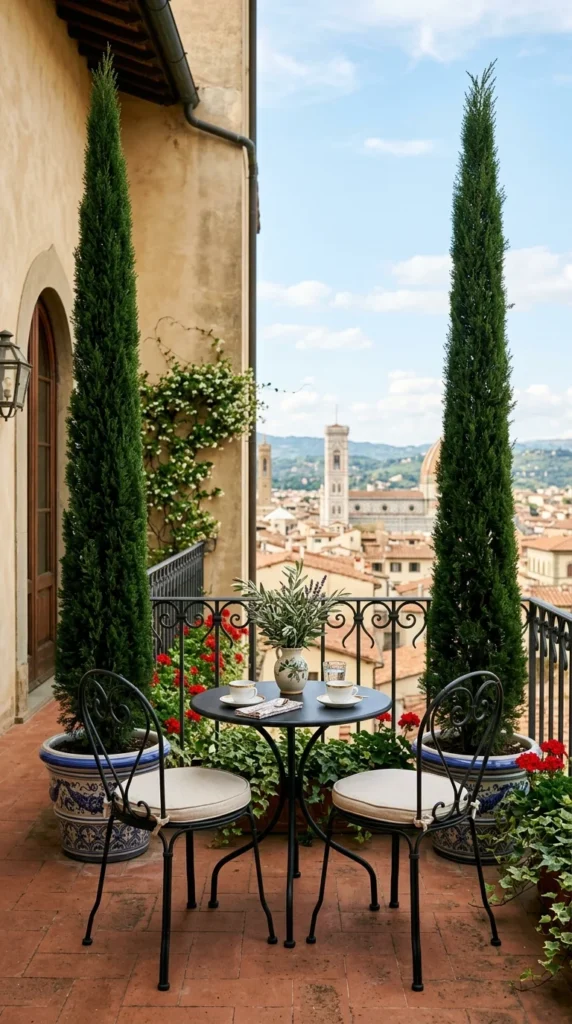
Symmetry is a classic design principle used in high-end hotels and estate gardens because it communicates order and sophistication. On a small balcony, try to mirror your elements. If you have a chair on one side, place a similar weight of greenery on the other. Flanking your balcony door with two identical planters creates a grand entrance. This “formal garden” approach makes a small space feel more disciplined and designed, moving away from the “collection of plants” look and toward an “outdoor room” philosophy.
7. Glass Accents
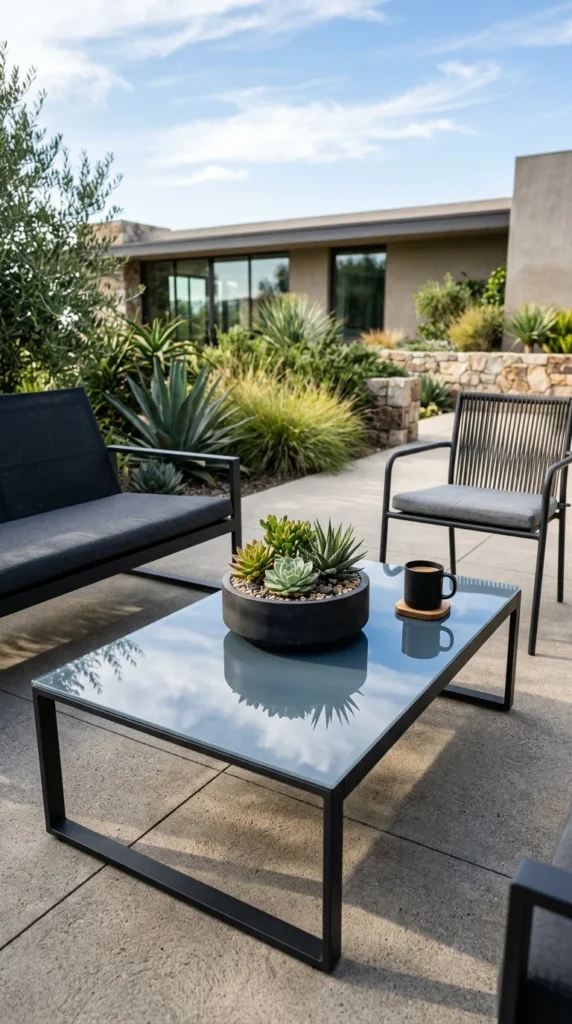
To keep a small balcony feeling open and airy, incorporate transparent or reflective materials. Glass-topped tables or clear “ghost” chairs allow the eye to travel through the furniture, making the space feel less crowded. Additionally, the way glass catches the light—especially during the “golden hour”—adds a shimmering, high-end quality to the garden. Pair these with metallic accents like brass or copper watering cans and plant misters left out as decorative objects.
8. Sculptural Succulents
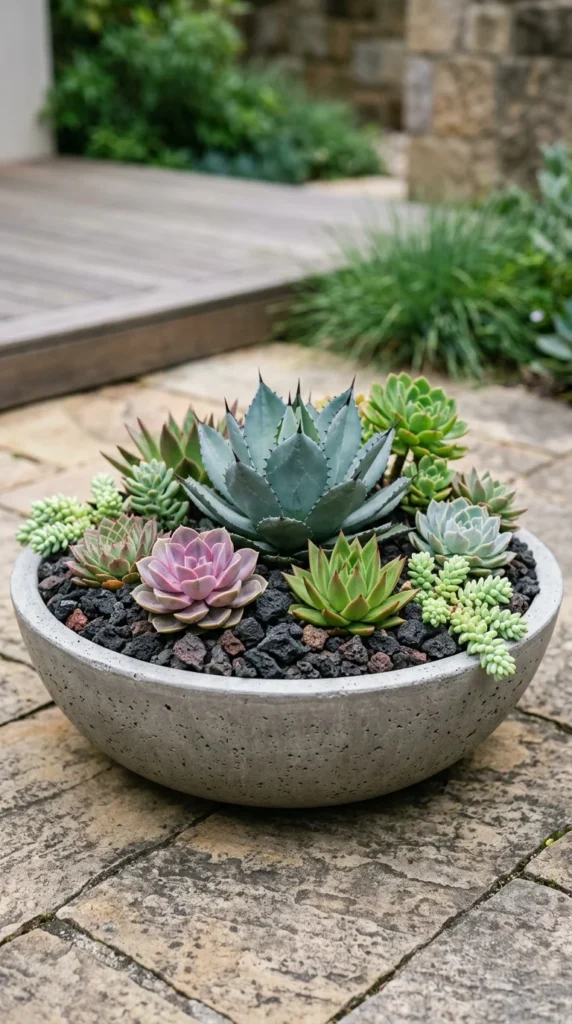
Succulents are the jewelry of the plant world. Because they have such defined, geometric shapes, they look like living sculptures. To make them look expensive, group them in a large, low-profile “bowl” planter rather than individual tiny pots. Cover the soil with a layer of professional top-dressing, such as fine gravel, crushed glass, or moss. This clean, finished look is what separates a hobbyist’s collection from a designer’s installation.
9. Textile Layering
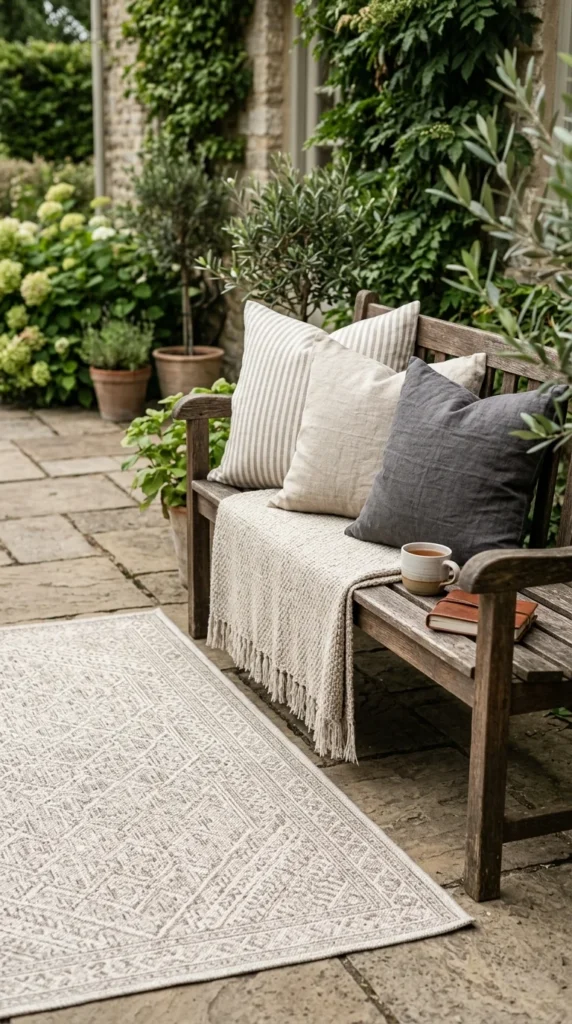
To bridge the gap between “outside” and “luxury living,” you must treat the balcony like an interior room. An outdoor rug is essential; it defines the space and provides comfort underfoot. Look for high-performance fabrics like Sunbrella that have the texture of indoor wool or linen. Avoid bright, “beachy” patterns and stick to sophisticated neutrals or deep navy. Layering cushions and a high-quality throw blanket over your seating makes the space look inviting and expensive, suggesting that the balcony is a true extension of the home’s interior.
10. Hidden Irrigation
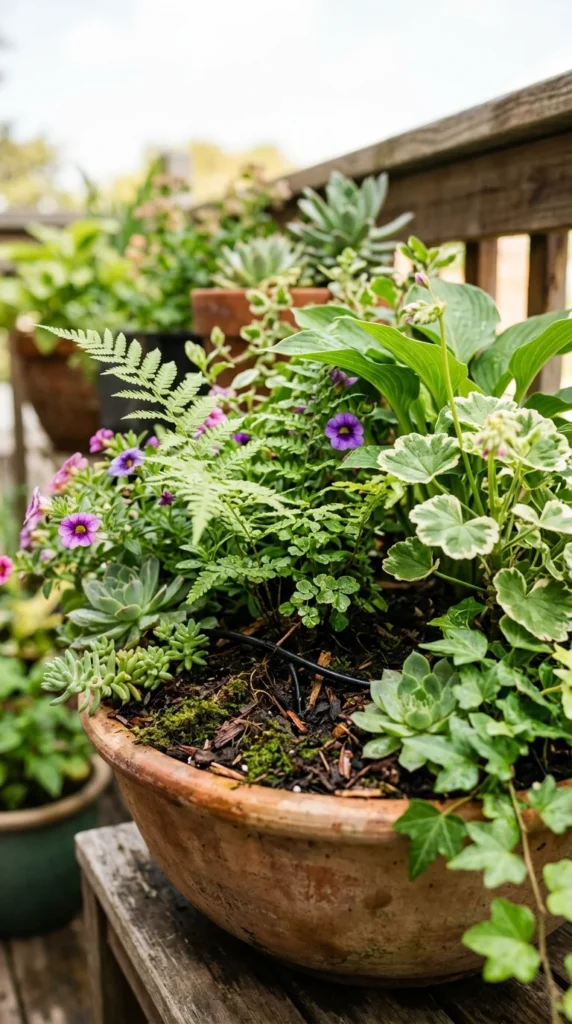
Nothing ruins the luxury aesthetic faster than dying, yellowing plants or a clutter of plastic watering cans. Professional gardens always look “perfect” because they are consistently hydrated. You can buy small-scale, automated drip irrigation kits for balconies that hook up to a standard faucet or even a hidden water reservoir. Keeping your plants in peak health—free of withered leaves and drooping stems—is the ultimate way to maintain an expensive look. When every leaf is shiny and turgid, the garden radiates vitality and high-end care.