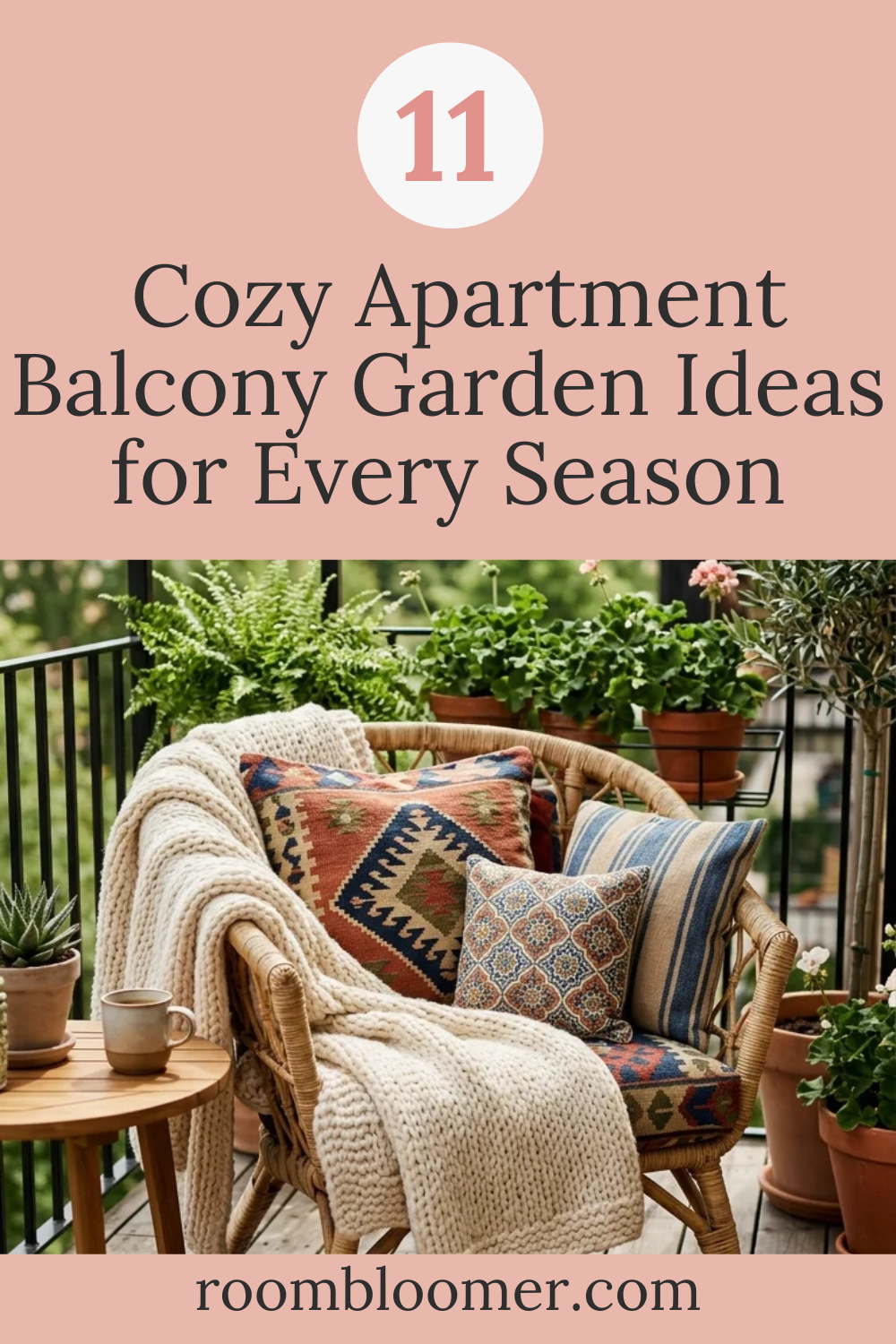
Transforming a small apartment balcony into a thriving sanctuary is one of the most rewarding urban projects you can undertake. Regardless of square footage, your balcony offers a unique opportunity to connect with nature and create a private escape from the hustle of city life. A “cozy” balcony isn’t just about aesthetics; it’s about choosing the right plants and decor that thrive in your micro-climate throughout the changing seasons.
Whether you are a seasoned gardener or a beginner with a few pots, these eleven ideas will help you cultivate a space that feels like an outdoor living room. From maximizing vertical space to selecting weather-resistant textures, here is how to curate your perfect four-season balcony garden.
1. Vertical Walls
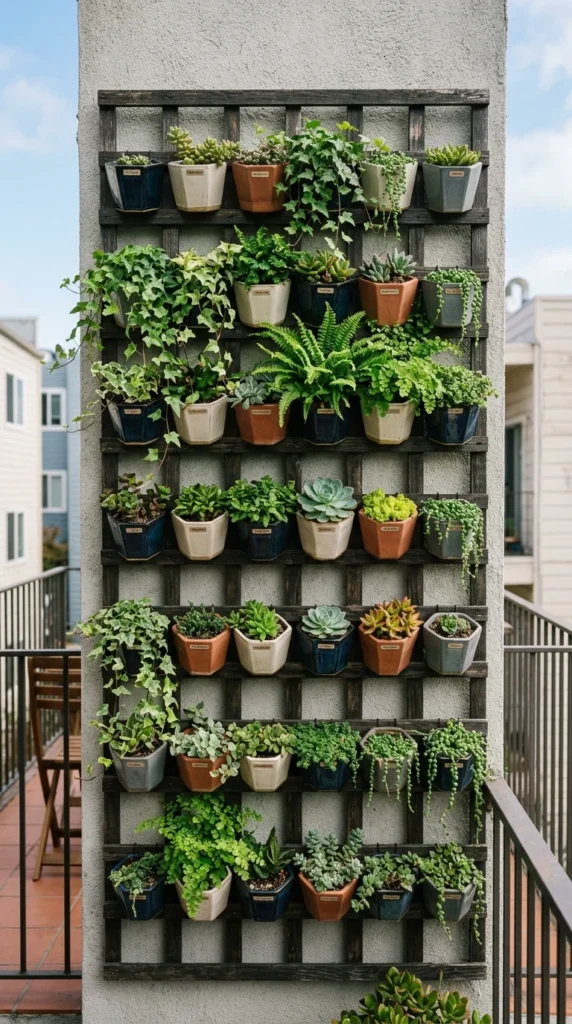
When floor space is at a premium, the only way to go is up. Vertical gardening is the gold standard for apartment dwellers. By utilizing wall-mounted planters, wooden lattices, or even repurposed pallets, you can create a “living wall” that provides privacy and a massive dose of greenery without sacrificing your walking space.
To make this work year-round, choose a mix of perennial climbers and seasonal accents. In the spring and summer, let jasmine or clematis climb the structure for fragrance and color. As autumn approaches, you can tuck in ornamental cabbages or ivy that remains green even when the temperature drops. The vertical structure also acts as a natural windbreak, protecting more delicate plants on your balcony floor from harsh gusts.
2. Ambient Lighting
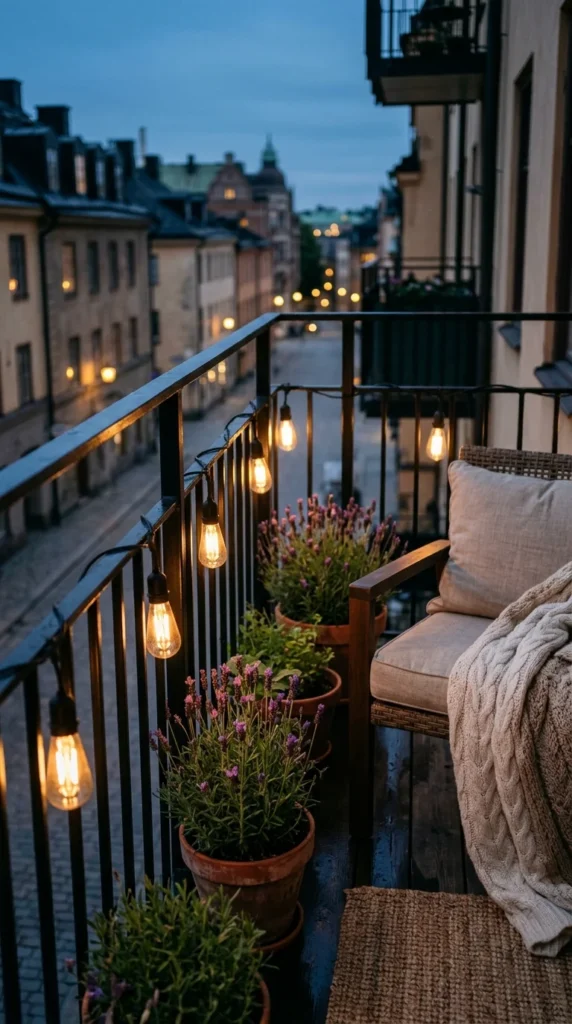
Atmosphere is everything when it comes to coziness. Lighting is the bridge that allows you to enjoy your balcony garden long after the sun goes down. For a garden-focused feel, avoid harsh overhead lights. Instead, opt for layers of soft illumination.
String lights (fairy lights or Edison bulbs) draped along the railing create a festive, magical boundary. Solar-powered stakes tucked into large planters can highlight the foliage of your favorite shrubs from below, creating dramatic shadows and depth. For the colder months, battery-operated LED candles placed inside glass lanterns provide a flickering, warm glow that mimics a fireplace, making the space feel inviting even when viewed through a window from the warmth of your living room.
3. Herb Stations
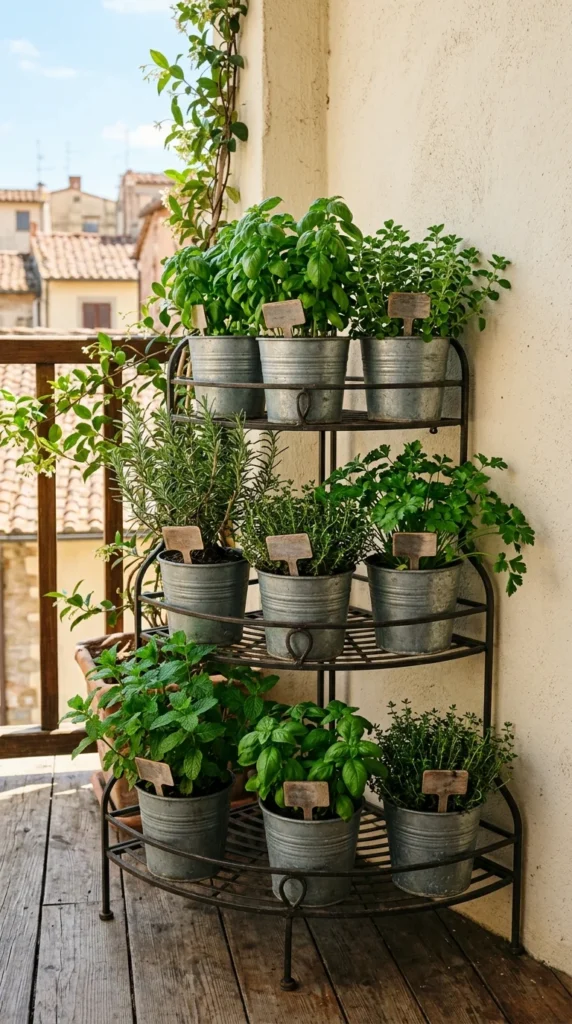
A balcony garden should be as functional as it is beautiful. An herb station is the perfect entry point for seasonal gardening. Most herbs are remarkably resilient and can be grown in small containers.
During the peak of summer, Mediterranean herbs like rosemary, thyme, and oregano thrive in the heat and intense sun typical of many balconies. As the season shifts to fall, you can plant cooler-weather herbs like parsley, cilantro, and chives. To keep the “cozy” theme, use uniform pots—perhaps in a rustic terracotta or a sleek matte black—to create a sense of visual order. The scent of fresh herbs floating through your balcony door adds a sensory layer to your home that no store-bought air freshener can match.
4. Layered Textiles
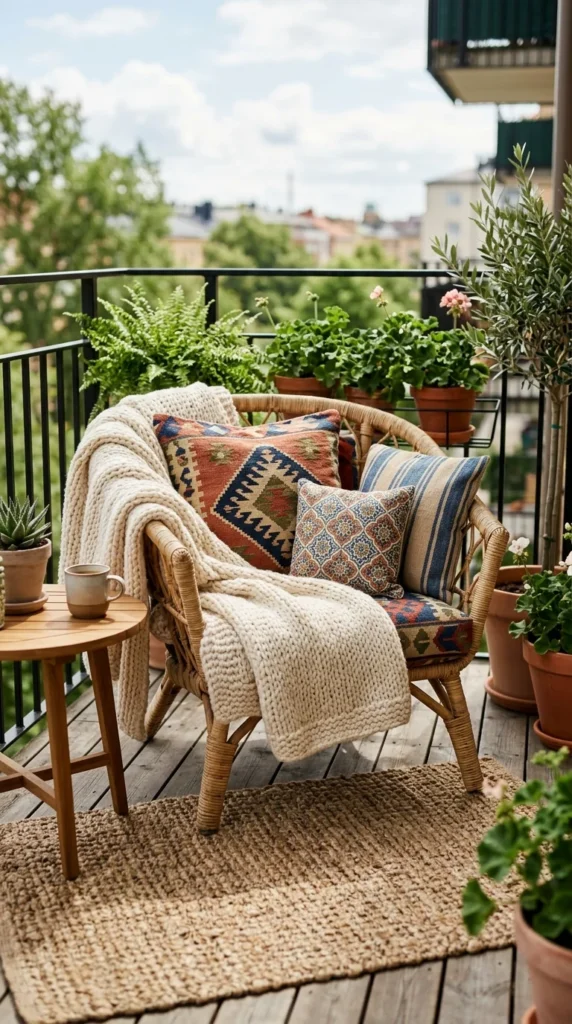
To make a garden feel like a room, you must introduce indoor comforts. Textiles are the secret weapon for seasonal transitions. Start with a base of a weather-resistant outdoor rug made from recycled plastic or jute; this provides warmth underfoot and defines the “living” area of the balcony.
In the spring, use light linens and bright floral patterns for your cushions. As the air turns crisp in the autumn, swap them for chunky knit throws and faux-fur pillows. These elements encourage you to spend more time outside, sipping coffee or reading a book surrounded by your plants. Look for “outdoor-rated” fabrics that resist UV fading and mold, ensuring your cozy sanctuary stays fresh through rain and shine.
5. Privacy Screens
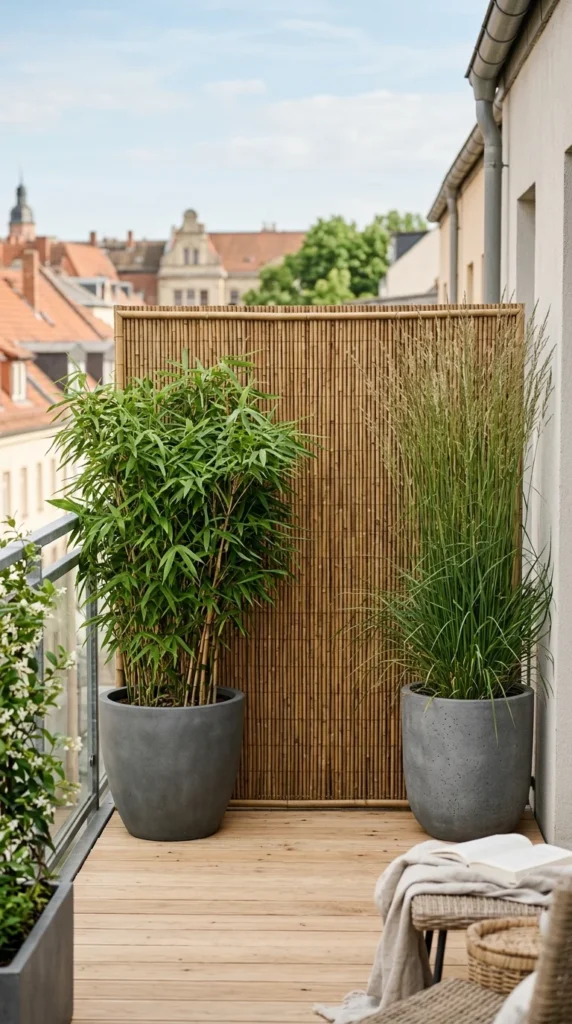
Privacy is a luxury in apartment living. Creating a “green screen” allows you to feel truly secluded in your garden. Instead of using plastic dividers, use nature to block the view of neighbors or the street.
Tall, slender plants like bamboo (in deep pots to prevent spreading), ornamental grasses, or cedar shrubs are excellent year-round choices. They provide a dense wall of foliage that also acts as a sound buffer against city noise. If you prefer something more decorative, a wooden trellis draped in climbing ivy or Virginia creeper provides a classic, romantic look. In the winter, the skeletal structure of the vines against the wood still offers a sense of enclosure and architectural interest.
6. Railing Planters
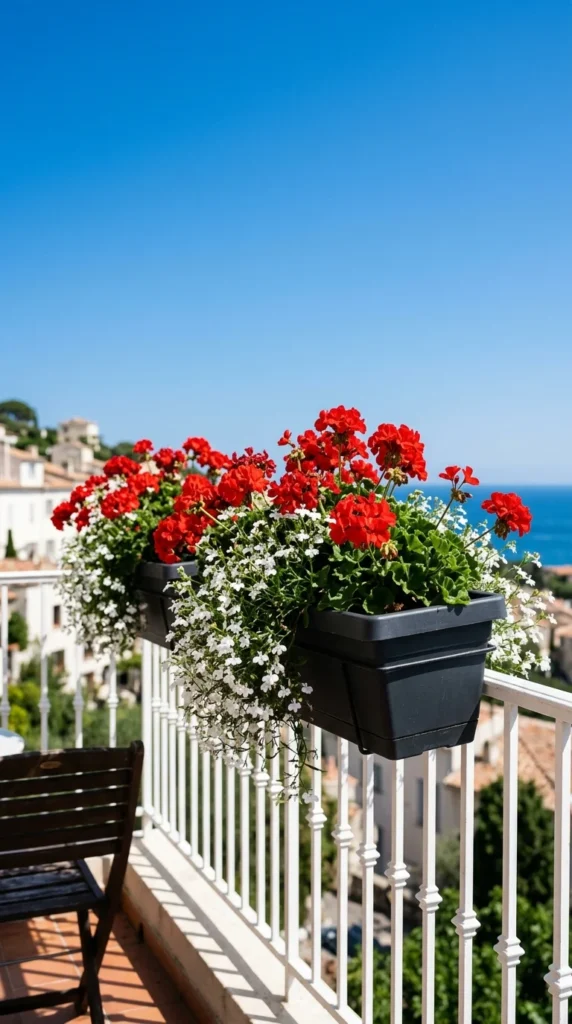
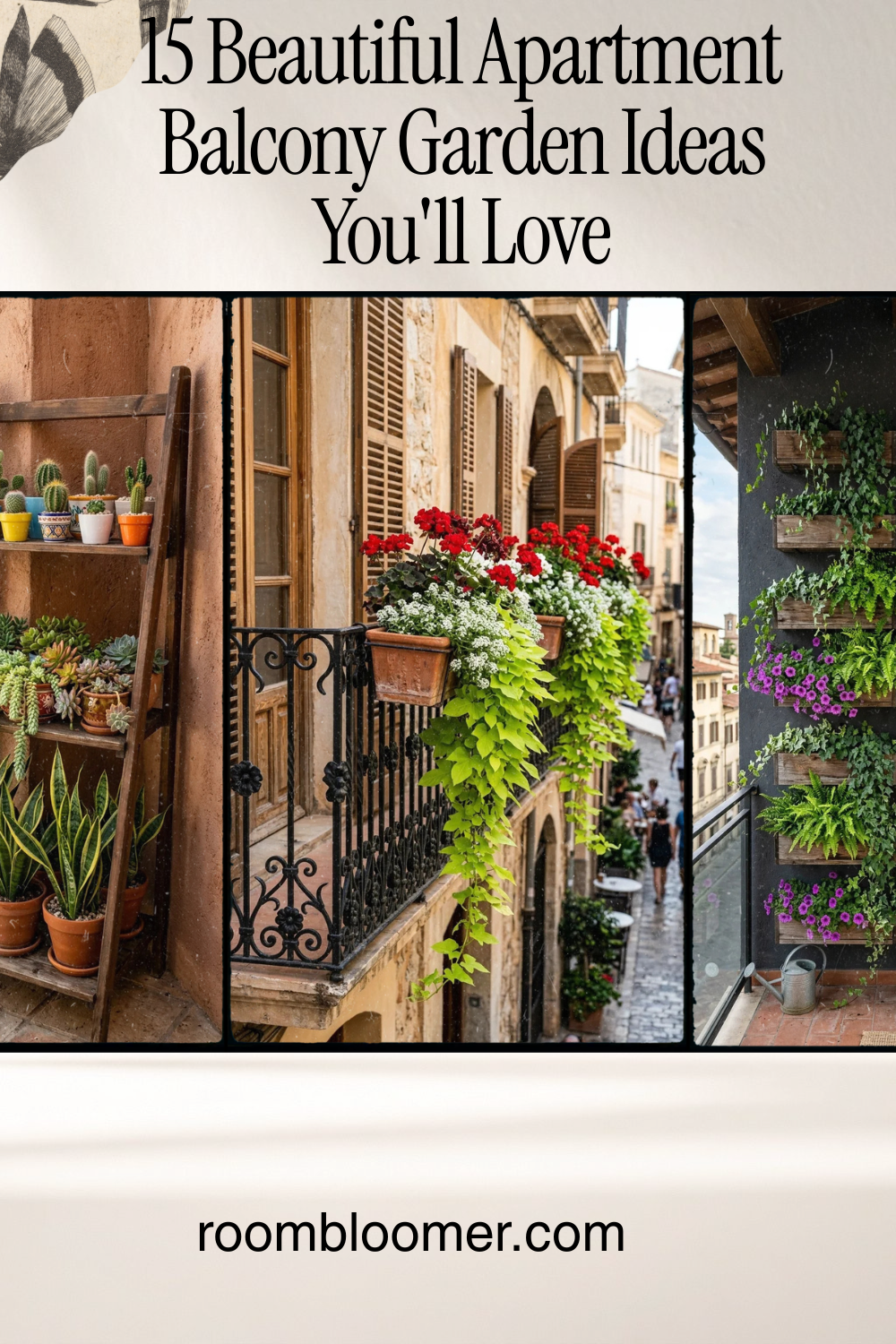
Railing planters are essential for adding color at eye level. They utilize the “dead space” of your balcony’s perimeter, allowing you to surround yourself with blooms without taking up an inch of floor space.
For a dynamic seasonal look, treat these planters like a rotating gallery. In spring, fill them with tulips and daffodils. In summer, transition to heat-loving petunias or “Million Bells” that spill over the edges in a waterfall of color. For the autumn and winter, replace the flowers with a combination of heather, silver-leafed cineraria, and miniature evergreens. This ensures that the view from your balcony is always vibrant, no matter the month.
7. Bistro Sets
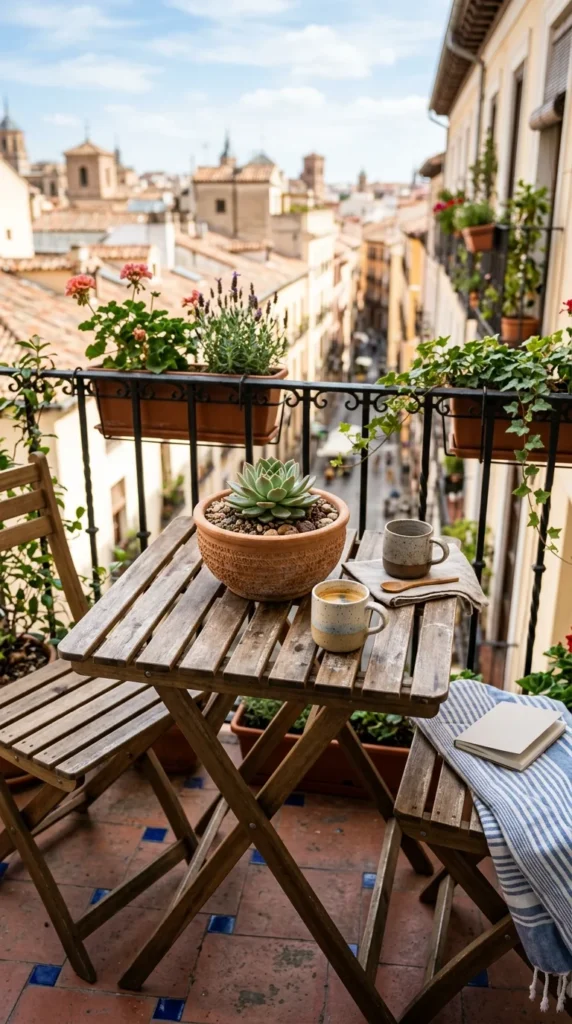
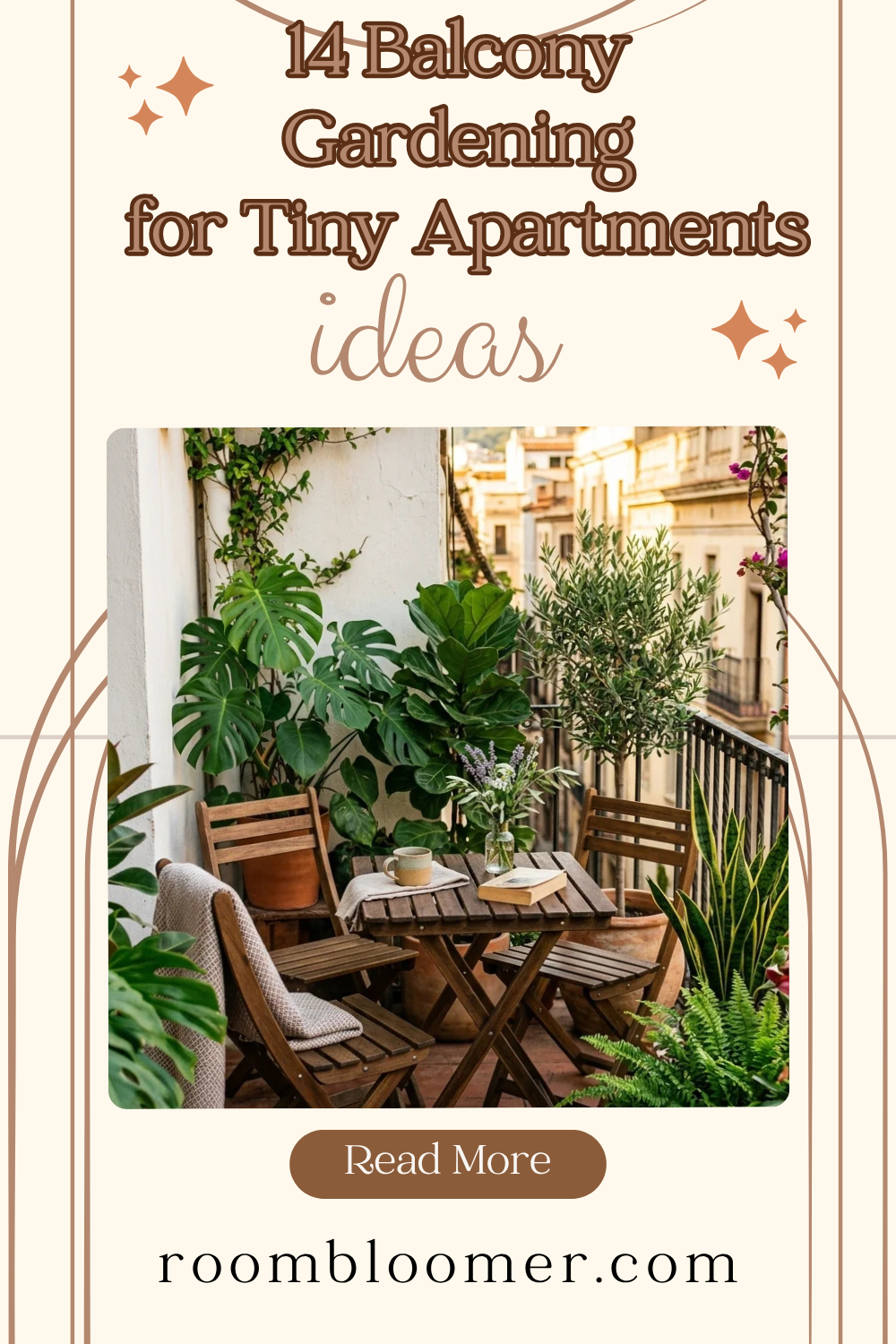
Every cozy garden needs a place to sit. A classic bistro set—usually consisting of a small round table and two foldable chairs—is the perfect scale for most apartment balconies. Because they are often made of powder-coated metal or treated wood, they can withstand the elements.
The “cozy” factor comes from how you style the set. A small potted plant as a centerpiece and a couple of seat cushions turn a simple furniture set into a destination. If your balcony is exceptionally small, look for “half-tables” that bolt directly onto the railing, providing a surface for your drink while leaving the floor entirely open for more plants.
8. Hanging Baskets
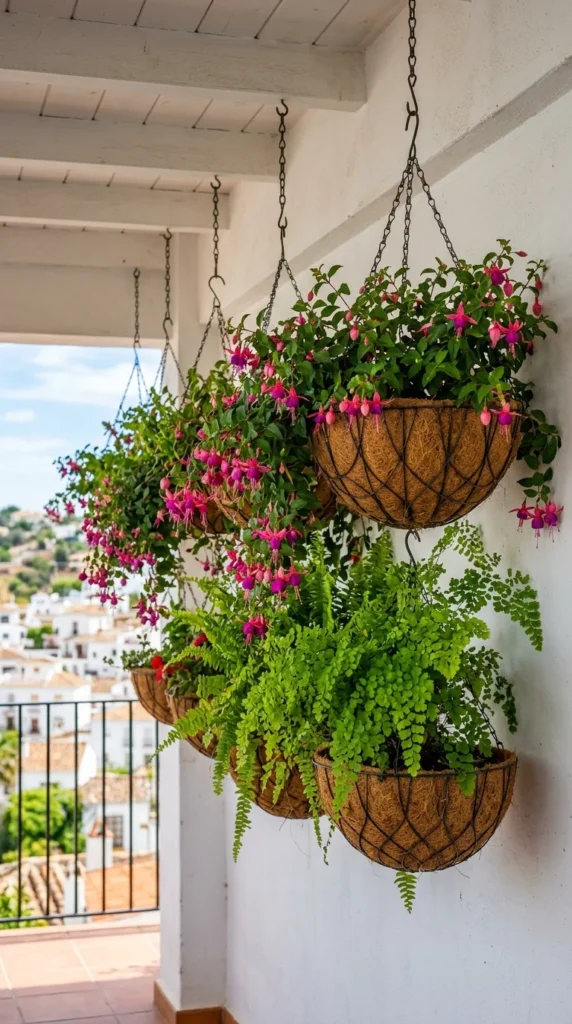
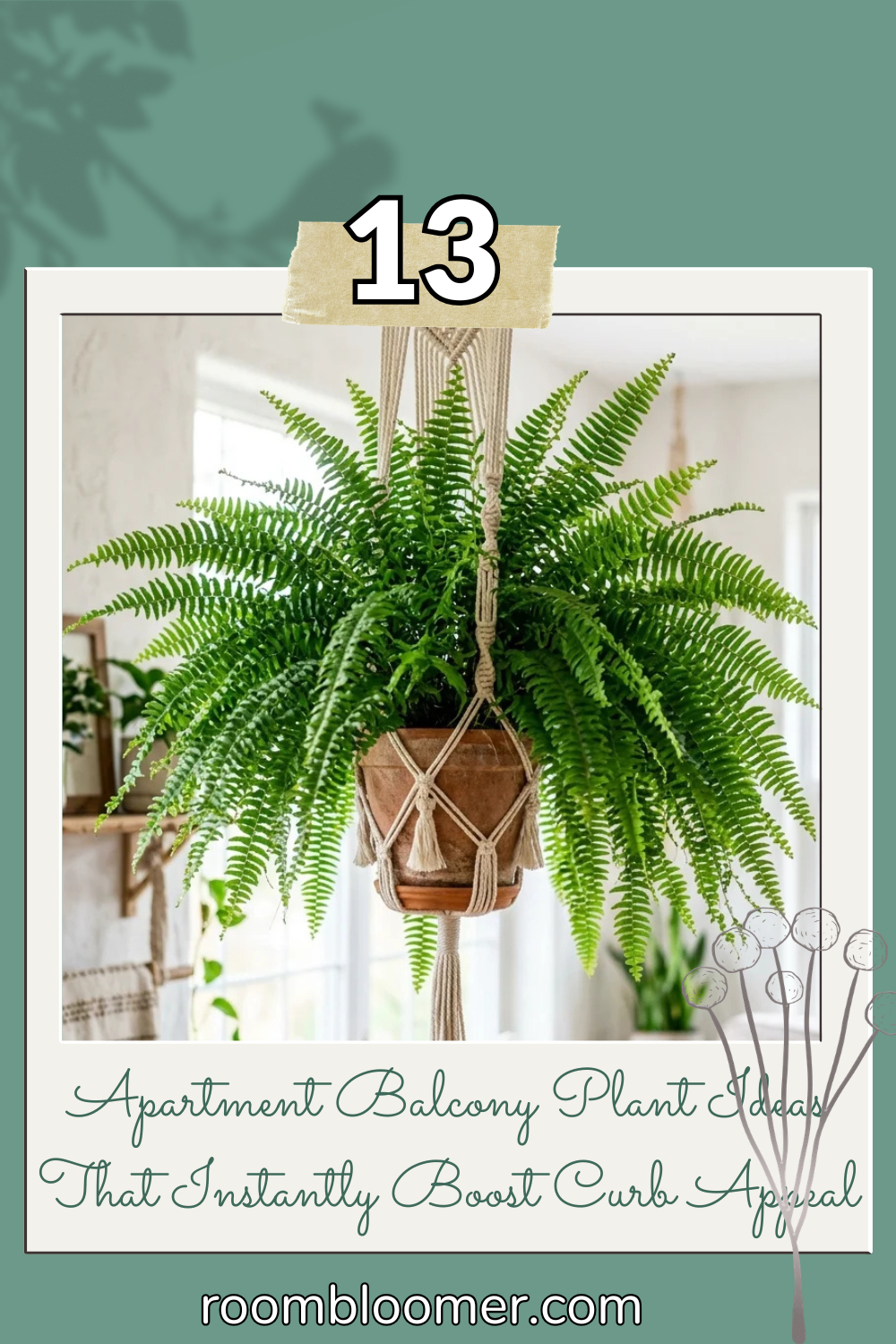
To achieve a truly immersive garden feel, you need greenery at every level. Hanging baskets draw the eye upward and create a canopy effect. This is particularly effective on balconies with a roof or an overhanging neighbor’s balcony.
Choose plants that have a “weeping” or “trailing” habit. Spider plants, Boston ferns, and trailing begonias are excellent for shaded balconies. If your balcony gets blasted with sun, succulents like “String of Pearls” or “Donkey’s Tail” are hardy and visually striking. In the winter, you can swap the plants for lanterns or bird feeders to keep the space active and interesting to look at.
9. Solar Lanterns
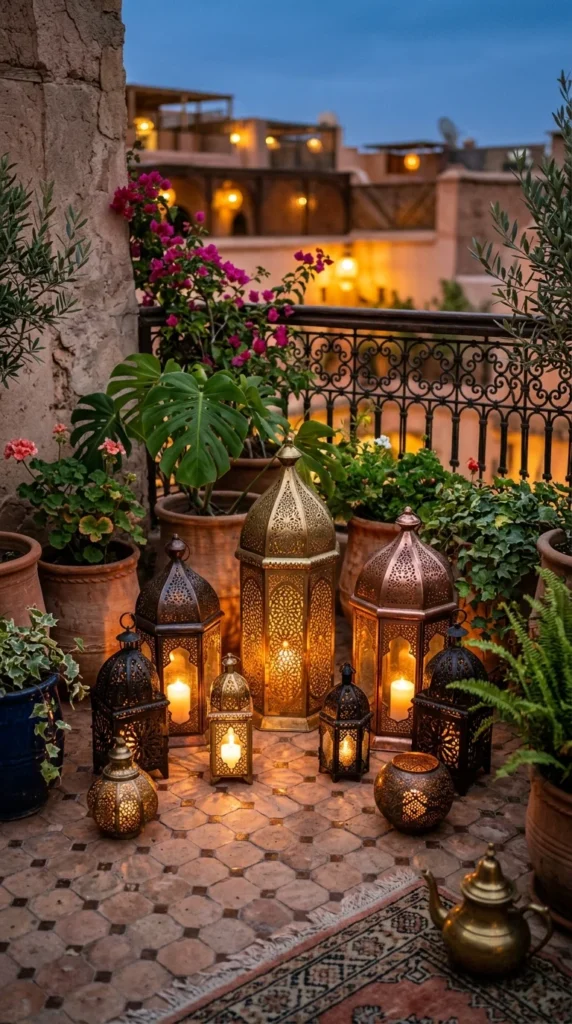
Sustainable and stylish, solar lanterns are the ultimate low-maintenance garden accessory. They charge during the day and automatically flicker to life at dusk, requiring no outdoor outlets or messy extension cords.
For a cozy bohemian vibe, choose lanterns with intricate cut-outs that cast beautiful shadows across your balcony floor. Placing them at different heights—some on the floor, some on the table, and some hanging—creates a layered lighting scheme that feels sophisticated. During the winter, when the sun is less intense, many modern solar lights still hold enough charge to provide a few hours of evening glow, brightening up those long, dark nights.
10. Seasonal Containers
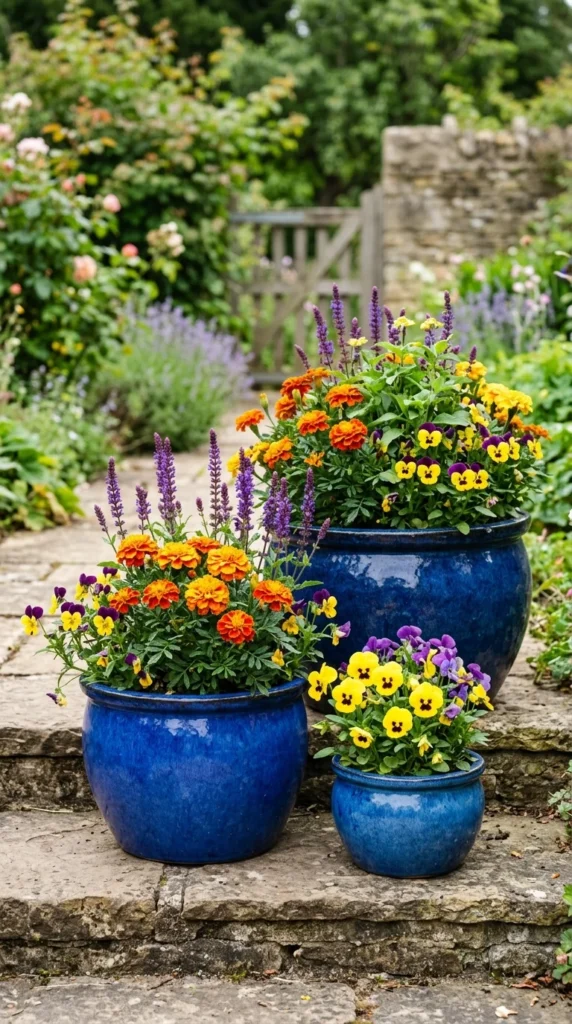
The key to a year-round garden is the “thriller, filler, spiller” method in your containers. This design principle ensures your pots always look professional and full.
- The Thriller: A tall, central plant (like a Dracaena or a small ornamental tree).
- The Filler: Mounded plants that fill the mid-section (like Marigolds or Zinnias).
- The Spiller: Plants that hang over the edge (like Creeping Jenny or Sweet Potato Vine).
As the seasons change, you don’t have to replace the whole pot. You can simply swap out the “filler” and “spiller” for seasonal varieties. For example, swap summer petunias for autumn mums, then replace those with winter pine boughs and red berries. This keeps your balcony garden looking intentional and fresh without requiring a total overhaul every three months.
11. Water Features
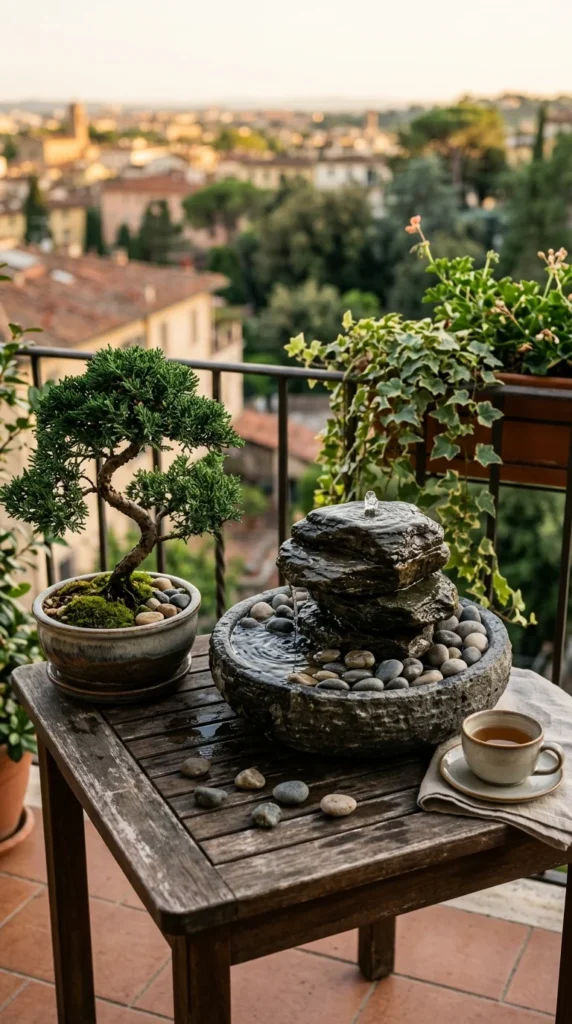
Nothing enhances a sense of peace quite like the sound of running water. Even on a tiny balcony, a small tabletop fountain can mask the sound of traffic and create a tranquil micro-environment.
Modern balcony fountains are often “plug-and-play,” requiring only a standard outlet and a small amount of water. The movement of the water also helps to humidify the air, which can be beneficial for your other plants during hot, dry summer days. In the winter, most small fountains should be drained and brought inside, but they can be replaced on your outdoor table with a bowl of decorative pinecones or a large hurricane candle to maintain the focal point.
Tips for Year-Round Balcony Success
To keep your cozy sanctuary thriving, remember a few apartment-specific rules:
- Weight Limits: Be mindful of the weight of large pots and heavy soil. Use lightweight fiberglass or plastic pots that mimic the look of stone or ceramic.
- Drainage: Ensure your pots have saucers to catch excess water, preventing it from dripping onto your neighbors below.
- Wind Protection: High-rise balconies can be very windy. Use heavy-duty ties to secure furniture and choose sturdy plants like ornamental grasses that dance in the wind rather than snapping.
- Watering: Pots dry out much faster than garden beds. Check your plants daily in the summer, and reduce watering in the winter when growth slows down.
By combining lush greenery with soft textures and thoughtful lighting, your apartment balcony can become your favorite “room” in the house, regardless of the season.