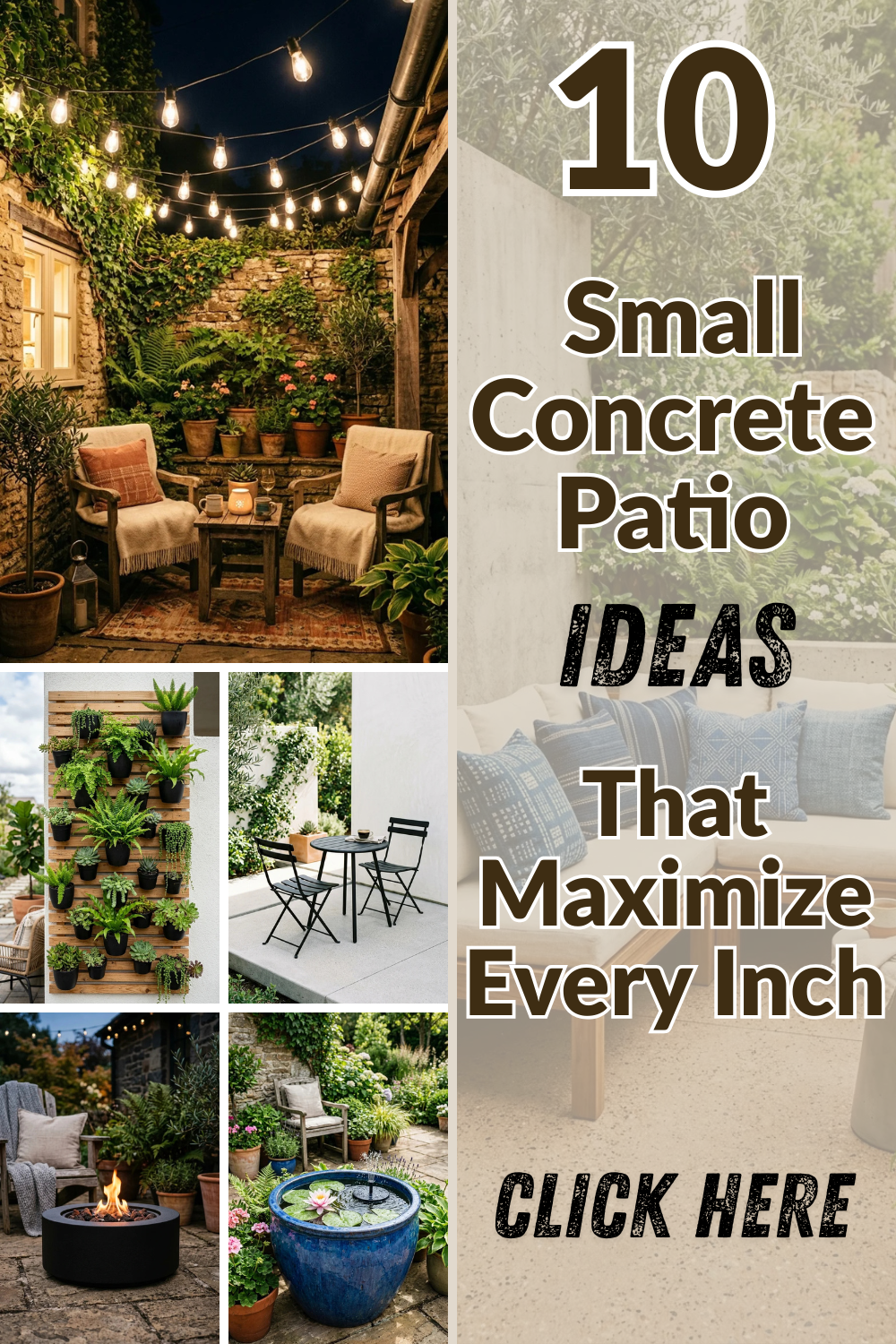
A small concrete patio is often viewed as a design limitation, but in reality, it is a blank canvas with immense potential. Whether you are dealing with a tiny urban balcony or a compact backyard slab, the goal is to balance functionality with aesthetics. You don’t need a sprawling estate to create a sanctuary; you just need a strategy. By focusing on vertical space, multi-functional elements, and visual textures, you can transform a drab grey rectangle into a vibrant outdoor retreat.
Here are ten innovative ideas to help you maximize every square inch of your small concrete patio.
1. Vertical Gardens
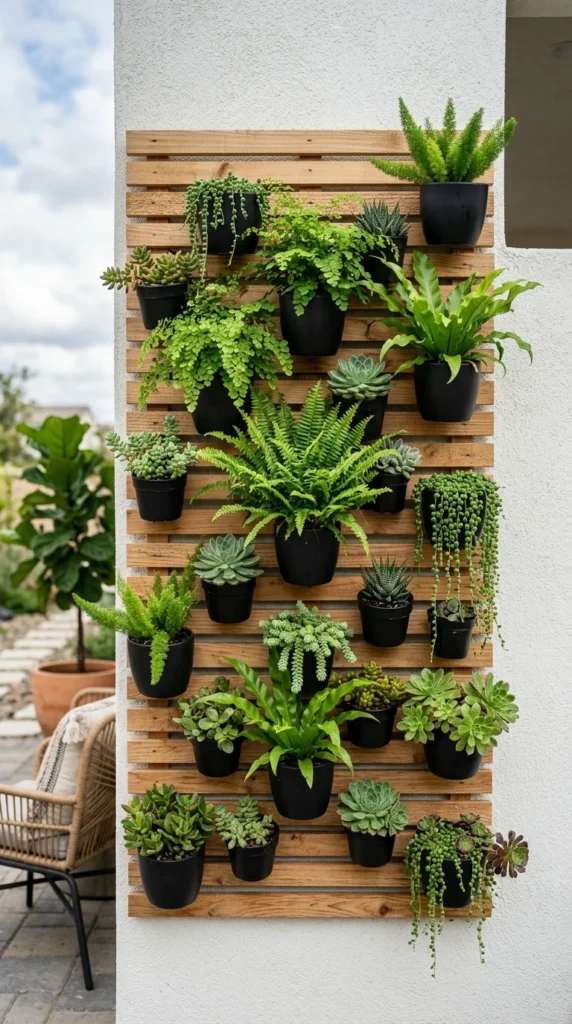
When floor space is at a premium, the only way to go is up. A vertical garden allows you to introduce lush greenery without sacrificing the footprint needed for seating or a table. You can use a variety of structures to achieve this, from wall-mounted planters to repurposed wooden pallets.
- Trellis Systems: Install a metal or wooden trellis against a wall and grow climbing vines like clematis or jasmine. Not only does this add greenery, but it also provides a natural fragrance.
- Hanging Planters: Utilize the overhead space by hanging baskets from the eaves of your house or a pergola. This draws the eye upward, making the patio feel larger than it actually is.
- Pocket Planters: Fabric wall pockets are an affordable way to create a “living wall” of herbs or strawberries, perfect for those who want a garden that is both beautiful and edible.
2. Built-in Benches
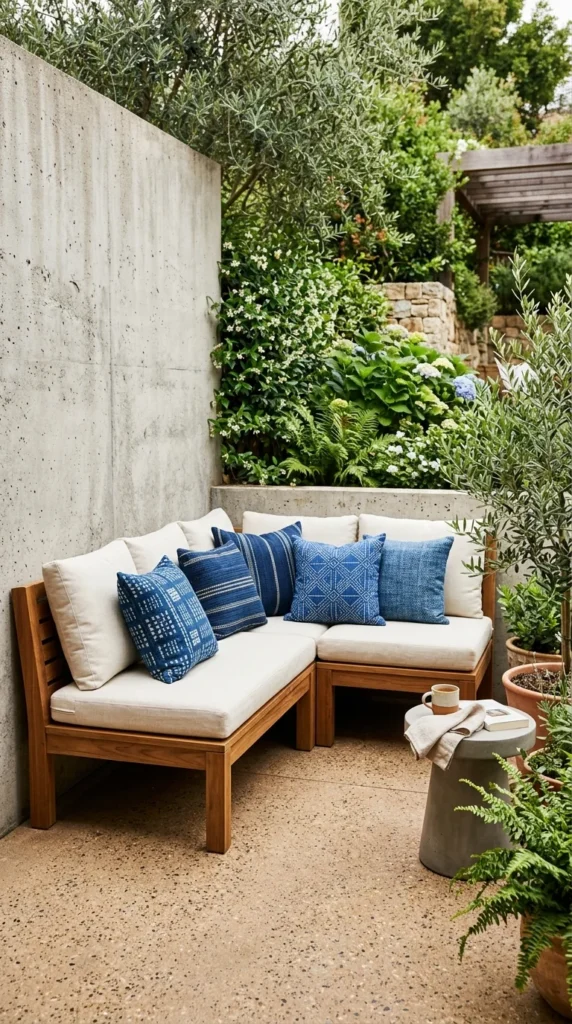
Standard patio furniture can be bulky and awkward in tight spaces. Built-in seating, however, utilizes the perimeter of your patio, leaving the center open for movement. By building benches directly into a corner or along a wall, you eliminate the “dead space” that typically exists behind standalone chairs.
- Corner Optimization: An L-shaped bench tucked into a corner provides the most seating for the least amount of square footage.
- Integrated Storage: Design your built-in benches with hinged tops. This creates a hidden compartment to store outdoor cushions, gardening tools, or firewood, keeping your patio clutter-free.
- Material Contrast: Use warm wood like cedar or teak for the seating to contrast against the cool, hard surface of the concrete.
3. Stamped Textures
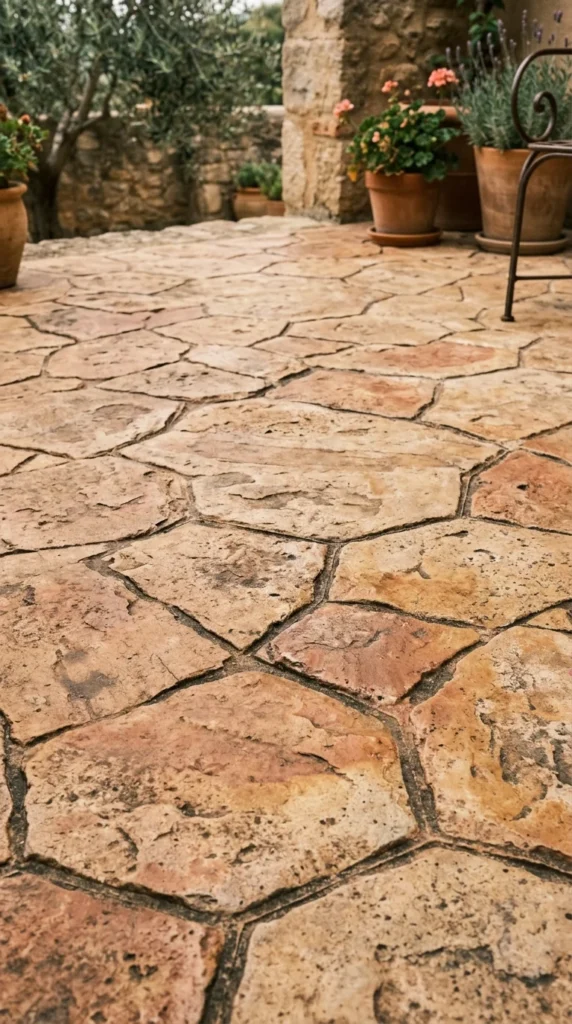
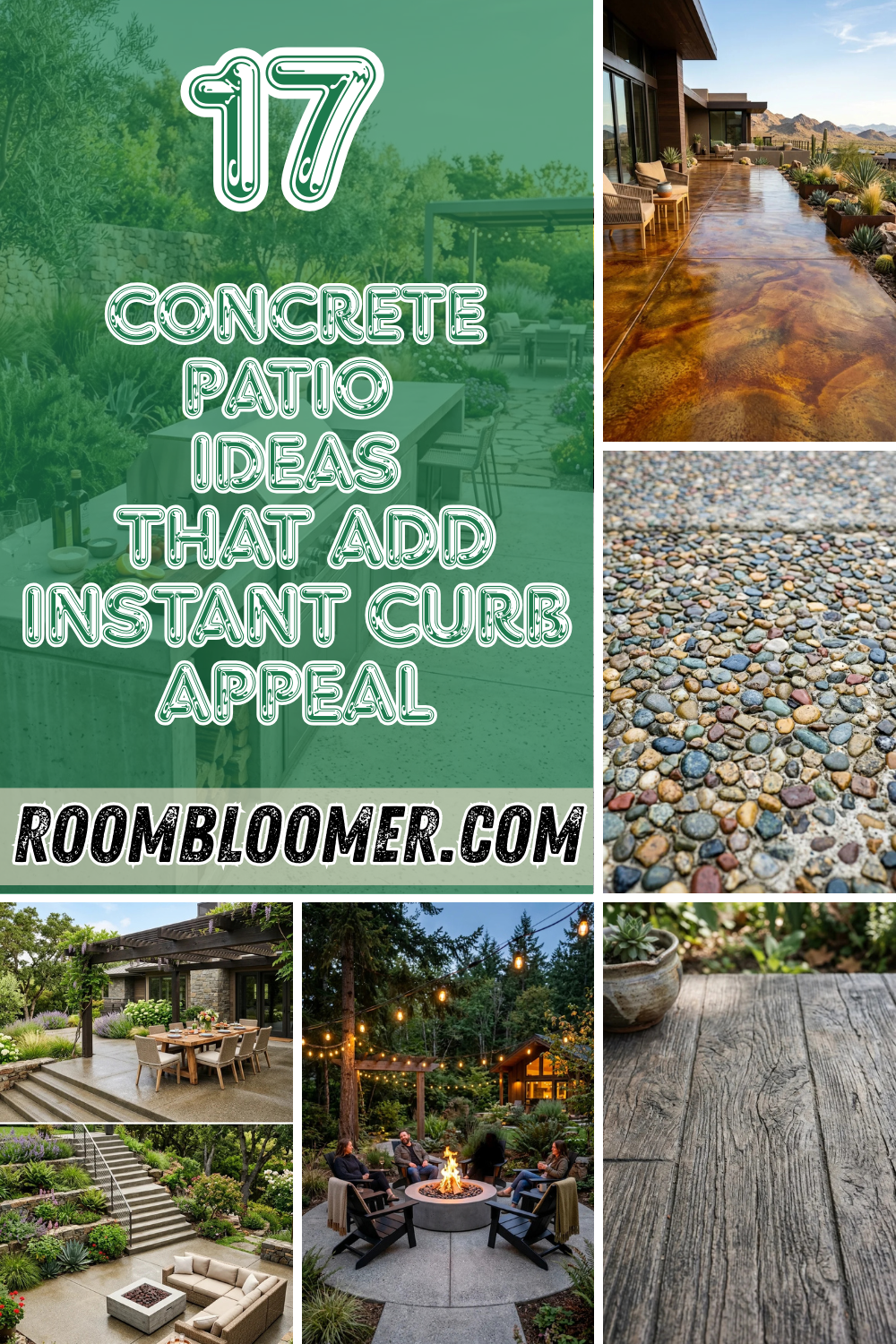
The biggest aesthetic hurdle for many small patios is the plain, industrial look of raw concrete. Stamping is a process where patterns are pressed into wet concrete to mimic more expensive materials like slate, brick, or even wood planks.
- Visual Depth: Patterns break up the monotony of a flat grey surface. A herringbone brick pattern or a flagstone texture can make a small space feel more architecturally significant.
- Color Staining: Combine stamping with acid staining to add rich, earthy tones. Darker colors can make a space feel cozy and intimate, while lighter tones reflect sunlight and keep the area cool.
- Seamless Transition: If your indoor flooring has a specific pattern, you can often find a concrete stamp that mimics it, creating a seamless indoor-outdoor flow that tricks the eye into thinking the space is larger.
4. Bistro Sets
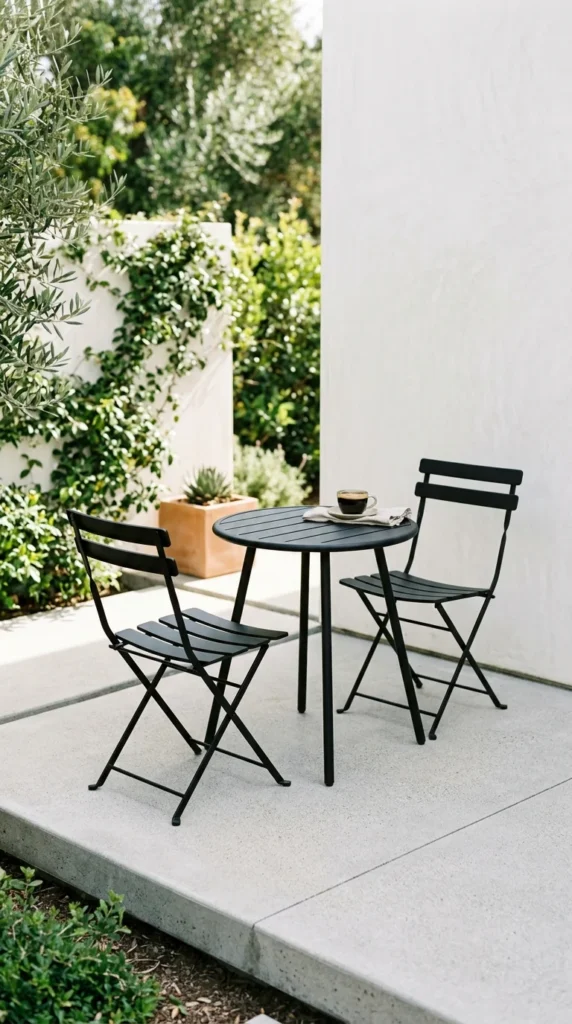
In a small space, scale is everything. Large dining tables and oversized sofas will overwhelm a compact patio. A bistro set—traditionally a small round table with two chairs—is the quintessential solution for small-scale outdoor dining.
- Folding Options: Look for bistro sets that are foldable. This allows you to easily clear the floor space if you need it for a different activity, such as a morning yoga session.
- Material Choice: Light-weight aluminum or wrought iron sets are durable and easy to move. For a more modern look, consider colorful powder-coated sets in shades like sage green or terracotta.
- Circular Flow: Round tables are better for small spaces than square ones because they lack sharp corners, making it easier to navigate around them without bumping into anything.
5. Privacy Screens
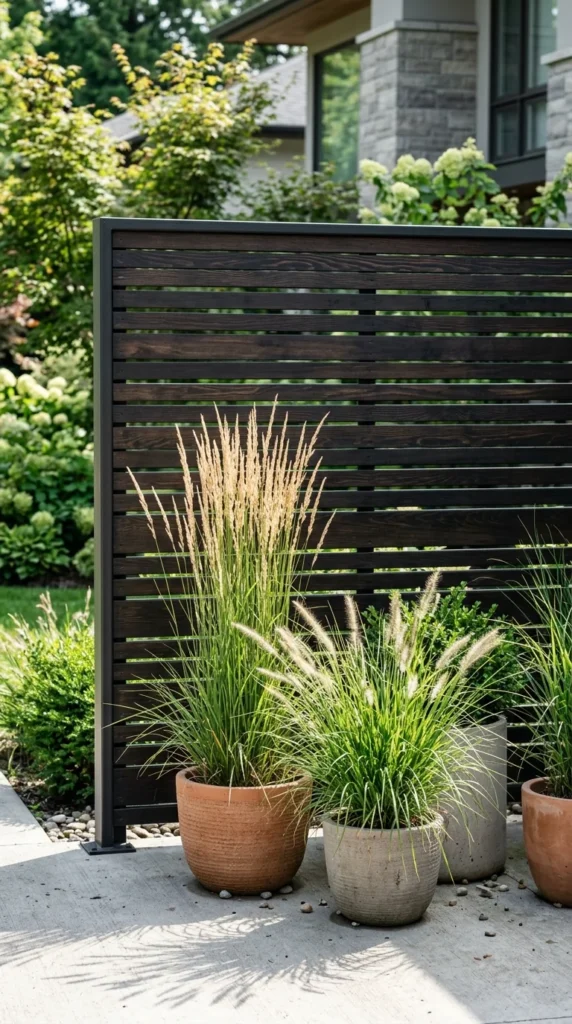
Privacy is a common concern for small patios, especially in high-density neighborhoods. A privacy screen doesn’t just block the neighbors; it helps define the “walls” of your outdoor room, making it feel like a true extension of your home.
- Slatted Wood: Horizontal slats provide a modern, sleek look while allowing airflow and some light to filter through.
- Lattice and Vines: A simple lattice panel with climbing ivy or roses creates a soft, living screen that feels more organic than a solid wall.
- Freestanding Dividers: If you cannot attach anything to your walls, use freestanding laser-cut metal screens. These come in intricate geometric patterns and act as both a functional barrier and a piece of outdoor art.
6. Outdoor Rugs
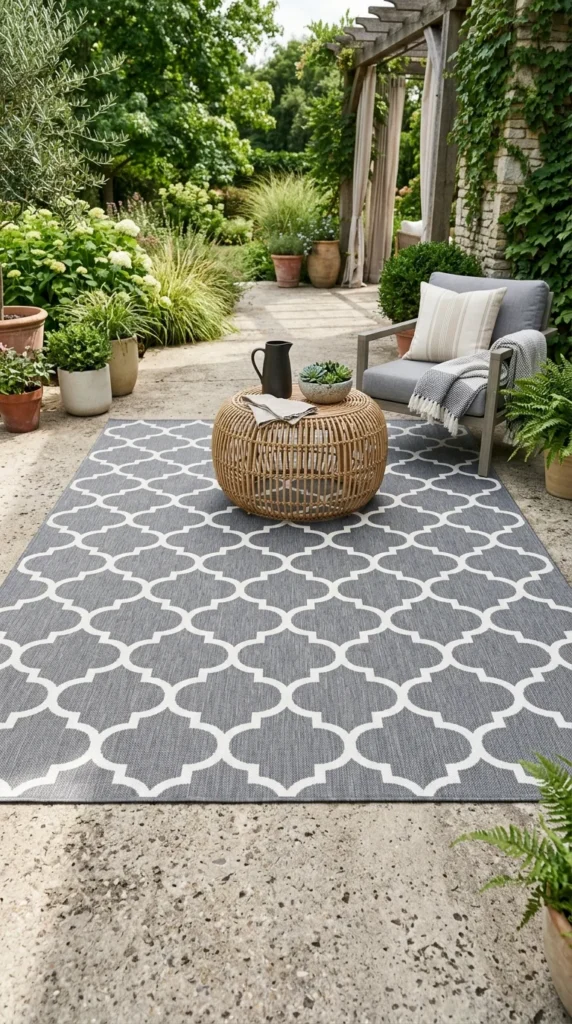
One of the fastest and most effective ways to transform a concrete patio is to lay down an outdoor rug. This simple addition softens the hard surface underfoot and introduces color and pattern that can tie your whole design together.
- Defining the Zone: A rug helps “anchor” your furniture. It creates a visual boundary that tells the eye exactly where the seating area begins and ends.
- Layering: For a high-design look, try layering a small patterned rug over a larger, neutral jute or sisal rug. This adds texture and a “designer” feel to the space.
- Durability: Modern outdoor rugs are made from polypropylene, making them resistant to mold, mildew, and UV fading. They are easy to clean—simply hose them down when they get dirty.
7. Fire Features
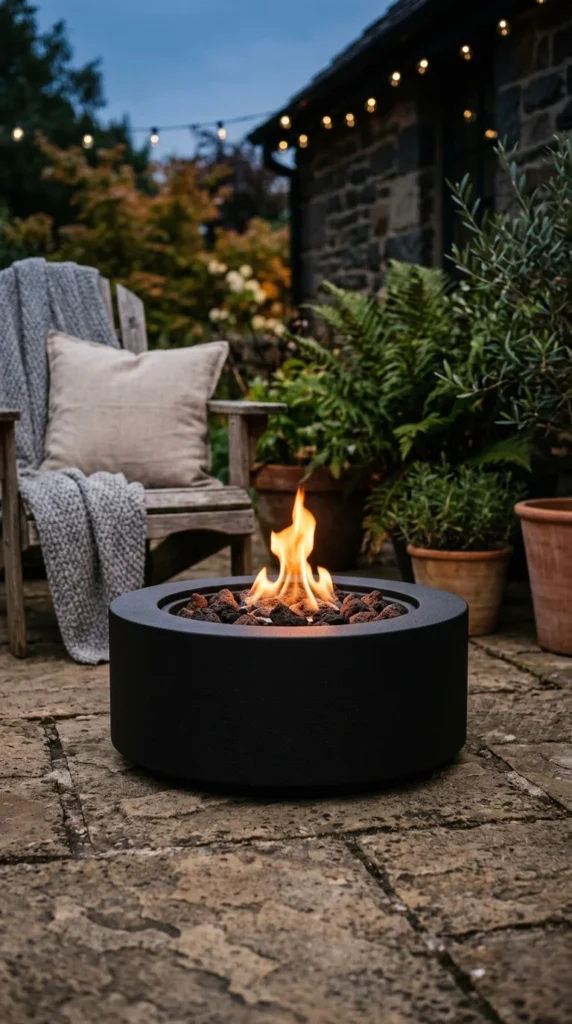
A fire feature provides a focal point and extends the usability of your patio into the cooler autumn and spring months. Even the smallest concrete slab can accommodate a fire element if you choose the right style.
- Portable Fire Bowls: Small propane fire bowls are ideal for concrete patios because they are clean-burning and don’t require a large hearth. They can be moved around as needed.
- Tabletop Fire Pits: If you have absolutely no floor space, a tabletop fire pit can sit right on your bistro table, providing warmth and ambiance without taking up any extra room.
- Safety First: When placing a fire pit on concrete, ensure you use a heat shield or a stand to prevent the concrete from cracking due to extreme temperature changes.
8. Container Ponds
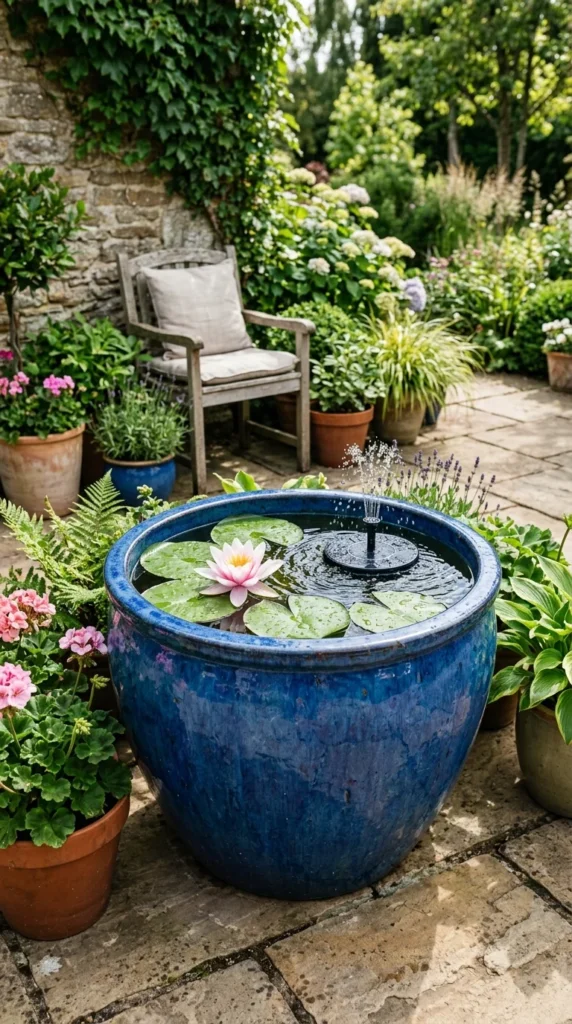
The sound of running water is incredibly soothing and can help drown out the noise of traffic or neighbors. You don’t need a full-sized pond to enjoy this; a container pond is a perfect miniature version.
- Easy Setup: All you need is a large, waterproof ceramic pot, some aquatic plants (like dwarf papyrus or water lilies), and a small recirculating pump.
- Solar Fountains: For an even easier setup, use a solar-powered fountain insert. It requires no wiring and will automatically bubble whenever the sun is out.
- Visual Interest: Use a pot with a vibrant glaze—like cobalt blue or deep emerald—to add a pop of color to your concrete landscape.
9. String Lighting
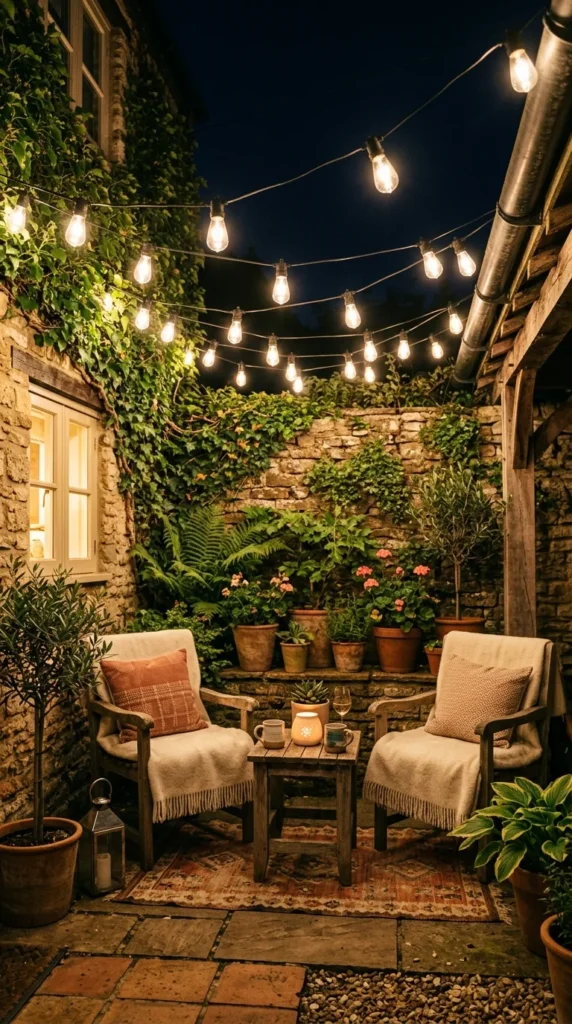
Lighting is the key to creating atmosphere. In a small space, heavy floor lamps or bulky lanterns can take up valuable real estate. String lights, however, utilize the air space and provide a warm, even glow.
- Edison Bulbs: Use “vintage-style” Edison bulbs for a classic, high-end look. They give off a warm, amber light that is much more inviting than harsh white LEDs.
- Crisscross Pattern: String them in a “V” or “X” pattern across the patio to ensure even coverage. If you don’t have walls to attach them to, use tall wooden poles secured in weighted planters.
- Smart Plugs: Connect your lights to a smart outdoor plug so you can control them with your phone or set them to a timer, ensuring your patio is always glowing when you come home.
10. Corner Herb Gardens
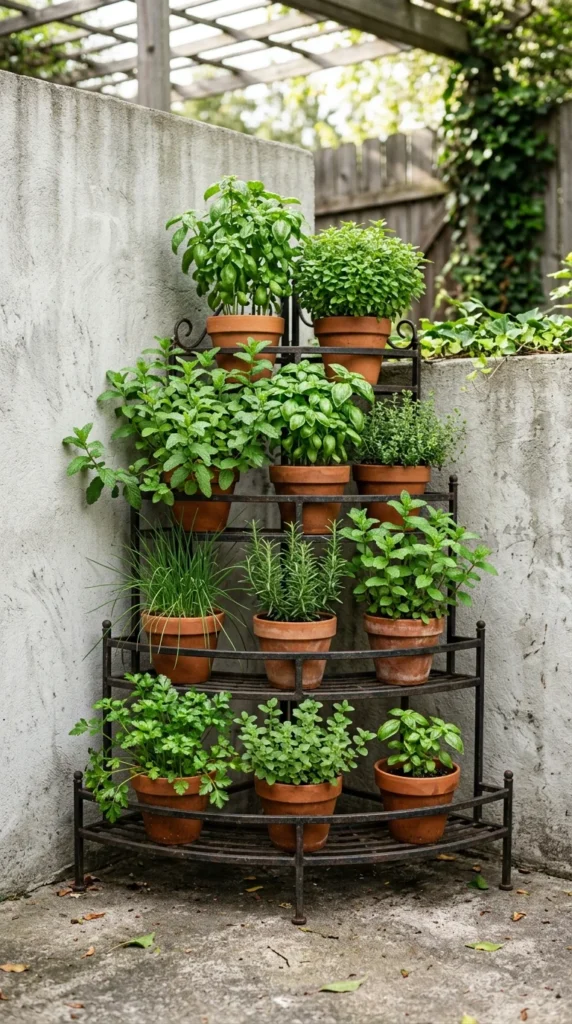
Maximize the utility of your patio by turning a neglected corner into a mini kitchen garden. Herbs are perfect for small patios because they grow well in containers and don’t require much space to flourish.
- Tiered Stands: Use a tiered plant stand to stack your pots vertically. This allows you to grow five or six different herbs in the footprint of a single pot.
- Fragrance Zones: Place fragrant herbs like rosemary, lavender, and mint near your seating area. Every time a breeze blows or you brush past them, they will release a pleasant scent.
- Color and Texture: Mix and match different types of pots—terracotta, galvanized steel, and ceramic—to add a curated, eclectic look to your patio corner.