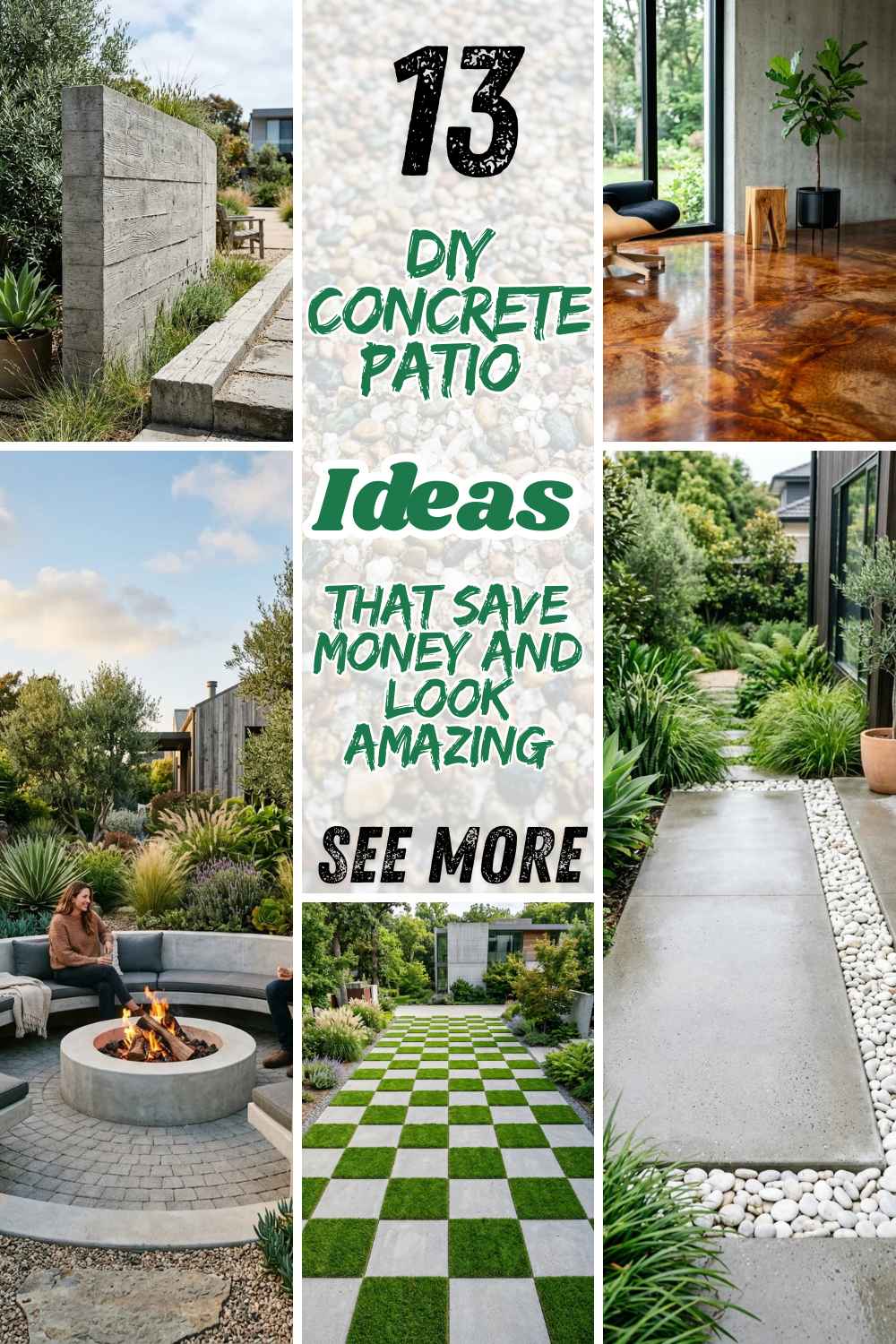
Concrete is often dismissed as a cold, industrial material, but for the savvy DIY enthusiast, it is a blank canvas of endless potential. Not only is it one of the most durable and cost-effective materials for outdoor living, but it also offers a versatility that wood and natural stone simply cannot match. Whether you are looking to revitalize an existing slab or pour a brand-new space from scratch, these thirteen ideas will help you achieve a high-end look without the designer price tag.
1. Paver Molds
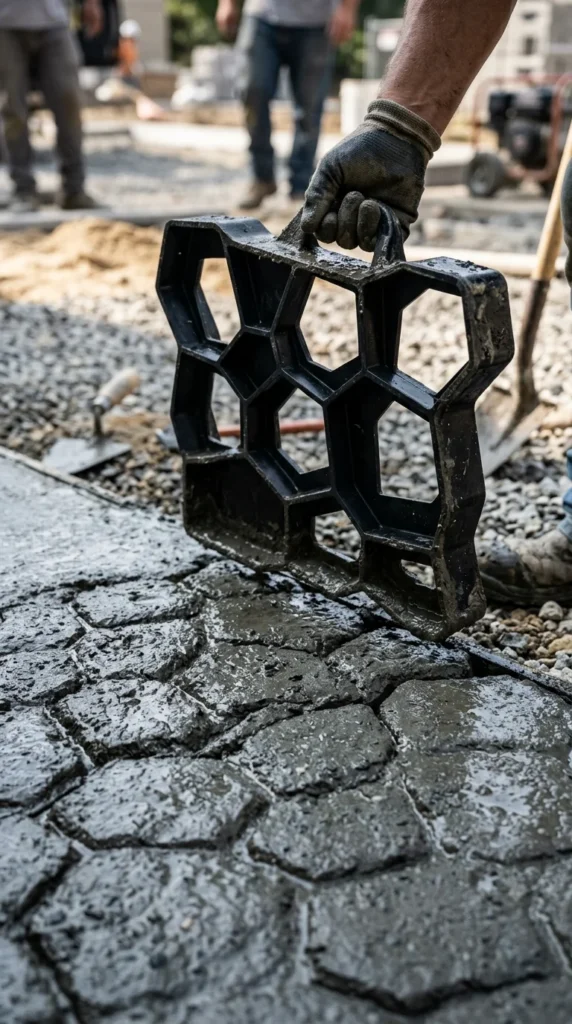
One of the most accessible ways to get a professional “stone” look is by using walkmaker or paver molds. Instead of pouring a massive, flat slab—which can be intimidating for beginners—you fill individual sections of a plastic mold with concrete. As you move the mold along, you create a repeating pattern that looks like hand-laid slate or cobblestone. This method is incredibly forgiving because you can work in small batches, and if one “stone” doesn’t look right, it’s easy to fix without ruining the entire patio.
2. Stenciled Designs
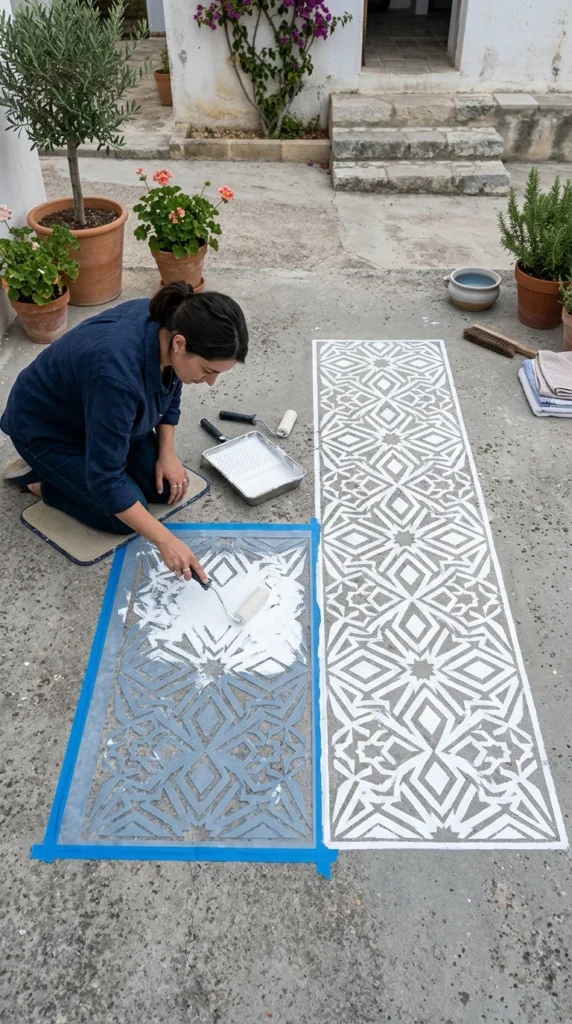
If you already have a plain, boring concrete slab, stenciling is the ultimate weekend makeover project. With a high-quality stencil and some porch and patio paint, you can mimic the look of expensive cement tiles. This is a fantastic way to add color and personality to your outdoor space. The key to success is thorough cleaning and priming of the old concrete to ensure the paint bonds properly. Once finished, a clear masonry sealer will protect your handiwork from the elements.
3. Acid Staining
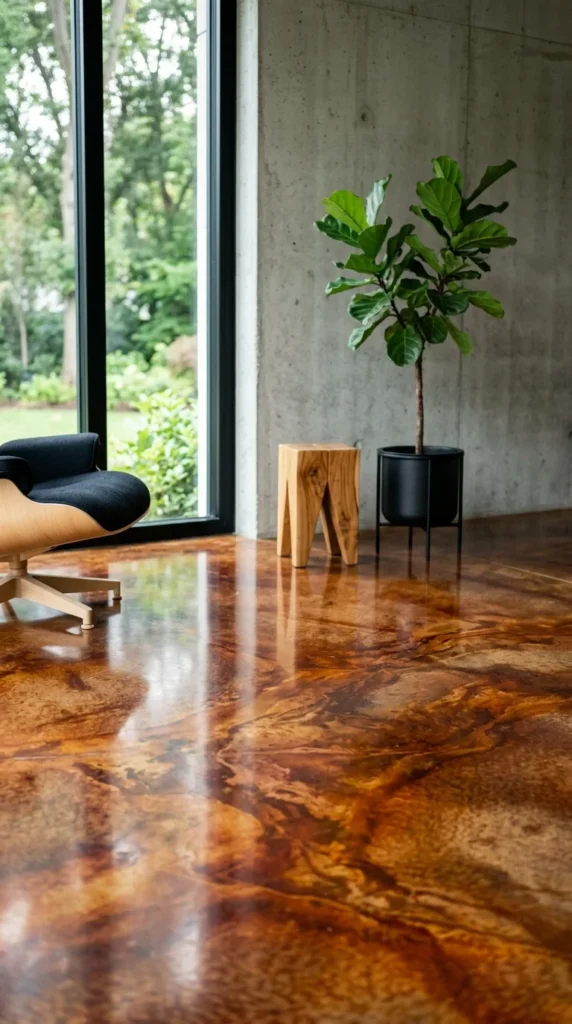
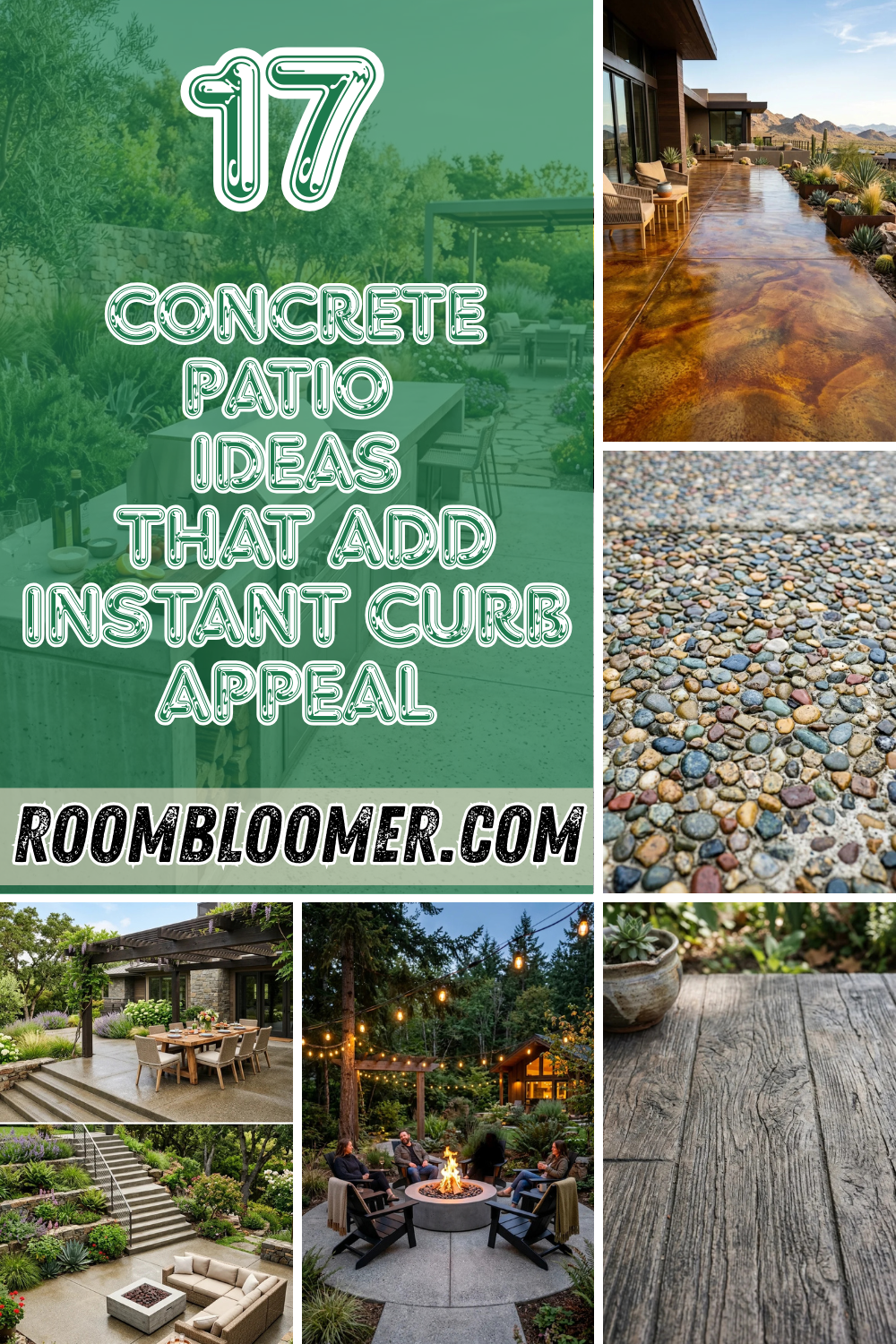
Acid staining isn’t just paint; it’s a chemical reaction that changes the color of the concrete itself. This creates a variegated, translucent look that mimics the natural movement of stone or marble. Because the stain penetrates the surface, it won’t chip or peel like paint might. It’s an excellent choice for those who want a sophisticated, “lived-in” aesthetic. You can mix different earth tones to create a custom palette that perfectly matches your home’s exterior.
4. Gravel Borders
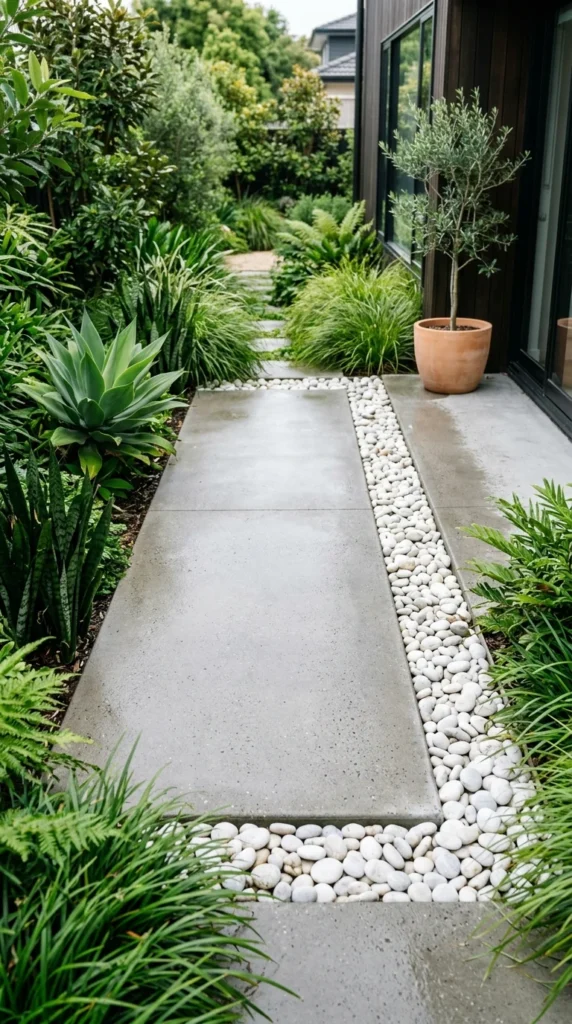
Sometimes, the best way to make concrete look amazing is to frame it correctly. By leaving a gap between your concrete pads and filling those gaps with decorative gravel or river rock, you create a high-contrast, modern look. This “interrupted” design also serves a functional purpose: it provides excellent drainage for rainwater. Using dark basalt gravel against light gray concrete offers a contemporary feel, while white pea gravel leans toward a coastal or Zen-garden vibe.
5. Faux Rugs
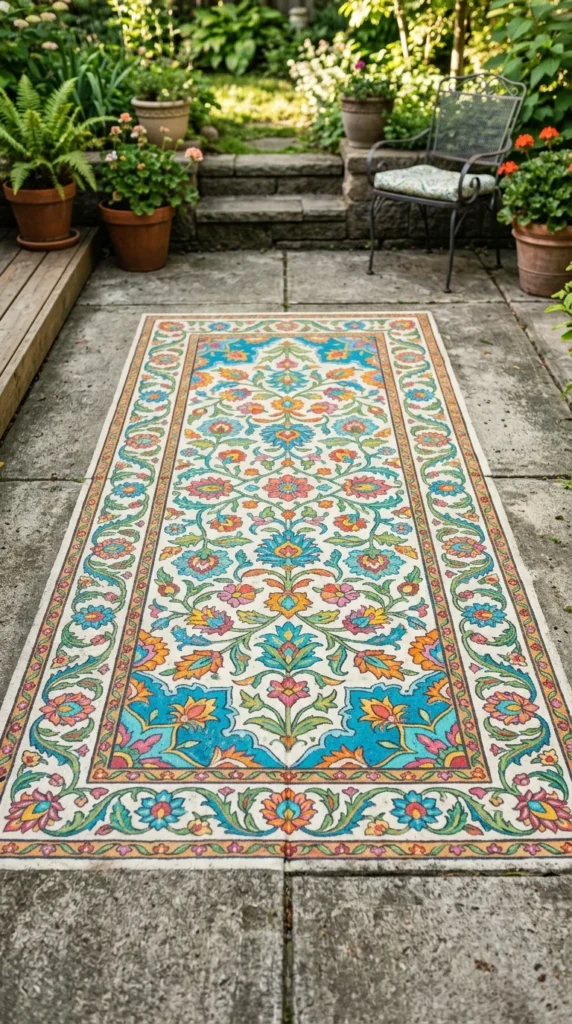
Why buy an outdoor rug that will eventually mold or fade when you can paint one? By using painters’ tape and a bit of creativity, you can “weave” a permanent rug design right onto your patio. This defines your seating area and adds a pop of visual interest. You can go for a simple striped nautical theme or a complex bohemian pattern. The best part is that maintenance involves nothing more than a quick spray with a garden hose.
6. Exposed Aggregate
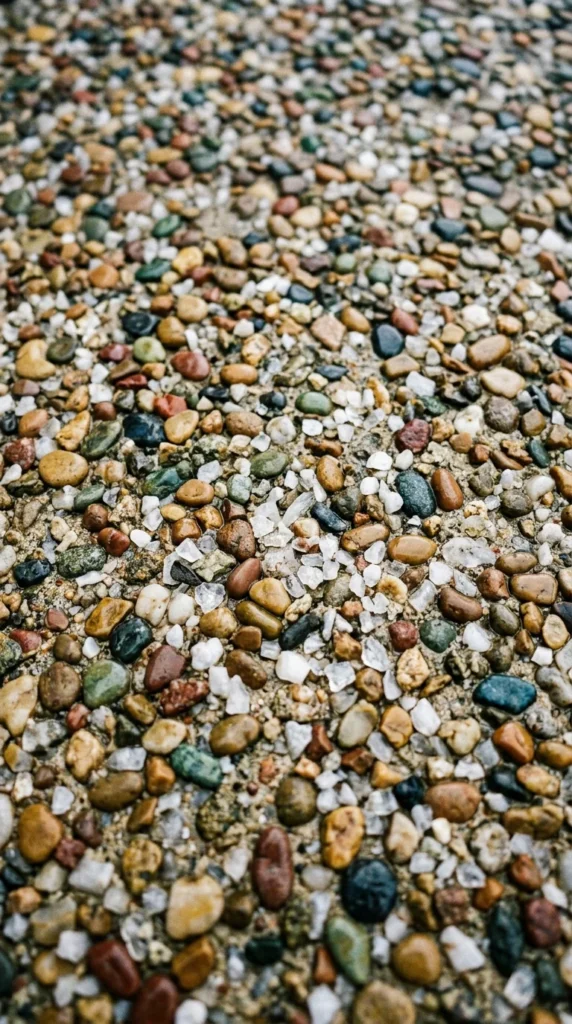
Exposed aggregate is a classic technique that involves washing away the top “cream” layer of the concrete before it fully cures to reveal the stones mixed inside. This creates a highly textured, slip-resistant surface that is perfect for pool decks or areas that get a lot of rain. You can customize the look by choosing specific types of colorful gravel to mix into your concrete batch, such as pink granite, black obsidian, or white quartz.
7. Wood Texture
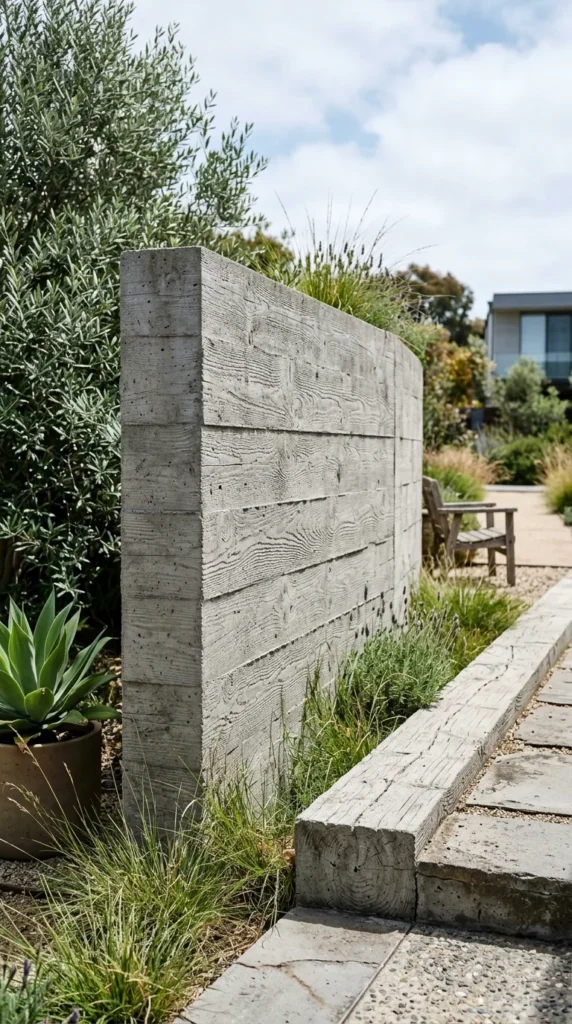
Also known as “board-formed” concrete, this technique involves using raw timber boards as the forms for your wet concrete. When the concrete dries and the boards are removed, the concrete retains the organic grain and knot patterns of the wood. This is a brilliant way to marry the industrial strength of concrete with the warm, rustic aesthetic of a wood deck. It’s particularly effective for raised patios or retaining walls that double as seating.
8. Checkerboard Layout
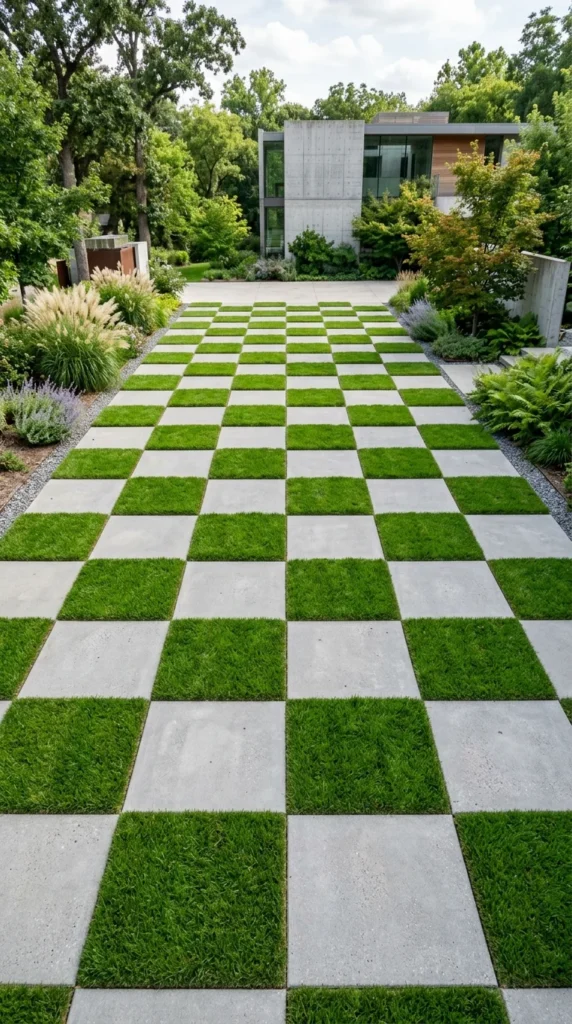
For a look that is both traditional and striking, consider a checkerboard layout. Instead of a solid mass of concrete, you pour large square slabs (usually 24×24 inches or larger) and leave equal-sized spaces in between. You can fill the alternating squares with artificial turf, real grass, or contrasting stones. This layout breaks up the visual weight of the concrete and makes even a small backyard feel like a curated estate garden.
9. Floating Slabs
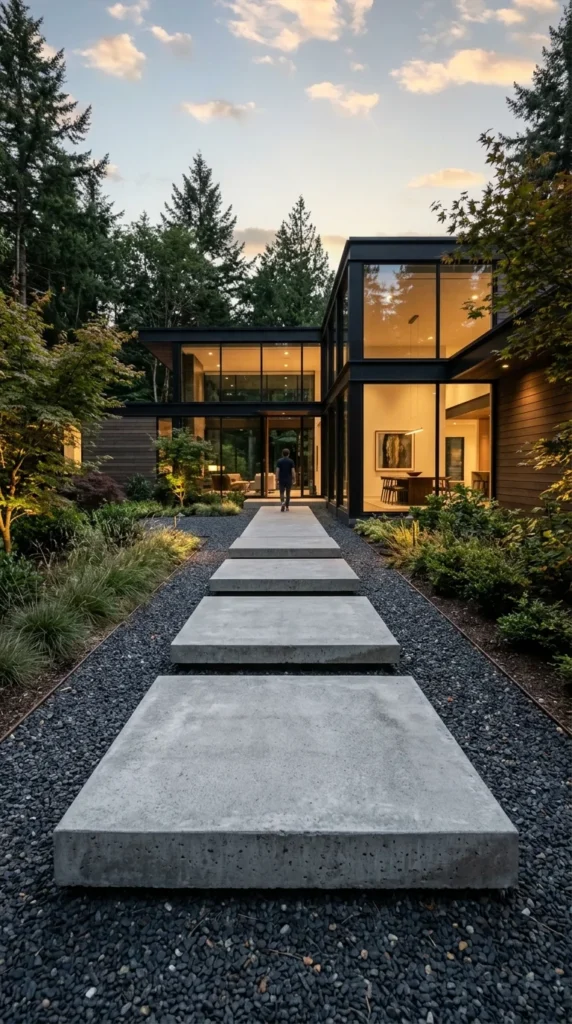
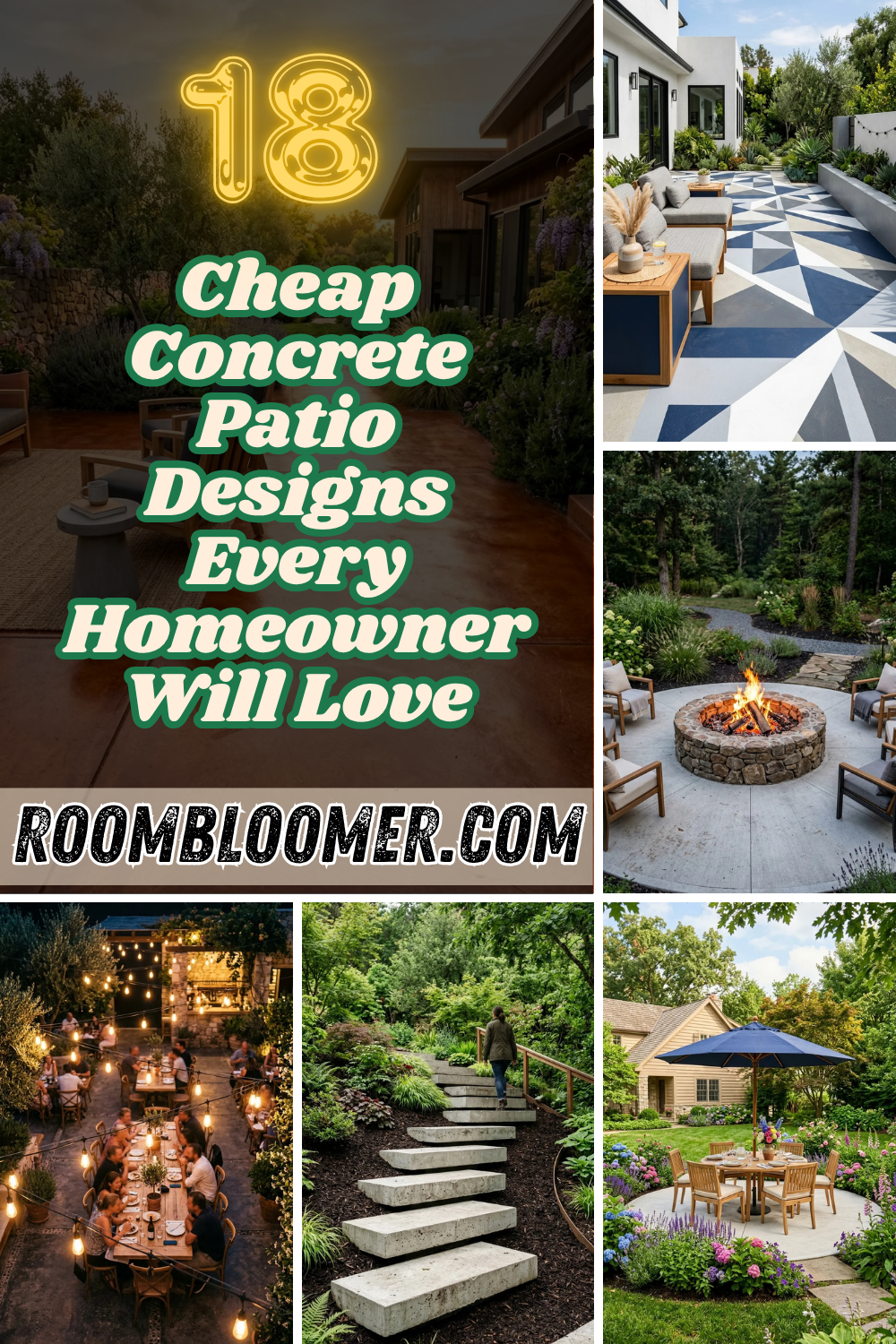
The “floating” slab look is a staple of mid-century modern and contemporary landscape design. By pouring thick, individual slabs and setting them into a bed of recessed gravel or ground-cover plants, you create a sense of lightness and motion. This DIY project is often easier than a full pour because you can build individual wooden forms for each slab and take your time perfecting each one. It’s a high-impact design that costs very little in materials.
10. Integrated Fire
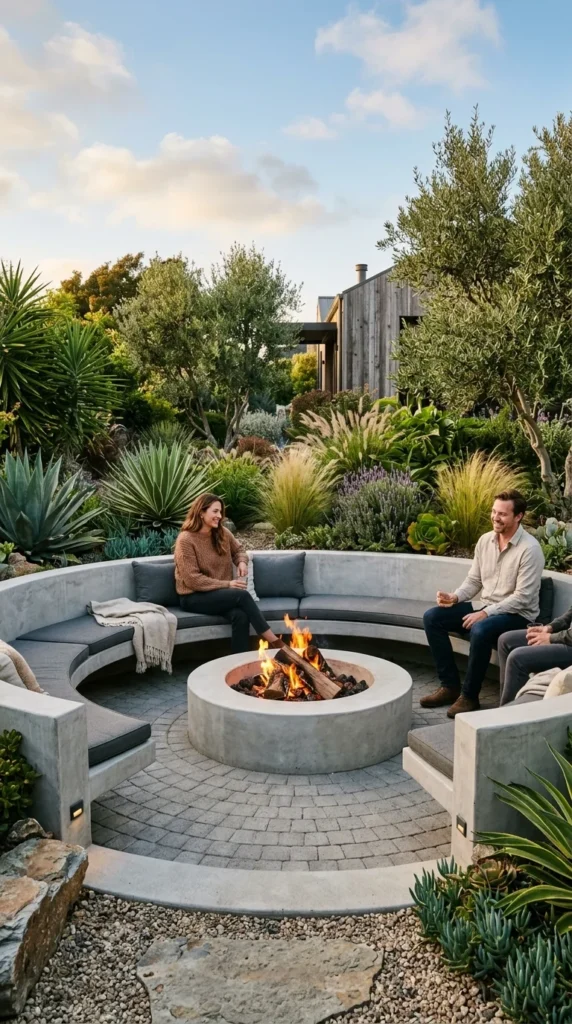
If you are pouring a new patio, why not build the furniture and features right into it? An integrated fire pit creates an immediate focal point and makes your patio a year-round destination. By using the same concrete for the patio and the pit, you achieve a seamless, architectural look. You can even use concrete to create built-in bench seating around the perimeter, which saves money on expensive outdoor furniture sets.
11. Wood Inlays
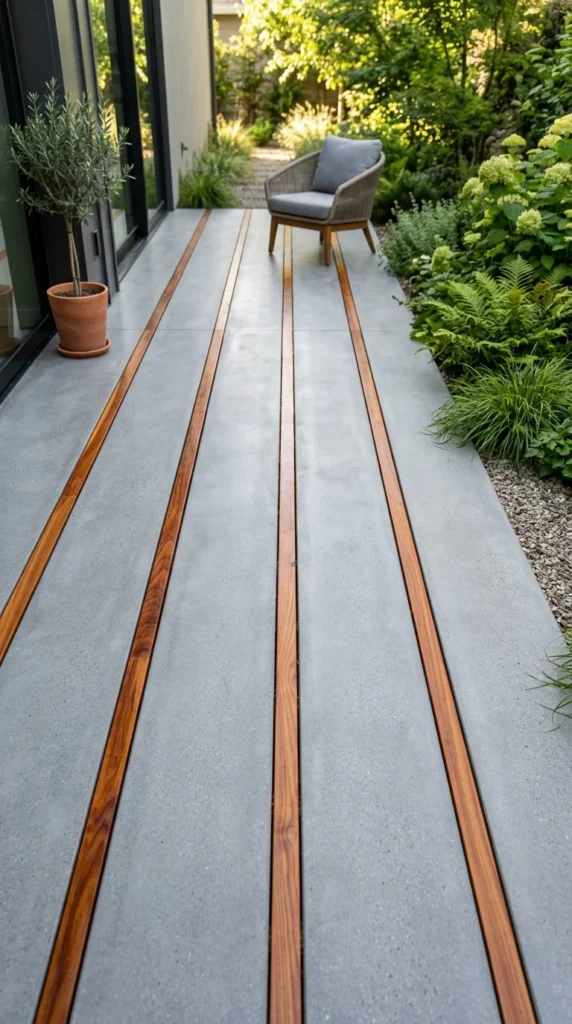
For a truly custom look, consider embedding weather-resistant wood, like Ipe or Cedar, directly into your concrete design. These wood inlays act as “expansion joints” while providing a beautiful material contrast. The warmth of the wood softens the coldness of the concrete, creating a balanced and high-end aesthetic. This technique requires careful planning to ensure the wood is treated for ground contact, but the result is a patio that looks like a professional designer’s work.
12. Scored Lines
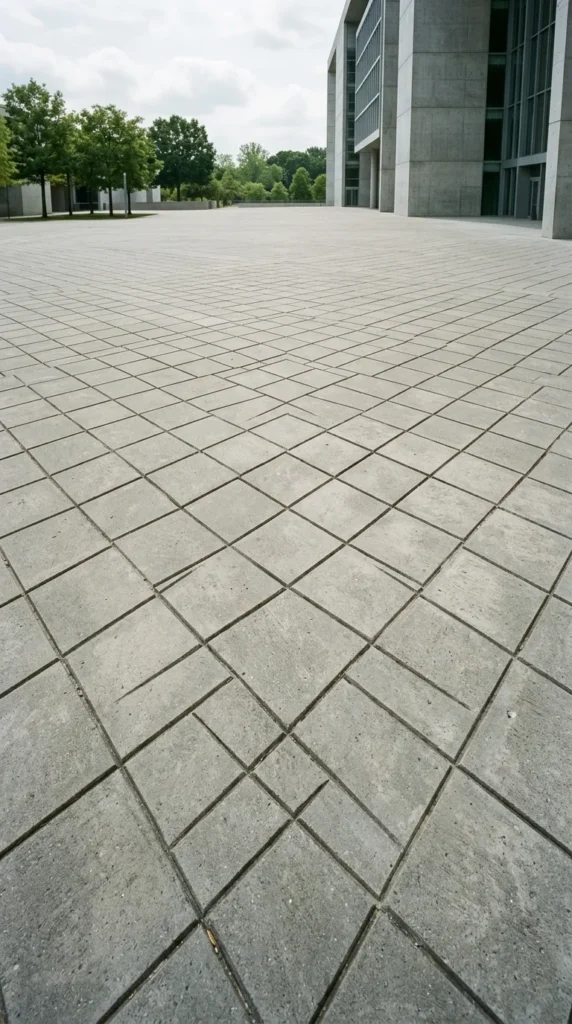
If you want the look of large-format tiles without the cost of the tiles themselves, scoring is the answer. Once your concrete is partially cured (or even after it’s fully dry), you can use a circular saw with a diamond blade to cut shallow lines into the surface. By cutting a large grid—either square or on a diagonal—you create the illusion of massive, expensive stone pavers. When paired with a stain, this technique is virtually indistinguishable from high-end masonry.
13. Luminous Accents
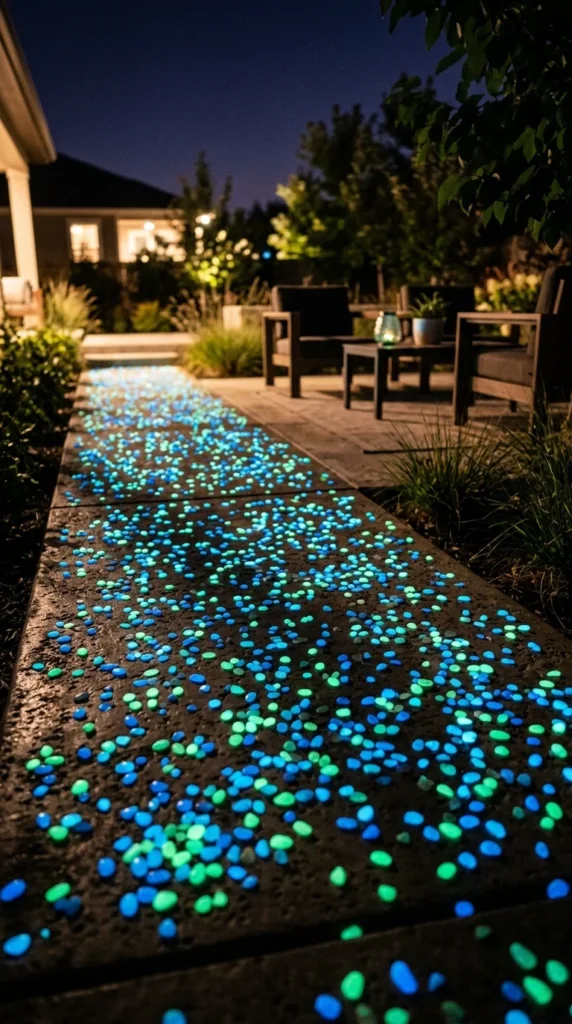
For a touch of magic, you can stir glow-in-the-dark “glow stones” into the surface of your wet concrete. During the day, they look like ordinary clear or white pebbles. At night, they soak up the day’s sunlight and emit a soft, ethereal glow. This is not only a stunning visual feature but also a great safety element for illuminating the edges of your patio or stairs without the need for electric wiring or solar lights.