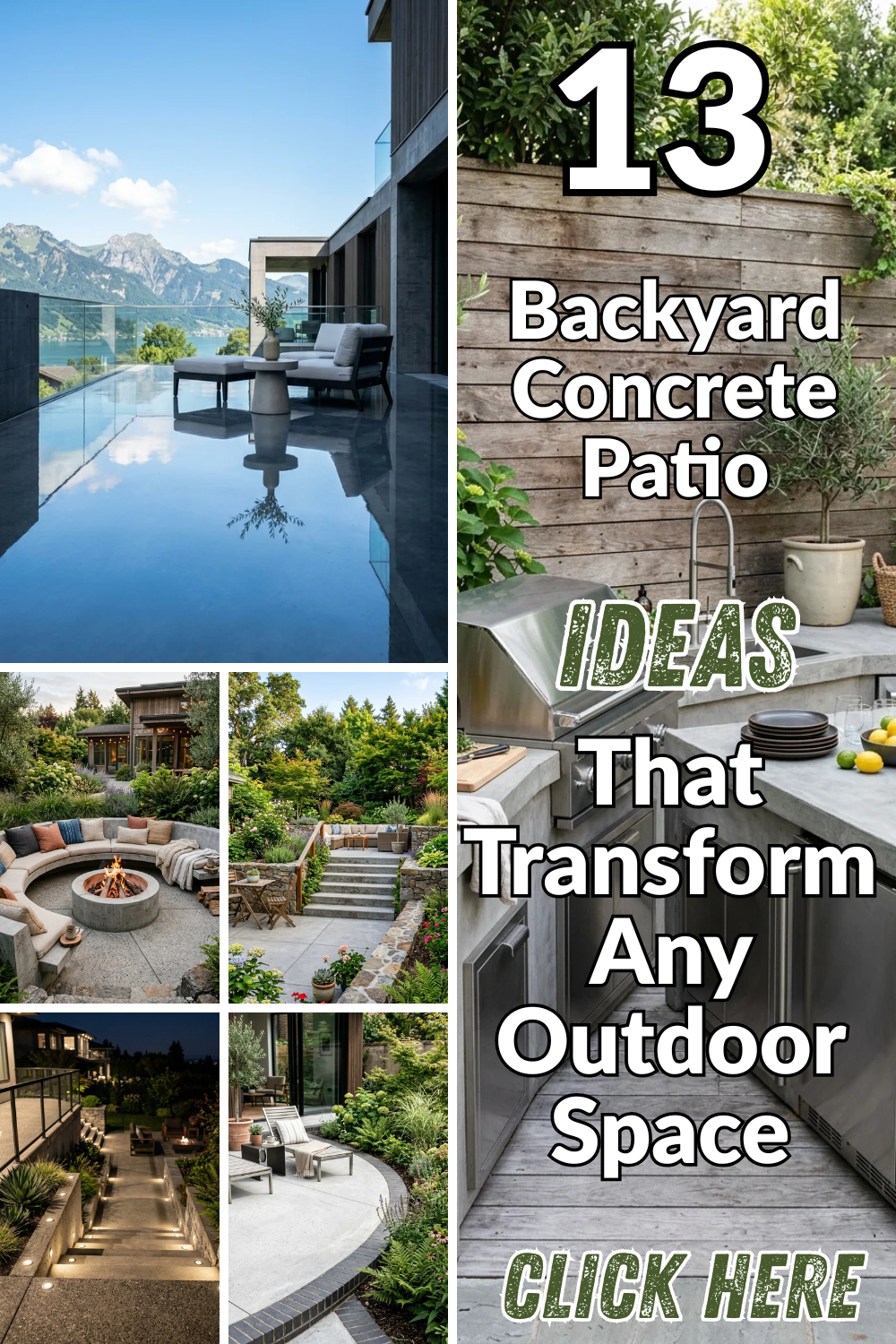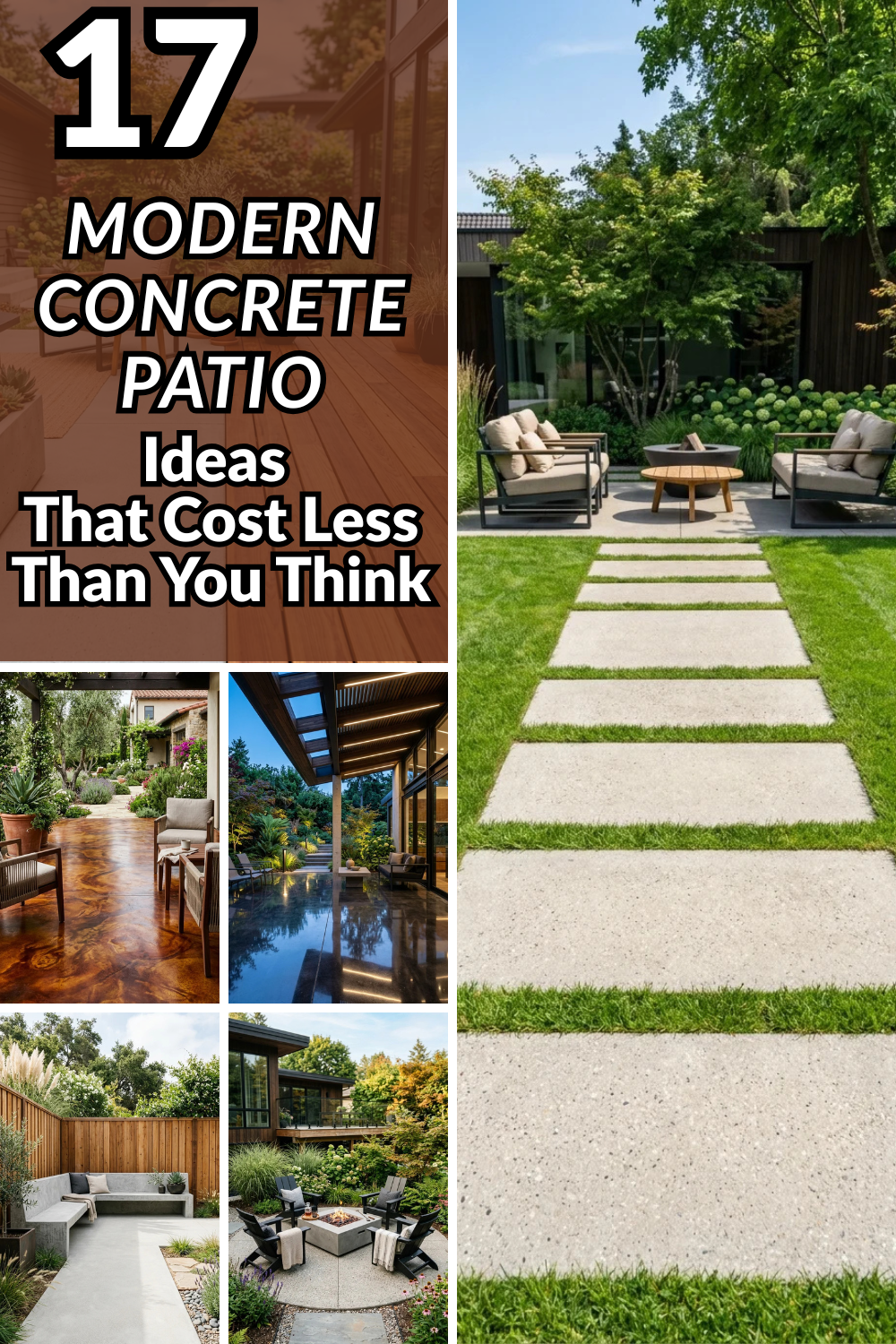
Concrete has long been the unsung hero of suburban backyards, often relegated to basic rectangular slabs or utilitarian driveways. However, in the realm of modern landscape design, concrete is undergoing a massive aesthetic renaissance. It is no longer just a durable surface; it is a versatile, high-end medium that can mimic expensive natural stone, create architectural interest, and provide a seamless transition between indoor and outdoor living—all without the staggering price tag of slate or marble.
If you are looking to overhaul your outdoor space, these 17 modern concrete patio ideas prove that you don’t need a massive budget to achieve a magazine-worthy look.
1. Geometric Pavers
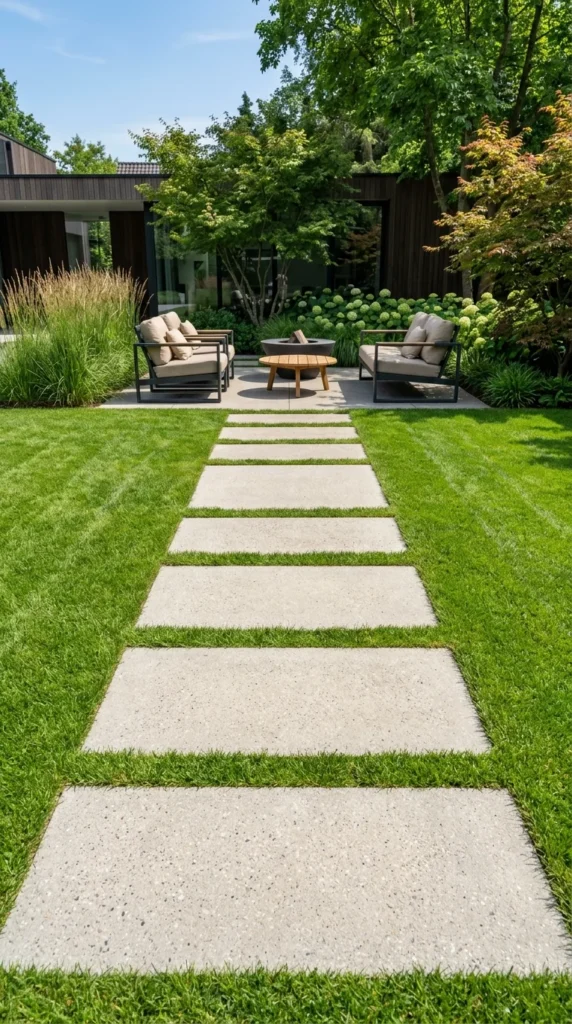
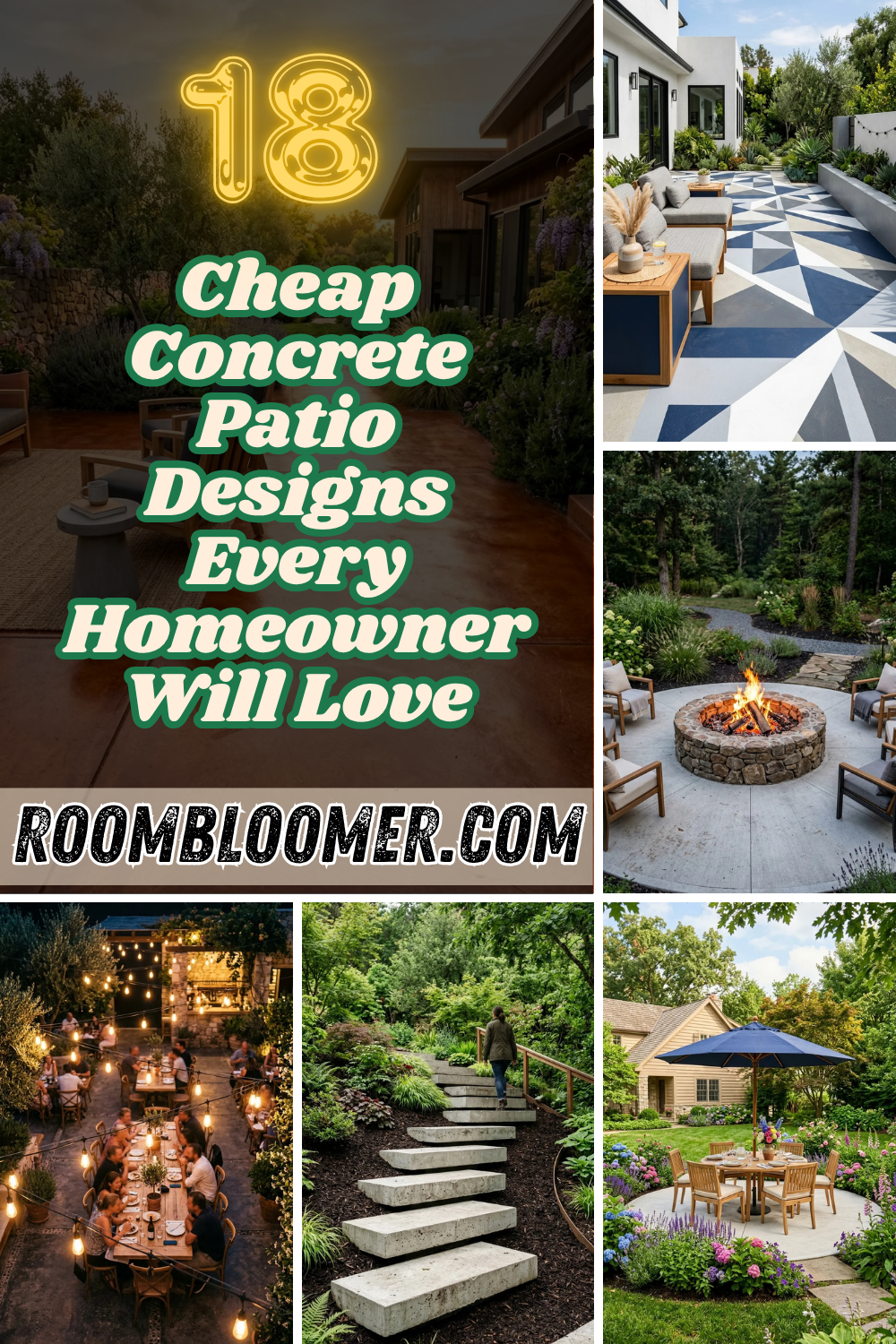
Using oversized geometric pavers is one of the most effective ways to achieve a contemporary, high-end look on a budget. Instead of pouring one continuous slab, laying individual concrete rectangles or squares creates a sense of rhythm and intentionality. By leaving a small gap between the pavers—filled with either vibrant green moss or dark river stones—you introduce texture and drainage, making the space feel architecturally designed rather than just “paved.”
2. Stamped Textures
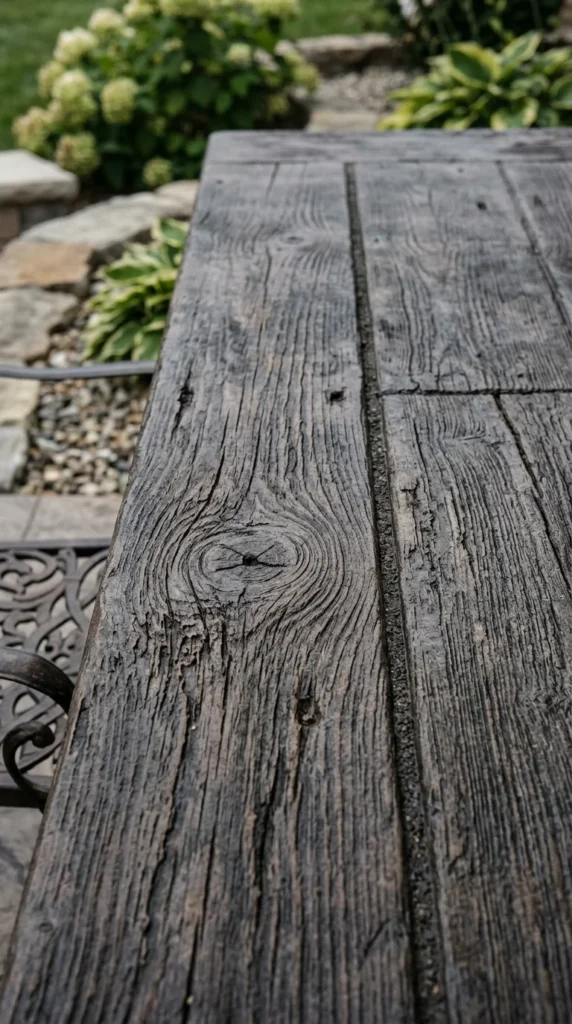
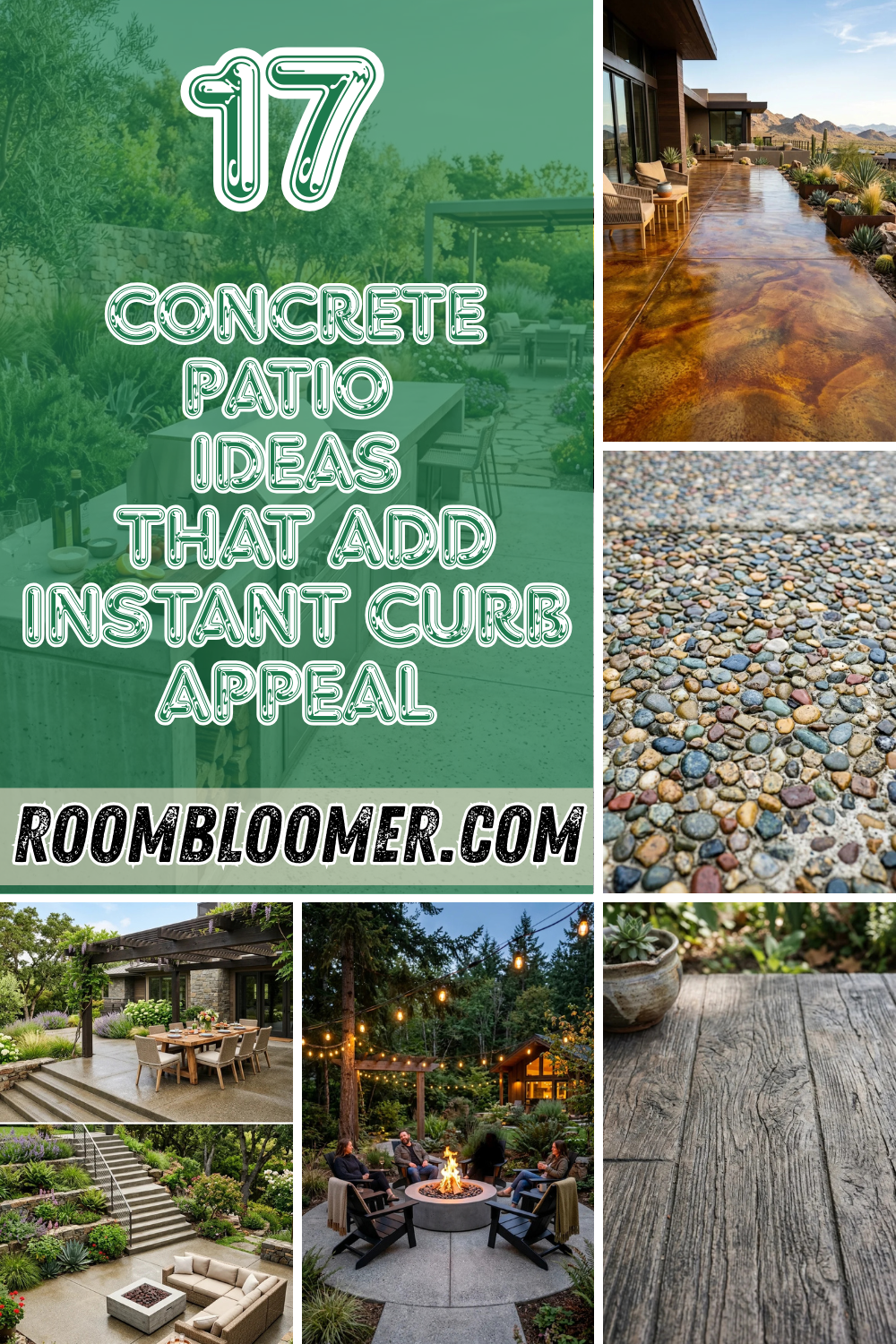
Stamped concrete is the ultimate “cheat code” for budget-conscious homeowners. By using polyurethane molds during the drying process, contractors can make wet concrete mimic the look of expensive materials like slate, flagstone, or even rustic hardwood planks. The result is a durable, monolithic surface that doesn’t have the maintenance issues of real wood or the shifting problems of individual stones, but retains all the visual warmth and character.
3. Exposed Aggregate
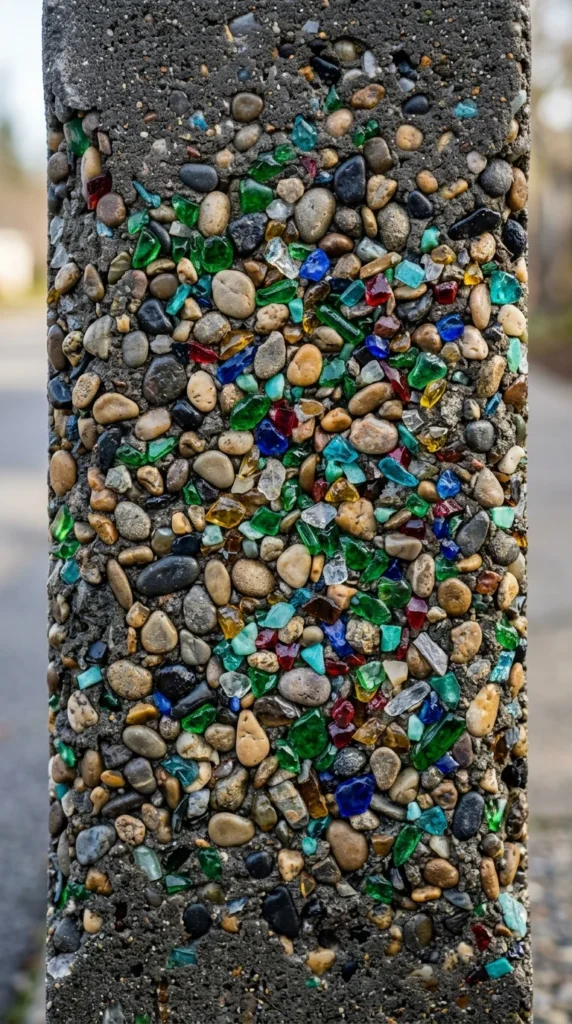
Exposed aggregate is achieved by stripping away the top layer of cement paste to reveal the decorative stones mixed into the concrete. This creates a rugged, organic texture that is naturally slip-resistant—perfect for pool decks or rainy climates. To keep it modern, choose a uniform aggregate like small gray pea gravel or even recycled glass for a subtle shimmer that catches the sunlight.
4. Acid Staining
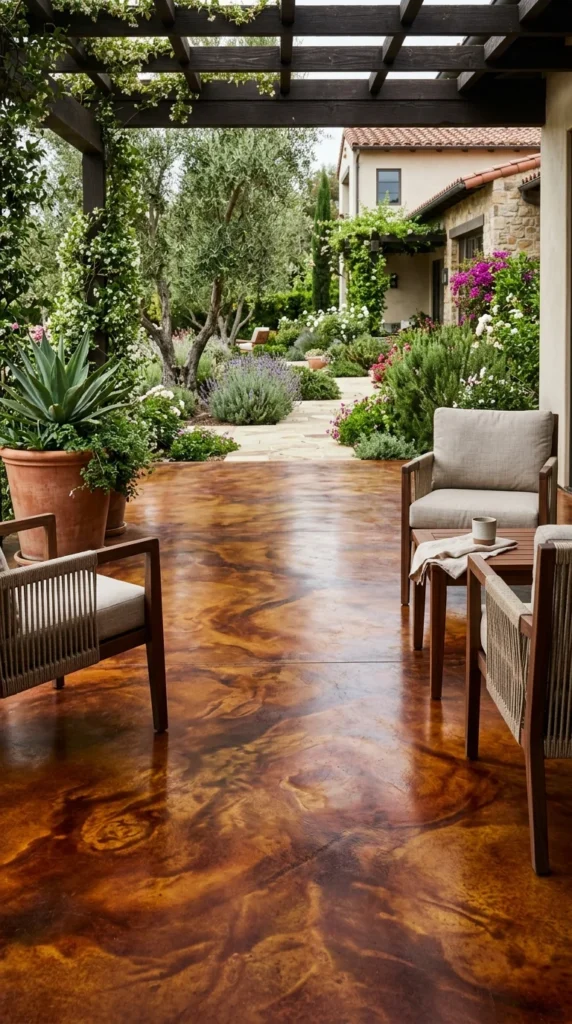
If you want a look that feels more like art than construction, acid staining is the way to go. Unlike paint, which sits on top of the surface, acid stains penetrate the concrete and react chemically with the minerals to create deep, marbled tones. This technique results in a variegated, translucent finish that looks remarkably like natural marble or aged leather, providing an incredibly sophisticated foundation for modern furniture.
5. Polished Sheen
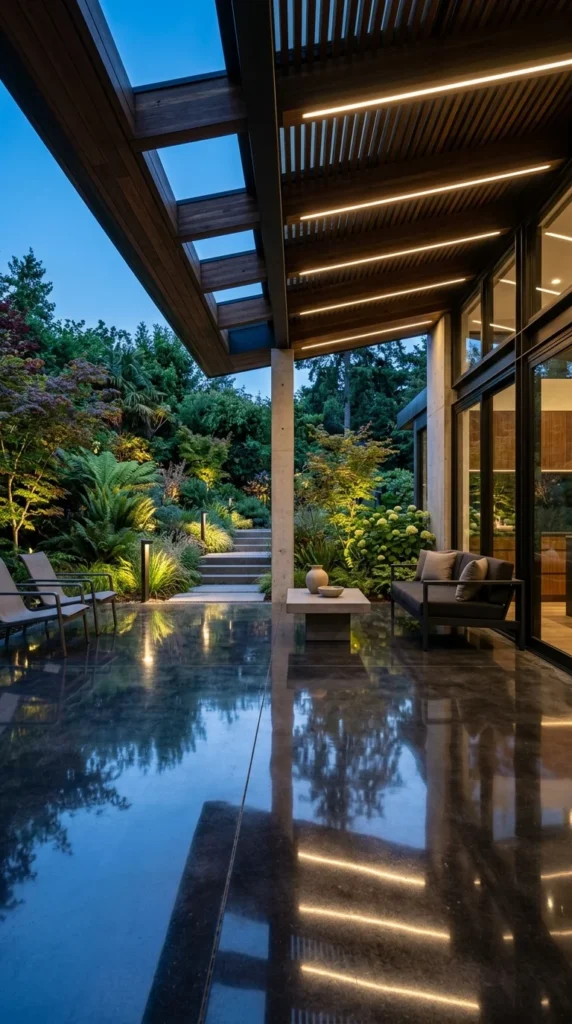
For a truly industrial-chic or ultra-modern aesthetic, polishing your concrete patio to a high gloss is transformative. This process involves grinding the surface with progressively finer diamond-grit pads until it shines. A polished patio reflects light, making a small backyard feel significantly larger and brighter. It’s easy to clean and offers a seamless look that mimics the high-end floors found in modern lofts and art galleries.
6. Mixed Materials
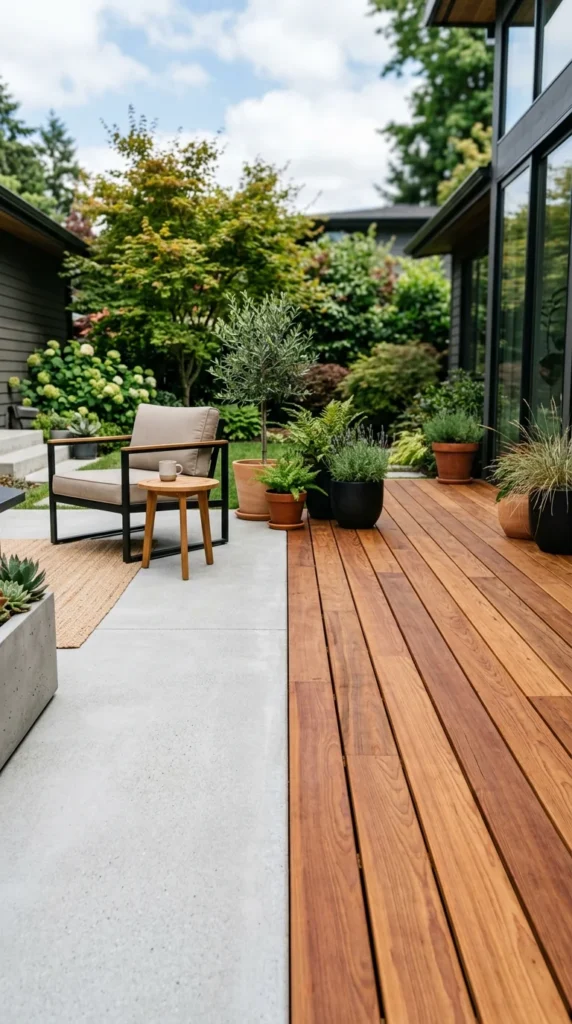
One of the hallmarks of modern design is the juxtaposition of different textures. You can elevate a simple concrete slab by bordering it with a different material, such as a wooden deck, a zone of crushed basalt, or even a line of artificial turf. This “breaks up” the visual weight of the concrete and makes the entire patio feel like a curated multi-zone living space.
7. Floating Slabs
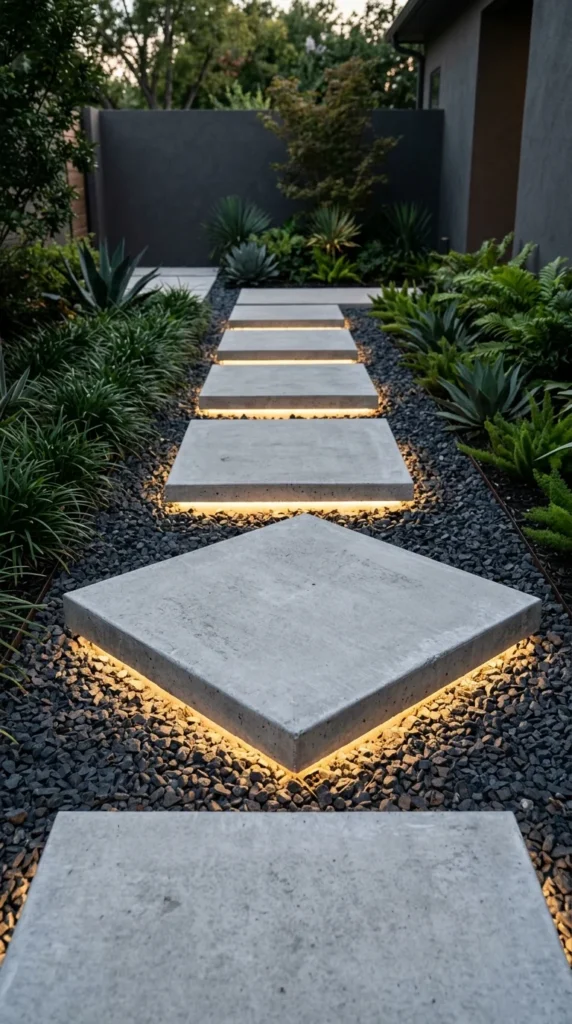
The “floating” effect is achieved by slightly elevating concrete slabs or setting them into a recessed bed of gravel or ground cover. This creates a sense of lightness and architectural drama. When paired with hidden LED strip lighting tucked underneath the overhanging edges, the patio takes on a futuristic, ethereal glow at night, perfect for entertaining.
8. Grid Patterns
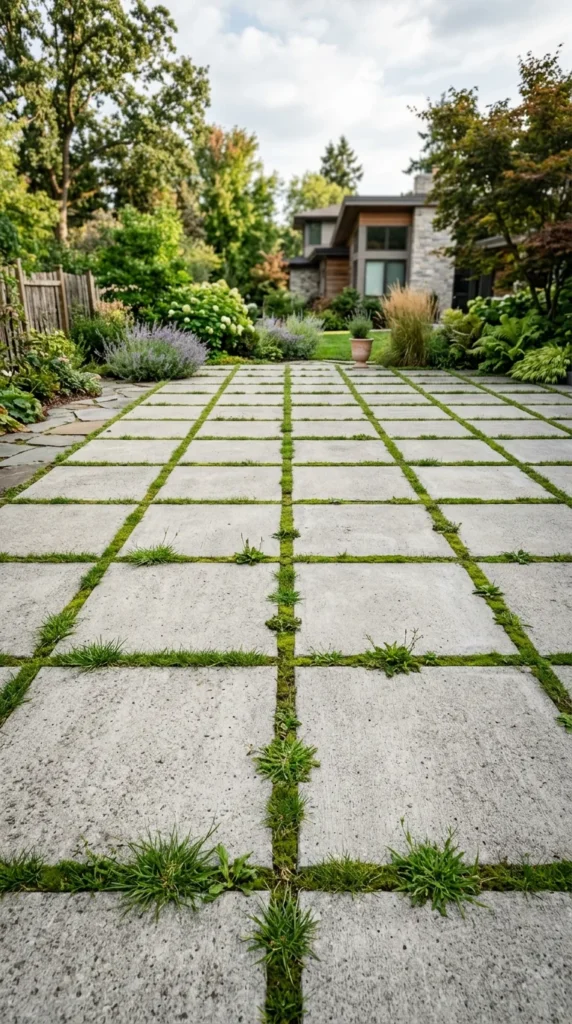
You don’t need to spend extra money on molds to get a designer look; sometimes, it’s all about the “saw cuts.” By cutting deep, wide grooves into a cured slab in a perfect grid pattern, you create the illusion of massive custom-poured tiles. Filling these joints with contrasting sand or allowing grass to grow through them adds a touch of “soft modernism” that blends the built environment with nature.
9. Built-in Seating
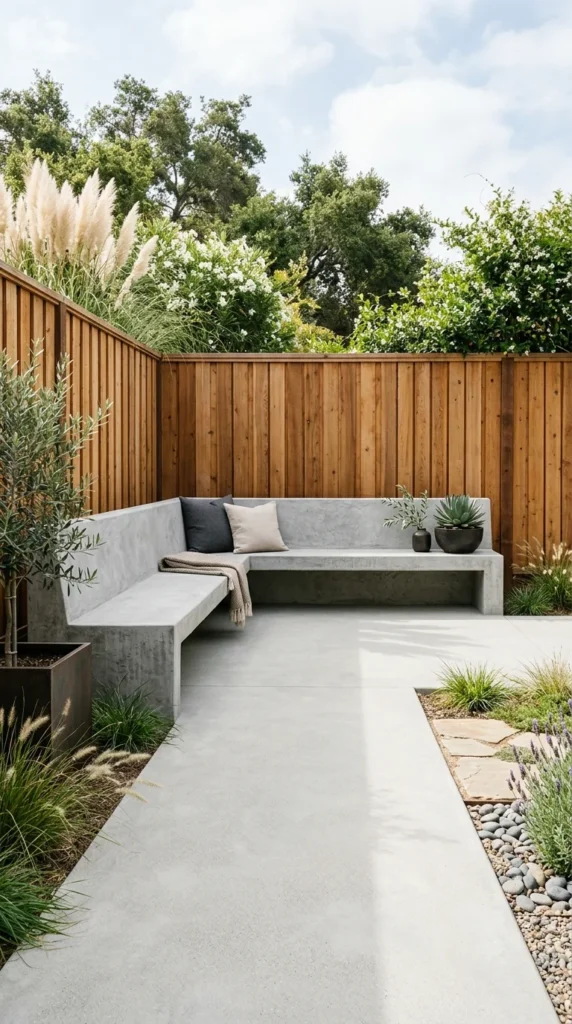
When pouring your patio, consider adding vertical elements like a built-in concrete bench. This eliminates the need for bulky outdoor furniture and creates a permanent, structural feel. To keep it comfortable, simply add weather-resistant cushions. The continuity of material from the floor to the seating creates a clean, uncluttered visual line that is a staple of modern minimalism.
10. Fire Pit Focus
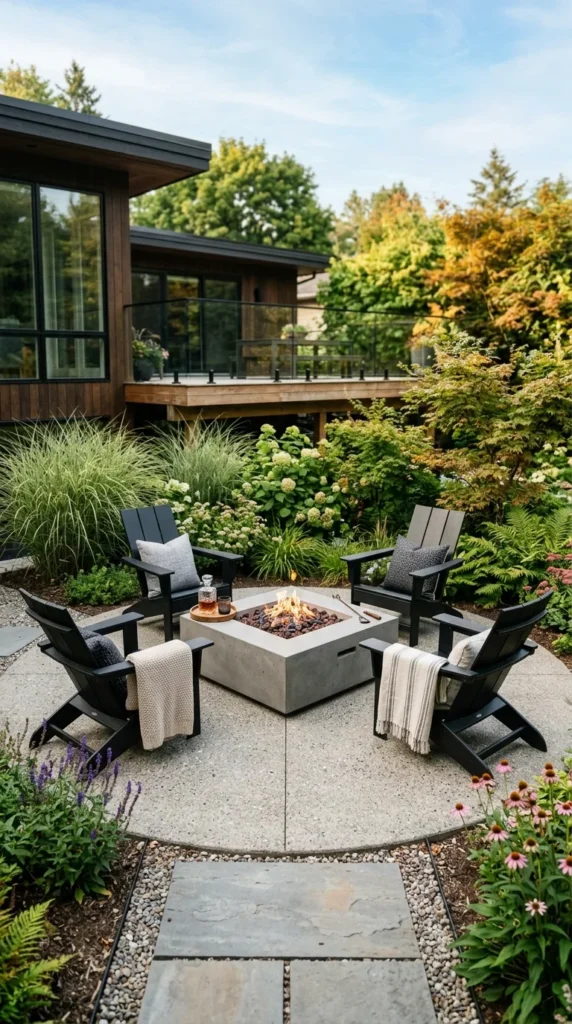
Concrete is the ideal material for fire features because of its heat resistance and durability. Instead of buying a cheap metal fire bowl, you can cast a simple, square or circular fire pit directly onto your concrete patio. This creates a dedicated focal point for the yard. The monochromatic look of a concrete fire pit against a concrete floor is incredibly sleek and sophisticated.
11. Gravel Borders
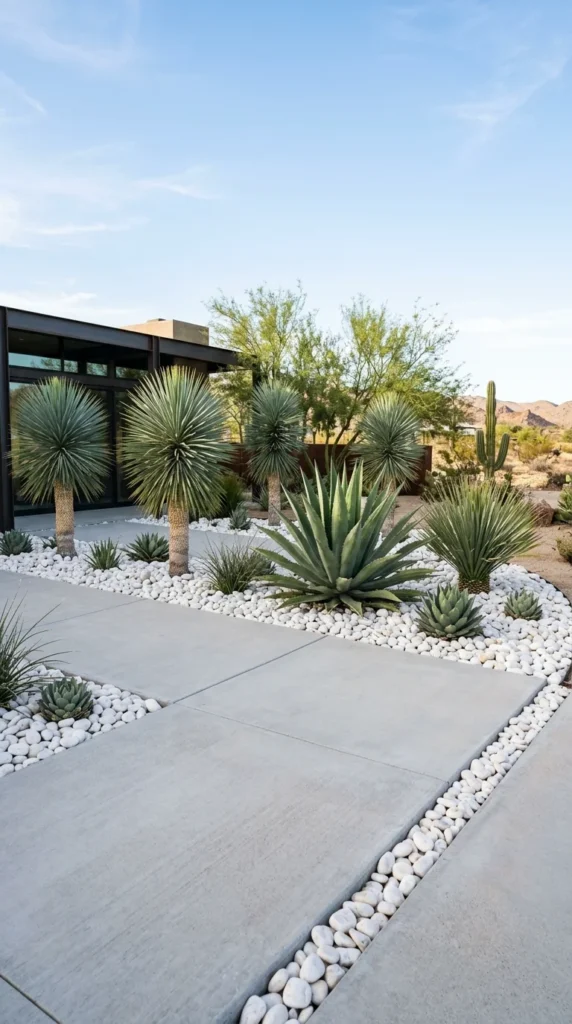
A simple way to make a basic concrete slab look intentional and high-end is to leave a “negative space” border around it filled with gravel. This serves two purposes: it provides excellent drainage for rainwater and creates a sharp, clean frame for your living area. Using contrasting colors—like dark slate gravel against light gray concrete—adds a dramatic, graphic quality to the landscape.
12. Checkerboard Layout
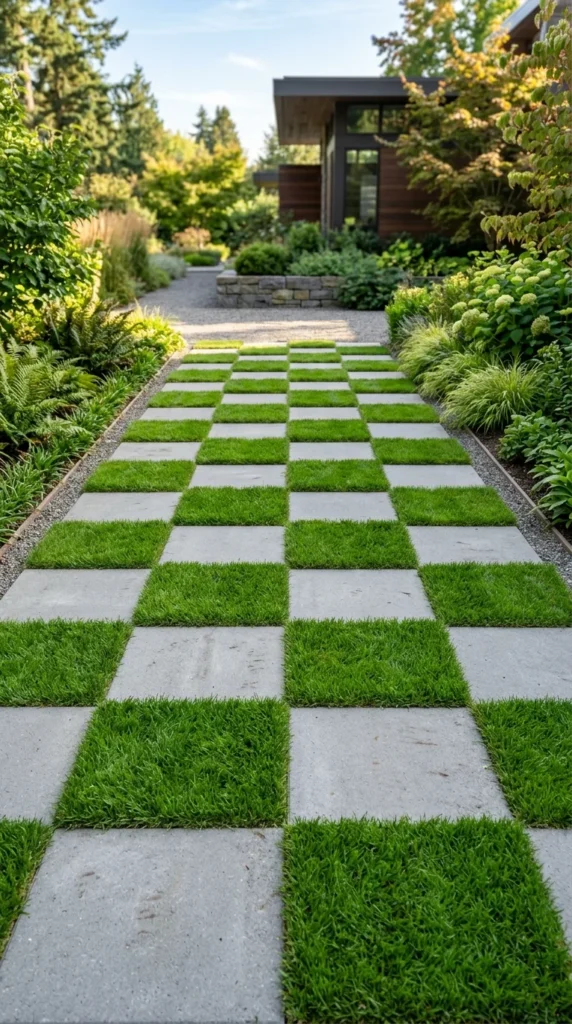
The checkerboard patio is a classic that has been reimagined for the modern era. By alternating concrete squares with squares of grass or low-growing ground cover (like Creeping Thyme), you create a living tapestry. This reduces the “heat island” effect of a solid concrete slab and adds a playful, rhythmic energy to the backyard that looks much more expensive than it actually is.
13. Curved Edges
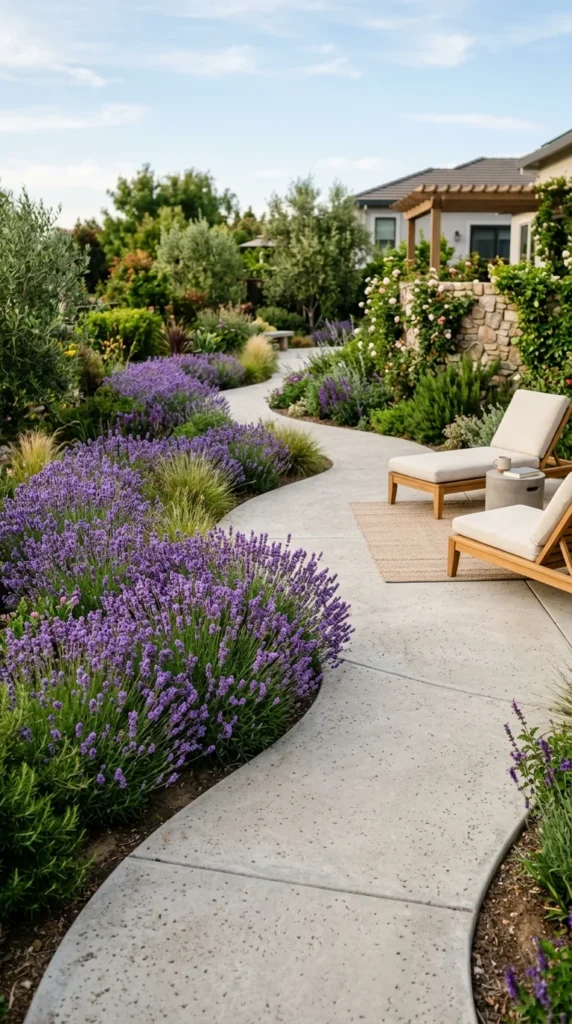
While modern design often leans toward sharp angles, organic “soft modernism” is a growing trend. Instead of a standard rectangle, pouring concrete with sweeping, serpentine curves allows the patio to flow naturally with the contours of your garden. This softens the “hard” look of the concrete and makes the outdoor space feel more relaxing and integrated with the environment.
14. Multi-level Tiers
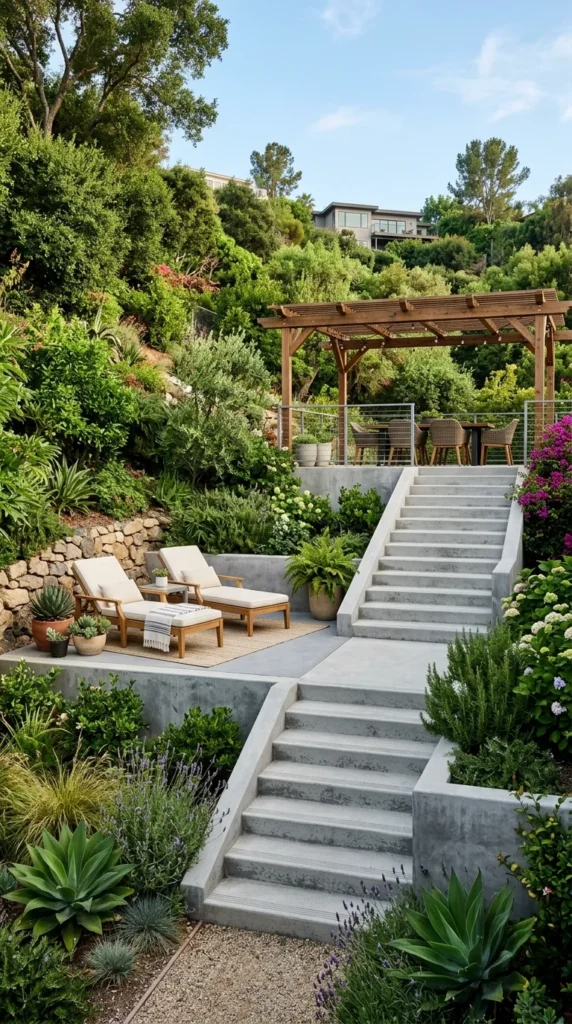
If your yard has a slope, don’t fight it—use it. Creating a series of small, tiered concrete platforms creates distinct “rooms” for dining, lounging, and cooking. This multi-level approach adds depth and dimension to the yard. Because concrete can be formed into any shape, it is often more cost-effective for terracing than building stone retaining walls and separate wooden decks.
15. Minimalist Overhangs
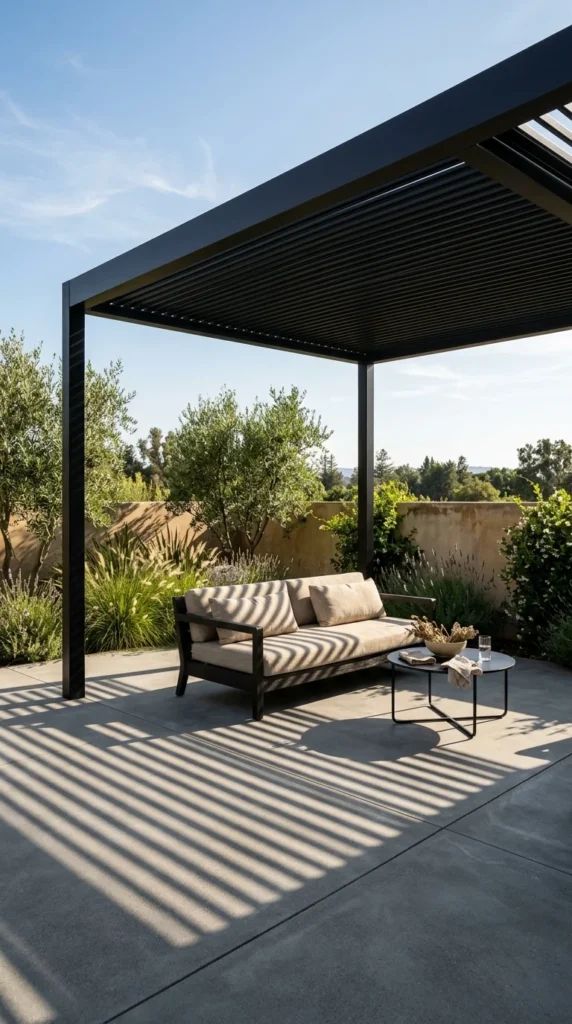
To complete the modern look, consider the vertical space above the concrete. A minimalist pergola or a cantilevered roof extension provides shade and architectural interest. The combination of a heavy, grounded concrete floor with a light, airy overhead structure creates a perfect balance of elements. This setup makes the patio feel like a true extension of the home’s interior architecture.
16. Solar Integration
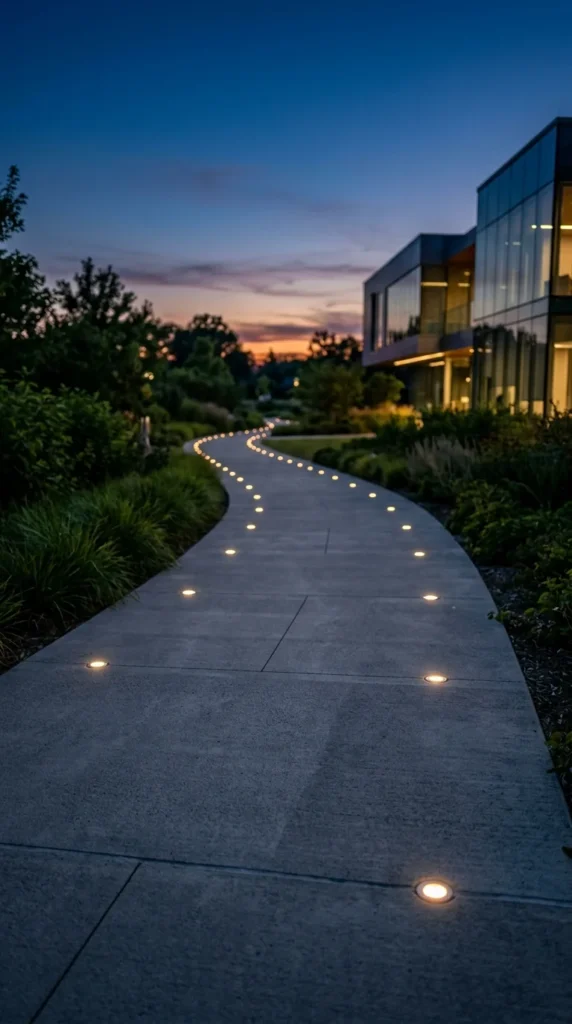
Modern patios are as much about function as they are about form. During the pouring process, you can embed solar-powered LED “bricks” or circular puck lights directly into the concrete. This provides a clean, wire-free lighting solution that guides guests along the patio at night and highlights the texture of the material without the clutter of traditional garden stakes.
17. Lush Landscaping
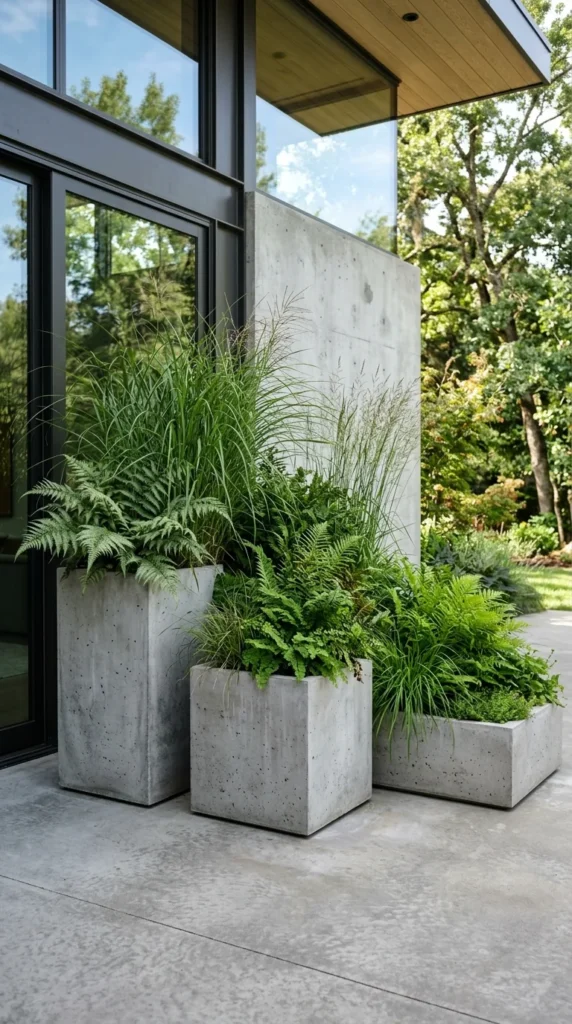
Concrete can sometimes feel “cold” if not balanced correctly. The secret to a successful modern concrete patio is the surrounding greenery. By using oversized concrete planters or leaving cutouts within the slab for architectural trees (like a Japanese Maple), you create a “living” patio. The contrast between the rigid, gray concrete and the soft, vibrant green foliage is the hallmark of professional landscape design.