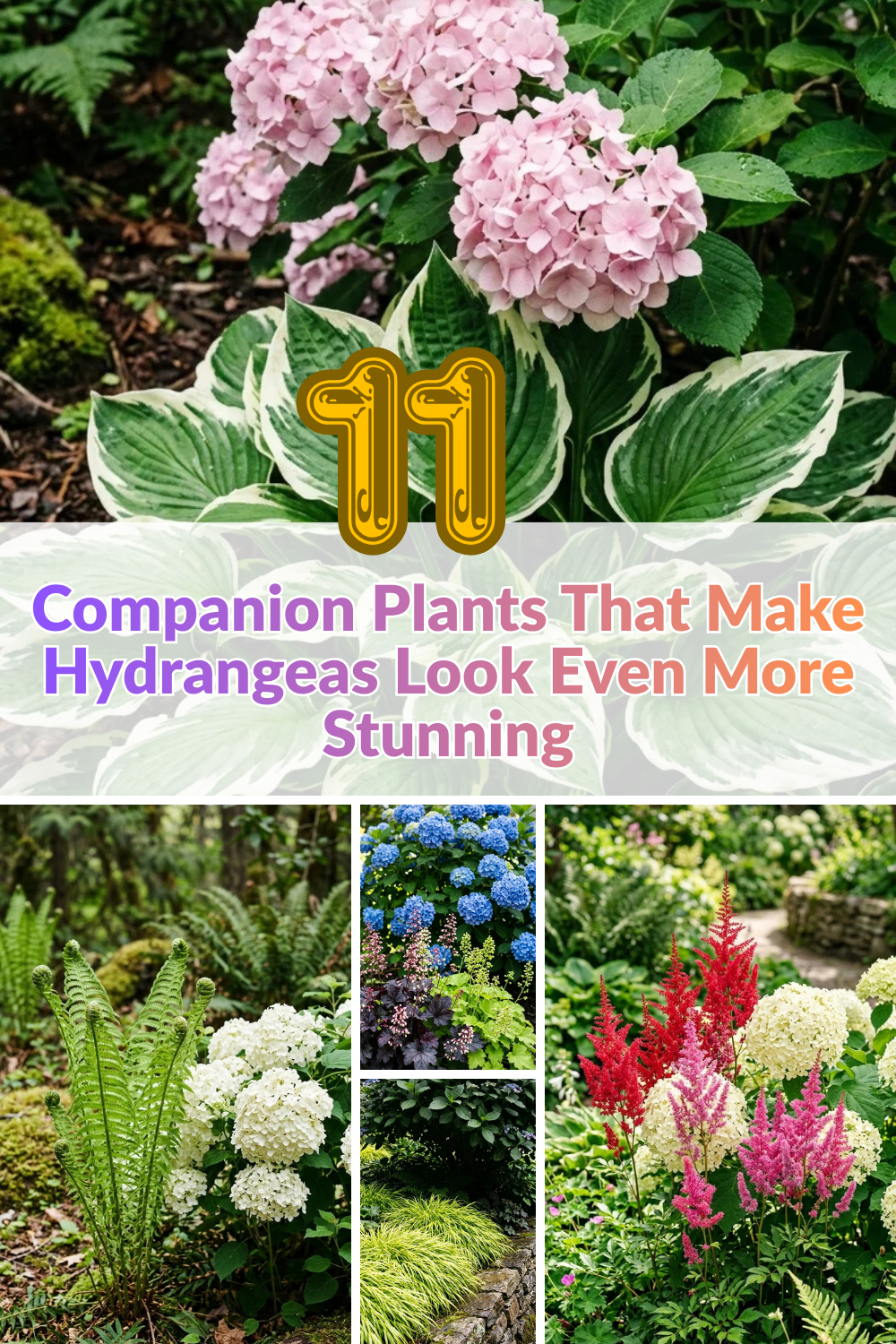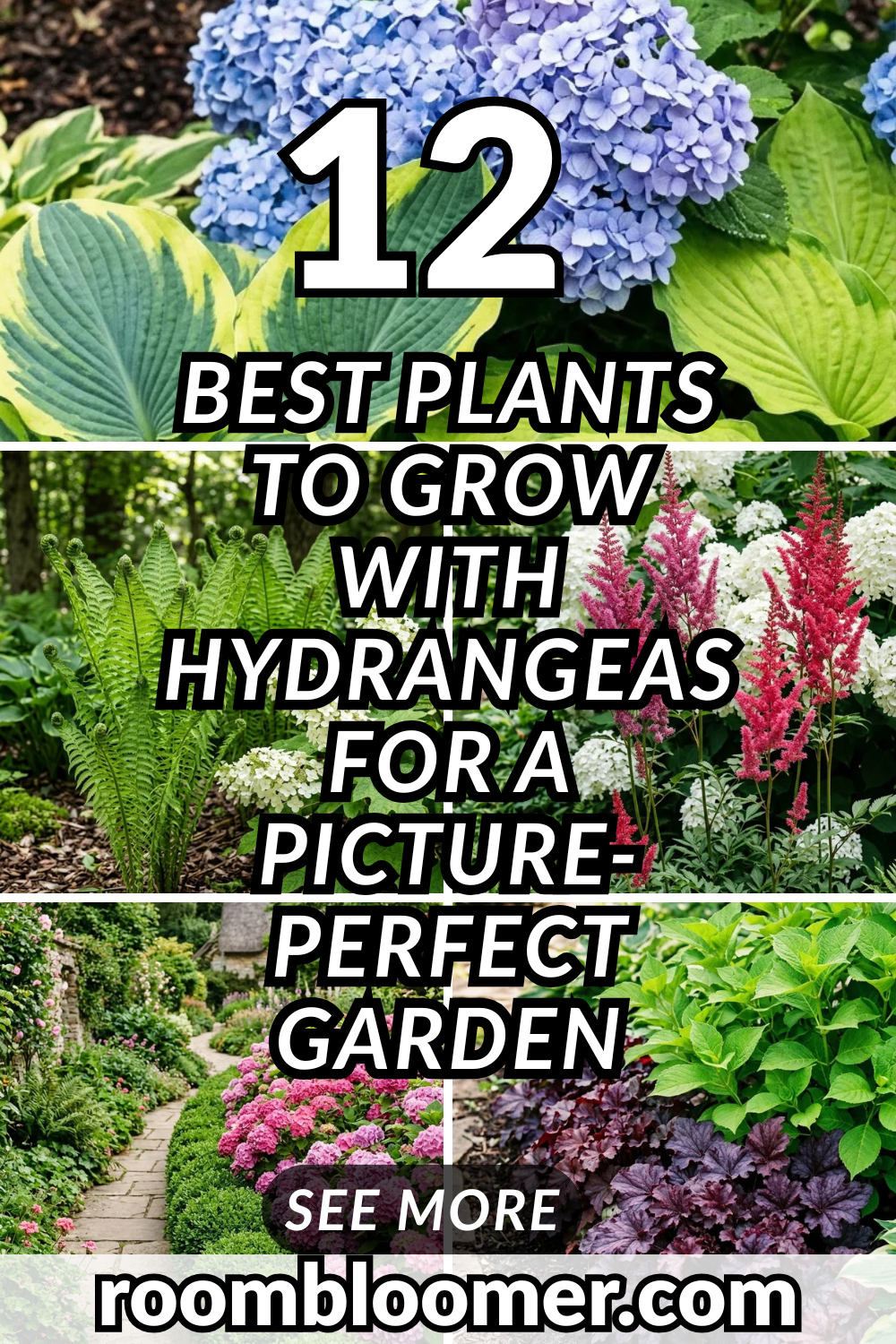
Hydrangeas are the undisputed royalty of the summer garden. With their voluminous blooms, rich green foliage, and ability to shift colors based on soil pH, they provide a dramatic focal point that few other shrubs can match. However, even a queen needs a court. To truly elevate your landscape from “nice” to “magazine-worthy,” you need companion plants that highlight the hydrangea’s best features while filling in the gaps during different seasons.
The secret to a successful hydrangea pairing lies in three things: shared growing conditions (moist, well-drained soil and partial shade), contrasting textures, and staggered bloom times. Whether you are planting the classic Bigleaf (Macrophylla), the sun-loving Panicle (Paniculata), or the delicate Smooth (Arborescens) variety, these twelve companions will create a harmonious and breathtaking garden display.
1. Hostas
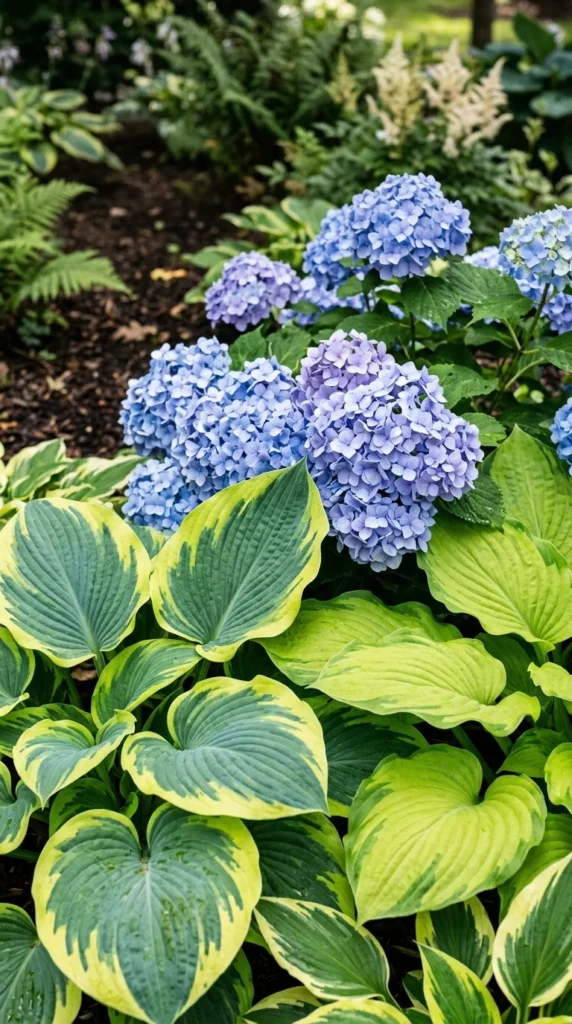
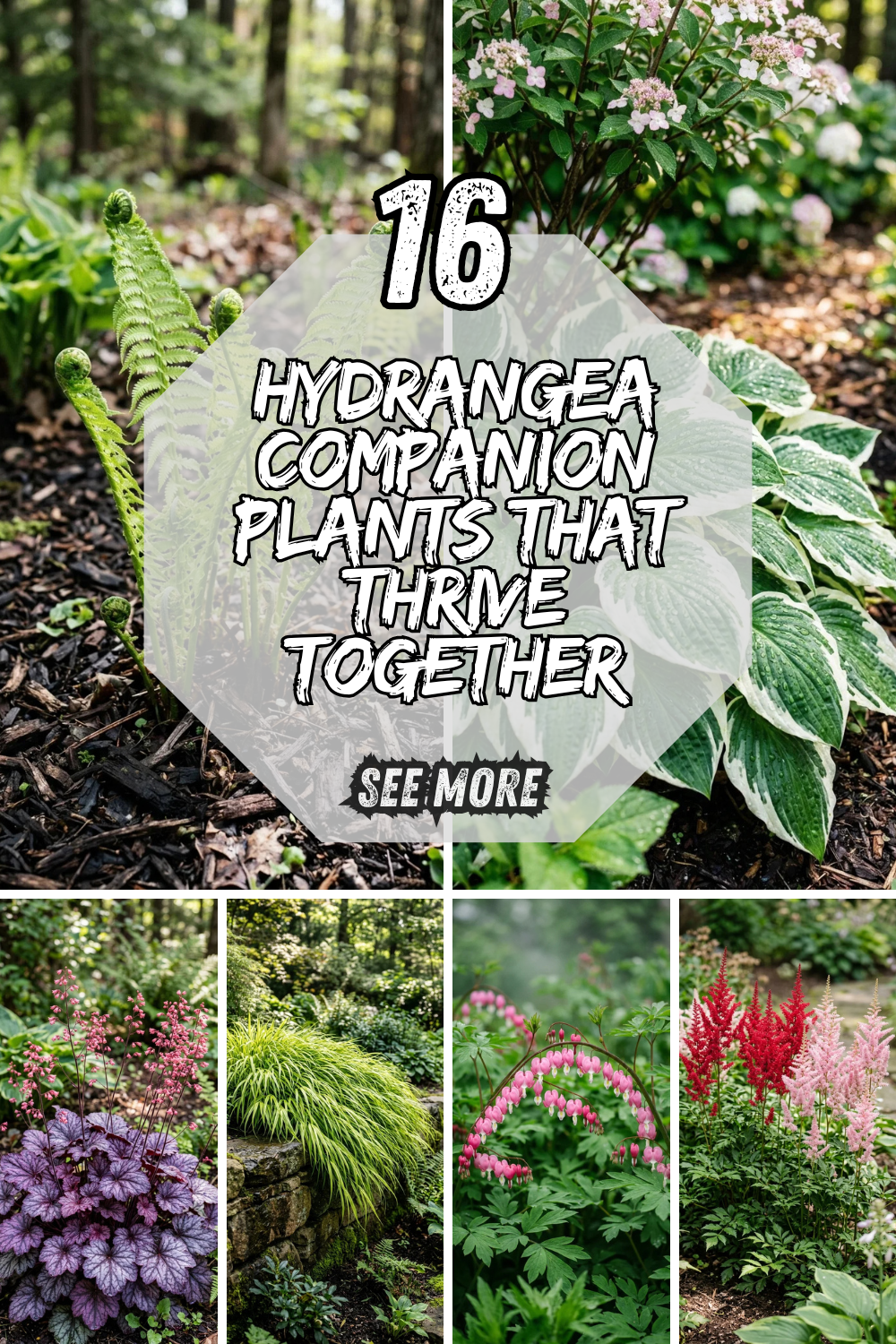
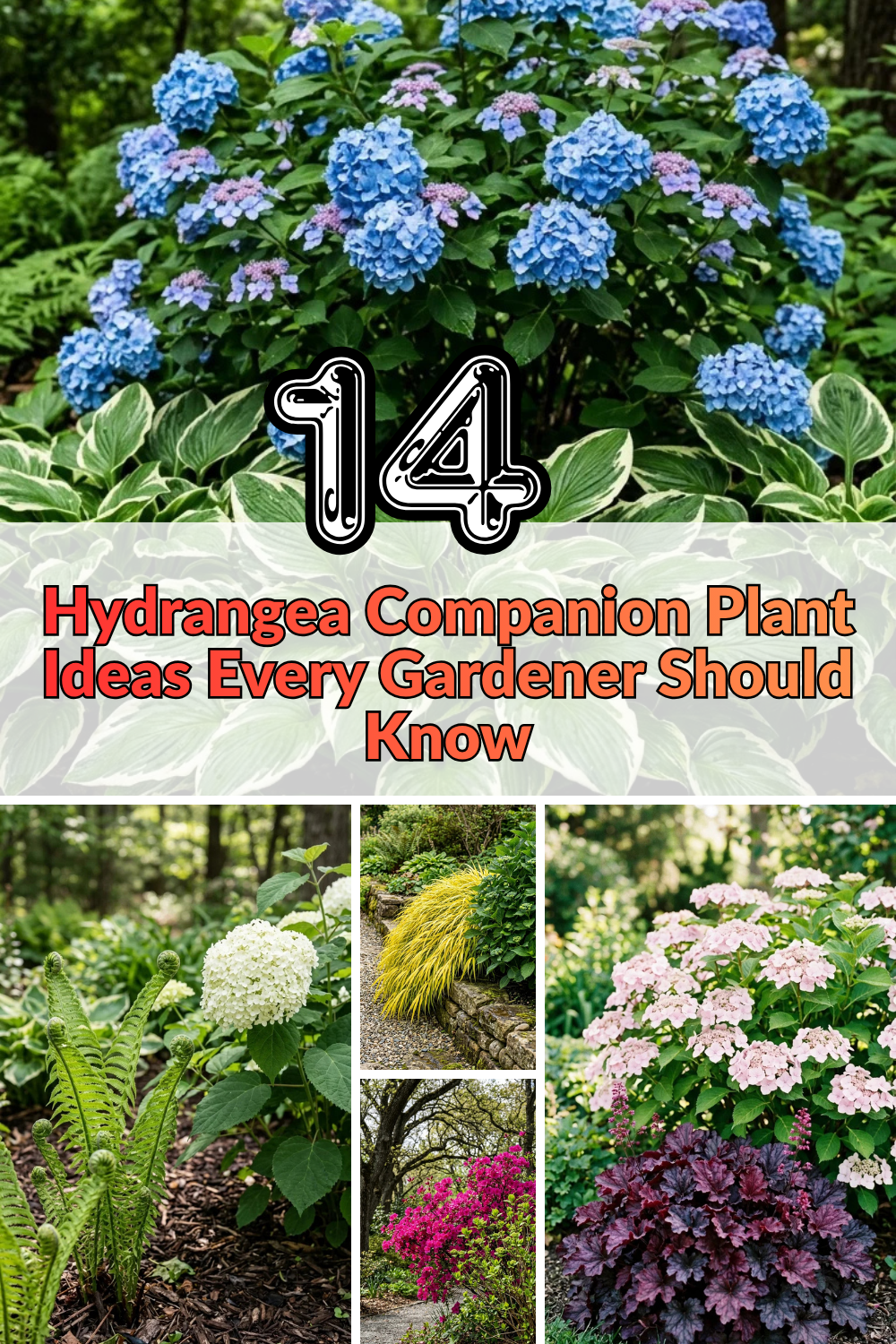
Hostas are the quintessential companion for hydrangeas. Since most hydrangeas thrive in part-shade, they share the exact same environmental preferences as these foliage powerhouses. The broad, waxy leaves of hostas provide a stunning structural contrast to the serrated, matte leaves of the hydrangea.
To create a professional look, choose variegated hostas with white or yellow margins. These “bright” leaves help illuminate the darker corners under the hydrangea canopy. Because hostas come in sizes ranging from miniature to “giant,” you can use them as a low-growing groundcover or a mid-level filler to hide the “bare legs” of older hydrangea shrubs.
2. Ferns
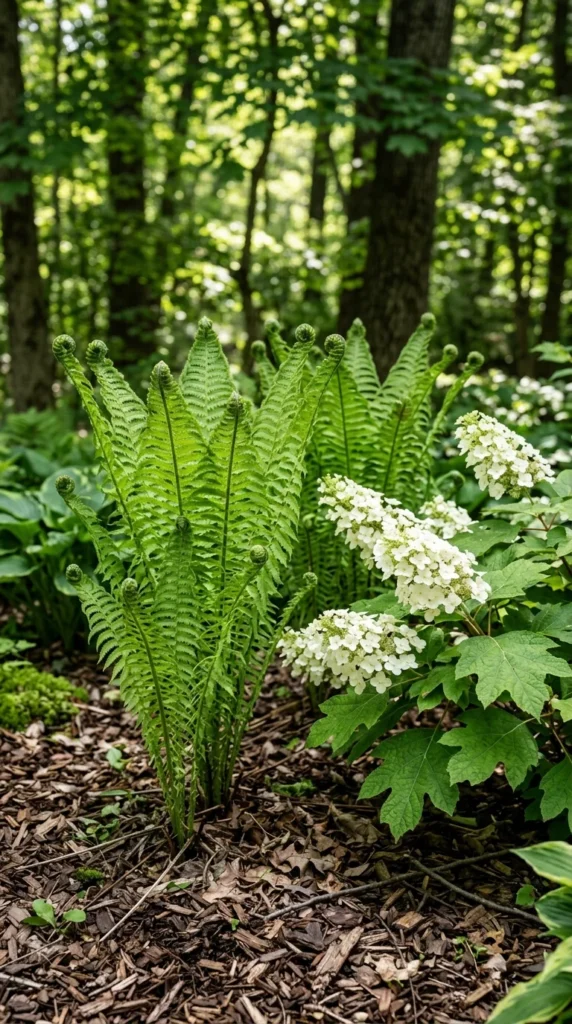
If you want to lean into a woodland or cottage garden aesthetic, ferns are an absolute must. While hydrangeas offer heavy, round, and bold textures, ferns provide the opposite: airy, feathery, and intricate patterns. This contrast prevents the garden from feeling too “heavy.”
Ostrich ferns offer impressive height, while Japanese Painted Ferns introduce unique silvery-purple hues that pair beautifully with blue or pink hydrangea varieties. Ferns are also excellent for filling in the damp, shaded spots where grass refuses to grow, creating a lush, green carpet that keeps the hydrangea roots cool and moist.
3. Astilbe
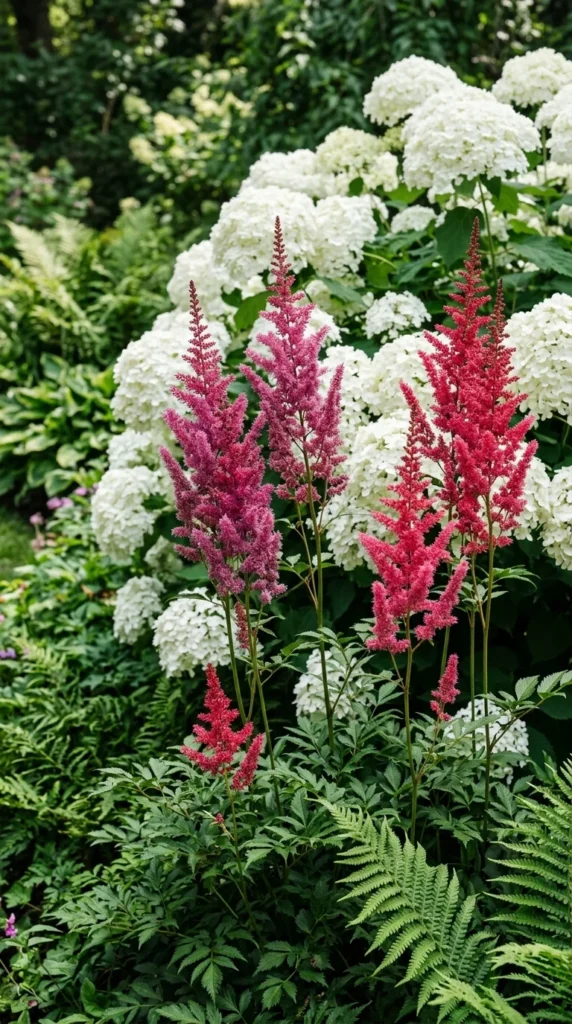
While hydrangeas provide the “mophead” or “lacecap” shapes, Astilbe introduces a completely different geometry: the spire. The vertical, feathery plumes of Astilbe add a sense of movement and height variety to your flower beds.
Astilbes bloom in shades of white, pink, red, and lavender, making it easy to color-coordinate with your hydrangeas. They love the same consistent moisture that hydrangeas crave, ensuring that neither plant will out-compete the other for water. Planting them in drifts (groups of three or five) creates a rhythmic flow that leads the eye through the garden.
4. Boxwood
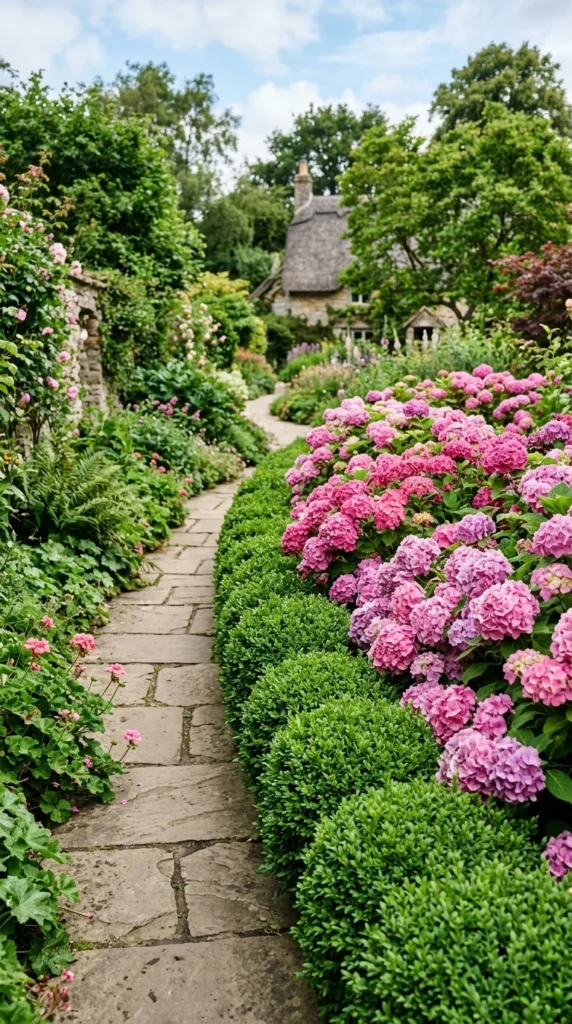
One of the few drawbacks of hydrangeas is that many varieties are deciduous and can look like a collection of sticks during the winter months. This is where Boxwood comes to the rescue. By planting evergreen boxwoods near your hydrangeas, you ensure your garden has structure and “bones” all year long.
The small, dark, glossy leaves of the boxwood provide a sophisticated backdrop that makes the hydrangea blooms pop. You can shear them into formal spheres or low hedges to create a “contained” look, which balances the somewhat wild and floppy nature of large hydrangea bushes.
5. Heuchera
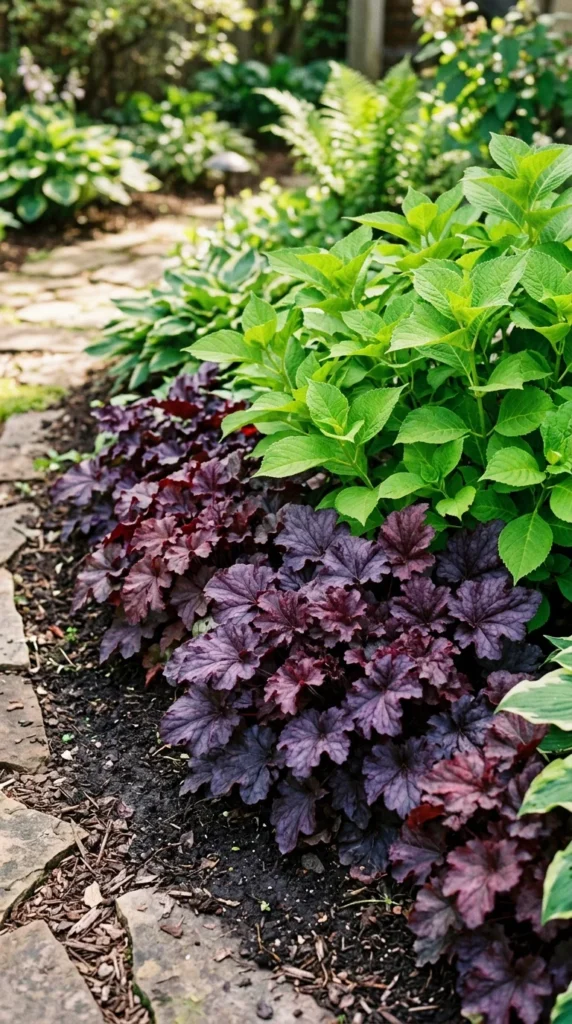
Commonly known as Coral Bells, Heuchera is grown primarily for its spectacular foliage. Available in colors ranging from lime green and silver to deep burgundy and burnt orange, these plants allow you to play with color theory in your garden.
A deep purple Heuchera planted beneath a white or “Limelight” hydrangea creates a high-contrast, modern look. Because Heuchera remains low to the ground, it acts as a colorful skirt for the hydrangea, masking the woody stems at the base while adding a splash of color even when nothing is in bloom.
6. Japanese Forest Grass
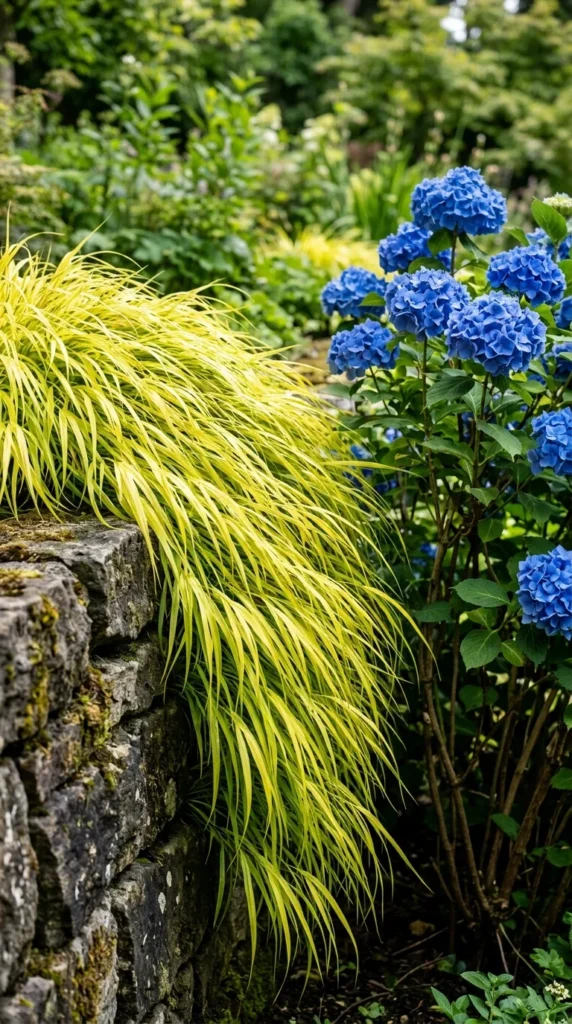
Texture is the secret ingredient of great garden design, and Japanese Forest Grass (Hakonechloa) offers it in spades. This ornamental grass has a weeping, bamboo-like habit that looks like a golden waterfall spilling out from under your hydrangeas.
The bright yellow-green color of the “Aureola” variety is perfect for brightening up shady spots. As the wind blows, the grass ripples, adding a dynamic element of motion that contrasts with the sturdy, static presence of the hydrangea. It’s a sophisticated pairing that works exceptionally well in Zen-inspired or contemporary gardens.
7. Azaleas
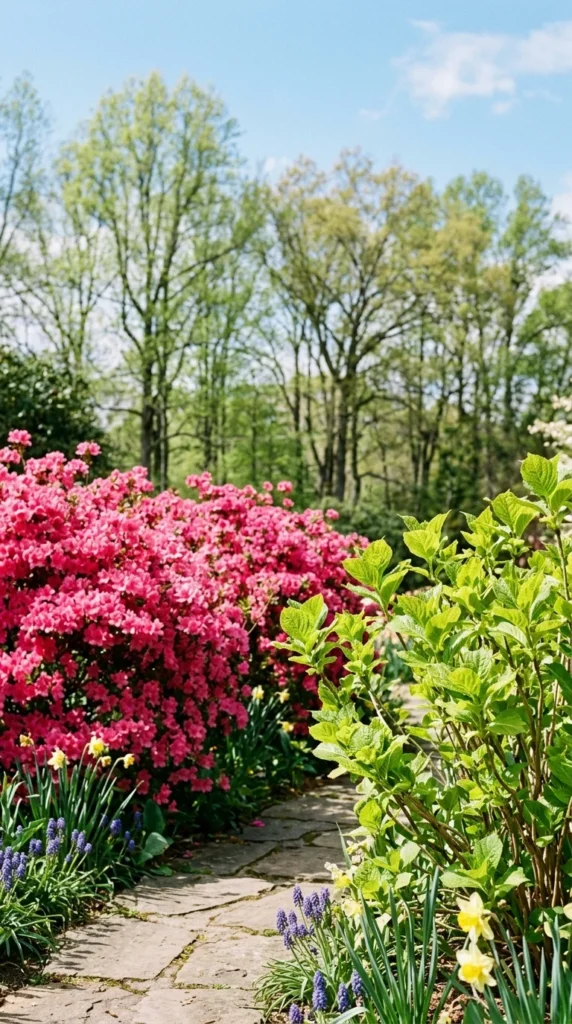
To extend your garden’s beauty, you need to think about the “bloom handoff.” Azaleas and rhododendrons typically bloom in early to mid-spring, just as hydrangeas are beginning to wake up and produce their lush green leaves.
By planting these two together, you ensure a continuous show of color from April through August. Both plants prefer acidic soil (which helps many hydrangeas stay blue) and filtered light. Once the azalea flowers fade, their evergreen leaves provide a solid green background for the hydrangea’s summer performance.
8. Bleeding Hearts
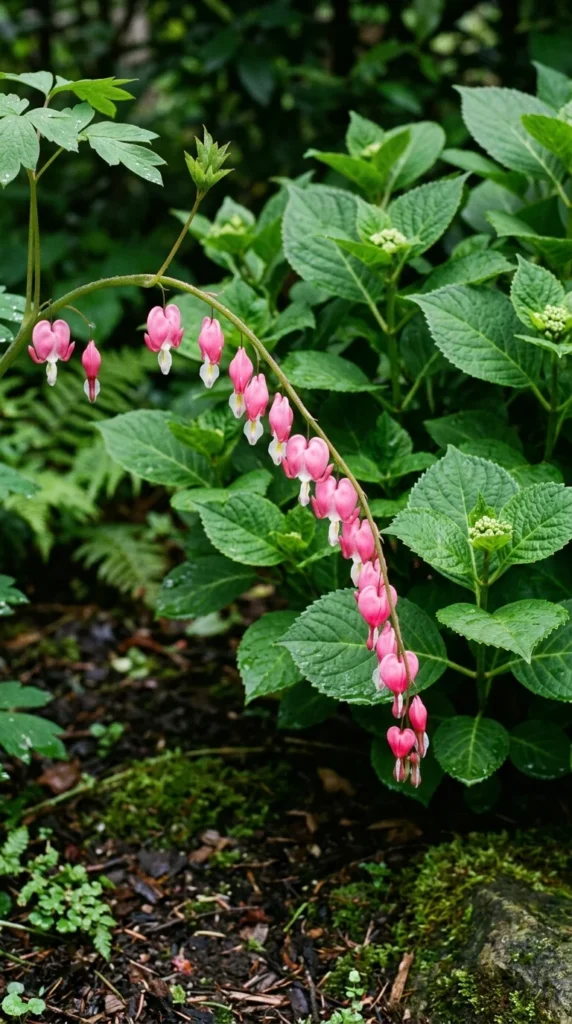
Bleeding Hearts (Lamprocapnos spectabilis) bring a touch of old-world romance to the hydrangea garden. They are one of the first perennials to emerge in the spring, offering delicate, heart-shaped blossoms that dangle from arching stems.
The ephemeral beauty of Bleeding Hearts fills the garden space early in the season. As they go dormant in the heat of mid-summer, the hydrangeas are reaching their full size and can grow over the spot where the Bleeding Hearts were, effectively hiding the yellowing foliage of the dormant plant. It is a perfect spatial and temporal partnership.
9. Siberian Iris
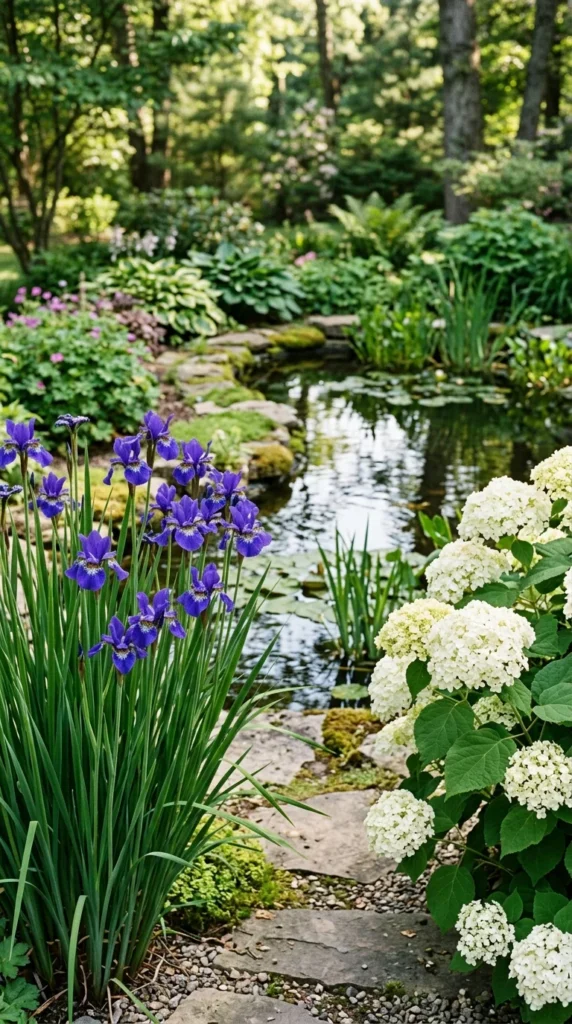
If you have a particularly damp spot in your yard, the Siberian Iris is an ideal companion. While most irises prefer dry feet, the Siberian variety thrives in the same moist soil that hydrangeas need to prevent wilting.
The tall, upright, sword-like foliage of the iris provides a sharp vertical contrast to the mounded shape of the hydrangea. Even after the elegant blue or purple flowers have finished blooming in early summer, the grass-like leaves remain attractive and provide a structural element that persists until frost.
10. Clematis
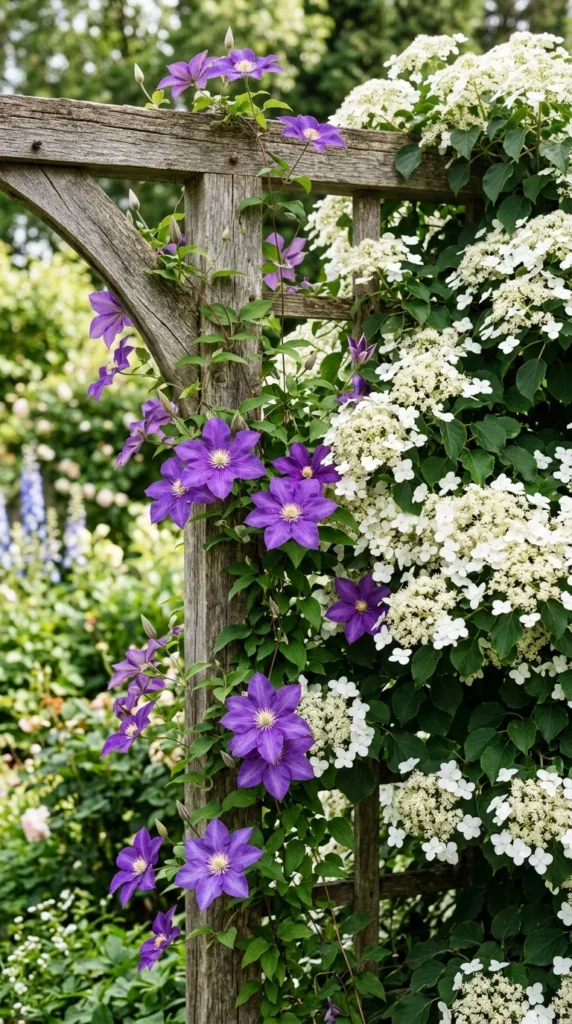
Why limit your garden to the ground? Using a “climbing” companion can add vertical interest and layers to your hydrangea bed. Clematis is often called the “Queen of Climbers,” and it shares a similar regal status with the hydrangea.
You can grow Clematis on a trellis behind your shrubs or even let the vines weave through the branches of sturdier hydrangea varieties like the Panicle hydrangea. A dark purple Clematis “Jackmanii” looks stunning when weaving through the creamy white cones of a “Phantom” or “Limelight” hydrangea, creating a multi-dimensional floral tapestry.
11. Alliums
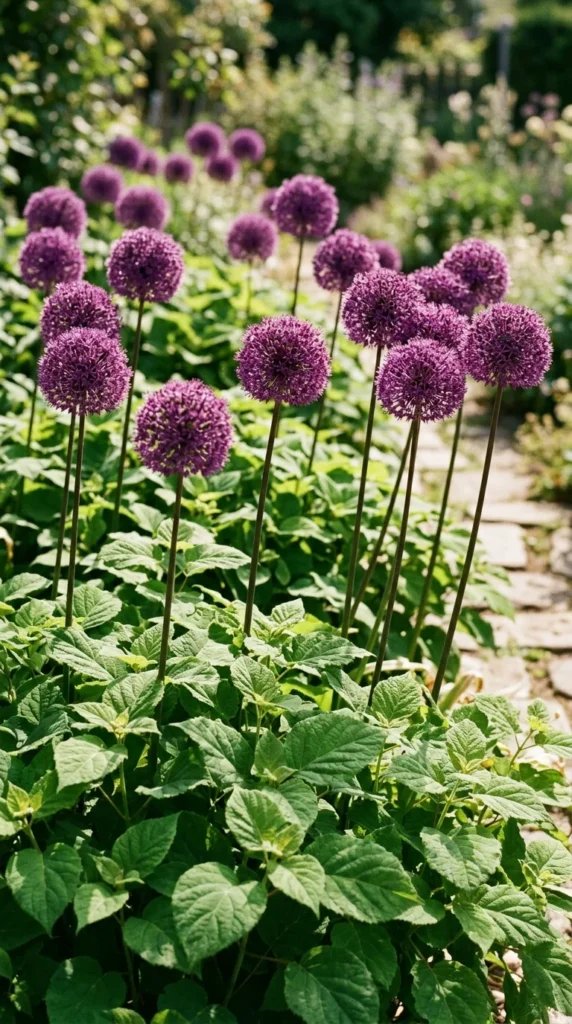
For those growing sun-tolerant hydrangeas like the Panicle or Oakleaf varieties, Alliums are a whimsical and unexpected companion. These ornamental onions produce perfectly spherical flower heads that look like floating lollipops.
The geometric perfection of the Allium globe provides a striking counterpoint to the more organic, ruffled clusters of the hydrangea. Since Allium foliage tends to wither just as the flowers bloom, the large leaves of the hydrangea do an excellent job of camouflaging the Allium’s messy “bottom half,” leaving only the beautiful purple or white spheres visible.
12. Amsonia
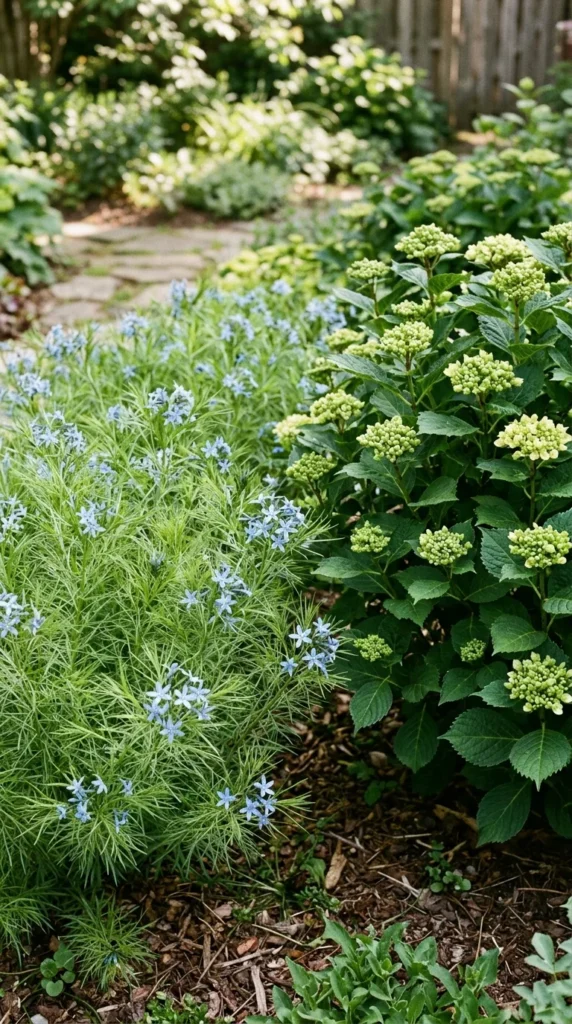
Amsonia, also known as Blue Star, is a textured powerhouse that deserves more recognition in the hydrangea garden. In the spring, it produces clusters of dainty, steel-blue flowers. However, its real value lies in its foliage.
Amsonia has extremely fine, needle-like leaves that create a soft, hazy texture. When planted next to the large-leafed Bigleaf hydrangea, the two plants create a masterclass in textural contrast. As an added bonus, Amsonia foliage turns a brilliant, glowing gold in the autumn, providing a final burst of color just as the hydrangea blooms are beginning to dry and turn antique shades of bronze and burgundy.