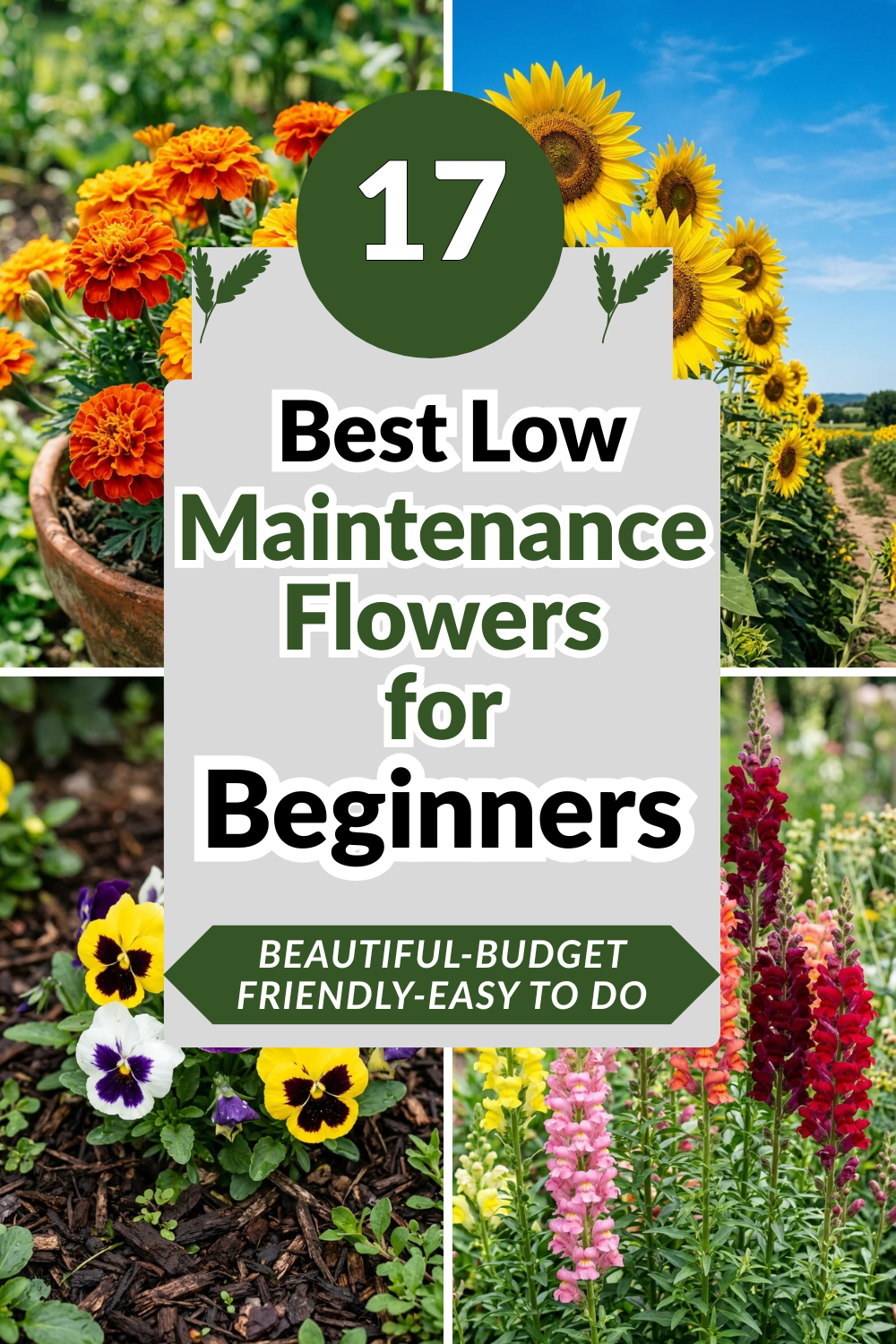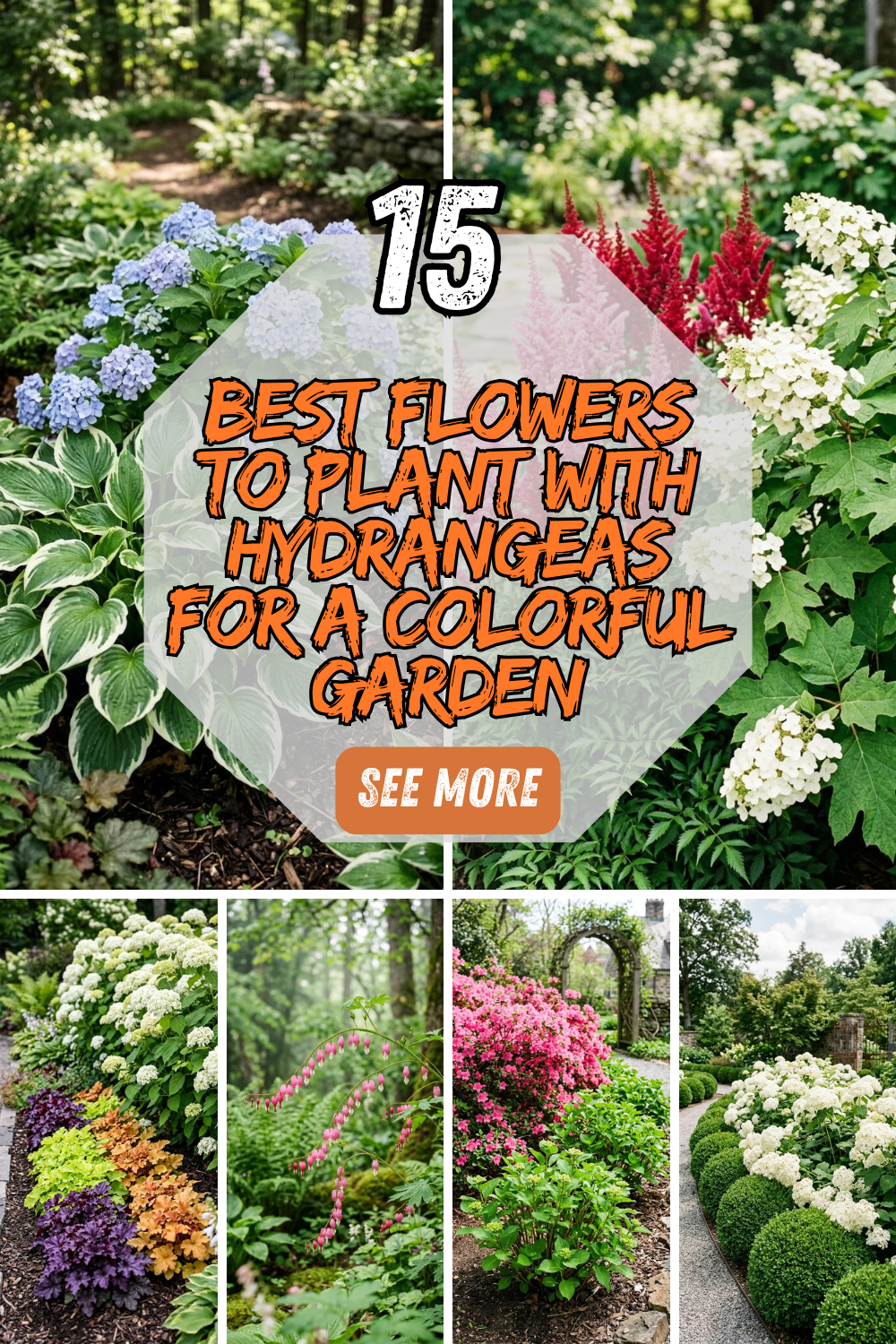
Hydrangeas are the undisputed royalty of the summer garden. With their massive, cloud-like blooms and lush green foliage, they provide a structural foundation that few other shrubs can match. However, even a queen needs a court. To truly elevate your landscape from “nice” to “breathtaking,” you need to pair your hydrangeas with companions that highlight their colors, fill in the gaps during their off-seasons, and thrive in similar soil conditions.
Whether you are growing the classic Bigleaf (Macrophylla), the sun-loving Panicle, or the delicate Lacecap, choosing the right neighbors is key to a harmonious garden. Here are the 15 best flowers and plants to tuck in alongside your hydrangeas for a season-long explosion of color and texture.
1. Hostas
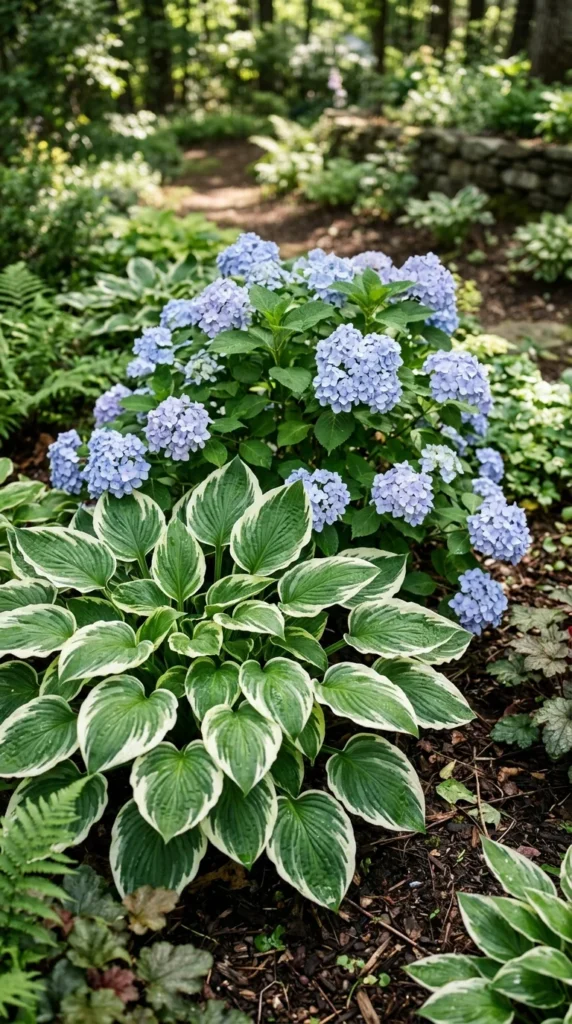
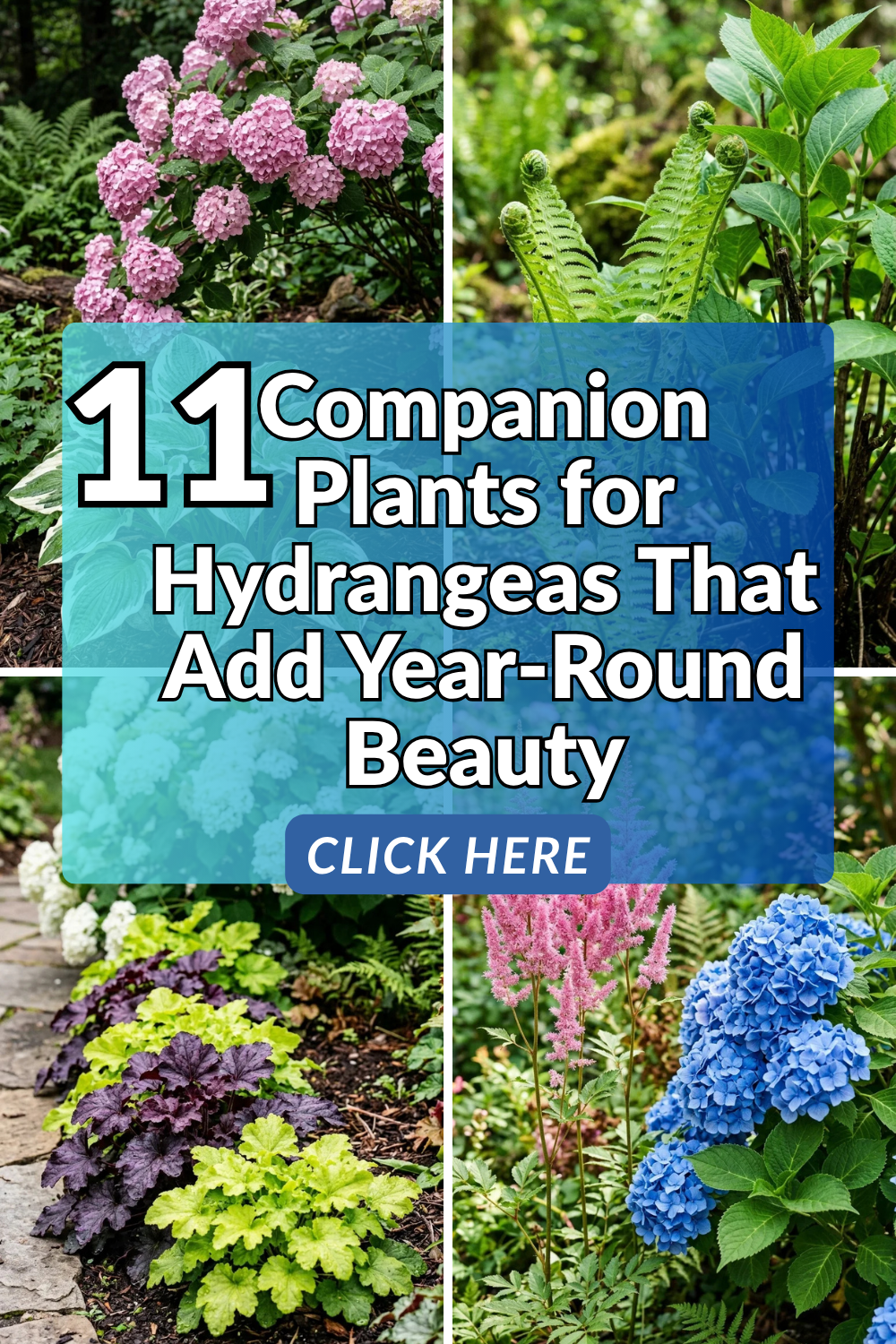
If there is a soulmate for the hydrangea, it is the Hosta. Thriving in the same dappled shade and moist, well-drained soil, Hostas provide a stunning textural contrast to the woody stems of hydrangeas. While hydrangeas offer height and massive floral displays, Hostas stay low to the ground, acting as a lush “skirt” that hides the often-bare lower branches of the shrubs. Opt for variegated varieties with white or chartreuse edges to brighten up darker corners of the garden and echo the colors of white or lime-green hydrangea cultivars.
2. Astilbe
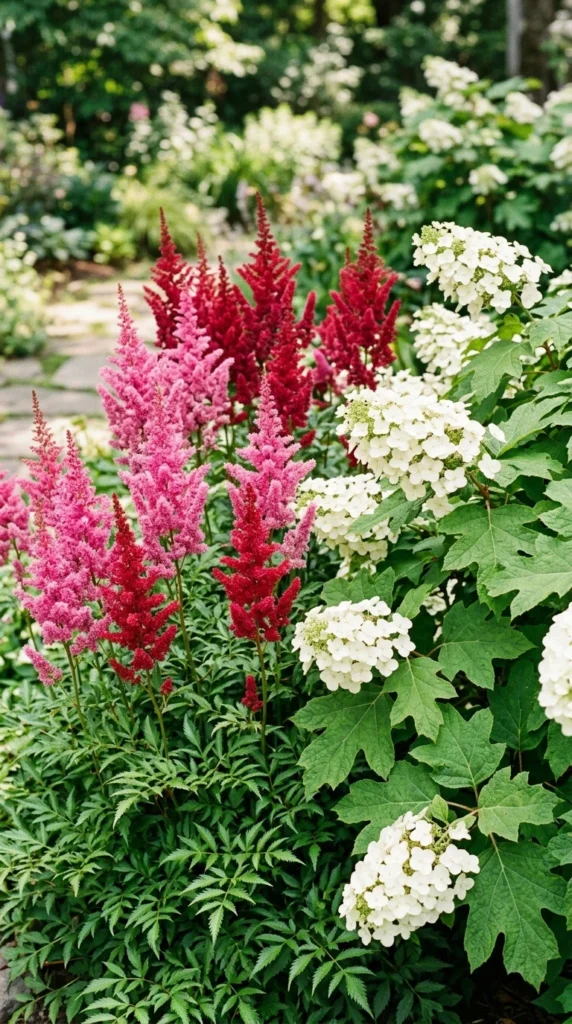
Astilbes are the perfect vertical counterpart to the rounded form of hydrangea blooms. These perennials produce feathery, spire-like plumes in shades of pink, red, white, and lavender. Because they share a love for consistent moisture and partial shade, they thrive in the exact same environment as Macrophylla hydrangeas. The delicate, fern-like foliage of the Astilbe adds a fine-textured layer beneath the broad, bold leaves of the hydrangea, creating a sophisticated multi-dimensional look.
3. Coral Bells
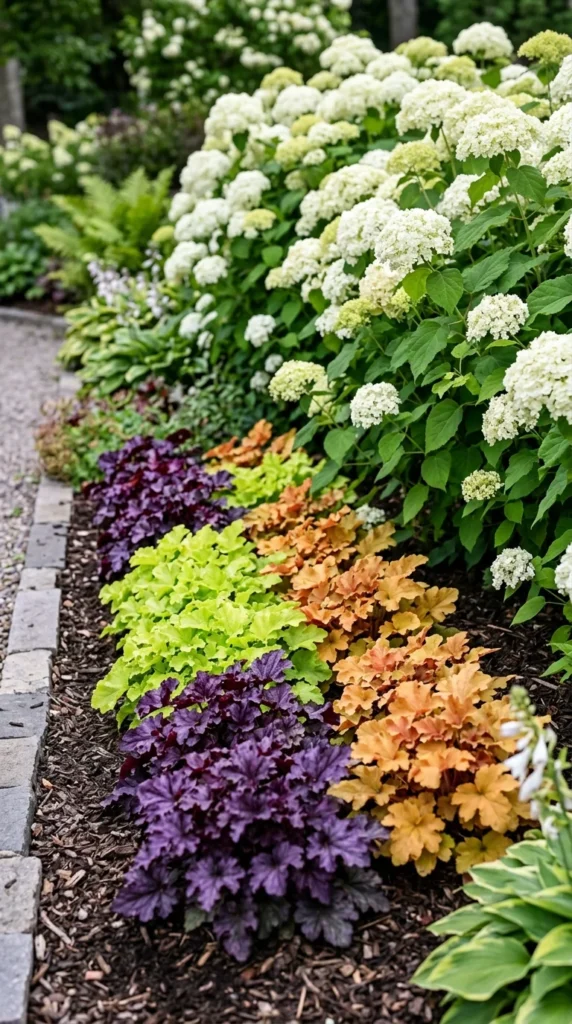
While flowers are fleeting, the foliage of Coral Bells (Heuchera) lasts from spring through frost. These plants are prized for their spectacular leaf colors, ranging from deep obsidian and royal purple to neon lime and burnt orange. Planting Coral Bells at the feet of your hydrangeas allows you to play with color theory—try pairing “Lime Rickey” Heuchera with blue hydrangeas for a high-contrast pop, or “Forever Purple” with white hydrangeas for a regal, cooling aesthetic.
4. Bleeding Hearts
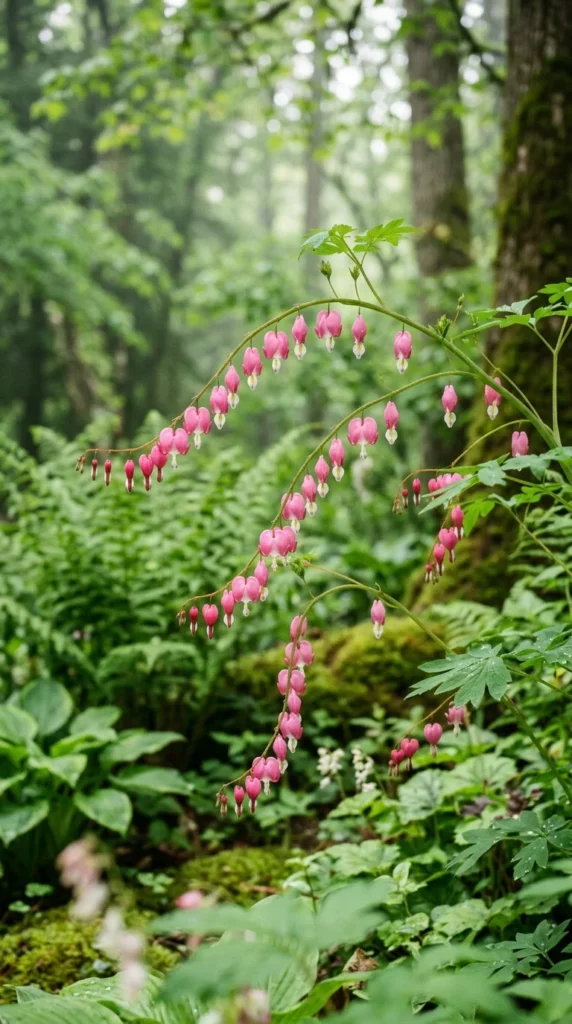
For early spring interest before your hydrangeas have even begun to bud, Bleeding Hearts (Lamprocapnos spectabilis) are an essential companion. They bloom in the cool temperatures of spring, offering whimsical, heart-shaped flowers that dangle from arching stems. As the Bleeding Hearts begin to go dormant in the heat of midsummer, the expanding hydrangea foliage conveniently grows over the space, hiding the fading leaves of the spring perennial.
5. Azaleas
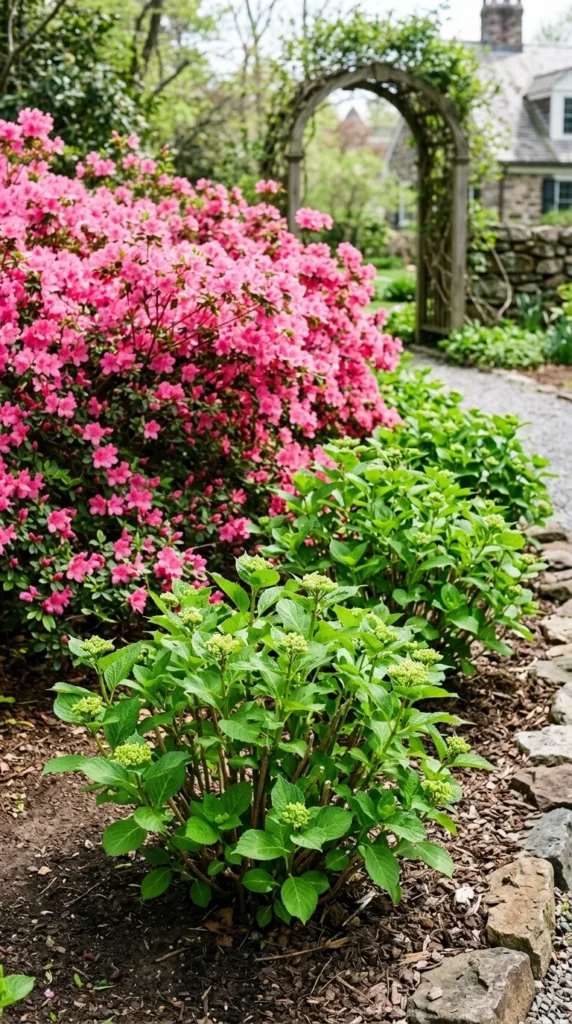
Azaleas and hydrangeas are a match made in acidic-soil heaven. Both plants thrive in soil with a lower pH, which is also what keeps many hydrangeas blooming in shades of blue. Azaleas provide a massive burst of color in the spring, acting as the “opening act” for the summer-blooming hydrangeas. By the time the azalea flowers fade, the hydrangea leaves have filled in, providing a solid green backdrop for the rest of the season.
6. Boxwoods
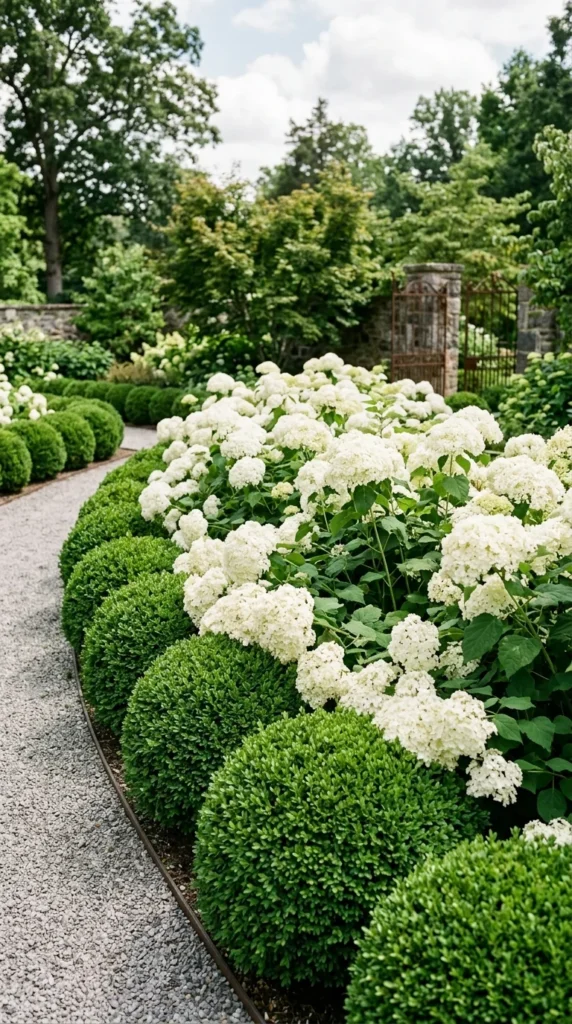
Every garden needs structure, and Boxwoods provide the “bones” that keep a hydrangea bed looking intentional even in the winter. Hydrangeas are deciduous and can look a bit sparse during the colder months. By interspersing evergreen Boxwoods, you ensure that your garden retains its shape and greenery year-round. In the summer, the clean, small leaves of the Boxwood offer a sharp, formal contrast to the wild, romantic reach of hydrangea branches.
7. Japanese Forest Grass
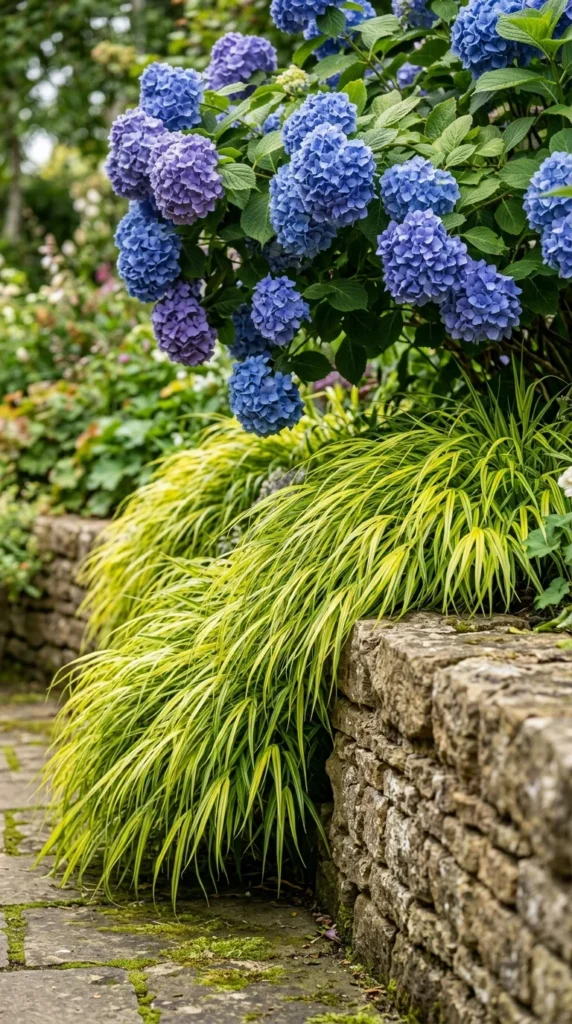
To add movement to your hydrangea garden, look no further than Japanese Forest Grass (Hakonechloa). This shade-loving ornamental grass grows in cascading mounds that look like flowing water. Its bright yellow and lime-green blades provide a luminous quality that can make a shady hydrangea bed feel like it’s glowing. It is particularly effective when planted along the edges of pathways or spilling over stone walls beneath the heavy, drooping heads of hydrangea blooms.
8. Foxgloves
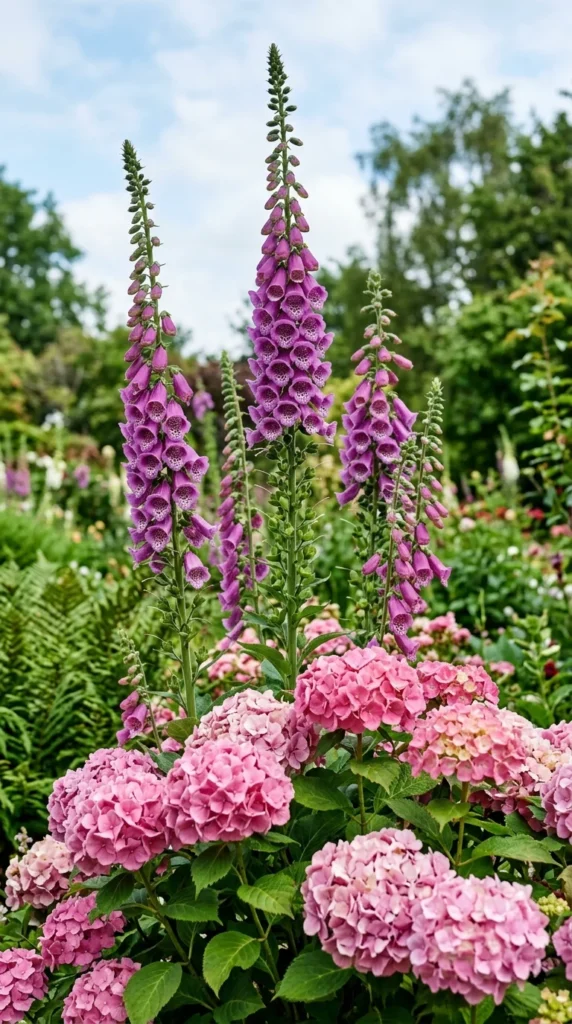
If you want to add a touch of “English Cottage” charm to your landscape, Foxgloves (Digitalis) are a must. These tall, stately biennials provide much-needed height and a vertical silhouette that breaks up the horizontal mass of hydrangea shrubs. Their bell-shaped flowers come in soft pastels and striking bicolors, often featuring intricate spotting inside the bells. They enjoy the same filtered light and rich soil that hydrangeas crave.
9. Clematis
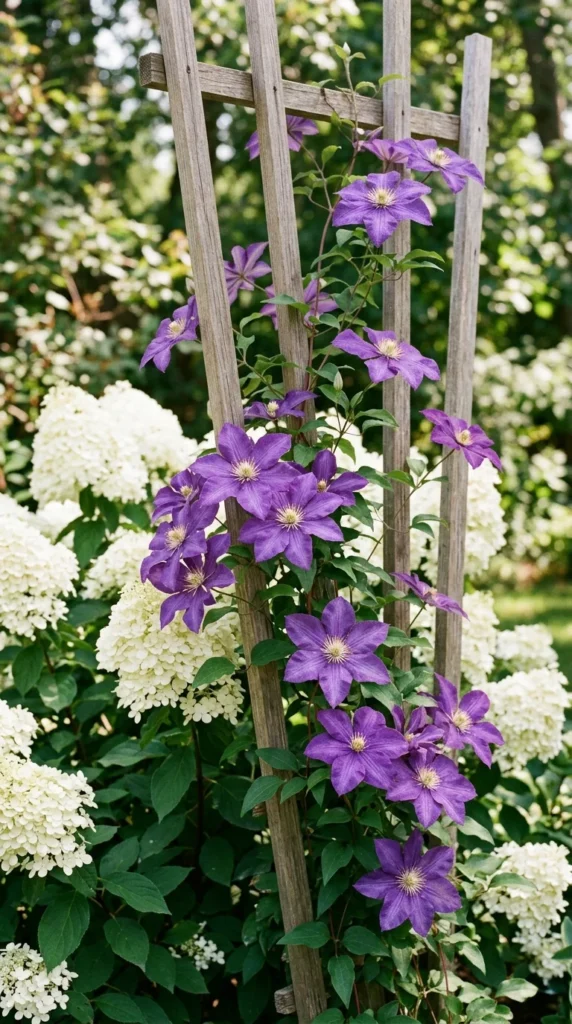
Why limit your garden to the ground? Clematis vines can be trained to grow up trellises or even through the branches of larger hydrangea varieties like the Panicle or Oakleaf. This “layered” gardening approach maximizes vertical space. A deep purple Clematis “Jackmanii” looks stunning when woven through the white cone-shaped flowers of a “Pee Gee” hydrangea, creating a tapestry of color that feels both natural and lush.
10. Ferns
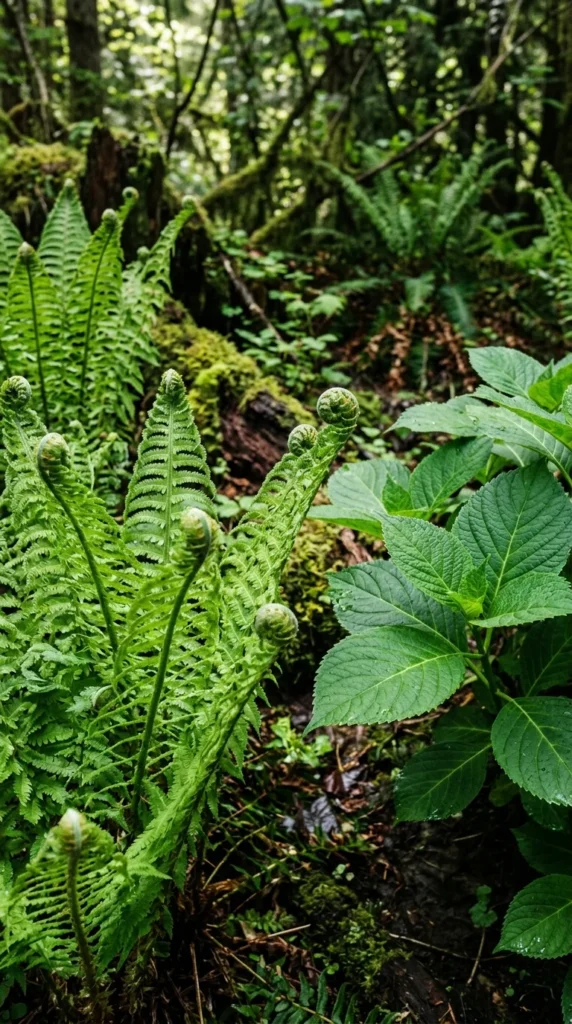
Ferns are the ultimate texture-builders. In a garden dominated by the broad, heavy leaves of hydrangeas, the airy, delicate fronds of Ostrich Ferns or Japanese Painted Ferns provide a cooling, woodland feel. Japanese Painted Ferns are particularly lovely as companions because their silvery-purple fronds echo the tones of blue and purple hydrangeas. They are incredibly low-maintenance and thrive in the moist, cool root zones that hydrangeas provide.
11. Alliums
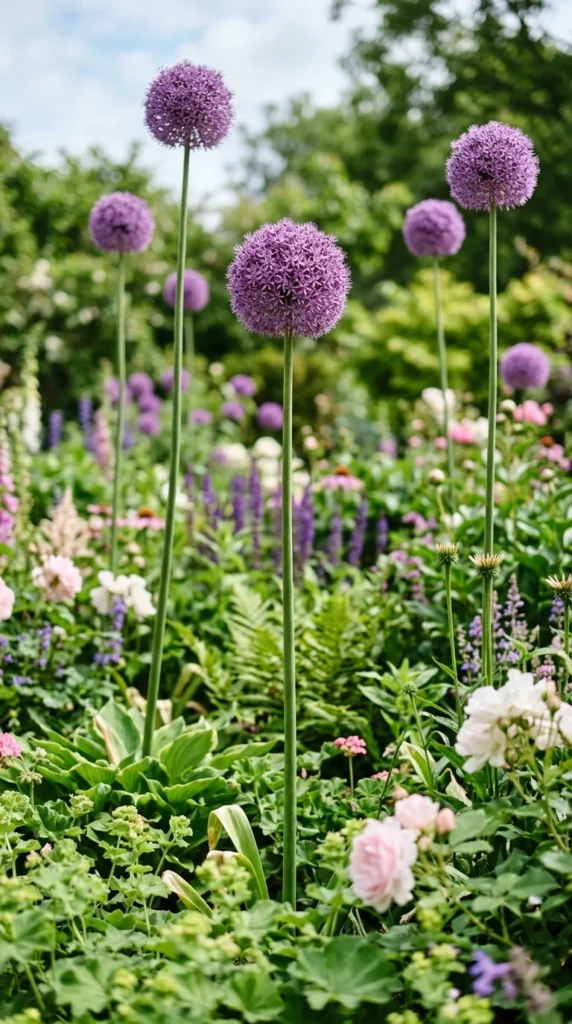
For a touch of whimsy and modern geometric contrast, plant Allium bulbs among your hydrangeas. The perfectly spherical “Globemaster” or “Purple Sensation” alliums look like floating lollipops above the hydrangea foliage. They typically bloom in late spring to early summer, bridging the gap between the spring bulbs and the full hydrangea show. Their structural form provides a stark, beautiful contrast to the soft, billowy nature of the shrubs.
12. Peonies
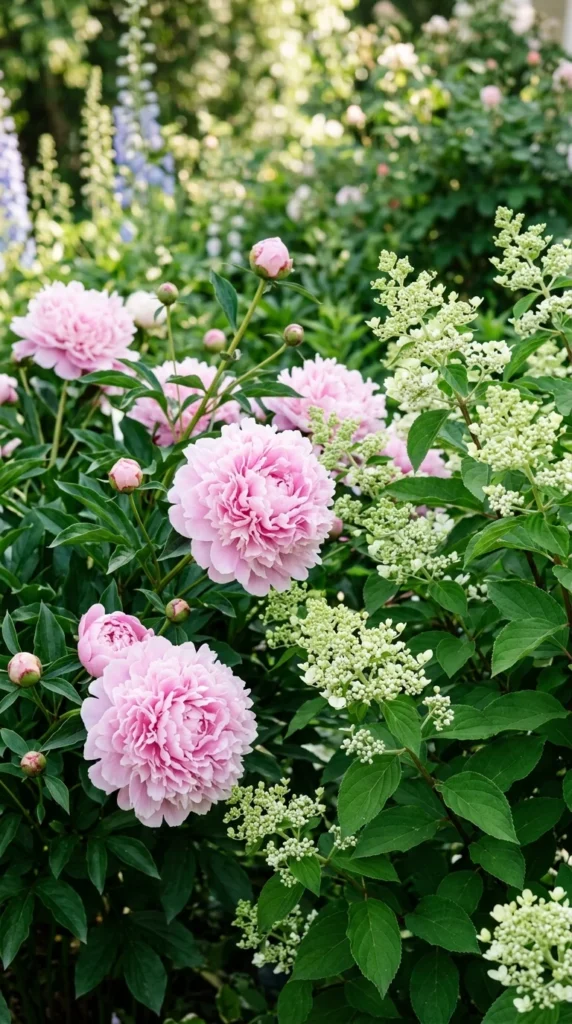
If you have a sunnier spot for your Panicle hydrangeas, Peonies make an exquisite neighbor. Peonies bloom in late spring with massive, fragrant, multi-petaled flowers that rival hydrangeas in sheer drama. Since Peonies finish blooming just as many hydrangeas are starting to gear up, they extend the “big flower” season of your garden significantly. Their glossy, deep green foliage remains attractive throughout the summer, providing a thick base of greenery.
13. Geraniums (Rozanne)
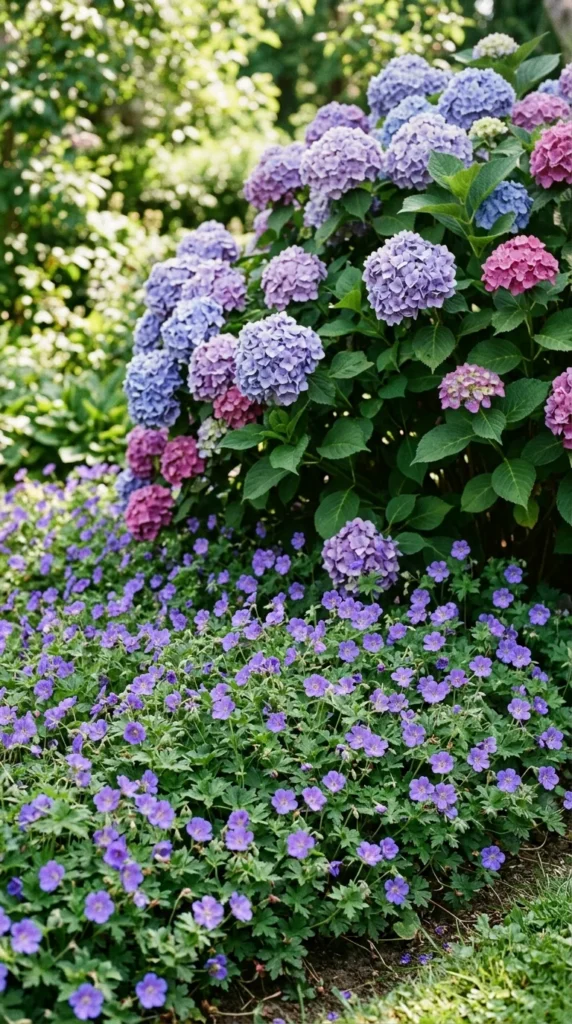
Not to be confused with the annual pelargoniums, “Rozanne” Hardy Geraniums are one of the longest-blooming perennials available. They create a low-growing carpet of violet-blue flowers that persists from June until frost. These are excellent “filler” plants to tuck into the front of a hydrangea border. They help suppress weeds and provide a constant splash of color even if the hydrangeas have a “rest” period between bloom flushes.
14. Phlox
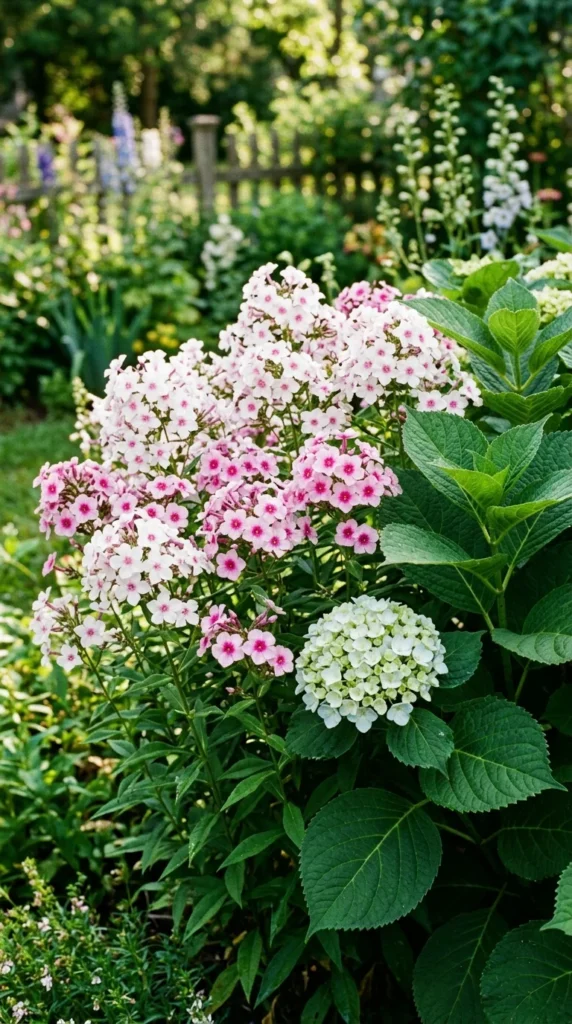
Garden Phlox (Phlox paniculata) adds two things to a hydrangea garden: height and scent. While most hydrangeas are not known for their fragrance, Phlox fills the summer air with a sweet, honey-like perfume. Their clusters of star-shaped flowers come in vibrant pinks, purples, and whites. They enjoy the same nutrient-rich soil and regular watering as hydrangeas, making them easy-to-manage garden companions.
15. Gardenias
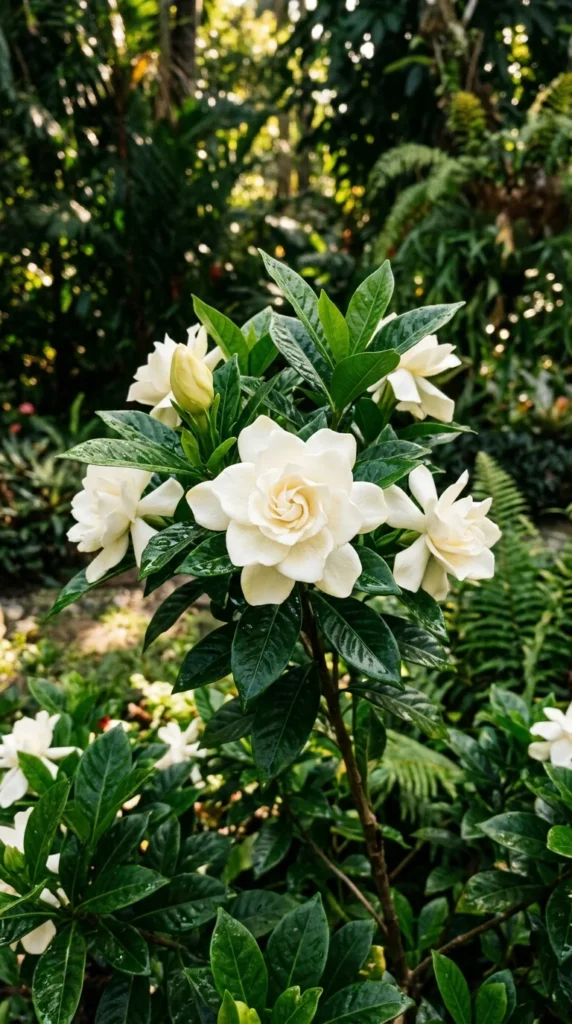
For those in warmer climates (Zones 7-9), Gardenias are a phenomenal choice. Like hydrangeas and azaleas, they prefer acidic soil. The intoxicating fragrance of Gardenias adds a sensory layer to the garden that hydrangeas lack. The waxy, dark evergreen leaves of the Gardenia provide a beautiful backdrop for the softer, matte leaves of the hydrangea, and their white blooms offer a classic, elegant look that never goes out of style.